
Tag: roasted green tea
Roasted Green Tea Guide: Flavour, Brewing, and Uses
You order a hojicha latte at an Australian café, expecting something green, and the barista hands you a warm brown drink with a toasted aroma. Nothing has gone wrong. Hojicha is roasted green tea, and roasting changes the leaf's colour, fragrance, bitterness, and best uses without removing its identity as green tea.
That difference makes roasted green tea an appealing choice for home brewers, matcha drinkers, café owners, and anyone who enjoys coffee-adjacent flavours but wants another option. It also creates confusion, particularly around caffeine and antioxidants. A satisfying cup depends less on a simple label such as “low caffeine” and more on the tea format, serving size, water, and brewing time.
What Roasted Green Tea Is and Why It Matters
The café customer looks at the brown latte and asks, “Is this coffee?” The barista explains that it's hojicha, a Japanese green tea that has been roasted until the leaves develop a warm, nutty aroma and a brown appearance. The drink may contain milk, foam, or a little sweetness, but its foundation is still tea.
Hojicha sits within the broad green-tea family alongside sencha, bancha, genmaicha, and matcha. The important distinction is what happens after the tea leaf is made into green tea. Instead of keeping the fresh, vegetal character associated with unroasted green tea, the producer applies dry heat to create a toasted profile. Similar roasted green teas may use leaves, stems, or a blend of both, so the final cup can range from delicate and cereal-like to deep and coffee-adjacent.

Why the brown colour matters
Unroasted green tea often appeals to people who enjoy fresh, grassy, marine, or slightly astringent flavours. Hojicha offers a different entry point. Roasting softens the sharper impression of the leaf and brings forward aromas that many Australians already recognise from toasted muesli, roasted nuts, cocoa, or a flat white.
That sensory shift makes hojicha useful in formats where bright green tea can feel difficult to balance. It works naturally in a warm infusion, a milk-based latte, an iced drink, and selected desserts. It can also be brewed as an everyday tea without requiring the whisking technique associated with matcha.
A useful distinction: matcha is powdered unroasted green tea, while hojicha is roasted green tea. They're related, but they don't tell the same flavour story.
A helpful introduction to the style is this guide to Hojicha Tea, particularly if you're deciding whether the roasted profile suits your routine. Once you understand the processing, you can choose a leaf or powder, adjust the brew, and use hojicha according to the occasion rather than treating it as a brown version of matcha.
How Roasting Transforms Green Tea
Roasting doesn't just add a flavouring to green tea. It changes the way the leaf smells, looks, and behaves in the cup. Think of the difference between soft bread and toast. The ingredients remain related, but heat creates a new sensory experience.
The production sequence
Steaming or pan-firing stops oxidation. Producers heat fresh leaves soon after harvest to preserve the green-tea character. Japanese teas are commonly steamed, while other green teas may be pan-fired.
Rolling and kneading shape the leaf. This step helps form the finished appearance and influences how water reaches the leaf during brewing.
Drying reduces moisture. A dry leaf stores more reliably and becomes ready for the final roasting stage.
Roasting builds aroma. Dry heat turns the leaf brown and develops toasted, nutty, caramel-like, grainy, or cocoa-like notes. Roast intensity matters. A gentler roast can leave a lighter cereal character, while a deeper roast can move towards coffee and dark toast.
Sorting and packing protect consistency. Producers separate material by size and quality before packing the finished tea.
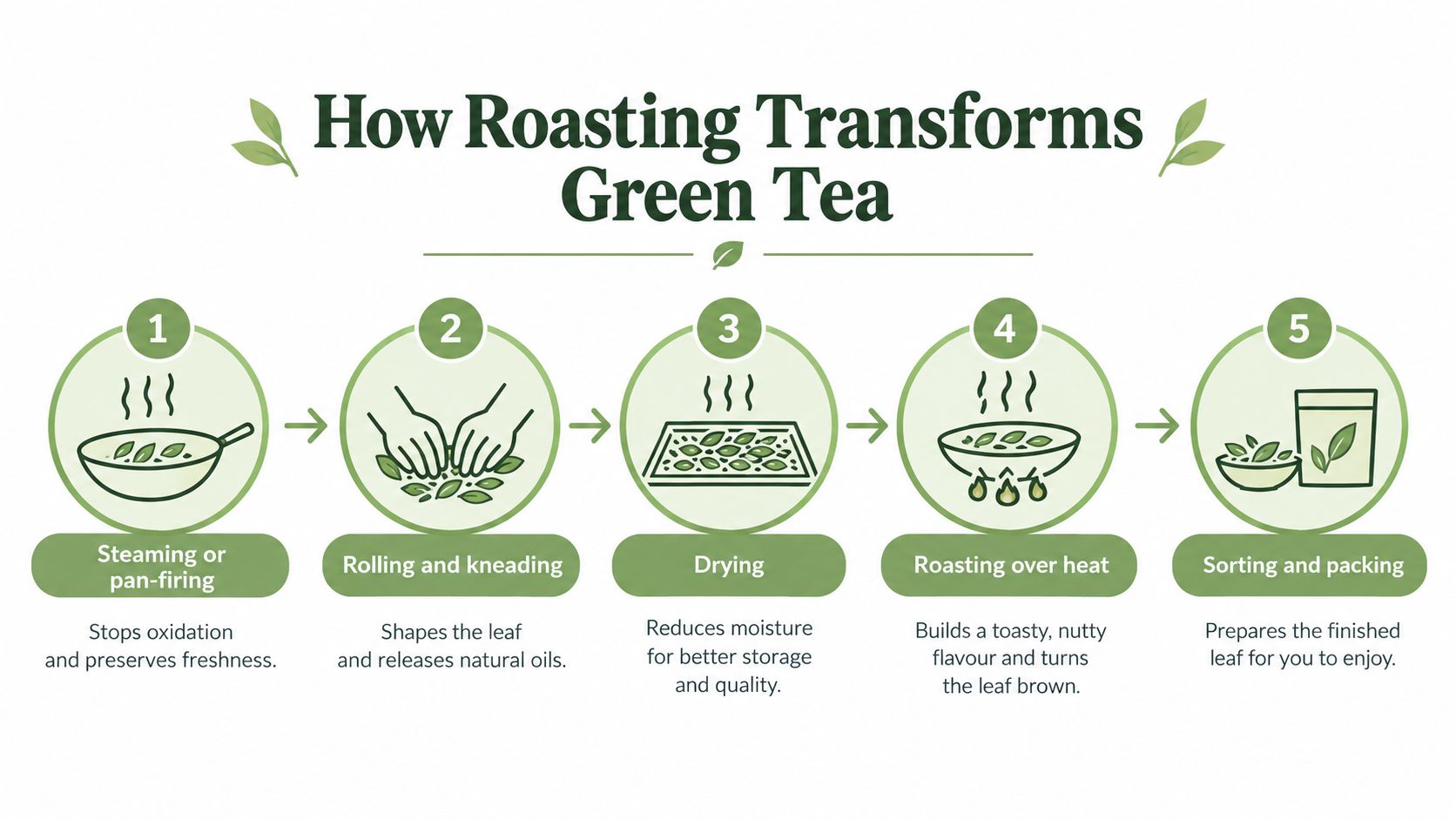
The roasting decision matters because heat affects more than aroma. Australian green-tea research measured theanine, caffeine, and five catechins, including EC, EGC, EGCG, GCG, and ECG, using high-performance liquid chromatography. The researchers assessed quality through measures such as total catechins and theanine-to-catechin and theanine-to-caffeine ratios. Higher theanine-to-catechin and theanine-to-caffeine ratios correlated with better retail-market quality, while total catechin concentration showed an inverse relationship with quality. The Australian research report also recorded seasonal shifts in catechin composition, with EGCG dominant early in harvest and EGC dominant later after peak temperatures.
That's why sensory quality shouldn't be judged by colour alone. A producer or buyer who wants repeatable roasted green tea should consider the original material, harvest timing, roast profile, aroma, taste, and, where relevant, laboratory testing before and after roasting.
Flavour and Aroma Profile Explained
A well-made cup of roasted green tea announces itself before you taste it. The dry leaves may smell like toasted grain, warm wood, roasted nuts, or a lightly browned biscuit. Once infused, the liquor usually appears amber to brown rather than vivid green.
The first sip tends to feel rounded. Instead of sencha's fresh, grassy lift, you might notice toasted rice, caramel, cocoa, or a mild coffee-like note. The finish can be gentle and dry, but it shouldn't dominate the palate with sharp bitterness. That makes hojicha approachable for people who've tried green tea and decided they dislike “vegetal” flavours.
A café-friendly sensory comparison
A useful comparison is toast rather than coffee. Hojicha can share coffee's warmth and roasted aroma, but the body is often lighter and the finish more tea-like. With milk, the leaf's nutty character can resemble a soft flat white or a toasted-muesli drink, while an unsweetened cup may remind you of a campfire without the smoke becoming the main flavour.
The roast also influences what you should expect:
- Light roast: toasted grain, dry cereal, gentle sweetness, and a lighter body.
- Medium roast: roasted nuts, caramel, biscuit, and a balanced aroma.
- Deep roast: dark toast, cocoa, wood, and a stronger coffee-adjacent impression.
These are tasting directions, not guarantees. Leaf size, stems, cultivar, harvest, roast temperature, and brewing all affect the final cup. A tea that tastes smooth in a café latte may taste more direct when brewed without milk.
If you're comparing styles or looking for Japanese tea terminology, a specialist overview of Hojicha Tea can help you understand how roasted tea sits alongside other Japanese green teas. Use the language of aroma when ordering. Ask for something toasty, nutty, mellow, or suitable for milk, rather than assuming every hojicha tastes the same.
Caffeine and Antioxidant Content in Real Servings
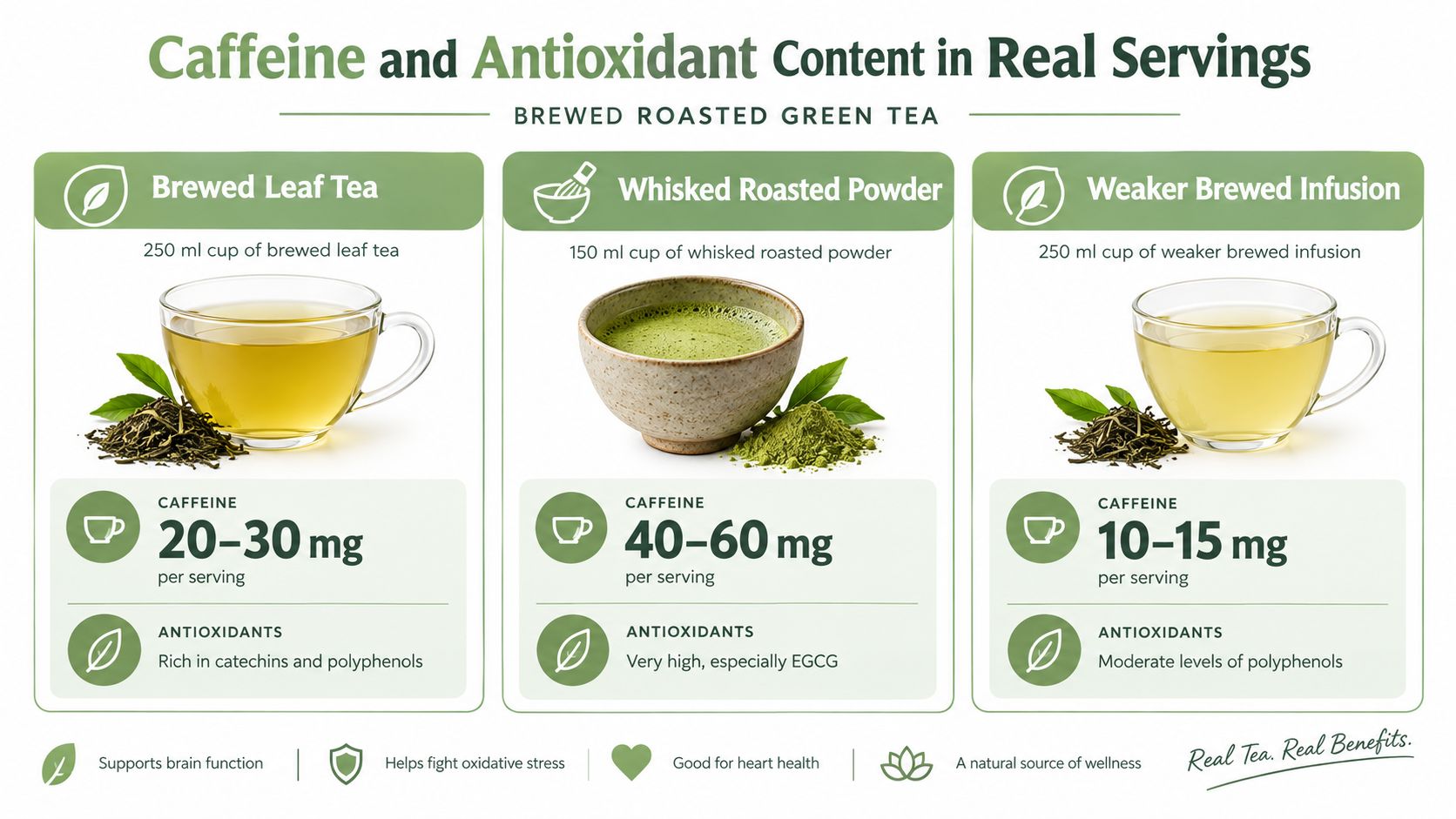
“Low caffeine” is too vague to guide a real drink. Roasting can change perceived bitterness and extraction behaviour, but roasted green tea isn't caffeine-free. The amount in your cup depends on the leaf mass, water volume, temperature, contact time, particle size, and whether you're drinking an infusion or consuming powdered tea.
The Australian Institute of Sport lists approximately 30–50 mg of caffeine in a 250 mL cup of green tea. Food Standards Australia New Zealand also gives a broad tea concentration range of 0–90 mg per serving, reflecting variation in tea type, preparation, and strength. These references are useful for planning, but they aren't a batch-specific result for every hojicha product. Food Standards Australia New Zealand's caffeine material explains why preparation and food composition data need careful interpretation.
Leaf, powder, and the cup you actually drink
A brewed leaf infusion leaves most of the plant material behind. Whisked hojicha powder is different because you consume the finely milled leaf, and a concentrated café preparation may use more tea in less liquid. You shouldn't transfer a caffeine expectation from one format to another without checking the recipe.
Antioxidant language needs similar care. Green tea contains catechins and theanine, but roasting and brewing influence the compounds that reach the cup. Australian field research found that quality relationships were more informative than total catechin concentration alone, so “more antioxidants” isn't a complete measure of a better tea.
Practical rule: standardise the grams of tea, water volume, temperature, and steep time before comparing cups.
For people managing sleep, pregnancy-related caffeine limits, children's intake, or caffeine from coffee, chocolate, energy drinks, and other tea, a prepared serving is more useful than a product category. The Australian Institute of Sport reports average adult caffeine intake at about 175 mg per day, with at least 25% of people consuming more than 230 mg daily. Those figures appear in its Australian caffeine guidance, alongside the green-tea reference.
For a deeper explanation of preparation and serving questions, see hojicha tea caffeine. If you're exploring Japanese caffeine-free or naturally low-caffeine traditions more broadly, this guide on where to buy Japanese herbal tea is a useful place to compare categories, while remembering that hojicha itself is tea and can contain caffeine.
Brewing Roasted Green Tea at Home
Hojicha is forgiving, but a repeatable recipe helps you understand what the leaf can do. Start with 3 grams of roasted green tea leaf, 250 mL of water at 90°C, and a 30–45 second steep. This produces an aromatic cup with enough body for drinking plain or adding milk.
Boiling water poured directly over the leaf can flatten delicate aromatics and draw out a rougher finish. Steeping for several minutes can make even a gentle roast taste dry or over-extracted. Use a kettle with a temperature setting, or let freshly boiled water cool briefly before brewing.
Adjusting the base recipe
For a stronger cup, try 3 grams in 150 mL for 60 seconds. This concentrated brew suits a small serving or a latte. For a softer everyday pot, use 2 grams in 300 mL and keep the steep brief enough to preserve the toasted aroma.
Hojicha powder needs a different method. Sift the powder into a bowl, add a small amount of warm water, whisk until smooth, then add more water or steamed milk. Because the powder is consumed rather than strained, treat it as a separate format when thinking about flavour and caffeine.
| Format | Leaf or powder | Water or milk | Temperature | Time |
|---|---|---|---|---|
| Everyday hot cup | 3 g leaf | 250 mL water | 90°C | 30–45 seconds |
| Strong latte base | 3 g leaf | 150 mL water | 90°C | 60 seconds |
| Light pot | 2 g leaf | 300 mL water | 90°C | Short steep |
| Powdered latte | Hojicha powder | Warm water, then milk | Warm, not boiling | Whisk until smooth |
| Iced infusion | Leaf | Cold water | Refrigerated | Longer, according to taste |
| Syrup or dessert base | Leaf or powder | Small concentrated liquid | Controlled heat | Taste and strain |
For an iced summer drink, cold brewing gives the tea time to release aroma gradually. For a syrup, make a concentrated infusion, strain it carefully, and combine it with your chosen sweetener while warm. You can then use the syrup in a latte, over vanilla ice cream, or in a zero-alcohol drink.
Pin this checklist near the kettle:
- Weigh the tea: Start with the recipe rather than guessing.
- Measure the water: Volume changes strength as much as leaf quantity does.
- Control temperature: Avoid pouring boiling water straight onto delicate material.
- Time the steep: Taste at the lower end of the range before extending it.
- Adjust one variable: Change leaf, water, or time, not everything at once.
Comparing Roasted Green Tea With Other Drinks
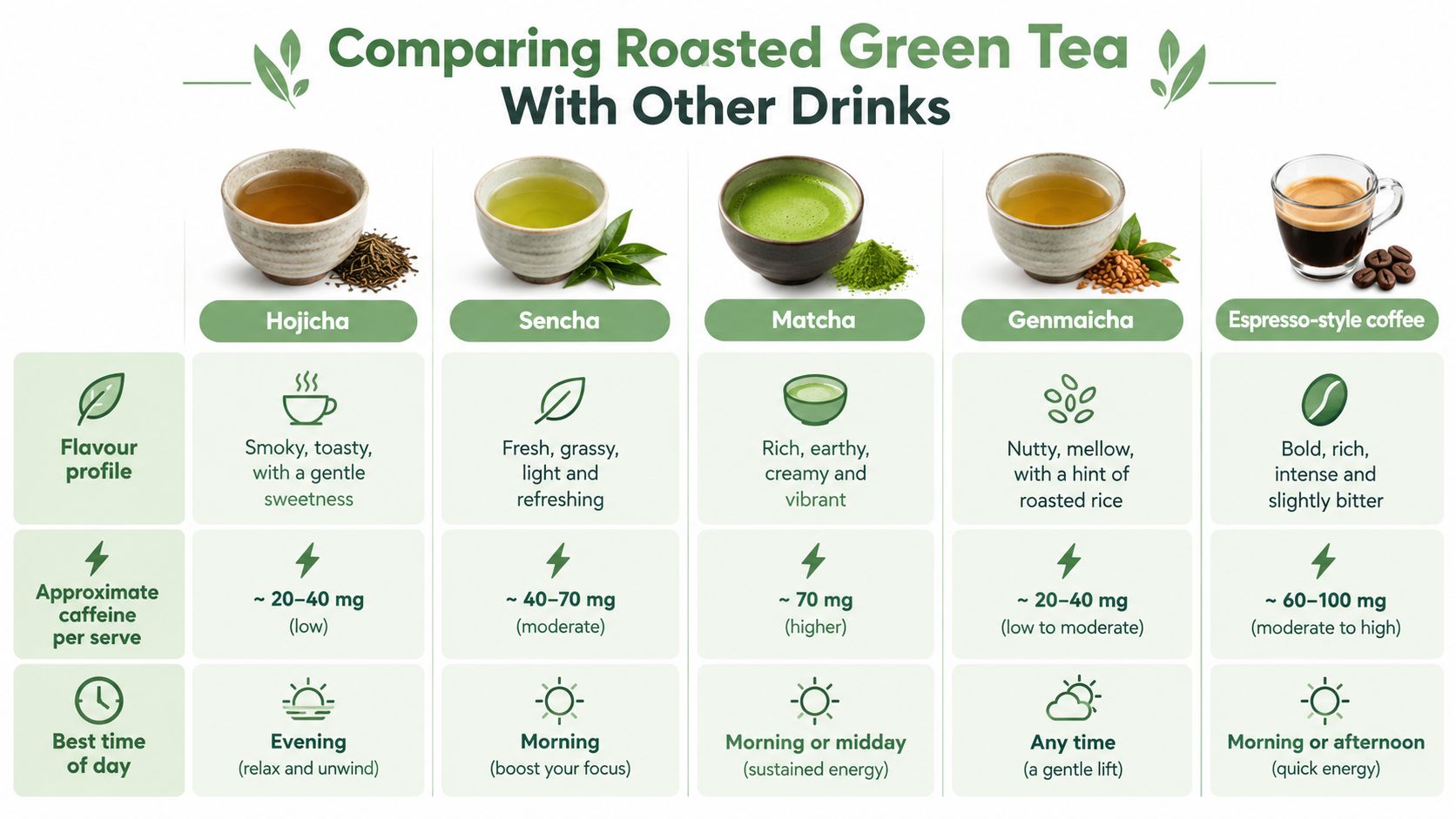
Hojicha earns its place by being different, not by replacing every other drink. Sencha is bright and fresh, matcha is concentrated and vivid, genmaicha combines green tea with toasted brown rice, and espresso-style coffee brings a denser roasted intensity. Roasted green tea sits between these experiences, with a lighter body than coffee and a deeper toastiness than many unroasted green teas.
Choose by taste and occasion
| Drink | Flavour direction | Caffeine approach | Useful format |
|---|---|---|---|
| Hojicha | Toasted, nutty, mellow, cocoa-like | Variable by serving | Hot brew, latte, dessert |
| Sencha | Fresh, grassy, lightly marine, brisk | Variable by serving | Straight hot tea |
| Matcha | Dense, vegetal, umami-rich | Depends on powder quantity | Whisked drink, latte, baking |
| Genmaicha | Green tea with toasted rice | Variable by serving | Food-friendly hot infusion |
| Espresso-style coffee | Roasted, dense, bitter, aromatic | Depends on preparation | Flat white, long black, dessert |
An espresso-style drink may suit the first part of a busy morning, while hojicha can work when you want a roasted flavour without the weight of coffee. Sencha is a better choice when you're seeking freshness and a clean, brisk finish. Matcha makes sense when you want the texture and intensity of powdered tea. Genmaicha offers toastiness through rice, with a recognisable green-tea foundation.
The common mistake is to describe hojicha as “matcha minus the caffeine”. That comparison misses the point. Hojicha's strongest difference is sensory. Its roasted character appeals to people who find matcha too grassy, and its aroma works naturally with oat, soy, dairy, chocolate, vanilla, and lightly sweetened café recipes.
Choose the drink that matches the moment. A plain hojicha infusion suits quiet sipping, a concentrated brew suits a latte, and hojicha powder suits cooking where you want the roasted flavour distributed through the recipe.
Culinary and Café Uses Beyond the Cup
Hojicha shouldn't be positioned only as a healthier matcha. Its most practical advantage in a café or home kitchen is flavour. Toasted, nutty notes can make a dessert feel deeper without relying on a large amount of sweetness, and the profile sits comfortably beside ingredients Australians already order and bake with.
Sweet applications
Hojicha powder works well in cookies, financiers, sponge cakes, ice cream, custards, and chocolate desserts because it disperses through the mixture. A leaf infusion is better when you want a lighter aroma in cream, milk, or syrup and plan to strain the solids before serving.
Try these combinations:
- Chocolate and cocoa: Roasting complements cocoa's bitterness and gives brownies or ganache a warmer finish.
- Vanilla and ice cream: Hojicha syrup adds toastiness to an affogato-style dessert without copying espresso.
- Nuts and grains: Almond, sesame, hazelnut, oat, and toasted rice reinforce the tea's cereal character.
- Fruit: Pear, stone fruit, and banana can work with a gentle roasted base when the sweetness is controlled.
You can also use concentrated hojicha in café drinks that aren't lattes. Build a zero-proof spritz with hojicha syrup, soda, citrus, and ice. Pair a cooled infusion with kombucha for a tea-forward refreshment, or use a small amount in a dessert sauce.
Savoury and seasonal formats
A light hojicha infusion can contribute depth to a broth, while powder can be blended into a finishing spice mix for roasted vegetables. Use it carefully. The aim is aroma, not a heavy tea flavour.
A simple seasonal framework helps café teams keep the idea repeatable:
- Cool weather: Hot hojicha, steamed milk, chocolate, and baked desserts.
- Warm weather: Iced hojicha, citrus, soda, cold brew, and spritz-style drinks.
- All year: Cookies, soft serve, affogato-style desserts, and a short unsweetened tea option.
For bakers comparing formats and applications, you can browse toasty hojicha for baking. For broader low-sugar drink ideas that can sit beside tea on a café menu, Pep Tea's healthy drinks to make offers further inspiration.
Putting It All Together
Roasting determines the aroma. The aroma determines whether hojicha suits a plain infusion, a latte, a dessert, or a savoury experiment. Brewing then decides how much of that character reaches the cup, which is why serving size and timing matter more than a blanket claim about caffeine or antioxidants.
Treat roasted green tea as its own category. It isn't a failed matcha, a brown sencha, or a coffee substitute. It's a flexible Japanese tea style with a toasted profile that can feel familiar in an Australian café and practical in a home kitchen.
Start with three actions:
- Choose the format: Use leaf for clear infusions and concentrated bases, or powder when you want the tea distributed through milk and food.
- Repeat one recipe: Begin with the measured hot-brew method, then change one variable at a time.
- Try one kitchen use: Add hojicha to a syrup, cookie, chocolate dessert, iced drink, or savoury finishing blend.
Check the label for organic sourcing, origin, roast style, and preparation guidance. Australia's tea supply is predominantly import-dependent. In 2021, Australia produced approximately 1,500 tonnes of tea and imported more than 20,000 tonnes, according to market reporting that cites Australian agricultural reporting, including ABARES and the Department of Agriculture, Water, and the Environment. The Australian tea market overview explains why provenance, import controls, certification, and reliable distribution matter.
Australia's tea habit also gives roasted green tea a familiar place to grow. The Australian Bureau of Statistics reports that tea accounted for an average of 153 g of daily consumption within the non-alcoholic-beverage category in 2023, and 32.4% of people consumed tea. Hojicha doesn't need to create a new ritual. It can give an existing one a warmer, more versatile flavour.
Pep Tea offers organic Japanese tea alongside Australian-brewed sugar-free organic Kombucha from the Hunter Valley, NSW, giving home drinkers and cafés practical options for low-sugar, non-alcoholic beverage menus. Visit Pep Tea to explore the range, find recipes, or enquire about wholesale supply for roasted green tea-inspired drinks.
Hojicha Tea Benefits: A Guide to Roasted Green Tea
Some evenings, you want a warm drink that feels comforting without turning bedtime into a staring-at-the-ceiling session. Coffee is out. Strong green tea can feel a bit too lively. Even some herbal blends miss that toasted, satisfying depth people crave in the evening.
That's where hojicha often surprises people.
If you've only really explored Japanese tea through matcha, hojicha can feel like a quiet revelation. It's still green tea, but it doesn't taste grassy or sharp. It tastes roasted, mellow, nutty, and softly sweet. The whole experience feels gentler.
Your New Favourite Evening Tea Ritual
A lot of Australians are already looking beyond basic supermarket tea bags and into more distinctive tea styles. The green tea category in Australia reached A$131.4 million in 2024 according to this Australian green tea market summary. That matters because hojicha sits inside that broader green tea world, but offers a completely different flavour and feel.
For many people, the turning point is simple. They want something cosy after dinner, but they don't want the buzz that can come with more stimulating drinks. They also don't want something bland. Hojicha fits neatly into that gap.
If you've been comparing relaxing drinks lately, it can help to look at a broader guide to restorative sleep teas so you can see where roasted teas sit beside herbal options. Hojicha stands out because it gives you that evening-friendly comfort while still feeling like a proper tea ritual.
Hojicha often appeals to people who enjoy green tea in theory, but don't enjoy bitterness in practice.
There's also a practical reason it keeps popping up in wellness conversations. People want drinks that support calmer routines, lower stimulation, and more mindful habits. Hojicha feels aligned with that shift, not because it's trendy for the sake of it, but because its character naturally suits slower parts of the day.
If caffeine is part of your decision, this guide to green tea caffeine gives useful context on how tea styles can differ. Hojicha's place in that conversation is one of the main reasons it's become such a favourite among people who want tea without the sharper edge.
What Exactly Is Hojicha Tea
Hojicha is roasted Japanese green tea. That's the key idea.
It isn't a separate plant. It isn't a flavoured tea. It's green tea that has been transformed by heat. Think of the difference between raw nuts and roasted nuts. Same starting point, completely different aroma, taste, and overall feel.
How roasting changes the tea
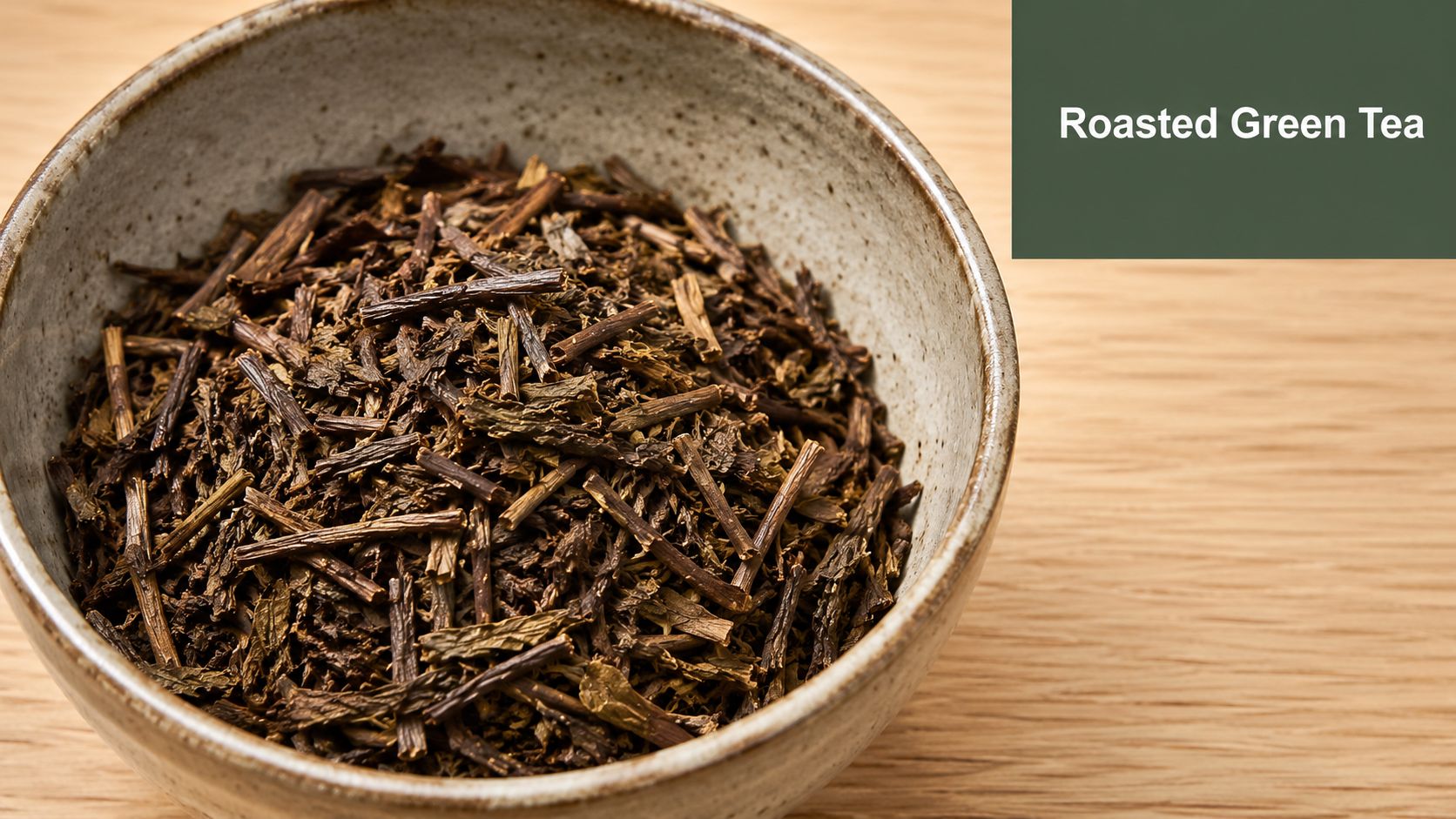
Most green teas are prized for fresh, vegetal notes. Hojicha goes in another direction. The leaves, and sometimes stems, are roasted. That roasting deepens the flavour and softens the greener, more astringent side of the tea.
The result is a cup with notes people often describe as toasty, nutty, woody, or gently caramel-like. If standard green tea can taste bright and brisk, hojicha tastes rounded and warm.
That's also why it can be a useful gateway tea. Someone who says, “I want the idea of green tea, but not the grassy taste,” often gets on very well with hojicha.
A tea with a relatively modern history
Hojicha isn't ancient in the way many people assume Japanese teas are. According to this overview of hojicha and its origins, it gained popularity in Kyoto around the 1920s. The same source notes that its roasting process leaves it with only about 8 mg per 250 ml.
That low-caffeine profile is a big part of its appeal. It makes hojicha a very practical choice for late afternoon, evening, or for anyone who's more sensitive to stimulating drinks.
What hojicha is not
It helps to clear up a few common points of confusion:
- It's not matcha. Matcha is a finely ground tea powder whisked into water. Hojicha is more commonly brewed like a loose-leaf tea, though powdered hojicha does exist.
- It's not black tea. The roasted flavour can make people assume it's fully oxidised like black tea, but it starts as green tea.
- It's not automatically smoky. Some people expect a campfire flavour. Good hojicha is roasted and aromatic, but usually smooth rather than harsh.
For a broader look at Japanese tea styles, this Japanese green tea guide can help place hojicha alongside sencha and matcha without mixing them up.
The Unique Health Benefits of Roasting
The most interesting hojicha tea benefits come from one simple fact. Roasting changes the chemistry of the tea.
That doesn't just alter flavour. It changes how the tea feels to drink, how intense it seems, and why many people experience it as steadier and softer than other green teas.
Why roasting matters
When tea leaves are roasted, the profile shifts away from the sharper, greener character many people associate with classic green tea. In practical terms, that usually means less bitterness and a more rounded cup.
That matters because plenty of people stop drinking green tea for one of two reasons. Either it feels too stimulating, or it tastes too astringent. Hojicha answers both issues through processing, not through added ingredients.
Practical rule: If a tea feels harsh, look at how it was processed, not just what plant it came from.
Roasting is the whole story here. It's the reason hojicha smells warm instead of grassy. It's the reason the cup feels softer. It's also the reason its benefits are best understood through the lens of transformation, not just nutrition.
The calm performance idea
One of the most useful ways to think about hojicha is as a calm performance tea.
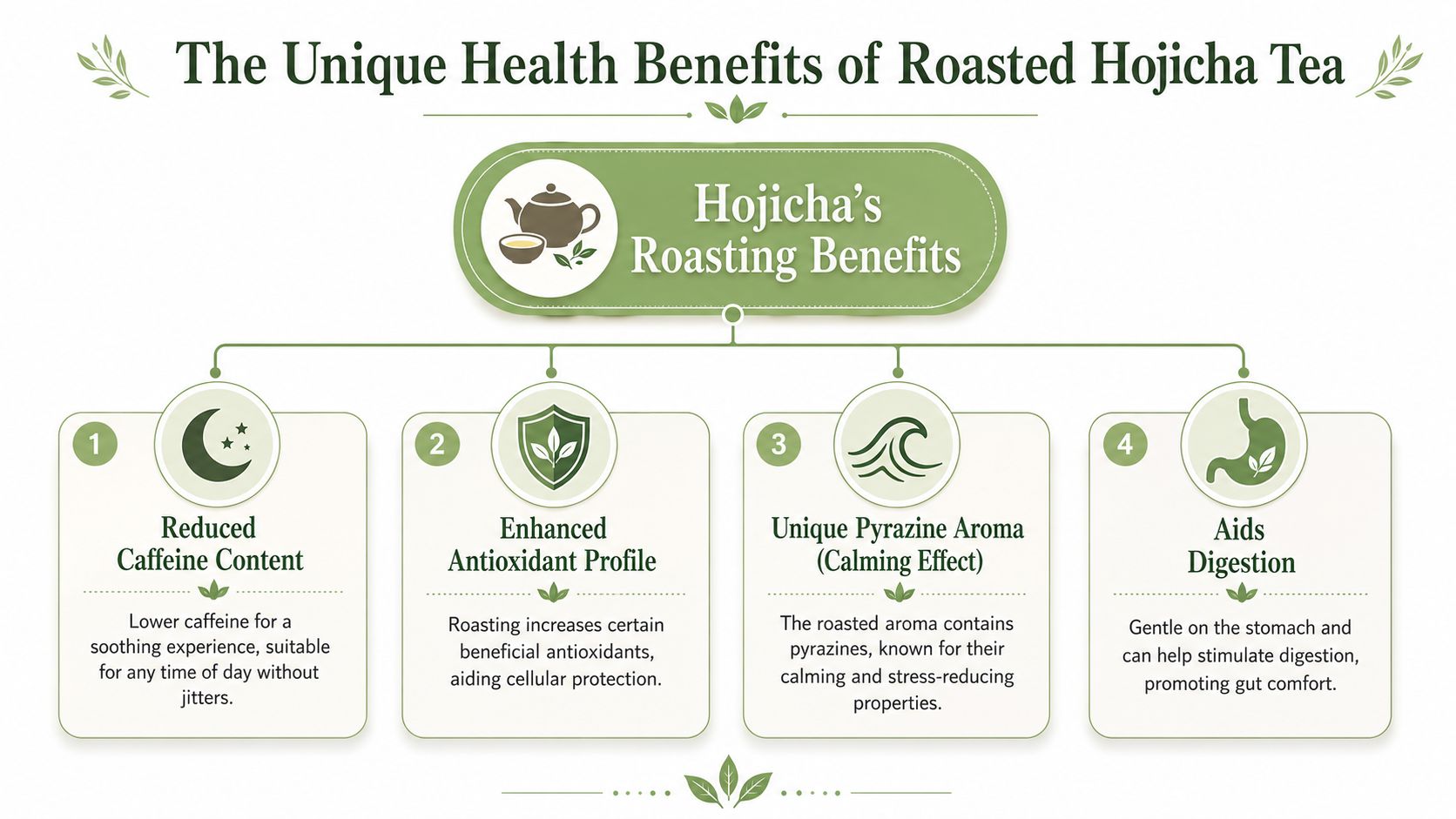
A peer-reviewed human study on roasted Japanese tea found that hojicha, compared with green tea and water, improved refreshment and motivation, and produced an earlier peak in the EEG P300 response associated with attention and concentration. The same study notes that hojicha is rich in pyrazine, a compound expected to support blood circulation, reduce feelings of cold, and ease fatigue. You can read the study in full in this peer-reviewed article on roasted Japanese tea and pyrazine.
That's a helpful distinction. Hojicha doesn't have to make you feel revved up to be useful. For some people, its value is feeling more settled while still mentally present.
In everyday language, this is the tea you reach for when you want to read, finish a few notes, chat after dinner, or wind down without feeling flat.
What pyrazines actually do in the cup
Pyrazines are part of what gives roasted foods and drinks their warm, appealing aroma. In hojicha, they contribute to that comforting toasted smell people notice straight away.
That aroma isn't just pleasant. It helps explain why hojicha often feels so soothing before you even take a sip. Smell shapes expectation, and expectation shapes experience. With hojicha, the aroma already tells your body this drink is going to be softer, warmer, and less sharp.
A few practical takeaways flow from that:
- For sensitive drinkers: The roasted profile often feels easier to enjoy than bright, grassy green tea.
- For evening routines: The sensory experience itself suits slower rituals.
- For cafés: It offers something distinct from matcha without leaving the Japanese tea category.
Why people often find it gentler
Many drinkers describe hojicha as kinder on the stomach than more astringent teas. The simplest explanation is sensory. Because the roast softens the greener edge, the tea often feels less aggressive on the palate.
That doesn't make it a medical treatment, and everyone's tolerance is different. But as a daily drinking experience, hojicha often works well for people who've found standard green tea a bit too brisk.
Some teas wake you up by pushing. Hojicha tends to work by smoothing the edges.
This is one reason hojicha fits modern wellness habits so well. People aren't only chasing energy. They're also looking for drinks that support steadiness, comfort, and routines they can repeat every day.
Hojicha vs Matcha A Friendly Comparison
If matcha is your main point of reference, hojicha can seem unusual at first. Both come from Japanese green tea traditions, but they serve different moments.
Matcha is often the pick for energetic focus. Hojicha is more about warmth, softness, and ease. Neither is better. They just solve different problems.
Hojicha and matcha side by side
| Attribute | Hojicha | Matcha |
|---|---|---|
| Tea type | Roasted green tea, usually brewed from leaves or stems | Stone-ground green tea powder whisked into water |
| Processing | Defined by roasting | Defined by shading, steaming, drying and grinding |
| Colour | Brown to reddish-brown liquor | Bright green |
| Flavour | Toasty, nutty, mellow, less astringent | Grassy, umami-rich, fresh, more intense |
| Caffeine feel | Lower-stimulant and evening-friendly | More energising and vivid |
| Best time to drink | Late afternoon, evening, quiet work sessions | Morning, early afternoon, pre-work focus |
| Popular uses | Hot tea, iced tea, lattes, desserts | Traditional tea, lattes, smoothies, baking |
Which one suits your routine
If your morning starts with a whisked tea or a matcha latte, that makes sense. Matcha has a fuller, more assertive presence. Many people like it when they want alertness and a stronger flavour.
Hojicha works differently. It suits the part of the day when you want comfort without switching to something sugary or caffeine-heavy. It also tends to win over people who don't love the strong vegetal side of green tea.
That's why cafés often treat them as complementary rather than competing drinks. Matcha covers the bright, high-energy end of the menu. Hojicha brings in the roasted, cosy, low-stimulant option.
A taste comparison that helps
A simple food analogy can make this clearer.
- Hojicha is a bit like toasted sesame, roasted nuts, or light cocoa in mood.
- Matcha is more like baby spinach, sea breeze, and savoury sweetness.
Neither description is exact, but it helps explain why one feels grounding and the other feels vibrant.
For readers still sorting out the broader tea family, this guide to the difference between matcha, green tea and green tea powder makes the categories easier to separate.
How to Brew and Enjoy Hojicha
Hojicha is one of the easiest Japanese teas to brew well at home. You don't need a ceremonial setup. You just need decent tea, hot water, and a little restraint. Boiling water and very long steeps can flatten the nicer roasted notes.
A simple way to brew it
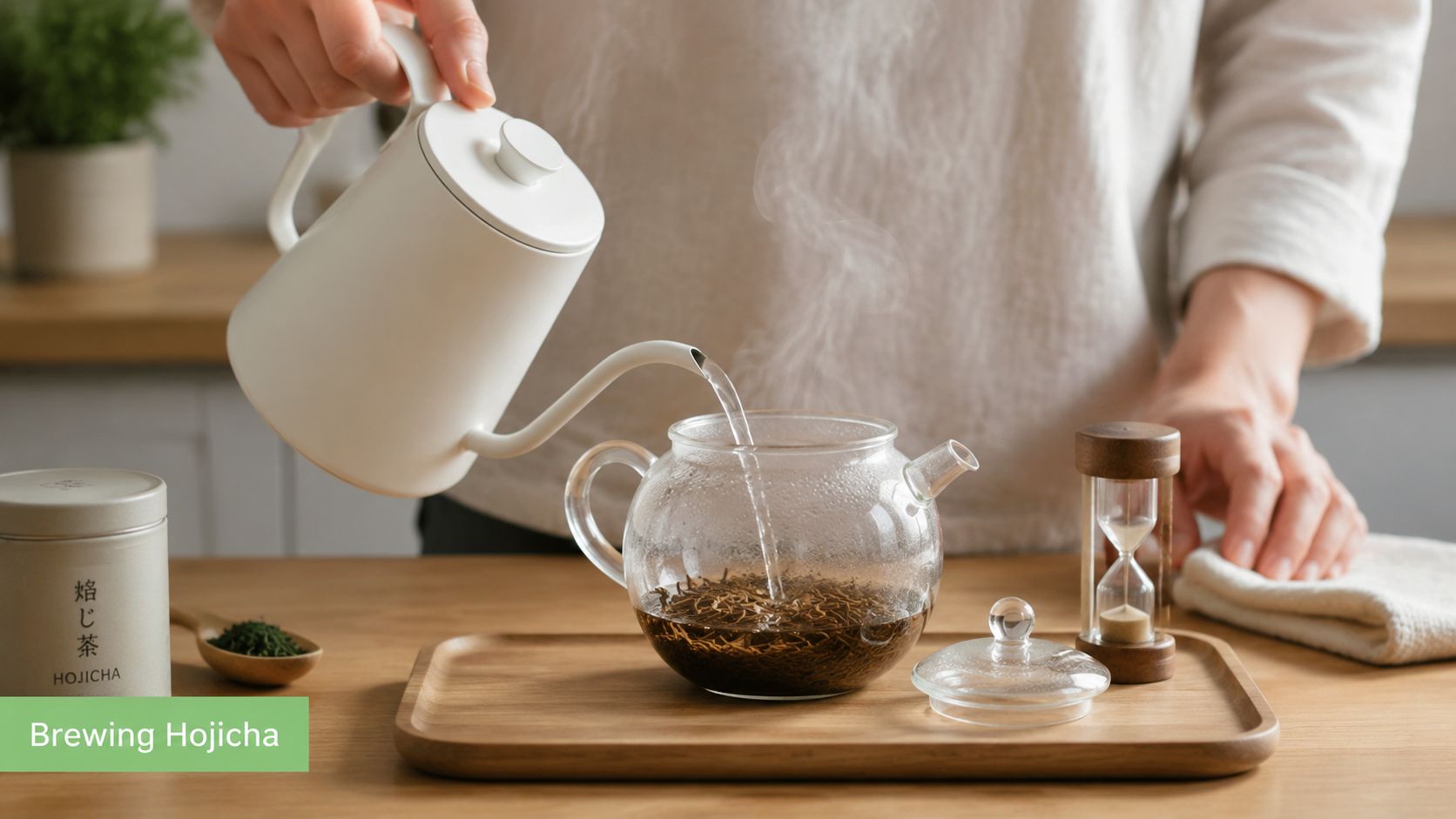
Start with loose-leaf hojicha in a teapot, infuser, or strainer. Use hot water rather than aggressively boiling water. The goal is to draw out the roasted aroma without making the cup taste dull.
A good first method looks like this:
- Warm your cup or teapot. This helps the tea stay stable and aromatic.
- Add the hojicha. Use enough leaf to give the cup some depth.
- Pour in hot water. Let the aroma rise before you even sip.
- Steep briefly. Hojicha usually doesn't need a long soak.
- Taste and adjust. If it feels too light, use a bit more leaf next time. If it tastes flat, shorten the infusion.
A good hojicha should smell inviting before it touches your lips. If the aroma feels warm and nutty, you're on the right track.
Make a hojicha latte
Hojicha also shines in milk-based drinks because the roasted flavour holds up beautifully. That's one reason it works so well on café menus.
For a simple hojicha latte at home:
- Brew a strong base: Make your hojicha a little stronger than you would for straight drinking.
- Heat your milk of choice: Dairy or plant milk can both work well.
- Sweeten lightly if you want: A small touch of sweetness can bring out the roasted notes.
- Combine and serve: Pour the milk over the tea and enjoy it hot.
If you're curious about the texture and flow of making hojicha into a latte-style drink, this video gives a useful visual reference:
Iced hojicha and beyond
Hojicha is just as good cold as it is hot. Brew it, let it cool, and pour it over ice. Because the flavour is already smooth and roasted, it usually stays pleasingly rounded even when chilled.
It also works beautifully in food. Think along these lines:
- Desserts: Ice cream, panna cotta, custard, or tiramisu-style layers.
- Baking: Shortbread, cakes, or muffins where you want a toasted tea note.
- Café specials: Iced hojicha latte, sparkling hojicha tonic, or a roasted tea float.
For hospitality venues, that versatility is a real advantage. Hojicha can act as a tea, a latte base, and a flavour ingredient without feeling gimmicky.
Is Hojicha the Right Tea for You
Hojicha tends to suit a specific kind of tea drinker, though that group is bigger than many people realise.
If you want something warm and flavourful at night, hojicha makes sense. If you're sensitive to stronger tea stimulation, it makes sense. If you like the idea of green tea but don't enjoy bitterness, it makes sense again.
It may be a great fit if you want
- An evening tea ritual: Something cosy that still feels refined.
- A softer Japanese tea experience: Roasted rather than grassy.
- A café alternative to standard chai or decaf coffee: Distinctive, but easy to understand.
- A calmer companion to matcha: One for energetic focus, the other for low-key clarity.
It's also a smart option for cafés and wellness retailers that want a non-alcoholic drink with a clear identity. Hojicha doesn't need much explanation once someone tastes it. The flavour usually does the work.
When another tea might suit you better
If you want vivid vegetal character, ceremonial ritual, or a more energising start to the day, matcha may still be your better fit. Hojicha isn't trying to replace that experience.
It offers something different. Softer edges. Toasted aroma. A gentler pace.
If matcha feels like a bright morning conversation, hojicha feels like a quiet evening exhale.
That difference is exactly why so many people keep both in the cupboard. One supports momentum. The other supports ease.
If you're exploring Japanese tea and want a trusted Australian source for premium organic options, have a look at Pep Tea. We're passionate about helping people find the right tea for the right moment, whether that's a vibrant matcha for clean daytime energy or a more mindful addition to your daily wellness routine.