
Tag: caffeine content in green tea
Caffeine Content in Green Tea: Your Complete Guide

Is your green tea giving you a light lift, or is it packing an almost coffee-like punch?
That's the question often overlooked. A common tendency is to hear one tidy number for caffeine and assume every green tea sits in the same lane. It doesn't. A basic tea bag, a smooth sencha, a shaded gyokuro, and a bowl of ceremonial matcha can feel completely different in the body, even though they all come from the same tea plant.
That's why understanding caffeine content in green tea matters. If you're choosing a morning drink, planning an afternoon cuppa, ordering a matcha latte at your local café, or trying to avoid feeling overstimulated at night, the details matter more than the label.
At Pep Tea, we spend a lot of time helping Australians make sense of tea without the fluff. Green tea isn't just “low caffeine”. Sometimes it is. Sometimes it isn't. Ultimately, the answer lies in the leaves, the growing method, and the way you brew it.
How Much Caffeine Is Really in Your Green Tea
The short answer is yes, green tea has caffeine. The more useful answer is that the amount can shift quite a bit from cup to cup.
It's understandable to want a single number. But with green tea, a single number can be misleading because “green tea” covers a huge range of styles, from supermarket tea bags to finely stone-ground Japanese matcha. If you've ever wondered why one cup feels soft and steady while another feels almost too energising, you're not imagining it.
A good starting point is to think of green tea as a category, not a fixed recipe. It's a bit like saying “bread”. A slice of sourdough and a sweet brioche are both bread, but they're not the same experience. Green tea works the same way. The plant may be the same, yet the final caffeine level depends on what part of the plant was used, how it was grown, and how it was prepared.
For a simple overview focused on calm energy, our guide to organic green tea caffeine is a handy companion. The key idea is this: the caffeine in your cup isn't random, but it also isn't universal.
Most confusion starts when people compare a standard brewed green tea with matcha as if they were the same drink. They're not.
That difference matters even more in Australia, where many cafés now serve premium Japanese teas alongside coffee. A customer who expects a gentle green tea may be surprised when a matcha latte feels much stronger. Once you know what changes the caffeine, the numbers start to make sense, and your daily tea choices become much easier.
The Standard Range and Why It Varies So Much
For a standard benchmark, a 240 ml cup of green tea contains approximately 25 to 45 mg of caffeine, which is about one-fourth to one-third of brewed coffee at 95 to 200 mg and roughly half the caffeine of black tea at 40 to 70 mg, according to Teapigs Australia's guide to caffeine in green tea.
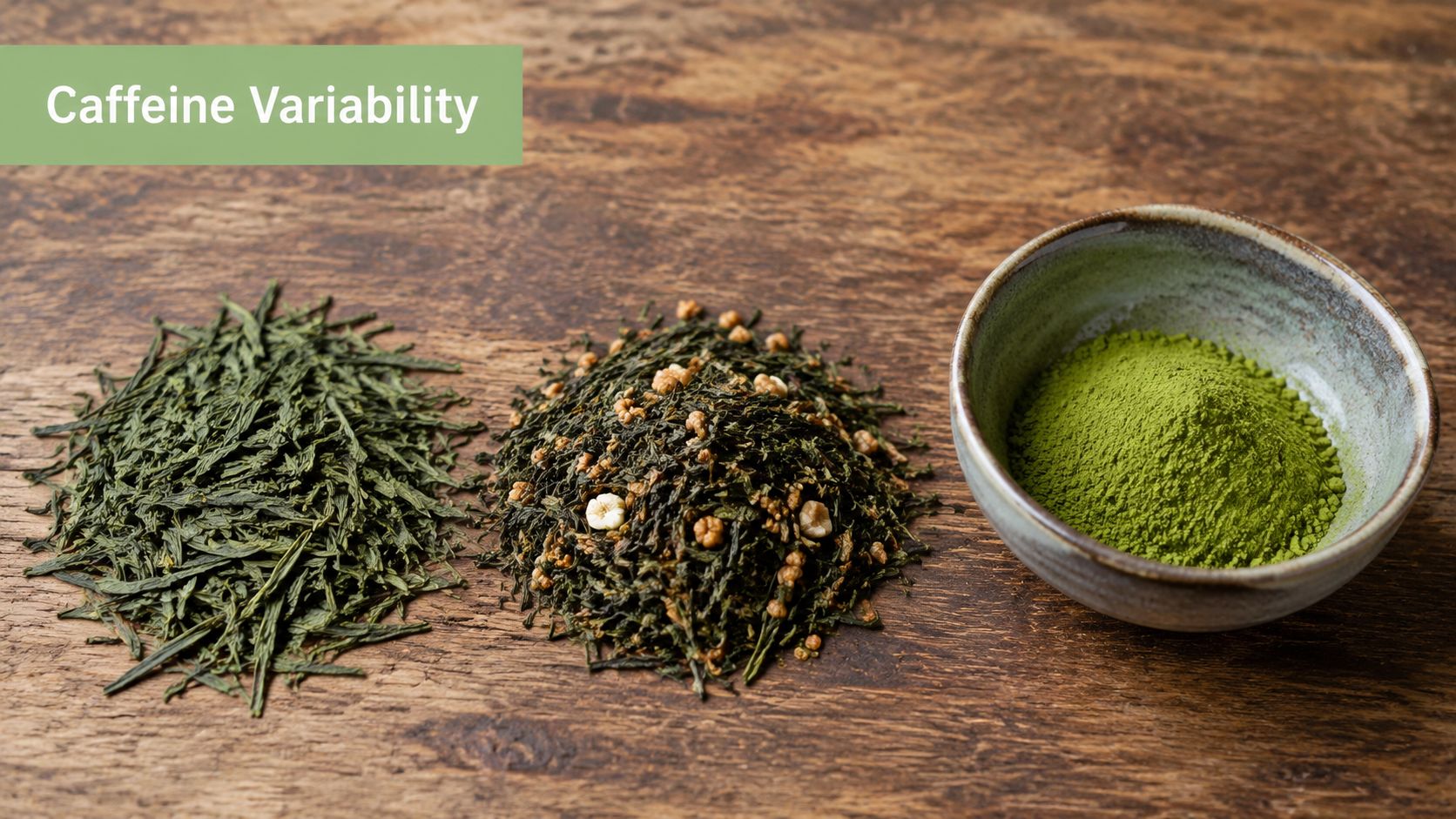
That range is useful, but it's only the front door. Variability is the key point. Green tea leaves naturally contain caffeine because the Camellia sinensis plant produces it in its leaves. What ends up in your mug depends on how much caffeine was in the leaf to begin with, and how much hot water pulls out during brewing.
The leaf matters
Tea is a bit like wine grapes. The same species can produce very different results depending on variety, growing conditions, and harvest style.
Younger, more delicate leaves tend to be associated with stronger, more refined teas, and they can also carry more caffeine. Older leaves usually brew a softer cup. That's one reason two green teas can taste different and energise you differently even before you touch the kettle.
Processing changes the outcome
Green tea isn't one uniform product. Some teas are grown in full sun. Others are shaded before harvest. Some are sold as whole leaves. Others are ground into powder.
These choices shape both flavour and caffeine. Shade-growing, in particular, is important for some Japanese teas because it changes the chemistry of the leaf before it's picked. That's one of the big reasons premium Japanese green teas often sit outside the “standard” range people expect.
Your brew is the final filter
Even if two people use the same tea, they can end up drinking different amounts of caffeine.
- More leaf means more potential caffeine in the cup.
- Hotter water extracts more quickly than cooler water.
- Longer steeping pulls out more from the same leaves.
- Powdered tea changes the equation because you consume the leaf itself rather than just infusing it.
Practical rule: Treat the printed tea name as the beginning of the caffeine story, not the end of it.
That's why broad averages help, but they can't tell you exactly what your own cuppa contains. For that, you need to know which green tea you're drinking and how it was made.
Caffeine in Sencha vs Gyokuro vs Matcha
If you want to understand caffeine content in green tea in a practical way, compare three familiar Japanese styles: sencha, gyokuro, and matcha. They all belong to the green tea family, but they don't sit anywhere near each other on the caffeine spectrum.
A quick comparison
| Tea Type | Typical Preparation | Estimated Caffeine (mg) |
|---|---|---|
| Sencha | Brewed leaf tea | Lower than shaded Japanese styles |
| Gyokuro | Brewed shade-grown leaf tea | 120 to 140 |
| Matcha | Whisked powdered tea | 136 in an 8 oz cup |
The sharp jump in the table isn't a typo. Gyokuro contains 120 to 140 mg per serving, while high-quality ceremonial matcha reaches 136 mg in an 8 oz cup, as noted in Nioteas' comparison of green tea and coffee caffeine.
For a broader look at what separates these styles, this guide on the difference between matcha green tea and green tea is useful reading.
Sencha feels familiar because it is
Sencha is what many tea drinkers picture when they hear “green tea”. It's brewed from leaves, usually with a fresh, grassy, lightly savoury character.
In everyday terms, sencha is the gentle middle ground. It's often what people mean when they quote a modest green tea caffeine figure. If you brew a normal loose-leaf green tea and get a smooth, manageable lift, you're probably experiencing something closer to this style than to the more intense Japanese teas below.
Gyokuro climbs because of shade
Gyokuro surprises people. It's still brewed like a leaf tea, yet its caffeine can rise dramatically.
The reason is cultivation. Gyokuro is shade-grown before harvest. You can think of shading like putting the plant on a different training program. The leaves respond by changing their internal chemistry, and one result is a much more concentrated tea. The cup often tastes deeper, sweeter, and more umami-rich, but the stimulation can be far stronger than people expect from something called “green tea”.
Gyokuro is one of the clearest examples of why a single caffeine number for green tea doesn't work.
This matters for Australian cafés as well. If a menu says “Japanese green tea”, the customer may assume a mild drink. If the tea is gyokuro, that assumption can be well off the mark.
Matcha is different because you drink the leaf
Matcha shifts the conversation again. With brewed tea, you steep the leaves and discard them. With matcha, the leaf is stone-ground into powder and whisked into water, so you consume the entire leaf.
That's why matcha often feels more substantial. You're not just drinking what water extracted. You're drinking the leaf material itself. If sencha is like simmering vegetables in broth, matcha is more like blending the vegetables into the soup.
A useful second benchmark comes from Australia as well. Kenko Tea's matcha caffeine page states that a cup of matcha contains 30 mg of caffeine per 1 gram serve, while brewed green tea averages about 15 mg per cup. The exact figure depends on how much powder you use, but the pattern is clear. Matcha usually sits above standard brewed green tea.
Why this matters in real life
If your goal is a softer afternoon drink, sencha makes sense. If you want a more powerful tea experience without switching to coffee, gyokuro and matcha enter the conversation quickly.
That's also why ceremonial matcha lattes can catch people off guard. They may taste creamy and soothing, but caffeine-wise they can be much closer to a deliberate energy drink than to a light green tea bag.
How Your Brewing Method Fine-Tunes Caffeine
Even after you choose the tea, you still have one big lever left. Brewing.
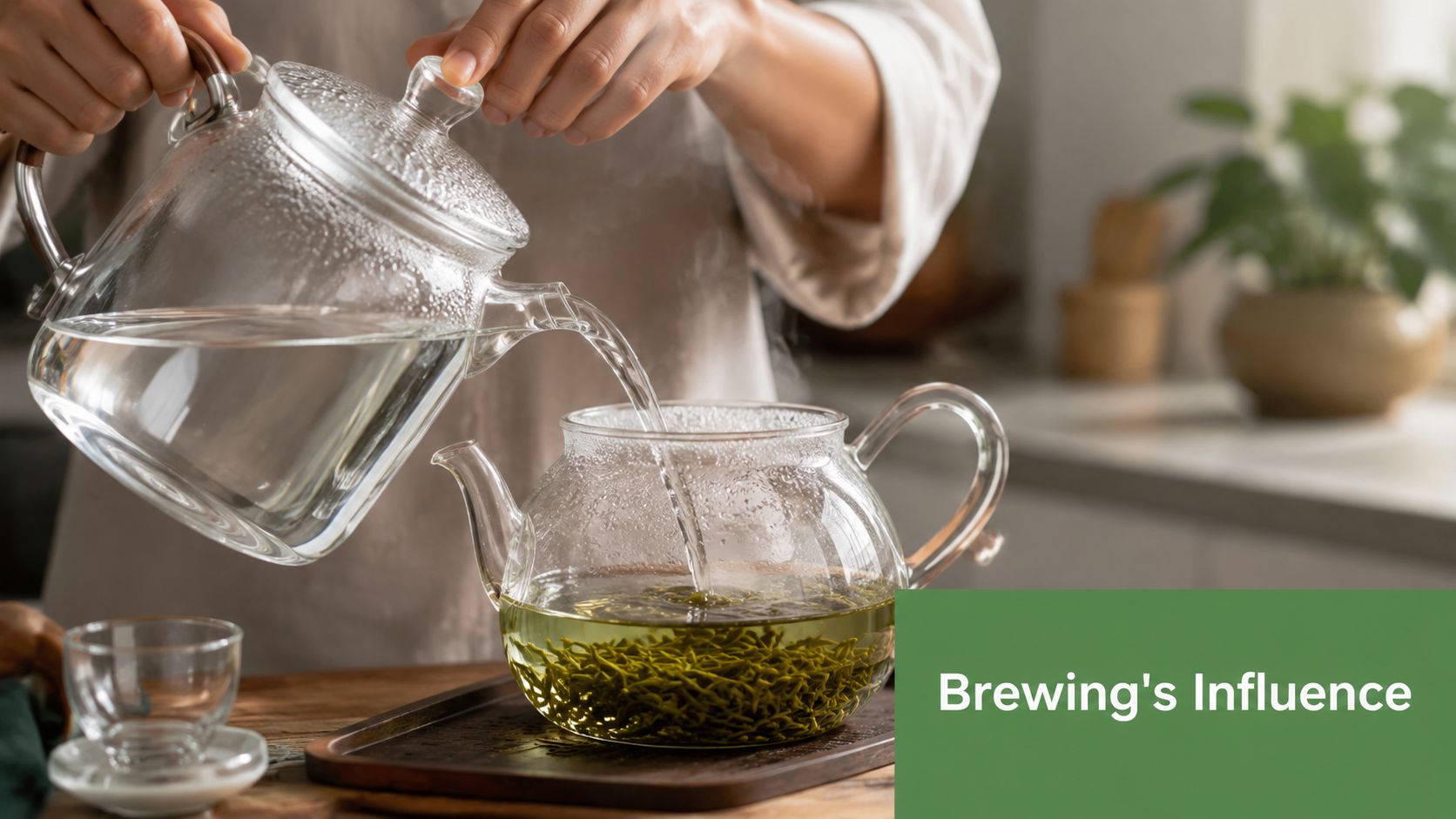
Caffeine is water-soluble, so brewing is basically an extraction exercise. Hotter water and longer contact usually pull more out of the leaf. Cooler water and shorter steeps usually pull less. That sounds simple, but it gives you real control over what lands in your cup.
Time and heat both matter
One of the clearest data points on this comes from Tavalon Australia's tea caffeine guide, which notes that brewing longer or with hotter water significantly increases caffeine, with Indian and Kenyan green teas yielding 59 mg and 58 mg respectively when steeped for 3 minutes, compared with a standard 20 to 30 mg average.
That's a useful reminder that the same category of tea can behave very differently depending on brewing style. If you've ever had one green tea that seemed mild and another that felt much punchier, the kettle may be part of the answer.
A simple home approach
You don't need lab gear to fine-tune caffeine. You just need to decide what kind of effect you want.
- For a gentler cup use cooler water and keep the steep short.
- For a stronger morning brew use warmer water and let the tea sit a little longer.
- For matcha remember that the serving size matters because adding more powder means drinking more leaf.
- For café drinks a larger matcha serve in a latte can change the feel of the drink even if the flavour still seems smooth.
If flavour is the song, brewing is the volume knob. Caffeine rises and falls with it.
A quick visual on technique can help if you're trying to improve consistency at home or in a café.
What about decaf and fermented tea
For people who are very sensitive to caffeine, decaf green tea is a separate category. In general, it still contains a trace amount rather than absolutely none.
Fermented tea drinks add another layer. Kombucha starts with tea, so it begins with some caffeine in the brew. During fermentation, the final drink can end up gentler than the tea it started from. That's one reason some people find kombucha feels lighter than a straight cup of tea, though the exact result depends on how it's made.
An easy rule for daily use
Try matching the brew to the time of day.
- Morning focus suits a fuller extraction.
- Mid-afternoon often works better with a moderate brew.
- Evening usually calls for shorter, cooler infusions or a lower-caffeine option altogether.
That one habit helps people enjoy green tea more without guessing why one cup feels completely different from the next.
Green Tea vs Coffee vs Kombucha A Comparison
Numbers are easier to understand when you can place them beside drinks you already know.
In Australia, green tea contains 24 to 45 mg of caffeine per 250 ml cup, compared with matcha at 60 to 75 mg per cup and black tea at 45 to 75 mg per cup, according to ABC News reporting cited here. That alone tells an important story. Standard green tea often sits at the lower end of the caffeinated drink spectrum, while matcha steps into a noticeably stronger zone.
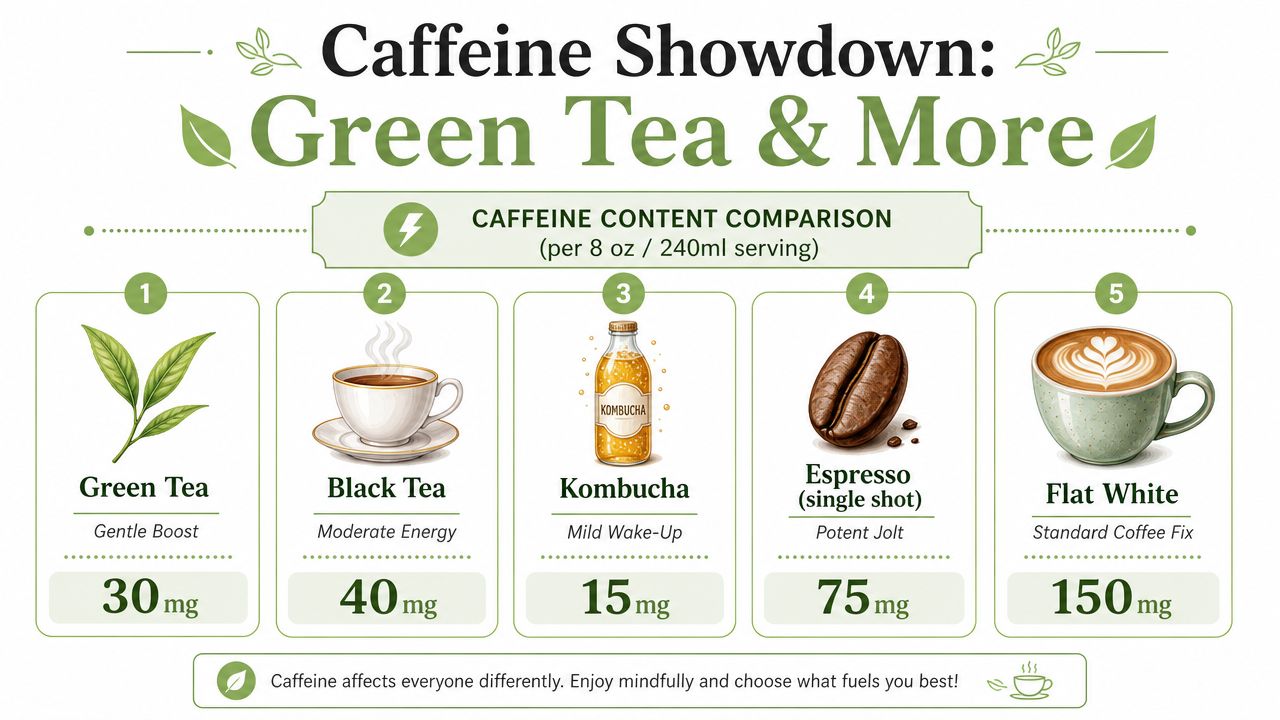
If you're curious about where fermented tea fits, our article on whether kombucha has caffeine adds more context.
It's not only about the number
Coffee tends to announce itself quickly. Green tea often arrives more gently. Many tea drinkers describe the effect as steadier and easier to live with.
That difference is one reason matcha has become so popular with people who want clean energy for work, study, or training. Tea naturally contains L-theanine alongside caffeine, and that pairing is widely valued for a calmer style of alertness.
A practical way to think about the line-up
- Green tea suits people who want a lighter lift.
- Black tea usually sits a step above standard green tea.
- Matcha can move much closer to coffee territory than many people expect.
- Kombucha is often the softer option when you want refreshment with less intensity.
- Coffee remains the obvious pick for those chasing a stronger jolt.
A flat white, a bowl of matcha, and a bottle of kombucha don't just taste different. They shape the pace of your day differently too.
For cafés, this comparison is useful on menus. “Green tea” and “matcha” shouldn't be treated as interchangeable. One is usually a mild brewed drink. The other can be a more functional, focus-oriented option.
Choosing the Right Green Tea for Your Day
Once you understand the range, the best tea becomes a timing question.
If you want a sharper start, organic matcha tea provides approximately double the caffeine content of a standard brewed green tea and half the caffeine of an espresso, while offering a more sustained lift due to L-Theanine, as noted on Pep Tea. That makes matcha a strong fit for morning concentration, a pre-work session, or the part of the day when coffee feels too abrupt.
Match your tea to the moment
- For focused mornings choose matcha when you want something more substantial than a standard leaf tea.
- For a balanced afternoon go with a classic brewed green tea such as sencha if you want a gentler rise.
- For evenings keep the brew light, shorten the steep, or switch to a lower-caffeine option.
- For café orders ask what kind of green tea is being used. That one question can save a surprise.
A note for café owners
This is one of the easiest menu education wins. Customers already understand coffee strength because cafés talk about single shots, double shots, and roast style. Tea deserves the same clarity.
A menu line like “ceremonial matcha latte” tells only part of the story. It helps to train staff to explain that matcha is different from standard brewed green tea because the whole leaf is consumed. That turns confusion into confidence, and it helps customers choose a drink that suits the time of day.
Keep the choice practical
You don't need to memorise every tea cultivar or brewing chart. A simple framework works well:
| Goal | Better fit | Why it helps |
|---|---|---|
| Morning energy | Matcha | Stronger, steadier feel |
| Midday reset | Sencha or standard green tea | Lighter lift |
| Late-day sipping | Lower-caffeine brew | Less chance of overdoing it |
If you want one product example, Pep Tea organic matcha is a relevant option for people specifically looking for a stronger green tea format rather than a mild brewed cup. The useful distinction isn't “good” versus “bad”. It's brewed leaf versus powdered leaf, and gentle lift versus more pronounced energy.
The best green tea for you isn't the strongest one. It's the one that fits your day, your sensitivity, and the kind of clarity you want from your cuppa.
If you're exploring cleaner ways to support focus, energy, and daily wellness, Pep Tea is a great place to start. You can browse our organic matcha range, learn more about sugar-free organic kombucha brewed in the Hunter Valley, NSW, and find practical guides for choosing the right tea for your routine.