
Tag: weight loss tea
Best Decaf Green Tea for Weight Loss: A 2026 AU Guide
Most advice on the best decaf green tea for weight loss starts in the wrong place. It treats caffeine as the star, then assumes decaf must be a watered-down compromise.
That misses the actual story.
Green tea's weight management potential isn't only about stimulation. The bigger players are catechins, especially EGCG, which are natural plant compounds found in the leaf itself. If those compounds are preserved during decaffeination, decaf green tea can still be a useful part of a sensible routine built around eating well, moving regularly, and sleeping properly.
That matters for a lot of Australians. Some people want a warm evening drink without the buzz. Others love green tea but don't love feeling wired. And many are looking for something more realistic than another “fat-burning” product with flashy promises.
A better approach is to treat decaf green tea as a supportive tool, not a miracle. It can fit neatly alongside a solid eating pattern, daily activity, and smarter habits like replacing sugary drinks. If you're building those foundations, practical resources such as Zing Coach's nutrition advice can help you think beyond single ingredients and focus on the bigger picture. If you'd like a broader look at tea options, this guide to green tea for weight loss is also useful.
Rethinking Decaf Green Tea for Your Wellness Goals
If you've ever thought, “Surely decaf green tea can't do much,” you're not alone. People often connect green tea with energy, and energy with caffeine. So once the caffeine goes, they assume the useful part has gone too.
That's where a lot of confusion starts.
Why decaf isn't automatically “less useful”
A high-quality decaf green tea still contains catechins, the antioxidant compounds that researchers keep studying in relation to metabolism and fat use during activity. In plain English, that means decaf may still help your body use fuel well, especially when your routine already includes exercise.
The key phrase is high-quality. Not every decaf green tea is processed the same way, and not every product keeps the same amount of those beneficial compounds.
Decaf works best when you stop asking, “Is it as strong as coffee?” and start asking, “Does it still keep the useful tea compounds?”
Who often benefits most from decaf
Decaf green tea makes particular sense for people who:
- Feel shaky with caffeine: Some people tolerate coffee poorly but still enjoy the ritual of tea.
- Want an evening option: A calming cup after dinner is easier to stick with than a drink that disrupts sleep.
- Prefer steady habits over extremes: Weight management usually responds better to routines than to all-or-nothing products.
This is why the best decaf green tea for weight loss isn't the strongest-tasting tea or the one with the flashiest packaging. It's the one that keeps the leaf's useful compounds intact and fits your life well enough that you'll drink it consistently.
How Catechins in Decaf Green Tea Aid Weight Management
The simplest way to understand green tea is this. Caffeine can contribute, but catechins do a lot of the heavy lifting. That's especially important when we're talking about decaf.
Catechins are natural polyphenols in green tea. EGCG is the one people talk about most because it's closely tied to green tea's metabolic effects. When people say green tea may support weight management, this is usually the part they mean.
What the research actually suggests
One of the clearest findings comes from a Penn State research summary. In a 16-week study, mice on a high-fat diet that consumed decaffeinated green tea extract combined with regular exercise had an average body mass reduction of 27.1 percent and an average abdominal fat mass reduction of 36.6 percent. The same report notes a 17 percent reduction in fasting blood glucose and a 65 percent decrease in plasma insulin levels.
That doesn't mean a cup of decaf green tea will create the same result in humans. It does mean the idea that decaf is “inactive” doesn't hold up well. In that study, decaffeinated green tea extract looked particularly effective when paired with exercise.
That pairing matters more than is generally understood.
What “fat oxidation” means in normal language
You'll sometimes see researchers talk about substrate utilisation or fat oxidation. Those phrases sound technical, but the idea is straightforward. Your body can draw energy from different sources. During activity, green tea catechins may help shift some of that energy use more towards fat.
Let's frame it this way:
- At rest and in movement, your body chooses fuel
- Training influences that choice
- Catechins may support a more efficient fuel mix during exercise
That's why decaf green tea isn't best viewed as a stand-alone slimming drink. It's better understood as a beverage that may support the work you're already doing.
Practical rule: If your routine includes walking, gym sessions, cycling, or strength training, decaf green tea makes more sense than if you expect it to do the whole job alone.
Why this matters in real life
For a health-conscious Australian trying to lose weight without overloading on stimulants, this is good news. You don't need to choose between “useful” and “decaf”. You need to choose a decaf green tea that still contains the compounds you want.
A lot of readers also care about the broader wellness picture, especially in life stages where hormones, stress, sleep, and appetite all interact. If that's relevant to you, this article on best probiotic for menopause weight loss offers another angle on supportive habits beyond caffeine-heavy products. Some people also compare brewed tea with concentrated formats, and this overview of green tea capsules for weight loss can help clarify the difference.
The takeaway from the science
Here's the useful interpretation, without hype:
| What people assume | What the evidence suggests |
|---|---|
| Decaf means no metabolic value | Decaf can still retain meaningful catechins |
| Caffeine is the whole reason green tea helps | Catechins remain central, especially with activity |
| Tea alone should drive visible weight loss | Results are more plausible when tea supports exercise and diet |
If you remember one thing, make it this. The best decaf green tea for weight loss is the one that preserves catechins and fits into an active lifestyle.
A Buyer's Guide to High-Quality Decaf Green Tea
Walking into a supermarket or browsing online can make decaf green tea look simple. It isn't. Two products can both say “decaf green tea” and still be very different in quality.
The biggest difference often sits behind the label. It's the decaffeination method.
Why the decaffeination method matters
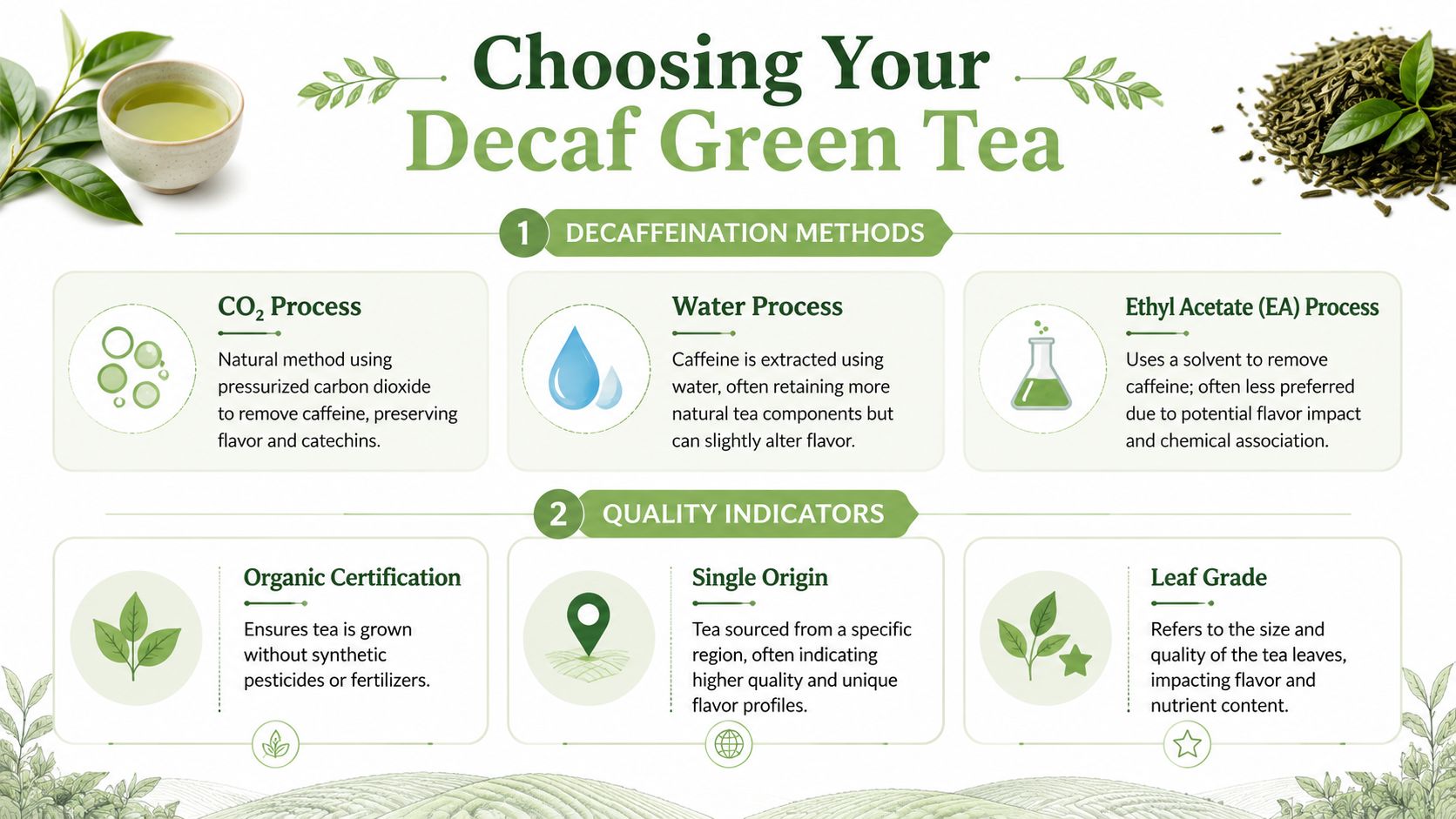
A decaf tea can only support your goals if the useful compounds survive processing. According to this decaf green tea analysis, the CO2 decaffeination process preserves 30 to 50 mg of EGCG per serving, while alternative methods have significantly lower retention. The same source notes that daily consumption of tea with high catechin levels, at around 690 mg, can measurably reduce body fat within 12 weeks, and that supplementation with 400 mg of EGCG from decaf extract significantly improves fat oxidation during exercise.
You don't need to become a lab technician to use that information well. You just need to know what to look for.
A simple comparison when you shop
| Method | What to know | Why it matters |
|---|---|---|
| CO2 decaffeination | Often preferred for preserving catechins | Better fit if you care about EGCG retention |
| Water process | Can be gentler than some alternatives | May still be a reasonable option, depending on the tea |
| Ethyl acetate process | Often less appealing to careful shoppers | People may avoid it because of flavour changes and processing concerns |
What to check on the label
Some brands tell you a lot. Others tell you almost nothing. If a product is vague about everything, be cautious.
Look for these quality signals:
- Decaffeination method listed: If the brand proudly says CO2 decaf, that's a good sign.
- Organic certification: This helps if you want a cleaner product and a more transparent supply chain.
- Leaf quality: Whole leaf or better leaf grade usually signals more care than dusty, flat-tasting tea bags.
- Origin information: Single-origin or clearly named growing region can indicate stronger quality control.
- Catechin or EGCG details: Not every label provides this, but if it does, that transparency is useful.
Cheap decaf green tea often tastes flat for a reason. It may have lost much of what made the original leaf special.
What “best” really means
The best decaf green tea for weight loss usually isn't the most aggressively marketed product. It's the one that gets four basics right:
- Preserves catechins well
- Tastes pleasant enough to drink regularly
- Comes from a transparent producer
- Fits the way you live
That last point matters. A beautiful loose-leaf tea isn't “best” if you'll never brew it. A practical tea bag option isn't “worse” if it helps you build a daily habit.
A fast buying checklist
If you want a quick shortcut, use this:
- Choose CO2 decaf when possible
- Pick organic if purity matters to you
- Prefer brands that explain their sourcing
- Don't confuse “decaf” with “benefit-free”
- Avoid products that hide every meaningful detail
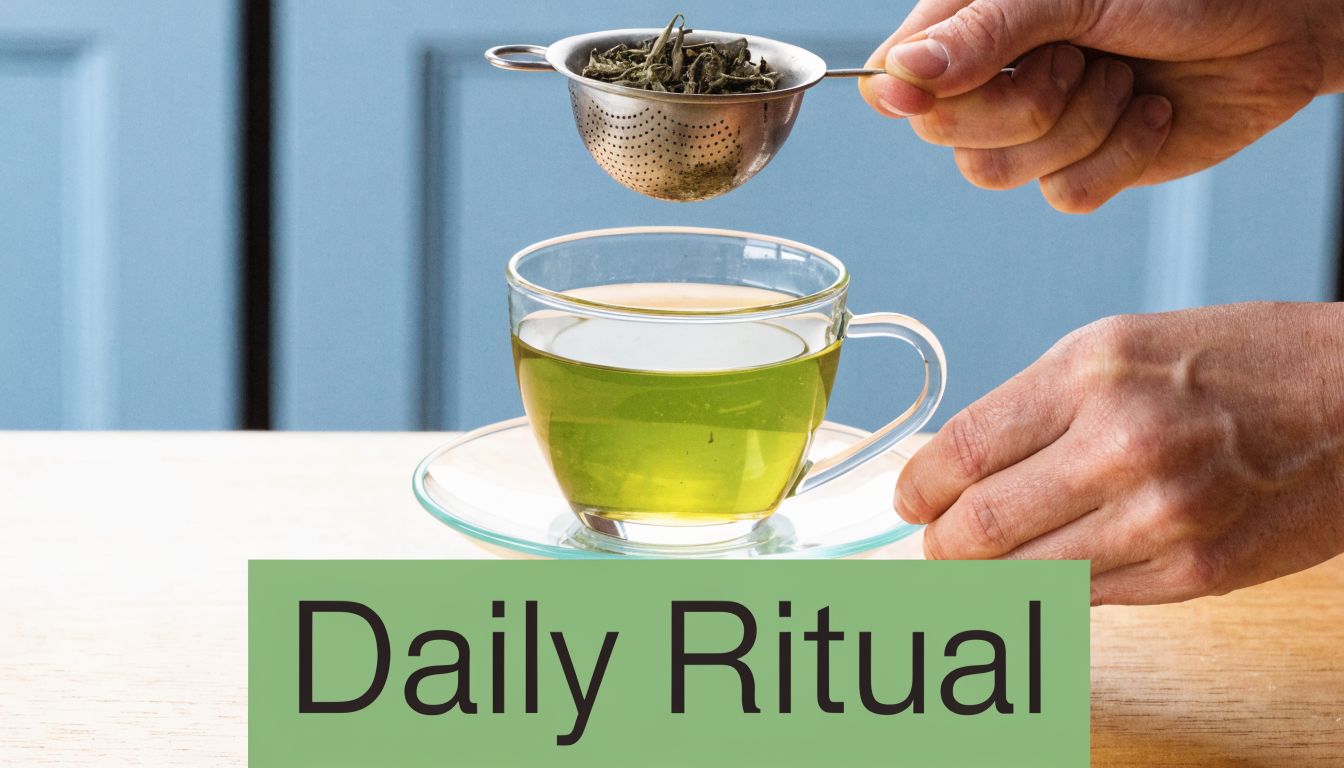
Your Daily Ritual for Decaf Green Tea Wellness
A good tea routine should feel easy. If it's fussy, expensive, or hard to repeat, it is often abandoned within a week.
The most effective decaf green tea habit is the one you can keep. For many people, that means one cup earlier in the day and another later on, especially if they want the comfort of tea without a late caffeine hit.
Why timing matters for some Australians
For the 28% of Australians following low-carb diets, zero-calorie decaf green tea can fit neatly into that style of eating, and it's especially useful in the evening because caffeine sensitivity affects up to 35% of the Australian population, according to this overview on decaf green tea and low-carb eating. The same source notes that decaf green tea tends to show minimal results alone, but its catechins work better alongside diet and exercise.
That gives us a helpful framework. Don't treat tea as the plan. Treat it as the drink that supports the plan.
How to brew it so it actually tastes good
A lot of people think they dislike green tea when they've really just had it brewed badly. Water that's too hot can make it bitter and harsh.
Try this instead:
- For loose-leaf decaf green tea: Use hot water, not boiling. Steep until the flavour is fresh and grassy, not overly sharp.
- For tea bags: Give the leaves room if you can. A cramped bag in scalding water often tastes dull.
- For a smoother cup: Let the kettle cool slightly before pouring.
A practical daily rhythm
Different people prefer different timings, but this pattern works well:
| Time | How it can fit |
|---|---|
| Morning | Replace a sugary breakfast drink or pair it with a balanced meal |
| Before activity | Use it as part of your pre-walk or pre-gym ritual |
| Afternoon | Swap it in when you'd usually reach for biscuits and another coffee |
| Evening | Keep the tea ritual without the stimulant effect |
If you're trying to lose weight, consistency beats intensity. A simple cup you enjoy every day is more useful than a “perfect” routine you follow twice.
Two easy ways to use it beyond a plain cup
You don't need to drink decaf green tea the same way every day.
1. Iced citrus decaf green tea
Brew your tea, cool it, pour over ice, and add lemon. Keep it unsweetened if your goal is weight management.
2. Warm decaf matcha-style latte
Whisk decaf green tea powder or a decaf matcha-style option with warm milk or an unsweetened milk alternative. This works well after dinner when you want something comforting.
For a quick brewing visual, this simple walkthrough can help:
Small habits that make tea more useful
The best decaf green tea for weight loss becomes more helpful when it replaces less helpful choices.
Some examples:
- Swap soft drink for tea at lunch: That change can reduce unnecessary sugar in a very practical way.
- Pair tea with movement: A cup before a walk creates a habit loop that's easy to repeat.
- Use tea to close the kitchen at night: Many people snack less once they've made a warm drink and settled in.
None of that is magic. It's habit design. And habit design is often what turns a nice idea into visible progress.
Expanding Your Routine with Matcha and Kombucha
If you enjoy green tea but want more variety, it helps to think in terms of a wellness routine, not a single “weight loss tea”.
Matcha belongs in that conversation because it gives you the whole leaf in powdered form. That matters when you care about the compounds inside the tea rather than just the ritual of sipping it. Research discussed in this paper on decaffeinated green tea extract and exercise metabolism notes that the catechins in green tea work together with L-theanine to support cognitive focus while maintaining metabolic function. The same source describes enhanced fat-burning efficiency over 8 to 12 weeks when combined with fitness routines, without the jitteriness associated with high-caffeine stimulants.
Why matcha feels different
Matcha often feels smoother and more rounded than standard green tea because you're getting a more concentrated tea experience. It also tends to attract people who want focus and ritual in the same cup.
That doesn't mean everyone needs matcha. It does mean matcha can be a smart extension of your tea routine if you want something a bit more substantial than a bagged decaf brew.
Where kombucha fits
Kombucha serves a different role. It's not a substitute for decaf green tea, and it's best not to force it into the same box. Instead, kombucha can complement a tea-based routine as a refreshing, lower-sugar functional drink that many people enjoy as an alternative to soft drink or alcohol.
If you're curious about that side of the wellness picture, this guide to kombucha benefits is a helpful place to start.
A thoughtful routine can include more than one drink. Tea may support your active lifestyle, while kombucha can help make healthier drink choices easier to stick with.
A sensible way to combine them
A simple pattern could look like this:
- Morning or early day: Matcha when you want a richer tea ritual
- Afternoon or evening: Decaf green tea when you want calm and consistency
- Social or meal moments: Kombucha as a flavourful alternative to sugary drinks
That kind of setup feels balanced. It also keeps you away from the trap of chasing one product to solve everything.
Your Questions Answered and Path Forward
A few practical questions come up again and again.
Is it better before or after exercise
Before often makes more sense if tea helps cue your workout or walk. The bigger idea is consistency. If drinking it after exercise helps you stick to the habit, that's still useful.
Do tea bags work as well as loose leaf
They can, but quality varies a lot. A good tea bag is more practical than loose leaf you never use. If the brand shares details about sourcing and decaffeination, that's a better sign than packaging alone.
Can I drink it at night
For many people, yes. That's one of decaf's biggest advantages. If you're sensitive to caffeine, decaf green tea can let you keep the ritual without the wired feeling that spoils sleep.
Should I build my whole weight loss plan around tea
No. Tea is supportive, not central. Your eating pattern, activity, recovery, and sleep still do the main work. If you want help organising meals around those basics, a tool like AI Meal Planner can be useful for turning good intentions into something more structured.
Here's the honest conclusion. The best decaf green tea for weight loss is high-quality decaf green tea that preserves catechins, tastes good enough to drink regularly, and supports a healthy routine you can maintain. It isn't a shortcut. It is a smart option for people who want green tea's benefits without relying on caffeine.
If you'd like to explore premium organic tea options for your own routine, Pep Tea offers Australian access to high-quality matcha and sugar-free organic kombucha that fit naturally into a thoughtful, everyday wellness lifestyle.