
Tag: buy matcha perth
Best Matcha Powder Perth: Where to Buy and How to Use It

You’ve probably seen it already. A bright green iced matcha latte on a café table in Fremantle, a neat little tin on a shelf in Subiaco, or a friend in Perth whisking green powder in a bowl and talking about “calm energy” like they’ve joined a secret club.
Fair question. What is matcha, and where do you find good matcha powder in Perth without wasting money on dull, bitter powder that tastes like lawn clippings?
That confusion is normal. Matcha looks simple, but there’s a big difference between average supermarket powder and a beautifully made Japanese matcha that’s smooth, sweet, fresh, and easy to drink. Once you know what to look for, the whole thing gets much less intimidating.
Matcha also isn’t some passing café fad. In Australia, it’s growing fast. The Australian Matcha Tea Market is projected to expand from USD 340 million in 2025 to USD 790 million by 2031, with a compound annual growth rate of 14.8%, according to Mobility Foresights’ Australia matcha tea market outlook. In a city like Perth, that makes sense. We’ve got a strong café culture, a growing interest in functional drinks, and plenty of people looking for something more mindful than another over-extracted coffee.
The easiest way to understand matcha is this. Regular green tea is like making a broth from leaves and then throwing the leaves away. Matcha is different because you drink the whole leaf, finely ground into powder. That’s why quality matters so much. If the leaf is excellent, the cup is excellent. If the leaf is poor, there’s nowhere to hide.
Introduction
Perth is a great place to get into matcha because you can explore it in a few different ways. You can try a latte at a good café, buy a tin from a Japanese grocer or health store, or order from an Australian online supplier and make it at home. Each option suits a different kind of drinker.
For beginners, the biggest hurdle is usually not taste. It’s vocabulary. People throw around terms like ceremonial grade, culinary grade, Uji, stone-ground, organic, umami, and L-theanine as if everyone already knows what they mean.
You don’t need to memorise tea jargon to buy well. You just need a few practical filters.
What most Perth buyers want to know
Some people want a matcha that tastes good with just water. Others only want something for iced lattes, smoothies, or baking. Café owners usually need consistency, reliable supply, and a powder that performs well during a busy service.
Those are different needs, and they call for different products.
Here’s the simple version:
- If you want to sip it straight, look for ceremonial grade.
- If you’re making lattes or baking, culinary grade often makes more sense.
- If freshness matters to you, storage, packaging, and turnover matter almost as much as the tea itself.
- If you live in Perth, climate matters too. Heat and humidity can flatten matcha faster than commonly understood.
Matcha becomes much easier to enjoy when you stop asking for the “best” matcha and start asking for the right matcha for how you’ll use it.
Why people keep coming back to it
A good matcha has a very particular personality. It can taste creamy, grassy, savoury, sweet, and softly bitter all at once. It feels a bit ritualistic without being fussy. And for a lot of people, making it becomes part of the appeal.
That’s why matcha powder perth searches keep growing. People aren’t just looking for a product. They’re looking for a better way to buy, brew, and enjoy it locally.
What Is Matcha and How Is It Made
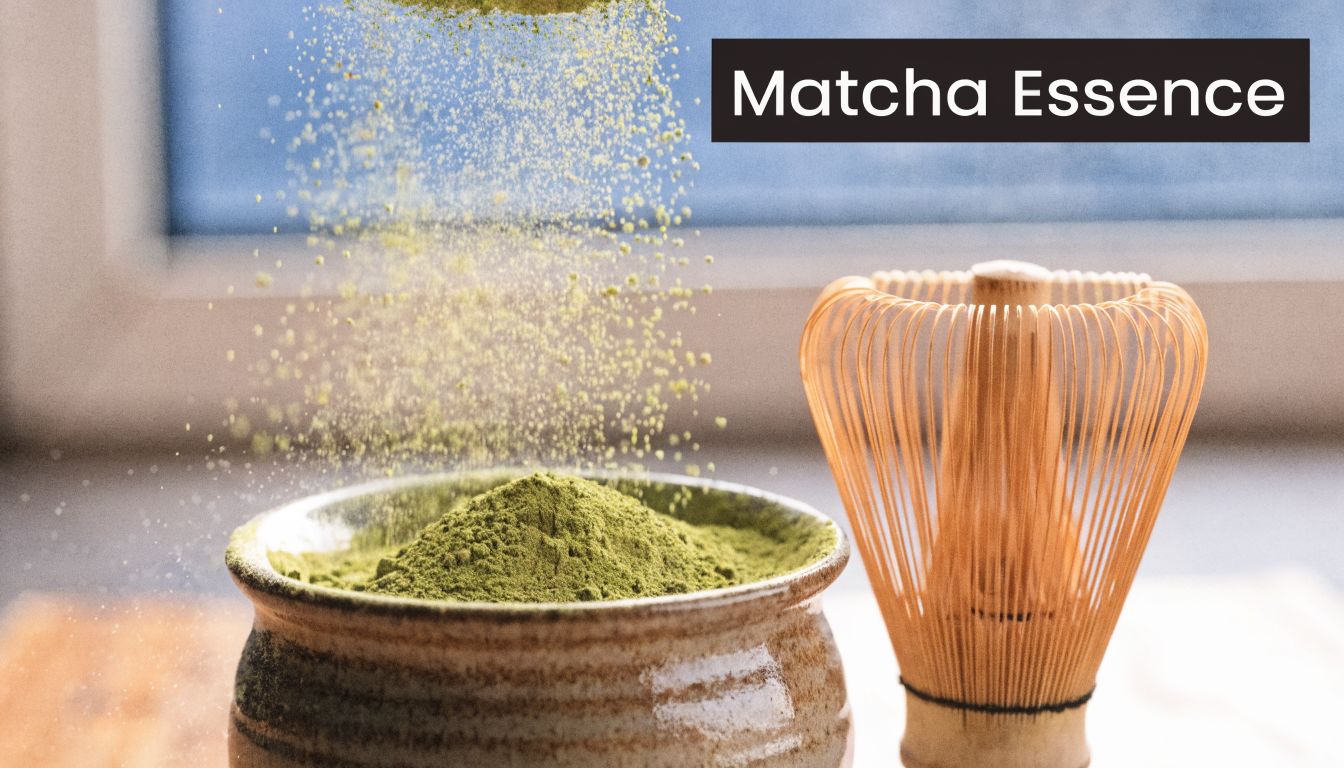
Matcha is a finely ground green tea powder made from specially grown tea leaves. It isn’t the same as standard green tea bags, and it isn’t just green tea that’s been crushed up. The growing and processing are what make it different.
Before harvest, the tea plants used for matcha are shaded. That reduced light changes the leaf. It helps build the vivid green colour people associate with premium matcha and contributes to the soft, savoury depth that good matcha lovers chase.
If you want a more detailed look at the traditional production steps, Pep Tea has a useful guide on how matcha tea is made.
Why matcha tastes different from regular green tea
With standard green tea, you steep the leaves in water and remove them. With matcha, the leaf is ground into powder and whisked directly into the bowl, so you consume the whole thing.
A simple way to think about it is this:
| Drink type | What you consume | What it feels like |
|---|---|---|
| Regular green tea | Water infused by the leaf | Lighter, more delicate |
| Matcha | The actual powdered leaf in suspension | Richer, fuller, more intense |
That’s why matcha has more body in the mouth. It can feel almost creamy even without milk, especially when it’s whisked properly.
What happens after harvesting
After the leaves are picked, they’re steamed, dried, and processed into tencha before being ground into a very fine powder. That fine grind is a huge part of the drinking experience. Better matcha feels soft and silky. Lower-grade powder can taste rough, settle badly, and look flat in colour.
This is also where grade starts to matter in real life, not just on a label.
Good matcha should look alive. If the powder looks tired in the tin, it’ll usually taste tired in the cup.
Ceremonial and culinary start with different goals
People sometimes assume ceremonial grade is always “better” and culinary grade is always “worse”. That’s too simplistic. They’re made for different jobs.
- Ceremonial grade is usually the better fit when you want to drink matcha with water and appreciate its aroma, sweetness, and umami.
- Culinary grade is usually chosen for recipes where milk, fruit, sweeteners, or baking ingredients share the stage.
- Your own taste matters more than prestige. If you only drink iced oat milk matcha, you may not need the gentlest ceremonial powder every day.
A lot of disappointment comes from mismatch, not poor tea. Someone buys ceremonial grade, buries it under syrups and ice, and wonders why it felt expensive. Someone else buys a cooking-grade powder, drinks it straight, and decides matcha isn’t for them.
Choosing Your Matcha Ceremonial vs Culinary Grades
The quickest way to buy better matcha in Perth is to understand grade by use, not by hype.
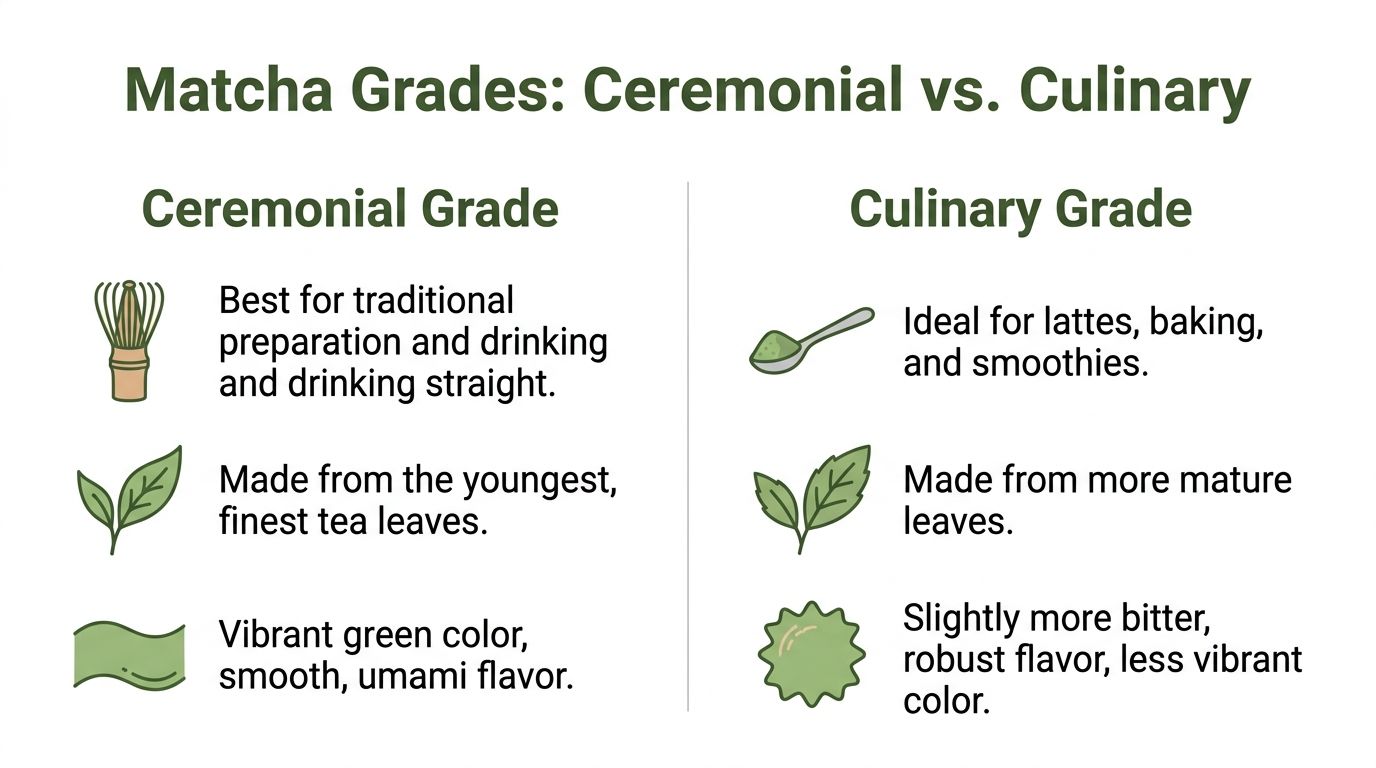
If you want a fuller primer on labels and classifications, this guide to different grades of matcha is a helpful starting point.
Ceremonial grade for drinking
Ceremonial grade is the one people usually picture when they imagine traditional Japanese tea preparation. It’s made to be whisked with water and enjoyed on its own.
You’ll usually notice:
- Brighter colour that leans vivid green rather than olive or khaki
- Softer flavour with sweetness, umami, and only gentle bitterness
- Finer texture that disperses more smoothly
- Cleaner finish that makes straight drinking enjoyable
This is the grade for the person who wants a morning bowl of matcha instead of a latte, or who wants to taste the tea itself rather than the milk around it.
Culinary grade for mixing
Culinary grade has a stronger, punchier profile. That’s not a flaw. It’s useful. In a latte, smoothie, muffin, pancake batter, or protein bowl, a more intense matcha can still come through.
It usually has:
- A firmer bitterness
- A less delicate aroma
- A darker or duller green tone
- A profile that stands up better in recipes
For many Perth households, culinary grade is the everyday workhorse. It’s practical, versatile, and often the better pick if your matcha mostly ends up over ice with milk.
A side by side buying guide
| Feature | Ceremonial grade | Culinary grade |
|---|---|---|
| Best use | Straight drinking, traditional whisking | Lattes, smoothies, baking |
| Colour | Vibrant green | Less vivid green |
| Taste | Smooth, umami, mild sweetness | Stronger, more robust, more bitter |
| Texture | Very fine and silky | Often slightly less refined |
| Who it suits | Tea drinkers who want the leaf to shine | Home cooks and latte lovers |
The texture clue most people miss
One of the most useful quality clues is how finely the powder has been milled. According to Maison Matcha’s ceremonial matcha guide, premium ceremonial matcha’s 800-mesh fineness with a 10 to 20µm particle size supports near-total solubility in lattes, while 500-mesh culinary grades can lead to 30% sediment.
That matters because it changes the whole drinking experience. A smoother powder doesn’t just look prettier in the cup. It feels better, whisks better, and settles less.
Buying rule: If you hate gritty matcha, don’t just ask what grade it is. Ask how fine it is.
How to choose without overthinking it
If you’re standing in a shop or comparing tins online, use this simple checklist.
Start with your main use
Be honest. If you’re making iced lattes every morning, buy for that.Look at colour before claims
A premium-looking label can still hide dull powder.Read the origin
Japanese matcha is often what buyers seek for a more refined cup.Think about value, not status
The “best” matcha is the one that suits your habit and budget.
A practical Perth example
Let’s say you drink one hot matcha on quiet mornings and make a few iced lattes through the week. You don’t need one tin to do everything perfectly.
Some people keep:
- One ceremonial tin for straight drinking
- One culinary tin for milk drinks and recipes
That approach is often more satisfying than trying to force one product into every role.
How to Spot Truly High-Quality Matcha Powder
You don’t need to be a tea master to judge matcha well. You just need to slow down and use your senses. When I’m helping someone choose matcha powder perth options, I tell them to ignore the marketing for a minute and look at what’s in front of them.
The first check is colour. Premium matcha should look fresh and bright, not brownish, swampy, or yellow-green. A flat colour often points to age, lower-grade leaf, or poor storage.
The second check is aroma. Open a fresh tin and you want a smell that feels green, sweet, and clean. It might remind you of fresh-cut grass, spinach, steamed greens, or even a soft creamy note. If it smells dusty, stale, or oddly marine, it’s usually not a good sign.
What quality feels like in the hand and bowl
Texture tells you a lot. Fine matcha should feel almost cloud-like when handled carefully. It shouldn’t feel sandy or coarse.
When whisked, it should form a smooth liquid rather than a stubborn clumpy mess.
A quick sensory checklist helps:
- Colour check. Look for vibrant green rather than dull olive.
- Aroma check. Fresh, grassy, slightly sweet is good.
- Texture check. Silky and fine beats gritty every time.
- Taste check. You want balance. Some pleasant bitterness is fine, but harshness shouldn’t dominate.
Why storage quality matters in Perth
Perth’s climate can be rough on delicate powders, especially if the tin sits in warmth, light, or moisture. This is one of the reasons online buyers should care about packaging and freshness, not just origin.
According to the technical specifications in this organic matcha product document, high-quality matcha powder should have moisture of ≤7% and total ash of ≤8%. The same source notes that in humid conditions, moisture above 7% can accelerate catechin oxidation and reduce EGCg bioavailability by up to 30% within six months.
That sounds technical, but the practical takeaway is simple. Matcha hates heat, light, air, and humidity.
In Perth, a great matcha stored badly can become a disappointing matcha surprisingly quickly.
Buying in person versus buying online
In-store buying has one big advantage. You can sometimes inspect the tin, ask questions, and get a feel for the shop’s standards. That can be excellent in specialist tea shops and selected Japanese grocers.
The challenge is freshness. Shelf time isn’t always obvious, and broad retail environments aren’t always ideal for delicate tea.
Online buying can be the stronger option when the supplier specialises in matcha, turns stock over regularly, and packs it well. That gives you access to a wider range, clearer product detail, and often better insight into origin and grade. For Perth buyers, it also opens up Australian suppliers who focus specifically on organic tea rather than carrying matcha as an afterthought.
Signs that usually point to a poor buy
Not every disappointing matcha is fake. Sometimes it’s just the wrong product for the job. Still, a few warning signs come up again and again:
- No clear origin listed
- Very dull powder colour
- Unsealed or poorly packed product
- Vague claims with no real product detail
- A texture that settles heavily and tastes rough
When people say they “don’t like matcha”, they’ve often just had old or low-quality powder. Fresh, well-made matcha is a very different experience.
Your Local Guide to Buying Matcha Powder in Perth
If you want to buy matcha powder perth locals enjoy using, there are a few sensible paths. Each has strengths, and each suits a different kind of buyer.
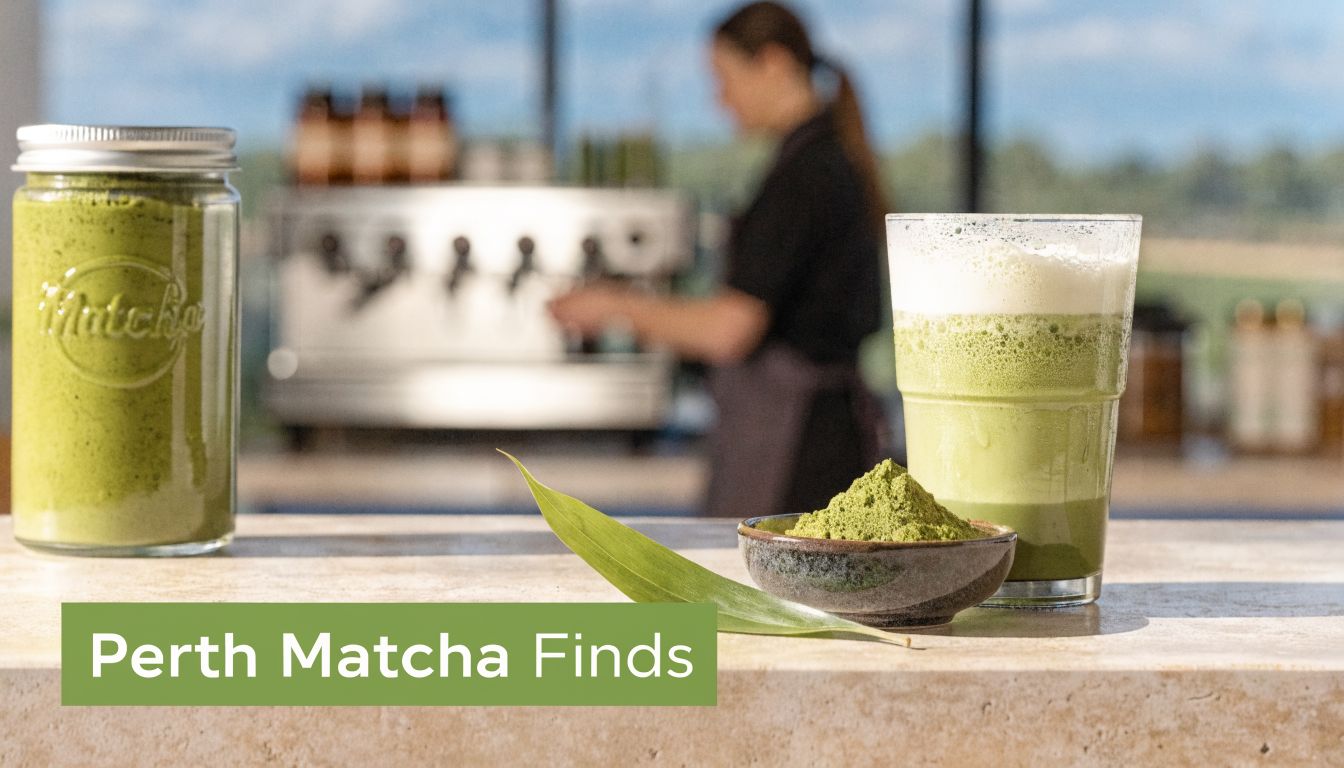
The good news is that access has improved. Australia’s matcha tea imports grew by 62.91% from 2023 to 2024, according to 6Wresearch’s Australia matcha tea market analysis. For Perth buyers, that helps support availability through specialty stores and online retailers serving WA.
Try it first at a good café
If you’re brand new to matcha, tasting a well-made café version can save you from buying blind. A solid matcha latte gives you a reference point for colour, aroma, and balance.
When you order one, pay attention to:
- Colour in the cup. It should look vibrant, not muddy.
- Flavour balance. Milk should soften the tea, not erase it.
- Sweetness level. If it’s extremely sweet, you may not be tasting the matcha clearly.
- Texture. A chalky or gritty latte usually points to poor whisking or lower powder quality.
This is especially useful if you’re unsure whether you enjoy matcha itself or only like sweetened café-style drinks.
Browse retail shelves with care
Health food stores, Japanese grocers, and premium supermarkets can all be worth checking. The benefit is convenience. You can grab a tin the same day and compare options on the shelf.
The downside is that shelf labels rarely tell the full story.
A few questions help:
| What to check | Why it matters |
|---|---|
| Origin listed clearly | Helps you understand what style you’re buying |
| Grade named clearly | Stops you using the wrong matcha for the wrong drink |
| Packaging sealed well | Freshness matters with matcha more than many teas |
| Storage conditions | Heat and light can flatten flavour over time |
Farmers markets and local makers
Markets can be fun if you enjoy discovery. You may come across wellness-focused stalls, Japanese pantry goods, or curated beverage products. Still, this route takes a bit more judgement because presentation and quality aren’t always the same thing.
If you buy from a market stall, ask direct questions about origin, grade, and how they recommend using it. A good seller should answer easily and specifically.
Why many Perth buyers end up ordering online
For a lot of people, online becomes the easiest long-term option. You can compare grades properly, read descriptions in detail, and keep a favourite on hand without driving all over the city.
Online also suits Perth’s pace. Once you know what you like, a repeat order is easier than hunting from suburb to suburb.
It’s especially helpful if you want:
- A specialist tea supplier rather than a general retailer
- Clear distinction between ceremonial and culinary options
- Better freshness practices and sealed packaging
- Consistent access for home use or café use
Easy ways to use matcha at home
You don’t need a full tea ceremony setup to enjoy matcha. Start with one recipe and make it part of your week.
Iced matcha latte for warm Perth days
You’ll need matcha, a splash of warm water, milk of your choice, and ice.
- Sift a little matcha into a cup or bowl.
- Add a small amount of warm water.
- Whisk until smooth.
- Fill a glass with ice and milk.
- Pour the whisked matcha over the top.
If you want sweetness, keep it light so you can still taste the tea.
A simple iced matcha latte is often the easiest gateway into matcha because it’s familiar, refreshing, and forgiving.
Matcha in breakfast and baking
Culinary matcha works well in smoothies, yoghurt, overnight oats, pancakes, muffins, and energy balls. It adds colour, a gentle earthy note, and a more grown-up flavour than standard sweet breakfast add-ins.
If the taste seems strong at first, reduce the amount and build up slowly. Matcha is one of those ingredients that rewards a light hand.
For Perth Cafés Sourcing Wholesale and Navigating Supply
Perth cafés don’t need another copy-and-paste menu item. They need drinks that fit how people order now. Matcha earns its place because it works across different customer habits. Hot, iced, dairy, oat, coconut, lightly sweetened, unsweetened, straight-up, or layered into a non-alcoholic menu.
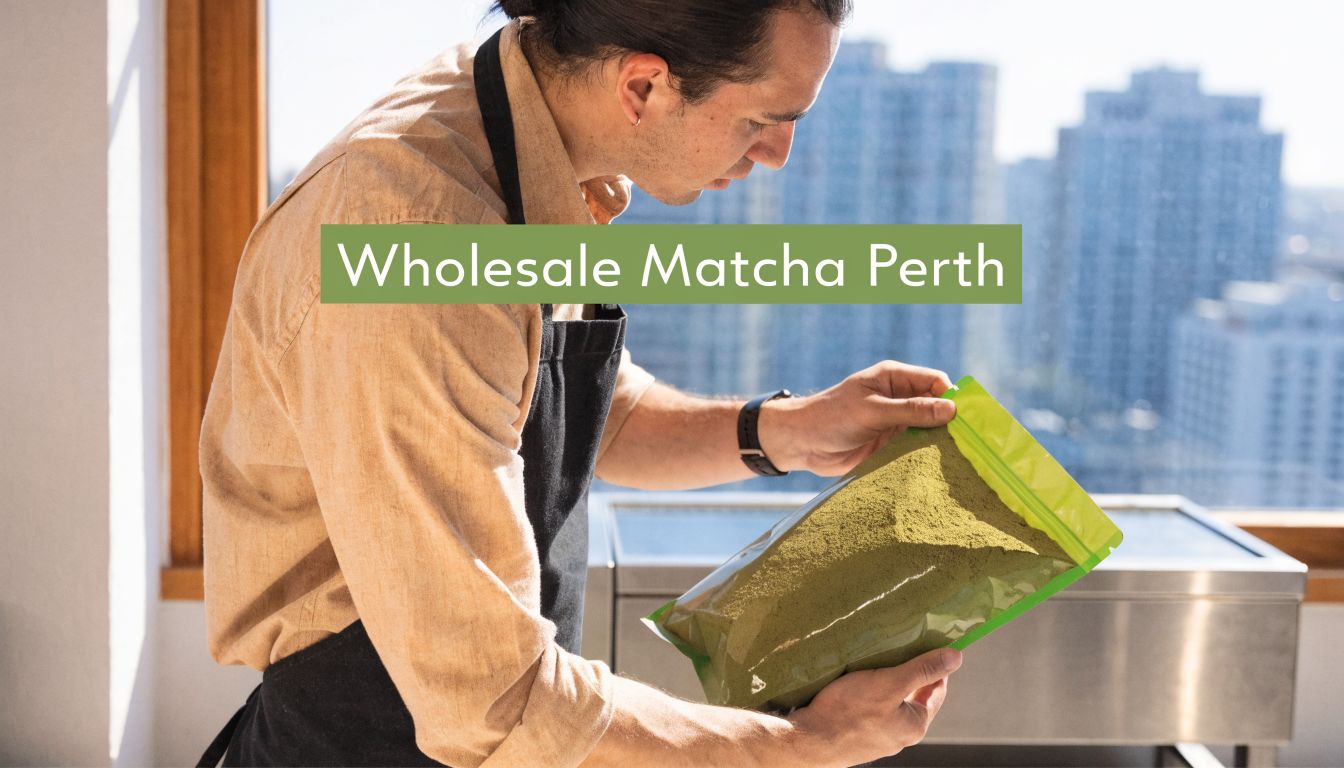
The bigger issue is supply. A café can build demand for a great matcha latte, then run into inconsistency if the product changes, disappears, or arrives in uneven quality.
According to ANZ Bluenotes’ reporting on the matcha shortage and supply chain pressure, the 2025 global matcha shortage slashed Japanese yields by 25% and doubled tencha prices, creating import instability for cafés that rely on overseas supply alone. That makes stable Australian supply relationships more valuable for Perth venues.
Why wholesale matcha needs a different buying mindset
Home buyers can experiment. Cafés can’t. A venue needs a powder that performs consistently in service, tastes the same from bag to bag, and suits the drinks that sell.
That usually means thinking about:
- Menu fit. Is your matcha for premium straight service, iced lattes, or both?
- Ease of prep. Can staff whisk it consistently during a rush?
- Milk compatibility. Does it hold its flavour in dairy and alt-milks?
- Supplier reliability. Can you reorder confidently without drama?
For venues building an all-day beverage program, matcha also works well alongside tea, coffee, and no-alcohol options.
Matcha and customer retention
A strong matcha offer can also support repeat visits. People who find a café that makes matcha properly often come back because they know it’s not guaranteed elsewhere.
That’s where broader retention thinking matters too. If you’re refining your drinks program, these Coffee Shop Loyalty Program strategies are useful for turning one-off beverage orders into regular habits.
What to ask a wholesale supplier
Before choosing a wholesale partner, café owners should ask practical questions, not just flavour questions.
Consider asking:
What grade is this designed for?
A latte powder and a straight-drinking powder are not the same thing.How is it packaged for freshness?
Matcha degrades if it’s handled casually.Can we order in bulk consistently?
Reliability matters more than novelty.What support do you offer for menu use?
Good suppliers should help with product fit, not just delivery.
If you’re comparing options for bar service, iced drinks, and kitchen use, Pep Tea offers a relevant bulk option in its bulk buy culinary grade organic matcha.
Cafés don’t just buy matcha. They buy consistency, speed of service, and confidence that the next delivery will taste like the last one.
Essential Tips for Storage and Common Perth FAQs
Once you’ve bought a good matcha, storage is what protects the experience. This part matters more in Perth than many people expect. Heat, light, air, and humidity all work against freshness.
The easiest rule is to treat matcha more like a delicate pantry ingredient than a hardy tea bag. Keep it sealed, keep it shaded, and don’t leave it sitting open while you decide what milk to use.
How to store matcha properly at home
A few habits make a big difference:
- Use an airtight container. Oxygen is not your friend once the package is open.
- Keep it away from light. Opaque packaging helps protect colour and flavour.
- Store it somewhere cool. Many people use the fridge, especially in warmer months.
- Avoid steam and condensation. Don’t open the tin right over a kettle or dishwasher.
If you refrigerate it, let the container sit closed for a moment before opening so you reduce condensation risk.
The clumping problem
Clumps don’t always mean bad matcha. Fine powders naturally compact a bit. The fix is simple.
Use a small sieve and sift the powder before whisking. That one step makes a noticeable difference to texture and saves you from chasing lumps around the bowl.
Sifting is the easiest upgrade most home matcha drinkers can make.
Common Perth questions
Is ceremonial grade worth it for a daily latte
Sometimes yes, often no. If milk is the main event, a good culinary grade usually gives better value. If you love a softer, more refined latte and you’re happy to pay for that nuance, ceremonial can still be lovely.
Where can I buy a bamboo whisk in Perth
Specialty Japanese tea shops and selected kitchenware stores are your best bet. Some online Australian tea retailers also stock whisks, bowls, and sifters. If you’re just getting started, don’t let gear delay you. You can begin with a small whisk or even a jar shake method while you decide whether matcha will become part of your routine.
How do I stop matcha tasting bitter
Usually one of three things has gone wrong. The water is too hot, the powder quality is too low for the way you’re drinking it, or you’ve used too much. Start gentler. Better matcha and cooler water usually solve a lot.
Can I use one matcha for everything
You can, but it’s a compromise. If you drink matcha straight and also bake with it, keeping separate ceremonial and culinary tins is often the more satisfying option.
Why does my matcha lose its bright green colour
That usually points to age, light exposure, heat, or air. Freshness isn’t just about taste. It shows up visually first.
The simplest way to get started
If you’re new, don’t buy a huge amount straight away. Start with a small quantity from a supplier that explains the grade clearly. Make one drink you know you’ll repeat, usually an iced latte or a simple hot whisked matcha.
That’s enough to build confidence. The ritual, the gear, and the more refined taste preferences can come later.
If you’re ready to try premium organic matcha from an Australian specialist, explore Pep Tea. You’ll find quality matcha options for straight drinking, lattes, and everyday use, plus a broader range of clean functional beverages made for Australian homes and cafés.