
Tag: matcha recipes baking healthy
8 Matcha Recipes Baking Healthy Bakers Will Love

Healthy matcha baking doesn't have to mean dry muffins, bland biscuits or a complicated pantry overhaul. Culinary-grade organic matcha brings vivid colour, earthy umami and a gentle tea character to baked and no-bake treats, so you can often reduce some of the sugar used only to create flavour. The result can be a soft lunchbox muffin, a portable oat bar, a celebration dessert or a comforting loaf, provided you judge the whole recipe rather than one fashionable ingredient.
This roundup brings together eight matcha recipes for healthy-minded baking, including grain-free cookies, dark chocolate brownies, cheesecake, bliss balls and chia muffins. Each one includes a practical texture tip, realistic substitutions and a reminder that “healthy” depends on the complete ingredient list and serving size. Matcha contains caffeine, too, so it isn't automatically suitable for everyone or caffeine-free because it's baked.
Pep Tea's organic culinary-grade matcha is the natural choice for recipes where tea flavour needs to stand up to flour, chocolate, fruit or dairy. Ceremonial-grade matcha is generally better reserved for whisking and drinking, while culinary grade suits cooking. If you're comparing options, Saporia's Clearspring matcha selection provides another useful reference point. The notes below cover sifting, dissolving, lowering added sugar, gluten-free swaps and keeping portions realistic.
1. Matcha Almond Flour Cookies with Coconut Oil
These delicate cookies pair organic culinary-grade matcha with almond flour and coconut oil for a naturally grain-free bake. Almond flour gives the dough a tender, slightly nutty texture, while matcha supplies colour and depth so the recipe doesn't need to rely entirely on sweetness for interest.
They're a useful option for gluten-free households, although almond flour isn't suitable for people with nut allergies and “gluten-free” doesn't automatically mean low in energy or sugar. Keep the sweetener modest, and let a pinch of sea salt sharpen the matcha's earthy character.
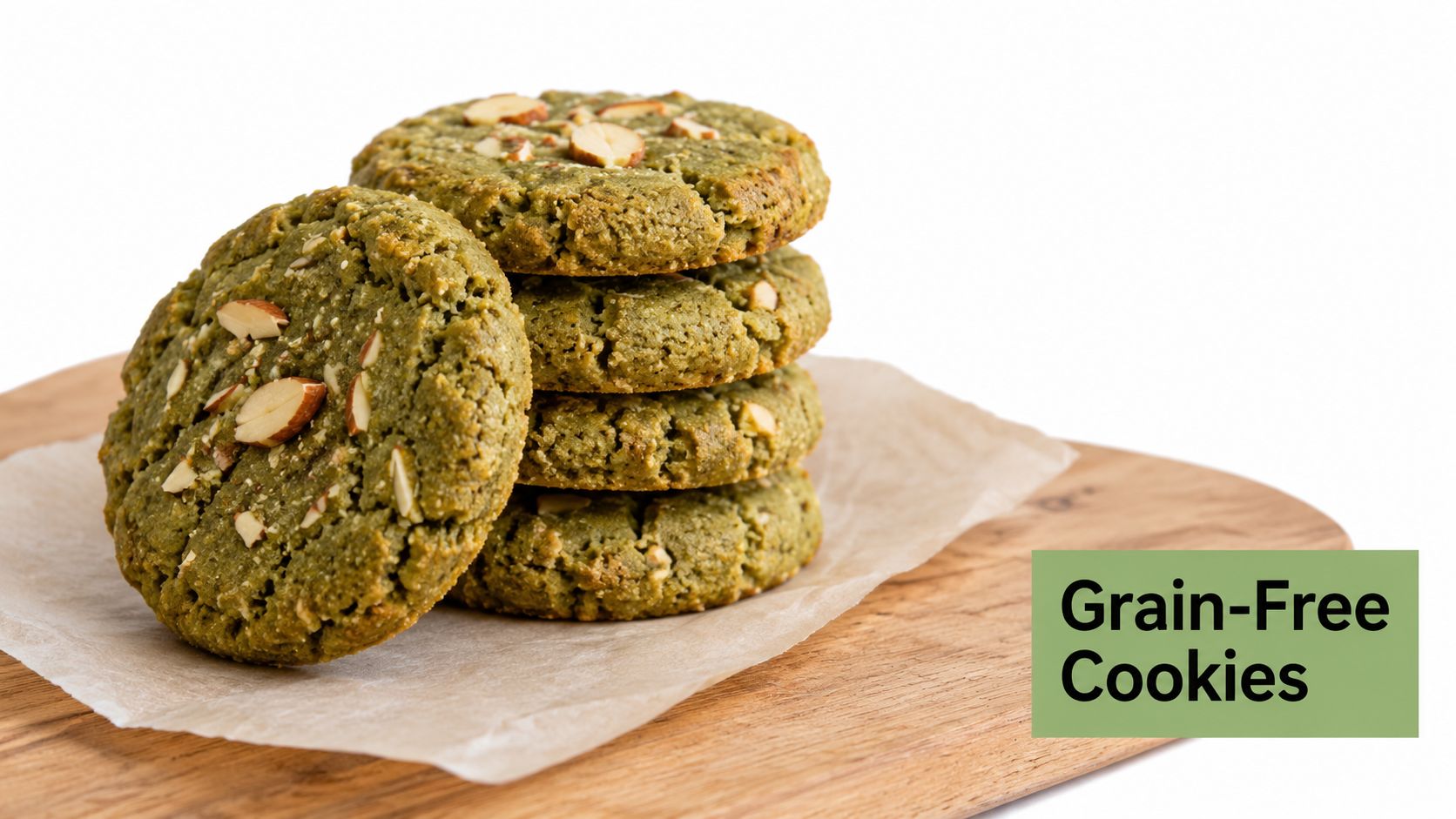
Recipe card
- Base: Almond flour, coconut oil, culinary-grade matcha, egg or suitable binder, a restrained sweetener and sea salt.
- Preparation: Sift the matcha before mixing it through the dough. Chill the dough for 30 minutes so the cookies hold their shape.
- Baking: Bake at 160–170°C, watching for set edges and soft centres.
- Finish: Add sliced almonds or a light dusting of matcha after cooling.
Practical rule: Sifting matters more with almond flour because small matcha pockets can taste sharply bitter in an otherwise mild cookie.
Serve one with an unsweetened matcha latte at home, or offer the cookies as a small café accompaniment. Coconut oil contributes fat, and almond flour contributes energy, so describe these as lower-sugar cookies, not unlimited snacks. For a nut-free version, use a tested seed-based flour blend rather than swapping ingredients by guesswork, because the dough's structure may change.
2. Matcha Green Tea Protein Brownies with Dark Chocolate
Matcha can make a dark chocolate brownie taste more layered, but more powder is not always better. Both ingredients bring bitterness and roasted depth, so the goal is balance. Dark chocolate supplies a rich base, while a modest amount of matcha adds a lingering tea note without turning the brownie harsh.
Protein powder changes the batter's structure. Plant-based varieties absorb liquid differently, much like adding extra flour, so check the mixture before baking. It should look thick and glossy, not stiff or crumbly. If the batter feels dry, a small adjustment to the liquid or oil may help, depending on the powder's instructions.
Recipe card
- Core ingredients: Dark chocolate, plant-based protein powder, flour or a suitable alternative, matcha, eggs or a plant-based binder, oil and a modest sweetener.
- Matcha paste: Whisk the powder with hot water at 60°C before mixing it into the batter. This helps distribute the colour and reduces dry pockets.
- Chocolate base: Melt the chocolate gently over a water bath so it does not seize.
- Mixing: Fold the ingredients together rather than beating them. Overmixing can make the brownies dense.
- Finish: Cool completely before slicing, then add a light matcha dusting if you want a brighter surface.
A gluten-free flour blend can replace standard flour, but choose one designed for baking and expect a slight texture change. If the dark chocolate tastes especially intense, a pinch of salt can sharpen its flavour without relying on extra sweetener.
The brownies firm as they rest. Warm slices may look underbaked and develop ragged edges, while cooled brownies cut more cleanly. For another practical combination of matcha and protein ingredients, try Pep Tea's matcha protein shake recipe.
Serve a small piece with water or an unsweetened drink. Matcha contains caffeine, and protein powder does not turn a brownie into automatic post-workout food. Consider the full recipe, portion and overall eating pattern when describing its wellness value.
3. Matcha Cream Cheese Cheesecake with Ginger Kombucha Drizzle
Matcha cheesecake works best when the tea remains recognisable without dominating the filling. Cream cheese rounds off matcha's bitterness, while ginger kombucha adds acidity and a warm aromatic note to the drizzle. The result suits a dinner table or Japanese-inspired café menu, although fermentation does not make cheesecake a health food.
Start with the powder. Sift the matcha two or three times, then whisk it with a little warm water to make a smooth paste. This paste spreads colour and flavour through the dense cream cheese more reliably than dry powder, which can leave green specks or bitter pockets.
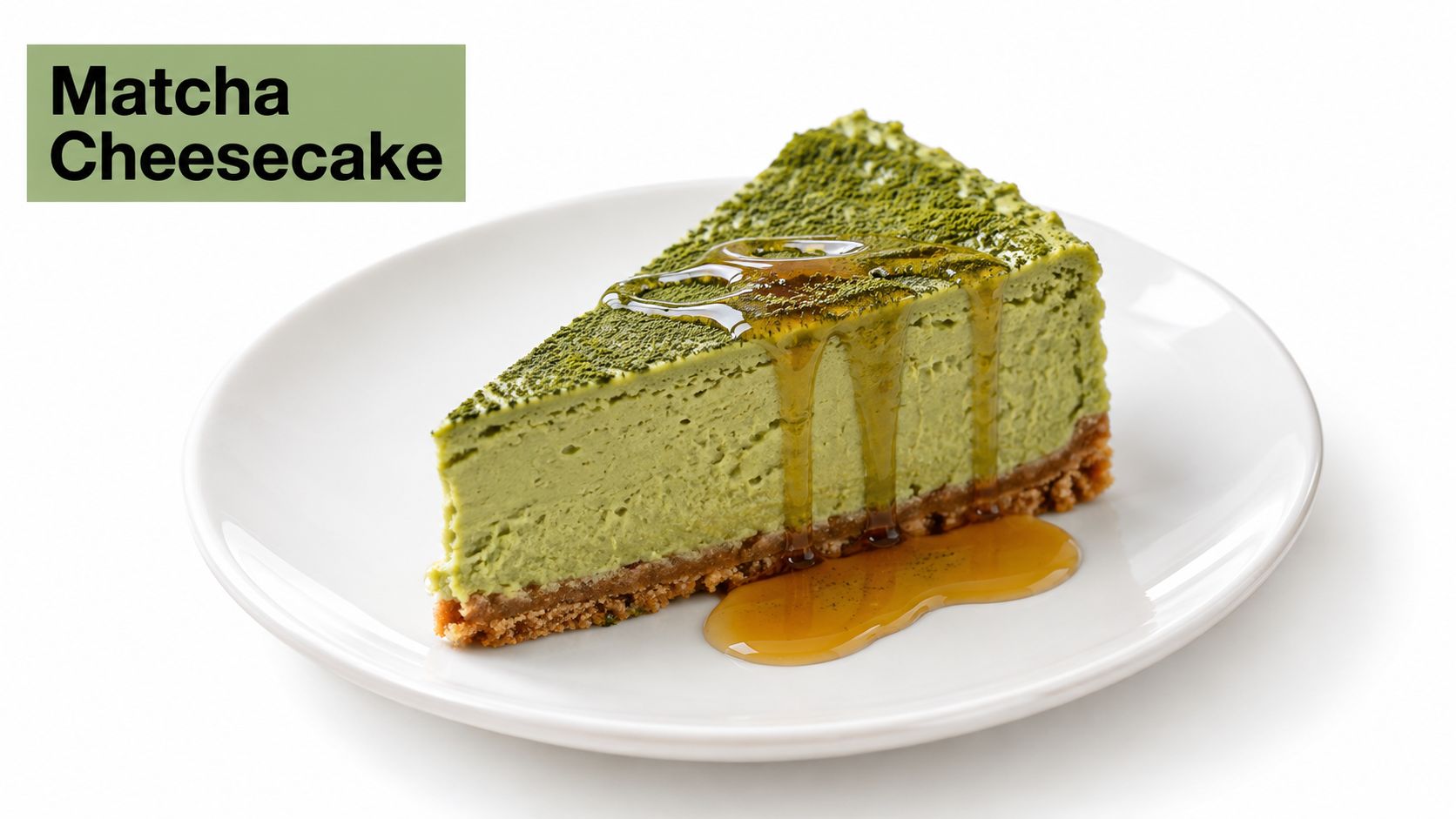
Build the cheesecake
Use cream cheese, eggs, matcha paste, vanilla and a measured sweetener for the filling. A conventional biscuit base gives familiar crunch, while an oat and nut base offers a different texture and may suit a gluten-free adaptation if every ingredient is checked.
Bake on a lower oven shelf with a water bath. The surrounding moisture supports gentler, more even cooking, which helps the filling stay soft rather than turning grainy. Cool the cake gradually at room temperature, then refrigerate it. Rapid cooling can encourage cracks, and overbaking can dry the centre.
For the topping, strain Pep Tea's Lemon & Ginger Kombucha and reduce it gently until concentrated. Use a thin drizzle, since it should sharpen the dessert rather than replace the sugar already calculated in the recipe.
Matcha supplies flavour and colour. It does not cancel the nutritional contribution of cream cheese, biscuits or sweeteners.
Serve smaller slices, with extra drizzle on the side for guests who prefer more acidity or sweetness. For café service, list allergens clearly and calculate nutrition from the exact ingredients used.
4. Matcha Oat Energy Bars with Dates and Chia Seeds
These no-bake bars are a practical pantry recipe, especially when you want a compact snack without turning on the oven. A food processor breaks down the dates into the sticky base, while oats provide chew, chia seeds add small bursts of texture, and nut butter holds everything together. Matcha brings a clear tea flavour, so you may need fewer chocolate chips or no coating at all.
“Energy bar” describes the format, not a guaranteed physiological effect. Dates and other dried fruit still contain sugar, which means a bar made without refined sugar is not sugar-free. That distinction matters for a walk, desk snack or lunchbox, particularly because oats, dates and nut butter create a dense serve.
Build the mixture
- Start with the dates: Pulse them until they become a tacky paste. If they are firm, soften them briefly before processing.
- Prepare the matcha: Whisk it with a small amount of warm water. This spreads the powder through the mixture and helps prevent bitter green pockets.
- Combine: Add rolled oats, chia seeds and nut butter, then stir through the matcha mixture until the ingredients hold together.
- Press and chill: Firmly pack the mixture into a lined tin. Refrigerate for at least two hours before slicing.
- Store: Keep the bars refrigerated for up to two weeks, or freeze them individually wrapped for up to two months.
A hot, wet knife gives cleaner edges. Crumbling means the mixture needs a little more nut butter or a splash of milk. If it feels oily, add oats gradually, then chill it again before assessing the texture.
For a lunchbox-friendly flavour, use less matcha and add orange zest, cinnamon or toasted coconut. Sunflower seed butter provides a nut-free alternative, but check packaged ingredients for allergen cross-contact. Smaller portions make sense when dates, nut butter and oats are pressed into a compact bar.
5. Matcha Lemon Pound Cake with Polenta and Olive Oil
A pound cake does not need butter to feel rich. Mild extra virgin olive oil keeps this version moist, while lemon lifts matcha's grassy, slightly savoury character. Fine polenta adds a delicate grain and lightly golden crumb, so the result has more texture than a plain sponge.
Choose the oil carefully. A peppery or strongly fruity variety can dominate the tea, whereas a mild one supports it. Culinary-grade matcha gives the clearest colour and flavour without turning the cake overly bitter.
A balanced formula
- Dry base: Fine polenta, flour or a tested gluten-free blend, baking powder and culinary-grade matcha.
- Aromatics: Lemon zest and vanilla, with a modest amount of sweetener.
- Liquid ingredients: Room-temperature eggs and mild extra virgin olive oil.
- Optional finish: Lemon juice mixed with icing sugar for a light glaze.
Sift the matcha, polenta and flour together. This distributes the powder evenly, much like spreading food colouring through a batter before it forms concentrated pockets. Rub freshly grated lemon zest gently into the dry mixture with your fingertips to release its aromatic oils. Room-temperature eggs also combine more smoothly with the oil, helping the batter emulsify.
Mix only until the ingredients come together.
Texture check: Stop stirring as soon as no dry patches remain. Extra mixing can make the crumb heavy, especially with a gluten-free flour blend.
For a gluten-free cake, verify the polenta, baking powder and flour blend against the needs of the person eating it. Polenta itself does not rule out gluten cross-contamination.
The glaze sharpens the citrus and improves presentation, but it increases sweetness. Leave it off for a less-sweet slice, then serve the cake with plain yoghurt and fresh berries. That combination keeps the lemon, matcha and olive oil in balance while adding a practical portion contrast for afternoon tea.
6. Matcha White Chocolate Macadamia Bliss Balls
Matcha bliss balls can taste like balanced tea or like sweetened white chocolate with green colouring. The difference comes from the matcha grade, amount and chilling time. Choose culinary-grade matcha for baking, then sift it so its grassy, umami flavour spreads evenly through the mixture.
Use macadamia butter for a smooth centre. Finely chopped macadamias create more texture and make the bites feel less like a truffle. White chocolate brings sweetness and fat, so a restrained version can use less of it and more macadamia, provided the mixture still binds.
Quick recipe guide
- Melt the white chocolate gently in a double boiler or in 30-second microwave bursts.
- Stir in macadamia butter or finely chopped nuts, vanilla and sifted matcha.
- Refrigerate the mixture for one hour before shaping. Chilling works like firming soft clay. It makes rolling cleaner and reduces sticking.
- Finish with desiccated coconut or a very light matcha dusting.
- Place the finished balls on parchment paper or a silicone mat for easier storage and serving.
If the mixture feels greasy, add a little more finely chopped macadamia rather than extra matcha. If it crumbles, it needs more binding from the chocolate or nut butter. Lemon zest can cut through excessive sweetness, although it changes the flavour toward a brighter citrus profile.
Pep Tea's matcha energy balls recipe provides another format for batch preparation. Treat these as confectionery-style bites rather than a sugar-free snack. Their compact size supports deliberate portions, while their sweetness can make several easy to eat unnoticed.
7. Matcha Banana Bread with Walnut and Kombucha Reduction
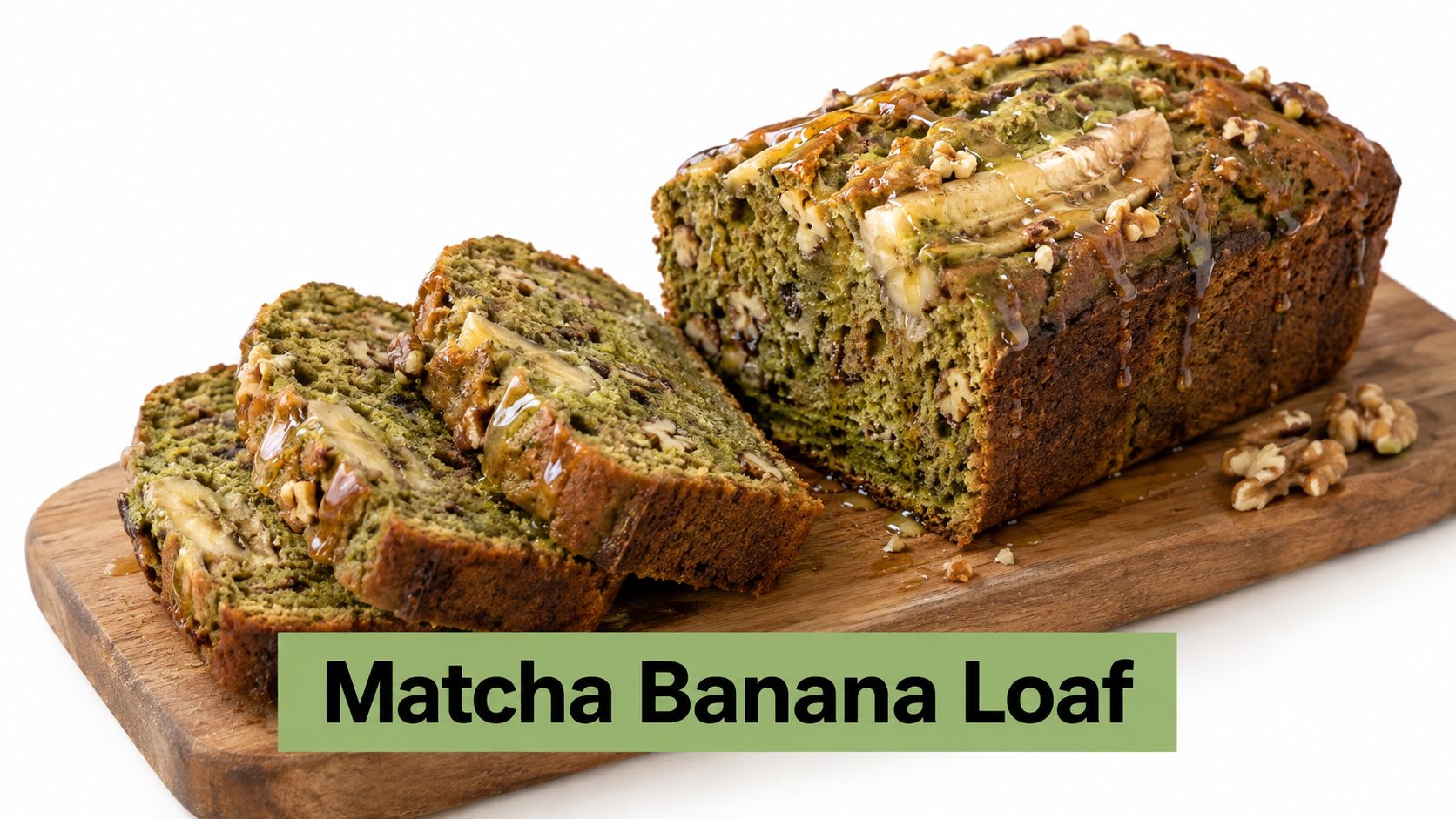
Matcha banana bread needs balance, not a heavy hand with the powder. Very ripe bananas supply moisture and fruit sweetness, while matcha adds a gentle green colour and savoury depth. Toasted walnuts bring aroma and crunch, giving the soft loaf a more interesting crumb.
For a pantry-conscious version, reduce the added sweetener when the bananas are heavily speckled with brown. Bananas still contribute naturally occurring sugars, and honey, maple syrup or a glaze adds more. Keep the liquid ingredients that support the loaf's structure, even when adjusting sweetness.
Recipe card
- Bananas: Mash overripe bananas with brown spots until mostly smooth.
- Matcha: Sift it with the flour and raising agents so the colour and flavour distribute evenly.
- Gluten-free option: Use a tested gluten-free flour blend designed for loaf cakes, rather than a single flour that may leave the crumb heavy.
- Walnuts: Toast them lightly, cool them, then fold them through the batter.
- Mixing: Combine wet and dry ingredients gently. Overmixing can make the loaf dense.
- Reduction: Simmer sugar-free kombucha over low heat until syrupy, strain any sediment, and brush a thin layer over the warm loaf.
A thin reduction acts like a finishing glaze, adding acidity without covering the matcha. If the loaf tastes bitter, use less matcha next time or pair it with riper bananas. If the centre stays wet, check that the loaf has cooled fully before slicing, since the crumb continues to set as it rests.
Serve a modest slice at brunch with plain tea. Sugar-free kombucha works as a separate drink, adding refreshment without making the bread probiotic or nutritionally complete.
8. Matcha Chia Seed Muffins with Honey and Vanilla Bean
Matcha muffins do not need a heavy glaze to taste inviting. The better balance is a soft crumb, gentle sweetness and enough vanilla to round out the tea's grassy edge. Chia seeds bring small bursts of texture, while wholegrain flour makes the muffin more substantial.
Choose culinary-grade matcha with a fresh green colour and fine texture. Sift it with the flour and raising agents to prevent bitter pockets and uneven colour. Honey and maple syrup both sweeten the batter, but they still count as sugars in the finished muffins.
Start with the chia mixture. Stir the seeds into a little plant-based milk and leave them for 10 minutes. They absorb liquid, much like tiny sponges, so pre-hydration helps protect the crumb from becoming dry during baking.
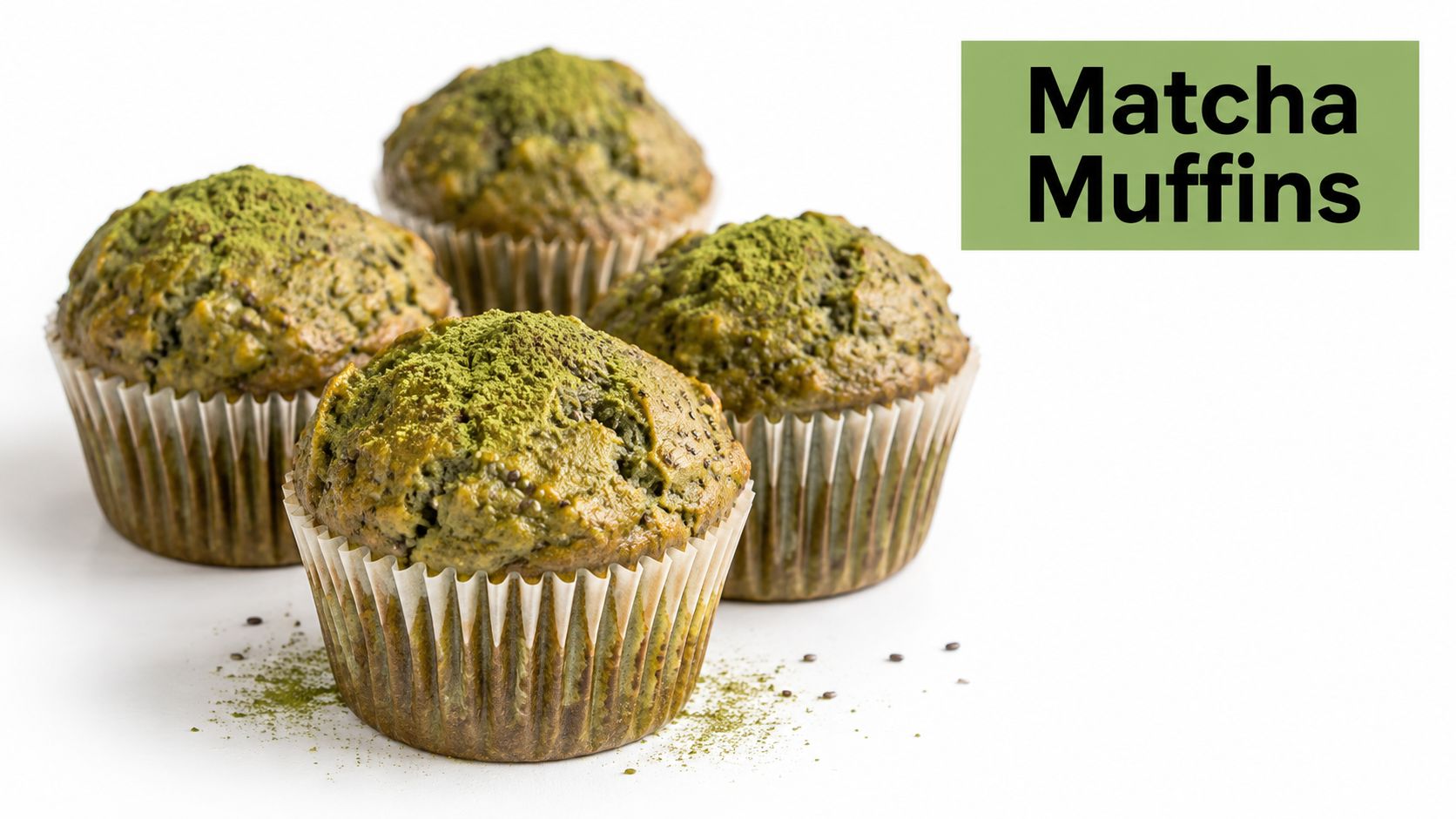
Bake by texture, not colour
Scrape the vanilla bean seeds into the wet ingredients, then combine them with the hydrated chia. Sift the matcha and dry ingredients separately before folding everything together. Stop mixing as soon as no dry streaks remain, because overworking the batter can produce dense muffins.
Fill each muffin cup to three-quarters capacity. Add a small pinch of matcha on top before baking for colour and aroma.
For a brighter flavour, fold through berries or finely grated citrus zest. Their acidity can balance earthy matcha without adding a thick, highly sweet glaze. A dairy-free batch works with plant milk and a tested egg replacement. Choose a milk with enough body to support the chia mixture.
Caffeine note: Baking does not remove matcha's natural caffeine. The amount in each muffin depends on the powder used, the product and the number of portions.
For Australian readers who are pregnant, breastfeeding or caffeine-sensitive, the NSW pregnancy healthy-eating guidance recommends a maximum of 200 mg caffeine per day during pregnancy and breastfeeding. Check the supplier's information, divide the matcha used across the muffins and include other caffeine consumed that day.
Healthy Matcha Baking, 8-Recipe Comparison
| Title | Implementation Complexity 🔄 | Resources & Time ⚡ | Expected Outcomes 📊 | Ideal Use Cases 💡 | Key Advantages ⭐ |
|---|---|---|---|---|---|
| Matcha Almond Flour Cookies with Coconut Oil | 🔄 Low, simple mixing/baking; careful measurement needed | ⚡ Quick (15–20 min); moderate cost (almond flour, coconut oil) | 📊 Gluten-free, low‑sugar, sustained energy; ⭐⭐⭐⭐ | Health-conscious snacks, cafés, gifting | Nutritient-dense, low‑carb, MCTs + L‑theanine |
| Matcha Green Tea Protein Brownies with Dark Chocolate | 🔄 Medium, careful mixing; chocolate handling | ⚡ Moderate, melting chocolate, baking; protein powder needed | 📊 High‑protein, fudgy texture; ⭐⭐⭐⭐ | Post‑workout snack, fitness cafés, vegan desserts | Protein-rich, indulgent yet nutrient-dense |
| Matcha Cream Cheese Cheesecake with Ginger Kombucha Drizzle | 🔄 High, precision baking, water bath, long chill | ⚡ Longer prep + overnight chill; higher ingredient cost | 📊 Restaurant-quality, probiotic glaze; ⭐⭐⭐⭐⭐ | Special occasions, high‑end cafés, signature dessert | Functional (matcha + probiotics), visually impressive |
| Matcha Oat Energy Bars with Dates and Chia Seeds | 🔄 Low, no‑bake or light bake; very accessible | ⚡ Very quick (10–15 min hands‑on); budget‑friendly pantry staples | 📊 Portable, high‑fiber, sustained energy; ⭐⭐⭐⭐ | Meal prep, pre‑workout, hiking, lunchboxes | Cheap, batch‑friendly, gluten‑free option, omega‑3s |
| Matcha Lemon Pound Cake with Polenta and Olive Oil | 🔄 Medium, standard cake technique, gentle handling | ⚡ Moderate bake time; moderate ingredient cost (polenta, olive oil) | 📊 Moist, elegant crumb with citrus lift; ⭐⭐⭐⭐ | Afternoon tea, cafés, breakfast cake | Dairy‑free option, long shelf life, sophisticated flavour |
| Matcha White Chocolate Macadamia Bliss Balls (No‑Bake) | 🔄 Low, no‑bake, simple assembly and chill | ⚡ Quick to make (≈30 min incl. chilling); higher cost (macadamias, quality white chocolate) | 📊 Decadent, giftable bites; shelf‑stable refrigerated; ⭐⭐⭐⭐ | Gifting, events, café grab‑and‑go | Minimal skill, premium presentation, customizable |
| Matcha Banana Bread with Walnut and Kombucha Reduction | 🔄 Low, basic loaf technique + reduction step | ⚡ Moderate, bake time + 15–20 min reduction; uses common pantry items | 📊 Comfort loaf with probiotic glaze; ⭐⭐⭐⭐ | Brunch menus, cafés, bake sales | Uses overripe bananas, freezeable, crowd‑pleasing functional twist |
| Matcha Chia Seed Muffins with Honey and Vanilla Bean | 🔄 Medium, whole‑grain batter, chia prep affects texture | ⚡ Moderate bake time; ingredients like vanilla bean add cost | 📊 High‑fibre, photogenic breakfast item; ⭐⭐⭐⭐ | School lunches, cafés, meal prep | Versatile, omega‑3s from chia, naturally coloured and sweetened |
Make Matcha Baking Work for Your Kitchen
The best recipe depends on the occasion, the texture you want and how much preparation you can manage. Choose muffins or oat bars when you want a batch for breakfasts, lunchboxes or portable snacks. Choose cookies when you need individually portioned, gluten-free-friendly treats, remembering that almond flour creates a nut-based recipe rather than a universally suitable one.
For afternoon tea, banana bread and lemon polenta pound cake offer familiar formats with more interesting flavour. The banana loaf is soft and comforting, while the pound cake is brighter and more refined. Cheesecake and bliss balls suit entertaining because they can be prepared ahead and presented as deliberate, small serves rather than everyday grazing food.
A few technique rules will improve almost every matcha bake:
- Measure the matcha carefully: More powder doesn't always mean better flavour. Higher doses can increase bitterness.
- Sift before mixing: This prevents concentrated green pockets and improves colour consistency.
- Dissolve when the mixture allows: A smooth paste works especially well in dense batters, cheesecake fillings and chocolate mixtures.
- Avoid overmixing: Fold muffins, brownies and loaves until the ingredients have just combined.
- Judge sweetness with the whole recipe: Lemon, vanilla, ginger, berries, dark chocolate and salt can make a lower-sugar bake taste more complete.
- Record the yield: Divide the total matcha used by the number of portions if caffeine awareness matters.
Australia's food-consumption data provides useful context for taking sugar reduction seriously. In 2022–23, apparent free-sugar consumption was 67 grams per person per day, and 89% of that consumption came from discretionary foods, a category that includes cakes, biscuits and pastries, according to the Australian Bureau of Statistics. That doesn't prove matcha baking is healthy, but it does support a practical approach: reduce added sugar where you can, keep portions measured and don't let colour or wellness language disguise a rich recipe.
Natural sweeteners aren't sugar-free. Honey, maple syrup, dates, ripe bananas and kombucha reductions can all contribute sweetness, and the final nutrition depends on the exact quantities. Matcha also doesn't cancel out butter, cream cheese, chocolate, oil or refined flour, so describe these recipes as health-conscious adaptations or lower-sugar options only when the formulation supports that wording.
Matcha selection matters, too. Use culinary-grade organic matcha for baking and reserve ceremonial grade for whisking when you want to appreciate its finer drinking character. For safety, avoid isolated caffeine powder or concentrated performance products. Food Standards Australia New Zealand's guidance on caffeine powders states that pure or highly concentrated caffeine products are banned from retail sale, and foods containing 5% or more caffeine in solid or semi-solid form are banned from sale to the public. Ordinary tea products with naturally occurring caffeine aren't included in that ban, but food-grade matcha from a legitimate retail product remains the sensible choice.
Finally, think about the pairing. A lightly sweetened matcha muffin doesn't need to sit beside a sugary latte, syrup or sweetened mixer. Pep Tea's sugar-free organic kombucha can provide a refreshing Australian-made option alongside a bake, but the drink is a beverage pairing, not proof that the dessert supports gut health or immunity. Explore different matcha strengths, taste as you go and choose the recipe that fits your kitchen rather than chasing a perfect label.
Pep Tea offers organic Japanese matcha suited to whisking and culinary use, along with sugar-free organic kombucha brewed in the Hunter Valley, NSW. Visit Pep Tea to explore matcha for your next bake and find a refreshing kombucha pairing for the finished treat.