
Tag: easy recipe
Matcha Cookies Recipe Easy: Perfect Bake

You're halfway through a batch of cookies when the matcha clumps into bitter green pockets, the dough spreads across the tray, and you realise nobody has measured the portions. This matcha cookies recipe easy approach avoids those problems with a controlled mixing process, sensible portioning, and a few Australian food-safety details that many recipes leave out.
The result is a fragrant biscuit with a soft centre and lightly set edges. Matcha adds colour and tea flavour, but it doesn't turn a flour, sugar, and fat-based cookie into a health food. Australian dietary guidance places sweet biscuits in the discretionary category, so the most useful approach is honest ingredient information, considered portions, and a recipe that works reliably.
Gathering Your Ingredients and Equipment
A smooth bake starts before the oven is switched on. Bring the butter to a soft, workable texture, weigh the dry ingredients, and clear enough bench space for a tray, cooling rack, and mixing bowl. A kitchen scale is more dependable than packed cups, particularly when flour and matcha are involved.
Ingredients for a practical batch
Use:
- Plain flour: Provides the main structure and chew.
- Culinary-grade matcha: Adds the characteristic tea flavour and green colour. Choose a fresh, aromatic powder rather than one that smells stale or looks dull.
- Unsalted butter: Controls richness, spread, and crispness. Softened butter should bend under pressure but not look oily.
- Caster sugar: Sweetens the dough and helps the edges set with a fine texture.
- Egg: Binds the mixture and contributes moisture.
- Baking powder: Supplies lift without making the cookie cakey.
- Fine salt: Sharpens the matcha and balances sweetness.
The exact quantity of matcha should reflect its flavour strength. A culinary powder intended for baking usually gives a more practical balance than using a prized drinking matcha in a strongly flavoured dough. The distinction between ceremonial and culinary products is explained clearly in PepTea's guide to ceremonial and culinary matcha.
Equipment that prevents avoidable errors
Set out a kitchen scale, measuring spoons, a large metal or glass bowl, a whisk, a spatula, baking trays, and parchment paper. A fine sieve is essential because matcha compresses into small lumps during storage. Sifting it with the flour distributes the powder before it reaches the wet ingredients.
Practical rule: Mix matcha into the dry ingredients, not directly into the butter. That single choice prevents concentrated green pockets and makes the flavour much more even.
Use a portion scoop or weigh each piece of dough. Consistent pieces bake at the same rate, while a tray containing small and large cookies forces you to choose between pale centres and overdone edges. Keep a cooling rack nearby, too, because cookies continue to firm as they leave the oven.
Mixing and Baking for the Perfect Texture
The best texture comes from controlling air, flour development, and fat temperature. Soft butter should combine smoothly with the sugar, but it doesn't need prolonged beating. Excessive aeration can encourage the cookies to rise and then collapse or spread unevenly.
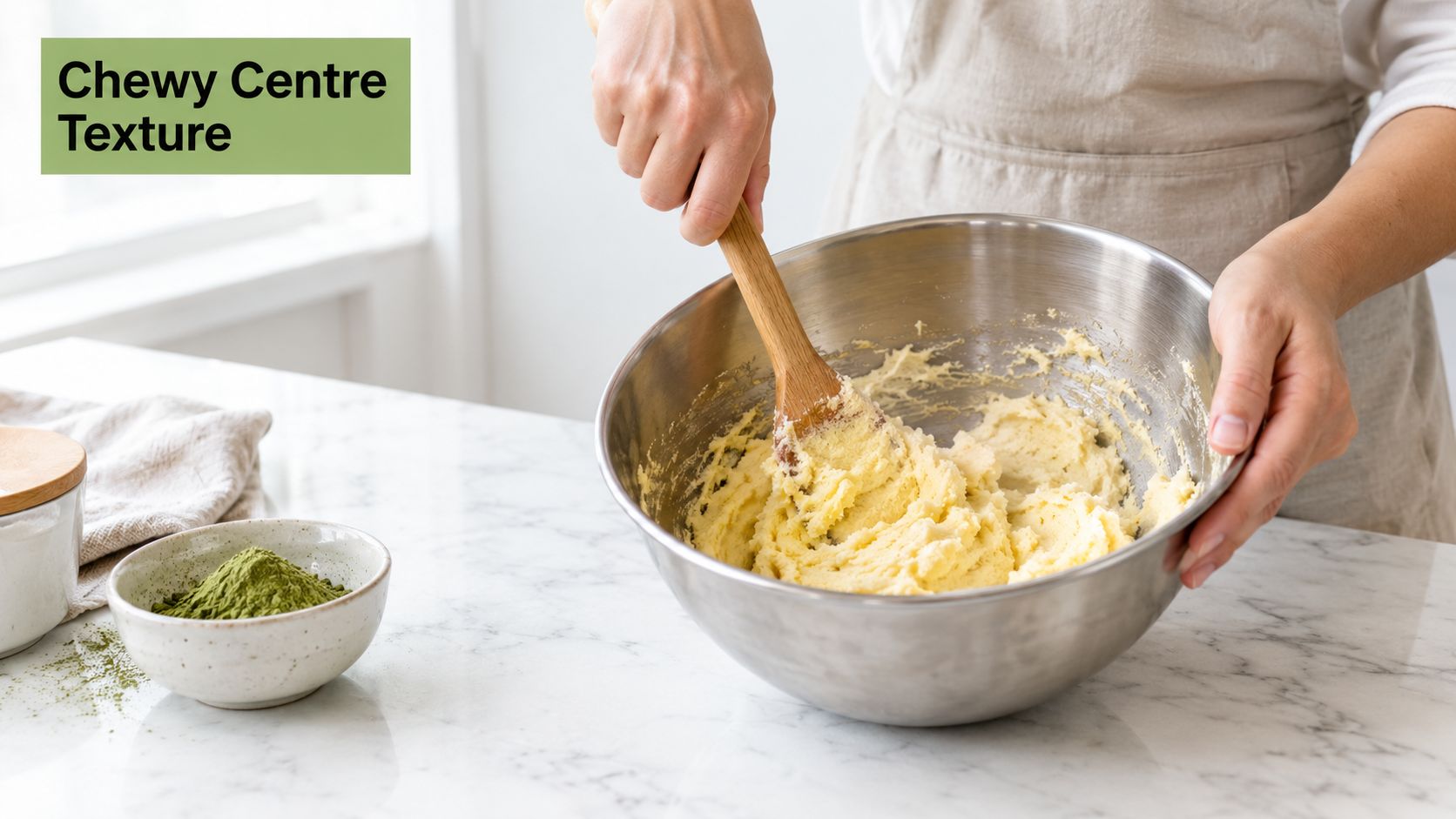
A controlled mixing sequence
- Prepare the dry mixture. Whisk the flour, matcha, baking powder, and salt, then sift them together.
- Combine butter and sugar. Cream softened butter with the sugar only until the mixture is uniform and smooth.
- Add the egg. Mix until combined, scraping the bowl so no buttery streaks remain.
- Add the dry ingredients. Fold or mix on low speed just until no dry flour is visible. Stop there. Continued mixing develops the flour and can make the finished biscuit tough.
- Portion the dough. Place evenly sized mounds on parchment, leaving room for spreading.
- Chill when necessary. If the dough feels glossy, loose, or warm, chill the portioned pieces before baking. Colder fat melts later, helping the cookies keep a thicker centre.
Preheat the oven fully rather than placing dough into a warming oven. An oven thermometer is useful because the displayed setting and the actual centre temperature can differ. Bake until the edges look set and the centres no longer look wet. Matcha can keep the surface visibly green, so colour alone isn't a reliable doneness test.
For an egg-containing biscuit, verify that the centre reaches approximately 71–72°C when food safety is critical, following the controlled-temperature method described by CSIRO's egg-quality guidance.
The tray still has a job after baking. Leave the cookies on it briefly before moving them to a rack, allowing the residual heat to finish setting the crumb. Transferring them immediately can cause soft centres to tear, while leaving them on a hot tray too long can darken the bases.
For more ideas on using matcha beyond a single batch of biscuits, see PepTea's matcha baking guide.
Understanding Portion Sizes and Caffeine Content
Matcha remains in the finished cookie. Baking changes texture and aroma, but you shouldn't assume it removes the powder's naturally occurring caffeine. The amount in each biscuit depends on the matcha quantity, the supplier's specification, and the final yield.
Calculate the approximate amount
Start with the total matcha used in the batch. Divide that amount by the number of cookies, then use the supplier's caffeine information to estimate the matcha-derived caffeine per cookie. This is more defensible than judging caffeine from colour or a teaspoon because matcha powders vary.
A café or home baker can record three details:
- Batch matcha: Weigh the complete quantity added to the dough.
- Final yield: Count the baked cookies, not the intended yield.
- Serving estimate: Divide the batch figure by the actual number produced.
The result is still approximate. It should be presented as an estimate, particularly for children, pregnant or breastfeeding people, and anyone sensitive to caffeine. Smaller cookies, less matcha, or replacing part of the matcha with a non-caffeinated culinary flavouring can make the recipe easier to manage for an evening or family menu. FSANZ's caffeine information explains the regulatory context for caffeine in food and why commercial labelling needs care.
Australian serving guidance gives sweet biscuits a recommended maximum retail serving size of 30 g and an approximate energy level of 600 kJ per serving. It reports a median amount consumed of 26 g, with observed amounts from 18 g for plain biscuits to 36 g for chocolate varieties. These benchmarks appear in the Australian serving-size rationale.
| Cookie size | Approx. weight | Estimated matcha per cookie | Energy benchmark |
|---|---|---|---|
| Small home portion | 18 g | Total batch matcha divided by final yield | Below the retail maximum benchmark |
| Typical portion | 26 g | Total batch matcha divided by final yield | Around the reported median biscuit amount |
| Retail maximum benchmark | 30 g | Total batch matcha divided by final yield | Approximately 600 kJ |
The energy column is a benchmark, not a nutrition calculation for this particular recipe. Butter, sugar, flour, chocolate, nuts, and the final yield all change the result. For a café, weigh the finished portions rather than relying on a scoop that may gradually become larger.
Readers who drink matcha as well as eating it can use PepTea's matcha serving guide to think about their total daily intake rather than treating the cookie as caffeine-free.
Adapting the Recipe for Dietary Needs
Dietary substitutions work best when you replace the function of an ingredient, not just its name. Wheat flour provides structure, butter brings water and fat, and egg binds the dough. Remove one of those elements without compensation and the cookie may crumble, spread excessively, or lose its chew.
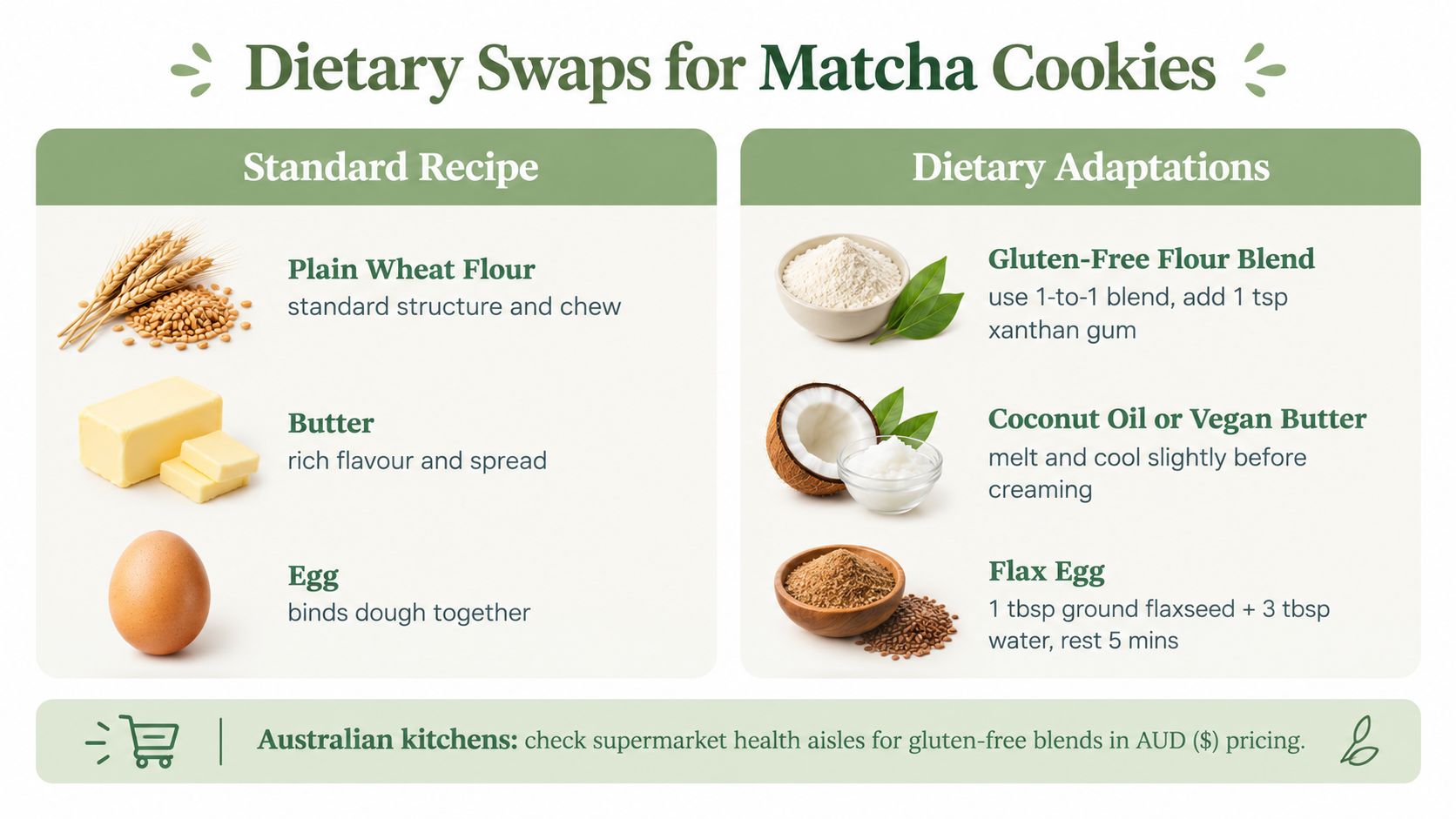
Gluten-free structure
A one-to-one gluten-free flour blend is the most practical starting point, but blends behave differently. Choose one designed for baking and check whether it already contains a binding ingredient. If it doesn't, a small amount of xanthan gum may help hold the dough together, although too much can produce a gummy bite.
Resting the dough before baking can improve hydration because alternative flours often absorb liquid at a different rate from wheat flour. If the dough crumbles when pressed, add moisture cautiously rather than pouring in a large amount at once. If it spreads, chill the portions and check that the substitute fat hasn't been overheated.
Australian wording matters as much as texture. A food labelled “gluten-free” must contain no detectable gluten and must not contain oats or oat products, while gluten-containing cereals and relevant allergens must be declared, according to NSW food-allergen guidance. Use certified ingredients, clean equipment, fresh parchment, and separate utensils where cross-contact is a concern. “Made without wheat” isn't interchangeable with “gluten-free”.
Vegan alternatives
Vegan butter generally gives the closest spread and familiar biscuit flavour. Coconut oil can work, but it behaves differently as it warms and may create a more fragile cookie with a noticeable coconut character. Let melted fat cool before mixing, and expect to adjust chilling time.
A flax egg, made by combining 1 tablespoon of ground flaxseed with 3 tablespoons of water and resting for 5 minutes, adds binding but less richness than an egg. The resulting cookie may be slightly softer or darker, depending on the plant fat and flour blend. Aquafaba can bind some doughs, but it can also make the texture less predictable when used without testing.
The safest adaptation is to change one variable at a time. Test the flour first, then the fat, then the egg replacement. That makes it clear whether spreading, crumbling, or toughness comes from the ingredient or the mixing method.
Storing Your Cookies and Troubleshooting Mistakes
Cool the cookies completely before storage. Warm biscuits release steam into the container, softening edges and making the surface tacky. Once cool, place them in an airtight container with parchment between layers and keep them away from heat and sunlight.
Portioned unbaked dough can be chilled or frozen in individual pieces, then baked from cold with the timing checked visually. Label the container with the matcha quantity and date so you can calculate the approximate caffeine per cookie after the final yield is known.
Quick diagnosis
- Thin, wide cookies: The butter or dough was too warm, the tray was warm, or the portions needed chilling. Chill the next batch and bake on a cool lined tray.
- Tough cookies: The flour was mixed for too long after addition. Stop as soon as the dry streaks disappear.
- Dry centres: The cookies stayed in the oven too long or were portioned too small. Use edge-setting and centre appearance together.
- Uneven green flavour: Matcha was added directly to the wet mixture or wasn't sifted. Distribute it through the dry ingredients first.
- Soft bases: The cookies were moved before the crumb set or stored while warm. Rest them briefly on the tray, then cool fully on a rack.
A reliable batch record helps cafés and regular home bakers identify patterns. Note the dough weight, oven setting, portion weight, and whether chilling was needed.
Food Safety and Ingredient Sourcing Answers
Raw egg dough isn't a ready-to-eat snack. Food Standards Australia New Zealand identifies raw doughs and batters containing egg, including biscuit and cake batter, as higher-risk foods. Keep eggs refrigerated, wash hands after handling them, and bake the cookies fully rather than tasting the mixture, particularly when children, pregnant people, older adults, or immunocompromised people may eat them.
Reducing white sugar doesn't automatically support a “low sugar” claim. For solid foods, the Code's example threshold for such a claim is no more than 5 g of sugar per 100 g, and total sugars include naturally present and added sugars, as explained by FSANZ's sugar-labelling guidance. Chocolate, dried fruit, and other additions still contribute to the total.
For packaged sale, calculate nutrition from the final recipe and yield rather than presenting a homemade estimate as an official declaration. Quality culinary matcha should taste fresh and tea-like, with enough character to remain noticeable after baking. Pep Tea offers organic Japanese matcha and Australian-brewed sugar-free kombucha from its Hunter Valley, NSW operation, giving bakers and cafés options for both matcha recipes and non-alcoholic drinks.
Explore the organic Japanese matcha range at Pep Tea for a baking powder with clear flavour and dependable sourcing, then pair your cookies with sugar-free organic kombucha for a balanced café-style serving. Visit Pep Tea to find matcha education, recipe ideas, and Australian-made beverage options for home or hospitality use.