
Tag: peptea recipes
Matcha Cookies Recipe Easy: Perfect Bake
You're halfway through a batch of cookies when the matcha clumps into bitter green pockets, the dough spreads across the tray, and you realise nobody has measured the portions. This matcha cookies recipe easy approach avoids those problems with a controlled mixing process, sensible portioning, and a few Australian food-safety details that many recipes leave out.
The result is a fragrant biscuit with a soft centre and lightly set edges. Matcha adds colour and tea flavour, but it doesn't turn a flour, sugar, and fat-based cookie into a health food. Australian dietary guidance places sweet biscuits in the discretionary category, so the most useful approach is honest ingredient information, considered portions, and a recipe that works reliably.
Gathering Your Ingredients and Equipment
A smooth bake starts before the oven is switched on. Bring the butter to a soft, workable texture, weigh the dry ingredients, and clear enough bench space for a tray, cooling rack, and mixing bowl. A kitchen scale is more dependable than packed cups, particularly when flour and matcha are involved.
Ingredients for a practical batch
Use:
- Plain flour: Provides the main structure and chew.
- Culinary-grade matcha: Adds the characteristic tea flavour and green colour. Choose a fresh, aromatic powder rather than one that smells stale or looks dull.
- Unsalted butter: Controls richness, spread, and crispness. Softened butter should bend under pressure but not look oily.
- Caster sugar: Sweetens the dough and helps the edges set with a fine texture.
- Egg: Binds the mixture and contributes moisture.
- Baking powder: Supplies lift without making the cookie cakey.
- Fine salt: Sharpens the matcha and balances sweetness.
The exact quantity of matcha should reflect its flavour strength. A culinary powder intended for baking usually gives a more practical balance than using a prized drinking matcha in a strongly flavoured dough. The distinction between ceremonial and culinary products is explained clearly in PepTea's guide to ceremonial and culinary matcha.
Equipment that prevents avoidable errors
Set out a kitchen scale, measuring spoons, a large metal or glass bowl, a whisk, a spatula, baking trays, and parchment paper. A fine sieve is essential because matcha compresses into small lumps during storage. Sifting it with the flour distributes the powder before it reaches the wet ingredients.
Practical rule: Mix matcha into the dry ingredients, not directly into the butter. That single choice prevents concentrated green pockets and makes the flavour much more even.
Use a portion scoop or weigh each piece of dough. Consistent pieces bake at the same rate, while a tray containing small and large cookies forces you to choose between pale centres and overdone edges. Keep a cooling rack nearby, too, because cookies continue to firm as they leave the oven.
Mixing and Baking for the Perfect Texture
The best texture comes from controlling air, flour development, and fat temperature. Soft butter should combine smoothly with the sugar, but it doesn't need prolonged beating. Excessive aeration can encourage the cookies to rise and then collapse or spread unevenly.
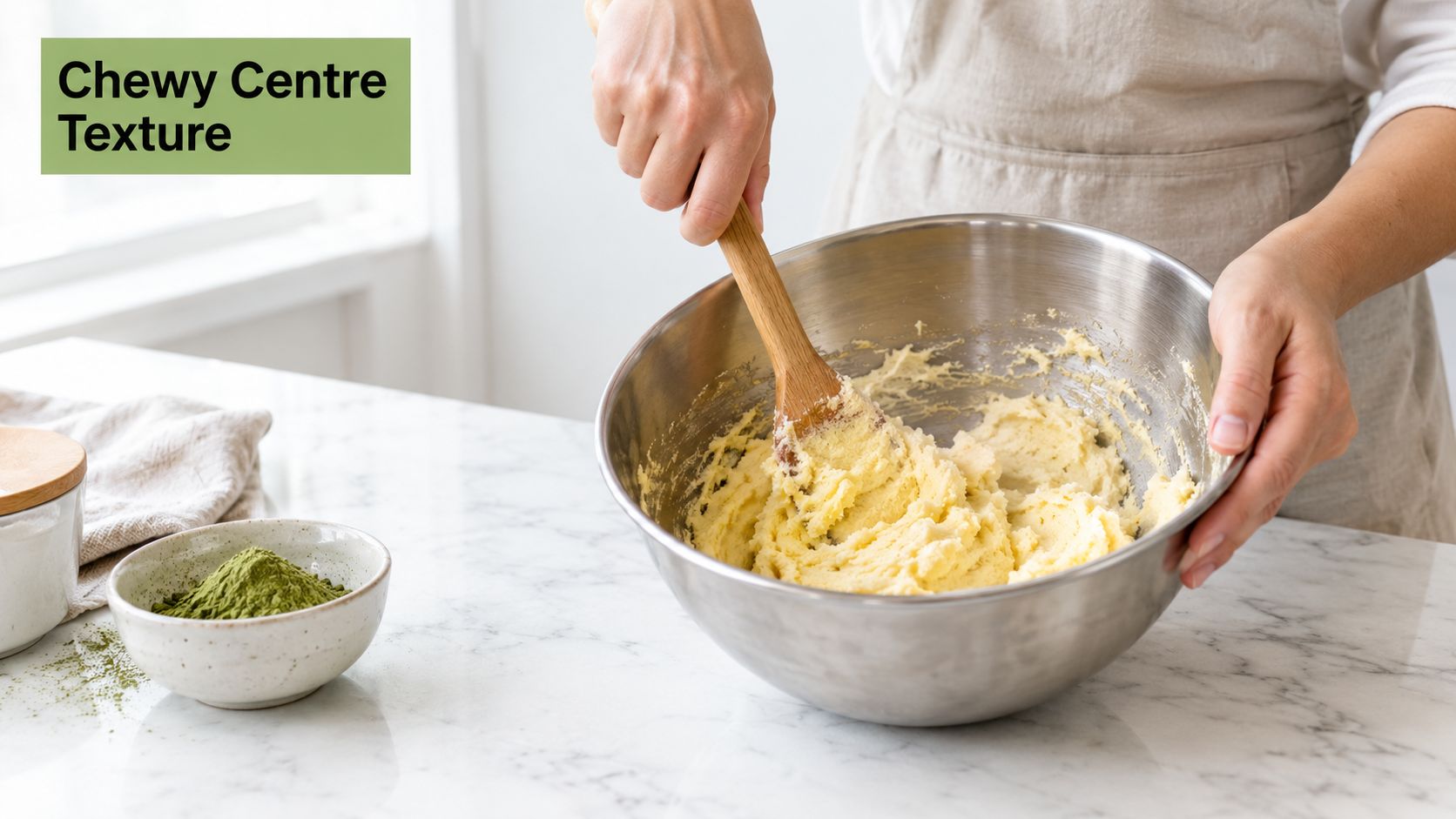
A controlled mixing sequence
- Prepare the dry mixture. Whisk the flour, matcha, baking powder, and salt, then sift them together.
- Combine butter and sugar. Cream softened butter with the sugar only until the mixture is uniform and smooth.
- Add the egg. Mix until combined, scraping the bowl so no buttery streaks remain.
- Add the dry ingredients. Fold or mix on low speed just until no dry flour is visible. Stop there. Continued mixing develops the flour and can make the finished biscuit tough.
- Portion the dough. Place evenly sized mounds on parchment, leaving room for spreading.
- Chill when necessary. If the dough feels glossy, loose, or warm, chill the portioned pieces before baking. Colder fat melts later, helping the cookies keep a thicker centre.
Preheat the oven fully rather than placing dough into a warming oven. An oven thermometer is useful because the displayed setting and the actual centre temperature can differ. Bake until the edges look set and the centres no longer look wet. Matcha can keep the surface visibly green, so colour alone isn't a reliable doneness test.
For an egg-containing biscuit, verify that the centre reaches approximately 71–72°C when food safety is critical, following the controlled-temperature method described by CSIRO's egg-quality guidance.
The tray still has a job after baking. Leave the cookies on it briefly before moving them to a rack, allowing the residual heat to finish setting the crumb. Transferring them immediately can cause soft centres to tear, while leaving them on a hot tray too long can darken the bases.
For more ideas on using matcha beyond a single batch of biscuits, see PepTea's matcha baking guide.
Understanding Portion Sizes and Caffeine Content
Matcha remains in the finished cookie. Baking changes texture and aroma, but you shouldn't assume it removes the powder's naturally occurring caffeine. The amount in each biscuit depends on the matcha quantity, the supplier's specification, and the final yield.
Calculate the approximate amount
Start with the total matcha used in the batch. Divide that amount by the number of cookies, then use the supplier's caffeine information to estimate the matcha-derived caffeine per cookie. This is more defensible than judging caffeine from colour or a teaspoon because matcha powders vary.
A café or home baker can record three details:
- Batch matcha: Weigh the complete quantity added to the dough.
- Final yield: Count the baked cookies, not the intended yield.
- Serving estimate: Divide the batch figure by the actual number produced.
The result is still approximate. It should be presented as an estimate, particularly for children, pregnant or breastfeeding people, and anyone sensitive to caffeine. Smaller cookies, less matcha, or replacing part of the matcha with a non-caffeinated culinary flavouring can make the recipe easier to manage for an evening or family menu. FSANZ's caffeine information explains the regulatory context for caffeine in food and why commercial labelling needs care.
Australian serving guidance gives sweet biscuits a recommended maximum retail serving size of 30 g and an approximate energy level of 600 kJ per serving. It reports a median amount consumed of 26 g, with observed amounts from 18 g for plain biscuits to 36 g for chocolate varieties. These benchmarks appear in the Australian serving-size rationale.
| Cookie size | Approx. weight | Estimated matcha per cookie | Energy benchmark |
|---|---|---|---|
| Small home portion | 18 g | Total batch matcha divided by final yield | Below the retail maximum benchmark |
| Typical portion | 26 g | Total batch matcha divided by final yield | Around the reported median biscuit amount |
| Retail maximum benchmark | 30 g | Total batch matcha divided by final yield | Approximately 600 kJ |
The energy column is a benchmark, not a nutrition calculation for this particular recipe. Butter, sugar, flour, chocolate, nuts, and the final yield all change the result. For a café, weigh the finished portions rather than relying on a scoop that may gradually become larger.
Readers who drink matcha as well as eating it can use PepTea's matcha serving guide to think about their total daily intake rather than treating the cookie as caffeine-free.
Adapting the Recipe for Dietary Needs
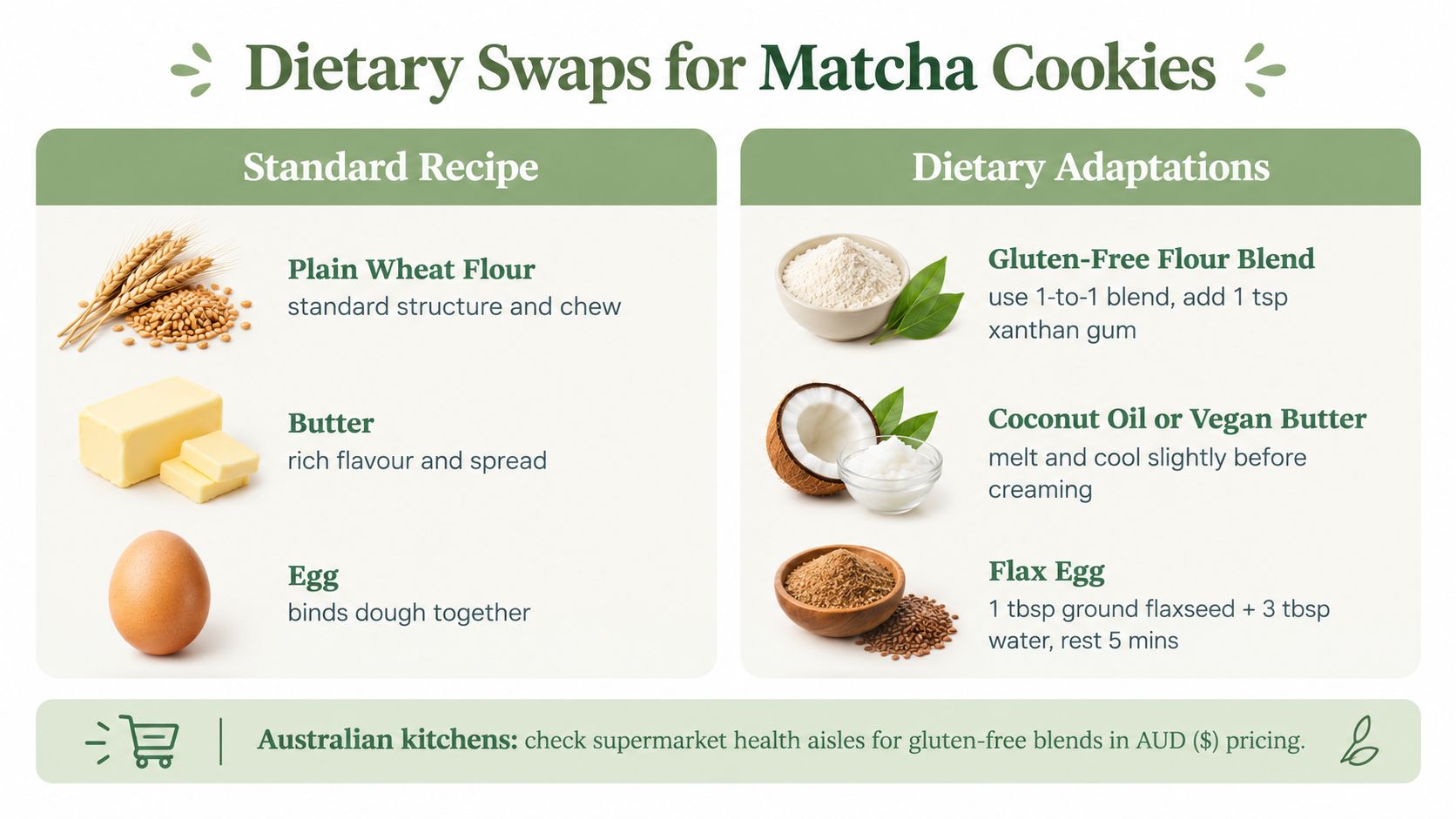
Dietary substitutions work best when you replace the function of an ingredient, not just its name. Wheat flour provides structure, butter brings water and fat, and egg binds the dough. Remove one of those elements without compensation and the cookie may crumble, spread excessively, or lose its chew.
Gluten-free structure
A one-to-one gluten-free flour blend is the most practical starting point, but blends behave differently. Choose one designed for baking and check whether it already contains a binding ingredient. If it doesn't, a small amount of xanthan gum may help hold the dough together, although too much can produce a gummy bite.
Resting the dough before baking can improve hydration because alternative flours often absorb liquid at a different rate from wheat flour. If the dough crumbles when pressed, add moisture cautiously rather than pouring in a large amount at once. If it spreads, chill the portions and check that the substitute fat hasn't been overheated.
Australian wording matters as much as texture. A food labelled “gluten-free” must contain no detectable gluten and must not contain oats or oat products, while gluten-containing cereals and relevant allergens must be declared, according to NSW food-allergen guidance. Use certified ingredients, clean equipment, fresh parchment, and separate utensils where cross-contact is a concern. “Made without wheat” isn't interchangeable with “gluten-free”.
Vegan alternatives
Vegan butter generally gives the closest spread and familiar biscuit flavour. Coconut oil can work, but it behaves differently as it warms and may create a more fragile cookie with a noticeable coconut character. Let melted fat cool before mixing, and expect to adjust chilling time.
A flax egg, made by combining 1 tablespoon of ground flaxseed with 3 tablespoons of water and resting for 5 minutes, adds binding but less richness than an egg. The resulting cookie may be slightly softer or darker, depending on the plant fat and flour blend. Aquafaba can bind some doughs, but it can also make the texture less predictable when used without testing.
The safest adaptation is to change one variable at a time. Test the flour first, then the fat, then the egg replacement. That makes it clear whether spreading, crumbling, or toughness comes from the ingredient or the mixing method.
Storing Your Cookies and Troubleshooting Mistakes
Cool the cookies completely before storage. Warm biscuits release steam into the container, softening edges and making the surface tacky. Once cool, place them in an airtight container with parchment between layers and keep them away from heat and sunlight.
Portioned unbaked dough can be chilled or frozen in individual pieces, then baked from cold with the timing checked visually. Label the container with the matcha quantity and date so you can calculate the approximate caffeine per cookie after the final yield is known.
Quick diagnosis
- Thin, wide cookies: The butter or dough was too warm, the tray was warm, or the portions needed chilling. Chill the next batch and bake on a cool lined tray.
- Tough cookies: The flour was mixed for too long after addition. Stop as soon as the dry streaks disappear.
- Dry centres: The cookies stayed in the oven too long or were portioned too small. Use edge-setting and centre appearance together.
- Uneven green flavour: Matcha was added directly to the wet mixture or wasn't sifted. Distribute it through the dry ingredients first.
- Soft bases: The cookies were moved before the crumb set or stored while warm. Rest them briefly on the tray, then cool fully on a rack.
A reliable batch record helps cafés and regular home bakers identify patterns. Note the dough weight, oven setting, portion weight, and whether chilling was needed.
Food Safety and Ingredient Sourcing Answers
Raw egg dough isn't a ready-to-eat snack. Food Standards Australia New Zealand identifies raw doughs and batters containing egg, including biscuit and cake batter, as higher-risk foods. Keep eggs refrigerated, wash hands after handling them, and bake the cookies fully rather than tasting the mixture, particularly when children, pregnant people, older adults, or immunocompromised people may eat them.
Reducing white sugar doesn't automatically support a “low sugar” claim. For solid foods, the Code's example threshold for such a claim is no more than 5 g of sugar per 100 g, and total sugars include naturally present and added sugars, as explained by FSANZ's sugar-labelling guidance. Chocolate, dried fruit, and other additions still contribute to the total.
For packaged sale, calculate nutrition from the final recipe and yield rather than presenting a homemade estimate as an official declaration. Quality culinary matcha should taste fresh and tea-like, with enough character to remain noticeable after baking. Pep Tea offers organic Japanese matcha and Australian-brewed sugar-free kombucha from its Hunter Valley, NSW operation, giving bakers and cafés options for both matcha recipes and non-alcoholic drinks.
Explore the organic Japanese matcha range at Pep Tea for a baking powder with clear flavour and dependable sourcing, then pair your cookies with sugar-free organic kombucha for a balanced café-style serving. Visit Pep Tea to find matcha education, recipe ideas, and Australian-made beverage options for home or hospitality use.
Top 10 Non Alcoholic Tea Cocktails for 2026

Why settle for a sugary mocktail when tea can do far more?
A well-built tea cocktail works like a chef's seasoning. Tea brings structure, aroma, tannin, freshness, and length, so the drink tastes layered rather than just sweet. That is why non alcoholic tea cocktails have become such a smart choice for Australians who want something refined, achievable at home, and better suited to everyday wellbeing.
Tea also gives you room to adjust the drink with purpose. Matcha can add savoury depth and a gentle, focused lift. Kombucha can add acidity, fizz, and a cultured tang that makes a zero-proof serve feel properly grown-up. Start with quality ingredients and the rest becomes much easier, whether you are mixing one glass at your kitchen bench or planning a batch for busy weekend service.
We are especially fond of recipes built on ceremonial grade green tea and well-made kombucha because they carry flavour without relying on heavy syrups. The result is cleaner, brighter, and more balanced. For many people, that also means an afternoon drink that feels refreshing instead of tiring.
This guide is written for two kinds of tea lovers at once. Home drinkers will get clear recipes and practical tips. Café owners, retailers, and hospitality teams will also find a useful commercial lens in each drink, including scaling ideas, menu pairings, and wholesale potential. That café and retailer angle matters because the best tea cocktails should work both as a lovely one-off serve and as a product worth putting on a menu, a shelf, or a seasonal promotion.
1. Matcha Mint Lemonade Spritzer
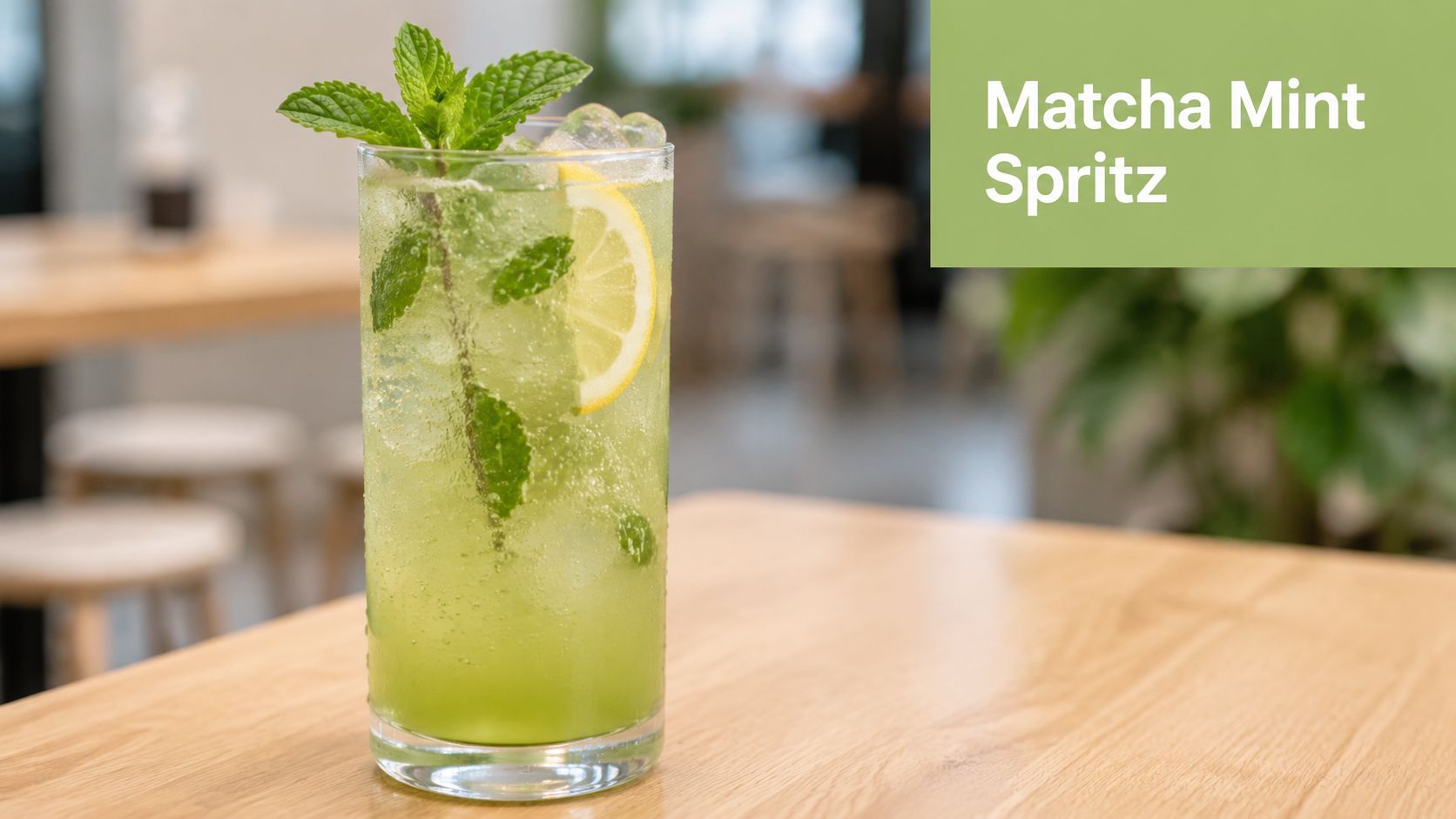
A good tea cocktail should wake up your palate, not bury it under sweetness. This one does that beautifully. Ceremonial-grade matcha, fresh mint, lemon juice, and sparkling water create a drink that tastes crisp, green, and clean, with enough lift to feel special on a hot Australian afternoon.
Our favourite base here is ceremonial grade green tea, because it gives you a softer, more elegant finish than lower-grade powders. Matcha also brings functional appeal. A standard 2g serve of ceremonial-grade Japanese organic matcha delivers 100 to 220mg of EGCG, and modern HPLC analyses confirm matcha contains 2 to 3 times more EGCG than steeped green tea, according to matcha EGCG analysis.
How to make it work
Whisk the matcha first with a small amount of warm water, around 70°C, until it's smooth. Add lemon juice, lightly crushed mint, ice, and top with sparkling water right at the end so the drink keeps its sparkle.
- Use gentle heat: Boiling water flattens matcha's delicate flavour and can push bitterness too far.
- Crush mint lightly: Press the leaves to release oils. Don't mash them into green pulp.
- Chill the glass: A cold glass gives the spritzer a sharper, cleaner finish.
Practical rule: Add sparkling water last and serve immediately. This drink is at its best in the first few minutes.
For cafés, this is an easy seasonal special because the colour sells itself and the ingredients are familiar to customers. For retailers, it's a strong recipe card companion beside ceremonial matcha, especially for shoppers looking to cut back on sugary afternoon drinks.
2. Kombucha Ginger Mocktail with Tea Base
What do you pour when you want the bite and ritual of a proper evening drink, but not the alcohol? This kombucha ginger build answers that beautifully. A light tea base gives structure, ginger brings a slow warming lift, and kombucha adds that bright, lively edge that keeps each sip interesting.
It helps to treat this recipe like a well-balanced vinaigrette. Tea is the body, acid is the spark, ginger is the aromatic top note, and kombucha ties it together with fizz and gentle funk. If the tea is too strong, the drink turns astringent. If the kombucha is too sweet, the finish loses its dry, grown-up feel.
A cleaner, more grown-up pour
Brew a green tea base lightly and chill it fully before mixing. Stir in fresh ginger and a squeeze of citrus, then top with sugar-free kombucha at the last moment. Our Ginger or Lime & Ginger styles are especially good here, and you can explore more serving ideas in our non-alcoholic cocktail mixers collection.
This recipe also suits customers looking for healthy soda alternatives, but it drinks with far more nuance than a standard soft drink swap.
For home makers, keep the tea and ginger base in a bottle in the fridge for two days and finish each glass to order. That tiny extra step preserves the kombucha's fizz and keeps the ginger fresh rather than muddy.
For cafés, this is a smart service drink because the prep is simple and the final assembly feels polished. Batch the chilled tea, citrus, and ginger base, then top with kombucha during service so the drink arrives bright and aromatic. It pairs especially well with savoury brunch dishes, grain bowls, grilled chicken sandwiches, or anything with sesame, miso, or light chilli heat.
For retailers and wholesalers, this recipe does double duty. It works as an easy recipe card beside kombucha and loose leaf tea, and it gives stockists a practical zero-proof menu idea they can scale without specialist bar gear. A venue can pour it by the glass, offer it as part of a wellness lunch special, or adapt it into a seasonal bottled cooler with careful cold-chain handling.
Serve in a tall glass over plenty of ice with a thin slice of ginger or a strip of lime peel. The aroma hits first, and that changes how the whole drink reads on the palate.
3. Iced Matcha Green Tea with Yuzu and Sparkling Water
Could a three-part drink feel as polished as a café spritz? This one can. Iced matcha, yuzu, and sparkling water make a crisp zero-proof serve that tastes clean rather than plain.
The balance is what makes it work. Matcha brings savoury depth and a soft, creamy texture. Yuzu adds a high, fragrant citrus note that sits somewhere between mandarin, grapefruit, and lime. Sparkling water lifts everything so the drink finishes bright instead of dense. If straight matcha has ever felt too grassy, this is a gentler way in.
Use chilled green tea to lengthen the drink without washing it out. It works like adding stock to a sauce instead of plain water. You keep flavour, but gain finesse. A spoonful of our Uji matcha latte powder for smooth iced matcha drinks can also help home makers and venues build a more rounded base with less bitterness.
Why it works for both home makers and menus
Australian diners are asking for zero-proof drinks that feel thoughtful, not like an afterthought, as noted earlier. This recipe answers that demand because it looks refined, tastes adult, and needs very little equipment.
For best results, whisk the matcha with a small amount of cool water first until smooth, then add the chilled tea and yuzu. Pour over plenty of ice and top with sparkling water at the last moment. That final step matters. Carbonation is the top note, and it fades fast if the drink sits.
A few practical uses make this especially handy:
- For home entertaining: Serve in a stemless wine glass or flute-style tumbler with a thin strip of yuzu peel. It feels dinner-party ready without being fussy.
- For cafés: Offer it as a light afternoon refresher with Japanese sandwiches, sashimi-style salads, citrus cakes, or sesame-forward brunch plates.
- For retailers and wholesalers: This is a strong recipe-card drink because it shows matcha beyond lattes. Stockists can demo it in tastings, bottle the still base for fast service, or build a seasonal sparkling tea special around it.
The café and retailer angle is especially useful here. One recipe can teach a home customer how to make a better iced matcha and give a venue a simple, premium non-alcoholic menu item with clear upsell potential. That kind of crossover is rare, and worth using.
4. Matcha Lavender Latte with Honey and Almond Milk
Not every tea cocktail needs fizz. Some are better warm, soft, and aromatic. This matcha lavender latte sits in that category. It's the sort of drink people order when they want a pause, not a rush.
Whisk ceremonial matcha with a little warm water until silky. Separately steep culinary lavender, strain it well, then blend with gently heated almond milk and a touch of honey. The milk rounds out the tea, while the lavender gives a floral note that should sit in the background rather than dominate.
A warm serve with café appeal
Matcha's clean energy lift is one reason this drink has such a loyal audience. L-Theanine helps modulate caffeine release, creating a smoother effect that can last 5 to 6 hours, according to matcha L-Theanine and energy duration details. That makes this a lovely option for afternoons when customers want focus without a jagged coffee spike.
If you want a ready-made starting point for the flavour profile, our Uji Matcha Latte is a handy reference for building a smoother matcha-and-milk serve.
- Steep lavender separately: Don't throw buds straight into the finished drink unless you want bitterness and grit.
- Heat milk gently: Around 60 to 70°C keeps the texture creamy.
- Froth last: A little microfoam makes the drink feel café-quality without extra effort.
For a retailer, this recipe helps move matcha beyond the breakfast routine. For a café, it's an easy upsell beside gluten-free slices, almond croissants, or a simple afternoon tea menu.
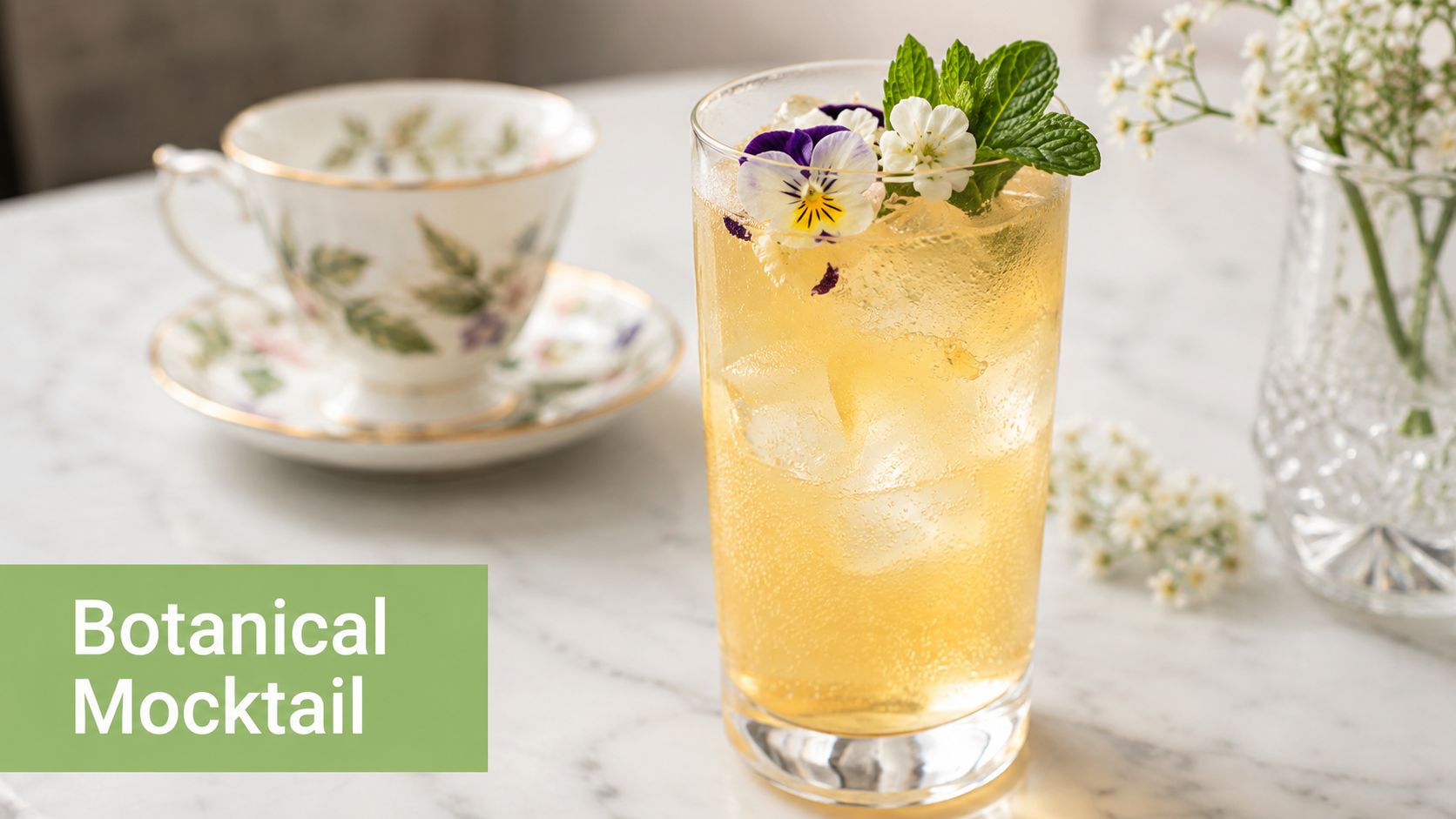
5. Kombucha Elderflower Mocktail with Botanical Tea
This is the garden-party serve. Floral, lifted, and elegant. It's one of the best examples of how kombucha can act like a serious mixer rather than a wellness add-on.
Use a delicate botanical tea such as chamomile, jasmine, or rose as the still base. Add a little elderflower cordial, chill thoroughly, and then top with sugar-free kombucha right before serving. Edible flowers make sense here, but balance is essential. You want perfume and brightness, not potpourri.
Why cafés are embracing this style
In the Australian hospitality sector, 28% of venues have formally expanded their non-alcoholic cocktail menus since 2023, with kombucha and cold-brew tea-based mocktails showing the highest adoption rate among cafés and bars in Melbourne and Sydney, according to alcohol-free menu growth in Australian venues. This drink fits that shift perfectly because it looks premium and photographs beautifully, yet it's straightforward to build during service.
A practical menu pairing is brunch or high tea. It also works well in event catering, where guests often want something celebratory in a flute or wine glass that isn't alcohol.
Keep the botanical tea light. Delicate flowers disappear if the base is over-brewed and tannic.
For retail shelves, elderflower and kombucha create a strong cross-sell story with entertaining, gifting, and spring-summer hosting.
6. Kombucha Turmeric Wellness Shot with Green Tea
Not every serve needs to mimic a cocktail glass. A wellness shot can still count as one of the most useful non alcoholic tea cocktails if it's layered, intentional, and enjoyable enough to repeat.
This version combines green tea, kombucha, turmeric, and ginger in a short, concentrated pour. The flavour should be bright and earthy, with enough acidity to keep it lively. A tiny pinch of black pepper can help round it out and support absorption of turmeric's key compounds.
Keep fermentation quality in mind
Kombucha quality matters more here because there's nowhere to hide rough edges. Sugar-free organic kombucha brewed in Australia's Hunter Valley can deliver live probiotic cultures with HACCP-accredited consistency at pH 3.2 to 3.6, live culture counts of at least 10^6 CFU/mL, and zero added sugar, according to Hunter Valley kombucha brewing standards. That kind of reliability is exactly what cafés and wellness bars need in a mixer.
If you'd like a broader functional drink idea to pair with this serve, our immune booster drink guide is a useful next stop.
- Use small glasses: This is best as a concise, punchy serve.
- Warm gently if extracting spices: Don't boil kombucha.
- Warn customers about turmeric: It stains benches, aprons, and sometimes smiles.
This style makes sense at smoothie bars, gym cafés, and health-focused retailers that want a grab-and-go recipe built around probiotic and tea ingredients rather than sugary shot formulas.
7. Iced Matcha Collagen Mocktail with Bone Broth
This one won't be for everyone, and that's part of its strength. It speaks directly to the wellness crowd that wants savoury, functional drinks with more substance than fruit juice and ice.
The method matters. Dissolve collagen into warm bone broth, whisk matcha separately, combine them, then chill over ice. A touch of vanilla or almond milk can soften the edges, but don't turn it into dessert. The appeal here is a clean, savoury-meets-green profile.
A niche serve for committed wellness customers
Australian health-conscious consumers aged 25 to 55 are increasingly prioritising sugar-free, probiotic-rich beverages as alternatives to alcohol, and non-alcoholic cocktail menus in Australian cafés grew by 34% between 2022 and 2024, according to functional beverage growth among Australian café menus. While this particular drink is more specialised than a spritz, it suits that broader appetite for functional serves.
For a fitness café, think post-class recovery menu. For a retailer, think recipe content aimed at people already buying collagen, broth, and matcha.
Here's a visual example of a wellness-style preparation approach:
The best commercial use for this drink is as a limited special. It starts conversations, builds authority, and tells customers your menu isn't stuck in the old mocktail mould.
8. Kombucha Passion Fruit Spritzer with Herbal Tea
What do you pour when someone wants a drink that feels festive, refreshing, and a little bit grown-up, without a drop of alcohol? This spritzer answers that beautifully. Passion fruit brings bright perfume and a soft tang. Herbal tea gives the drink its backbone. Kombucha adds that lively, sparkling edge that makes a simple fruit mix feel more like a proper café serve.
The easiest way to balance it is to treat it like building a good fruit tart. You need sweetness, acidity, and structure. Hibiscus gives a sharper, ruby-toned base that suits summer menus. Rooibos is rounder and gentler, which helps if your kombucha is already quite tart. Brew the tea a little stronger than you would for a mug, chill it fully, then top with kombucha just before serving so the fizz stays fresh.
Passion fruit can trip people up here. Too much pulp makes the texture muddy, especially in a tall glass. Strain most of it if you want a cleaner café-style finish, then spoon in a little fresh pulp at the end for aroma and visual appeal. Mint is enough for garnish. A heavy garnish stack only gets in the way of the drink's tropical profile.
A smart crossover serve for home kitchens, cafés, and retail counters
As noted earlier, younger Australian drinkers are helping drive demand for alcohol-free options that still feel social and stylish. This recipe suits that shift because it is easy to love on first sip, yet still has enough tea character to stand apart from standard mocktails.
For cafés and retailers, that makes it useful in more than one setting:
- Summer café special: Serve in a wine glass or large tumbler with crushed ice. It pairs well with prawn rolls, grilled halloumi salads, or passionfruit yoghurt cakes.
- Retail sampling pour: Batch the herbal tea ahead, keep the passion fruit separate, and finish with kombucha to order. Customers can taste the tea base clearly, which is helpful if you also sell the blend loose leaf or wholesale.
- Events and catering: Build it as a low-labour welcome drink. The colour sells it quickly, and the ingredients scale without much fuss.
For wholesale conversations, this recipe is particularly handy. A retailer can stock the herbal tea, a café can feature it as a seasonal spritz, and both can tell a clean story around flavour, low-alcohol socialising, and easy menu application. That bridge between home recipe and commercial serve is where tea does its best work.
9. Matcha Chai Latte with Spiced Milk
If the lavender latte is soft and floral, this one is bold and warming. Matcha and chai shouldn't fight each other. They should layer. The best versions let the spice open first, then the green, slightly savoury matcha note comes through on the finish.
Toast whole spices lightly, steep them properly, strain well, and then combine with smooth matcha paste and warm milk. Honey works nicely if you want a sweeter edge, but keep it restrained.
Better bitterness without relying on syrup
One of the biggest problems in this category is over-sweetness. Existing content often skips the challenge of recreating that bitter-sweet cocktail feel without leaning on syrup, even though 68% of consumers actively seek low-sugar options, according to Australian demand for low-sugar clean-label mixers. Chai spices help solve that problem because cardamom, ginger, cinnamon, and clove build complexity without needing much sugar at all.
A good tea cocktail doesn't need to taste sweet to feel complete. Spice, tannin, aroma, and texture can do the heavy lifting.
For cafés, this makes a strong winter special and pairs naturally with banana bread, spiced biscuits, or oat-based bakery items. For home drinkers, it's a smart evening drink when you want comfort without opening a bottle.
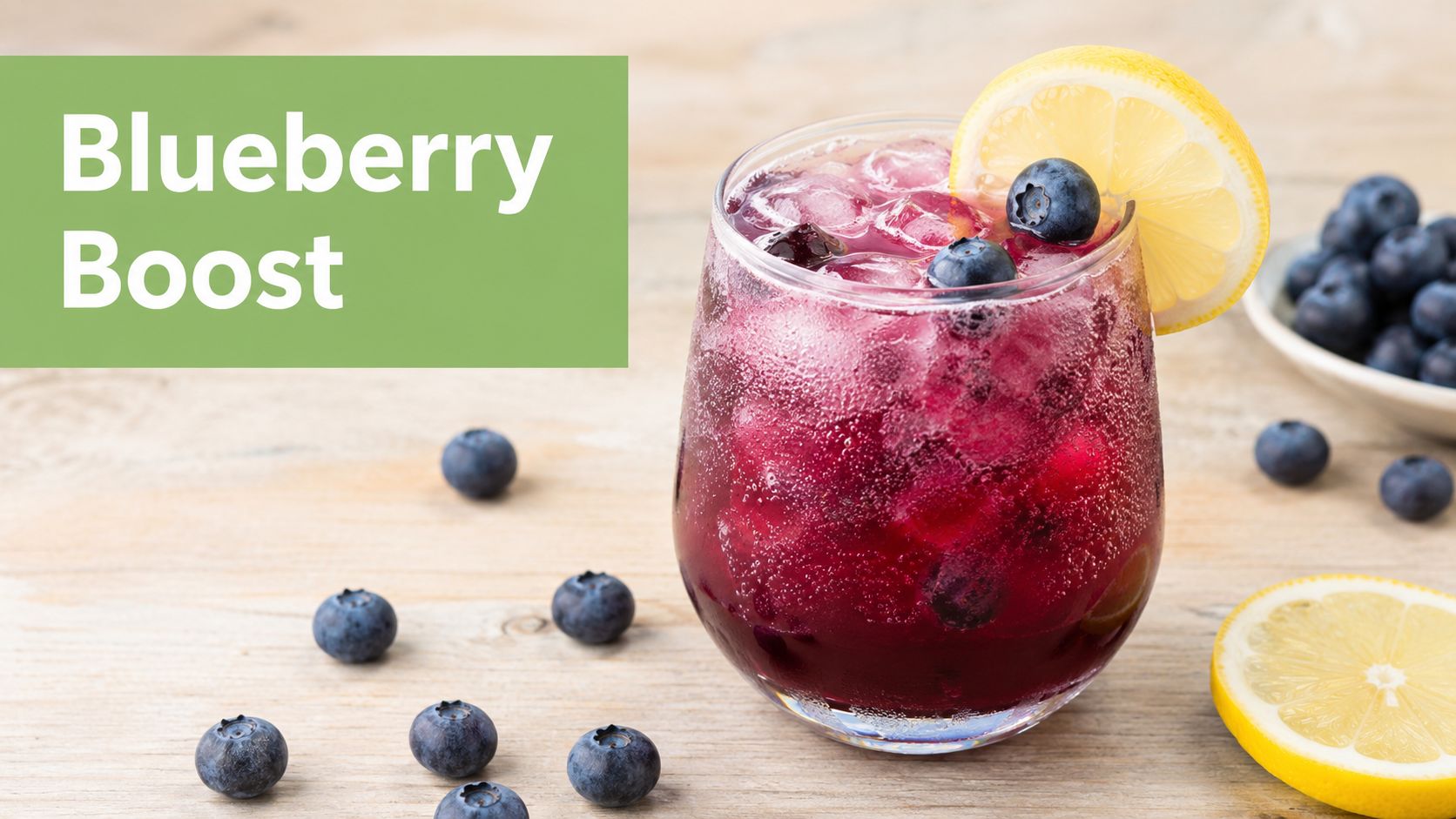
10. Kombucha Blueberry Antioxidant Mocktail with White Tea
This is the jewel-toned showpiece. Blueberries give colour and fruit depth. White tea keeps the structure light and elegant. Kombucha adds acidity and fine fizz, while lemon brightens the whole glass.
Use fresh berries when they're good, or high-quality frozen berries when they're not. Lightly crush or blend, strain if you want a smoother texture, and combine with chilled white tea before topping with kombucha.
Functional appeal with broad market interest
Australian consumer surveys indicate that 36% of health-conscious adults aged 25 to 40 prefer non-alcoholic tea cocktails with functional ingredients like L-Theanine or probiotics over traditional sugary mocktails, according to ready-to-drink mocktail market analysis. This drink lines up with that preference because it feels indulgent in colour and flavour, while still sitting firmly in the wellness space.
It's especially strong for:
- Upscale cafés: It looks premium with minimal garnish.
- Retail demos: Blueberry and lemon are familiar flavours that make kombucha easier for new customers.
- Brunch venues: It's a natural fit where guests want something celebratory but alcohol-free.
White tea is delicate, so keep the brew gentle. That's what gives this drink its elegance.
Top 10 Non-Alcoholic Tea Cocktails Comparison
| Beverage | Implementation Complexity 🔄 | Resource Requirements ⚡ | Expected Outcomes 📊 | Ideal Use Cases 💡 | Key Advantages ⭐ |
|---|---|---|---|---|---|
| Matcha Mint Lemonade Spritzer | Low, quick whisking technique required | Low, ceremonial matcha (premium), mint, lemon, sparkling water | Refreshing, antioxidant boost, sustained calm energy | Warm afternoons, health-focused café breakfast menus | High antioxidants; L-theanine for calm focus; Instagram-worthy |
| Kombucha Ginger Mocktail with Tea Base | Medium, careful kombucha handling to preserve fizz | Medium, live kombucha, green tea, fresh ginger, chilled storage | Probiotic support, digestive aid, subtle spice complexity | Premium non-alcoholic menus, wellness cafés | Probiotics + antioxidants; low sugar; Australian-made credibility |
| Iced Matcha Green Tea with Yuzu and Sparkling Water | Low–Medium, simple assembly, citrus balance needed | Medium, culinary matcha, yuzu (or substitute), sparkling water | Elegant, antioxidant-rich, sustained energy | Japanese-inspired premium menus, cosmopolitan cafés | Accessible cost (culinary matcha); clean minimalist flavour |
| Matcha Lavender Latte with Honey and Almond Milk | Medium, steeping lavender and milk heating required | Medium, ceremonial matcha, culinary lavender, almond milk, honey | Calming "calm focus", soothing aroma, gentle energy | Afternoon wellness rituals, mindfulness offerings | L-theanine + lavender synergy; comforting, wellness positioning |
| Kombucha Elderflower Mocktail with Botanical Tea | Medium, botanical tea selection and cordial sourcing | Medium, kombucha, elderflower cordial, botanical teas, garnishes | Floral, sophisticated flavour with probiotic benefits | Weddings, premium hospitality, garden events | Elegant, complex flavour; low sugar; premium presentation |
| Kombucha Turmeric Wellness Shot with Green Tea | Medium, concentrated prep and turmeric handling | Low–Medium, kombucha, turmeric (fresh/powder), ginger, green tea | Anti-inflammatory, immune support in small shot format | Wellness shots, fitness routines, daily rituals | Concentrated functional benefits; convenient shot format |
| Iced Matcha Collagen Mocktail with Bone Broth | High, multiple heat/whisking steps, careful integration | High, bone broth, collagen peptides, matcha, vanilla (costly) | Protein-rich recovery, skin and joint support | Fitness-focused cafés, post-workout menus, premium wellness venues | High protein/amino acids; recovery and skin benefits; premium appeal |
| Kombucha Passion Fruit Spritzer with Herbal Tea | Low–Medium, pulping/straining fruit and carbonation timing | Medium, kombucha, fresh passion fruit (seasonal), herbal tea, sparkling water | Tropical, probiotic, visually striking summer beverage | Summer menus, outdoor events, social-media-driven offerings | Exotic tropical flavour; strong visual appeal; low sugar |
| Matcha Chai Latte with Spiced Milk | Medium, spice toasting/steeping plus milk preparation | Medium, ceremonial matcha, chai spices, milk (or plant alternative) | Warming, aromatic, comforting sustained energy | Autumn/winter menus, cosy café specials | Warming spices with L-theanine; versatile milk options; seasonal favourite |
| Kombucha Blueberry Antioxidant Mocktail with White Tea | Medium, berry processing and gentle tea brewing | Medium, kombucha, blueberries (fresh/frozen), white tea, lemon | Triple antioxidant synergy for cognitive and immune support | Antioxidant-focused menus, wellness positioning, premium cafés | Strong antioxidant profile; striking purple colour; probiotic synergy |
Start Your Tea Cocktail Adventure Today
What if your next favourite party drink, café special, or retail-ready wellness serve started with tea instead of spirits?
Non alcoholic tea cocktails work because tea already gives you the structure that many mocktails struggle to find. Matcha brings body and a gentle savoury depth. Kombucha adds acidity, fizz, and complexity. Herbal and botanical teas layer in aroma the same way seasoning finishes a good meal. Once you understand that balance, building a drink feels far less intimidating.
Quality ingredients change the result straight away. At Pep Tea, we focus on organic Japanese Matcha and authentically brewed, sugar-free organic Kombucha because they create a clean, reliable base from the first sip. Our matcha is stone-ground, bright, and easy to whisk into both hot and iced recipes. Our kombucha is brewed in the Hunter Valley, NSW, with real fermentation and live cultures, giving home drinkers a refined mixer and giving cafés and retailers a product that holds up on a menu or shelf.
Tea already has a natural place in everyday Australian drinking habits, as noted earlier. What these recipes do is give tea a more social role. It becomes something you can serve in a wine glass at dinner, batch for brunch, or position as a premium zero-proof option beside cocktails, coffee, and sparkling drinks.
That matters at home and in business.
For home makers, these recipes offer a practical way to create drinks that feel grown-up, nourishing, and achievable without needing specialist bar gear. For cafés, the same recipes can become profitable signatures with small adjustments in batch prep, garnish, and glassware. For retailers, they point to a wider opportunity: ingredient bundles, seasonal gifting, and wellness-focused ranges that help customers recreate the experience at home. That café and retailer perspective is what makes tea cocktails especially useful. One good recipe can move from kitchen bench to menu board to retail display with only a few smart tweaks.
If you are deciding where to begin, match the recipe to the moment. The Matcha Mint Lemonade Spritzer suits warm afternoons and easy entertaining. The Kombucha Elderflower Mocktail fits brunch menus and customers who like floral, lighter serves. The Matcha Chai Latte is a natural winter favourite and works beautifully as a café special or retail-led recipe card feature.
Start with one recipe. Make it once as written, then adjust one element at a time, perhaps a little less sweetness, a brighter citrus note, or a different garnish. That is how confidence builds. Tea cocktails work a bit like cooking with a good base stock. Once the foundation is sound, small changes make a big difference.
If you're ready to make better non alcoholic tea cocktails at home, in your café, or on your retail shelf, explore Pep Tea for premium organic Japanese Matcha, Hunter Valley brewed sugar-free organic Kombucha, and practical recipe inspiration that makes functional drinking feel achievable and delicious.