
Tag: gluten free baking
8 Matcha Recipes Baking Healthy Bakers Will Love

Healthy matcha baking doesn't have to mean dry muffins, bland biscuits or a complicated pantry overhaul. Culinary-grade organic matcha brings vivid colour, earthy umami and a gentle tea character to baked and no-bake treats, so you can often reduce some of the sugar used only to create flavour. The result can be a soft lunchbox muffin, a portable oat bar, a celebration dessert or a comforting loaf, provided you judge the whole recipe rather than one fashionable ingredient.
This roundup brings together eight matcha recipes for healthy-minded baking, including grain-free cookies, dark chocolate brownies, cheesecake, bliss balls and chia muffins. Each one includes a practical texture tip, realistic substitutions and a reminder that “healthy” depends on the complete ingredient list and serving size. Matcha contains caffeine, too, so it isn't automatically suitable for everyone or caffeine-free because it's baked.
Pep Tea's organic culinary-grade matcha is the natural choice for recipes where tea flavour needs to stand up to flour, chocolate, fruit or dairy. Ceremonial-grade matcha is generally better reserved for whisking and drinking, while culinary grade suits cooking. If you're comparing options, Saporia's Clearspring matcha selection provides another useful reference point. The notes below cover sifting, dissolving, lowering added sugar, gluten-free swaps and keeping portions realistic.
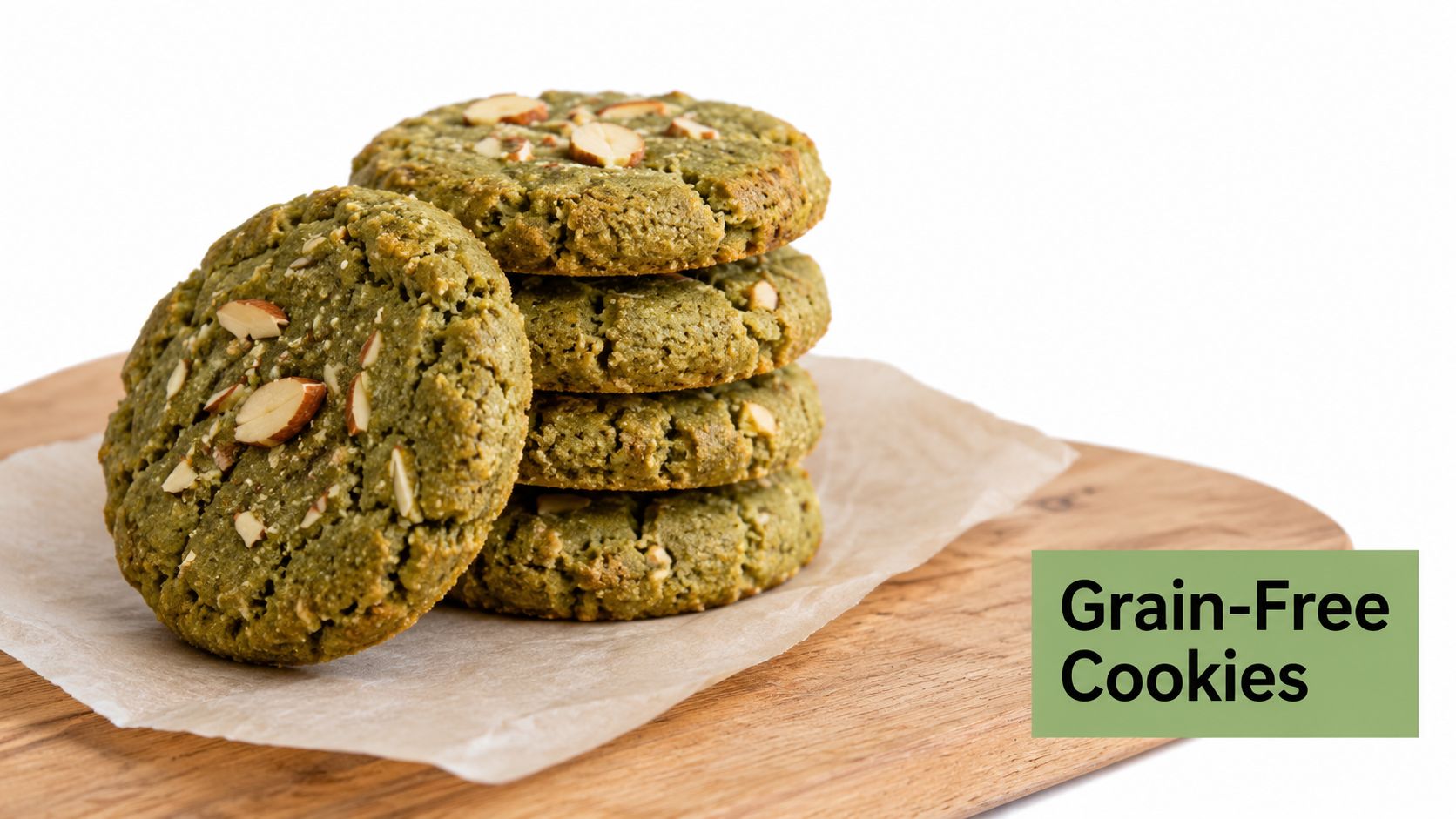
1. Matcha Almond Flour Cookies with Coconut Oil
These delicate cookies pair organic culinary-grade matcha with almond flour and coconut oil for a naturally grain-free bake. Almond flour gives the dough a tender, slightly nutty texture, while matcha supplies colour and depth so the recipe doesn't need to rely entirely on sweetness for interest.
They're a useful option for gluten-free households, although almond flour isn't suitable for people with nut allergies and “gluten-free” doesn't automatically mean low in energy or sugar. Keep the sweetener modest, and let a pinch of sea salt sharpen the matcha's earthy character.
Recipe card
- Base: Almond flour, coconut oil, culinary-grade matcha, egg or suitable binder, a restrained sweetener and sea salt.
- Preparation: Sift the matcha before mixing it through the dough. Chill the dough for 30 minutes so the cookies hold their shape.
- Baking: Bake at 160–170°C, watching for set edges and soft centres.
- Finish: Add sliced almonds or a light dusting of matcha after cooling.
Practical rule: Sifting matters more with almond flour because small matcha pockets can taste sharply bitter in an otherwise mild cookie.
Serve one with an unsweetened matcha latte at home, or offer the cookies as a small café accompaniment. Coconut oil contributes fat, and almond flour contributes energy, so describe these as lower-sugar cookies, not unlimited snacks. For a nut-free version, use a tested seed-based flour blend rather than swapping ingredients by guesswork, because the dough's structure may change.
2. Matcha Green Tea Protein Brownies with Dark Chocolate
Matcha can make a dark chocolate brownie taste more layered, but more powder is not always better. Both ingredients bring bitterness and roasted depth, so the goal is balance. Dark chocolate supplies a rich base, while a modest amount of matcha adds a lingering tea note without turning the brownie harsh.
Protein powder changes the batter's structure. Plant-based varieties absorb liquid differently, much like adding extra flour, so check the mixture before baking. It should look thick and glossy, not stiff or crumbly. If the batter feels dry, a small adjustment to the liquid or oil may help, depending on the powder's instructions.
Recipe card
- Core ingredients: Dark chocolate, plant-based protein powder, flour or a suitable alternative, matcha, eggs or a plant-based binder, oil and a modest sweetener.
- Matcha paste: Whisk the powder with hot water at 60°C before mixing it into the batter. This helps distribute the colour and reduces dry pockets.
- Chocolate base: Melt the chocolate gently over a water bath so it does not seize.
- Mixing: Fold the ingredients together rather than beating them. Overmixing can make the brownies dense.
- Finish: Cool completely before slicing, then add a light matcha dusting if you want a brighter surface.
A gluten-free flour blend can replace standard flour, but choose one designed for baking and expect a slight texture change. If the dark chocolate tastes especially intense, a pinch of salt can sharpen its flavour without relying on extra sweetener.
The brownies firm as they rest. Warm slices may look underbaked and develop ragged edges, while cooled brownies cut more cleanly. For another practical combination of matcha and protein ingredients, try Pep Tea's matcha protein shake recipe.
Serve a small piece with water or an unsweetened drink. Matcha contains caffeine, and protein powder does not turn a brownie into automatic post-workout food. Consider the full recipe, portion and overall eating pattern when describing its wellness value.
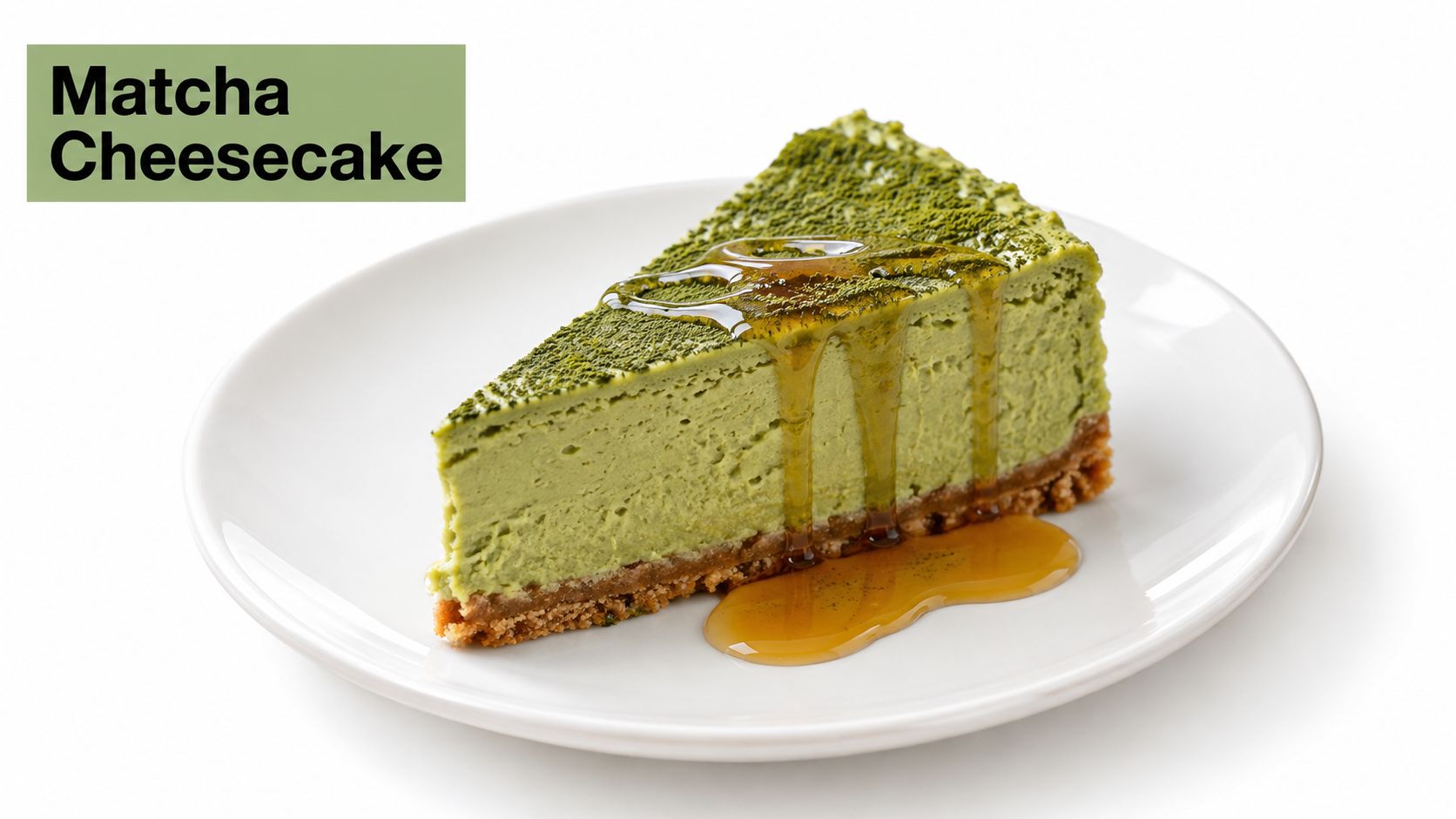
3. Matcha Cream Cheese Cheesecake with Ginger Kombucha Drizzle
Matcha cheesecake works best when the tea remains recognisable without dominating the filling. Cream cheese rounds off matcha's bitterness, while ginger kombucha adds acidity and a warm aromatic note to the drizzle. The result suits a dinner table or Japanese-inspired café menu, although fermentation does not make cheesecake a health food.
Start with the powder. Sift the matcha two or three times, then whisk it with a little warm water to make a smooth paste. This paste spreads colour and flavour through the dense cream cheese more reliably than dry powder, which can leave green specks or bitter pockets.
Build the cheesecake
Use cream cheese, eggs, matcha paste, vanilla and a measured sweetener for the filling. A conventional biscuit base gives familiar crunch, while an oat and nut base offers a different texture and may suit a gluten-free adaptation if every ingredient is checked.
Bake on a lower oven shelf with a water bath. The surrounding moisture supports gentler, more even cooking, which helps the filling stay soft rather than turning grainy. Cool the cake gradually at room temperature, then refrigerate it. Rapid cooling can encourage cracks, and overbaking can dry the centre.
For the topping, strain Pep Tea's Lemon & Ginger Kombucha and reduce it gently until concentrated. Use a thin drizzle, since it should sharpen the dessert rather than replace the sugar already calculated in the recipe.
Matcha supplies flavour and colour. It does not cancel the nutritional contribution of cream cheese, biscuits or sweeteners.
Serve smaller slices, with extra drizzle on the side for guests who prefer more acidity or sweetness. For café service, list allergens clearly and calculate nutrition from the exact ingredients used.
4. Matcha Oat Energy Bars with Dates and Chia Seeds
These no-bake bars are a practical pantry recipe, especially when you want a compact snack without turning on the oven. A food processor breaks down the dates into the sticky base, while oats provide chew, chia seeds add small bursts of texture, and nut butter holds everything together. Matcha brings a clear tea flavour, so you may need fewer chocolate chips or no coating at all.
“Energy bar” describes the format, not a guaranteed physiological effect. Dates and other dried fruit still contain sugar, which means a bar made without refined sugar is not sugar-free. That distinction matters for a walk, desk snack or lunchbox, particularly because oats, dates and nut butter create a dense serve.
Build the mixture
- Start with the dates: Pulse them until they become a tacky paste. If they are firm, soften them briefly before processing.
- Prepare the matcha: Whisk it with a small amount of warm water. This spreads the powder through the mixture and helps prevent bitter green pockets.
- Combine: Add rolled oats, chia seeds and nut butter, then stir through the matcha mixture until the ingredients hold together.
- Press and chill: Firmly pack the mixture into a lined tin. Refrigerate for at least two hours before slicing.
- Store: Keep the bars refrigerated for up to two weeks, or freeze them individually wrapped for up to two months.
A hot, wet knife gives cleaner edges. Crumbling means the mixture needs a little more nut butter or a splash of milk. If it feels oily, add oats gradually, then chill it again before assessing the texture.
For a lunchbox-friendly flavour, use less matcha and add orange zest, cinnamon or toasted coconut. Sunflower seed butter provides a nut-free alternative, but check packaged ingredients for allergen cross-contact. Smaller portions make sense when dates, nut butter and oats are pressed into a compact bar.
5. Matcha Lemon Pound Cake with Polenta and Olive Oil
A pound cake does not need butter to feel rich. Mild extra virgin olive oil keeps this version moist, while lemon lifts matcha's grassy, slightly savoury character. Fine polenta adds a delicate grain and lightly golden crumb, so the result has more texture than a plain sponge.
Choose the oil carefully. A peppery or strongly fruity variety can dominate the tea, whereas a mild one supports it. Culinary-grade matcha gives the clearest colour and flavour without turning the cake overly bitter.
A balanced formula
- Dry base: Fine polenta, flour or a tested gluten-free blend, baking powder and culinary-grade matcha.
- Aromatics: Lemon zest and vanilla, with a modest amount of sweetener.
- Liquid ingredients: Room-temperature eggs and mild extra virgin olive oil.
- Optional finish: Lemon juice mixed with icing sugar for a light glaze.
Sift the matcha, polenta and flour together. This distributes the powder evenly, much like spreading food colouring through a batter before it forms concentrated pockets. Rub freshly grated lemon zest gently into the dry mixture with your fingertips to release its aromatic oils. Room-temperature eggs also combine more smoothly with the oil, helping the batter emulsify.
Mix only until the ingredients come together.
Texture check: Stop stirring as soon as no dry patches remain. Extra mixing can make the crumb heavy, especially with a gluten-free flour blend.
For a gluten-free cake, verify the polenta, baking powder and flour blend against the needs of the person eating it. Polenta itself does not rule out gluten cross-contamination.
The glaze sharpens the citrus and improves presentation, but it increases sweetness. Leave it off for a less-sweet slice, then serve the cake with plain yoghurt and fresh berries. That combination keeps the lemon, matcha and olive oil in balance while adding a practical portion contrast for afternoon tea.
6. Matcha White Chocolate Macadamia Bliss Balls
Matcha bliss balls can taste like balanced tea or like sweetened white chocolate with green colouring. The difference comes from the matcha grade, amount and chilling time. Choose culinary-grade matcha for baking, then sift it so its grassy, umami flavour spreads evenly through the mixture.
Use macadamia butter for a smooth centre. Finely chopped macadamias create more texture and make the bites feel less like a truffle. White chocolate brings sweetness and fat, so a restrained version can use less of it and more macadamia, provided the mixture still binds.
Quick recipe guide
- Melt the white chocolate gently in a double boiler or in 30-second microwave bursts.
- Stir in macadamia butter or finely chopped nuts, vanilla and sifted matcha.
- Refrigerate the mixture for one hour before shaping. Chilling works like firming soft clay. It makes rolling cleaner and reduces sticking.
- Finish with desiccated coconut or a very light matcha dusting.
- Place the finished balls on parchment paper or a silicone mat for easier storage and serving.
If the mixture feels greasy, add a little more finely chopped macadamia rather than extra matcha. If it crumbles, it needs more binding from the chocolate or nut butter. Lemon zest can cut through excessive sweetness, although it changes the flavour toward a brighter citrus profile.
Pep Tea's matcha energy balls recipe provides another format for batch preparation. Treat these as confectionery-style bites rather than a sugar-free snack. Their compact size supports deliberate portions, while their sweetness can make several easy to eat unnoticed.
7. Matcha Banana Bread with Walnut and Kombucha Reduction
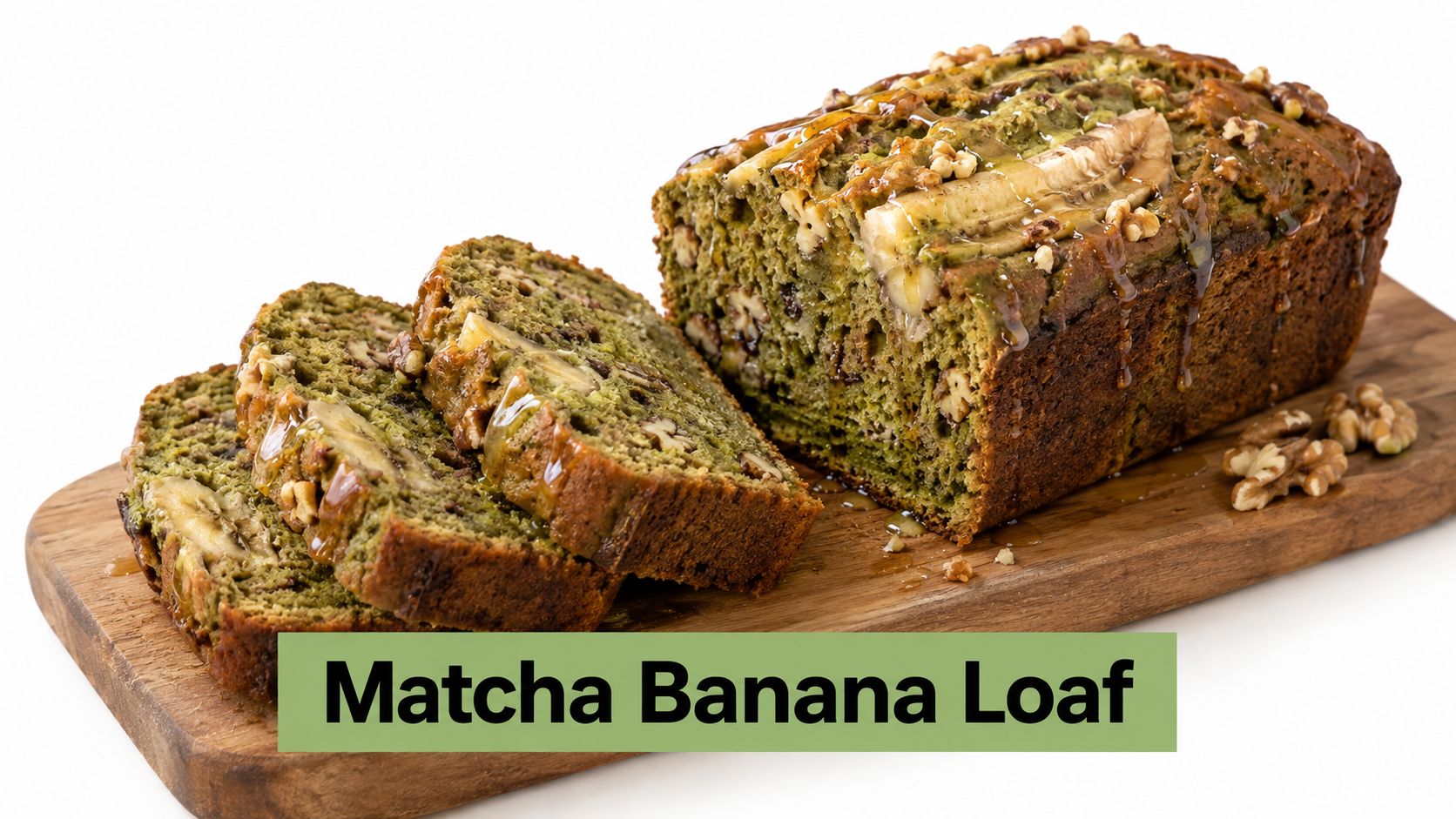
Matcha banana bread needs balance, not a heavy hand with the powder. Very ripe bananas supply moisture and fruit sweetness, while matcha adds a gentle green colour and savoury depth. Toasted walnuts bring aroma and crunch, giving the soft loaf a more interesting crumb.
For a pantry-conscious version, reduce the added sweetener when the bananas are heavily speckled with brown. Bananas still contribute naturally occurring sugars, and honey, maple syrup or a glaze adds more. Keep the liquid ingredients that support the loaf's structure, even when adjusting sweetness.
Recipe card
- Bananas: Mash overripe bananas with brown spots until mostly smooth.
- Matcha: Sift it with the flour and raising agents so the colour and flavour distribute evenly.
- Gluten-free option: Use a tested gluten-free flour blend designed for loaf cakes, rather than a single flour that may leave the crumb heavy.
- Walnuts: Toast them lightly, cool them, then fold them through the batter.
- Mixing: Combine wet and dry ingredients gently. Overmixing can make the loaf dense.
- Reduction: Simmer sugar-free kombucha over low heat until syrupy, strain any sediment, and brush a thin layer over the warm loaf.
A thin reduction acts like a finishing glaze, adding acidity without covering the matcha. If the loaf tastes bitter, use less matcha next time or pair it with riper bananas. If the centre stays wet, check that the loaf has cooled fully before slicing, since the crumb continues to set as it rests.
Serve a modest slice at brunch with plain tea. Sugar-free kombucha works as a separate drink, adding refreshment without making the bread probiotic or nutritionally complete.
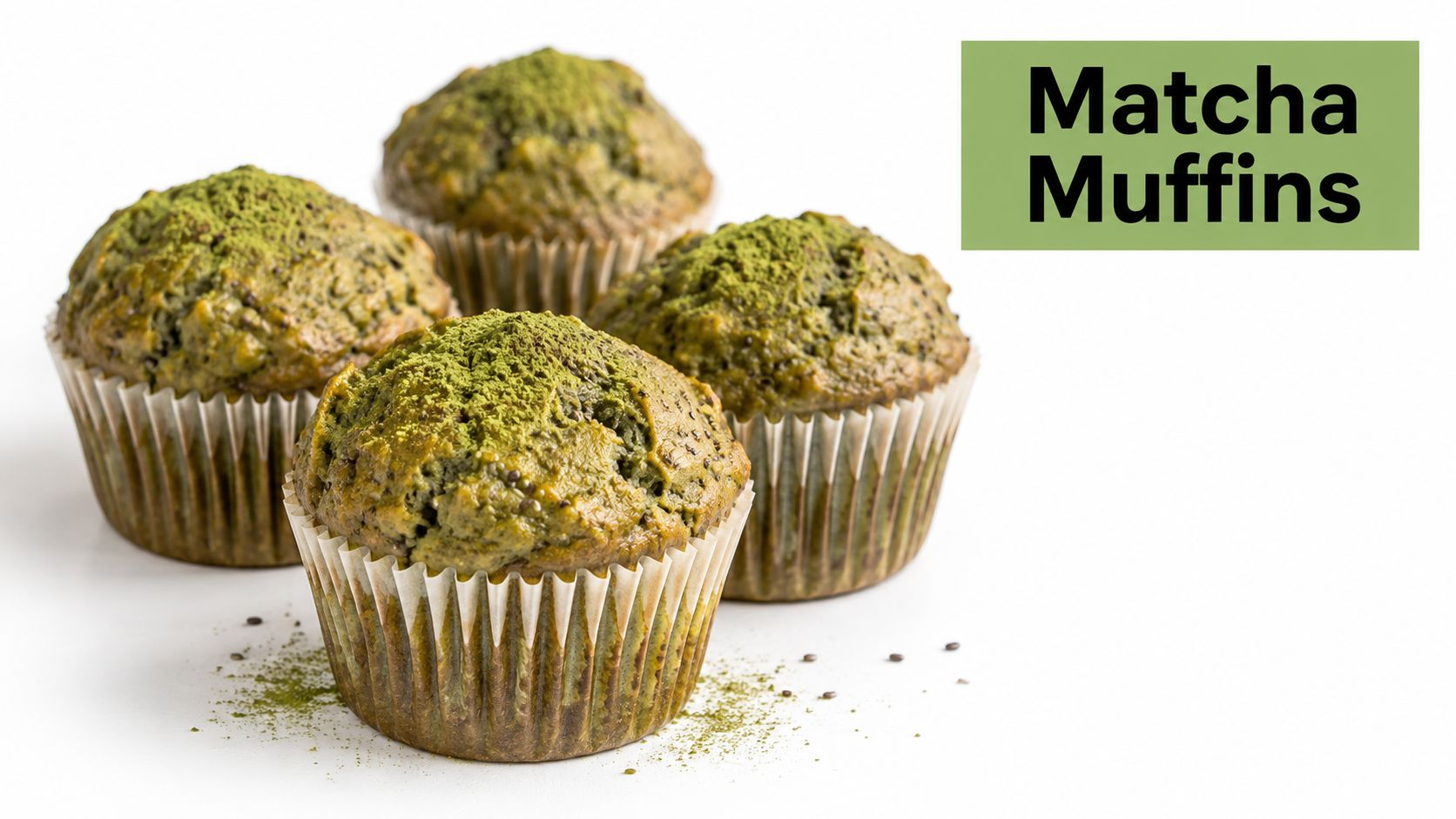
8. Matcha Chia Seed Muffins with Honey and Vanilla Bean
Matcha muffins do not need a heavy glaze to taste inviting. The better balance is a soft crumb, gentle sweetness and enough vanilla to round out the tea's grassy edge. Chia seeds bring small bursts of texture, while wholegrain flour makes the muffin more substantial.
Choose culinary-grade matcha with a fresh green colour and fine texture. Sift it with the flour and raising agents to prevent bitter pockets and uneven colour. Honey and maple syrup both sweeten the batter, but they still count as sugars in the finished muffins.
Start with the chia mixture. Stir the seeds into a little plant-based milk and leave them for 10 minutes. They absorb liquid, much like tiny sponges, so pre-hydration helps protect the crumb from becoming dry during baking.
Bake by texture, not colour
Scrape the vanilla bean seeds into the wet ingredients, then combine them with the hydrated chia. Sift the matcha and dry ingredients separately before folding everything together. Stop mixing as soon as no dry streaks remain, because overworking the batter can produce dense muffins.
Fill each muffin cup to three-quarters capacity. Add a small pinch of matcha on top before baking for colour and aroma.
For a brighter flavour, fold through berries or finely grated citrus zest. Their acidity can balance earthy matcha without adding a thick, highly sweet glaze. A dairy-free batch works with plant milk and a tested egg replacement. Choose a milk with enough body to support the chia mixture.
Caffeine note: Baking does not remove matcha's natural caffeine. The amount in each muffin depends on the powder used, the product and the number of portions.
For Australian readers who are pregnant, breastfeeding or caffeine-sensitive, the NSW pregnancy healthy-eating guidance recommends a maximum of 200 mg caffeine per day during pregnancy and breastfeeding. Check the supplier's information, divide the matcha used across the muffins and include other caffeine consumed that day.
Healthy Matcha Baking, 8-Recipe Comparison
| Title | Implementation Complexity 🔄 | Resources & Time ⚡ | Expected Outcomes 📊 | Ideal Use Cases 💡 | Key Advantages ⭐ |
|---|---|---|---|---|---|
| Matcha Almond Flour Cookies with Coconut Oil | 🔄 Low, simple mixing/baking; careful measurement needed | ⚡ Quick (15–20 min); moderate cost (almond flour, coconut oil) | 📊 Gluten-free, low‑sugar, sustained energy; ⭐⭐⭐⭐ | Health-conscious snacks, cafés, gifting | Nutritient-dense, low‑carb, MCTs + L‑theanine |
| Matcha Green Tea Protein Brownies with Dark Chocolate | 🔄 Medium, careful mixing; chocolate handling | ⚡ Moderate, melting chocolate, baking; protein powder needed | 📊 High‑protein, fudgy texture; ⭐⭐⭐⭐ | Post‑workout snack, fitness cafés, vegan desserts | Protein-rich, indulgent yet nutrient-dense |
| Matcha Cream Cheese Cheesecake with Ginger Kombucha Drizzle | 🔄 High, precision baking, water bath, long chill | ⚡ Longer prep + overnight chill; higher ingredient cost | 📊 Restaurant-quality, probiotic glaze; ⭐⭐⭐⭐⭐ | Special occasions, high‑end cafés, signature dessert | Functional (matcha + probiotics), visually impressive |
| Matcha Oat Energy Bars with Dates and Chia Seeds | 🔄 Low, no‑bake or light bake; very accessible | ⚡ Very quick (10–15 min hands‑on); budget‑friendly pantry staples | 📊 Portable, high‑fiber, sustained energy; ⭐⭐⭐⭐ | Meal prep, pre‑workout, hiking, lunchboxes | Cheap, batch‑friendly, gluten‑free option, omega‑3s |
| Matcha Lemon Pound Cake with Polenta and Olive Oil | 🔄 Medium, standard cake technique, gentle handling | ⚡ Moderate bake time; moderate ingredient cost (polenta, olive oil) | 📊 Moist, elegant crumb with citrus lift; ⭐⭐⭐⭐ | Afternoon tea, cafés, breakfast cake | Dairy‑free option, long shelf life, sophisticated flavour |
| Matcha White Chocolate Macadamia Bliss Balls (No‑Bake) | 🔄 Low, no‑bake, simple assembly and chill | ⚡ Quick to make (≈30 min incl. chilling); higher cost (macadamias, quality white chocolate) | 📊 Decadent, giftable bites; shelf‑stable refrigerated; ⭐⭐⭐⭐ | Gifting, events, café grab‑and‑go | Minimal skill, premium presentation, customizable |
| Matcha Banana Bread with Walnut and Kombucha Reduction | 🔄 Low, basic loaf technique + reduction step | ⚡ Moderate, bake time + 15–20 min reduction; uses common pantry items | 📊 Comfort loaf with probiotic glaze; ⭐⭐⭐⭐ | Brunch menus, cafés, bake sales | Uses overripe bananas, freezeable, crowd‑pleasing functional twist |
| Matcha Chia Seed Muffins with Honey and Vanilla Bean | 🔄 Medium, whole‑grain batter, chia prep affects texture | ⚡ Moderate bake time; ingredients like vanilla bean add cost | 📊 High‑fibre, photogenic breakfast item; ⭐⭐⭐⭐ | School lunches, cafés, meal prep | Versatile, omega‑3s from chia, naturally coloured and sweetened |
Make Matcha Baking Work for Your Kitchen
The best recipe depends on the occasion, the texture you want and how much preparation you can manage. Choose muffins or oat bars when you want a batch for breakfasts, lunchboxes or portable snacks. Choose cookies when you need individually portioned, gluten-free-friendly treats, remembering that almond flour creates a nut-based recipe rather than a universally suitable one.
For afternoon tea, banana bread and lemon polenta pound cake offer familiar formats with more interesting flavour. The banana loaf is soft and comforting, while the pound cake is brighter and more refined. Cheesecake and bliss balls suit entertaining because they can be prepared ahead and presented as deliberate, small serves rather than everyday grazing food.
A few technique rules will improve almost every matcha bake:
- Measure the matcha carefully: More powder doesn't always mean better flavour. Higher doses can increase bitterness.
- Sift before mixing: This prevents concentrated green pockets and improves colour consistency.
- Dissolve when the mixture allows: A smooth paste works especially well in dense batters, cheesecake fillings and chocolate mixtures.
- Avoid overmixing: Fold muffins, brownies and loaves until the ingredients have just combined.
- Judge sweetness with the whole recipe: Lemon, vanilla, ginger, berries, dark chocolate and salt can make a lower-sugar bake taste more complete.
- Record the yield: Divide the total matcha used by the number of portions if caffeine awareness matters.
Australia's food-consumption data provides useful context for taking sugar reduction seriously. In 2022–23, apparent free-sugar consumption was 67 grams per person per day, and 89% of that consumption came from discretionary foods, a category that includes cakes, biscuits and pastries, according to the Australian Bureau of Statistics. That doesn't prove matcha baking is healthy, but it does support a practical approach: reduce added sugar where you can, keep portions measured and don't let colour or wellness language disguise a rich recipe.
Natural sweeteners aren't sugar-free. Honey, maple syrup, dates, ripe bananas and kombucha reductions can all contribute sweetness, and the final nutrition depends on the exact quantities. Matcha also doesn't cancel out butter, cream cheese, chocolate, oil or refined flour, so describe these recipes as health-conscious adaptations or lower-sugar options only when the formulation supports that wording.
Matcha selection matters, too. Use culinary-grade organic matcha for baking and reserve ceremonial grade for whisking when you want to appreciate its finer drinking character. For safety, avoid isolated caffeine powder or concentrated performance products. Food Standards Australia New Zealand's guidance on caffeine powders states that pure or highly concentrated caffeine products are banned from retail sale, and foods containing 5% or more caffeine in solid or semi-solid form are banned from sale to the public. Ordinary tea products with naturally occurring caffeine aren't included in that ban, but food-grade matcha from a legitimate retail product remains the sensible choice.
Finally, think about the pairing. A lightly sweetened matcha muffin doesn't need to sit beside a sugary latte, syrup or sweetened mixer. Pep Tea's sugar-free organic kombucha can provide a refreshing Australian-made option alongside a bake, but the drink is a beverage pairing, not proof that the dessert supports gut health or immunity. Explore different matcha strengths, taste as you go and choose the recipe that fits your kitchen rather than chasing a perfect label.
Pep Tea offers organic Japanese matcha suited to whisking and culinary use, along with sugar-free organic kombucha brewed in the Hunter Valley, NSW. Visit Pep Tea to explore matcha for your next bake and find a refreshing kombucha pairing for the finished treat.
Perfect Gluten Free Raspberry and White Chocolate Muffins
There's a good chance you're here because you've had one too many disappointing gluten-free muffins. They looked promising going into the oven, then came out heavy, gummy, dry, or oddly wet around the berries. That's frustrating when all you wanted was a soft, bakery-style muffin to go with a quiet morning tea or an easy afternoon break.
The good news is that great gluten free raspberry and white chocolate muffins are absolutely achievable at home. They don't need to taste “good for gluten-free”. They can taste good. The balance is what makes this style such a keeper. Tart raspberries cut through the sweetness, white chocolate rounds everything out, and the right method gives you a tender crumb instead of a dense one.
The Perfect At-Home Café Muffin Awaits
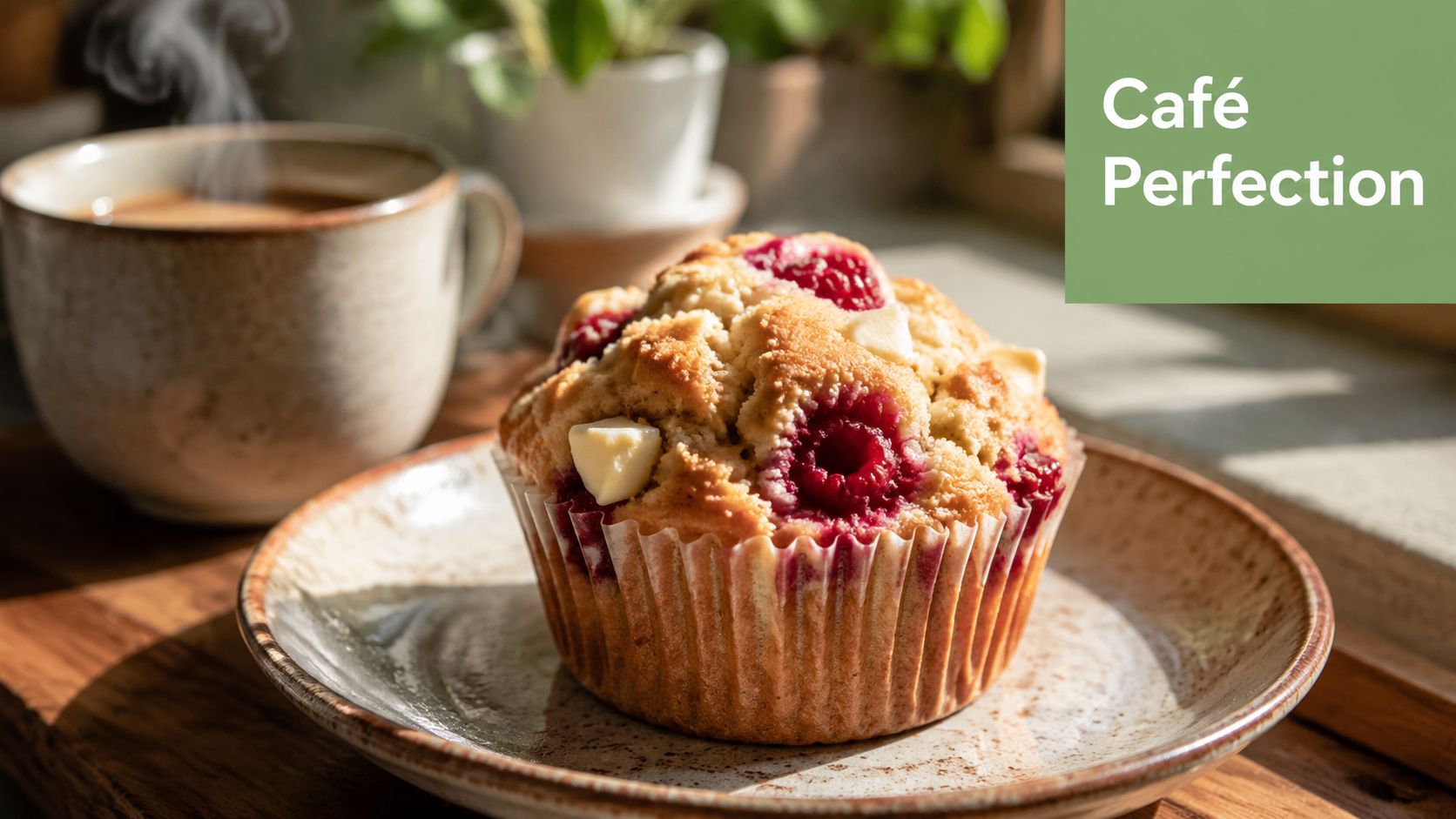
A proper café muffin has a few things going for it. It rises well, keeps a soft centre, and feels a bit generous. You get pockets of fruit, creamy sweetness from the chocolate, and a top that looks like it belongs in a bakery cabinet rather than a rushed weekday bake.
That's why this flavour combo works so well in Australian kitchens. Gluten-free eating isn't a tiny niche anymore. The Australian market for gluten-free products was valued at about USD 444.4 million in 2023 and is projected to reach about USD 730.2 million by 2030, which shows how mainstream these food choices have become, as noted by this gluten-free market context. Home bakers want the same quality they see in cafés, and they want it without guesswork.
Why this muffin earns a repeat bake
The best version of this muffin doesn't try to hide that it's gluten-free. It leans into a method that suits gluten-free flour, uses fruit carefully, and treats moisture as something to manage, not fear.
A few things make the difference:
- The flour blend matters: A good gluten-free plain flour blend gives structure and keeps the crumb from falling apart.
- Raspberries need gentle handling: They bring colour, flavour, and moisture, but they can also turn batter patchy and heavy if they're crushed.
- White chocolate is more than sweetness: It softens the tartness of the berries and gives the muffin that café-style finish.
These muffins are at their best when they feel a little indulgent and a little practical. That's the sweet spot for everyday baking.
There's also a wider reason this kind of bake keeps showing up in cafés and market stalls. Familiar bakery items with clear dietary appeal are easier for both home bakers and small food businesses to work into a regular offering. If that side of the industry interests you, this profitable dessert food truck guide is a useful read because it shows how classic treats stay relevant when they're done well.
The kind of result you're aiming for
Think of a muffin with a lightly golden top, soft interior, and visible pieces of raspberry rather than a pink, collapsed centre. The white chocolate should hold its shape in little pockets instead of vanishing into greasy streaks.
That's the goal here. Not a fussy bake. Just a dependable one.
Gathering Your Quality Ingredients
A strong muffin starts before you mix anything. With gluten-free baking, ingredients don't just add flavour. They control structure, moisture, and how well the muffin holds together once it cools.
For this recipe, I'd treat the shopping list as part of the method. If one ingredient is off, the texture usually tells on you.
The core ingredient list
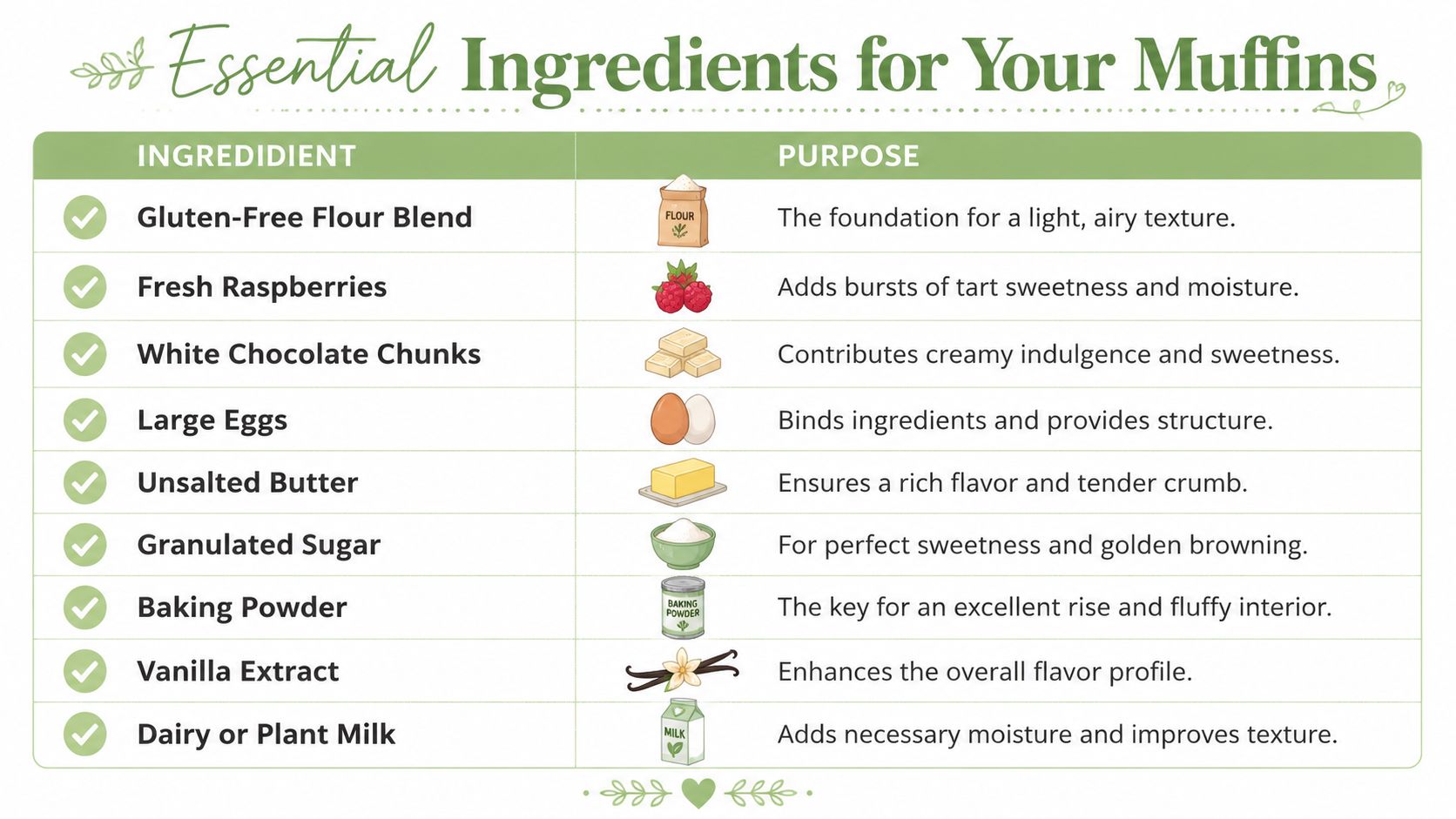
Here's a reliable base for 12 standard muffins.
| Ingredient | Metric | Cups and spoons |
|---|---|---|
| Gluten-free flour blend | 260 g | 2 cups |
| Baking powder | 10 g | 2 tsp |
| Fine salt | 3 g | 1/2 tsp |
| Caster or granulated sugar | 150 g | 3/4 cup |
| Unsalted butter, melted and cooled | 115 g | 1/2 cup |
| Large eggs | 2 | 2 |
| Vanilla extract | 10 ml | 2 tsp |
| Milk or unsweetened plant milk | 180 ml | 3/4 cup |
| White chocolate chips or chunks | 120 g | about 3/4 cup |
| Fresh raspberries | 120 g | about 1 cup loosely packed |
What to look for when buying each ingredient
The flour is the first decision. Choose a gluten-free all-purpose blend with xanthan gum included if possible. That saves you from balancing binders yourself and gives the batter a better chance of holding a soft crumb.
White chocolate deserves more attention than people give it. In gluten-free muffin batter, it's best to use chips, drops, or chopped pieces that hold their shape. A product made with a solid cocoa butter base usually behaves better than a very sugary compound-style option.
For raspberries, fresh is the easier path. Australia produces around 5,500 tonnes of raspberries and blackberries annually, and protected cropping systems help make good fresh berries available for recipes like this across much of the year, according to this overview of Australian berry supply.
Ingredient rule: If your raspberries are very soft or leaking juice in the punnet, save them for compote and buy firmer ones for muffins.
The practical trade-offs
Some swaps are fine. Some are where muffins start to go wrong.
- Butter versus oil: Butter gives fuller flavour. Oil can produce a slightly softer crumb, but it changes the taste.
- Fresh versus frozen raspberries: Fresh berries are easier to fold through cleanly. Frozen berries can work, but they usually release more moisture.
- Chips versus chopped block chocolate: Chips distribute more evenly. Chopped chocolate gives bigger pockets and a more rustic finish.
If you're also refreshing your tins, liners, or mixing tools, it helps to explore Chef Shop's baking range before bake day so you're not wrestling with shallow pans or flimsy trays.
For readers already building out a gluten-free pantry, Pep Tea also has a helpful post on adding another great gluten-free range that fits nicely with this style of home baking.
The Step-by-Step Baking Method
Good gluten-free muffins come from order and restraint. Get everything measured first, keep the batter cool enough to protect the chocolate, and don't stir past the point of “just combined”.
Set up before you mix
Preheat the oven well. Line a 12-hole muffin tin. Melt the butter, then let it cool so it's warm rather than hot. Wash the raspberries only if they need it, and dry them carefully.
In a separate bowl, whisk together the gluten-free flour, baking powder, and salt. In another bowl, whisk the eggs, sugar, vanilla, melted butter, and milk until smooth.
This is also the point where a little organisation saves the bake. Keep the white chocolate and raspberries ready to fold in last, not sitting in the wet mixture while you finish other jobs.
Build the batter with a light hand
Add a small splash of the liquid mixture to the dry ingredients first and stir it through. Then add the rest of the wet ingredients and mix until there are no obvious dry patches. You're looking for a thick batter, but not one that feels stiff or chalky.
A useful benchmark from Australian gluten-free baking guidance is that pre-mixing dry ingredients with a small amount of liquid can help reduce the over-hydration problem that showed up in 78% of failed home-baking trials, where gummy texture was the issue. That same guidance notes this is a common failure point in gluten-free muffins.
Now pause and check temperature. If the batter feels warm from the butter, let it sit briefly. White chocolate melts too early if it goes into batter that's too warm.
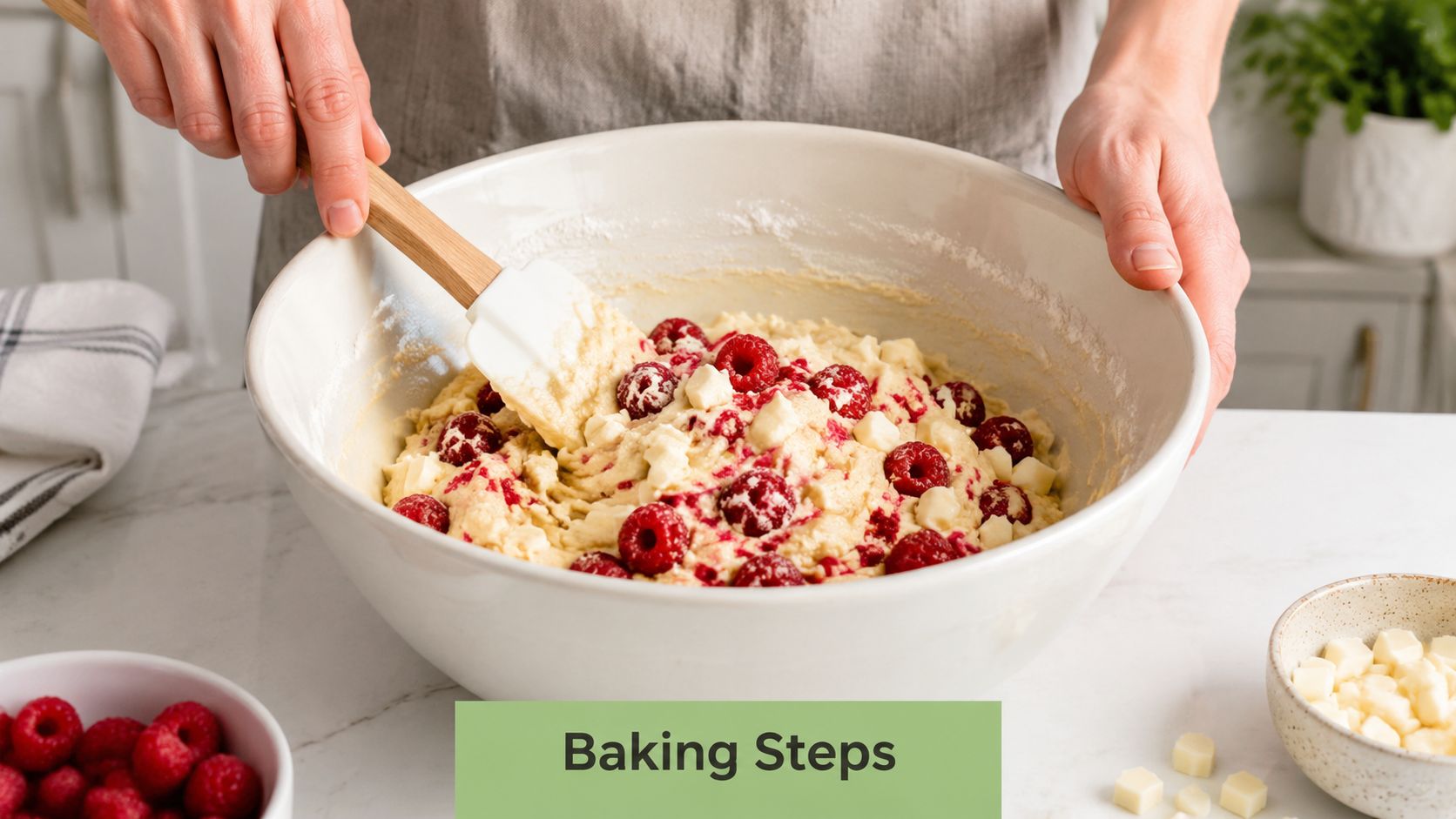
Then fold in the chocolate and raspberries gently. Don't beat them in. Use a spatula and broad strokes from the bottom of the bowl.
If your batter turns bright pink before it reaches the tin, the raspberries have been overworked.
Fill and bake for height and an even centre
Spoon the batter into the muffin tin evenly. Fill each cavity generously so you get a rounded top rather than a flat one. If you like, press a few extra pieces of white chocolate on top for appearance.
Bake using the two-stage method. Start at 205°C for the first 5 minutes, then reduce to 175°C for the remaining 20 to 25 minutes. This method is linked to a 75% success rate in achieving a perfect bake and helps prevent tunneling.
For another flavoured bake that uses a similarly thoughtful approach, Pep Tea's matcha muffins recipe is worth bookmarking.
A quick visual walkthrough can also help if you like to bake by feel as much as by written method.
Know when they're done
The tops should be lightly golden and spring back when touched. A skewer inserted near the centre should come out clean of wet batter. A bit of melted white chocolate on the skewer is fine. Raw batter isn't.
Leave the muffins in the tin briefly, then move them to a rack. Gluten-free muffins often seem delicate straight from the oven, but they settle as the crumb finishes setting.
Mastering Gluten-Free Muffin Texture
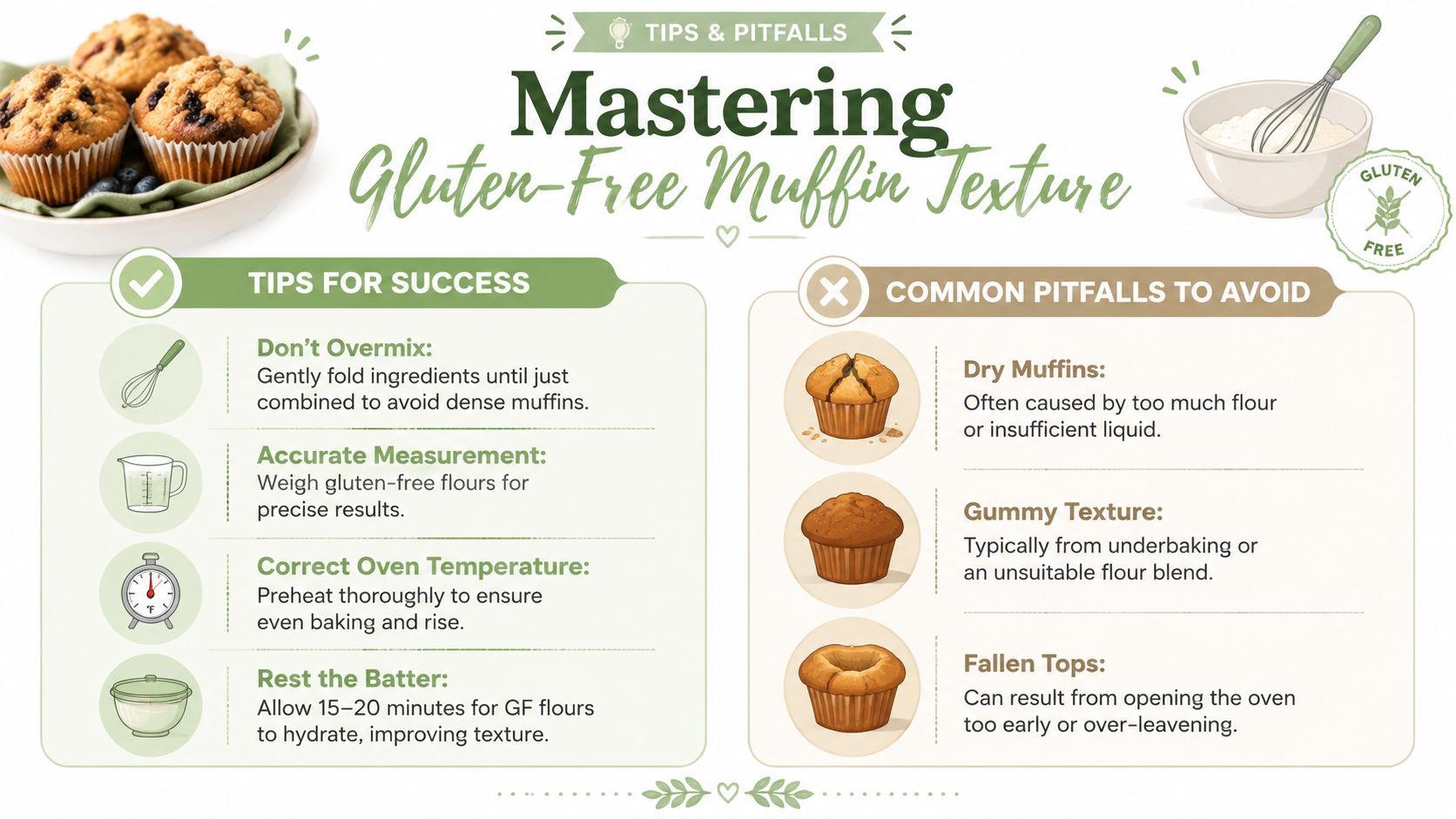
Texture is where most gluten-free muffin recipes win or lose. Flavour is easy enough to build. Structure takes more care. If your muffins have ever seemed damp in the middle, oddly heavy, or collapsed around the fruit, the issue is usually one of three things. Binder choice, water balance, or fruit handling.
Why xanthan gum matters
In a wheat muffin, gluten gives the batter elasticity and helps trap air. In a gluten-free muffin, something else has to do that job. Xanthan gum is the common answer.
Australian benchmark data on gluten-free baking found that using flour blends with 2.0 to 2.5% xanthan gum by weight produced a 92% success rate for a soft and fluffy crumb, compared with 64% when alginate-based binders were used alone. That's why I strongly favour a flour blend that already includes xanthan gum instead of trying to improvise structure later.
If your muffins crumble once cooled, or break apart halfway through eating, that usually points back to a flour blend that isn't doing enough structural work.
The gummy muffin problem
This is the complaint I hear most often. The muffin looks cooked, but the crumb is sticky and dense.
A common pitfall in gluten-free baking is over-hydration, and it was reported in 78% of failed home-baking trials. The reason is simple. Starches in many gluten-free flour blends absorb water differently, and if the batter is too wet, the centre can stay gummy even after cooling.
Here's what works better:
- Pre-hydrate carefully: Mix the dry ingredients with a small amount of the total liquid before combining everything fully.
- Measure flour by weight when possible: Scooped cups vary too much.
- Don't chase a loose batter: Gluten-free muffin batter is often thicker than standard muffin batter.
Quick diagnosis: If the tops look done but the inside feels gluey, the batter was likely too wet, not just underbaked.
Fruit and chocolate need timing
Raspberries bring their own moisture. White chocolate brings fat. Both can upset the structure if they go in at the wrong moment.
Australian culinary guidance notes that adding berries when the batter is around 20°C can reduce moisture leakage by 45% compared with adding them at room temperature, which helps the muffin keep its shape better. It also helps to fold raspberries in right at the end, using as few strokes as possible.
A few practical fixes help:
| Problem | Likely cause | Better approach |
|---|---|---|
| Pink, streaky batter | Overmixed berries | Fold berries in last with a spatula |
| Greasy chocolate pockets | Batter too warm | Add chocolate at the final fold once batter has cooled |
| Wet base | Excess berry moisture | Use firm fresh raspberries and avoid crushing them |
Fresh fruit usually gives the cleaner result
When bakers ask whether frozen berries are fine, the honest answer is that they can work, but they make this recipe harder to control. Guidance for this style of muffin notes that using fresh raspberries at 150 g instead of frozen ones can reduce soggy-bottom risk by 60%, while frozen berries increase moisture in the batter and can extend baking time. For a clean crumb and better shape, fresh is the easier choice.
Storing, Freezing, and Serving Suggestions
These muffins are best on the day they're baked, when the tops still have a slight crisp edge and the crumb is at its softest. By the next day they're still lovely, but the raspberry moisture starts to settle through the crumb and the white chocolate softens more.
How to store them safely
Moist fruit changes the storage rules. A gap in many online recipes is practical safety advice, and that matters here. Guidance highlighted by this storage-focused gluten-free muffin article notes that baked goods with moist fruit like raspberries should be refrigerated if kept for more than 24 to 48 hours.
For everyday storage, use this approach:
- Same day or next day: Keep them in an airtight container once fully cool.
- Beyond a short room-temperature window: Refrigerate them so the fruit stays safer and fresher.
- For longer keeping: Freeze them.
The key is cooling first. If you seal warm muffins into a container, trapped steam softens the tops and can make the whole batch feel damp.
Cool muffins completely before storing. Warmth in the container turns a tender crumb into a sticky one very quickly.
Freezing without ruining the crumb
Freeze the muffins individually or in a single layer first, then transfer them to a sealed freezer-safe container or bag. That stops the tops from sticking together and makes it easier to thaw only what you need.
To serve, let a muffin thaw at room temperature or warm it gently. Too much reheating melts the white chocolate further and can make the raspberry pockets feel overly hot and wet.
Serving ideas that feel a bit special
These muffins sit nicely between breakfast and treat baking. They work warm, at room temperature, or packed for an afternoon break.
A few favourite ways to serve them:
- With plain yoghurt: Good if you want to balance the sweetness.
- With fresh berries on the side: Best when serving guests at brunch.
- Slightly warmed: This brings back the softness of the crumb and loosens the white chocolate just enough.
They also fit naturally into a modern wellness routine. One muffin with a calm morning drink feels far more satisfying than grabbing something forgettable on the run. That's especially true when the bake has real flavour and proper texture.
Recipe Variations and FAQs
Once you've baked one dependable batch, it's easy to adapt this recipe without losing what makes it work. The safest changes are the ones that respect the batter's moisture level and don't overload the structure.
Variations worth trying
Some swaps are simple and still keep the spirit of the muffin intact.
- Dairy-free version: Use plant milk, dairy-free butter or a neutral oil, and dairy-free white chocolate drops.
- Lower-sugar direction: Reduce the sweetness slightly if your white chocolate is very sweet, but keep enough sugar for structure and browning.
- Berry changes: Blueberries can work well, though they give a different balance. Strawberries need careful chopping because they release more juice.
- Café-style finish: Add a few extra chocolate pieces and a couple of berry fragments to the tops before baking for a better display.
If you like browsing ideas once you've nailed a base recipe, you can Browse healthy recipes for more snack and breakfast inspiration that fits into a practical weekly routine.
Pep Tea also has a broader collection of gluten-free recipe ideas worth saving if this bake puts you in a gluten-free cooking mood.
FAQs bakers ask most
Can I use an egg replacer
You can experiment, but eggs do a lot of work in this muffin. They bind, support rise, and help the crumb set around the raspberries. If you need an egg-free bake, expect some texture changes and test a small batch first.
My batter seems very thick. Is that normal
Yes. Gluten-free muffin batter is often thicker than standard muffin batter. Thick is fine. Dry and hard to spoon is not. If it looks chalky or overly stiff, recheck your flour measurement.
Can I use frozen raspberries
You can, but they're more likely to bleed into the batter and make the muffins wetter. If frozen is all you have, keep them frozen until the last moment and fold very gently.
Any tips for baking these for a café or market stall
Consistency matters more than improvising. Weigh ingredients, use the same scoop for portioning, and don't vary the berry size too much from batch to batch. Presentation also counts. A few visible pieces of white chocolate on top make the tray look more polished.
Bake one test batch in your actual tins and oven before producing a larger run. Gluten-free batter is less forgiving of small equipment differences.
Why did my muffins sink after baking
That usually comes down to excess moisture, underbaking, or opening the oven too early. A well-risen top still needs enough time at the lower temperature stage to set through the centre.
If you enjoy baking that fits into a calm, health-minded routine, have a look at Pep Tea for organic matcha, sugar-free organic kombucha, and more recipe inspiration that brings together flavour and everyday wellness.