
Tag: matcha uses
Matcha Green Tea Powder Uses: 8 Creative Ideas for 2026
You bought a bag of matcha with good intentions. It made one decent latte, maybe a second that was a bit lumpy, and now it's sitting behind the cocoa in the pantry while you wonder if that's all it's for. It isn't, and that's the point of exploring matcha green tea powder uses properly before the colour fades.
Matcha behaves differently from brewed tea because you're eating the leaf, not steeping it. A Western Sydney University research review describes leaves grown under approximately 90% shade and milled whole, which is why the powder can be whisked, blended or baked straight into food. The same tin can colour a cake, lift a salad dressing or turn a sugar-free kombucha into a café worthy mocktail.
Below are eight practical uses, each matched to the grade worth buying, with a realistic time estimate and a clear flavour note. Pick the one that fits your kitchen this week and start there. You don't need ceremonial powder for cookies, and you shouldn't waste culinary powder on a plain whisked tea where every bitter edge shows.
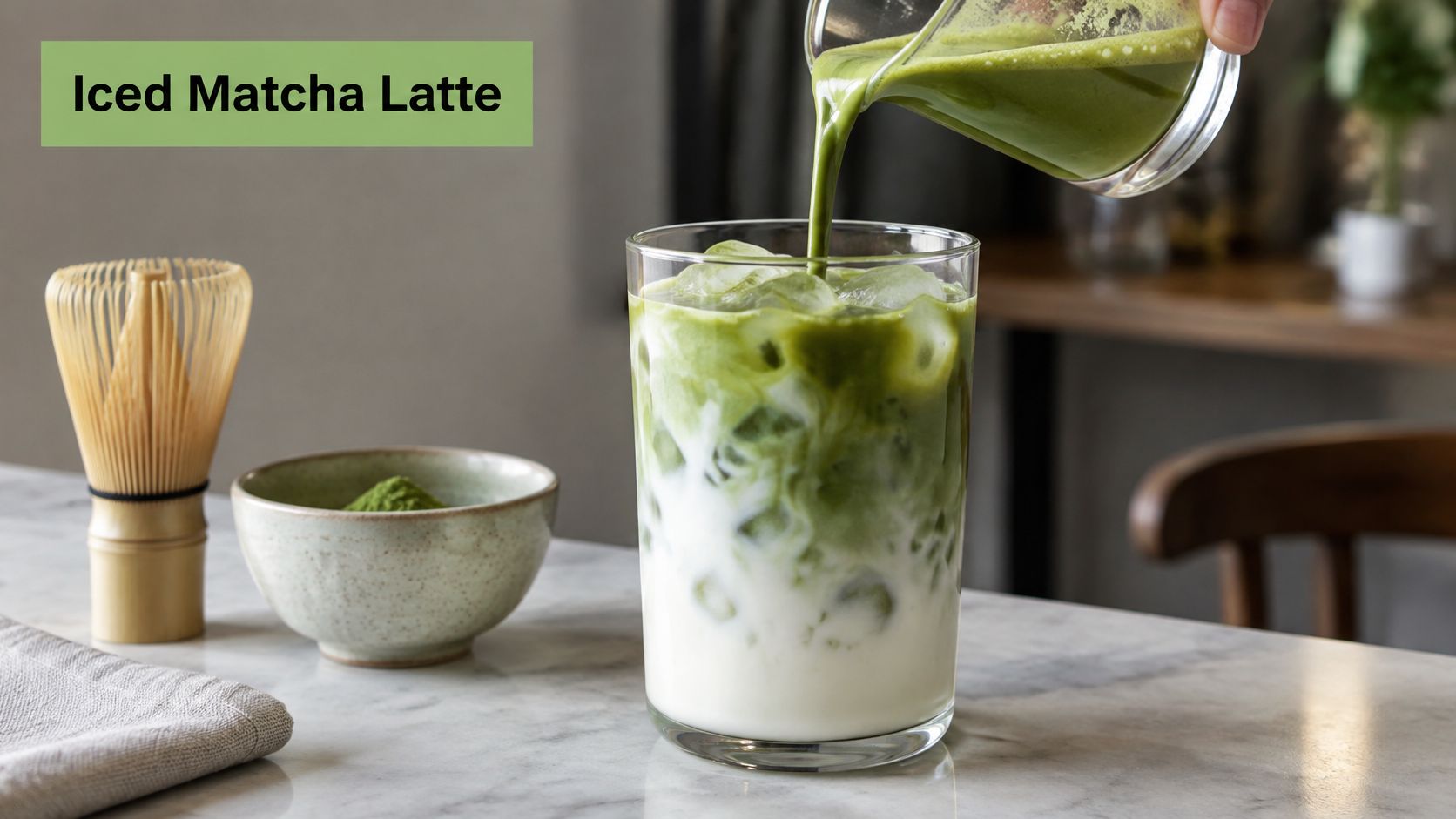
1. Iced and Cold-Brewed Matcha Lattes
Grade to use: Ceremonial or premium culinary. Time: 5 minutes. Flavour note: cool, creamy and vegetal, with less bitterness than a hot version. Most Australians meet matcha now, and it's forgiving if you get the whisking right first.
Sift 1 to 2 teaspoons into a small bowl, add 30 to 60 ml of hot water at 70 to 80 degrees Celsius, and whisk in a fast W motion until smooth and frothy. Pour over a glass full of ice, top with cold milk or oat milk, and stir once. Making a paste first stops the powder clumping in cold milk, which is the mistake that ruins most first attempts.
Making It Work on Busy Mornings
- Whisk before you chill: Hot water disperses the powder. Cold milk alone won't.
- Sweeten lightly first: A little honey or maple in the paste dissolves better than sugar over ice.
- Batch the base: A whisked concentrate keeps in the fridge for a day, similar in spirit to a cold brew tea concentrate approach for quick pouring.
At home, this costs a fraction of a café version. Cafés in Sydney charged an average of AUD 7.50 for a matcha latte in 2024, according to Torrens University Australia. For a weekday routine, prepare the paste while the kettle cools, pour, and you're out the door. If it tastes chalky, you skipped sifting. If it's bitter, your water was boiling.
2. Traditional Hot Matcha (Whisked Tea)
Traditional whisked tea is the honest test of a powder. Grade to use: Ceremonial only. Time: 3 to 4 minutes. Flavour note: concentrated umami, natural sweetness and a fine foam when it's done well. Culinary grade here tastes harsh because there's no milk or sugar to hide behind.
Use 1 to 2 grams, roughly half to one teaspoon, for 60 to 80 ml of water. Sift into a warmed bowl, add a splash of water and work it into a smooth paste, then top up and whisk briskly in a zigzag for 15 to 20 seconds until a fine foam forms. Drink it straight away, because the foam settles and the flavour flattens as it sits.
Tea already has a firm place in Australian routines, which helps explain why a short ritual like this sticks. The Australian Bureau of Statistics reported adults consumed an average of 153 grams of tea per person per day in 2023, and 38.5% of adults consumed tea. A bowl of matcha fits that habit, it's just more concentrated.
Watch the basic whisking motion before your first try, then copy the wrist speed rather than pressing hard on the bowl.
Practical rule: If you wouldn't drink it plain, don't judge the grade in a latte. Plain whisked tea tells you exactly what you paid for.
Serve it as a mid morning pause instead of a second coffee. You'll taste quickly whether your powder is fresh, sweet and smooth, or stale and dull.
3. Baking with Matcha
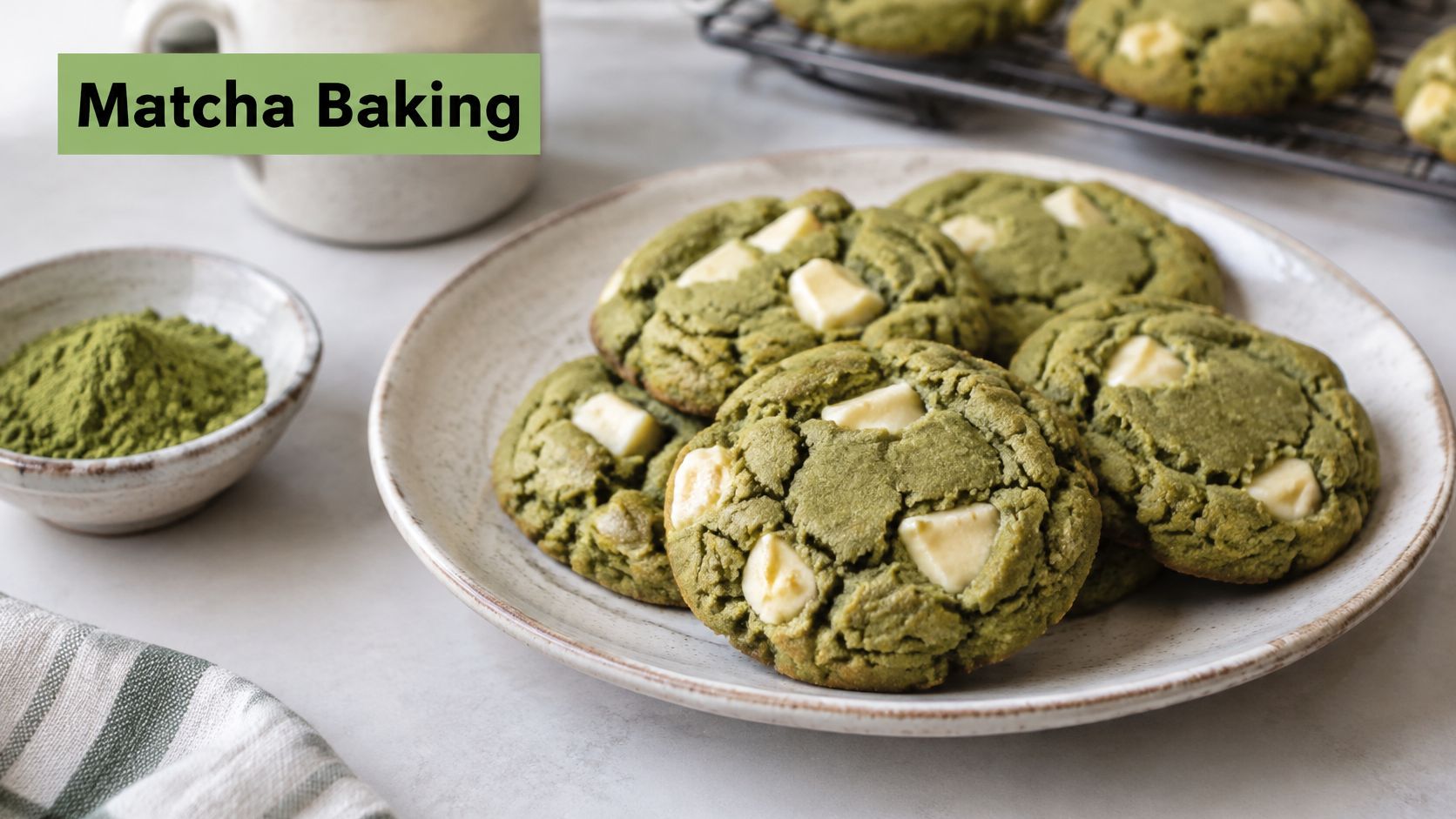
For baking, colour and assertive flavour matter more than delicate aroma. Grade to use: Culinary. Time: 25 to 45 minutes depending on the recipe. Flavour note: earthy and bittersweet, best softened with white chocolate, lemon or vanilla.
Start with matcha white chocolate cookies or a matcha lemon cake, both reliable in home kitchens. Use 1 to 2 teaspoons per 250 g of flour, sifted in with the flour and baking powder so you don't get green streaks or bitter pockets. More than that and the crumb tastes grassy rather than pleasantly tea like.
Keeping the Colour Bright
Bake at 160 to 170 degrees Celsius fan-forced where the recipe allows it. High heat dulls the green toward olive, especially in muffins and scones. A Japanese style roll cake filled with lightly sweetened cream shows the colour beautifully because the sponge stays pale and bakes quickly.
Demand for this kind of home and café baking sits within a larger Australian category. Matcha powder accounted for an estimated 10 to 15% of Australia's organic green tea market volume in 2026 while representing approximately 22 to 30% of retail revenue, according to IndexBox. That premium makes sense if you buy the right grade. For a batch of shortbread, culinary powder gives you the colour and punch without burning money on ceremonial stock.
4. Matcha Smoothies and Smoothie Bowls
A smoothie is the fastest weekday use, and it's the easiest place to start if straight matcha still tastes strong. Grade to use: Culinary or premium culinary. Time: 5 minutes. Flavour note: fresh and fruity first, with a gentle green tea finish.
Blend 1 teaspoon of sifted matcha with a frozen banana, a handful of spinach and 200 ml of milk or coconut milk. Mango and avocado also work well, and frozen berries are fine if you accept a murkier colour. Add Greek yoghurt or nut butter if this is breakfast, not a snack, so it keeps you full past nine o'clock.
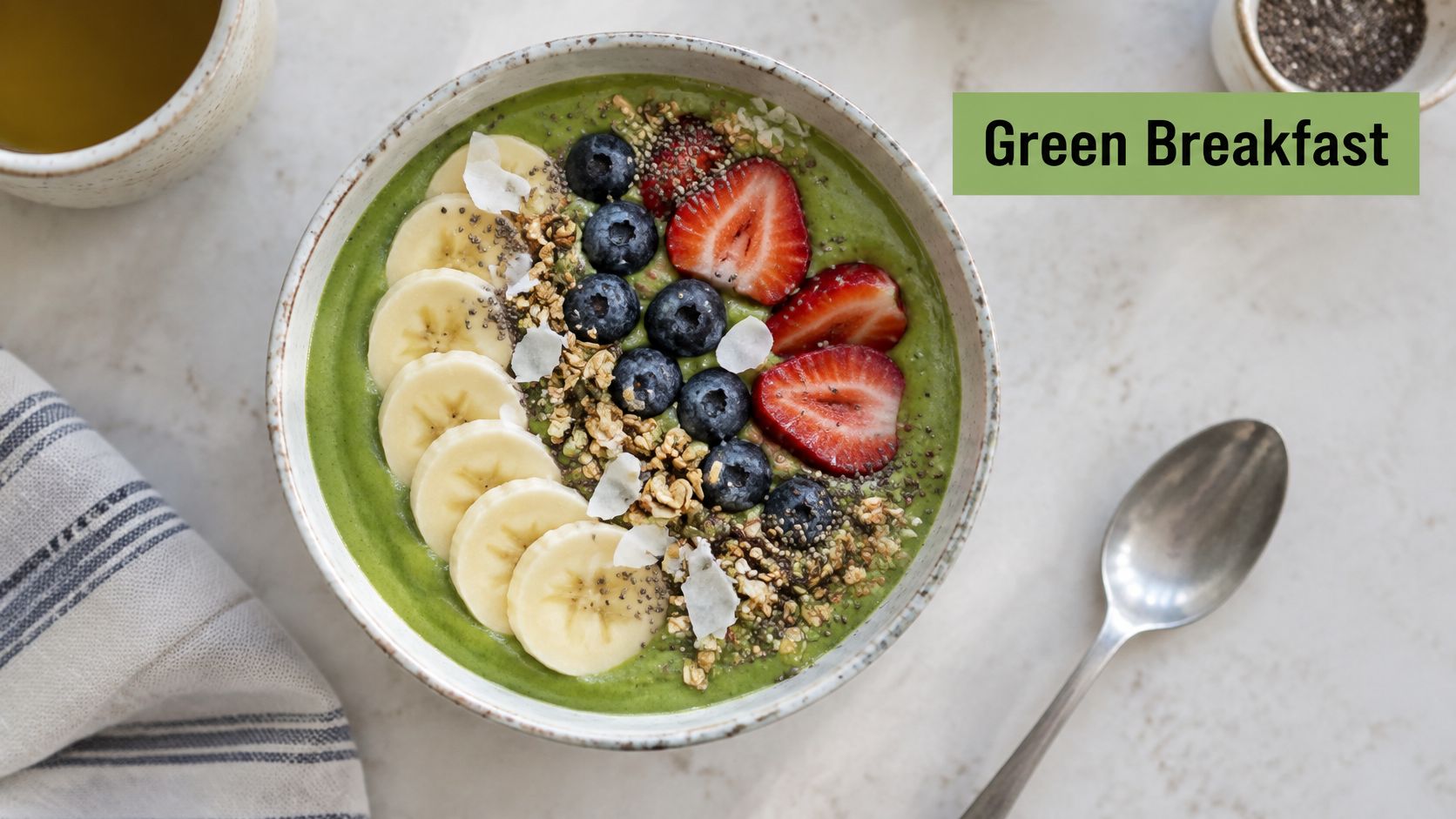
For a bowl, blend thicker with less liquid, spoon into a bowl and top with granola, chia seeds and fresh fruit. Cafés that serve a lot of these live or die by blender consistency, a point covered well in Simply Hospitality's juice equipment guide. At home, blend the matcha with the liquid for ten seconds before adding frozen fruit, and you'll avoid green flecks.
Younger Australians are driving a lot of this use. Matcha logs among Australian users rose by 33.8% year on year, and people aged 18 to 34 generated 53% of matcha logs, according to MyFitnessPal data reported by Medianet. Start with half a teaspoon if you're new to it, taste, then add more next time rather than overdoing the first glass.
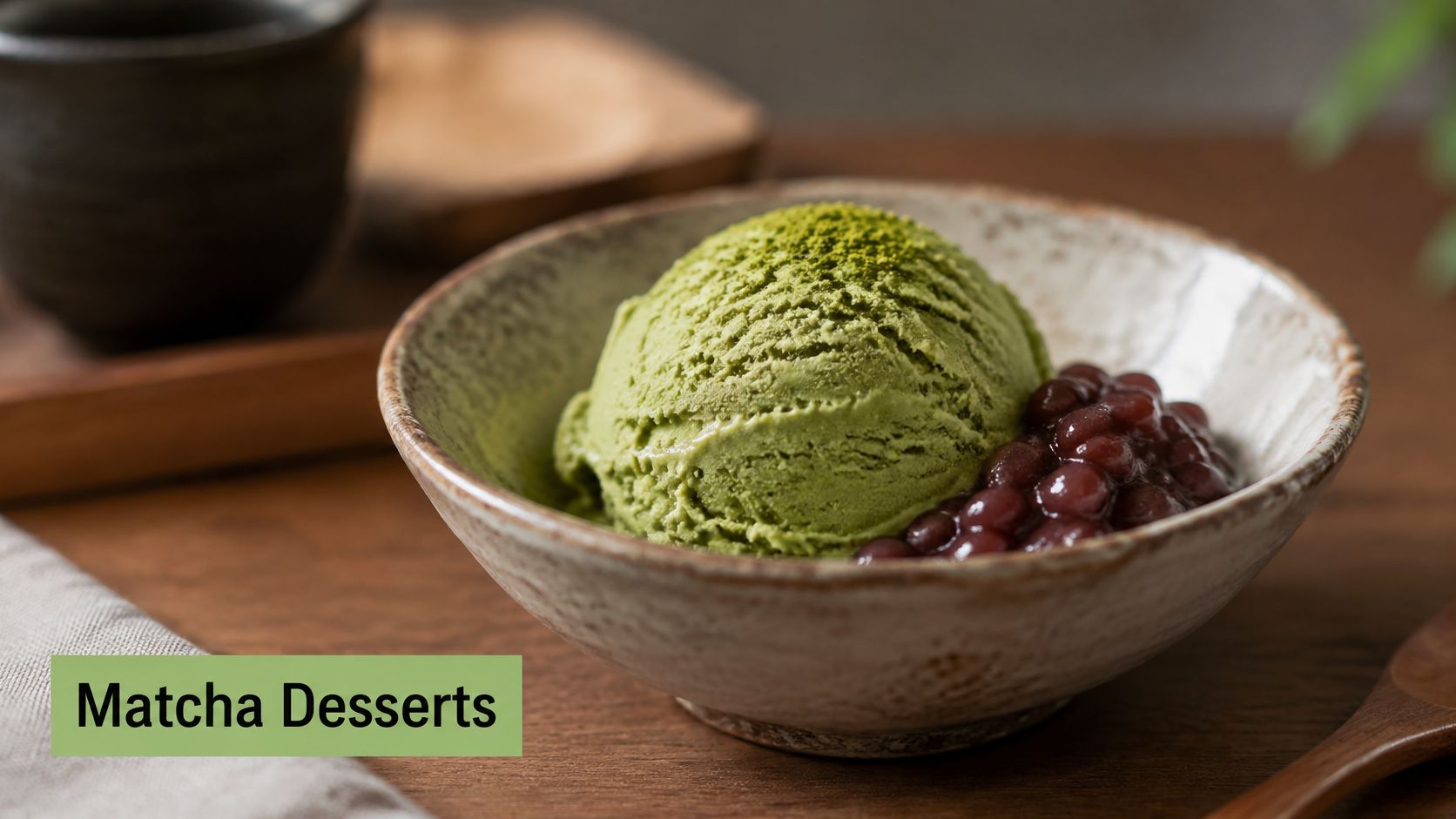
5. Matcha Desserts and Ice Cream
Dessert is where matcha's bitterness becomes an asset. Grade to use: Culinary, or premium culinary for no churn and set creams. Time: 20 minutes plus chilling or churning. Flavour note: bittersweet and creamy, especially with white chocolate, condensed milk or red bean.
Matcha ice cream, soft serve and gelato are familiar in Japanese and Australian dessert shops for a reason. The fat in cream rounds out the edge, and cold serving temperatures soften bitterness. The same balance works in panna cotta, mousse, cheesecake and layered parfaits with cream and sweet red bean.
A Simple Home Method
- Bloom in warm liquid: Whisk 1 to 2 teaspoons into warm milk or cream until smooth, then stir into your custard base.
- Balance before chilling: Add vanilla or a little condensed milk and taste now. Cold mutes sweetness, so it should taste slightly sweet warm.
- Serve with contrast: Fresh berries, honey or toasted coconut stop the flavour feeling one note.
Australian appetite for ordering these flavours in is clear, as Australian matcha orders on Uber Eats increased by 217% over the two years to 2025, according to Uber Eats 2025 cravings data reported by QSR Media. At home, a small batch of matcha panna cotta is the lower effort entry point. It sets overnight, looks striking, and lets you judge the strength before committing to a full tub of ice cream.
6. Savoury Cooking with Matcha
Savoury cooking isn't a gimmick if you treat matcha as a seasoning, not the main event. Grade to use: Culinary. Time: 5 to 10 minutes added to a dish. Flavour note: grassy umami, closest to a very light seaweed or green herb finish.
Try it first in a dressing. Whisk half a teaspoon with rice vinegar, sesame oil, soy and a squeeze of lemon, then toss through soba noodles with cucumber and toasted sesame. Taste before you add more, because matcha builds quickly in a small amount of liquid and can turn a dressing muddy.
Where It Earns Its Place
Matcha salt is the other useful starting point. Mix finely sifted matcha through flaky salt and use it, sparingly, on grilled fish, roast pumpkin or tempura vegetables straight after cooking. Adding it at the end preserves both colour and flavour, while long cooking in a marinade or braise wastes the powder and dulls the result.
Add matcha to savoury food the way you'd add lemon zest. A little at the end lifts a dish. A spoonful cooked for half an hour just disappears.
This kitchen use reflects how matcha is commonly bought for food service. Australian foodservice represents an estimated 45 to 50% of national volume, with culinary grade powder used in smoothies, baked goods, ice cream and other desserts, according to IndexBox. At home, pair it with miso, sesame and citrus and keep portions small. Tofu, chicken and white fish take it best, while rich red meat tends to fight the grassy note.
7. Non-Alcoholic Matcha and Kombucha Mocktails
A chilled matcha concentrate gives kombucha a fresh green colour and a gently earthy base. Grade to use: Premium culinary or ceremonial. Time: 5 minutes, plus chilling. Flavour note: tart and lightly fizzy, with matcha's grassy depth underneath.
Whisk 1 teaspoon of matcha with 30 ml of hot water, then chill the concentrate. Pour it over ice and top with sugar-free kombucha. Add the kombucha last and pour gently to preserve the fizz. Mint, lime and thin slices of fresh ginger add a crisp finish without syrup.
Ginger-flavoured kombucha, including ginger or lime-and-ginger styles, pairs well with matcha: the ginger's warmth balances the powder's earthiness. For more ideas, browse these non-alcoholic cocktail mixers. Serve in a chilled stemless glass with plenty of ice.
For a summer barbecue or celebration, offer the drink alongside elegant alcohol-free wedding drink ideas. Keep the matcha concentrate unsweetened and let the kombucha provide the tartness. If the finished drink tastes too sharp, add a splash of soda water rather than sugar.
8. Matcha in Skincare and DIY Beauty
DIY beauty is a valid use for a tin that's past its best for drinking, provided you keep expectations modest. Grade to use: Culinary. Time: 15 to 20 minutes. Flavour note: not applicable, but expect a clean, earthy scent and a very green sink if you're careless.
A basic mask is 1 teaspoon of matcha mixed with 1 tablespoon of honey and 1 tablespoon of yoghurt. Apply to clean skin, leave for 10 to 15 minutes, and rinse with lukewarm water using gentle circular movements. The fine powder gives mild physical exfoliation as you rinse, so don't scrub, especially if your skin is already irritated.
Use It Sensibly
- Patch test first: Try a small area on your inner arm and wait before using it on your face.
- Make it fresh: Mix only what you'll use now. Yoghurt and honey masks don't keep well.
- Keep costs in check: Culinary grade is plenty here, and the same ingredient logic sits behind an organic green tea face wash for daily use.
Matcha turns up in cleansers and masks from Australian natural skincare brands, largely for its antioxidant rich profile and colour. Results vary between people, and independent evidence for topical matcha is limited, so treat this as a pleasant ritual, not a treatment. Old, dull powder that's lost its drinking quality is perfect for a bath soak or scrub. Fresh ceremonial powder on your face is an expensive way to learn that lesson.
Matcha Uses at a Glance
Choose the grade to suit the recipe. Ceremonial matcha suits plain whisked tea, while culinary or premium culinary powder works better when other ingredients share the flavour.
| Use | Best Matcha Grade | Prep Time | Flavour Profile | Best For |
|---|---|---|---|---|
| Iced and Cold-Brewed Matcha Lattes | Ceremonial or premium culinary | Quick; whisk before adding cold milk and ice | Smooth, creamy, vegetal, and less bitter | Refreshing cold drinks and matcha newcomers |
| Traditional Hot Matcha (Whisked Tea) | Ceremonial | Brief; whisk until lightly foamy | Umami-rich, naturally sweet, and full-bodied | Traditional tea rituals and mindful breaks |
| Baking with Matcha | Culinary | Recipe-dependent; baking required | Earthy and subtly sweet, with gentle bitterness | Cakes, cookies, and other baked goods |
| Matcha Smoothies and Smoothie Bowls | Culinary or premium | Quick; blend with other ingredients | Earthy and balanced by fruit or other additions | Convenient breakfasts and blended drinks |
| Matcha Desserts and Ice Cream | Culinary | Recipe-dependent; chilling or churning may be needed | Bittersweet and earthy, balanced with sweetness and cream | Ice cream, pastries, and other sweet treats |
| Savoury Cooking with Matcha | Culinary | Recipe-dependent | Grassy, earthy, and umami-rich | Noodles, dressings, marinades, and seasonings |
| Non-Alcoholic Matcha and Kombucha Mocktails | Premium culinary or ceremonial | Brief; whisk, chill, and mix | Vegetal and smooth with tangy, fizzy notes | Alcohol-free drinks and entertaining |
| Matcha in Skincare and DIY Beauty | Culinary | About 10–15 minutes for a mask | Not intended for flavour; fresh, earthy aroma | DIY masks, scrubs, and self-care routines |
Start With One Recipe and Build From There
Make one recipe this week, then note what worked. An iced latte shows whether you enjoy matcha cold and milky; cookies reveal how its bittersweet flavour holds up in baking. Record the colour, flavour and strength you prefer. That gives you a useful starting point next time.
Matcha grade depends on how prominent you want the flavour. Choose ceremonial grade for plain whisked tea and simple drinks where matcha leads. Culinary grade suits baking, desserts, savoury seasoning, smoothies and mocktails, where other ingredients share the stage. Using one tin for everything can mean paying more than needed for baking or finding a plain tea less satisfying.
Australia's matcha tea imports increased by 62.91% from 2023 to 2024, according to 6Wresearch's report on the Australian matcha tea market. With more choice, check the product label for origin, grade and a best-before date. Keep the powder airtight and away from heat and light.
Matcha contains caffeine, and the amount in a cup depends on how much powder you use. The Australian Institute of Sport reports average adult caffeine intake in Australia at about 175 mg per day, with at least 25% of Australians consuming more than 230 mg daily in its caffeine guide. Count coffee and energy drinks in your daily total, start with a small amount of matcha, and have it earlier if it affects your sleep.
Food Standards Australia New Zealand notes that naturally caffeinated foods such as tea will normally provide no more than 100 milligrams of caffeine in a standard serving, in its guidance on dietary caffeine.
If you already enjoy green tea, try matcha in a latte; its flavour is stronger, so milk can soften the edge. If green tea is not your favourite, start with cookies or ice cream, where sweetness balances matcha's earthy bitterness.
Build a small rotation around the recipes you enjoy: a weekday smoothie, a weekend bake or a kombucha spritzer for friends. Store the powder well and choose uses that fit your routine, rather than letting an opened tin sit unused.
Explore Pep Tea's organic matcha for everything from a plain whisked tea to baking, smoothies and kombucha mocktails, pairing it with the sugar free kombucha brewed in New South Wales, and browse the range at Pep Tea.