
Tag: kombucha scoby
Best Organic Kombucha Starter Kit: 7 AU Picks

Is the best organic kombucha starter kit the most complete option, the easiest one to scale, or the kit with the clearest organic credentials? Those are different buying decisions, and a jar filled with tea and a SCOBY doesn't automatically solve all three.
A SCOBY is a living culture of bacteria and yeast that ferments sweetened tea. During the first fermentation, the culture converts some of the sugar into acids and other fermentation products while the brew develops its flavour. The quality and quantity of the starter liquid matter just as much as the rubbery culture itself, because the acidic liquid helps establish the new batch.
This roundup compares compact, family-size, minimalist and continuous-brew options available to Australian buyers. The useful differences are batch capacity, vessel design, monitoring equipment, culture documentation and beginner support. Check whether “organic” applies to the SCOBY, tea, sugar and other edible components, rather than assuming the claim covers the whole kit.
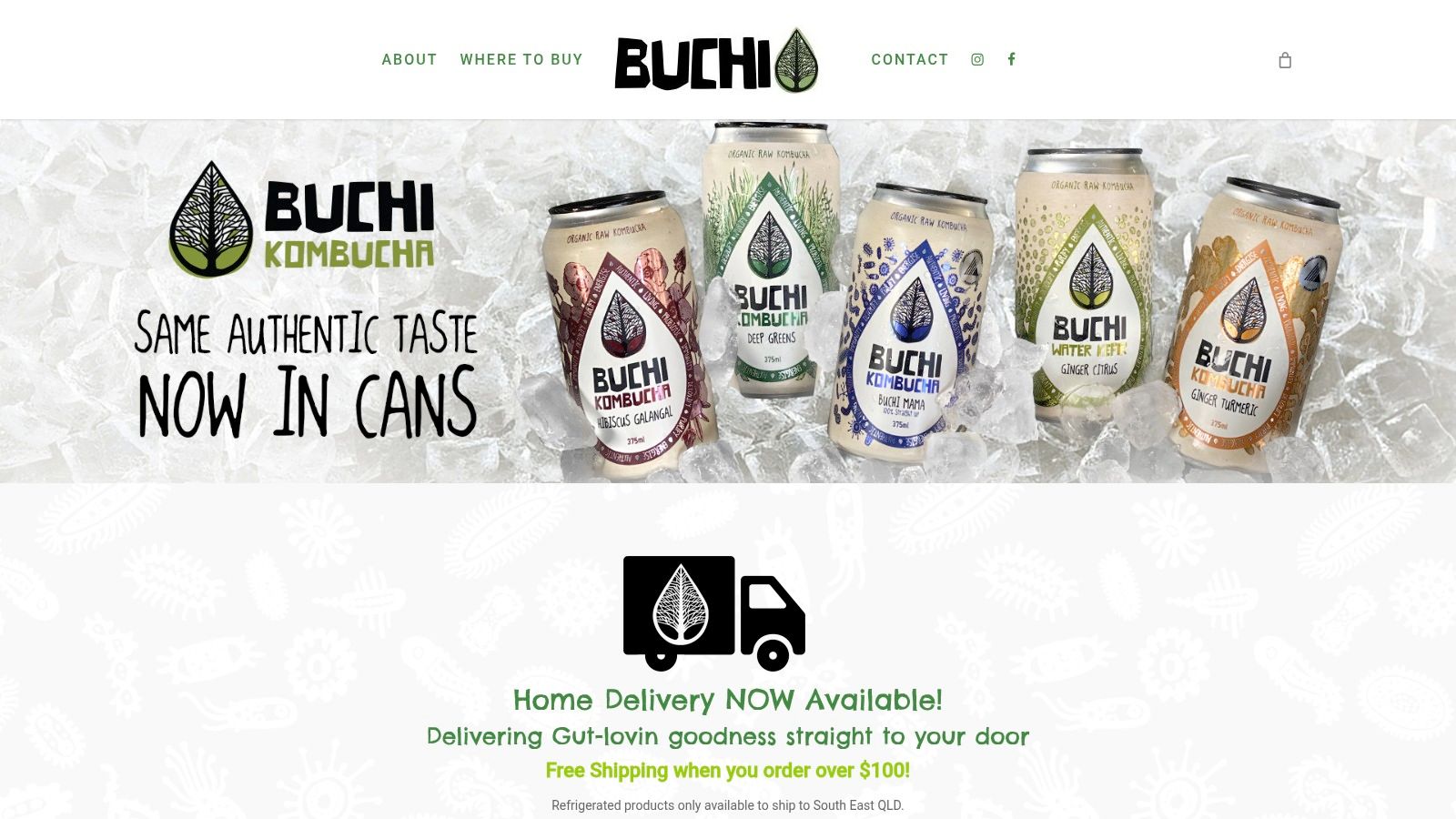
1. Buchi Kombucha Certified Organic Kombucha Home Brew Kit
For buyers who want a complete family-size setup with clear organic credentials, the Buchi certified organic home brew kit is a strong starting point. The Brisbane-based supplier includes a 5 L glass brewing jar, certified-organic SCOBY, organic starter liquid, organic tea and organic sugar. You can begin brewing without sourcing the main ingredients separately.
The kit's main advantage is its culture and ingredient documentation. Buchi markets the edible components as certified organic, including its Australian-brewed cultures and ingredients. That gives certification-focused shoppers more information than a kit that just uses “organic” in its name.
Best fit: Choose Buchi when certified ingredients, a complete bundle and a family-size batch matter more than a dispensing tap or the smallest entry point.
What works well for beginners
The glass jar provides room for the first fermentation, and the supplied instructions set out the process in a practical order. They allow a 7 to 14 day first ferment, helping beginners judge flavour and acidity rather than follow a fixed date. These time figures are included in the Buchi product information.
The setup is straightforward, but it is a standard jar rather than a continuous-brew vessel. Serving requires pouring from the jar, so it suits batch brewing better than a routine that depends on dispensing small amounts while the culture stays in place. Buyers who want that arrangement may prefer a kit with a tap.
Availability is the main practical compromise. Retailer stock can fluctuate, and pricing varies by stockist, so check how replacement cultures are obtained before buying. Also confirm that the instructions cover pH testing, sanitation, cooling and storage. Freshly prepared tea can initially sit at about pH 5, so safe brewing depends on teaching users how to acidify the liquid during fermentation, not just how to develop flavour. FSANZ explains the relevant kombucha control points.
For another Australian option, compare the PepTea kombucha tea kit. Buchi remains the better choice for a certified-organic, family-size starting point.
2. Nourishme Organics Ultimate Kombucha Brewing Kit
Does your brewing routine depend on dispensing kombucha without lifting or disturbing the vessel? The Nourishme Organics Ultimate Kombucha Brewing Kit is built for that use, combining a ceramic brewing vessel with a stainless-steel tap for a more practical continuous-brew setup.
Its 5 to 6 L ceramic vessel leaves enough capacity for regular household brewing while allowing finished kombucha to be drawn from the tap. The vessel is described as lead and cadmium free. The kit also includes organic starter culture, organic raw cane sugar, 100 g of English Breakfast tea, a growler bottle and ongoing brewing resources. Those product specifications are provided by Nourishme Organics.
Where the premium design earns its keep
The tap suits households that serve kombucha regularly and small cafés that want controlled dispensing from an attractive bench-top vessel. It reduces the need to pour from a jar and helps keep the remaining brew in place. Ceramic gives the setup a more considered appearance than a basic preserving jar, although the filled vessel will be heavy and difficult to move.
The equipment is better matched to an established brewing habit than to a cautious first experiment. Its larger capacity commits more tea, sugar and space than a small starter kit, while the ceramic vessel and tap add cleaning requirements. The tap is another contact point for residue and contamination, so it needs thorough cleaning as part of every brewing cycle.
A continuous-brew vessel only saves effort when the tap, cover and surrounding equipment stay clean.
The PepTea kombucha brewing container offers another reference point for buyers comparing dispensing vessels. Nourishme is the stronger fit when serving convenience, a larger batch and an ongoing brewing rhythm matter more than portability. Beginners who are still learning how temperature, sugar, fermentation time and pH affect flavour may find a smaller setup easier to manage.
The included guidance adds value because continuous brewing follows a different routine from a single batch. The brewer removes some finished drink, then replenishes the vessel with fresh sweetened tea. Written instructions can help establish that rhythm, but the culture still needs observation and basic record-keeping. This kit supports repeat brewing well, provided the buyer has room for the vessel and is prepared to maintain the tap carefully.
3. Mad Millie AU Kombucha Kit
Contrasting with Nourishme Organics' larger vessel, the Mad Millie AU Kombucha Kit keeps the equipment compact and the first commitment small. It suits a beginner who wants to learn the basic fermentation process before buying a larger brewing vessel.
The kit includes an organic SCOBY, a 1 L glass jar, muslin cloth, thermometer strip and lid. The instructions set out around 20 minutes of hands-on preparation and an 8 to 25 day fermentation period, according to the brand's product listing. That guidance sets realistic expectations: the brew needs little daily work, but it will not be ready straight away.
The small-batch trade-off
A 1 L batch fits a small kitchen and limits the tea and sugar used during an early experiment. The modest volume also makes it easier to test one choice at a time, such as black tea versus green tea or a shorter ferment versus a longer one. For a cautious beginner, that control can make flavour changes easier to understand.
The culture is identified as organic, while the kit's equipment covers the basic first-fermentation workflow. Buyers should still check the product details for their preferred ingredients and confirm current stock before ordering.
Capacity is the clear compromise. A household that drinks kombucha regularly may finish a litre quickly, then decide to scale up. The jar is not designed for a continuous-brew routine or regular café service, and the compact format leaves less room for serving several people from one batch.
- Good starting equipment: The glass jar, cloth, thermometer strip and lid cover the main needs for a first fermentation.
- Low learning barrier: Clear instructions help first-time brewers begin without already owning specialist equipment.
- Scaling limitation: A larger vessel, extra starter liquid and further monitoring equipment may be needed later.
- Availability consideration: Culture stock can be temporarily unavailable, so check supply before planning a brew.
Mad Millie's broad distribution through Australian kitchenware retailers and online sellers makes replacement equipment convenient to source. This kit is the strongest fit here for a beginner who values a compact learning experience over batch capacity. It is less suitable for anyone already planning frequent brewing or continuous dispensing.
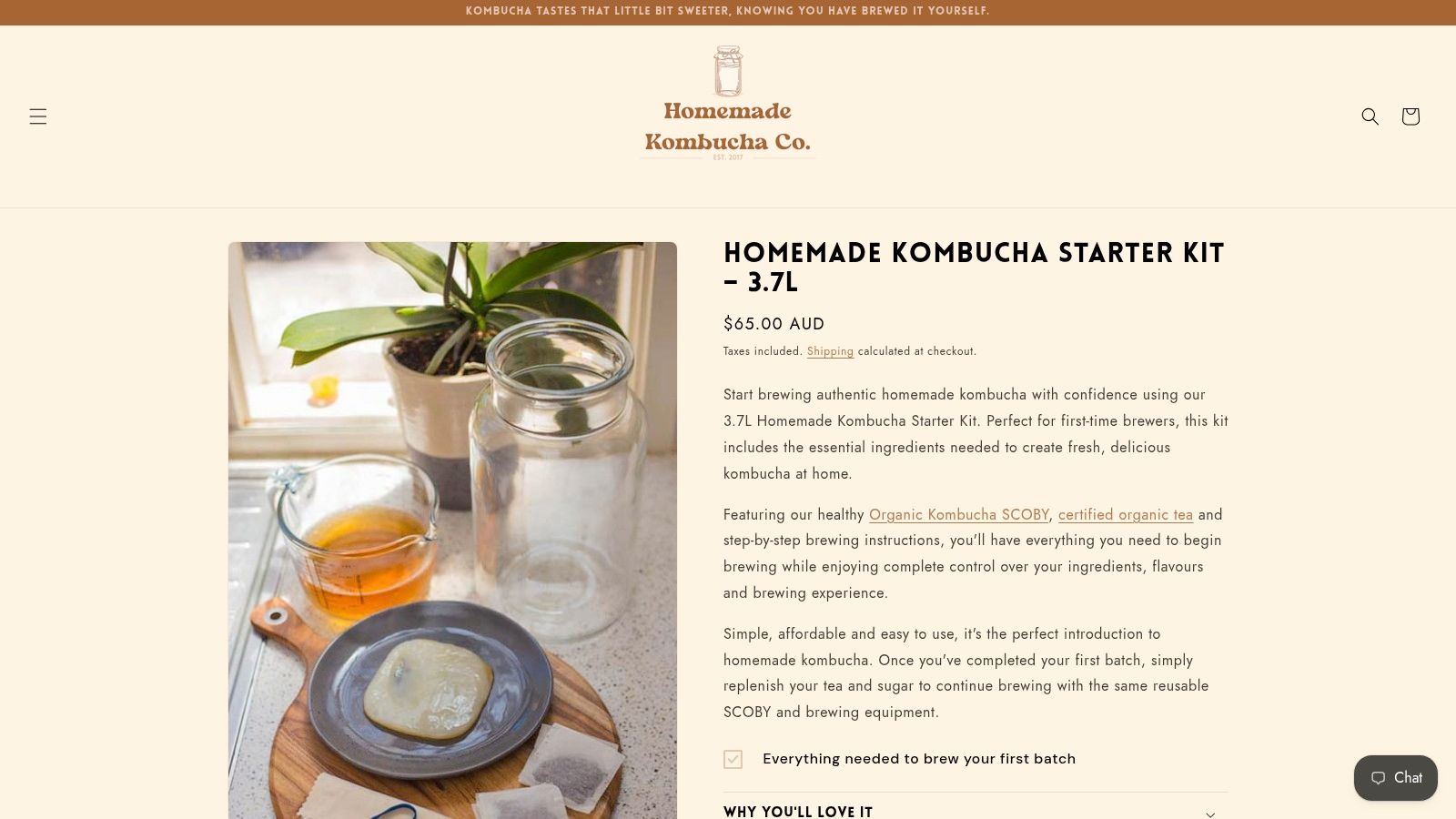
4. Homemade Kombucha Co. 3.8 L Homemade Kombucha Kit
The Homemade Kombucha Co. 3.8 L kit suits brewers choosing between a small trial batch and a larger continuous-brew setup. The Queensland-based specialist supplies a 3.8 L glass brewing jar, breathable cover, starter liquid and a choice between black-tea and green-tea SCOBY options. The product details come directly from Homemade Kombucha Co.
The choice between black-tea and green-tea SCOBY options lets brewers match their preferred flavour profile from the start. Black tea generally gives a more traditional kombucha character, while green tea offers a lighter route into the process. The kit also includes organic tea bags and approximately 500 mL of starter liquid, providing acidic liquid to help establish the new batch. That quantity is stated in the product listing.
A practical family-size compromise
The vessel gives a household more useful batch capacity than a compact beginner jar without moving straight to hospitality-scale equipment. It suits people who want to pour kombucha over several days. The breathable cover allows air exchange during first fermentation while helping keep the jar protected.
Sugar is the main omission. You will need to supply your own, which is straightforward if organic raw sugar is already in the pantry, but it makes this kit less complete than options that include sugar. Use suitable tea, sugar and water, then weigh them consistently so each batch is easier to compare.
Practical rule: A larger jar does not correct an inconsistent recipe. Record the tea, sugar, temperature, fermentation time and pH for every batch.
This kit is a sensible choice for a first-time brewer who wants more capacity than Mad Millie without a tap-equipped continuous-brew vessel. It is not set up for continuous dispensing, so regular high-volume brewing may call for different equipment. Stock can fluctuate, and some variants sell out periodically. Check the available culture and the exact SCOBY option before ordering.
5. Gram Sustainable Kombucha Brew Kit
Do you already have a suitable glass jar for brewing? The Gram Sustainable Kombucha Brew Kit takes a deliberately minimalist approach, supplying the culture, ingredients, cover and instructions while leaving the brewing vessel to you. That keeps the package compact and avoids paying for equipment you already own.
Gram lists an organic-fed SCOBY with more than 200 mL of culture and starter liquid, 50 g of organic tea and 100 g of organic raw sugar, along with a fermentation cloth and instructions. The culture is described as 100% accredited organic and maintained on organic inputs. That gives buyers clearer information about the culture and ingredients than an unverified SCOBY listing, although certification details are still worth checking on the current product page.
Best for an equipped brewer
The absence of a jar is the kit's defining trade-off. It saves duplication for brewers with a clean, food-safe glass vessel, but adds a shopping step for first-timers. Check that your jar is large enough for the supplied culture and starter liquid, has not held unsuitable chemicals, and can be covered with a breathable cloth during first fermentation.
The listed price is positioned as a lower-cost route into organic-fed brewing, but the final cost depends on whether you need to buy a vessel. Product prices and stock can change, so check the current listing before comparing kits.
- Choose it for: An existing jar, organic tea and sugar, and a straightforward first brew.
- Avoid it for: A gift recipient or beginner who needs a complete equipment bundle.
- Check before buying: Current stock, vessel suitability, and whether the instructions cover sanitation and pH checks.
The kit suits conventional batch brewing rather than a tap-based continuous routine. It does not appear designed for dispensing, so choose another setup if you want to draw kombucha regularly from one vessel. For an experienced brewer, the smaller package reduces clutter. A first-timer may prefer a kit that includes every physical component and gives more guidance while learning to judge fermentation.
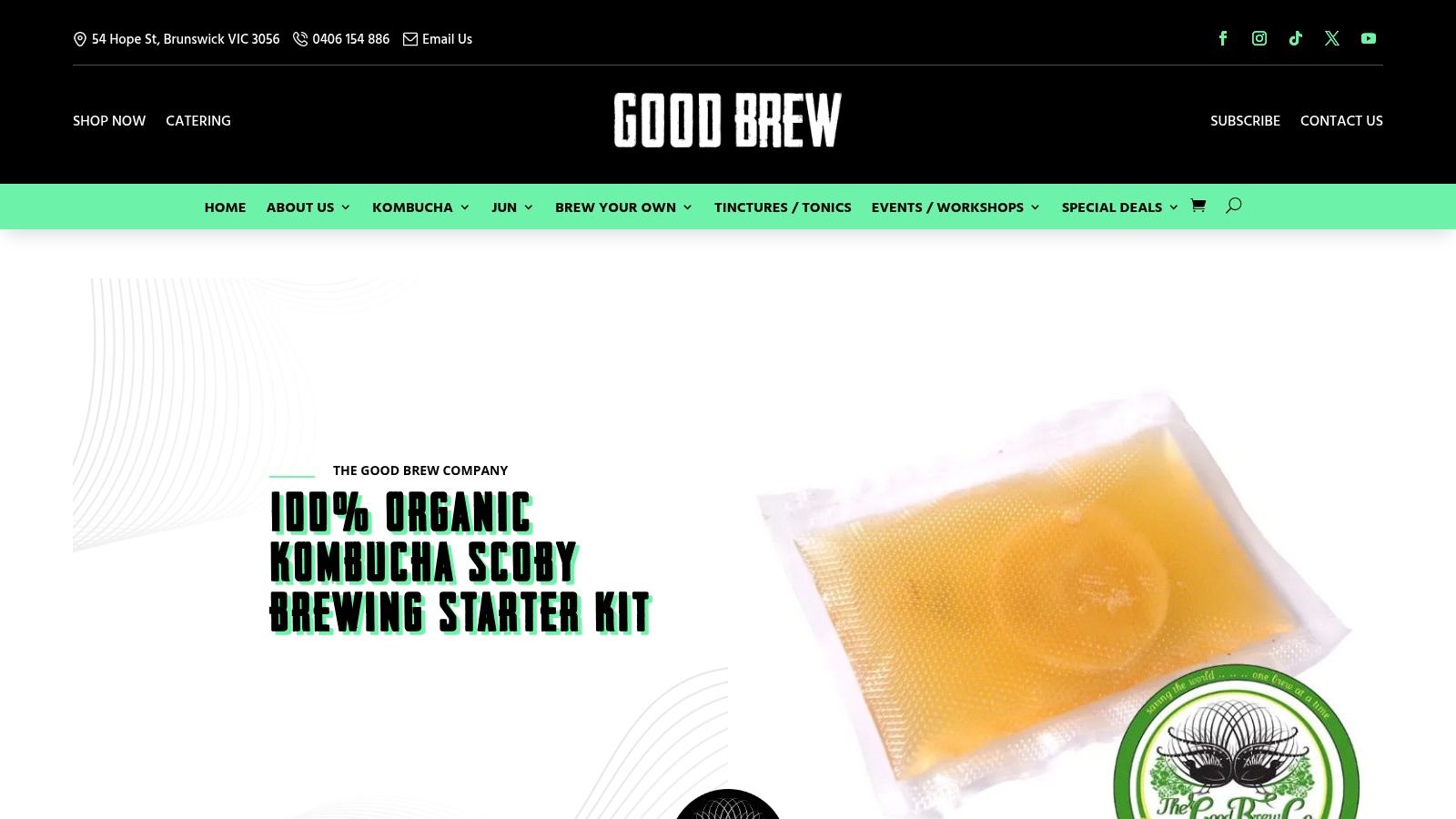
6. The Good Brew Company Organic Kombucha SCOBY Starter Kit
For brewers who already have jars, tea and sugar on hand, The Good Brew Company's Organic Kombucha SCOBY Starter Kit removes the need for bundled equipment. It puts the focus on a living culture and printed brewing instructions, which suits someone refining an established recipe or replacing an existing SCOBY.
The Melbourne and Daylesford-based maker supplies a 100% accredited-organic SCOBY. The culture is intended to scale from 1 L upward, while the 220 mL starter size qualifies for free Australian shipping, as stated on the product listing. The supplier also describes a culture fed with organic inputs for over a decade.
Culture-first buying
This package is strongest on culture provenance and weakest on equipment completeness. You supply the brewing vessel, tea and sugar unless you add extras, so the total setup cost depends on what is already in your pantry and cupboard. That makes it a practical choice for an equipped brewer, but less suitable as a first-brew gift.
The stated starting capacity is 1 L, giving a manageable batch for testing a recipe before scaling up. The culture can grow with the process, but the kit does not provide a tap or dispensing vessel for continuous brewing. Choose another format if drawing regular servings from one container is a priority.
Quality checks matter with any culture-only purchase. Confirm that the starter includes enough liquid, that care instructions are clear, and that the guidance explains healthy appearance and smell. Discard a batch showing mould or visible contamination. Western Australian fermented-food guidance explains the need for pH monitoring and contamination control identifies mould contamination, including Penicillium and Aspergillus, as a hazard in homemade kombucha starter cultures.
For practical help, PepTea's guide to making a kombucha SCOBY is a useful companion. Choose this kit for an organic culture and a scalable starting point, rather than a complete beginner setup.
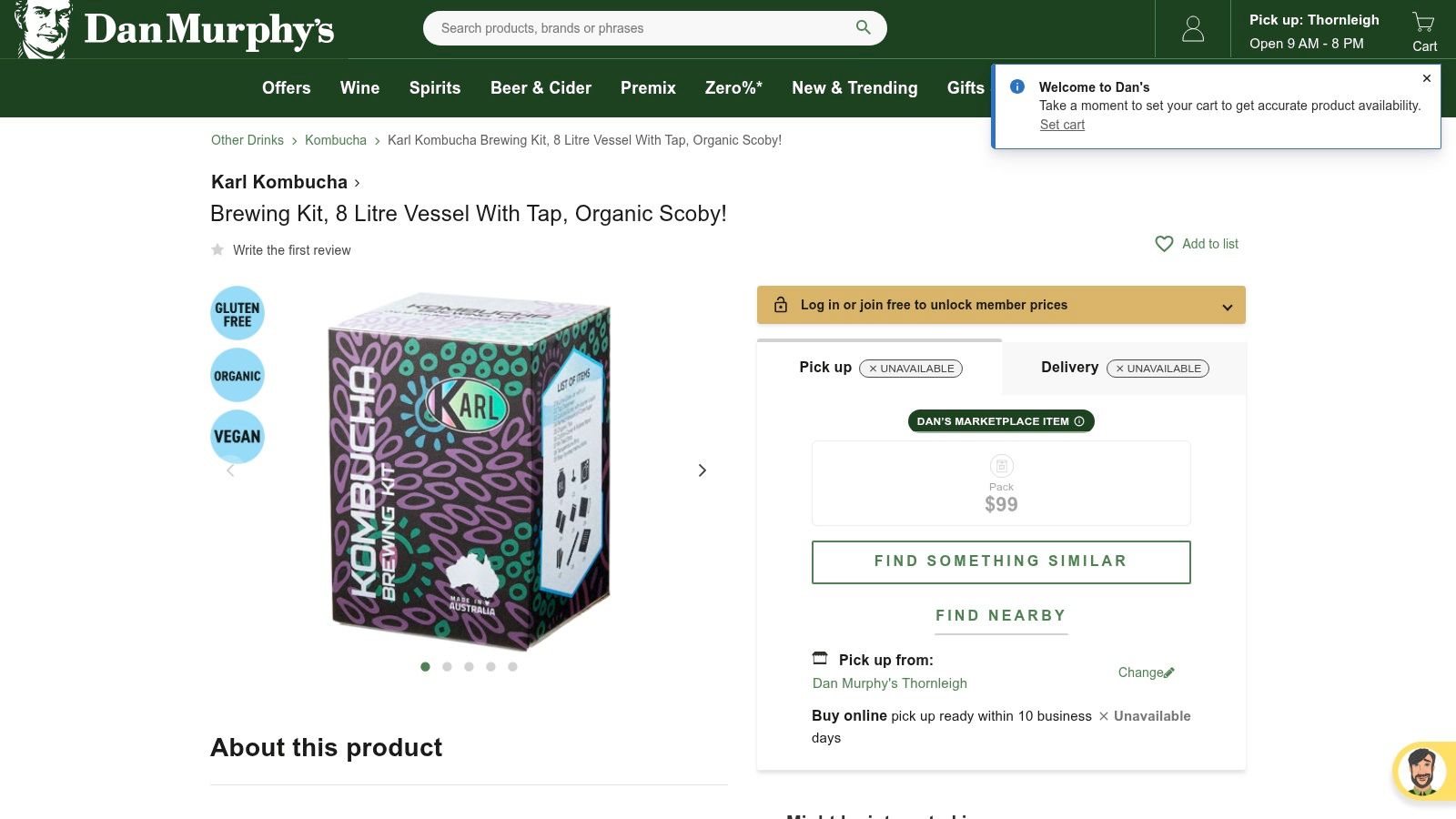
7. Karl Kombucha 8 L Brewing Kit With Tap
Need a larger batch and easier dispensing? The Karl Kombucha 8 L brewing kit is the highest-capacity option in this comparison. Sold through Dan Murphy's Marketplace, it includes an 8 L vessel with tap, organic SCOBY, organic tea, organic sugar, measuring aids, a cloth and instructions. The product details are available through Dan Murphy's Marketplace.
The included pH strips and temperature strip give brewers practical checks during fermentation. That is useful at this size, where a batch represents more ingredients and time than a compact trial. Australian guidance recommends monitoring kombucha and reaching pH 4.2 or lower, while acidification below pH 3.0 helps inhibit food-poisoning bacteria. The Western Australian fermented-food guideline provides further food-safety detail.
Capacity brings responsibility
The tap simplifies sampling and bottling, and the vessel is better suited to regular production than a small jar. It could suit a café or bar trialling a fermented soft drink, but hospitality use requires a documented process, consistent cleaning, suitable testing and careful storage.
Alcohol control also needs attention. A national Australian survey found that 64% of sampled fermented beverages contained more than 0.5% ABV, 25% exceeded 1.15% ABV, and 15% of alcohol-containing products had no alcohol warning. The FSANZ fermented soft-drinks survey also reported a 174% increase in kombucha sales over the preceding three years.
Those results do not predict every home batch, but they show why fermentation time, temperature, sugar, secondary fermentation, refrigeration and labelling deserve attention. The Karl Kombucha, 8 L Brewing Kit With Tap suits experienced home brewers or small operators who value batch size, dispensing and monitoring tools over the simplicity of a smaller first kit. Marketplace fulfilment may vary by store or delivery route.
Top 7 Organic Kombucha Starter Kits Comparison
| Product | 🔄 Implementation Complexity | ⚡ Resource Requirements | 📊 Expected Outcomes | 💡 Ideal Use Cases | ⭐ Key Advantages |
|---|---|---|---|---|---|
| Buchi Kombucha – Certified Organic Kombucha Home Brew Kit | Low, guided 7–14 day first ferment | Minimal, includes certified organic SCOBY, starter tea, sugar and 5 L glass jar | Family-size 5 L batches; consistent, certified-organic results | Beginners who want a fully certified-organic end-to-end kit | Certified-organic across edible components; robust, beginner-friendly SCOBY |
| Nourishme Organics – Ultimate Kombucha Brewing Kit (6 L ceramic vessel) | Moderate, continuous-brew setup with ongoing maintenance | Mostly included, 5–6 L ceramic jar with stainless tap, starter, sugar, tea, growler | Smooth continuous dispensing; stable long-term brews | Users wanting a turnkey continuous-brew system and easy dispensing | Turnkey ceramic vessel with tap; strong after-sales support |
| Mad Millie (AU) – Kombucha Kit (1 L) | Very low, simple small-batch process | Included, organic SCOBY, 1 L jar, muslin cloth, thermometer strip | Small test batches; ideal for learning or producing a starter | Budget-first-timers and those testing recipes or scaling up | Low entry price; widely available through retailers |
| Homemade Kombucha Co. – 3.8 L Homemade Kombucha Kit | Low, straightforward family-size ferment | Mostly included, 3.8 L glass jar, choice of SCOBY/tea, starter liquid (sugar not included) | Larger family batches (~3.8 L); good value for volume | First-time brewers who want larger batch sizes | Strong price-to-contents value; clear practical guidance |
| Gram Sustainable – Kombucha Brew Kit (No Jar) | Low, simple if you supply your own vessel | Partial, organic-fed SCOBY, organic tea and sugar, fermentation cloth (no jar) | Reliable small-to-medium batches using an organic-fed culture | Brewers who already own jars and want an organic-fed SCOBY | Affordable; SCOBY is 100% accredited-organic |
| The Good Brew Company – Organic Kombucha SCOBY Starter Kit | Low, SCOBY-only option, process depends on user supplies | Minimal, accredited-organic SCOBY and printed instructions (jar/ingredients not included) | Scalable starter culture usable from 1 L upward | Brewers who only need a certified-organic SCOBY to start or scale | Long-running organic-fed cultures; responsive support resources |
| Karl Kombucha – 8 L Brewing Kit with Tap (Dan Murphy's Marketplace) | Moderate, larger-format setup and handling for higher volumes | Comprehensive, 8 L vessel with tap, organic SCOBY, tea, sugar, pH & temp strips, cloth | High-volume batches; suited to continuous or small hospitality use | Households with high consumption or small hospitality/high-volume home use | Large 8 L capacity with tap; national marketplace distribution and pickup options |
Choose Your First Fermentation Setup
The right kit depends less on a universal ranking than on how you'll brew next month. Choose Buchi if you want an end-to-end certified-organic 5 L setup with the main edible components included. It's the most straightforward match for a household that values ingredient certification, a family-size vessel and beginner guidance.
Choose Nourishme Organics or Karl Kombucha if dispensing and larger ongoing batches are central to the decision. Nourishme Organics has the more polished ceramic continuous-brew presentation, while Karl Kombucha combines a larger vessel with pH and temperature monitoring equipment. Both demand more cleaning discipline than a simple jar, particularly around the tap.
Mad Millie is the sensible compact introduction. Its small format keeps the first experiment manageable, although regular drinkers may outgrow it. Homemade Kombucha Co. offers a useful family-size middle ground, especially for buyers who want a glass vessel and starter liquid but don't mind supplying their own sugar.
Gram Sustainable and The Good Brew Company make more sense when a jar and pantry ingredients are already available. Gram includes tea and sugar, while The Good Brew Company is the stronger culture-first option for a brewer who wants to scale an organic-fed SCOBY.
Before ordering, check:
- Certification: Confirm whether organic claims cover the SCOBY, starter liquid, tea, sugar and other edible components.
- Culture quantity: Look for a healthy live SCOBY supplied with enough starter liquid to establish the new batch.
- Vessel material: Prefer a suitable food-safe glass or ceramic vessel and inspect taps, covers and seals for easy cleaning.
- Batch size: Choose a capacity you can drink and refrigerate responsibly, not the largest vessel available.
- Monitoring guidance: Make sure the instructions explain temperature, pH, sanitation and what to do with visible mould.
- Replacement access: Check whether replacement cultures and ingredients are readily available in Australia.
- Stock status: A kit that repeatedly sells out may be harder to use as the foundation for a regular brewing routine.
Australian food-safety guidance says tea should be cooled rapidly from 60°C to 20°C within 2 hours, and the SCOBY should be added as soon as possible to begin acid production. During fermentation, the drink should reach pH 4.2 or lower, while a finished drink should generally remain at pH 2.5 or above. These control points are set out in FSANZ's safe-food guidance. Treat them as safety controls, not as flavour preferences.
Keep equipment clean, follow the supplied timing, leave the first ferment exposed to air, reserve starter liquid for future batches and change one variable at a time. If you alter tea, sugar, temperature and fermentation time together, you won't know which change affected the result. Refrigerate finished kombucha promptly, and remember that fermentation can continue after bottling.
PepTea offers an Australian perspective on properly fermented, low-sugar alternatives through its sugar-free organic kombucha, brewed in the Hunter Valley, NSW, as well as organic tea for home brewing. The brand's Ginger, Lime & Ginger and Mango flavours provide examples of how live fermented drinks can sit alongside non-alcoholic café menus and everyday wellness routines without assuming that every homemade batch has the same sugar or alcohol profile. The Australian Dietary Guidelines recommend limiting foods and drinks containing added sugars, so assess and label a homemade product according to its actual recipe and the applicable Australian rules rather than relying on the phrase “sugar-free” alone.
Explore PepTea's organic tea and sugar-free organic kombucha to compare properly fermented, low-sugar beverage options for home, café and hospitality use. Visit Pep Tea for kombucha education, brewing guidance and the current range.
What Is Kombucha SCOBY Used for: A Practical Guide

You've opened a jar of kombucha and found a pale, rubbery disc floating on top. It may look unusual, but that pancake-like layer is part of the culture that turns sweet tea into kombucha. The more useful question isn't only what is kombucha SCOBY used for, but also what you should do with it once your jar produces more than you need.
A SCOBY can start another brew, support a vinegar-style ferment, live in a storage jar known as a SCOBY hotel, or go into the compost when it's past its useful life. It can also be explored as a cellulose material, although home reuse requires careful food-safety judgement. The key is understanding the difference between the visible pellicle, the acidic starter liquid and signs of contamination.
What a Kombucha SCOBY Actually Is
A SCOBY means Symbiotic Culture Of Bacteria and Yeast. In a kitchen jar, it usually appears as a cream, pale brown or translucent rubbery disc floating on the surface of fermented tea. Some cultures sink, split into layers or form uneven patches. Those variations don't automatically mean anything is wrong.
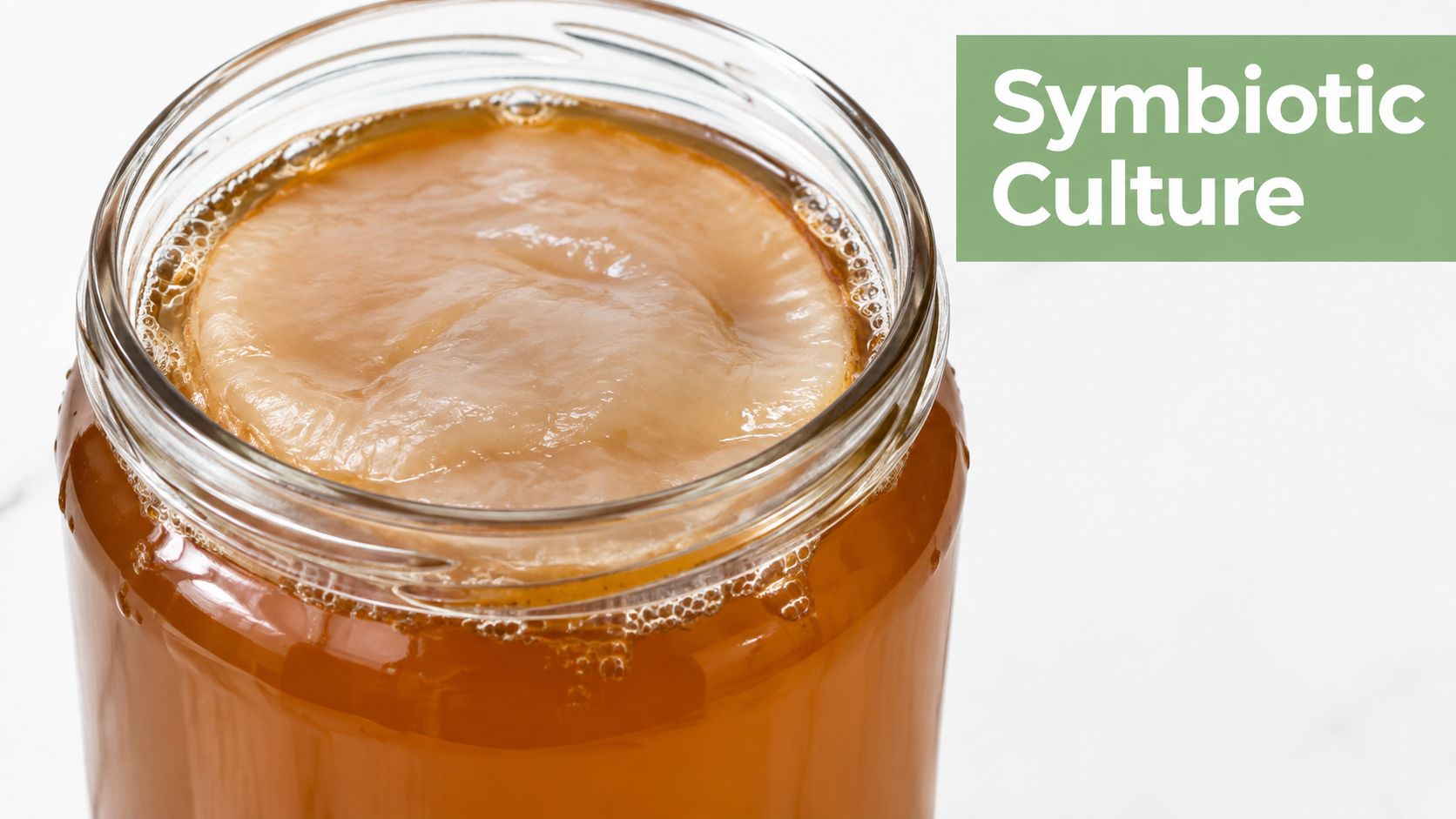
A helpful analogy is a living apartment building. Yeasts occupy the culture first, breaking down sugar and producing ethanol and carbon dioxide. Acetic acid bacteria then use the ethanol and convert it into acetic acid, which gives kombucha its familiar tartness. Australian material describes SCOBY communities as including acetic acid bacteria such as Komagataeibacter, Gluconobacter and Acetobacter, together with lactic acid bacteria such as Lactobacillus and Lactococcus. You can read more about fermented foods and their place in the diet in this Skin Perfection fermented food guide.
The pellicle is only part of the culture
The solid disc is called the pellicle. It's a cellulose mat produced by bacteria as they grow at the tea's air surface. The mat gives the culture its recognisable shape and may offer a protective home for parts of the microbial community.
The liquid matters just as much. Finished kombucha contains the active acidic starter culture, including yeast and bacteria suspended throughout the brew. For that reason, a thick pellicle alone isn't the complete SCOBY, and an attractive-looking disc isn't a guarantee of a healthy fermentation.
Practical rule: Treat the pellicle as the visible component, and the reserved acidic kombucha as essential starter liquid.
Australian university research has found that SCOBYs aren't uniform blocks of microbes. Different areas of the solid pellicle can contain spatially differentiated communities, so a commercial brewer monitoring consistency needs representative samples from both upper and lower layers. For a home brewer, the practical lesson is simple: don't judge the entire culture from one tiny fragment or one unusual strand.
How a SCOBY Ferments Sweet Tea Into Kombucha
The fermentation starts with cooled, sweetened tea. A home recipe may use black tea and roughly 60 to 80 grams of sugar per litre, then add the SCOBY and about 10 per cent starter liquid from a previous batch. Sugar isn't added because the finished drink needs to remain sweet. It feeds the microorganisms, which transform it during fermentation.
The two-stage process
At first, yeast break sucrose into simpler sugars, including glucose and fructose. They also produce ethanol and carbon dioxide. You may notice small bubbles, sediment or brown yeast strands during this part of the process.
Bacteria then oxidise the ethanol into acetic acid. The tea becomes sharper, the pH falls and the developing drink moves away from sweet tea towards kombucha. Australian fermentation guidance describes the first stage as commonly running in an open vessel for 7 to 10 days at 22°C to 30°C, with fermentation often stopped around pH below 4.2 before the SCOBY is removed for bottle-conditioning. These conditions and control points are discussed in Australian fermentation guidance.
The jar needs a clean, breathable cloth rather than an airtight lid during primary fermentation. Air supports the surface bacteria, while the cover helps keep dust and insects away. Place the vessel away from direct sunlight at a stable room temperature, then use smell, taste and pH testing rather than a calendar alone to decide when the batch is ready.
This explains why kombucha needs tea. Tea supplies more than flavour. It provides the brewing environment that the culture uses alongside sugar.
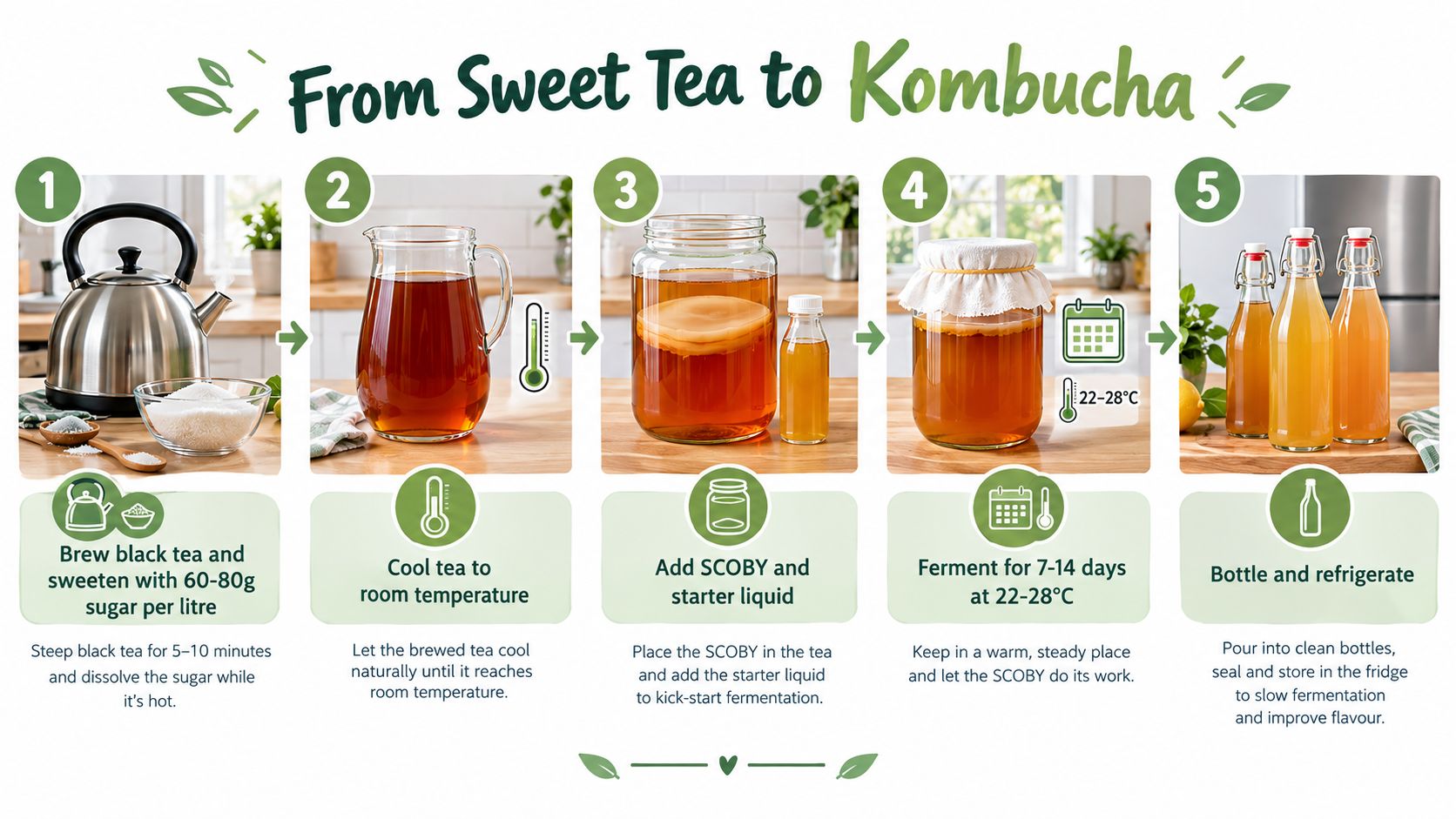
The visible “baby” SCOBY forms as bacteria produce more cellulose at the surface. It may begin as a thin film and thicken unevenly. Once the tea has reached safe acidity and tastes balanced, remove the culture, reserve starter liquid for the next batch and refrigerate the finished drink.
Practical Uses for a SCOBY at Home
An extra SCOBY doesn't have to become kitchen waste immediately. Its best use depends on whether you brew regularly, want to experiment, garden, or need a safe way to manage surplus culture.
| Practical SCOBY Uses at a Glance | Best For | Key Requirement |
|---|---|---|
| Start another batch | Active brewers | Healthy pellicle plus acidic starter liquid |
| SCOBY hotel | People keeping spare cultures | Clean jar, enough liquid and regular checks |
| Vinegar-style starter | Cooks who enjoy sharper ferments | Extended fermentation and careful monitoring |
| Compost | Gardeners with surplus cultures | Only use sound, uncontaminated SCOBYs |
| DIY or skincare experiments | Curious makers | Clean handling and no use on damaged skin |
Starting another batch
This remains the most dependable use. Put a healthy pellicle into cooled sweet tea and add reserved starter liquid from a finished brew. Local Food Connect recommends cutting off a small piece of the solid SCOBY, keeping about a cup of liquid and using that combination to refresh the next batch. The liquid is particularly useful because it carries the active culture through the brew.
If you only have a small pellicle, don't force it into a large batch. Match the amount of sweet tea to the starter culture you have, and watch acidity closely.
Keeping a SCOBY hotel
A SCOBY hotel is a clean jar containing spare pellicles and enough acidic kombucha to keep them covered. It suits regular brewers who want backup cultures without starting a new batch every time. Australian conditions can vary between cool indoor rooms and warm summer kitchens, so the jar still needs inspection rather than being forgotten.
Making a vinegar-style ferment
Leave a batch fermenting longer and the flavour can become increasingly sharp, closer to a mild kombucha vinegar. Use it as a cooking experiment rather than assuming it has the same characteristics as commercial vinegar. Keep the vessel covered, monitor it and discard the entire batch if mould or abnormal odour appears.
Composting and DIY ideas
A sound, unwanted SCOBY can be cut into smaller pieces and added to compost. It contributes moist organic material, but it shouldn't go into the garden if there are visible mould signs or an unpleasant smell.
Some makers blend small pieces into DIY face-mask experiments or explore the pellicle as a biodegradable sheet. Skin use needs extra caution. Fermented material isn't automatically suitable for every person, and it shouldn't be applied to broken, irritated or reactive skin. Patch testing and clean handling matter more than novelty.
How to Store Spare SCOBYs Safely
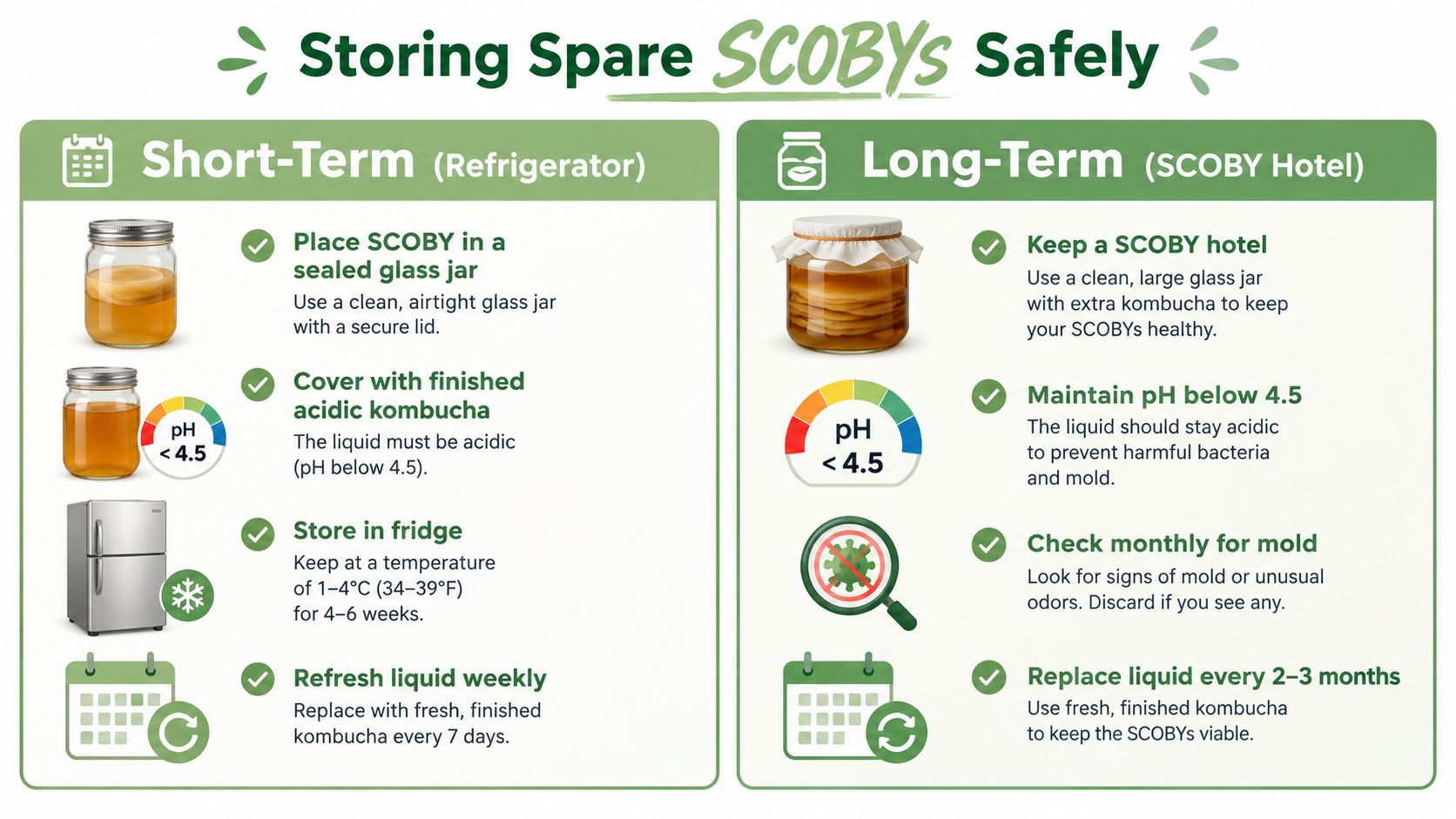
Short-term storage is usually easiest in a clean glass jar. Cover the SCOBY with finished acidic kombucha, keep the container sealed and refrigerate it. The supplied storage plan allows 4 to 6 weeks in the fridge when the culture remains covered in acidic liquid, although every stored culture still needs inspection before reuse.
A SCOBY hotel suits people who accumulate several pellicles. Place the cultures in a larger clean jar and add enough starter liquid to cover them. Keep the jar organised, label it with the date and avoid dipping used utensils into it. Periodic liquid replacement helps maintain an acidic environment and reduces the chance of the culture drying out.
A simple storage checklist
- Use glass: Choose a clean jar that won't retain food smells or residues.
- Keep it covered: The liquid should cover the pellicles so exposed areas don't dry out.
- Control the temperature: Refrigeration slows activity for short-term holding.
- Check before use: Look for fuzzy growth, unusual colour, off-odour or a slimy texture.
- Choose a commercial starter when unsure: Commercial cultures offer a more controlled starting point for beginners.
Food Standards Australia New Zealand warns that kombucha risks can include contamination from the SCOBY or dirty equipment, as well as excessive acid or alcohol levels. It recommends clean, sanitised equipment, proven commercial starter cultures and cooling tea quickly from 60°C to 20°C within 2 hours before adding the SCOBY. Read the FSANZ kombucha safety guidance before developing a regular home-brewing routine.
Freezing and dehydrating are sometimes discussed as longer-term options, but they can change the culture's texture and performance. A thawed pellicle may be softer, and a dried sheet may need careful rehydration before it proves useful. If you can't confirm that a stored culture is sound, start with a fresh commercial starter rather than gambling on an uncertain jar.
Beyond the Brew, Australian SCOBY Innovation
A SCOBY is useful because it performs two jobs at once. It helps ferment a beverage, and its bacteria produce cellulose, the structural material that forms the pellicle. That cellulose has attracted Australian interest for textiles and paper, offering a way to consider fermentation as a materials process rather than only a drink-making method.
A University of Queensland-associated project describes the microbial sequence clearly. Yeast first breaks sugar into glucose and fructose, then bacteria convert those sugars into cellulose. The team is exploring a synthetic SCOBY using omics-based methods to investigate more sustainable cellulose production. Australian reporting also describes SCOBY cellulose being considered for material applications such as textiles and paper. The Australian functional beverage trends guide places this experimentation within the wider movement towards drinks and ingredients with more than one practical role.
The beverage itself is also being studied in Australia. A Sydney University randomized crossover trial found that live kombucha reduced the post-meal blood sugar spike and improved insulin response compared with soda water or diet soft drink. The study kombucha was reported to contain about 200 microbial species and about 2.5 times the polyphenol content of green tea, as described in the Australian industry report Tonic to Textiles. Those findings don't turn kombucha into a medicine, and they don't mean every bottle has the same composition.
| Australian Kombucha Market Snapshot | Value |
|---|---|
| Surveyed products classed as alcoholic at a 0.5% ABV threshold | 64.8% |
| Sales rise reported over three years | 174% |
| Largest consumer market identified | NSW |
| Next biggest consumer market identified | Queensland |
Australia's regulatory discussion also records that kombucha sales rose 174% over three years, while 64.8% of surveyed products would be classed as alcoholic in jurisdictions using a 0.5% ABV threshold. The history is older than the current wellness category too, with fermented tea use dating back to at least 220 B.C. These details show why controlled fermentation matters for both home brewers and Australian producers.
A SCOBY Safety Decision Tree for Home Brewers
Use a SCOBY only after checking the whole culture, not just the top surface. Australian food-safety guidance says kombucha cultures should be checked for discolouration and abnormal odour, and that green, white, black or grey growth means the SCOBY should be discarded. Australian kombucha food-safety advice provides the basic standard for that inspection.
Start with the appearance
A healthy pellicle may be pale, tan or brown, with yeast strands, bubbles and uneven layers. Those features can look messy without being dangerous. Fuzzy, dry growth is different from a smooth cellulose film. If you see green, black, grey or suspicious white mould, don't scrape it off and continue. Discard the culture and the associated liquid.
Pink or orange discolouration also deserves a discard decision, especially when it appears as an unusual bloom rather than a normal tea stain. A mushy, disintegrating pellicle has lost its practical value, even if it doesn't show obvious mould.
Smell the liquid and culture
A light yeasty or vinegary aroma fits normal fermentation. Rotten, ammonia-like or faecal odours don't. Don't taste a batch that already smells contaminated, and don't try to rescue it by adding fresh tea.
Decide how to reuse it
If appearance and smell are normal, inspect the texture. A firm, rubbery disc with brown strands can usually return to a fresh brew, provided the starter liquid is also sound. If the pellicle is weak but the acidic liquid smells and looks normal, you may choose to keep the liquid as starter while composting the deteriorated solid layer.
Keep acidity under control. Western Australian guidance treats pH monitoring as a critical control point, with fermentation commonly taking 7 to 10 days at 20°C to 23°C, reaching pH 4.2 or lower, followed by removal of the starter culture and refrigeration at 4°C. A digital pH meter for kombucha monitoring can make repeated checks easier than relying only on taste.
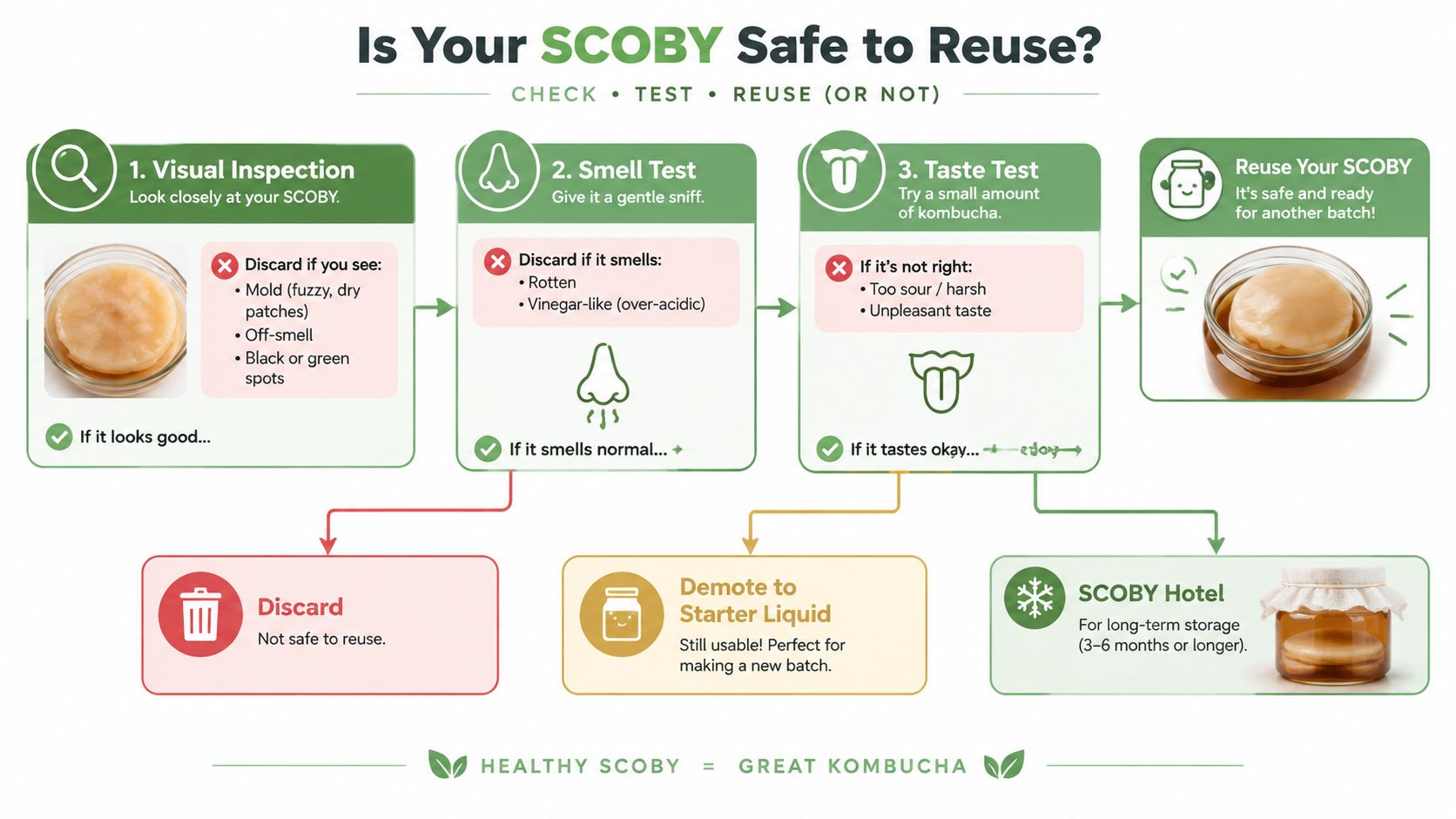
Print this decision path for your pantry:
- Fuzzy or abnormal growth? Discard the culture and liquid.
- Rotten or chemical odour? Discard rather than tasting.
- Firm pellicle and clean sour aroma? Keep for brewing or storage.
- Soft pellicle but sound acidic liquid? Demote the pellicle to compost and retain only the liquid if you're confident it's safe.
- Uncertain at any stage? Discard and use a proven starter culture.
Common SCOBY Myths and Smart Next Steps
Myth one, the disc is the entire culture. The pellicle is visible, but the liquid carries active yeast and bacteria too. A thick disc can look reassuring while a weak or contaminated liquid undermines the next batch. Treat both components as part of the starter system.
Myth two, every new batch needs a large SCOBY. A healthy pellicle can help, but reserved acidic kombucha is a carrier of the culture. If you have enough reliable starter liquid, you don't need to keep an ever-growing stack of rubbery discs. This is why many experienced brewers separate the practical need for starter liquid from the emotional attachment to every “baby” SCOBY.
Myth three, brown strings and a sour smell mean mould. Brown strands commonly come from yeast and can hang beneath the pellicle. A clean vinegary aroma also fits fermentation. Mould is more likely to appear as fuzzy, dry growth or unusual green, black, grey or pink discolouration, and Australian food-safety guidance says affected cultures should be discarded rather than skimmed.
Sensible next steps
- Use suitable ingredients: Brew with quality tea, real fermentable sugar and a reliable starter culture.
- Keep equipment clean: Sanitise jars, utensils and cloth covers before handling the ferment.
- Measure acidity: Use pH checks alongside taste and smell, particularly when you're learning.
- Reduce the culture pile: Keep one or two useful backups, share sound extras or compost cultures you no longer need.
- Start without the maintenance: Pep Tea offers Australian-brewed, sugar-free organic kombucha from the Hunter Valley, NSW, so beginners can explore the drink without managing a SCOBY straight away.
A SCOBY is best understood as a working fermentation culture, not a collectible object. Keep it when it's healthy and useful, use the liquid intelligently, and discard anything that raises a genuine contamination concern.
Pep Tea offers sugar-free organic kombucha brewed in the Hunter Valley, NSW, along with organic Japanese matcha for everyday tea rituals. Visit Pep Tea to explore the range, find a convenient way to enjoy live kombucha and learn more about Australian tea and fermentation.
How Do You Make a SCOBY: Your 2026 Step-by-Step Guide

You've probably stood in the kitchen with a bottle of raw kombucha in one hand, a clean jar in the other, and thought, “How do you make a SCOBY without turning the bench into a science project?”
That hesitation is normal. A SCOBY looks odd, the process sounds fiddly, and plenty of online advice skips over the bits that matter in an Australian home, like what happens when your brew sits through a sticky NSW summer afternoon or a cold inland snap.
The good news is that making a SCOBY is very doable. Once you understand what it needs, mainly sweet tea, active starter liquid, clean gear, airflow, and patience, it stops feeling mysterious. It starts feeling like good kitchen practice.
Your Kombucha Journey Starts Here
Most first-time brewers are less worried about the tea than the SCOBY itself. Fair enough. It can look slippery, lumpy, pale, stringy, or slightly alien. But in practical terms, it's just the working culture that helps transform sweet tea into kombucha.
A lot of people get started in one of two ways. They either accept a SCOBY from a friend who already brews, or they grow one from a bottle of raw kombucha. For beginners, growing one yourself is often the clearest way to learn what healthy fermentation looks like from day one.
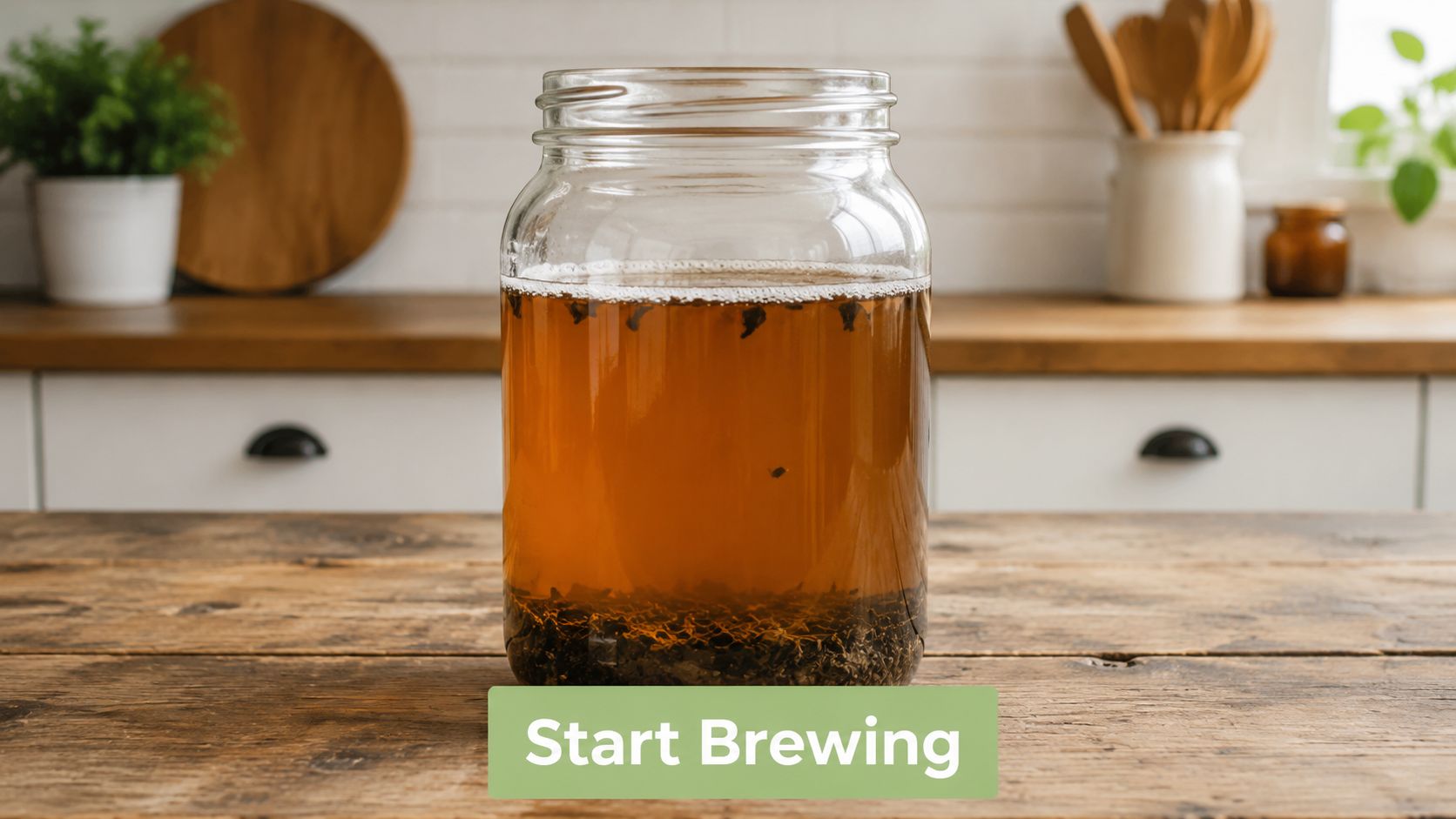
If you're brand new to brewing, it helps to first get familiar with what kombucha actually is. Once that clicks, the SCOBY makes more sense. It isn't a novelty ingredient. It's the engine of the brew.
Why beginners overcomplicate it
The biggest mistake I see is treating SCOBY growth like a lab test with a hundred moving parts. It's simpler than that. You're creating the right conditions, then leaving the culture alone long enough to establish itself.
What works well:
- Using plain, raw kombucha with visible sediment or floaties
- Starting with black tea, because it's dependable for a new culture
- Leaving the jar undisturbed in a suitable spot
- Expecting a slow process, not a weekend project
What usually doesn't work:
- Using flavoured or pasteurised kombucha
- Rushing the setup with warm tea that hasn't cooled properly
- Covering the jar too loosely
- Moving the jar around to check on it every day
Practical rule: A healthy SCOBY starts with a healthy liquid culture. The surface growth comes later.
A good first goal
Your first goal isn't to make the fizziest kombucha you've ever tasted. It's to grow a stable culture you can trust. Once you've done that, every later batch gets easier to manage.
That's where patience pays off. A calm setup in a clean kitchen corner usually beats constant tweaking. If you're wondering how do you make a SCOBY successfully, that's the heart of it. Give the culture what it needs, then let fermentation do its work.
Gathering Your Essential Gear and Ingredients
The easiest way to avoid problems later is to choose the right setup now. Good kombucha brewing doesn't require fancy equipment, but the few things you do use need to suit an acidic ferment.
Glass is the safest choice for the main vessel because it won't react with the brew. A breathable cover matters just as much. The culture needs airflow, but fruit flies love kombucha, so your cover has to protect the jar without sealing it shut.
Your basic starter kit
Here's the gear and ingredient list I'd put on the bench before doing anything else.
| Item | Quantity | Why it's important |
|---|---|---|
| Glass jar | 1 | Non-reactive and easy to monitor visually |
| Black tea bags or loose leaf black tea | 3–4 tea bags or 1 tbsp loose leaf | Black tea is the most reliable base for starting a fresh culture |
| Granulated sugar | 1/4 cup | Feeds the yeast and bacteria during early growth |
| Hot water | 2 cups | Used to brew the sweet tea base |
| Raw, unpasteurised kombucha with floaties | 1 cup | Supplies the live culture needed to start SCOBY formation |
| Breathable fabric cover | 1 | Allows airflow while protecting the jar |
| Rubber band | 1 | Keeps the cover secured tightly |
| Clean spoon | 1 | Useful for dissolving sugar before cooling |
The most dependable starter formula in the Australian context is 1/4 cup of granulated sugar, steeped with 3–4 black tea bags or 1 tbsp loose leaf in 2 cups of hot water, cooled fully, then combined with 1 cup of raw, unpasteurised kombucha containing floaties. Green tea or decaf can inhibit growth at this stage, so black tea is the benchmark for success, according to Nourish Me Organics' kombucha guide.
Why each choice matters
A few trade-offs are worth knowing before you start:
- Black tea over green tea. For a fresh SCOBY, black tea is the safer choice. Once your culture is established, you can experiment more.
- Fabric cover over cheesecloth. Cheesecloth sounds right, but it's not ideal. A tighter weave does a better job against pests.
- Raw kombucha over filtered-looking bottles. If you don't see sediment, you may not be getting an active enough culture.
- Clean over “probably fine”. Fermentation is forgiving in some ways, but not when dirty tools introduce unwanted microbes.
If you're interested in the broader hygiene mindset behind fermentation work, this guide on how to sterilize mushroom substrate is useful reading. It's from a different corner of fermentation, but the discipline around clean prep and contamination control is very relevant.
Clean doesn't mean clinical. It means organised, washed, rinsed well, and free of residues that can interfere with the culture.
One helpful shortcut
If you want a tidy starting point, a purpose-built kombucha tea kit can make the first run less fiddly. That's especially handy if you're setting up for home use and don't want to hunt down each item individually.
The Step-by-Step Process for Growing Your SCOBY
A Hunter kitchen in late summer can sit beautifully warm all morning, then swing once a storm rolls through. That kind of temperature wobble is why a good SCOBY routine matters. Order, cleanliness, and a steady resting spot make more difference than fancy gear.
Early on, it helps to see the flow visually.
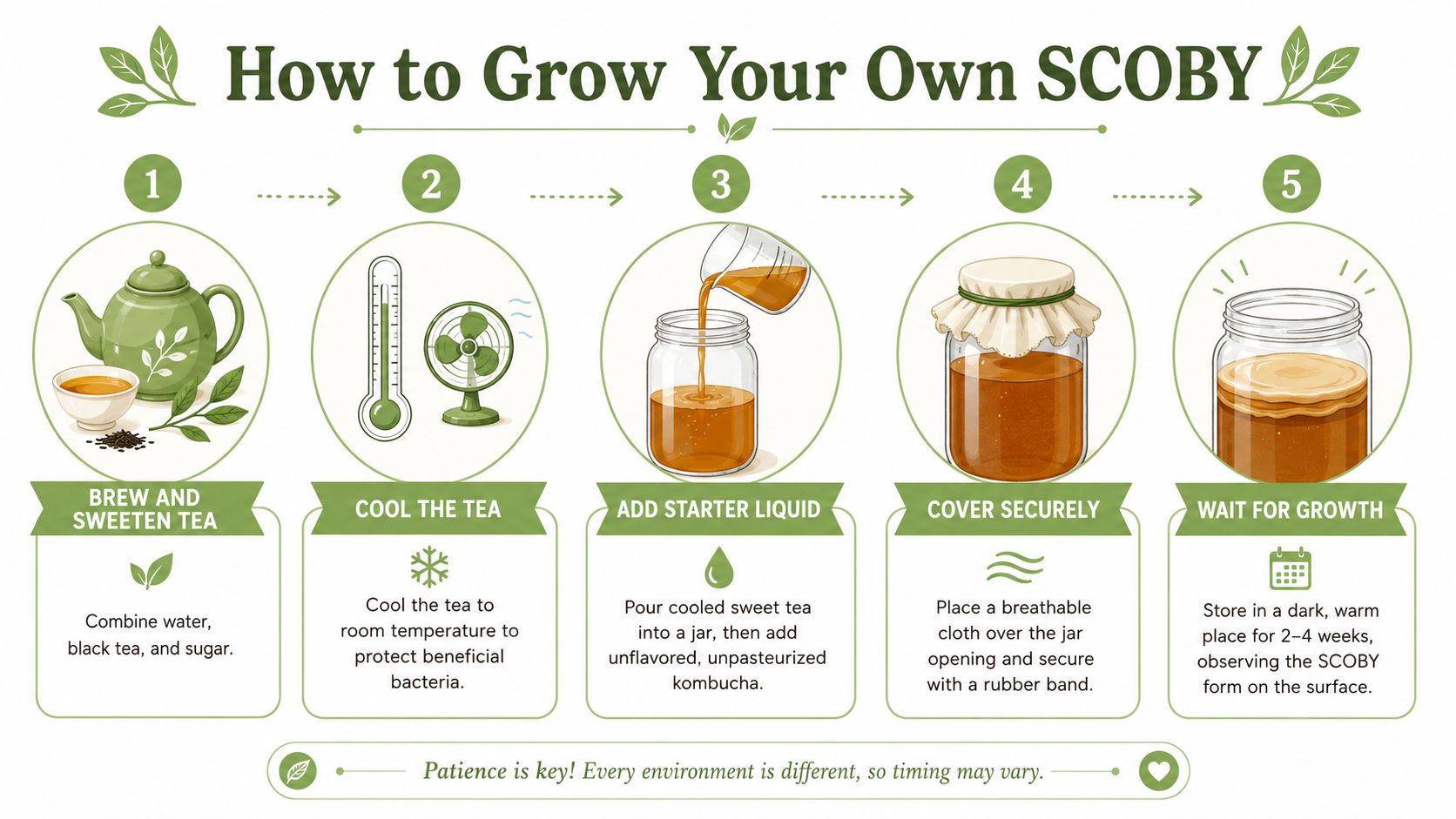
Brew the sweet tea properly
Brew the black tea first, then dissolve the sugar fully while the liquid is still hot. A clean, fully mixed tea base gives the culture an even food source and avoids gritty sugar collecting at the bottom of the jar.
Let the tea cool right down to room temperature before adding any live kombucha. Warm tea can stress the microbes and slow the start. In practical terms, if the outside of the jar or bowl still feels warm in your hand, wait longer.
Add the starter liquid and set the jar up
Pour the cooled sweet tea into a clean glass jar and add the raw, unflavoured kombucha. Tip in the sediment as well if the bottle has it. That cloudy material often carries plenty of active yeast and bacteria.
Cover the jar with a tightly woven cloth and secure it well. In Australia, especially through fruit-fly season, loose covers cause trouble fast. Cheesecloth is often too open. A clean tea towel, muslin folded over, or a paper towel under a firm rubber band does a better job.
For brewers making kombucha often, or for a cafe doing small-batch ferments in a prep area, keep your bench habits disciplined. Wash well, rinse away detergent residue, and keep ferments away from sourdough starters, compost caddies, and ripening fruit. Herbilabs has a useful guide on how to prevent lab contamination that translates well to fermentation spaces.
Choose the right spot and leave it alone
Set the jar somewhere with stable room temperature, decent airflow, and no direct sun, as described in You Brew Kombucha's SCOBY growing guide. In many NSW homes, a pantry shelf or the back corner of a bench works better than a windowsill, where daytime heat and nighttime cooling can push the culture around.
Leave it alone once it is in place.
Constant movement does not always ruin a batch, but it can interrupt that first thin layer trying to form across the surface. Avoid the top of the dishwasher, above the fridge, or any shelf that gets rattled every time someone reaches for mugs.
Good fermentation spots are dull, steady, and easy to keep clean.
This walkthrough can also help if you like seeing the process demonstrated in real time.
Know the realistic timeline
Growing a SCOBY from scratch is slow. It usually needs a generous amount of raw starter kombucha, then several weeks of patience before the new layer is thick and strong enough for regular brewing. In a warm coastal kitchen it can move along nicely. In a cool inland house, or during a NSW cold snap, it can take much longer than online tutorials suggest.
Thickness matters more than speed. Wait until you have a solid, leathery layer and a sharply acidic liquid underneath. That mature starter tea protects your first full batch far better than a thin, immature culture does.
What success looks like at the end
By the end of the process, you want two things. A formed SCOBY on top, and strong starter liquid below. Keep both.
If you want a reliable answer to how do you make a SCOBY, it comes down to this: brew sweet black tea, cool it fully, add live kombucha, protect it from contamination, then give it a stable spot and enough time to finish properly.
What to Expect While Your SCOBY Is Growing
The most reassuring skill in kombucha brewing is learning how to read the jar. New brewers often assume anything ugly is a problem. It usually isn't. Healthy SCOBY growth can look patchy, bubbly, uneven, and strange before it looks tidy.
Observation beats overreaction.
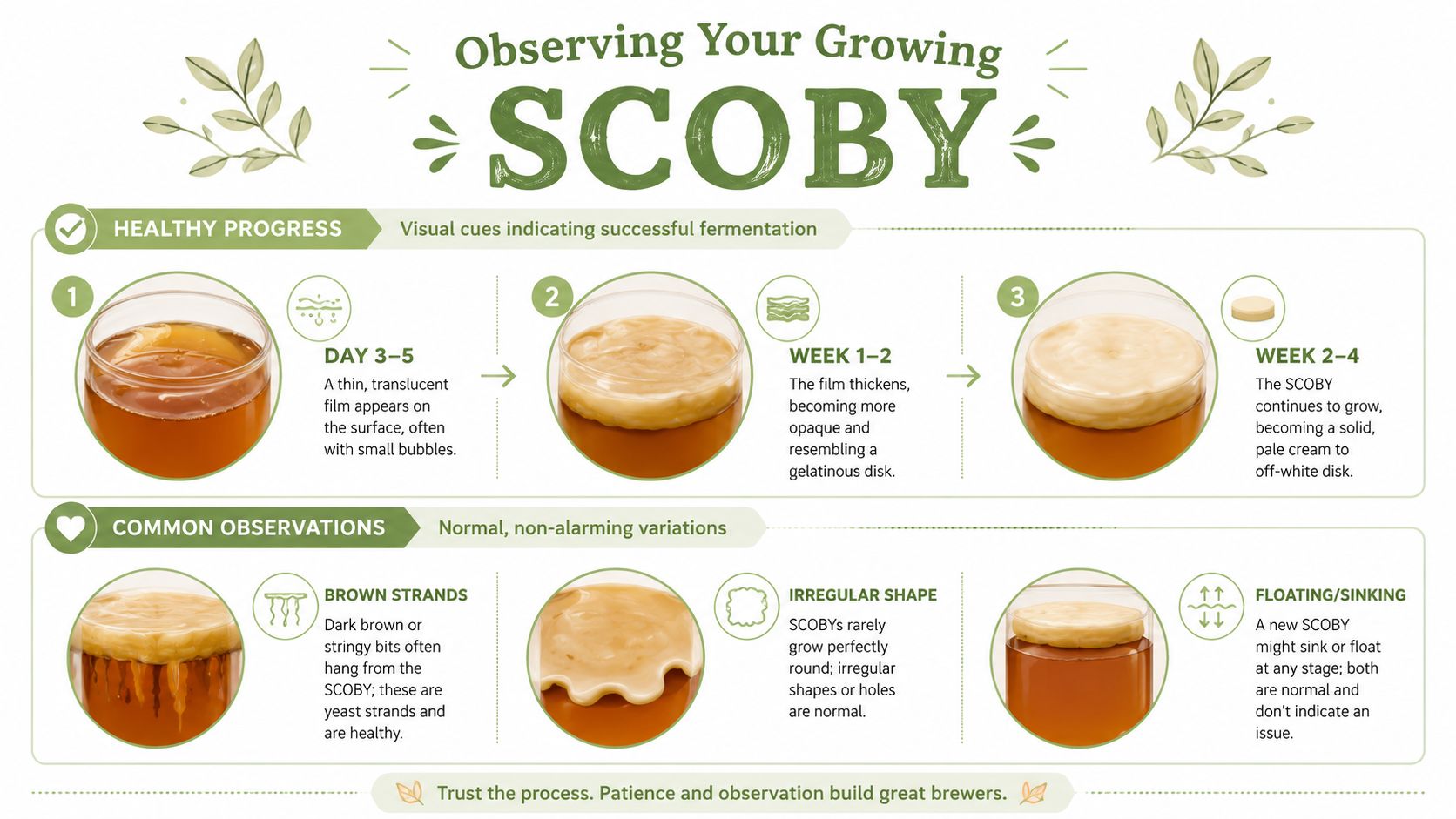
Healthy signs you'll probably see
In the early stage, you may notice a thin film spreading over the surface. It can look translucent at first. Small bubbles can appear under it. That's often a good sign, not a warning sign.
As time passes, the surface layer usually thickens and turns more opaque. The colour is often pale cream to off-white. It may not form a perfect circle, and it may not look smooth.
Common normal features include:
- Brown stringy bits hanging below the layer. These are usually yeast strands.
- Uneven edges or holes in the developing mat.
- Floating or sinking at different points in the process.
- A sharp, vinegary aroma that smells fermented, not rotten.
A healthy SCOBY rarely looks pretty in the polished, social-media sense. It looks alive.
Signs that should make you stop
There is a difference between normal oddness and a genuine contamination problem. Mould is the main one to watch for. Mould typically appears dry or fuzzy, and it sits on top rather than dangling in the liquid.
Be cautious if you see:
- Green or blue growth
- Fuzzy white patches that look powdery rather than wet
- A smell that suggests rot rather than acidity
- A surface that looks dry and mould-like instead of glossy and damp
If you see mould, discard the batch and clean your equipment thoroughly before trying again. Don't try to rescue it.
A more advanced confidence check
Taste and appearance tell you a lot, but some brewers like an extra layer of reassurance. In a healthy kombucha culture, the SCOBY should be able to produce a new film within 3 weeks while the brew trends toward a pleasantly sour, faintly sweet profile, as described by Planning With Kids in their Australian kombucha guide.
That same guide also notes that a healthy culture can double in mass over time. You don't need to obsess over measuring it. What matters at home is seeing steady surface growth, increasing acidity, and no signs of contamination.
Patience is part of the process
A common mistake is interfering with the jar because “nothing seems to be happening”. Something usually is happening. It's just gradual. Lifting the cloth repeatedly, moving the jar, or changing spots every few days doesn't help.
If the brew smells clean and sour, the surface is forming a moist film, and there's no fuzz, your best move is usually to keep waiting.
Fixing Common Problems in Australian Climates
A jar that behaves perfectly in coastal Queensland can struggle badly during a cold NSW snap. That catches out plenty of new brewers. SCOBY growth is less about luck and more about keeping temperature and hygiene steady enough for the culture to stay in charge.
Winter is usually the harder season. In cooler kitchens, SCOBY growth can slow right down, and Live Eat Learn's kombucha guide notes that cold conditions are a common reason batches fail. Around the Hunter, I tell people to check the room before they blame the culture. A bench near an outside wall, a draught from a window, or a jar sitting on cold stone can be enough to stall progress.
What helps in cooler weather:
- Use the warmest stable room in the house rather than the laundry, garage, or pantry
- Lift the jar off cold benchtops with a folded tea towel or timber board underneath
- Wrap the sides lightly with a clean towel if nights are cool, while keeping the top breathable
- Leave it in one spot so the culture is not coping with daily temperature swings
- Keep it out of direct heater blasts because sharp rises and drops can stress the brew
Heat brings a different set of problems. Summer ferments can acidify fast, especially in kitchens that sit warm all afternoon. You might get a surface layer quickly, but speed alone does not mean the culture is healthy. Too much heat can leave you with harsh, overly sour liquid before the new SCOBY has built proper strength.
For hot weather, keep the jar in bright shade, away from windows, ovens, dishwashers, and the top of the fridge. Small cafes should watch this closely. Back-of-house areas often run warmer than staff realise, especially once service starts.
A few common signs worry people more than they should:
- The SCOBY sank. A fresh layer can still form on the surface
- The top looks patchy or lumpy. Early growth is often uneven
- The brew smells sharp. Clean vinegar-like acidity is normal during development
- There are strands or brown bits in the liquid. Yeast often looks messy before the culture settles
Fruit flies are the exception. In Australian summers, they can ruin a batch fast. If they are hovering around the jar, check the cloth, the rubber band, and the rim of the vessel straight away. For home brewers and small cafes, this is where good habits matter. Wash the jar well, rinse away any detergent residue, use clean hands, and wipe nearby surfaces before you start. If the cover has gaps or the jar looks compromised, discard the batch and reset.
If your culture keeps struggling, simplify the setup. One jar. One consistent spot. Clean equipment. Active starter. That solves more problems than constant fiddling.
If you end up with extra starter liquid or a backup culture while troubleshooting, this guide on how to store kombucha safely between batches is useful for keeping it in good condition.
Harvesting, Storing, and Scaling Up
Once your SCOBY reaches brewing strength, you'll notice the difference. The surface layer has enough body to handle transfer, and the liquid below is sharply acidic rather than sweet tea with a tang.
When it's ready to use
A mature SCOBY for a full batch should be at least 1/2 inch thick, and the concentrated starter tea left behind is useful for the next brew, as noted earlier in the SCOBY growth process. Handle it with clean hands or clean utensils, and keep enough strong starter liquid with it so the culture stays protected.
A simple routine works well:
- Lift the SCOBY gently and place it into the next prepared batch
- Reserve starter tea from the jar rather than using all of it
- Keep a backup culture if you plan to brew regularly
Storing extra SCOBYs well
If you end up with more culture than you need, set up a SCOBY hotel. That's a separate jar where extra SCOBYs sit in strong kombucha starter liquid. Keep it covered with breathable fabric and store it in a stable spot, just as you would an active brew.
For longer-term care and practical handling, this guide on how to store kombucha is useful if you want to keep your starter and finished batches in good condition.
What changes when a café scales up
At home, consistency comes from habits. In a café or small production setting, consistency comes from systems. The bigger the batch, the less room there is for guesswork around cleanliness, monitoring, and storage.
For commercial organic kombucha in Australia, premises must be HACCP certified, which means critical control points such as pH and temperature are monitored as part of food safety practice. That's the benchmark followed by Pep Tea in its Hunter Valley brewery, as outlined on their organic kombucha page.
That matters for cafés thinking beyond hobby brewing. A good SCOBY culture is only part of the job. Reliable process control is what turns fermentation into a dependable product.
If you're ready to move from home-brewing curiosity to reliable, well-made kombucha, explore Pep Tea for Australian organic kombucha, practical brewing guidance, and resources built for both home drinkers and hospitality teams.
Why does kombucha need tea?

Although the clue is in the name, chances are that tea is not the first thing that springs to mind when you think of kombucha.
Good for your gut. Sure.
Fizzy. Fermented. Sour.
All of the above. Yet unless you make your own kombucha, does it even occur to you that kombucha is made from tea?
Let’s dwell on that for a moment.
Kombucha tea ingredients
Kombucha is made from five ingredients. Water, tea, and sugar, plus bacteria and yeast in the form of the SCOBY. This is left alone to ferment. The SCOBY is the live culture responsible for fermentation, a process that involves turning sugar to alcohol and alcohol to organic acids. It is similar to how rice vinegar is made.
Whilst we are busy concentrating on the amount of sugar in kombucha, or whether kombucha is alcoholic, ( a good scientifically correct kombucha has no remaining sugar or alcohol) tea is quietly getting on with its job. Turns out, tea is actually the most important ingredient in kombucha.
Why does kombucha need tea?
Tea not only makes booch taste great, and has some bonafide benefits to health, but it plays an integral part in the fermentation process too. Sugar plays an important part, but it is also the various compounds in the tea leaves that support the life of the SCOBY.
Is there caffeine in tea?
Caffeine occurs naturally in the plant camellia sinensis from which all true teas are harvested yet caffeine content in tea varies widely. Tea also contains an amino acid called l-theanine which works synergistically with caffeine to induce a state of calm alertness, as oppose to the rollercoaster ride of a coffee caffeine-high.
There are many factors that determine the caffeine content of tea. Although black tea is widely considered to have more caffeine than green tea, this may not always be the case. Some types of Japanese green tea, for instance, have more caffeine as they are grown in the shade and only the tips are harvested. Assam, a tea varietal found in many black teas, is naturally high in caffeine.
So, does kombucha have caffeine it it?
As with tea, the caffeine content of kombucha varies. The type of tea used, and the specifics of the brewing process, can affect the results. What is important to know is that less caffeine comes out than goes in because caffeine is used up in the fermentation reaction. Something involving nitrogen.
What teas can you use to make kombucha?
Kombucha needs true tea to grow and thrive. That’s black, green, white or oolong tea (or a combination). Herbal teas, such as peppermint or chamomile, are herbs not true teas so will not provide the right nutrients for fermentation. They can be used, with a healthy SCOBY, to brew up a batch or two but as part of the continual fermentation process that is kombucha they will not support the ongoing health of the culture.
It goes without saying that organic tea is preferable. Not only could pesticide residues inhibit fermentation but they will end up in your brew too.
Here at PepTea we only produce organic kombucha from green tea.
Kombucha green tea benefits
One of the major health benefits of kombucha is that it carries all the antioxidant benefits of the tea that it was made from. Green tea is particularly rich in antioxidant polyphenols, and studies have shown it to have numerous benefits to health.
Antioxidants prevent cell damage and inflammation. Green tea is a particularly rich source of EGCG, a powerful antioxidant of the group known as catechins. L-theanine has anti-anxiety properties which together with brain boosting caffeine can improve long term brain function. Green tea is also said to improve fat burning, reduce blood sugar and improve insulin sensitivity, and help prevent cardiovascular disease.
Have you tried all the flavours of our green tea kombucha yet? Also, check out our bulk food online store.
Kombucha – A Healthful & Natural Traditional Beverage
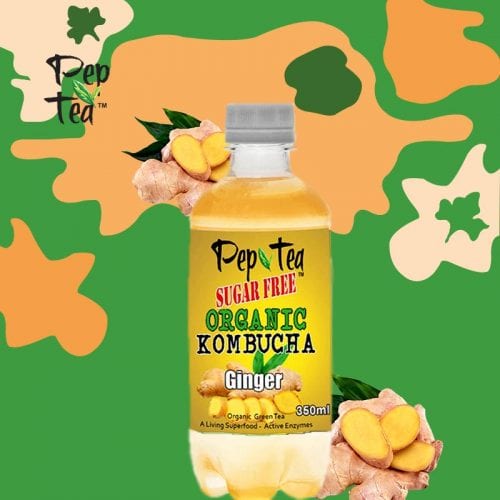
Kombucha is also known as “Mushroom Tea” or the “Elixir of health” has been there for more than thousands of years. It is a fermented tea beverage where the tea is combined together with sugar, bacteria, and yeast to begin the fermentation process. The healthy bacteria Kombucha scoby which is added during the process absorbs essential nutrients and helps our body to fight sickness. Kombucha is rich in antioxidants and probiotics which benefit the body, brain, and gut.
Peptea has specialized in being the go-to Kombucha brand in Australia. All our Kombucha drinks are sugar-free because during the process sugar is converted and the finished product is completely sugar-free. Our products have a low amount of calorie, carbohydrates, and GI. They are vegan-friendly, free from gluten and caffeine and do not need any artificial preservatives. There are different flavors of Kombucha drinks available with us to check out our online store for further details.
Buy Peptea organic Lime & Ginger Kombucha from our store. You can also buy a box of 12 combined Kombucha drinks of a different flavor from our parent wholesale Kombucha brand, Opera Foods.
Where To Buy Organic Kombucha In Australia
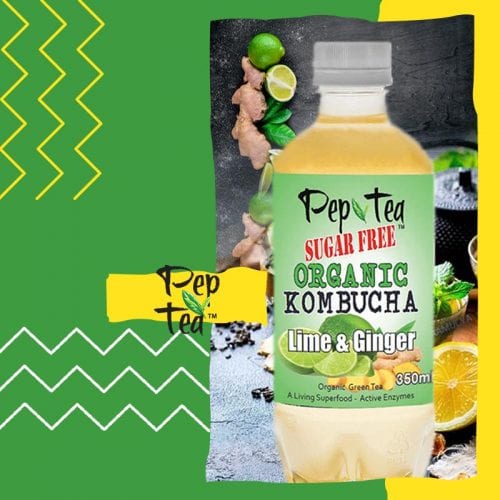
Pep Tea is an Australian kombucha brand which offers where to buy organic kombucha in Australia. The brand offers Australian organic Kombucha and organic Japanese Matcha tea powder. All our Kombucha drinks are raw and organic they are loaded with real Kombucha antioxidants and taste great.
The Lime and Ginger Kombucha drink of Pep Tea brand are completely free from Caffeine, Lactose and fat. These drinks are brewed and bottled in the Hunter Valley of NSW. The Buy Lime and Ginger Kombucha drink is a superfood drink which contains active enzymes. They are low in calorie, contain low carbohydrates and are vegan-friendly.
Order a complete box of 12 Lime and Ginger Kombucha drink or a mixed pack which has 4 flavors mixed in it from our wholesale food suppliers Opera Foods.
A Kombucha Drink a Day keeps Stress Way
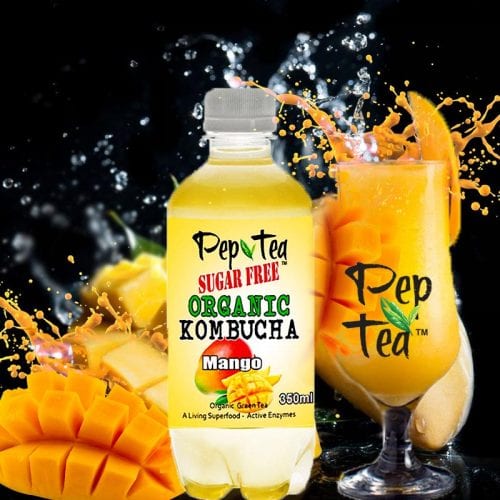
Kombucha is loaded with probiotics which are essential for our body. Drinking Kombucha helps us in managing diabetes, protecting the liver and in maintaining a good healthy heart rate. Peptea has found a way to retain the goodness of Kombucha by adding flavors of natural organic fruit and vegetable flavorings. Kombucha was first used over 2240 years ago but over the ages, it became known as the “Miracle Elixir of health” because of its amazing health benefits.
Our Peptea brand Kombucha is grown in clean bacteria controlled room with a tested Kombucha scoby. Our Pep Tea brand Kombucha is fermented with beneficial yeast that helps re-populates the gut. The standout feature of our brand is we use the right bacteria in the correct scientific balance, all our Kombucha drinks are expertly tested before it is sold in the market or our store. Kombucha contains Vitamin B12 which is very vital for the body to remain in a good mental state. A Kombucha drink relives your body from the stress and pressure of your everyday hectic life.
Pep Tea is a famous Kombucha brands and a registered brand label of Opera Foods.
Be relieved of your stress and boost your mental health with a fruity Kombucha drink from Pep Tea.
Kombucha A Natural and Organic Health Drink

Kombucha is a health drink which is made from the natural fermentation of Green tea. Pep Tea brand organic kombucha drinks are loaded with real and organic green tea powder, fermented and brewed. These kombucha drinks are of the highest quality and purely made in Australia. They are very rich in amino acids, vitamin B and antioxidants. Some of the Kombucha health benefits are they are low in calories, fat-free, Lactose-free and Vegan-friendly.
There are four different flavors of Kombucha available in our online store. The Flavors are Mango, Ginger, Lime & Ginger, and Apple & Pomegranate. If you are drinking kombucha for its health benefits you should have the PepTea labeled kombucha drinks which are consistently good with no side effects and zero sugar.
You can order Organic Kombucha Tea of 350ml sugar-free drinks which contains a mixed box of 12 drinks of Mango, Ginger, Lime & Ginger and Apple & Pomegranate. Buy Kombucha In Bulk Online Direct, Organic, Sugar Free and in 4 great flavours
You can also buy all 4 Kombucha flavours from Pep Tea at Harris Farm Markets