
Tag: how to store matcha
How to Store Matcha Tea and Keep It Fresh

You open the matcha tin for your morning latte and notice the colour has shifted from vivid green to something duller. The aroma that once smelled sweet and grassy now reminds you of hay, even though the powder is still within its printed date. In an Australian kitchen, that change can happen quickly when matcha sits beside a toaster, on a sunny shelf, or in a humid cupboard.
Learning how to store matcha tea isn't about treating a pantry like a laboratory. It's about controlling air, light, heat and moisture, then building a routine that prevents condensation and repeated exposure. Store it properly and your matcha will keep its fresh aroma, smooth flavour and vibrant colour for far longer.
Why Your Matcha Is Going Off Faster Than You Think
The first sign is often subtle. You whisk your usual morning bowl, but the fragrance is flat and the flavour tastes more like cut grass than fresh, sweet greenery. The tin was sealed after yesterday's use, so you assume the problem must be the matcha itself.
Usually, the problem is exposure. Matcha is made by grinding tea leaves into an extremely fine powder, which means oxygen can reach a much larger exposed surface than it can with intact loose leaves. Its delicate colour, aroma and flavour are therefore vulnerable every time you open the container. You can learn more about that transformation in this guide to how matcha tea is made.
Australian conditions make careless storage harder to forgive. A warm summer kitchen, a humid apartment near the coast and a cupboard above the oven all expose matcha to conditions that shorten its best flavour window. Frequent fridge opening creates another issue, because temperature changes can encourage condensation inside the packaging.
Freshness isn't the same as safety
Matcha may remain usable after its best sensory qualities have faded. Australian guidance commonly recommends using opened matcha within 2 to 3 months, because flavour and nutritional benefits peak early and decline with air, light and moisture exposure. Unopened product is often kept for up to 12 months, although some suppliers recommend 6 to 12 months for best quality. (Australian Matcha Society guidance)
That distinction matters. A powder can be technically within its storage window while its aroma has already disappeared, its colour has dulled and its flavour has become bitter or bland. Treat the printed date as a safety and quality reference, not permission to leave an opened tin untouched for months.
Practical rule: If the colour, aroma and flavour have clearly deteriorated, better storage won't restore them. Use fresher matcha next time and protect it from the moment you open it.
The Four Enemies of Fresh Matcha
Audit your current storage setup against four causes of deterioration. Fix the biggest exposure first, then make the rest part of your normal kitchen routine.
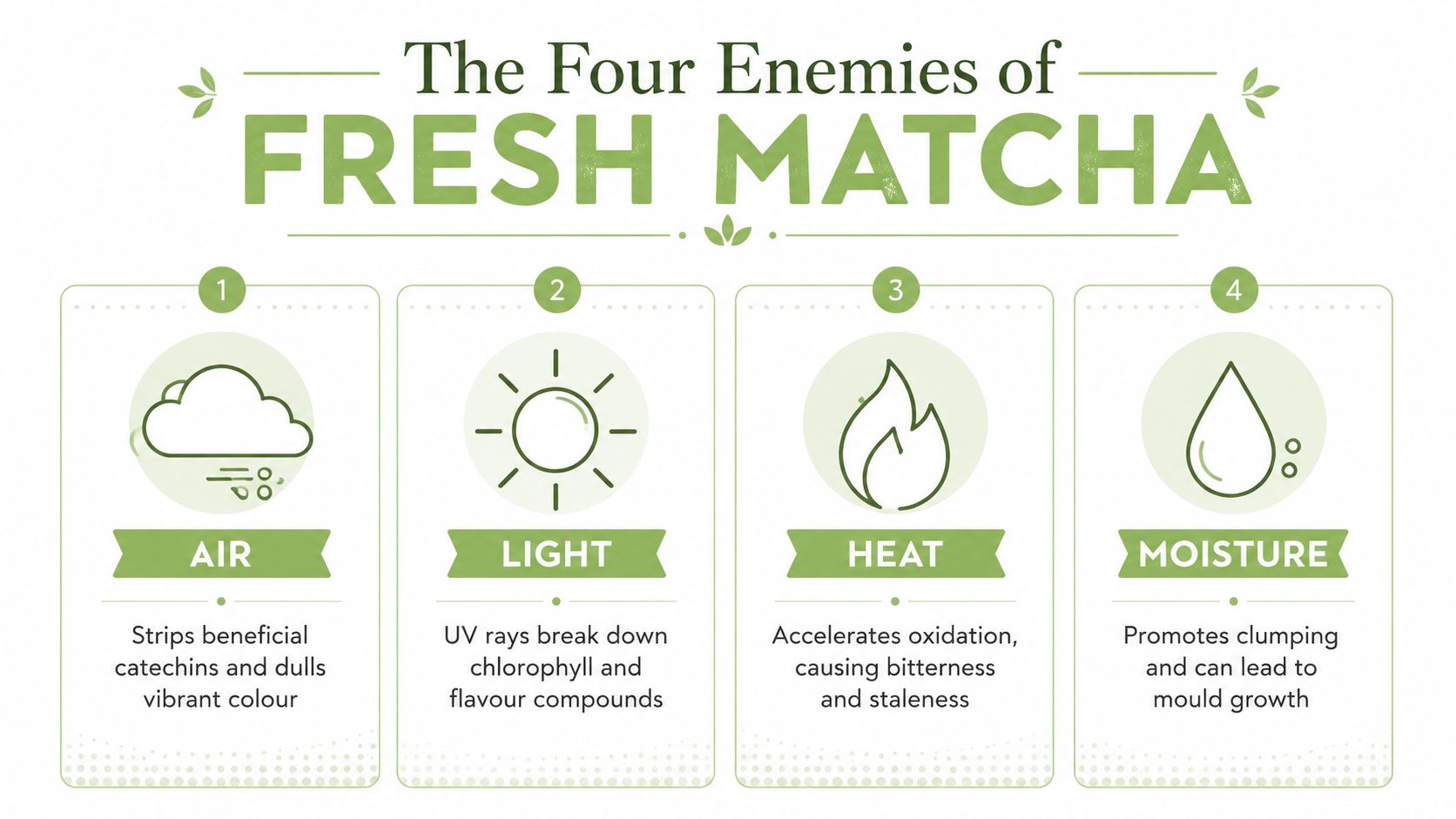
Air
Oxygen gradually dulls matcha's colour, aroma and flavour. A pouch that contains a large pocket of air is already working against you.
Spot it: The powder looks less vibrant around the surface or tastes flat despite being tightly closed.
Counter it: Squeeze excess air from a resealable pouch before closing it, or transfer the powder to the smallest suitable airtight container. Australian storage advice specifically recommends smaller packs and limiting repeated air exposure. (Kenkō Tea storage guidance)
Light
Direct sunlight and bright kitchen lighting can fade the green colour and weaken the fresh vegetal character.
Spot it: Your container sits on an open shelf, windowsill or bench in full daylight.
Counter it: Use an opaque tin or place the sealed container inside a dark cupboard. A clear canister may look attractive, but it's a poor choice for long-term matcha storage.
Heat
Heat accelerates quality loss. Keep matcha away from ovens, kettles, stovetops, dishwashers and other warm appliances. Australian guidance identifies 0°C to 20°C as an ideal storage band and recommends relative humidity at or below 60%. (Kenkō Tea storage guidance)
Spot it: The tin feels warm, or it lives in a cupboard above an appliance.
Counter it: Move it to the coolest dark cupboard available, or use the fridge when your home is consistently hot or humid.
Moisture
Humidity causes clumping and can compromise the powder's quality. Steam from a kettle, a damp teaspoon or condensation from a cold container can introduce enough moisture to change the texture.
Spot it: The matcha forms stubborn lumps or feels damp rather than silky.
Counter it: Use a completely dry spoon, close the container immediately and never open chilled matcha until it has returned to room temperature.
Start with air and heat, then eliminate light and moisture. A perfect container won't compensate for a hot shelf or a wet spoon.
Pantry, Fridge or Freezer Where Should Matcha Live
There isn't one universal storage zone. The right choice depends on your household temperature, humidity and how quickly you use the powder.
| Location | Ideal Temperature | Typical Shelf Life | Best For |
|---|---|---|---|
| Pantry | Around 25°C or cooler | Opened matcha is best used within 2 to 3 months | Daily drinkers with a genuinely cool, dark cupboard |
| Fridge | Cool and stable, within the recommended 0°C to 20°C band | Opened matcha is commonly used within 2 to 3 months for best quality | Hot or humid Australian homes |
| Freezer | Frozen and consistently sealed | Some Australian guidance allows unopened matcha to be kept for longer, but quality depends on avoiding moisture and temperature swings | Large, sealed reserves or café stock |
The pantry is perfectly practical when it stays cool, dry and dark. Store the matcha in its airtight opaque packaging, away from direct light and heat sources. An Australian tea guide recommends around 25°C or cooler, with refrigeration or desiccants reserved for humid conditions. (Tavalon Australia storage advice)
The fridge is the better choice for a hot Australian summer or a humid apartment. Put the sealed container inside a protective airtight food container and keep it away from strong-smelling foods. Don't open it straight from the fridge. Let it reach room temperature first, otherwise warm humid air can condense on the powder.
Freezing is a specialist option, not my default recommendation for a household tin. Use it only when the matcha is sealed thoroughly and you won't keep moving it between frozen and room-temperature storage. A freezer can extend storage for a bulk reserve, but condensation during thawing can undo the benefit.
My recommendation: Daily users should choose a cool dark pantry if it stays stable. If summer heat or humidity makes that unreliable, use the fridge consistently. Occasional users should buy smaller packs rather than relying on long-term freezing.
Choosing the Right Container and Packaging
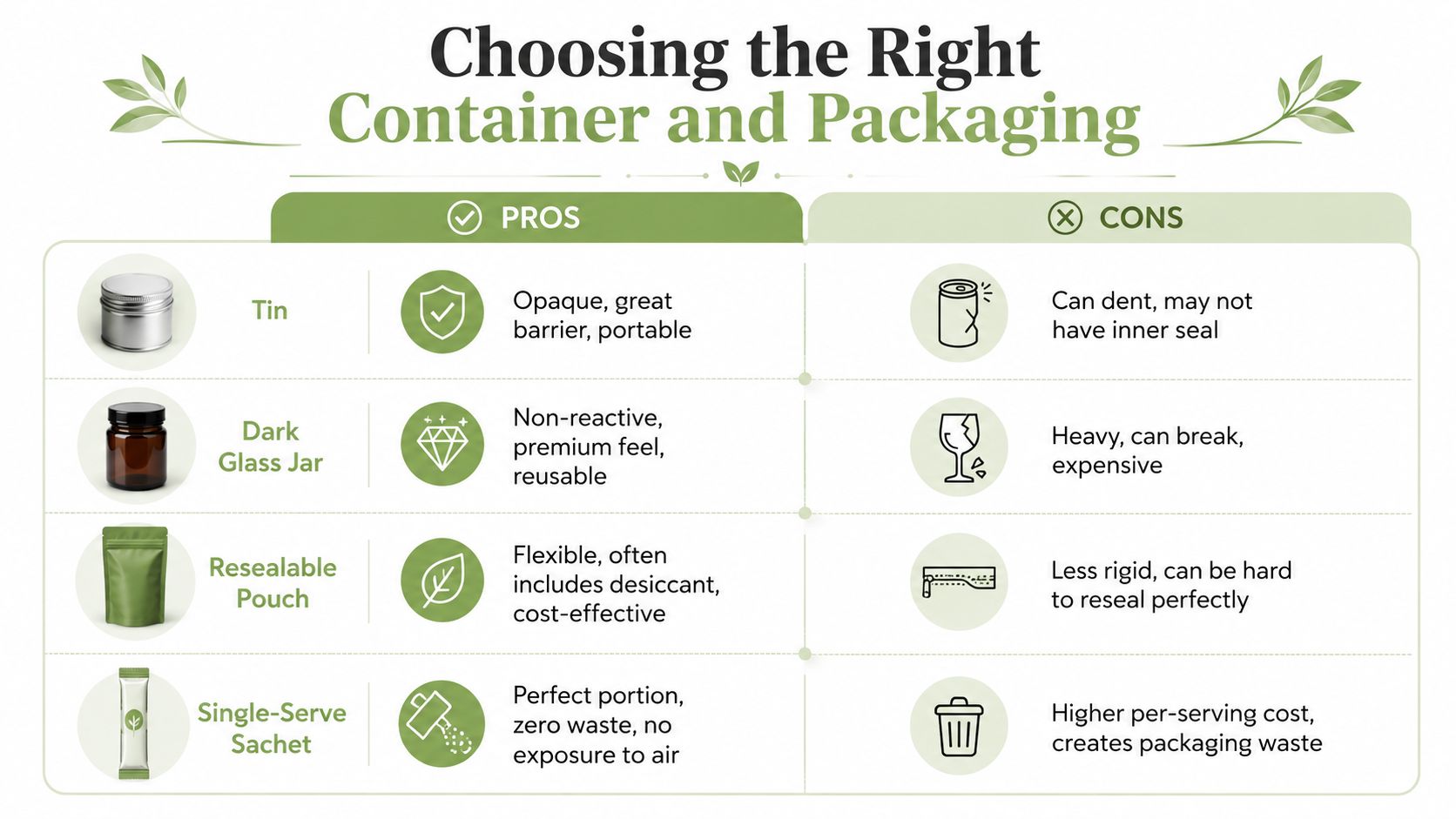
The best matcha container is airtight, opaque, clean and appropriately sized. Don't choose a clear decorative jar because it looks good on the bench. Light and excess air matter more than presentation.
Tins for regular home use
A metal tin is my first choice for a daily drinker. It blocks light, travels well and usually gives you a strong barrier against the kitchen environment. Look for a tight inner seal, because a lid that merely rests on the rim isn't enough.
The weakness is practical. Tins can dent, and some have no reliable inner seal. Keep the original pouch inside the tin if it closes securely, or use a food-safe airtight insert that doesn't leave a large air gap.
Dark glass jars for careful storage
Dark glass is non-reactive, reusable and attractive on a kitchen shelf, provided it blocks light effectively. It's heavier than a tin and can break, so it suits a stationary home setup better than a café service area.
Fill the jar sensibly rather than leaving a large empty space above the powder. Wash it thoroughly, dry it completely and never transfer matcha into a container that retains steam or detergent odour.
Resealable pouches and sachets
Resealable pouches are flexible and efficient, especially when they include a suitable barrier layer or desiccant. Squeeze excess air out before resealing, and don't assume a zip closure remains perfect forever. For a useful packaging example, compare the format of this matcha green tea pouch 40g.
Single-serve sachets offer excellent portion control. Each serving remains protected until use, but the packaging creates more waste and can cost more per serving. They make sense for cafés with inconsistent demand, travel kits and hospitality service where an opened bulk pouch would sit exposed.
For more container-specific guidance, see this practical resource on a matcha storage container. For cafés and retail, vacuum-sealed or nitrogen-flushed pouches can reduce oxygen exposure before opening, but staff still need a disciplined system after the seal breaks.
Pack Sizes, Rotation and Everyday Habits That Matter Most
A better container helps. Smaller packs and disciplined rotation help more. Matcha begins losing quality as soon as the seal is broken, so a quantity that gets used promptly is a smarter purchase than a large bargain pack that remains open through changing weather.
Australian guidance recommends smaller packs, with about 50 g suggested for people who drink matcha daily to reduce repeated air exposure. Some Australian advice also recommends consuming opened matcha within about 2 months. (Kenkō Tea storage guidance)
Use a simple FIFO system
Cafés should mark the opening date on every pouch or tin and use first in, first out rotation. Put the oldest opened stock at the front of the shelf, not behind a newer delivery. Households can use the same approach by writing the opening date on masking tape and keeping one active pack at a time.
Don't bulk-buy simply because a sale makes the larger size appear economical. The saving disappears when the powder sits open, loses its aroma and forces you to compromise on flavour in lattes, baking or ceremonial preparation.
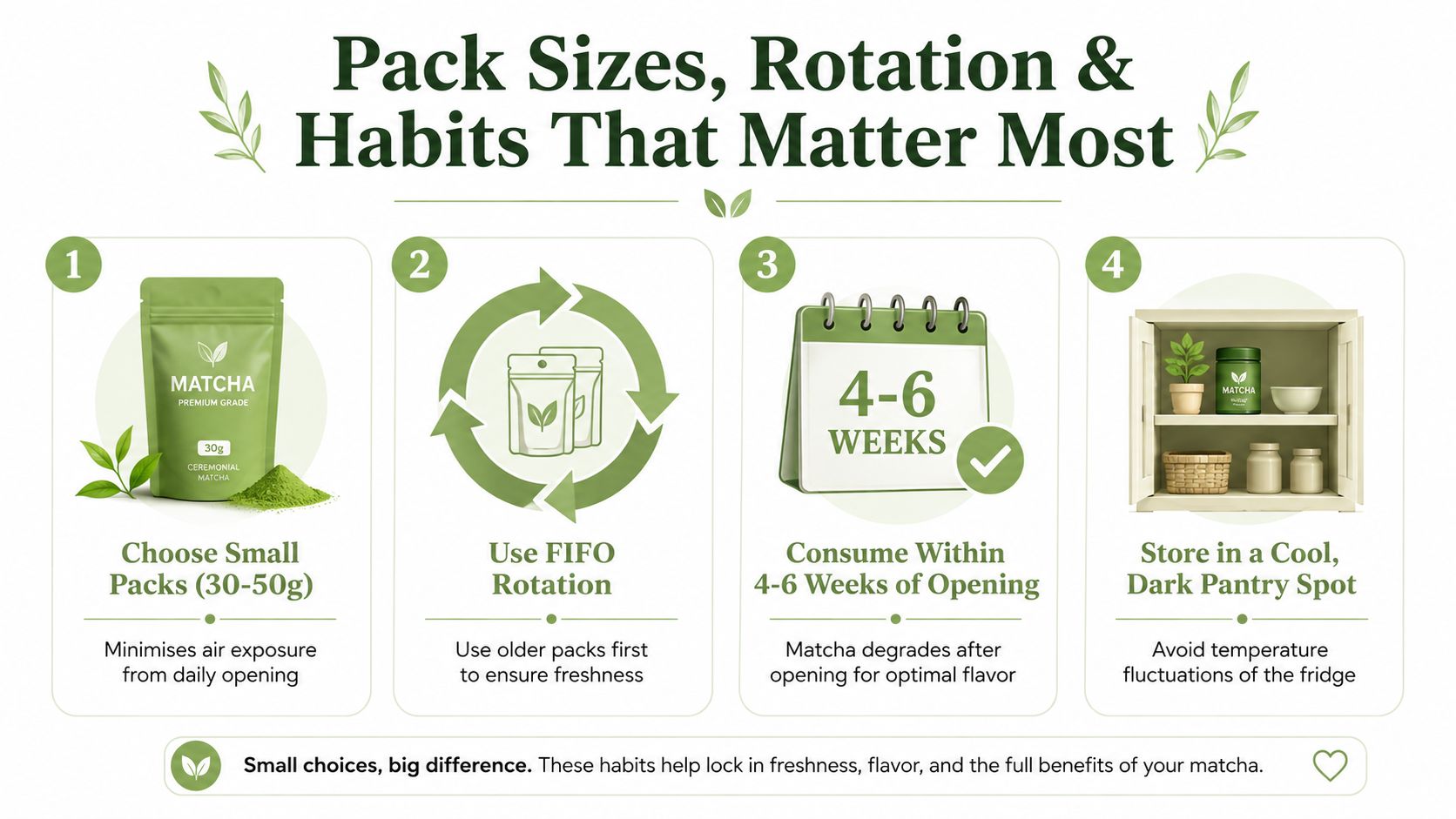
A useful routine is to keep a small working amount in a daily tin while the main pack stays sealed. Refill that tin only when necessary, and return the main pack to its cool storage immediately. This reduces the number of times you expose the full supply to air.
For more detail on quality windows and handling, use this guide to matcha shelf life. The exact container matters less than opening only what you can use promptly.
Troubleshooting Common Matcha Storage Mistakes
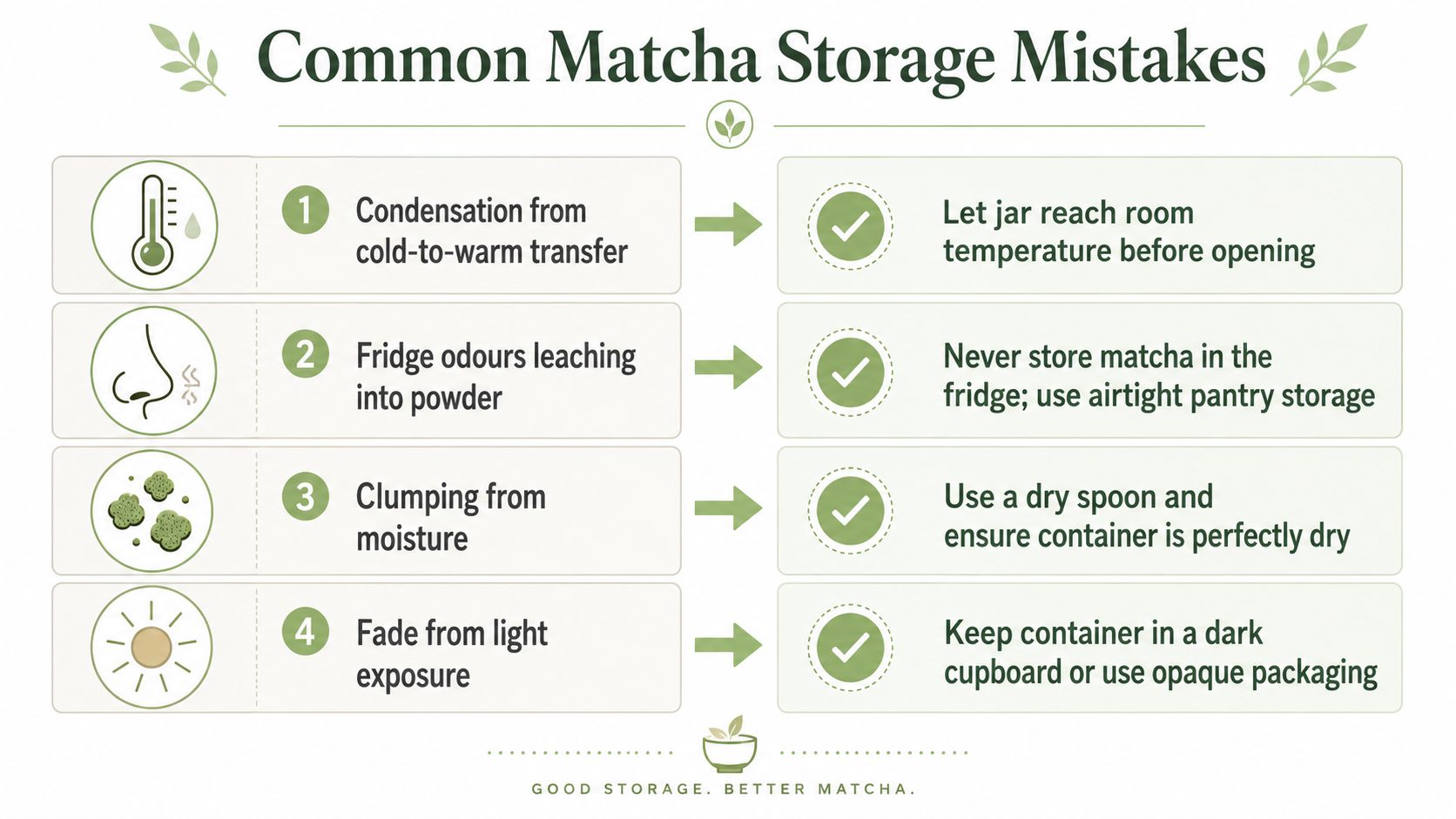
Most storage failures leave visible or aromatic clues. Use this checklist before deciding whether your matcha needs replacing.
Condensation after refrigeration
If you open a cold tin in warm kitchen air, moisture can form inside. That moisture lands directly on the powder and creates clumps.
Fix: Keep the container sealed while it returns to room temperature. Don't speed up the process by opening the lid on the bench.
Fridge odours in the powder
Matcha can pick up nearby food smells, particularly when packaging isn't fully airtight.
Fix: Store it inside a second airtight food container and keep it away from strongly scented foods. If the aroma has already changed to garlic, onion or another fridge smell, the container has failed at its job.
Clumping from moisture
Small soft lumps may come from a damp spoon or steam near the kettle. Hard, persistent clumps suggest more serious moisture exposure.
Fix: Use a dry spoon every time, ensure the container is completely dry and keep the lid off only while measuring. Never scoop matcha over a steaming mug or saucepan.
Faded colour
Fresh matcha should look lively and green. A dull green, greyish or brown appearance, paired with a flat or stale aroma, indicates oxidation and quality loss.
Fix: Don't try to rescue it with extra powder or sweetener. Replace it, then protect the new pack from light, air, heat and moisture from day one.
A Simple Daily Storage Routine You Can Stick To
Good storage should be easy enough to follow on a busy weekday. This routine takes only a few minutes to organise and removes most of the avoidable exposure from daily use.
Set up the main pack
Choose a small opaque tin for the amount you'll use regularly. On a quiet day, portion enough matcha for several daily preparations into that working tin, then close the main pouch firmly and return it to its chosen storage zone.
If your main supply lives in the fridge, keep it sealed while it warms before opening. Don't keep moving it between the fridge and pantry. Stable conditions are safer than constant temperature changes.
Handle the powder properly
Before scooping, wipe the teaspoon completely dry. A clean, dry bamboo scoop or teaspoon is fine, but a wet utensil can introduce moisture in seconds.
Measure what you need, then close the daily tin immediately. Never leave the lid upside down on the bench, where condensation, steam or crumbs can reach the seal. Put the lid back on as soon as the powder is out.
Keep the storage spot organised
Choose a dark cupboard away from the oven, toaster, kettle and dishwasher. If the kitchen becomes hot or humid during an Australian summer, move the sealed supply to the fridge instead, using the same careful warm-up routine before opening.
Label the opened date and keep older stock in front. That simple habit prevents forgotten tins from hiding behind newer purchases and gives cafés a practical way to manage multiple matcha grades.
Buy packaging that supports the routine
Fresh, well-packaged matcha makes this process much easier. An opaque, airtight pack already protects the powder from the main storage threats, so you only need to add sensible handling, quick resealing and a dry utensil.
Australian storage guidance varies on unopened quality windows, with one guide allowing up to 18 months in a cool, dry place when excess air is removed from resealable pouches and opaque airtight packaging is used. (Mindya Matcha storage guide) That longer unopened window doesn't change the central rule: once opened, prioritise flavour and volatility retention over keeping the powder until it is technically usable.
At home or in a café, choose a pack size you can finish promptly, keep it cool and dark, and make resealing automatic. That's how to store matcha tea without turning every morning cup into a storage experiment.
Choose Pep Tea for premium organic Japanese matcha in formats suited to everyday drinking, cafés and culinary use. Visit Pep Tea to find matcha that arrives properly packaged, then make the simple routine above part of your daily preparation.
Matcha Storage Container: Keep Your Tea Fresh

You open a fresh pouch of matcha, expecting that bright green colour and sweet, creamy aroma. Instead, the powder looks flat, a bit khaki, and the flavour tastes sharper than you remember. That moment is frustrating, especially when you've bought good-quality tea and treated it like any other pantry item.
This happens all the time in Australian kitchens. A tin sits near the kettle. A pouch gets folded over and clipped shut. A clear jar looks pretty on the bench. Then a humid week rolls through, the afternoon sun hits the counter, and your matcha starts losing what made it special in the first place.
A good matcha storage container isn't a decorative extra. It's part of the ritual, just like a whisk or bowl. If you're not sure how long your powder should stay fresh, this guide on matcha shelf life is a useful companion.
Why Your Matcha Loses Its Magic and How to Stop It
One of the easiest ways to understand matcha is to stop thinking of it as a tough dried tea and start treating it more like a delicate spice. If you left premium saffron, fresh vanilla powder, or a finely ground herb sitting in warm air and sunlight, you'd expect it to fade. Matcha behaves the same way, only faster.
That vivid green colour isn't just for looks. It tells you a lot about freshness. When matcha dulls, you're often also losing the soft umami notes, the clean finish, and the gentle sweetness that make ceremonial-grade tea such a pleasure to drink.
What the dull colour is really telling you
A faded powder usually means the tea has been exposed to the wrong environment. Light can affect chlorophyll. Oxygen can flatten aroma. Heat speeds up the reactions that make matcha taste stale. Moisture changes texture and can make powder clump.
In other words, the container matters because the powder is exposed on all sides.
Fresh matcha should feel alive in the bowl. If it looks tired before you whisk it, the storage setup is usually the first thing to question.
Why this matters more in Australia
Australian homes and cafés often deal with warm rooms, changing temperatures, and coastal humidity. That combination is rough on a finely milled tea powder. A loose lid or a clear jar might seem harmless in winter, then become a real problem during a humid Queensland summer or a run of hot days in NSW.
The good news is that protecting matcha doesn't require complicated gear. You just need to understand what's damaging it and choose a container that blocks those threats instead of inviting them in.
Matcha's Four Enemies Light Air Heat and Moisture
If you remember only one thing, remember this. Matcha is vulnerable because it's powdered. Once tea is ground so finely, it has far more surface area exposed to the environment. That's why a premium powder can change quickly if it's stored carelessly.
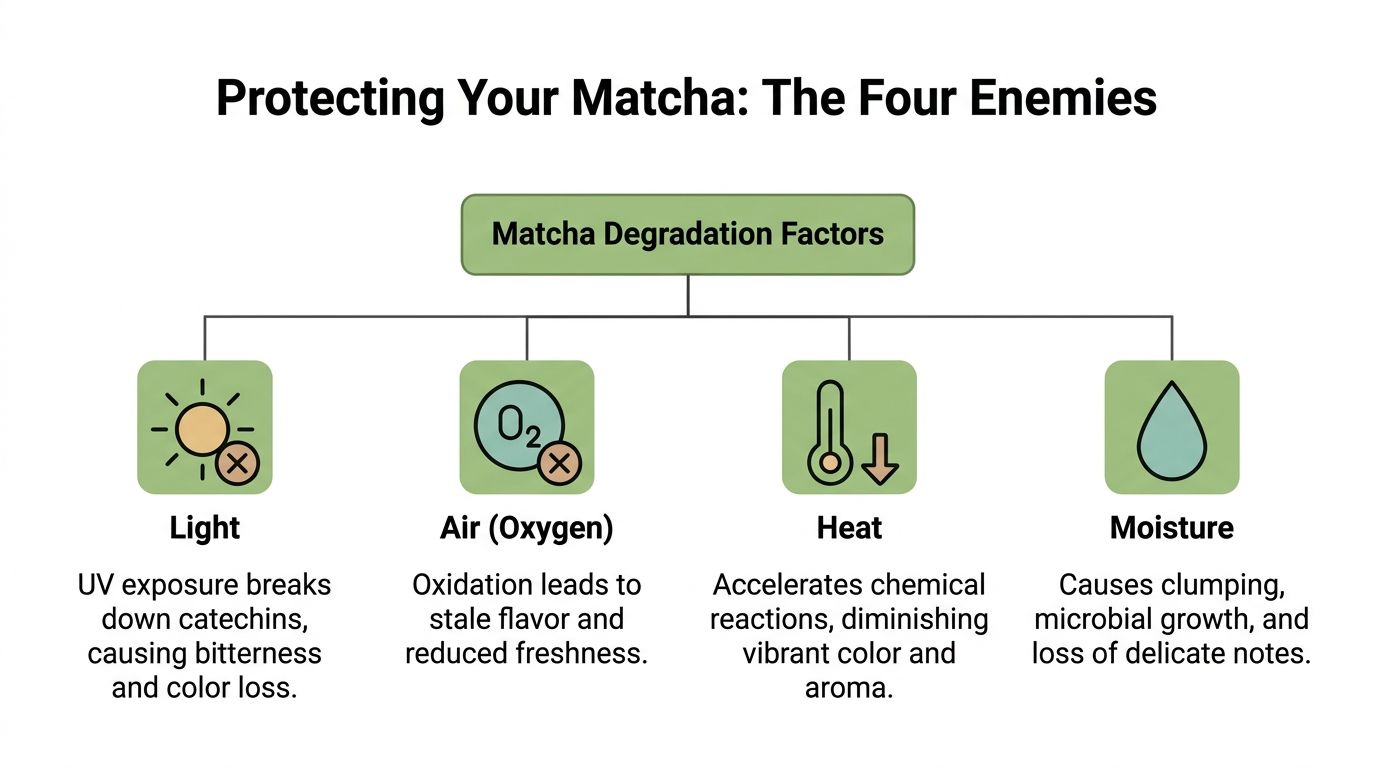
Light strips away freshness
Light is one of the easiest problems to overlook because the damage is subtle at first. A clear jar on an open shelf might look elegant, but it lets in the very thing matcha doesn't want. Over time, light exposure can fade that electric green tone and leave the powder looking duller and older than it should.
This is why opaque storage matters. If you can see your matcha through the container, light can reach it too.
Air starts the slide into staleness
Every time oxygen reaches the powder, freshness starts slipping. The aroma softens first. Then the flavour becomes flatter or rougher. If you've ever opened a container and found the smell surprisingly weak, that's often the result of too much air contact over time.
A useful analogy is ground coffee, but even more delicate. Matcha doesn't have much tolerance for repeated opening and closing if there's too much empty space in the container.
Heat speeds everything up
Heat doesn't just warm the powder. It accelerates the chemical changes that make matcha lose colour and flavour. For unopened, sealed ground matcha, quality is stable at or below 4°C but degrades rapidly above 25°C, even in sealed bags, according to Yunomi's matcha storage guidance. That matters in Australia, especially in NSW and QLD where rooms and storerooms often rise above that threshold.
A pantry can be fine in cool conditions for short-term daily use. But if the cupboard sits near an oven, dishwasher, sunny wall, or warm café service area, it isn't doing your tea any favours.
Moisture ruins texture and invites trouble
Matcha should be soft, fine, and easy to sift. Moisture changes that fast. It causes clumping, affects how the powder whiskes, and can dull the fragrance. This is why using a damp spoon or opening a cold container straight from the fridge can create problems.
Keep matcha away from steam, wet utensils, and that cupboard above the kettle. Convenience often becomes the reason freshness disappears.
A simple way to remember it
Think of matcha as a powder that wants four protections:
- Darkness so light can't fade it
- A tight seal so oxygen stays out
- Cool conditions so heat doesn't accelerate degradation
- Dry surroundings so moisture doesn't affect texture
Once those four enemies make sense, the design of the right matcha storage container becomes much easier to judge.
The Anatomy of a Perfect Matcha Canister
A strong matcha storage container does a simple job well. It creates a small, dark, sealed environment that protects a very delicate powder from the kitchen around it. The details matter, though, because plenty of containers look suitable and still fail on the basics.
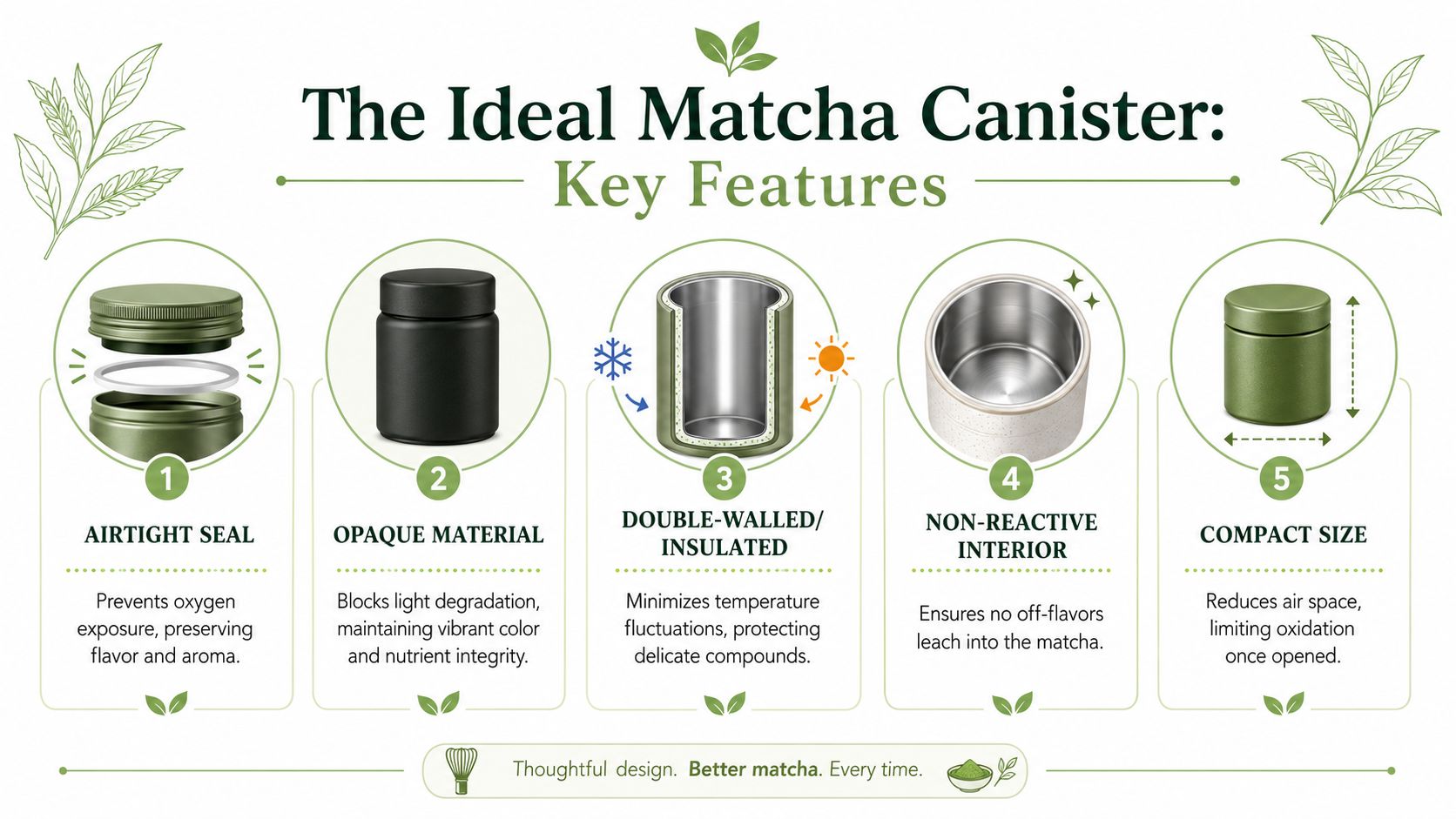
Start with the seal
The lid is the first thing to inspect. If it doesn't close firmly, the rest of the container doesn't matter much. The ideal matcha storage container must be airtight, opaque, hermetic against odour intrusion, and impervious to moisture, according to Ooika's matcha storage guide. The same source notes that 78% of matcha spoilage incidents in cafés stem from storing powder in clear glass jars or plastic bags.
That figure says a lot. Many spoilage problems don't start with bad tea. They start with the wrong vessel.
Material matters more than looks
Some materials are better suited to matcha.
| Container material | How it performs for matcha | Best use |
|---|---|---|
| Opaque metal | Excellent light protection and a strong barrier | Daily home use and café decanting |
| Ceramic with tight lid | Good light protection if fully opaque | Home storage in cool areas |
| Clear glass | Poor against light unless stored completely in the dark | Not ideal for regular use |
| Thin plastic | Often weaker against odours, air, and moisture | Best avoided for premium matcha |
Food-grade stainless steel and properly finished ceramic are usually the safest bets because they're non-reactive and easy to keep clean. Clear glass is the classic mistake. It lets you admire the colour while helping it disappear.
Shape and size affect air exposure
The best container is rarely oversized. A huge canister with a small amount of matcha inside leaves too much air around the powder after each opening. A compact canister that matches your usage is usually smarter because it limits headspace.
If you're comparing options for pantry organisation more broadly, Everti's container buyer's guide is a handy read for thinking through lid quality, material, and practicality before you buy.
Details worth checking before you buy
A good matcha canister should have:
- An opaque body that blocks light completely
- A snug gasket or tight-fitting lid to reduce air exchange
- A non-reactive interior so no stray flavours transfer to the tea
- A manageable opening that lets you scoop cleanly without spilling
- A size that suits your routine instead of leaving lots of empty space
A storage container should protect the tea first and look nice second. If it does both, that's a bonus.
If you're building a proper setup at home, a few purpose-built matcha tea accessories make the process tidier and help reduce unnecessary exposure during prep.
Finding the Right Container Size for Home Cafe or Travel
Container size isn't just about how much powder fits. It changes how often your tea meets air, heat, and movement. The right choice depends on whether you're making one bowl each morning, carrying a small amount to work, or running a busy café bar.
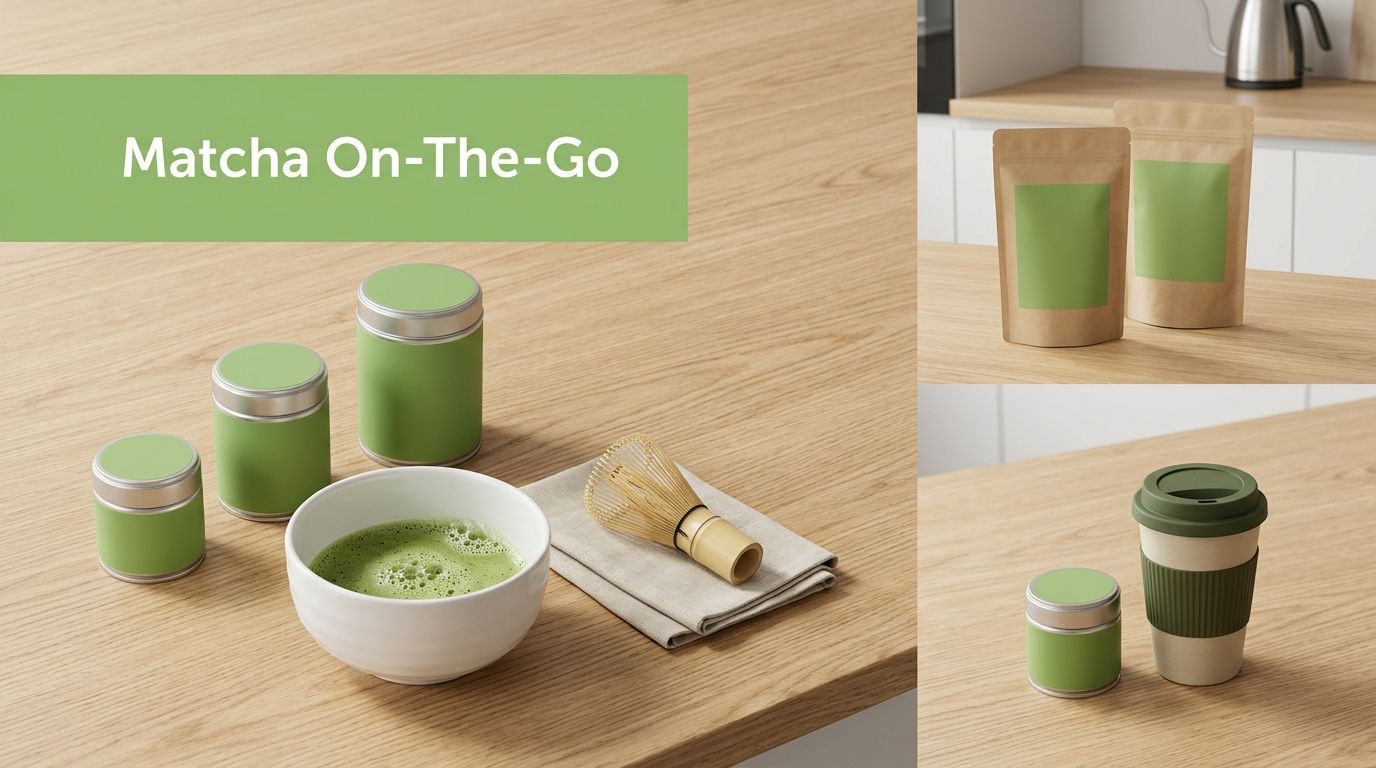
For home users
Most home drinkers do best with a medium canister. You want enough room for a practical amount of tea, but not so much space that half the container is air. If you drink matcha daily, keeping a smaller active canister and refilling it from a better-protected reserve supply is often the neatest system.
A small travel tin also makes sense for a desk drawer or overnight bag. It keeps your main supply safer at home and stops you opening the larger container all the time.
For cafés and busy kitchens
Commercial use needs a different rhythm. Premium stone-ground matcha is slow to produce. Traditional Japanese stone mills yield only 30 grams per hour, and a 100g batch represents roughly 3 to 4 hours of continuous grinding, as explained by The S Tradition's overview of matcha production.
That makes waste feel very different. When café teams understand how slowly premium matcha is made, they're usually quicker to stop storing it in oversized bench jars.
A practical café system often looks like this:
- Bulk reserve storage kept sealed and cold
- A smaller service canister used on the bench for short periods
- Frequent top-ups instead of leaving the full supply exposed
- A clear labelling routine so older stock is used first
If you buy in larger volumes, a catering format such as the premium 1kg organic matcha green tea catering pack makes storage planning even more important. Bulk quantity saves hassle only if the tea is portioned sensibly once opened.
A quick comparison by use case
| Use case | Best container approach | Why it works |
|---|---|---|
| Daily home bowl or latte | Medium opaque airtight canister | Easy access without excessive air space |
| Travel or office use | Small sealed tin | Less mess, less repeated opening of main supply |
| Café service | Small countertop canister plus cold bulk reserve | Faster workflow with less exposure |
| Wholesale or high-volume kitchen | Batch-based decanting system | Better stock control and cleaner handling |
The smartest setup is the one that fits your actual habits. Convenience matters, but only if it doesn't sacrifice the tea.
Practical Steps for Long-Lasting Freshness
Good storage starts the moment you open the pouch. If the transfer is rushed, the lid is loose, or the container isn't fully dry, you can shorten freshness before the tea even reaches the shelf.
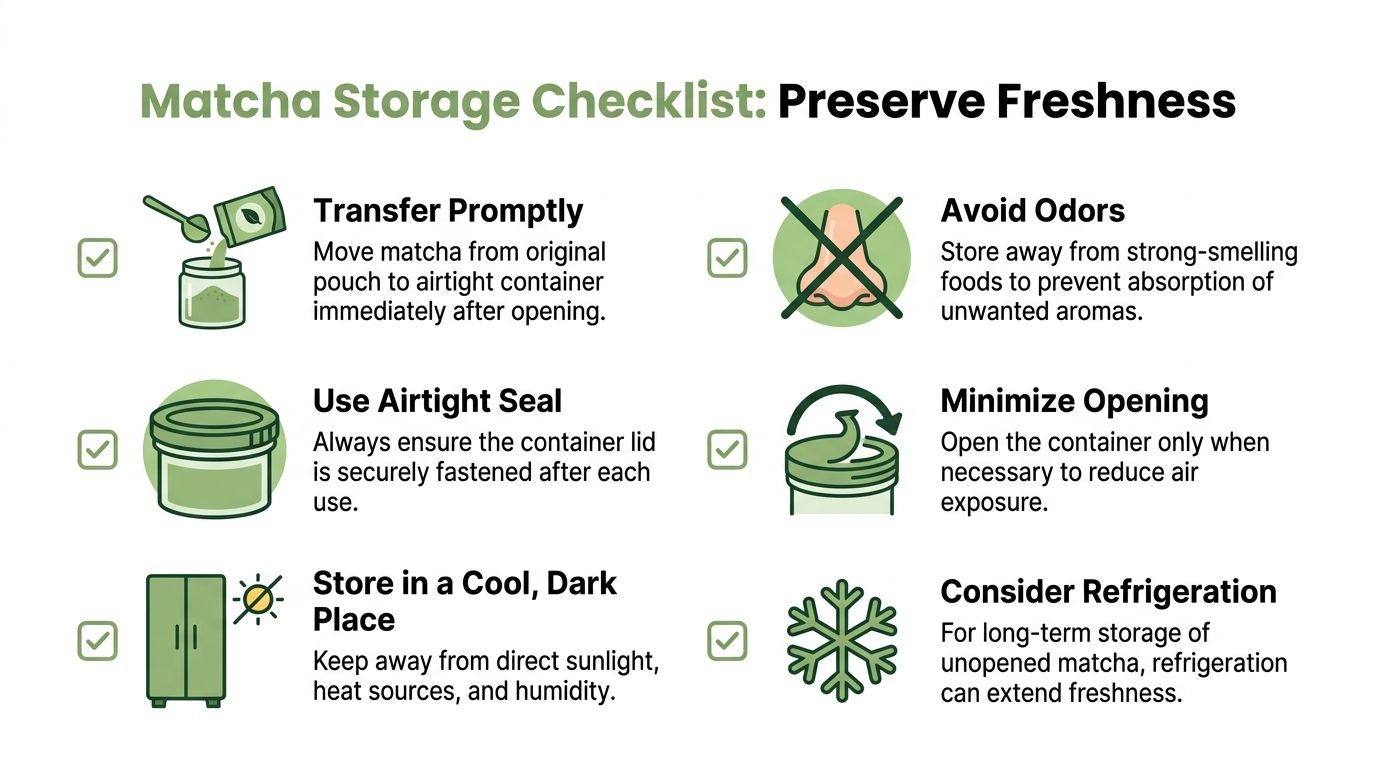
How to fill a matcha storage container properly
Use this simple routine:
- Wash the container ahead of time if it's new or has held anything else.
- Dry it completely. Not almost dry. Completely dry.
- Open the pouch only when you're ready to transfer the powder.
- Pour or spoon the matcha in quickly and gently to limit exposure.
- Seal the lid straight away and store it in the right place.
If you're reusing a canister, make sure no old powder is stuck in the corners. Tiny leftovers can affect flavour and freshness when mixed with a new batch.
Practical rule: never refill a canister that still feels cool, damp, or carries the smell of coffee, spices, or another tea.
Fridge or pantry
Refrigeration often leads to confusion. It is excellent for protecting sealed or reserve matcha, but only if you handle it carefully. To preserve the high antioxidant content and bright green colour of authentic Japanese ceremonial-grade matcha, the finished powder should be stored between 2°C and 5°C immediately after grading, as noted in Matcha Wellness Australia's production guide.
That tells us something important. Cool storage supports freshness. But daily use still needs common sense.
A reliable home method is:
- Keep your main supply cold in a sealed, moisture-safe container
- Use a smaller daily canister at room temperature if you make matcha often
- Let chilled matcha come closer to room temperature before opening so condensation doesn't form inside
- Store away from strong smells because matcha can absorb them
Here's a useful visual guide to handling and storing powder well:
Cleaning habits that protect flavour
A matcha canister doesn't need harsh cleaners or scented products. Warm water and careful drying are usually enough. If you use detergent, rinse thoroughly so no fragrance remains.
Check these habits regularly:
- Use dry scoops only so moisture never enters the container
- Close the lid immediately after measuring
- Don't store beside coffee, onions, spices, or cleaning products
- Keep the canister away from sunlight, ovens, and kettles
A good storage routine isn't fussy. It's organised.
Your Partner in Preserving Premium Matcha
A well-chosen matcha storage container protects more than powder. It protects the flavour, aroma, colour, and quiet pleasure you were hoping for when you bought the tea. Once you understand the four big threats and choose a container that blocks them, the rest becomes much easier.
The strongest setups are simple. Use an airtight, opaque container with a reliable seal. Keep it cool. Keep it dry. Match the size to how quickly you use the tea. If you do that, you give your matcha a much better chance of tasting the way it should.
That care makes a real difference over time. High-quality airtight, opaque containers with rubber gaskets can extend matcha's shelf life to 12–18 months by reducing oxidation rates by 90%, while matcha can lose up to 30% of its antioxidant potency within 3 months in non-hermetic containers, according to Aprika Matcha's storage article.
The bigger idea is this. Brewing matcha well starts before the water goes in. Storage is part of preparation. When you protect the powder properly, every bowl has a better chance of showing the tea at its best.
If you're ready to enjoy fresher bowls, brighter lattes, and better everyday matcha habits, explore Pep Tea for premium organic matcha, practical accessories, and Australian expertise that helps you get the most from every gram.
Matcha Shelf Life: Preserve Its Vibrant Flavor

You open a fresh tin of matcha, peel back the seal, and get that first burst of deep green colour and sweet grassy aroma. It feels a bit special. Then real life kicks in. A few morning lattes, one forgotten week in the pantry, a warm kitchen, and suddenly you're wondering whether your matcha is still good.
That's where a lot of people get tripped up. Matcha shelf life isn't really about a dramatic moment when the powder “goes off”. It's more about protecting a delicate ingredient so it keeps its vibrant flavour, creamy umami, and fresh aroma for as long as possible. Premium matcha is finely ground, sensitive, and much less forgiving than many pantry staples.
For Australian households, that matters even more. Warm weather, bright kitchens, and long shipping journeys can all chip away at freshness before your tin is even halfway empty. If you've ever asked, “Is this still safe to drink?” when the better question was “Has this gone stale?”, you're not alone.
If you're still getting familiar with the tea itself, this guide to what matcha powder is gives useful background. Once you understand why matcha behaves differently from loose leaf tea, shelf life makes much more sense.
Your Guide to Matcha Shelf Life and Freshness
Fresh matcha has a personality. It looks lively, smells clean and green, and tastes rounded rather than harsh. Older matcha can still be usable, but it often loses the very qualities that made you buy it in the first place.
That's why it helps to think in terms of peak quality rather than panic over a printed date. A best-before date tells you about enjoyment. It doesn't always tell you what's happening in the bowl, on the whisk, or on your palate. Matcha usually fades gradually. First the aroma softens. Then the colour dulls. Then the taste becomes flatter, drier, or more bitter.
Practical rule: Judge matcha the way you'd judge fresh coffee beans or good olive oil. The closer you are to opening, the more vivid the experience.
The good news is that keeping matcha in great condition isn't complicated. You only need to understand three things:
- What timeframe you're working with so you buy realistic quantities
- What damages matcha most quickly in an ordinary kitchen
- What signs tell you it's stale, not necessarily unsafe
A lot of shelf life advice online stays vague. It tells you a range of weeks or months but doesn't help you decide what to do with the tin sitting in your cupboard right now. That's the practical gap individuals need filled.
By the end of this guide, you'll know how long matcha generally keeps its best character, how to spot quality loss with your eyes and nose, and how to store it properly so each scoop gives you the flavour you paid for.
How Long Does Matcha Really Last
You open a tin expecting that sweet, creamy, almost spinach-fresh aroma you fell in love with, and instead the powder smells faint and tastes a little sharp. The label may still say it is within date. Your bowl is telling a different story.
That is the core shelf life question with matcha. There is a difference between safe to use and still at peak quality. Best-before dates speak to the first part. Your eyes, nose, and palate are often better guides for the second, especially in Australia, where warmth, humidity, and long shipping routes can shorten matcha's best window. As noted by Uji Matcha Tea's guide to matcha shelf life, unopened matcha is often labelled for much longer than its true peak, while opened matcha is usually best enjoyed within a much shorter period.
Matcha shelf life at a glance
| Matcha Form | Peak Quality Window | What that means in practice |
|---|---|---|
| Unopened powder | Usually best within a few months of milling | A sealed tin protects matcha, but it does not stop gradual flavour loss |
| Opened powder | Usually best within several weeks | Once air starts getting in regularly, aroma and sweetness fade faster |
| Prepared matcha drink | Best enjoyed soon after mixing | The fresh flavour drops off quickly, especially with heat, milk, or time in the fridge |
A sealed tin helps, but it does not pause time. Matcha is a finely milled green tea, so it has much more exposed surface area than loose leaf tea. That makes it a bit like ground coffee. Freshness slips away faster once oxygen has a chance to work on it.
This also explains why two tins with the same printed date can taste completely different. One may have been stored cool from milling to your kitchen. Another may have sat in warm transit, on a sunny shelf, or in a humid pantry. Same date, different result.
Why the label and your senses can disagree
Best-before dates are broad. They are useful for stock control, but they are not a promise that your matcha will still taste vivid, sweet, and full of umami right up to that day.
Peak quality is narrower. Premium matcha has delicate aromatic compounds and colour pigments that fade gradually over time, even before you break the seal. Once opened, the clock speeds up. If you buy ceremonial matcha for straight whisking, that shorter peak window matters a lot more than it does for baking or blending into smoothies.
Grade matters too. A latte-friendly powder can still be enjoyable after it has softened a little, while a delicate ceremonial matcha shows age much sooner in the cup. If you are unsure which style you are buying, this guide to different grades of matcha can help you match the tea to how you drink it.
A practical rule: buy the amount you can finish while the tea still tastes bright, not the amount that looks cheapest per gram.
A more useful way to judge how long yours will last
Use the calendar as a rough guide, then confirm with your senses.
- Bright green colour and fresh, grassy aroma: ideal for straight whisked matcha
- Still green but less fragrant: usually fine for lattes, iced drinks, and smoothies
- Duller colour and flatter taste: better moved to baking or cooking
- Musty smell, damp clumps, or obvious moisture exposure: discard it
That last point is about safety, not just quality. A stale matcha is disappointing. A damp, musty matcha is a different issue.
So how long does matcha really last? Long enough to stay usable for quite a while if stored well, but only a shorter window where it tastes lively. If you care about getting the sweet, creamy, vivid side of premium matcha, freshness after opening matters far more than the printed date alone.
The Four Enemies of Fresh Matcha
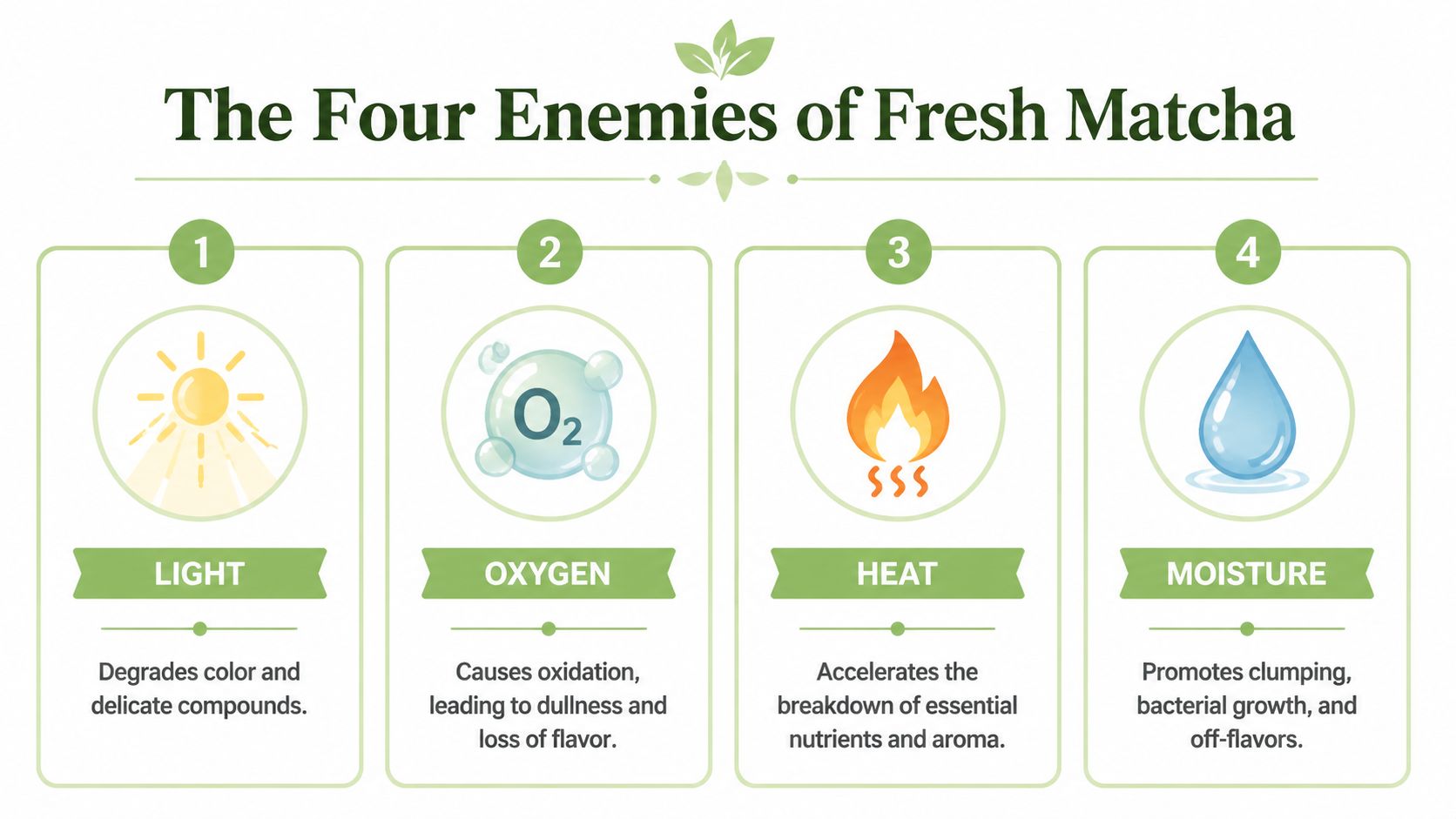
Matcha doesn't usually fade for one mysterious reason. It fades because everyday kitchen conditions keep working against it. Four things do most of the damage: light, oxygen, heat, and moisture.
Light strips away colour
Fresh matcha gets its vivid green look from delicate plant pigments. Leave the powder exposed to light, especially strong daylight, and that colour starts to fade. What was once bright green can shift towards olive, yellow-green, or a tired-looking dull tone.
If you've ever seen matcha stored in a clear jar on an open shelf, it may look lovely on day one. It's not doing the powder any favours.
Oxygen steals flavour
Every time you open the tin, oxygen gets in. That starts oxidation, which is the main reason matcha loses its sweetness, umami, and aromatic lift. The powder won't suddenly become dangerous because air touched it. It just becomes less interesting, less rounded, and more blunt on the tongue.
This is why a half-empty container often seems to age faster. More headspace means more air around the powder.
Matcha doesn't need dramatic mishandling to lose quality. Repeated small exposures add up.
Heat speeds everything up
Heat is the accelerator. A warm pantry, a shelf near the kettle, or a sunny benchtop can push matcha along its ageing curve much faster. Heat doesn't work alone. It makes the effects of oxygen and light happen faster.
In Australia, this catches people out all the time. A cupboard that feels “fine” in winter can become a poor storage spot in summer.
Moisture causes the biggest practical problems
Moisture is the enemy that changes both texture and safety risk. Dry matcha is fairly stable. Damp matcha is not. Once moisture gets into the powder, it starts clumping, loses its silky feel, and can develop off smells.
Here's what each enemy tends to do in real life:
- Light dulls colour and can make premium matcha look tired
- Oxygen flattens aroma and pushes flavour towards bitterness
- Heat speeds up all of the quality loss
- Moisture causes clumps and creates the biggest reason to discard the powder
Why this matters more for matcha than loose leaf tea
Loose leaf tea still has some natural protection in the leaf itself. Matcha is a powder, so much more of it is exposed all at once. That's why it behaves less like a sturdy pantry tea and more like a fresh ingredient you want to shield from the environment.
Once you understand those four enemies, good storage stops feeling fussy. It then becomes logical.
How to Tell If Your Matcha Has Gone Stale
The question often posed is, “Is it expired?” Yet, the true inquiry should be, “Is it still worth drinking?” These are different questions.
According to Japanese Tea Pedia's explanation of matcha shelf life, a commonly missed point is the difference between safety and quality. Matcha is a dry, low-moisture product, so the date on the tin is usually a best-enjoyment window, not a food-safety cut-off. That's why sensory checks matter so much.
Start with colour
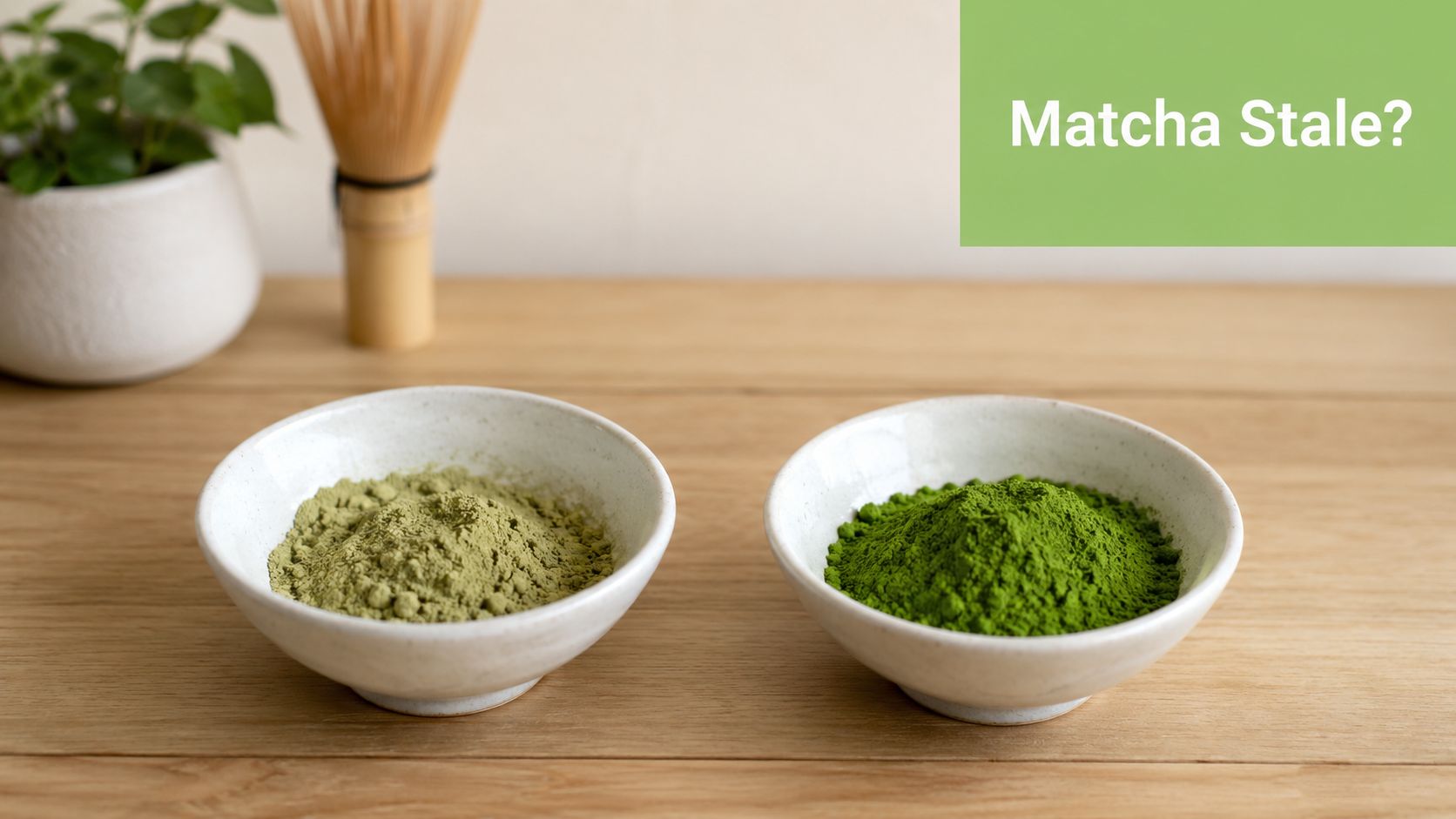
Fresh matcha usually looks vivid and alive. Not neon, not fake-bright, but clearly fresh. As it stales, the powder tends to look duller. You may notice olive tones, a yellow cast, or a brownish tinge.
Colour alone doesn't tell the whole story, but it's often the first clue.
Ask yourself:
- Does it still look vibrant when you open the tin?
- Has it shifted towards khaki or yellow-green?
- Does the whisked tea look muddy rather than lively?
If the visual spark has gone, the flavour often has too.
Smell the powder before you whisk
Aroma tells you even more. Fresh matcha should smell green, clean, and softly sweet. Depending on the style, you might notice grassy, leafy, or savoury notes. Stale matcha smells weak, dusty, flat, or hay-like.
A musty smell is different again. That can point to poor storage and possible moisture exposure.
If your matcha smells dull but clean, it's usually stale. If it smells musty, sour, or damp, don't try to rescue it.
Taste is the final test
The bowl never lies. Fresh matcha should taste balanced. Even when it has pleasant bitterness, there's usually some softness, depth, or umami underneath. Stale matcha loses that shape. It can become sharp, thin, chalky, or overly astringent.
Here's a simple at-home freshness check:
- Sift a small amount into a bowl
- Whisk it with water rather than masking it in milk first
- Taste it plain before deciding what condition it's in
If you want to watch the powder and foam closely as you prepare it, this quick visual guide can help:
Texture gives away moisture problems
Good matcha feels very fine and soft. It should sift easily. If the powder is forming hard little pellets, sticking together, or feeling grainy, moisture has probably reached it. A few soft clumps can happen naturally and may break apart with a sieve. Damp, hardened clumps are more concerning.
When to keep it, repurpose it, or toss it
Use this simple decision rule:
- Still bright, aromatic, and smooth means drink it proudly
- Duller but dry and normal-smelling means use it in lattes, smoothies, or baking
- Musty odour, odd dampness, or severe clumping means discard it
That's the key distinction. Stale matcha is disappointing. Spoiled matcha is suspicious. Your senses are usually better guides than the printed date alone.
Best Storage Practices to Extend Matcha Freshness
Good storage isn't about turning your kitchen into a lab. It's about reducing exposure every single time you use the tin. If you control air, light, warmth, and humidity, you give your matcha the best chance of staying fresh.
For home kitchens
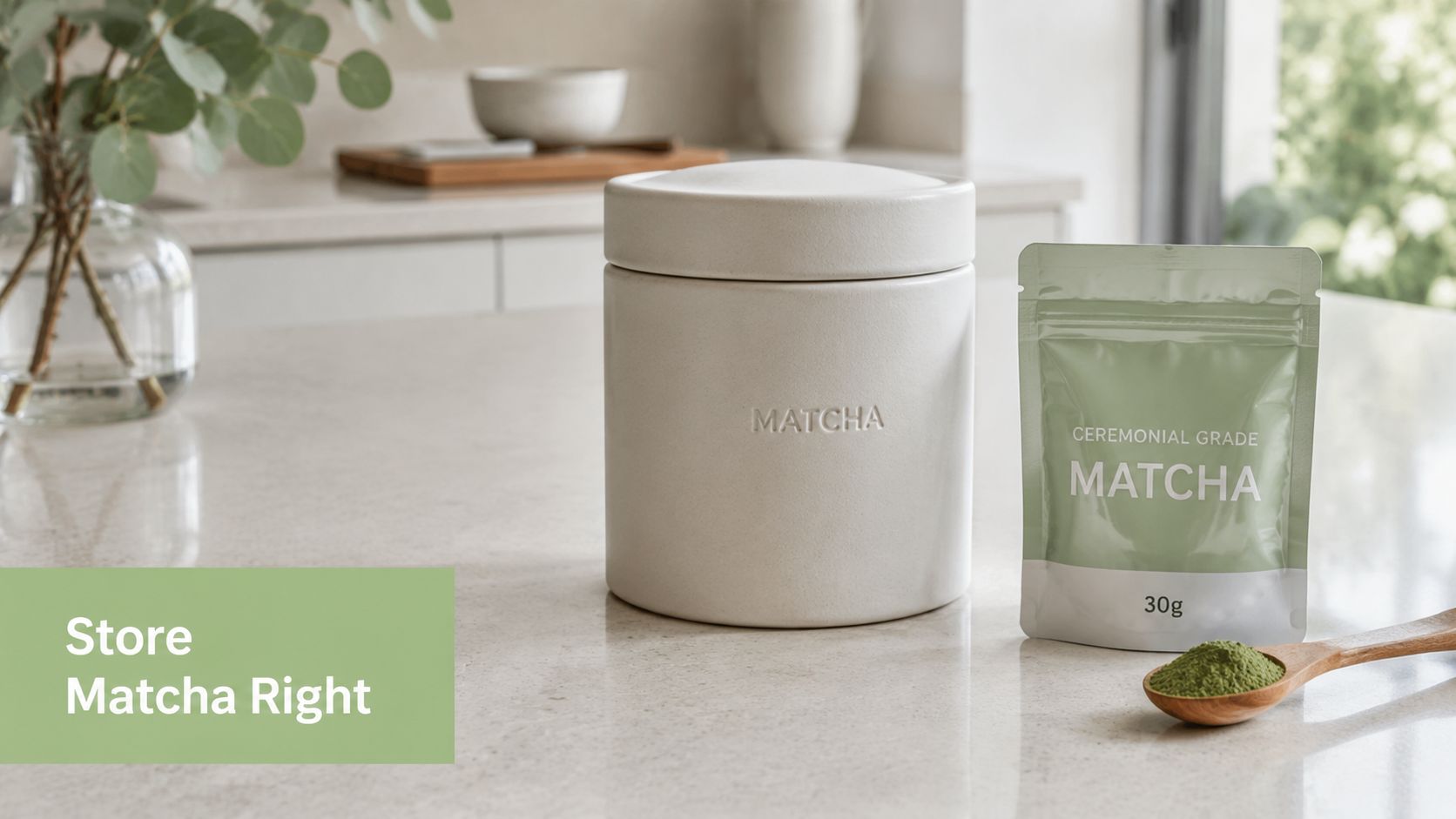
If you drink matcha regularly, the simplest setup is often the best. Keep it in an airtight, opaque container in a cool, dark place, away from the stove, dishwasher, toaster, and direct sunlight.
A few habits make a real difference:
- Open briefly and close the container straight away
- Use a dry spoon every time
- Avoid steam from kettles or cooking
- Don't store it beside strong smells because matcha can pick them up
A lot of the same principles apply across tea storage generally. If you'd like a broader refresher on storing loose leaf tea correctly, that guide offers helpful common-sense rules that also support better matcha care.
Fridge or pantry
Many people often hesitate. The pantry is easier. The fridge is cooler. Both can work, but they come with trade-offs.
Pantry storage is practical if you'll finish the matcha fairly quickly and your cupboard stays cool, dark, and dry.
Refrigeration can help preserve quality, especially for delicate matcha, but only if the container is tightly sealed. The biggest risk isn't the cold itself. It's condensation when you open a chilled container too soon.
Take refrigerated matcha out and let it come fully to room temperature before opening. That one habit can save you from moisture damage.
Freezing for longer holds
Freezing can make sense for unopened backup packs you won't touch for a while. It's less useful for a tin you open every day. Repeated freezing and thawing creates more chances for condensation, which defeats the purpose.
If you freeze matcha:
- Keep it sealed
- Portion it if possible, so you're not reopening the whole supply
- Warm to room temperature before opening
For cafés and busy households
High-use settings need a different rhythm. If you're making matcha all day, don't keep opening the main stock bag over and over. Decant a smaller working amount into a daily-use tin, then keep the main supply sealed.
That reduces repeated oxygen exposure and protects the rest of the powder. It also makes service faster and cleaner.
Useful tools make storage easier
The right accessories help good habits stick. A small tin with a strong seal, a dry scoop, and a fine sieve all reduce mess and unnecessary exposure. If you're building a better setup, these matcha tea accessories show the kinds of tools that make regular preparation easier and gentler on the powder.
The big takeaway is simple. Matcha stays freshest when you buy sensible amounts, keep it sealed, and protect it from heat and humidity. Fancy rituals are optional. Consistent storage isn't.
Frequently Asked Questions About Matcha Shelf Life
Can old matcha make you sick
Usually, dry matcha that's been stored properly is more likely to become stale than unsafe. The bigger concern is quality loss. If it smells musty, seems damp, or has unusual clumping that suggests moisture got in, don't use it.
Does ceremonial grade go off faster than culinary grade
In practice, many tea drinkers notice that ceremonial grade seems to lose its sparkle sooner. That's not necessarily because it has a completely different shelf life on paper. It's because its delicate aroma, sweetness, and umami are easier to notice when they fade. Culinary matcha can hide age a little better in baking and lattes.
How long does a made matcha latte last
A matcha latte is best consumed soon after making it. Once matcha is mixed with water or milk, freshness drops quickly. The foam settles, the flavour changes, and chilled ingredients can separate or taste flat. If you need to make one ahead, keep it refrigerated and treat it as a same-day drink for best enjoyment.
Can I still use stale matcha for recipes
Yes, if it's dry, clean-smelling, and past its prime. Older matcha often works better in smoothies, cakes, pancakes, or biscuits than in a plain whisked bowl.
Fresh matcha is one of those small daily pleasures that rewards good care. If you'd like to enjoy premium organic matcha at its best, explore the range at Pep Tea for ceremonial and culinary options suited to everyday whisking, lattes, and recipes.