
Tag: matcha containers
How to Store Matcha Tea and Keep It Fresh

You open the matcha tin for your morning latte and notice the colour has shifted from vivid green to something duller. The aroma that once smelled sweet and grassy now reminds you of hay, even though the powder is still within its printed date. In an Australian kitchen, that change can happen quickly when matcha sits beside a toaster, on a sunny shelf, or in a humid cupboard.
Learning how to store matcha tea isn't about treating a pantry like a laboratory. It's about controlling air, light, heat and moisture, then building a routine that prevents condensation and repeated exposure. Store it properly and your matcha will keep its fresh aroma, smooth flavour and vibrant colour for far longer.
Why Your Matcha Is Going Off Faster Than You Think
The first sign is often subtle. You whisk your usual morning bowl, but the fragrance is flat and the flavour tastes more like cut grass than fresh, sweet greenery. The tin was sealed after yesterday's use, so you assume the problem must be the matcha itself.
Usually, the problem is exposure. Matcha is made by grinding tea leaves into an extremely fine powder, which means oxygen can reach a much larger exposed surface than it can with intact loose leaves. Its delicate colour, aroma and flavour are therefore vulnerable every time you open the container. You can learn more about that transformation in this guide to how matcha tea is made.
Australian conditions make careless storage harder to forgive. A warm summer kitchen, a humid apartment near the coast and a cupboard above the oven all expose matcha to conditions that shorten its best flavour window. Frequent fridge opening creates another issue, because temperature changes can encourage condensation inside the packaging.
Freshness isn't the same as safety
Matcha may remain usable after its best sensory qualities have faded. Australian guidance commonly recommends using opened matcha within 2 to 3 months, because flavour and nutritional benefits peak early and decline with air, light and moisture exposure. Unopened product is often kept for up to 12 months, although some suppliers recommend 6 to 12 months for best quality. (Australian Matcha Society guidance)
That distinction matters. A powder can be technically within its storage window while its aroma has already disappeared, its colour has dulled and its flavour has become bitter or bland. Treat the printed date as a safety and quality reference, not permission to leave an opened tin untouched for months.
Practical rule: If the colour, aroma and flavour have clearly deteriorated, better storage won't restore them. Use fresher matcha next time and protect it from the moment you open it.
The Four Enemies of Fresh Matcha
Audit your current storage setup against four causes of deterioration. Fix the biggest exposure first, then make the rest part of your normal kitchen routine.
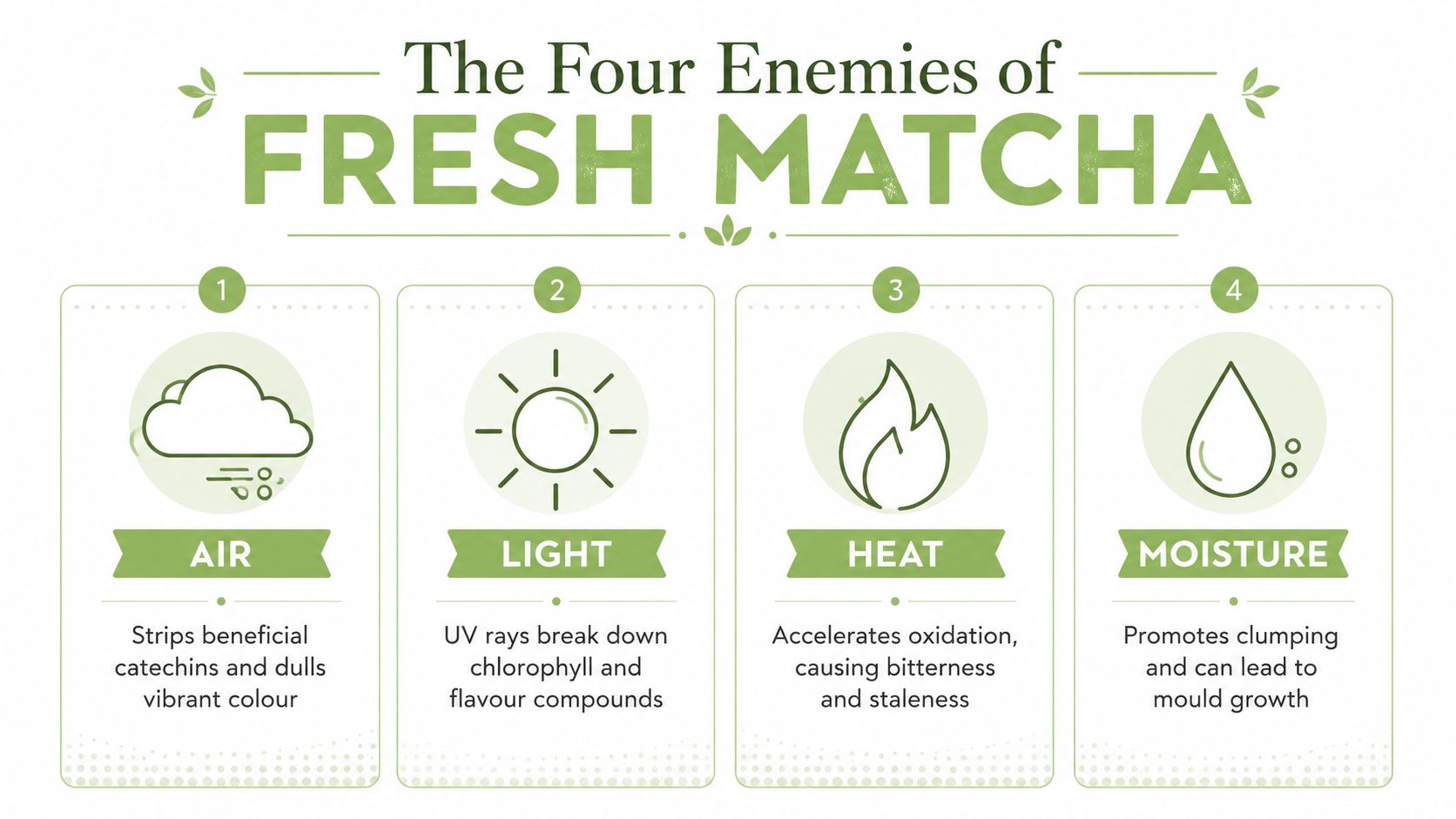
Air
Oxygen gradually dulls matcha's colour, aroma and flavour. A pouch that contains a large pocket of air is already working against you.
Spot it: The powder looks less vibrant around the surface or tastes flat despite being tightly closed.
Counter it: Squeeze excess air from a resealable pouch before closing it, or transfer the powder to the smallest suitable airtight container. Australian storage advice specifically recommends smaller packs and limiting repeated air exposure. (Kenkō Tea storage guidance)
Light
Direct sunlight and bright kitchen lighting can fade the green colour and weaken the fresh vegetal character.
Spot it: Your container sits on an open shelf, windowsill or bench in full daylight.
Counter it: Use an opaque tin or place the sealed container inside a dark cupboard. A clear canister may look attractive, but it's a poor choice for long-term matcha storage.
Heat
Heat accelerates quality loss. Keep matcha away from ovens, kettles, stovetops, dishwashers and other warm appliances. Australian guidance identifies 0°C to 20°C as an ideal storage band and recommends relative humidity at or below 60%. (Kenkō Tea storage guidance)
Spot it: The tin feels warm, or it lives in a cupboard above an appliance.
Counter it: Move it to the coolest dark cupboard available, or use the fridge when your home is consistently hot or humid.
Moisture
Humidity causes clumping and can compromise the powder's quality. Steam from a kettle, a damp teaspoon or condensation from a cold container can introduce enough moisture to change the texture.
Spot it: The matcha forms stubborn lumps or feels damp rather than silky.
Counter it: Use a completely dry spoon, close the container immediately and never open chilled matcha until it has returned to room temperature.
Start with air and heat, then eliminate light and moisture. A perfect container won't compensate for a hot shelf or a wet spoon.
Pantry, Fridge or Freezer Where Should Matcha Live
There isn't one universal storage zone. The right choice depends on your household temperature, humidity and how quickly you use the powder.
| Location | Ideal Temperature | Typical Shelf Life | Best For |
|---|---|---|---|
| Pantry | Around 25°C or cooler | Opened matcha is best used within 2 to 3 months | Daily drinkers with a genuinely cool, dark cupboard |
| Fridge | Cool and stable, within the recommended 0°C to 20°C band | Opened matcha is commonly used within 2 to 3 months for best quality | Hot or humid Australian homes |
| Freezer | Frozen and consistently sealed | Some Australian guidance allows unopened matcha to be kept for longer, but quality depends on avoiding moisture and temperature swings | Large, sealed reserves or café stock |
The pantry is perfectly practical when it stays cool, dry and dark. Store the matcha in its airtight opaque packaging, away from direct light and heat sources. An Australian tea guide recommends around 25°C or cooler, with refrigeration or desiccants reserved for humid conditions. (Tavalon Australia storage advice)
The fridge is the better choice for a hot Australian summer or a humid apartment. Put the sealed container inside a protective airtight food container and keep it away from strong-smelling foods. Don't open it straight from the fridge. Let it reach room temperature first, otherwise warm humid air can condense on the powder.
Freezing is a specialist option, not my default recommendation for a household tin. Use it only when the matcha is sealed thoroughly and you won't keep moving it between frozen and room-temperature storage. A freezer can extend storage for a bulk reserve, but condensation during thawing can undo the benefit.
My recommendation: Daily users should choose a cool dark pantry if it stays stable. If summer heat or humidity makes that unreliable, use the fridge consistently. Occasional users should buy smaller packs rather than relying on long-term freezing.
Choosing the Right Container and Packaging
The best matcha container is airtight, opaque, clean and appropriately sized. Don't choose a clear decorative jar because it looks good on the bench. Light and excess air matter more than presentation.
Tins for regular home use
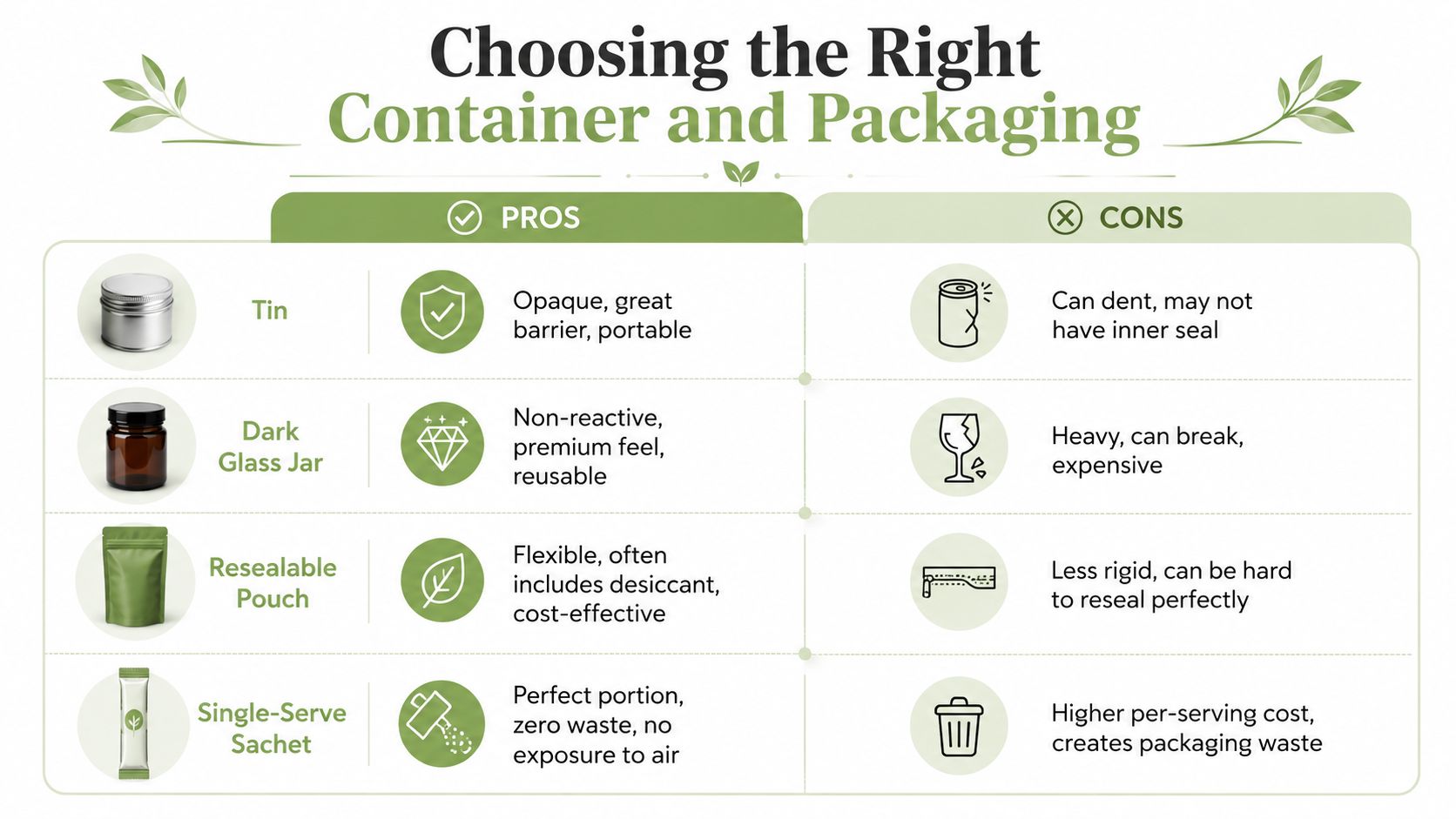
A metal tin is my first choice for a daily drinker. It blocks light, travels well and usually gives you a strong barrier against the kitchen environment. Look for a tight inner seal, because a lid that merely rests on the rim isn't enough.
The weakness is practical. Tins can dent, and some have no reliable inner seal. Keep the original pouch inside the tin if it closes securely, or use a food-safe airtight insert that doesn't leave a large air gap.
Dark glass jars for careful storage
Dark glass is non-reactive, reusable and attractive on a kitchen shelf, provided it blocks light effectively. It's heavier than a tin and can break, so it suits a stationary home setup better than a café service area.
Fill the jar sensibly rather than leaving a large empty space above the powder. Wash it thoroughly, dry it completely and never transfer matcha into a container that retains steam or detergent odour.
Resealable pouches and sachets
Resealable pouches are flexible and efficient, especially when they include a suitable barrier layer or desiccant. Squeeze excess air out before resealing, and don't assume a zip closure remains perfect forever. For a useful packaging example, compare the format of this matcha green tea pouch 40g.
Single-serve sachets offer excellent portion control. Each serving remains protected until use, but the packaging creates more waste and can cost more per serving. They make sense for cafés with inconsistent demand, travel kits and hospitality service where an opened bulk pouch would sit exposed.
For more container-specific guidance, see this practical resource on a matcha storage container. For cafés and retail, vacuum-sealed or nitrogen-flushed pouches can reduce oxygen exposure before opening, but staff still need a disciplined system after the seal breaks.
Pack Sizes, Rotation and Everyday Habits That Matter Most
A better container helps. Smaller packs and disciplined rotation help more. Matcha begins losing quality as soon as the seal is broken, so a quantity that gets used promptly is a smarter purchase than a large bargain pack that remains open through changing weather.
Australian guidance recommends smaller packs, with about 50 g suggested for people who drink matcha daily to reduce repeated air exposure. Some Australian advice also recommends consuming opened matcha within about 2 months. (Kenkō Tea storage guidance)
Use a simple FIFO system
Cafés should mark the opening date on every pouch or tin and use first in, first out rotation. Put the oldest opened stock at the front of the shelf, not behind a newer delivery. Households can use the same approach by writing the opening date on masking tape and keeping one active pack at a time.
Don't bulk-buy simply because a sale makes the larger size appear economical. The saving disappears when the powder sits open, loses its aroma and forces you to compromise on flavour in lattes, baking or ceremonial preparation.
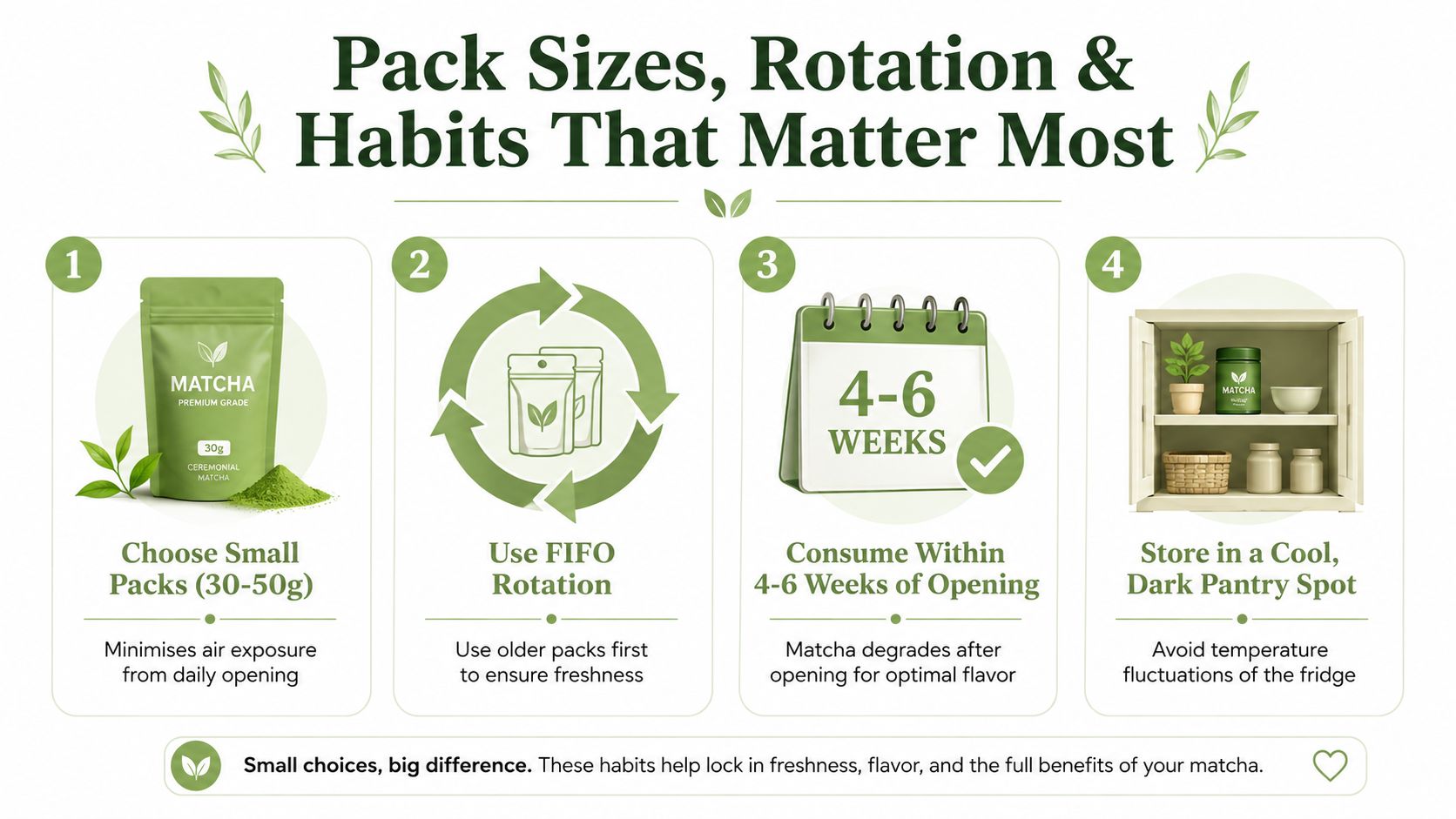
A useful routine is to keep a small working amount in a daily tin while the main pack stays sealed. Refill that tin only when necessary, and return the main pack to its cool storage immediately. This reduces the number of times you expose the full supply to air.
For more detail on quality windows and handling, use this guide to matcha shelf life. The exact container matters less than opening only what you can use promptly.
Troubleshooting Common Matcha Storage Mistakes
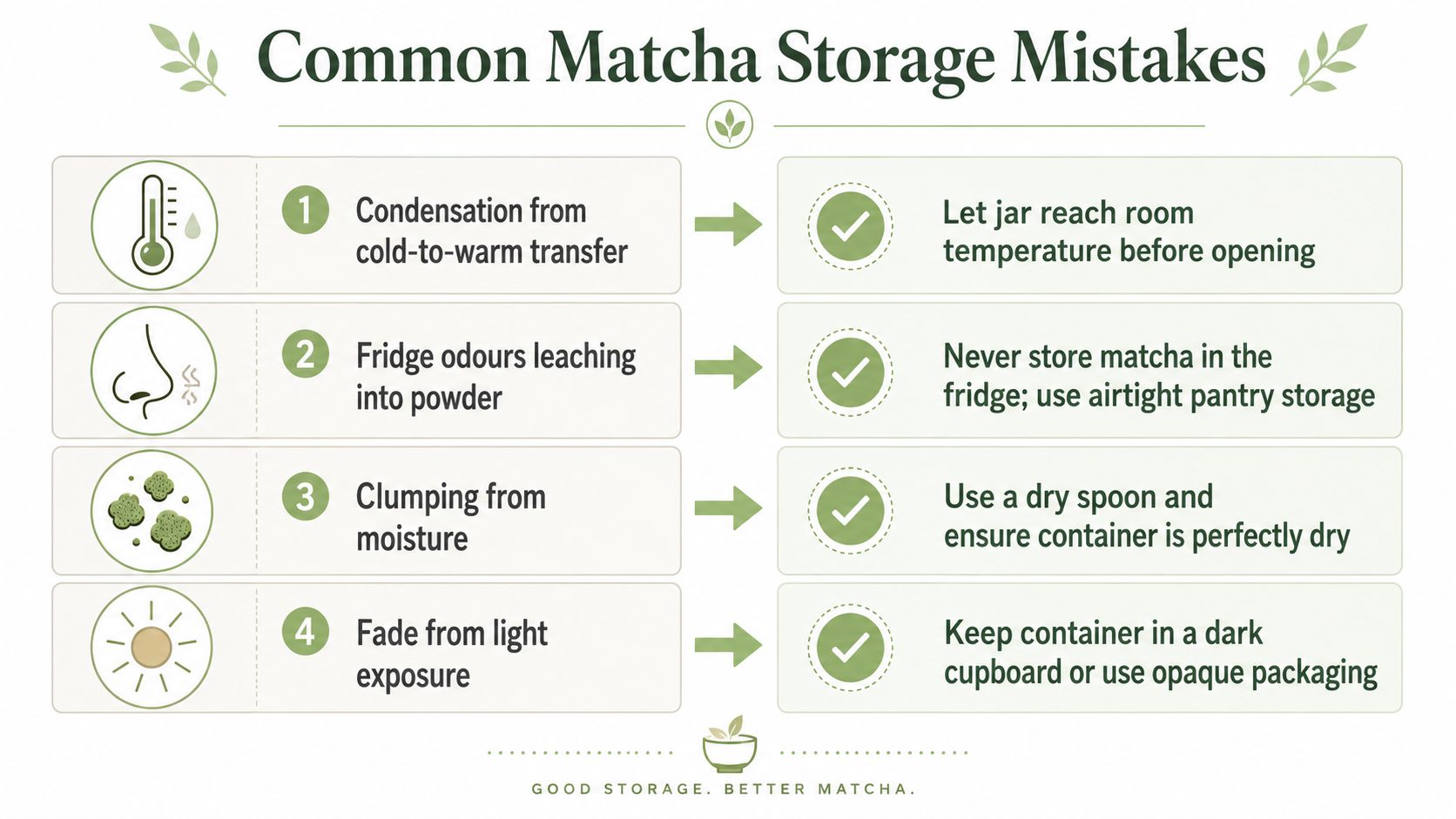
Most storage failures leave visible or aromatic clues. Use this checklist before deciding whether your matcha needs replacing.
Condensation after refrigeration
If you open a cold tin in warm kitchen air, moisture can form inside. That moisture lands directly on the powder and creates clumps.
Fix: Keep the container sealed while it returns to room temperature. Don't speed up the process by opening the lid on the bench.
Fridge odours in the powder
Matcha can pick up nearby food smells, particularly when packaging isn't fully airtight.
Fix: Store it inside a second airtight food container and keep it away from strongly scented foods. If the aroma has already changed to garlic, onion or another fridge smell, the container has failed at its job.
Clumping from moisture
Small soft lumps may come from a damp spoon or steam near the kettle. Hard, persistent clumps suggest more serious moisture exposure.
Fix: Use a dry spoon every time, ensure the container is completely dry and keep the lid off only while measuring. Never scoop matcha over a steaming mug or saucepan.
Faded colour
Fresh matcha should look lively and green. A dull green, greyish or brown appearance, paired with a flat or stale aroma, indicates oxidation and quality loss.
Fix: Don't try to rescue it with extra powder or sweetener. Replace it, then protect the new pack from light, air, heat and moisture from day one.
A Simple Daily Storage Routine You Can Stick To
Good storage should be easy enough to follow on a busy weekday. This routine takes only a few minutes to organise and removes most of the avoidable exposure from daily use.
Set up the main pack
Choose a small opaque tin for the amount you'll use regularly. On a quiet day, portion enough matcha for several daily preparations into that working tin, then close the main pouch firmly and return it to its chosen storage zone.
If your main supply lives in the fridge, keep it sealed while it warms before opening. Don't keep moving it between the fridge and pantry. Stable conditions are safer than constant temperature changes.
Handle the powder properly
Before scooping, wipe the teaspoon completely dry. A clean, dry bamboo scoop or teaspoon is fine, but a wet utensil can introduce moisture in seconds.
Measure what you need, then close the daily tin immediately. Never leave the lid upside down on the bench, where condensation, steam or crumbs can reach the seal. Put the lid back on as soon as the powder is out.
Keep the storage spot organised
Choose a dark cupboard away from the oven, toaster, kettle and dishwasher. If the kitchen becomes hot or humid during an Australian summer, move the sealed supply to the fridge instead, using the same careful warm-up routine before opening.
Label the opened date and keep older stock in front. That simple habit prevents forgotten tins from hiding behind newer purchases and gives cafés a practical way to manage multiple matcha grades.
Buy packaging that supports the routine
Fresh, well-packaged matcha makes this process much easier. An opaque, airtight pack already protects the powder from the main storage threats, so you only need to add sensible handling, quick resealing and a dry utensil.
Australian storage guidance varies on unopened quality windows, with one guide allowing up to 18 months in a cool, dry place when excess air is removed from resealable pouches and opaque airtight packaging is used. (Mindya Matcha storage guide) That longer unopened window doesn't change the central rule: once opened, prioritise flavour and volatility retention over keeping the powder until it is technically usable.
At home or in a café, choose a pack size you can finish promptly, keep it cool and dark, and make resealing automatic. That's how to store matcha tea without turning every morning cup into a storage experiment.
Choose Pep Tea for premium organic Japanese matcha in formats suited to everyday drinking, cafés and culinary use. Visit Pep Tea to find matcha that arrives properly packaged, then make the simple routine above part of your daily preparation.