
Tag: keep matcha fresh
Matcha Storage Container: Keep Your Tea Fresh

You open a fresh pouch of matcha, expecting that bright green colour and sweet, creamy aroma. Instead, the powder looks flat, a bit khaki, and the flavour tastes sharper than you remember. That moment is frustrating, especially when you've bought good-quality tea and treated it like any other pantry item.
This happens all the time in Australian kitchens. A tin sits near the kettle. A pouch gets folded over and clipped shut. A clear jar looks pretty on the bench. Then a humid week rolls through, the afternoon sun hits the counter, and your matcha starts losing what made it special in the first place.
A good matcha storage container isn't a decorative extra. It's part of the ritual, just like a whisk or bowl. If you're not sure how long your powder should stay fresh, this guide on matcha shelf life is a useful companion.
Why Your Matcha Loses Its Magic and How to Stop It
One of the easiest ways to understand matcha is to stop thinking of it as a tough dried tea and start treating it more like a delicate spice. If you left premium saffron, fresh vanilla powder, or a finely ground herb sitting in warm air and sunlight, you'd expect it to fade. Matcha behaves the same way, only faster.
That vivid green colour isn't just for looks. It tells you a lot about freshness. When matcha dulls, you're often also losing the soft umami notes, the clean finish, and the gentle sweetness that make ceremonial-grade tea such a pleasure to drink.
What the dull colour is really telling you
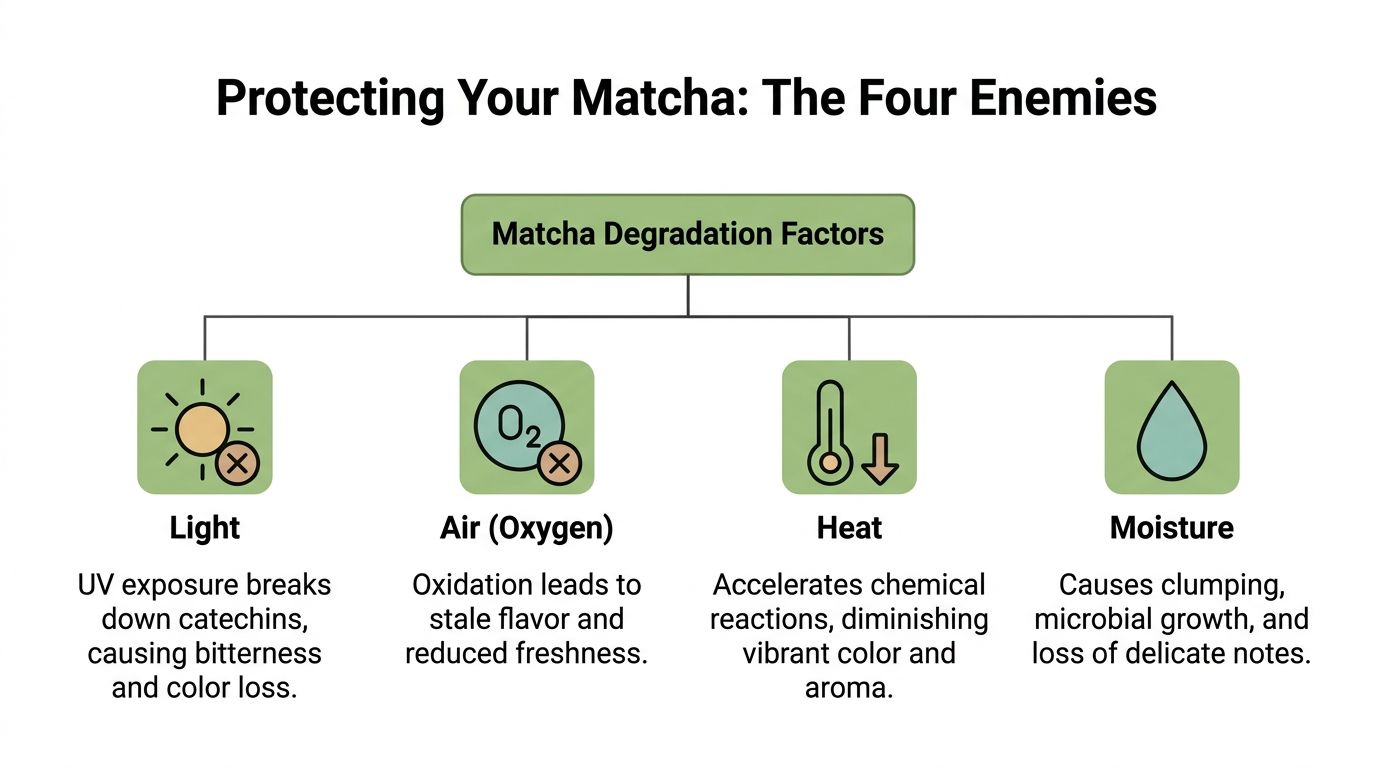
A faded powder usually means the tea has been exposed to the wrong environment. Light can affect chlorophyll. Oxygen can flatten aroma. Heat speeds up the reactions that make matcha taste stale. Moisture changes texture and can make powder clump.
In other words, the container matters because the powder is exposed on all sides.
Fresh matcha should feel alive in the bowl. If it looks tired before you whisk it, the storage setup is usually the first thing to question.
Why this matters more in Australia
Australian homes and cafés often deal with warm rooms, changing temperatures, and coastal humidity. That combination is rough on a finely milled tea powder. A loose lid or a clear jar might seem harmless in winter, then become a real problem during a humid Queensland summer or a run of hot days in NSW.
The good news is that protecting matcha doesn't require complicated gear. You just need to understand what's damaging it and choose a container that blocks those threats instead of inviting them in.
Matcha's Four Enemies Light Air Heat and Moisture
If you remember only one thing, remember this. Matcha is vulnerable because it's powdered. Once tea is ground so finely, it has far more surface area exposed to the environment. That's why a premium powder can change quickly if it's stored carelessly.
Light strips away freshness
Light is one of the easiest problems to overlook because the damage is subtle at first. A clear jar on an open shelf might look elegant, but it lets in the very thing matcha doesn't want. Over time, light exposure can fade that electric green tone and leave the powder looking duller and older than it should.
This is why opaque storage matters. If you can see your matcha through the container, light can reach it too.
Air starts the slide into staleness
Every time oxygen reaches the powder, freshness starts slipping. The aroma softens first. Then the flavour becomes flatter or rougher. If you've ever opened a container and found the smell surprisingly weak, that's often the result of too much air contact over time.
A useful analogy is ground coffee, but even more delicate. Matcha doesn't have much tolerance for repeated opening and closing if there's too much empty space in the container.
Heat speeds everything up
Heat doesn't just warm the powder. It accelerates the chemical changes that make matcha lose colour and flavour. For unopened, sealed ground matcha, quality is stable at or below 4°C but degrades rapidly above 25°C, even in sealed bags, according to Yunomi's matcha storage guidance. That matters in Australia, especially in NSW and QLD where rooms and storerooms often rise above that threshold.
A pantry can be fine in cool conditions for short-term daily use. But if the cupboard sits near an oven, dishwasher, sunny wall, or warm café service area, it isn't doing your tea any favours.
Moisture ruins texture and invites trouble
Matcha should be soft, fine, and easy to sift. Moisture changes that fast. It causes clumping, affects how the powder whiskes, and can dull the fragrance. This is why using a damp spoon or opening a cold container straight from the fridge can create problems.
Keep matcha away from steam, wet utensils, and that cupboard above the kettle. Convenience often becomes the reason freshness disappears.
A simple way to remember it
Think of matcha as a powder that wants four protections:
- Darkness so light can't fade it
- A tight seal so oxygen stays out
- Cool conditions so heat doesn't accelerate degradation
- Dry surroundings so moisture doesn't affect texture
Once those four enemies make sense, the design of the right matcha storage container becomes much easier to judge.
The Anatomy of a Perfect Matcha Canister
A strong matcha storage container does a simple job well. It creates a small, dark, sealed environment that protects a very delicate powder from the kitchen around it. The details matter, though, because plenty of containers look suitable and still fail on the basics.
Start with the seal
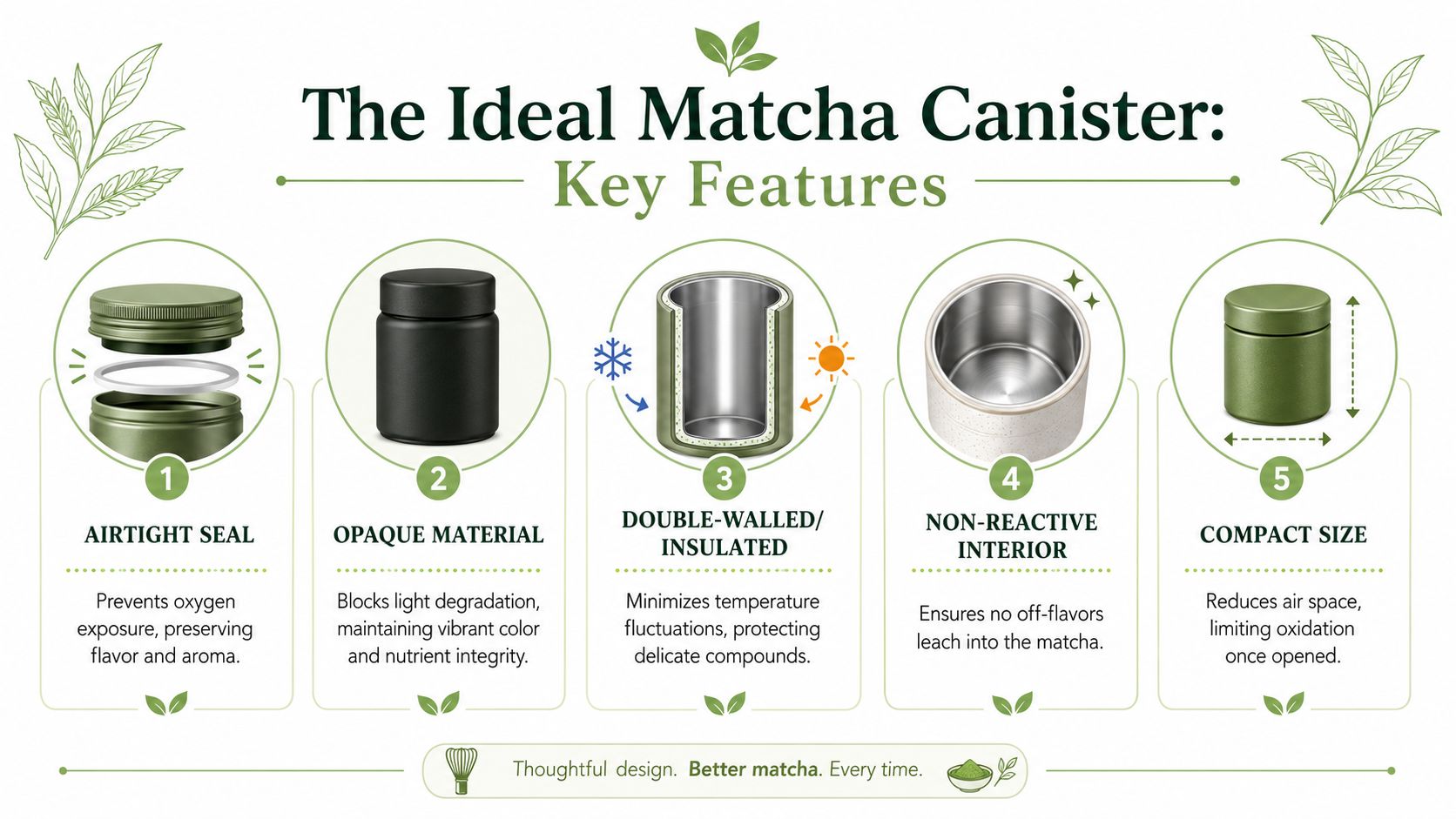
The lid is the first thing to inspect. If it doesn't close firmly, the rest of the container doesn't matter much. The ideal matcha storage container must be airtight, opaque, hermetic against odour intrusion, and impervious to moisture, according to Ooika's matcha storage guide. The same source notes that 78% of matcha spoilage incidents in cafés stem from storing powder in clear glass jars or plastic bags.
That figure says a lot. Many spoilage problems don't start with bad tea. They start with the wrong vessel.
Material matters more than looks
Some materials are better suited to matcha.
| Container material | How it performs for matcha | Best use |
|---|---|---|
| Opaque metal | Excellent light protection and a strong barrier | Daily home use and café decanting |
| Ceramic with tight lid | Good light protection if fully opaque | Home storage in cool areas |
| Clear glass | Poor against light unless stored completely in the dark | Not ideal for regular use |
| Thin plastic | Often weaker against odours, air, and moisture | Best avoided for premium matcha |
Food-grade stainless steel and properly finished ceramic are usually the safest bets because they're non-reactive and easy to keep clean. Clear glass is the classic mistake. It lets you admire the colour while helping it disappear.
Shape and size affect air exposure
The best container is rarely oversized. A huge canister with a small amount of matcha inside leaves too much air around the powder after each opening. A compact canister that matches your usage is usually smarter because it limits headspace.
If you're comparing options for pantry organisation more broadly, Everti's container buyer's guide is a handy read for thinking through lid quality, material, and practicality before you buy.
Details worth checking before you buy
A good matcha canister should have:
- An opaque body that blocks light completely
- A snug gasket or tight-fitting lid to reduce air exchange
- A non-reactive interior so no stray flavours transfer to the tea
- A manageable opening that lets you scoop cleanly without spilling
- A size that suits your routine instead of leaving lots of empty space
A storage container should protect the tea first and look nice second. If it does both, that's a bonus.
If you're building a proper setup at home, a few purpose-built matcha tea accessories make the process tidier and help reduce unnecessary exposure during prep.
Finding the Right Container Size for Home Cafe or Travel
Container size isn't just about how much powder fits. It changes how often your tea meets air, heat, and movement. The right choice depends on whether you're making one bowl each morning, carrying a small amount to work, or running a busy café bar.
For home users
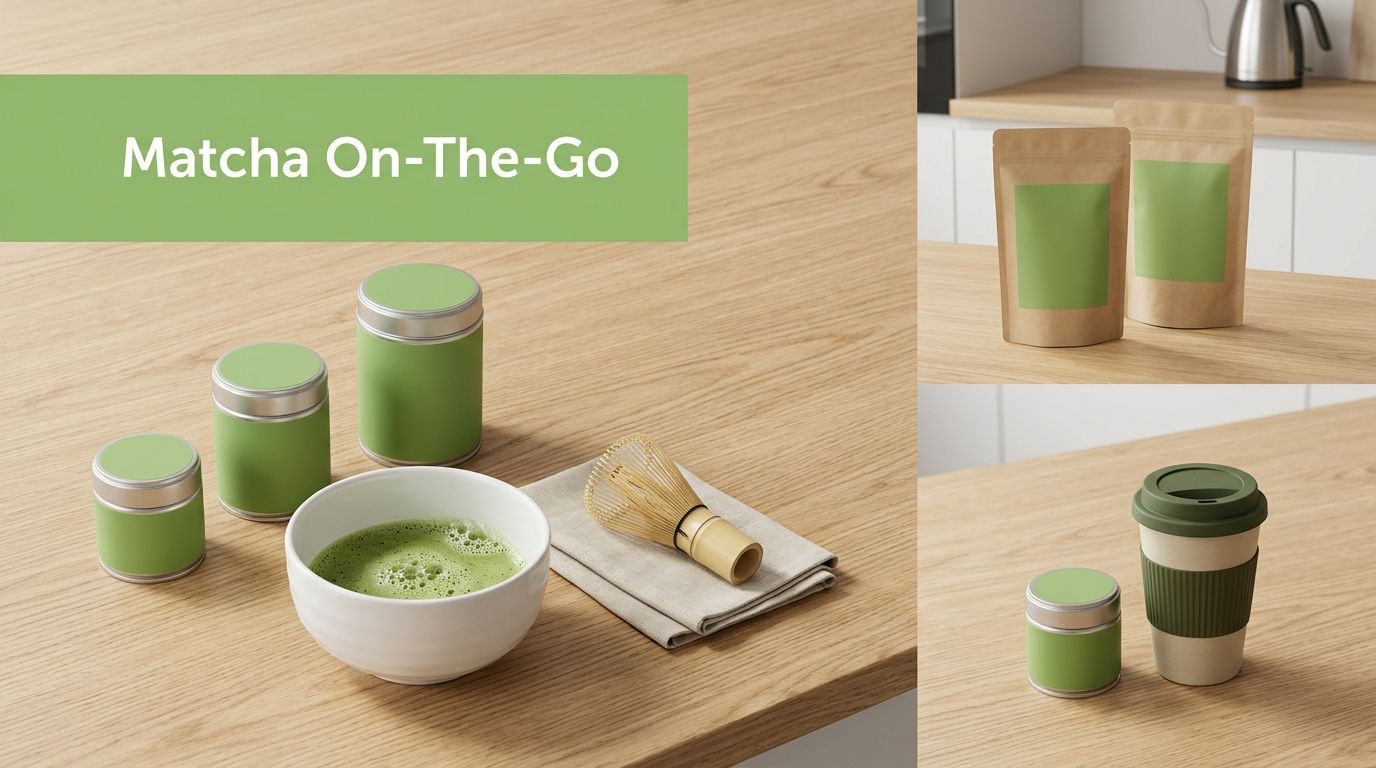
Most home drinkers do best with a medium canister. You want enough room for a practical amount of tea, but not so much space that half the container is air. If you drink matcha daily, keeping a smaller active canister and refilling it from a better-protected reserve supply is often the neatest system.
A small travel tin also makes sense for a desk drawer or overnight bag. It keeps your main supply safer at home and stops you opening the larger container all the time.
For cafés and busy kitchens
Commercial use needs a different rhythm. Premium stone-ground matcha is slow to produce. Traditional Japanese stone mills yield only 30 grams per hour, and a 100g batch represents roughly 3 to 4 hours of continuous grinding, as explained by The S Tradition's overview of matcha production.
That makes waste feel very different. When café teams understand how slowly premium matcha is made, they're usually quicker to stop storing it in oversized bench jars.
A practical café system often looks like this:
- Bulk reserve storage kept sealed and cold
- A smaller service canister used on the bench for short periods
- Frequent top-ups instead of leaving the full supply exposed
- A clear labelling routine so older stock is used first
If you buy in larger volumes, a catering format such as the premium 1kg organic matcha green tea catering pack makes storage planning even more important. Bulk quantity saves hassle only if the tea is portioned sensibly once opened.
A quick comparison by use case
| Use case | Best container approach | Why it works |
|---|---|---|
| Daily home bowl or latte | Medium opaque airtight canister | Easy access without excessive air space |
| Travel or office use | Small sealed tin | Less mess, less repeated opening of main supply |
| Café service | Small countertop canister plus cold bulk reserve | Faster workflow with less exposure |
| Wholesale or high-volume kitchen | Batch-based decanting system | Better stock control and cleaner handling |
The smartest setup is the one that fits your actual habits. Convenience matters, but only if it doesn't sacrifice the tea.
Practical Steps for Long-Lasting Freshness
Good storage starts the moment you open the pouch. If the transfer is rushed, the lid is loose, or the container isn't fully dry, you can shorten freshness before the tea even reaches the shelf.
How to fill a matcha storage container properly
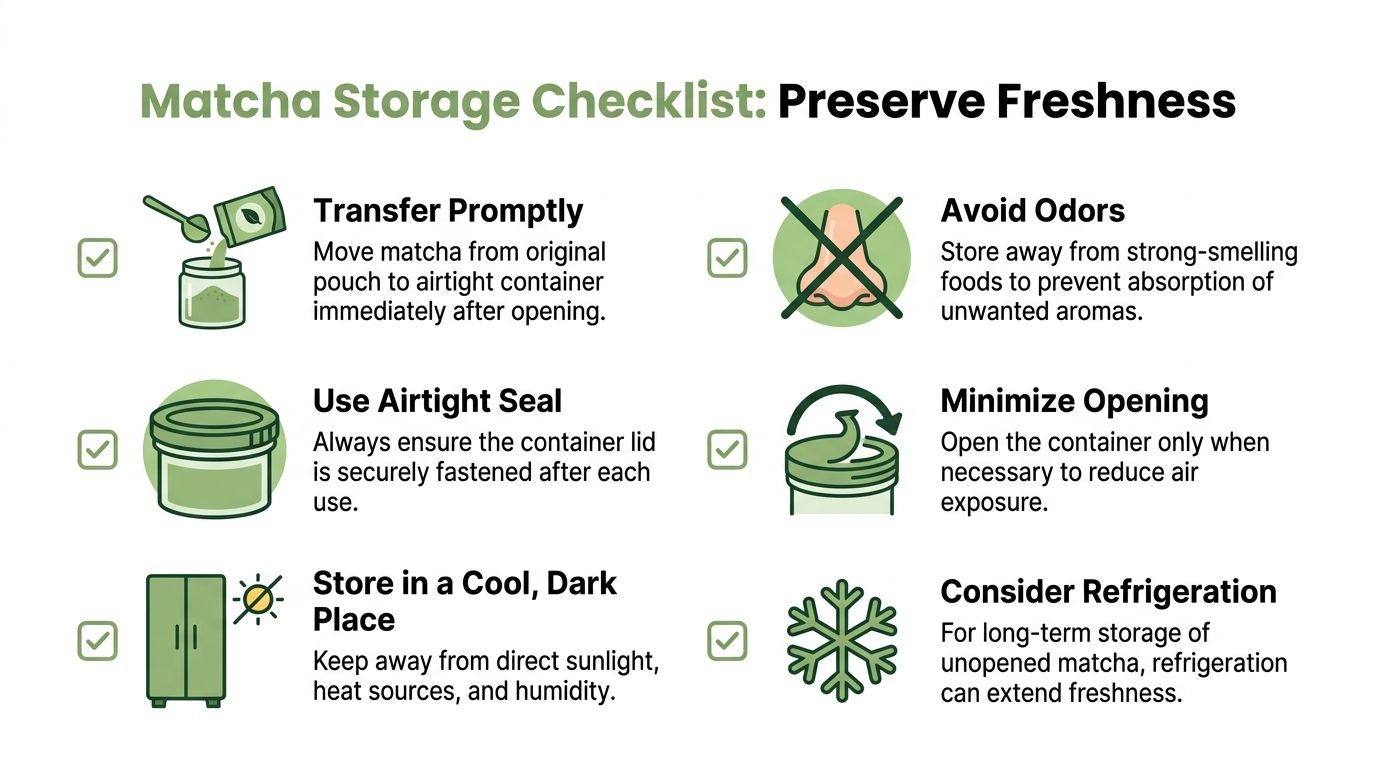
Use this simple routine:
- Wash the container ahead of time if it's new or has held anything else.
- Dry it completely. Not almost dry. Completely dry.
- Open the pouch only when you're ready to transfer the powder.
- Pour or spoon the matcha in quickly and gently to limit exposure.
- Seal the lid straight away and store it in the right place.
If you're reusing a canister, make sure no old powder is stuck in the corners. Tiny leftovers can affect flavour and freshness when mixed with a new batch.
Practical rule: never refill a canister that still feels cool, damp, or carries the smell of coffee, spices, or another tea.
Fridge or pantry
Refrigeration often leads to confusion. It is excellent for protecting sealed or reserve matcha, but only if you handle it carefully. To preserve the high antioxidant content and bright green colour of authentic Japanese ceremonial-grade matcha, the finished powder should be stored between 2°C and 5°C immediately after grading, as noted in Matcha Wellness Australia's production guide.
That tells us something important. Cool storage supports freshness. But daily use still needs common sense.
A reliable home method is:
- Keep your main supply cold in a sealed, moisture-safe container
- Use a smaller daily canister at room temperature if you make matcha often
- Let chilled matcha come closer to room temperature before opening so condensation doesn't form inside
- Store away from strong smells because matcha can absorb them
Here's a useful visual guide to handling and storing powder well:
Cleaning habits that protect flavour
A matcha canister doesn't need harsh cleaners or scented products. Warm water and careful drying are usually enough. If you use detergent, rinse thoroughly so no fragrance remains.
Check these habits regularly:
- Use dry scoops only so moisture never enters the container
- Close the lid immediately after measuring
- Don't store beside coffee, onions, spices, or cleaning products
- Keep the canister away from sunlight, ovens, and kettles
A good storage routine isn't fussy. It's organised.
Your Partner in Preserving Premium Matcha
A well-chosen matcha storage container protects more than powder. It protects the flavour, aroma, colour, and quiet pleasure you were hoping for when you bought the tea. Once you understand the four big threats and choose a container that blocks them, the rest becomes much easier.
The strongest setups are simple. Use an airtight, opaque container with a reliable seal. Keep it cool. Keep it dry. Match the size to how quickly you use the tea. If you do that, you give your matcha a much better chance of tasting the way it should.
That care makes a real difference over time. High-quality airtight, opaque containers with rubber gaskets can extend matcha's shelf life to 12–18 months by reducing oxidation rates by 90%, while matcha can lose up to 30% of its antioxidant potency within 3 months in non-hermetic containers, according to Aprika Matcha's storage article.
The bigger idea is this. Brewing matcha well starts before the water goes in. Storage is part of preparation. When you protect the powder properly, every bowl has a better chance of showing the tea at its best.
If you're ready to enjoy fresher bowls, brighter lattes, and better everyday matcha habits, explore Pep Tea for premium organic matcha, practical accessories, and Australian expertise that helps you get the most from every gram.