
Tag: matcha tea powder
What Is Matcha Tea Powder and How to Use It Well
What is matcha tea powder if it's made from the same plant as the green tea in a bag? Matcha is a finely milled powder made from shade-grown green tea leaves that you whisk into water and consume whole, rather than steeping the leaves and throwing them away. That single difference, eating the leaf instead of only drinking its infusion, explains the vivid colour, the fuller flavour, and why the amount of powder in your cup matters so much.
What Matcha Tea Powder Actually Is
Matcha isn't a different species and it isn't an herbal blend. It's made from Camellia sinensis, the same plant used for green, black and oolong tea, but it's grown, processed and consumed in a specific way. The leaves are shaded before harvest, steamed, dried and milled into a very fine powder.
With a tea bag, hot water extracts flavour and compounds, then you discard the leaves. With matcha, the powder stays suspended in the liquid. You drink the leaf material itself, so your serve is set mainly by how many grams of powder you use, not just by how long something steeped.
If you've only used tea bags, the tin can look unfamiliar. Fine green powder doesn't behave like leaf tea, and it won't dissolve neatly like instant coffee. It forms a suspension, which is why whisking matters and why a thin layer may settle if a drink sits.
A Simple Working Definition
If the whole powdered leaf ends up in the cup, think matcha. If the leaf stays in a bag or pot and only the water reaches the cup, think steeped tea.
In Australia, matcha is also grouped with other non-fermented green teas for import purposes, rather than sitting in its own separate customs category. The Australian green tea import classification records for tea in smaller packings sit within Harmonized System heading 0902, including code 0902.10.00 where the general duty is listed as Free. That detail sounds bureaucratic, but it's useful. It tells you national trade figures usually describe green tea broadly, not matcha alone.
It also clears up a common confusion. Matcha isn't automatically Japanese, organic, low in caffeine or high grade because it's green powder. Matcha describes a processing format. Origin, cultivar, harvest, certification and grade still need separate checking.
From here, it helps to follow the journey from shaded field to tin, then compare that powder with steeped green tea. After that, you'll be able to judge a label, prepare a bowl or latte by weight, and place the caffeine claims in a realistic Australian context.
How Matcha Is Grown and Milled
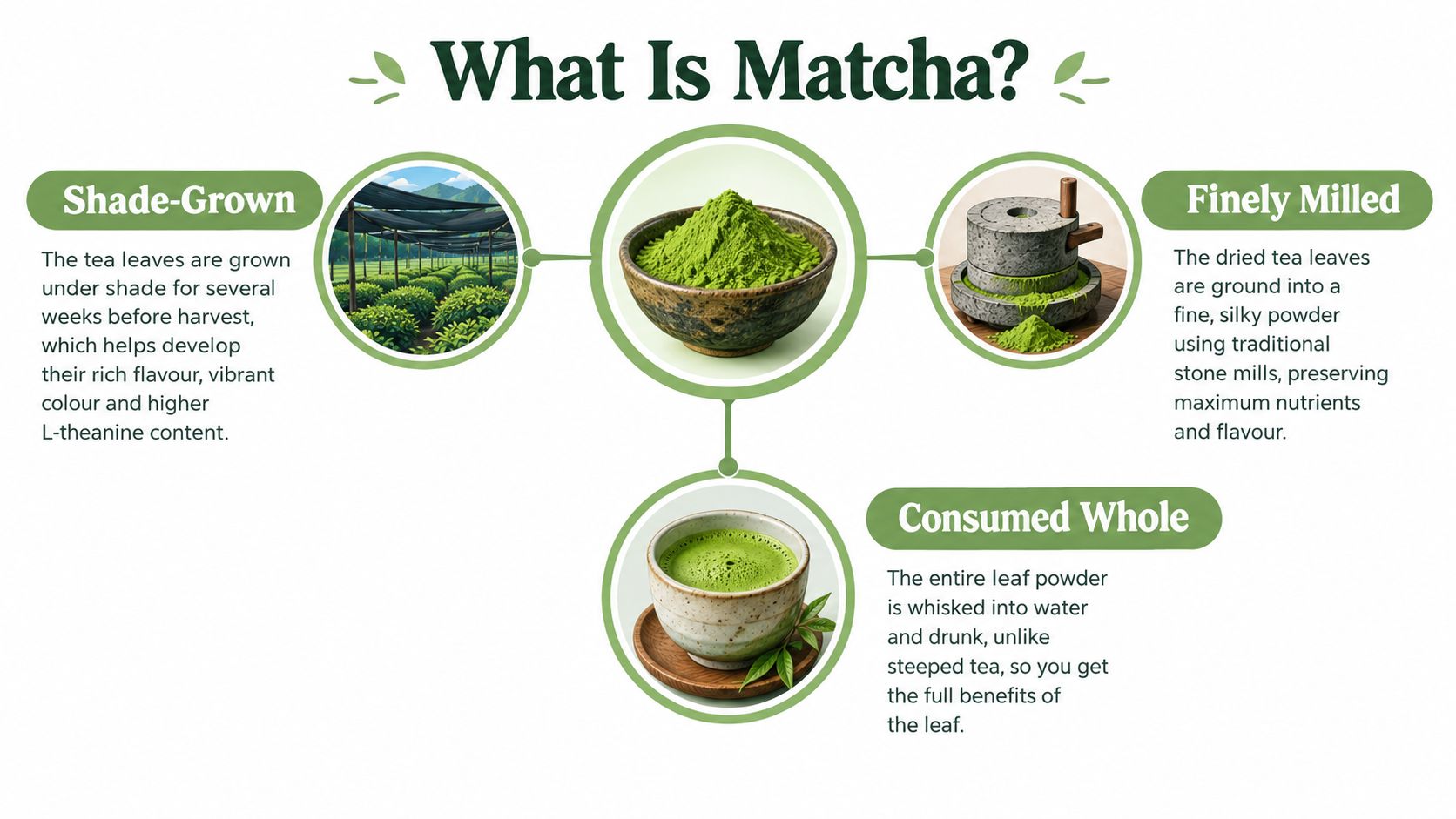
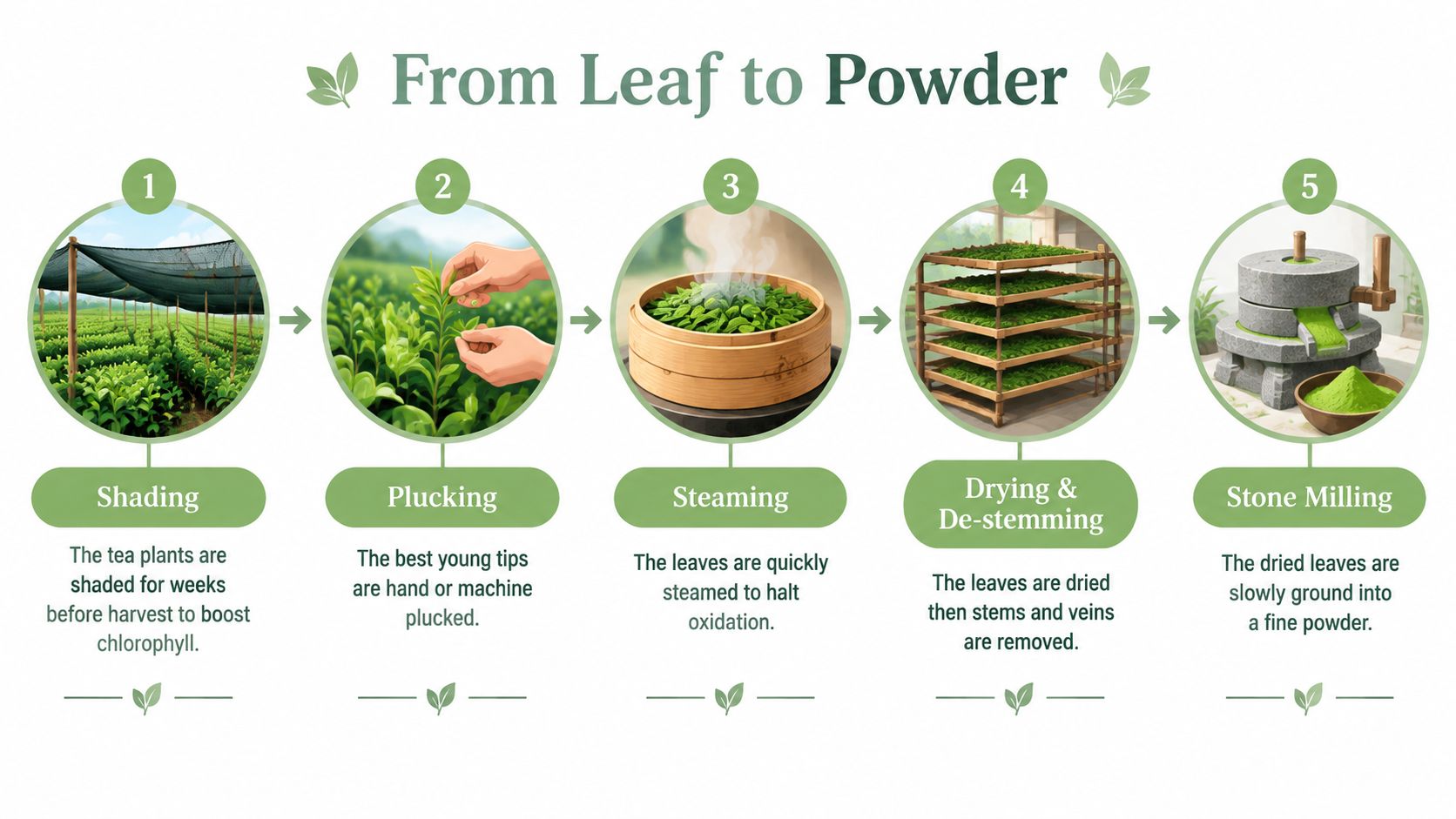
Start in the field, a few weeks before harvest. Growers cover the tea bushes so the leaves develop in reduced light. Australian academic researchers describe matcha leaves as typically cultivated under approximately 90% shade before harvest in their review of matcha bioactive compounds and analytical techniques.
That shade changes how the plant works. With less light, the leaf produces and retains more chlorophyll, which supports the deep green colour. Shading also reduces light-driven catechin formation while helping preserve or increase L-theanine and caffeine, two compounds that shape matcha's savoury, smooth character.
From Leaf to Tencha
At harvest, growers pluck young leaf material by hand or machine, depending on the farm and grade. The fresh leaves are steamed quickly to halt oxidation. That quick steam helps keep them green, much as blanching vegetables sets their colour, although tea handling is more delicate.
The steamed leaves are then dried and sorted. Stems and larger veins are removed, leaving flat, flaky leaf material called tencha. Think of tencha as a brittle green tea biscuit, dry and fragile, waiting to be reduced to powder. It isn't the finished product yet, and you wouldn't brew it the same way as loose-leaf sencha.
This intermediate step matters when you shop. A powder ground from whole, unspecified green tea leaves, stems included, may look green in a smoothie but taste harsher and feel coarser. Proper matcha starts with leaf material prepared for milling.
Milling the Powder
Producers mill tencha slowly into powder, traditionally between granite stones. Slow milling creates a fine particle size and limits heat. The result should feel silky, clump lightly because it's so fine, and whisk into a smooth suspension rather than a gritty drink.
Fine milling also explains some of the cost. Shading, careful plucking, steaming, drying, sorting and gradual grinding add labour at every stage. A very cheap tin isn't automatically poor, but there's a production reason genuine matcha rarely behaves like a bulk culinary colouring.
If you're explaining it to a friend, keep it to three ideas. The plants are shaded, the leaves are steamed and dried into tencha, and that tencha is milled so you can consume the leaf itself. Everything else, from grade names to café lattes, builds on that sequence.
Matcha Compared to Steeped Green Tea
The practical question is why you'd bother with powder when a tea bag is easier. The answer isn't that matcha is automatically better. It's a different format with a different dose, texture, flavour and routine.
Steeped green tea gives you compounds that move from leaf into water during brewing. Matcha gives you the compounds present in the weighed leaf material, including parts that don't extract fully into an infusion. That's why two drinks from the same plant can feel noticeably different.
| Factor | Steeped green tea | Matcha powder |
|---|---|---|
| What you consume | Water infused with leaf compounds | The suspended powdered leaf itself |
| Dose control | Leaf amount, water and steeping time | Mainly grams of powder used |
| Flavour | Lighter, often grassy or bitter | Fuller, savoury and creamy when well made |
| Texture | Clear liquid | Opaque, frothy suspension |
| Equipment | Bag, pot or infuser | Bowl or cup, whisk or frother |
| Best use | Simple hot or iced tea | Whisked tea, lattes, smoothies and baking |
What Changes in the Cup
Because you consume the leaf, matcha generally contains catechins, L-theanine and caffeine at higher levels than green tea infusions. Concentrations still vary substantially with cultivar, shading, growing conditions, processing and test method. Bright colour alone can't tell you the exact potency of a tin.
That variability is important for cafés and home users who want consistency. Supplier specifications or batch testing give you a firmer basis for standardising a recipe than the word ceremonial on packaging. At home, weighing your serve is the simplest consistency tool you have.
Flavour shifts too. Steeped green tea is clear and light, and over-steeping can make it bitter. Well-made matcha has body because the powder remains in the drink. You may notice sweetness and umami before bitterness, especially with powder intended for drinking straight.
Keeping Health Claims Grounded
The Australian Dietary Guidelines on green and black tea catechins and cardiovascular risk factors identify green and black tea as sources of polyphenols called catechins and state that consumption of green and black tea is associated with a reduced risk of stroke. The guidelines also describe catechins as compounds reported to influence factors including hypertension, atherosclerosis, thrombogenesis, nitric oxide production and endothelial health.
Those statements support describing matcha as a concentrated green tea powder containing tea polyphenols. They don't prove matcha cures disease, and they don't turn every antioxidant claim on social media into clinical evidence. The cited association concerns green and black tea consumption generally.
Caffeine also needs context. FSANZ reports a caffeine concentration range of 0 to 90 mg per 100 g for tea in its assessment of tea as a naturally occurring caffeine source. For matcha, the amount you consume depends on the grams of powder, the product composition and the serving size.
Cost per cup typically rises with matcha because production is more involved and there's no discarded leaf carrying unused material away. In exchange, you get a format that works in milk, baking and cold drinks in ways a tea bag can't. Choose steeped tea for simplicity, matcha for concentration and versatility. Neither choice needs hype to justify it.
How to Choose Quality Matcha in Australia
A useful starting point is intended use. Ceremonial grade usually signals matcha selected for whisking with water, where sweetness, fine texture and low bitterness matter. Culinary grade is generally intended for milk drinks, smoothies and baking, where stronger flavour and lower cost are practical. These labels aren't a guarantee by themselves, so treat them as a category, not proof.
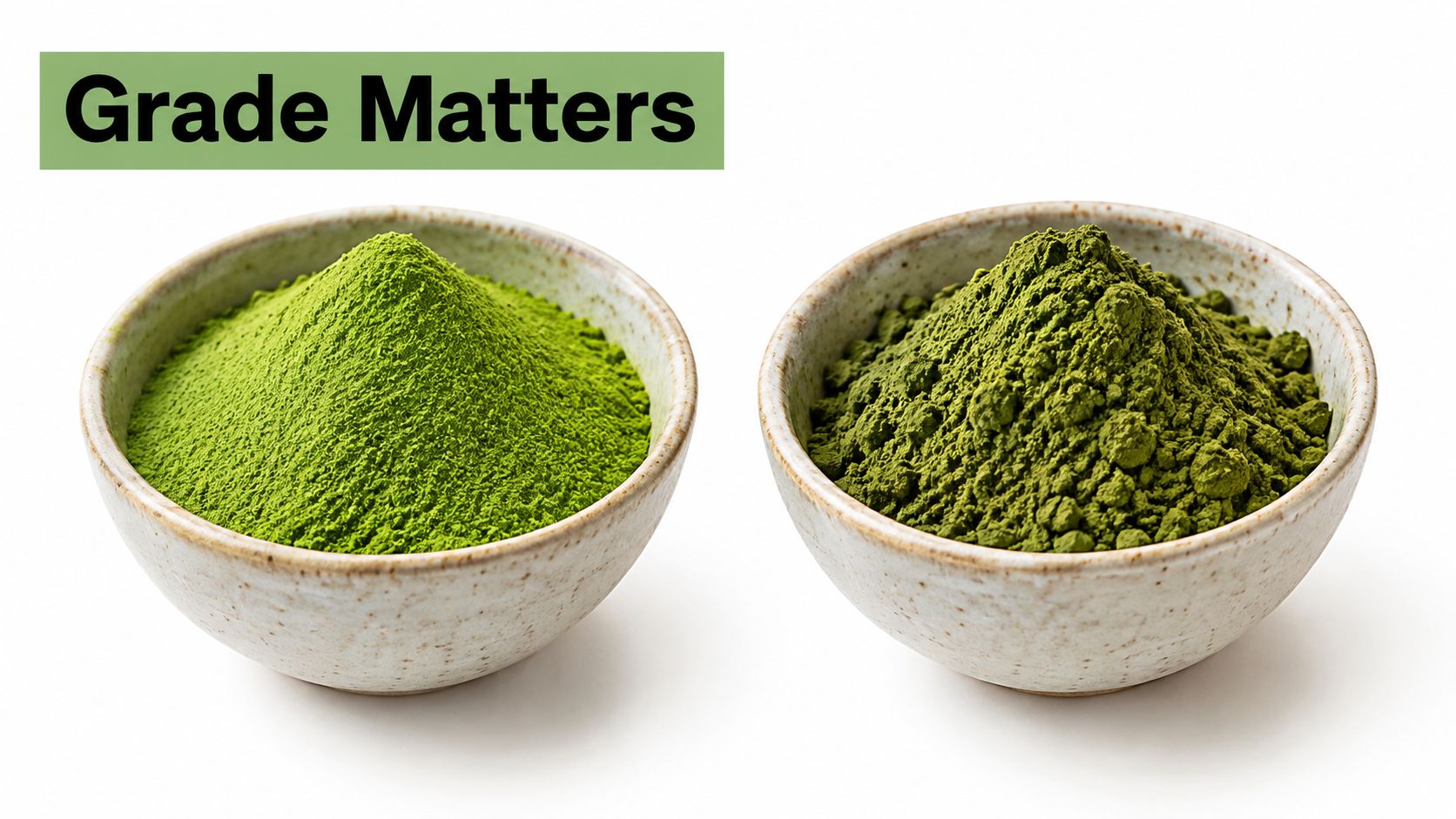
If you're deciding between them for home or café use, our guide to ceremonial and culinary matcha grades sets out the practical differences. The short version is to buy for the job. A delicate drinking powder can disappear under sweetened oat milk, while a sturdy culinary powder can taste rough as straight tea.
Reading an Australian Label
- Country of origin: Check where the tea was grown, not only where it was packed.
- Ingredient purity: Look for matcha as the ingredient, without unnecessary fillers or sweeteners.
- Certification: If organic matters to you, look for recognised certification details.
- Batch information: Harvest, milling or batch details support traceability.
- Storage guidance: Powder should be protected from air, light, heat and moisture.
Colour helps, but it isn't the whole test. A dull, yellowish or brownish powder may be older, less carefully processed or made from leaf material that wasn't handled as tencha. A vivid green is promising, yet it still can't confirm caffeine content, nutrition or purity.
Why Origin and Price Have Shifted
Australia's wider green tea supply is import-dependent. In 2024, Australia imported approximately 2,135,520 kilograms worth about US$20.62 million in packings of 3 kg or less, according to Australian import data for small-pack green tea by partner country. India supplied the largest volume at 1,253,690 kilograms, while Japan supplied 155,951 kilograms valued at approximately US$4.39 million in that same category.
Demand for Japanese tea has also tightened. SBS reported Japan exported 195,319 kg of green tea to Australia from January through August 2025, a 131% year-on-year increase, while tencha reached 8,235 yen per kilogram at a Kyoto auction in May 2025, up 170% year on year, in its reporting on Australia's matcha boom and Japanese supply pressure. Those figures help explain price changes, gaps on shelves and substitution risk.
This short video is a handy visual check on how different powders can look before you commit to a larger bag.
We stock PepTea organic Japanese matcha as one Australian retail example, but the same checks apply to any supplier. Ask what's in the tin, where it came from, how it's packed and whether the grade suits your drink. Green flags are clear origin, pure ingredients, fine texture, fresh aroma and sensible storage advice.
Preparing and Using Matcha at Home
Start with weight, not guesswork. A spoonful varies with how tightly the powder packs and how fine it is. A small kitchen scale helps you repeat a drink you like and adjust caffeine exposure in a predictable direction. Use more powder for stronger flavour, less for a gentler cup.
Water should be hot but not boiling. Boiling water can push matcha toward bitterness and flatten its aroma. Let the kettle sit briefly, add a little water first to make a paste, then whisk in the rest.
Three Ways to Use One Tin
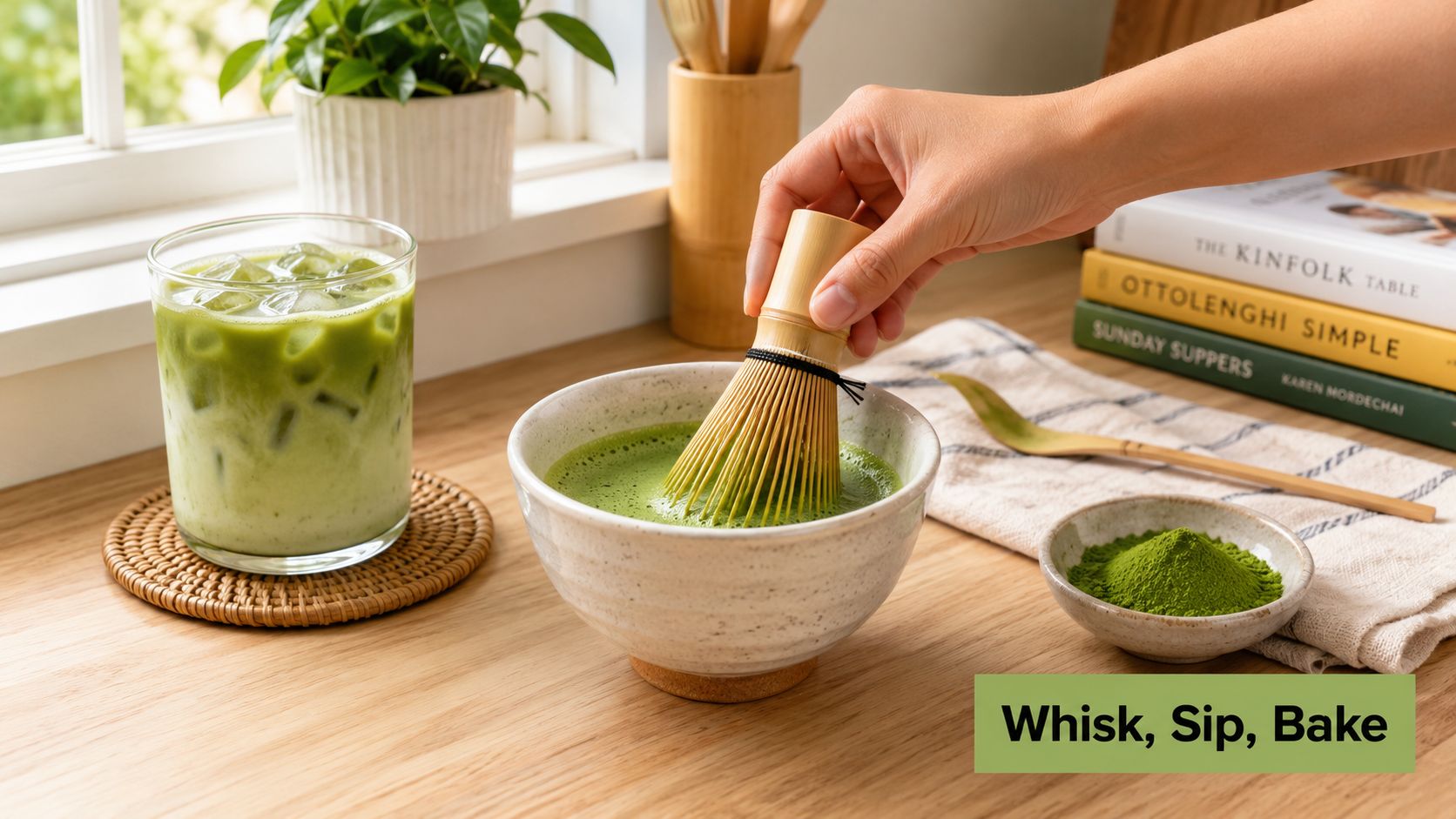
- Whisked tea: Sift the powder into a bowl, add warm water and whisk briskly until frothy. A smoother drinking grade earns its place here.
- Hot or iced latte: Whisk the powder into a concentrated paste, then add steamed milk or pour over cold milk and ice. A culinary grade often stands up better to milk.
- Smoothies and baking: Blend or mix the powder through yoghurt, banana, batter or icing. Match the amount to the total recipe so one serve doesn't become unexpectedly strong.
A bamboo whisk is designed to break clumps and create foam, but a small handheld milk frother can work for lattes. Sifting first makes either tool more effective. If you want the bowl technique in detail, our step-by-step guide to whisking matcha shows the motion and common fixes.
Practical rule: Make a smooth paste with a splash of water before adding the full amount. Most clumps start because dry powder met a full cup at once.
Matcha behaves differently once other ingredients arrive. In a latte, milk softens bitterness and rounds out the grassy notes. In baking, heat and sugar mute freshness, so culinary powder usually makes more financial sense. In a smoothie, fruit can cover a delicate grade completely.
For savoury cooking, use a light hand. A small amount whisked into a dressing, soup finish or noodle broth adds colour and a tea note without turning the dish into dessert. Add it late where possible, taste, then decide whether the recipe needs more.
Store the tin sealed in a cool, dark place and use a dry spoon. Once opened, smaller amounts bought more often can taste fresher than a large bag kept beside the kettle. Good preparation can't rescue stale powder, but careful storage protects the powder you've paid for.
Caffeine, Calmness and Who Should Be Careful
The phrase calm energy needs unpacking. Matcha contains L-theanine as well as caffeine, and many drinkers experience it differently from coffee. That doesn't mean the caffeine stops acting like caffeine. Sensory smoothness isn't a safety standard.
A teaspoon isn't a standard dose. Powder mass changes with scooping, particle size and recipe, and composition changes with cultivar, harvest and processing. If caffeine matters to you, weigh the serve and check supplier information rather than judging by colour or flavour.
Australian Safety Context
FSANZ states naturally occurring caffeine in foods such as tea is typically no more than 100 mg in a standard serving, and acute intake up to 200 mg is not generally associated with safety concerns in healthy adults, in its caffeine advice for Australian consumers. The same advice reports evidence of increased anxiety in children at approximately 3 mg/kg body weight per day and notes caffeine was consumed by 87% of Australians in national dietary survey day-one data.
For pregnancy, Australian public health guidance recommends limiting total caffeine intake to about 200 mg per day, as summarised in the FSANZ material on caffeine sources and pregnancy guidance. Matcha counts toward that total together with coffee, tea, chocolate, soft drinks, energy drinks and caffeine-containing medicines.
If you want to place tea drinks in that wider budget, our overview of caffeine content in green tea is a useful companion. The key habit is counting the whole day, not treating each café drink as isolated.
Who Should Take Extra Care
- Children: Don't assume a sweetened matcha latte is caffeine-free because it's milk-based.
- Pregnant people: Add matcha to all other caffeine sources for the day.
- People with anxiety or sleep sensitivity: Start small and avoid late-day serves to see how you respond.
- Café operators: Standardise grams per serve and retain supplier documentation.
- Anyone using medicines or supplements: Check labels and seek professional advice if you're unsure.
Matcha is a naturally caffeinated food, not a concentrated caffeine powder. FSANZ states solid or semi-solid foods containing 5% or more caffeine, equivalent to at least 50 mg caffeine per gram, are prohibited from retail sale to the public in its guidance on caffeine powders and high-caffeine foods. That restriction targets highly concentrated products and doesn't prohibit naturally occurring caffeine in ordinary tea.
The sensible middle ground is simple. Enjoy matcha as tea, portion it by grams, and don't let L-theanine marketing erase the caffeine line in your daily total.
Bringing Matcha Into Your Daily Routine
You now have the core picture. Matcha is shade-grown green tea, steamed and dried into tencha, then milled into powder and consumed whole. It differs from steeped tea in dose and texture, not because it's a mysterious new plant.
That understanding makes daily use easier. Choose grade by purpose, check origin and ingredients on the label, weigh your serve, and use water below boiling for drinking tea. Treat the powder as a caffeinated ingredient, especially when a recipe serves children or someone tracking pregnancy limits.
A Week That Makes Sense
Try a small whisked serve on mornings when you want tea instead of coffee, and notice how timing affects your sleep. Use a culinary powder for weekday iced lattes, where milk and ice need a stronger tea flavour. Keep baking for the weekend, when you can share portions and judge how much powder the recipe needs.
Start with one repeatable serve, weighed the same way each time. Adjust only one thing, powder, water or milk, until it suits your taste.
For Australian households, freshness and traceability are practical quality markers. Buy a size you'll finish while it still smells fresh, store it away from kettle steam, and ask suppliers direct questions when labels are vague. A higher price doesn't automatically mean stronger nutrition, and a famous grade name doesn't replace batch information.
Matcha works best when it fits your routine rather than chasing a perfect ritual. A reliable morning bowl, a café-style latte at your desk, or green buttercream for a family bake all count. Once you understand what is matcha tea powder and how it's made, you can choose the format that earns its place in your kitchen.
Ready to try a tin with clear Japanese origin and organic certification for whisking, lattes or baking at home? Explore the matcha range at Pep Tea, choose the grade that matches how you will use it, and start with one weighed serve you can repeat with confidence.
Matcha Tea Powder Australia: The Complete Buyer’s Guide
Australia's matcha imports jumped 62.91% from 2023 to 2024, showing how quickly local demand for Japanese-style matcha powder is rising. If you're buying matcha tea powder in Australia, the important question isn't which packet looks greenest, but whether the grade, origin, testing and supply chain match the way you'll use it.
Matcha now sits at the intersection of café culture, mindful caffeine and practical food preparation. You'll find it whisked with water, blended into iced lattes, folded through baking mixtures and stocked by cafés that need a dependable alternative to coffee. Yet supply shortages and vague grading terms mean Australian buyers need more than a fashionable label.
This guide explains what genuine matcha is, how to compare grades, which technical details matter and how to choose a product that performs consistently at home or in a commercial kitchen.
Why Matcha Is Surging in Australian Pantries
Australia's matcha market was estimated to grow at a 14.94% compound annual growth rate from 2020 to 2024. That rise reflects a shift from occasional café orders to a pantry ingredient used in lattes, baking, iced drinks and home tea routines. (Australian matcha market and import data)
Matcha is entering a market that already has a strong tea habit. Roy Morgan found that, in the 12 months to March 2015, 42% of Australians aged 14 and over bought tea in an average four-week period, compared with 45% who bought coffee. Within tea, 11% bought green tea, while 35% bought regular tea and 8% bought herb or fruit tea. More recent commentary puts green tea at 25% of Australian tea sales in 2023, giving many shoppers a familiar starting point for matcha's flavour and preparation. (Australian tea and matcha consumption context)
Why supply matters to your buying decision
Growing demand does not guarantee steady stock. Australian coverage of the matcha shortage described one venue facing wholesale prices that had tripled, while ordering almost three months ahead was needed to secure supply. Japanese green tea imports into Australia reached 195,319 kilograms between January and August 2025, up 131% year on year, making Australia the eighth-largest export destination for Japanese green tea. (Australian matcha shortage and supply pressures)
Japan remains a major source of premium matcha, especially from areas associated with Kyoto and Uji. Australian buyers therefore depend on harvest conditions, tencha availability, shipping schedules and demand from other countries. The supply chain works like a queue. When harvests are tight or overseas orders rise, a smaller market may wait longer or pay more.
For a home drinker, that pressure may mean a favourite tin disappears from the shelf. For a café, it can require a menu change, a price increase or an explanation to regular customers. Check the powder's origin, the grade suited to your use, whether testing information is available and how quickly the supplier can replenish it.
Practical rule: Choose matcha for the drink you will actually make, then confirm that the supplier can keep providing that grade.
How Shade-Grown Matcha Differs From Regular Green Tea
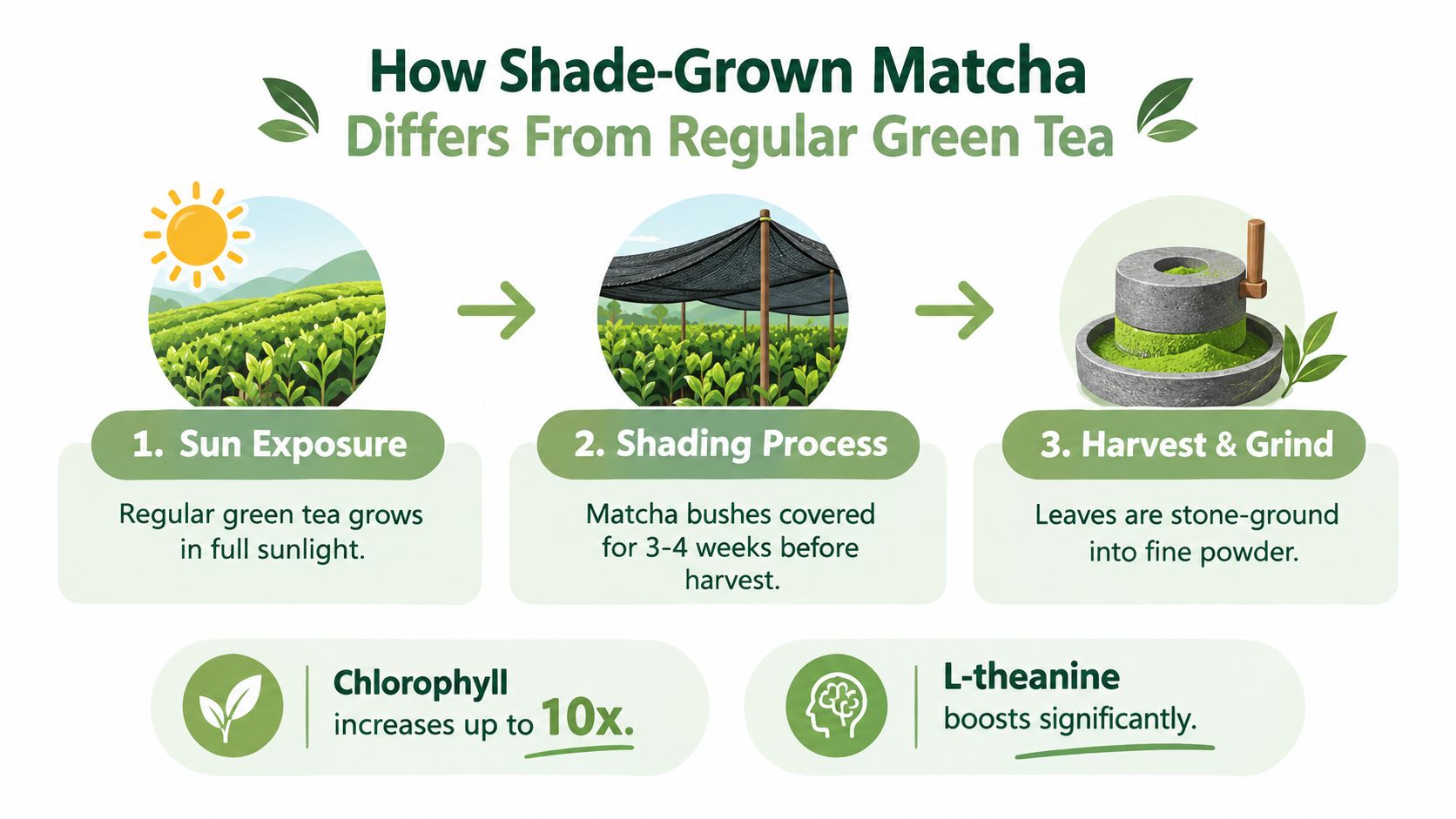
Matcha and regular green tea both come from Camellia sinensis, but they aren't prepared in the same way. With ordinary green tea, you steep the leaves and discard them. With matcha, specially prepared tea leaves are ground into powder, so you consume the leaf rather than only the water-soluble compounds released during steeping.
The key difference begins before harvest. Matcha bushes are shaded for three to four weeks before the leaves are picked. Think of the covering as a curtain that changes the plant's growing conditions. With less direct sunlight, the leaves develop more chlorophyll and L-theanine, which contributes to matcha's vivid colour, savoury umami character and gentler feeling of alertness. (Shade-grown matcha production and serving information)
From leaf to powder
After harvesting, producers process the leaves into tencha, removing stems and veins before milling the leaf material into a fine powder. Traditional stone milling is slow and careful because excessive heat can affect the powder's colour and aroma.
That process explains why matcha behaves differently in a cup:
- Regular green tea gives you a brewed liquid with a lighter body and a flavour shaped by steeping time and water temperature.
- Matcha gives you a suspended powder with a fuller texture, stronger vegetal notes and more direct contact with the leaf.
- Shade-grown matcha often has a rounded umami taste, while poorly prepared or low-quality powder can taste harsh, stale or overly bitter.
Matcha still contains caffeine. An Australian product specification lists approximately 30 to 40 milligrams per 2-gram serving, which is a useful practical reference for cafés and home recipes. (Australian matcha product specification)
The presence of L-theanine doesn't mean matcha is caffeine-free or suitable for everyone. It means matcha offers a different combination of caffeine and amino acids from a standard cup of coffee. If you're sensitive to caffeine, start with a modest serving and pay attention to how your body responds.
For a clearer side-by-side explanation, see how matcha differs from green tea.
Ceremonial Grade Versus Culinary Grade Matcha
The words ceremonial grade and culinary grade are useful shopping shorthand, but they shouldn't be treated as a universal legal or industry grading system. A seller can use these terms differently, so the label should be considered alongside colour, aroma, texture, origin and intended use.
| Feature | Ceremonial Grade | Culinary Grade |
|---|---|---|
| Typical texture | Very fine and smooth | Fine, but selected for mixing into food and drinks |
| Colour | Usually vivid green | Green, with variation depending on origin and processing |
| Flavour | Softer, rounded umami for drinking with water | More assertive flavour that can stand up to milk and other ingredients |
| Caffeine | Contains caffeine, with the amount depending on the product and serving | Contains caffeine, with the amount depending on the product and serving |
| Best use | Straight matcha, thin tea or thick tea | Lattes, smoothies, baking, sauces and desserts |
Choose ceremonial for the plain-water ritual
Ceremonial-style matcha makes sense when you want the powder itself to lead the experience. Whisk it with water and you'll notice its aroma, mouthfeel, sweetness and bitterness without milk or fruit masking the details.
A good example is a quiet morning ritual. Sift the powder into a bowl, add a small amount of warm water, whisk until smooth and then adjust the consistency. At this stage, freshness and fine milling matter most because there are no other ingredients to hide roughness.
Choose culinary for recipes and café drinks
Culinary matcha is often the more practical choice for a latte, smoothie or baked recipe. Milk, fruit, vanilla, chocolate and sweeteners all change the balance of a drink, so a powder selected for blending doesn't need to perform exactly like one intended for sipping on its own.
Use culinary grade for:
- Matcha lattes: Its flavour can remain present after adding milk.
- Smoothies: It combines easily with fruit, yoghurt or plant-based ingredients.
- Baking: It adds colour and tea flavour to biscuits, cakes and slices.
- Desserts: It works in ice cream, icing and custards where other ingredients share the spotlight.
Buying shortcut: If your main drink is straight matcha, prioritise refinement and flavour. If you're making lattes or recipes, prioritise reliable blending, a clean taste and consistent supply.
Ask the seller what the powder is designed for rather than assuming the most expensive option will be the best fit. A ceremonial label won't improve a latte if the product is old or difficult to dissolve, and culinary matcha may be wasted if your favourite preparation is a simple bowl of whisked tea.
Reading Quality Markers on Matcha Packaging
A bright packet and an attractive origin story can't tell you everything. For Australian buyers, a technical specification or certificate of analysis can reveal whether a supplier understands commercial quality control.
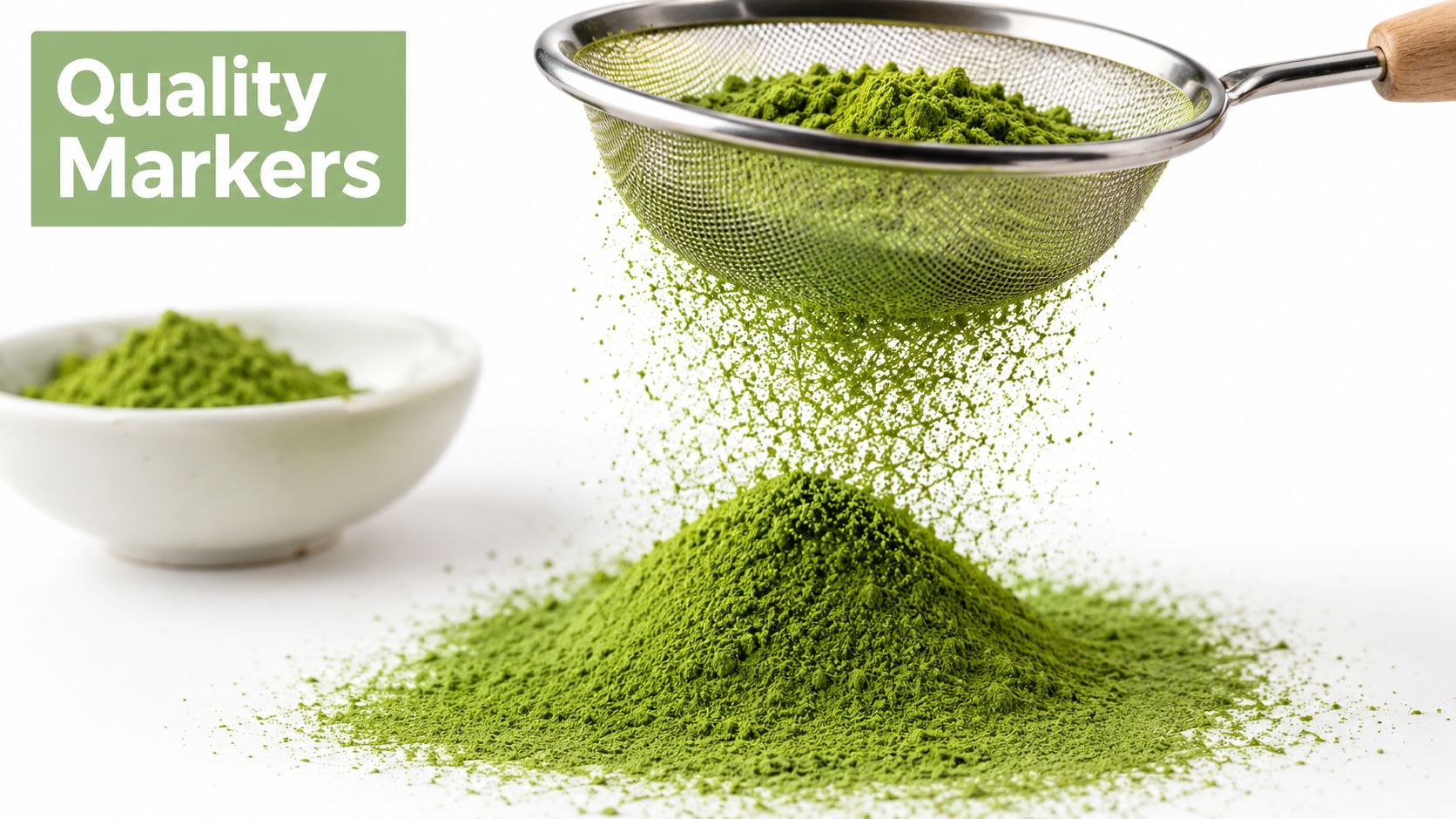
Start with particle size. One Australia-supplied technical specification reports 95% passing through 200 mesh. In plain language, that indicates a very fine powder. Fine particles suspend more evenly, which can improve the mouthfeel of a latte and reduce the gritty sensation that appears when matcha hasn't been milled or sifted well. (Australian matcha technical specification)
What the technical numbers tell you
The same specification reports loss on drying of no more than 8.0%, total heavy metals below 10 parts per million, a total plate count below 10,000 colony-forming units per gram, and yeast and mould below 300 colony-forming units per gram. These markers don't describe flavour on their own, but they help buyers assess moisture control, contamination limits and batch hygiene. (Australian matcha technical specification)
Moisture matters because matcha has a large surface area. A powder exposed to humidity can clump, lose freshness and become harder to whisk. Microbiological results provide additional reassurance, particularly for cafés, retailers and businesses storing larger quantities.
Look for packaging that identifies:
- Origin: The country and, where available, the region or producer.
- Grade or intended use: Straight drinking, lattes, baking or foodservice.
- Batch information: A lot or batch reference helps with traceability.
- Testing: Ask whether heavy metal, microbiological or other laboratory results are available.
- Storage guidance: Good suppliers explain how to protect the powder after opening.
A lab result isn't a substitute for tasting the tea, but it's more useful than an unsupported phrase such as “ultra premium”. This video can also help you visualise the preparation and handling of matcha powder.
What Organic Certification Really Means for Matcha Buyers
"Organic" should describe a verifiable production and certification pathway, not just a natural-looking package. When you're comparing matcha tea powder in Australia, check whether the product is certified, who holds or verifies that certification and whether the claim applies to the matcha itself rather than only to another ingredient in a blend.
A practical check involves four steps:
- Find the certification mark or controller details. Look for an Accredited Controller of Organics label or another recognised certification reference.
- Match the name to the product. The certificate, brand and product description should clearly relate to the powder you're buying.
- Check the ingredient list. Pure matcha should be identified plainly. A latte mix may contain sugar, milk ingredients or flavourings, so don't assume every green powder is pure tea.
- Ask for evidence if the wording is vague. A supplier should be able to explain the certification basis rather than relying on a green leaf graphic.
Certified organic and organic ingredients aren't identical
“Certified organic matcha” points to a certification claim for the tea. “Made with organic ingredients” can describe a broader product containing a mixture of ingredients, and it may not communicate the same thing about the matcha powder itself.
That distinction matters if you're trying to reduce unnecessary additives, control sugar or choose a product that aligns with your household values. It also matters for cafés that need clear answers when customers ask where an ingredient came from.
Organic status won't automatically tell you whether the powder is fresh, smooth or suitable for a latte. You still need to assess origin, packaging, testing and storage. Use this guide to organic certification in Australia to understand the language before you compare products.
A transparent supplier should make the certification information easy to find and explain what it covers. If the claim is difficult to verify, treat that uncertainty as part of the buying decision.
Where to Buy Matcha in Australia
Australian buyers can find matcha through specialist online tea retailers, cafés, natural food stores, supermarkets and foodservice distributors. The right source depends on whether you need a small tin for personal use, a steady supply for a café or a larger pack for a bakery or hospitality business.
Start with provenance and purpose
A specialist retailer may provide more information about Japanese origin, harvest style, grade and preparation. A supermarket can be convenient, but the label may offer less detail about milling, laboratory testing or supply continuity. A wholesale distributor can be suitable for cafés, although you'll want to ask about lead times, minimum order quantities and what happens when a particular batch sells out.
Kyoto and Uji are familiar names in Japanese tea, but a famous region alone doesn't guarantee that a powder suits your menu. Match the origin information with the intended use:
- For straight drinking: Look for a refined powder, fresh aroma and a flavour that isn't dominated by bitterness.
- For café lattes: Ask about suspension, consistency between batches and foodservice pack sizes.
- For baking: Focus on clean flavour, dependable colour and a cost that works across repeated recipes.
- For retail shelves: Prioritise clear labelling, organic evidence, a useful best-before date and replenishment options.
Ask the supplier practical questions
The recent shortage has made supply reliability part of product quality. A cheap product that disappears during a busy period may cost a café more than a slightly higher-priced product with dependable availability.
Before ordering, ask:
- Where was the matcha grown and processed?
- Is the powder intended for drinking, lattes or culinary use?
- Are laboratory results available?
- How is it packed and stored before dispatch?
- Can the supplier support wholesale volumes?
- What lead time should a café allow for its next order?
Price comparison also needs context. A small retail tin, a larger hospitality pack and a product with documented testing aren't directly interchangeable. Compare the amount of usable powder, not just the ticket price, and avoid paying a premium for a vague grade label without supporting information.
For Australian hospitality buyers, a local supplier can simplify communication, delivery and replenishment. That doesn't remove Japan's role in the supply chain, but it can make the final purchasing relationship more responsive.
Storing Matcha and Using It at Home
Matcha is finely ground, so air, light, heat and moisture can affect it quickly once the package is open. Keep it in an airtight container, away from sunlight and strong-smelling foods. A cool, dark cupboard may work for short-term use, while refrigeration can help preserve freshness when the container is sealed carefully and protected from condensation.
Don't leave the lid open while you prepare breakfast. Scoop what you need, close the container promptly and use a dry spoon. If powder has been chilled, let the sealed container come towards room temperature before opening it, so humid air doesn't settle on the matcha.
For more detailed storage guidance, follow these matcha storage recommendations.
Three easy ways to start
Classic whisked matcha
Sift matcha into a bowl, add a small splash of warm water and whisk briskly in a zigzag motion until the powder is dispersed. Add more water to reach your preferred strength. The aim isn't perfect technique. It's a smooth drink without dry clumps.
Café-style matcha latte
Dissolve the powder in a small amount of warm water first. Add warmed milk or a plant-based alternative and sweeten only if you want to. This two-stage method prevents dry powder from floating across the surface of the latte.
Matcha smoothie bowl
Blend matcha with banana, yoghurt or your preferred milk, then pour the mixture into a bowl. Add fruit, seeds or toasted grains for texture. Culinary-grade powder is a sensible choice here because the recipe already contains several strong flavours.
A sieve is useful for all three preparations. It breaks up compacted powder before water or milk is added, giving your whisk a much easier job.
Common Matcha Mistakes Australian Buyers Make
Mistake one, treating all green powder as matcha. Matcha is made from prepared tea leaves that are shade-grown and ground into powder. A product labelled only “green tea powder” may be processed differently and may not offer the same colour, texture or umami flavour.
Mistake two, assuming the brightest green packet must be the best. Colour is a useful clue, but it isn't a complete quality test. Fresh aroma, fine texture, transparent origin, suitable packaging and a clean flavour matter too.
Mistake three, choosing ceremonial grade for every recipe. If you mostly make iced lattes, smoothies or baked goods, culinary grade may be the more sensible fit. Save a refined drinking matcha for preparations where you taste its subtle character.
Mistake four, ignoring supply continuity. Australian cafés have already faced shortages, price pressure and long ordering lead times. A supplier's ability to provide the same product consistently deserves as much attention as the first sample.
Mistake five, storing an opened pouch beside the kettle. Heat and steam are a poor combination for delicate powder. Seal it, keep it cool and dark, and avoid opening the container in a humid kitchen.
A quick buyer checklist
- Authenticity: Is it clearly identified as matcha made from Camellia sinensis?
- Fit: Is the grade suited to water, milk, baking or foodservice?
- Evidence: Can the supplier provide certification or testing information?
- Freshness: Is the packaging protective, sealed and clearly dated?
- Supply: Can you reorder without facing uncertain lead times?
Pep Tea offers organic Japanese matcha tea powder in Supreme, Imperial and Premium grades, with retail and wholesale pack options for Australian buyers. Explore the range, compare the intended uses and choose the powder that fits your daily ritual or café menu through Pep Tea.