
Tag: matcha vs energy drinks
Zero Sugar Energy Drinks: Natural Boosts for 2026
A drink can be zero sugar and still be a poor energy choice.
That sounds backwards, because most marketing trains us to think sugar is the whole problem. In reality, removing sugar only answers one question. It doesn't tell you how much caffeine is inside, what sweeteners create the flavour, how acidic the drink is, or whether the “boost” comes from a harsh stimulant hit rather than a steadier source of focus.
Australians are right in the middle of this shift. Shelves are packed with bright cans promising clean energy, better performance and no guilt. But if you want a drink that supports wellbeing, it helps to look past the front of the can and ask a better question. What kind of energy are you buying?
The Rise of the Zero Sugar Promise
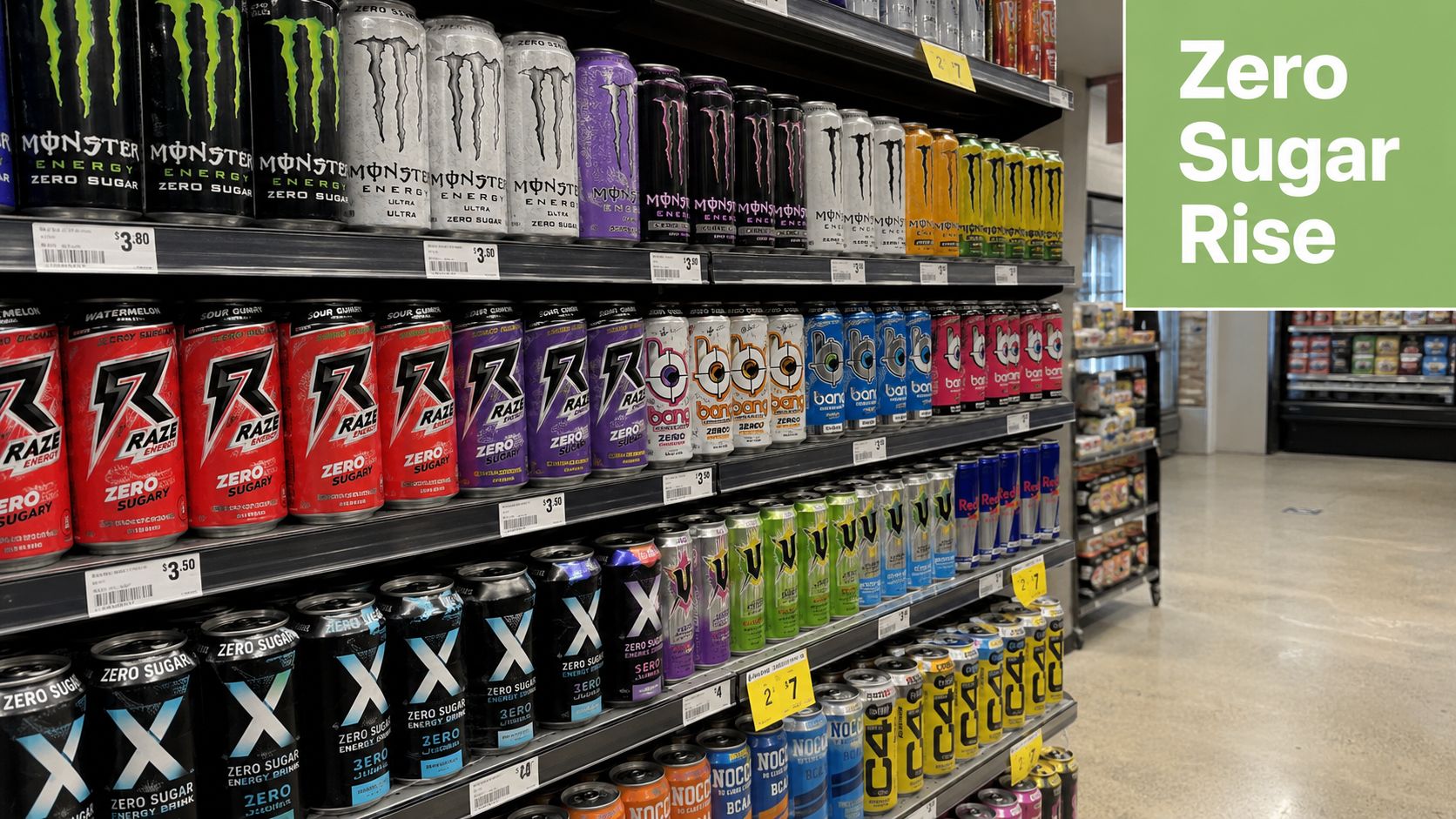
Walk into a servo, supermarket or gym fridge and you'll see how normal zero sugar energy drinks have become. They're aimed at students, tradies, office workers, parents, drivers and just about anyone who feels tired at 3 pm. The message is simple. You can keep the buzz and skip the sugar.
That message has landed because the category is huge and still growing. The global zero-sugar beverages market was valued at USD 79.48 billion in 2026 and is projected to reach USD 199.68 billion by 2034, while Asia Pacific held a 38.14% share in 2025. Australia sits inside that regional demand, which shows how central local consumers are to the trend.
Why the promise is so attractive
Zero sugar energy drinks solve an obvious concern. Many people want alertness without the sugar crash that can follow a sweet soft drink or a standard energy drink. For busy Australians trying to cut back on sugar, that sounds like an upgrade.
The trouble is that “zero sugar” has become a health shortcut. People often read it as low-risk, light, or somehow naturally better. It isn't that simple.
What the label doesn't tell you at a glance
A can may be free from sugar and still rely on a mix of caffeine, acids, flavour systems and non-nutritive sweeteners to deliver the same big taste and punchy effect. That doesn't automatically make it dangerous, but it does mean the health story is incomplete if all you look at is the sugar line.
A useful rule: “Zero sugar” describes what has been removed. It doesn't describe the overall quality of the drink.
If you've noticed more cafés, retailers and wellness brands talking about alternatives to mainstream energy drinks, that's part of the same conversation. We've written more about that broader shift in functional beverage trends in Australia, where people are looking for drinks that do more than just stimulate.
The real question
The issue isn't whether individuals need energy. They do. The issue is whether the drink delivers energy in a way that fits their body, routine and long-term health goals.
That's where the label needs a closer look.
Unpacking the Can What Is Really Inside
The design on the outside usually says “performance”, “focus” or “no crash”. The ingredient list tells the full story.
The main building blocks
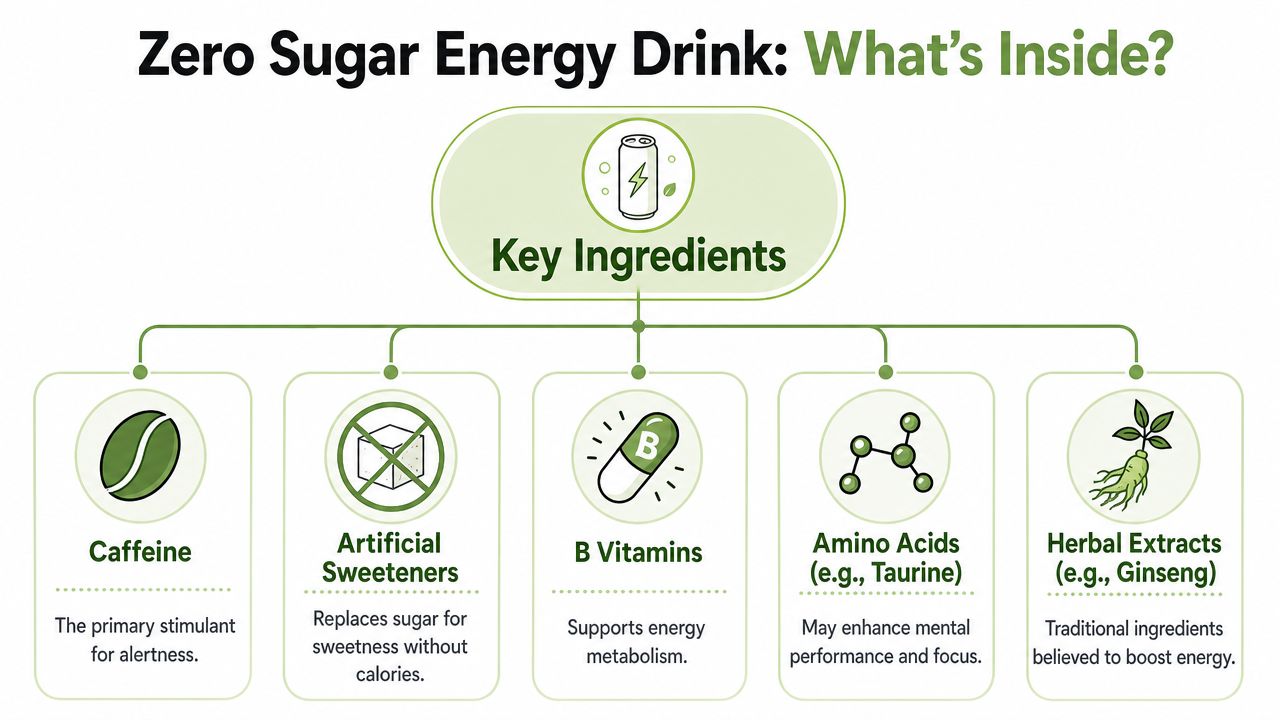
Most zero sugar energy drinks sold in Australia are built from a familiar formula:
- Caffeine for stimulation. This is the main active ingredient people feel. In Australia, zero-sugar energy drinks commonly sit around 32 mg of caffeine per 100 mL, which works out to about 80 mg in a 250 mL can.
- Sweeteners instead of sugar. These create the sweet taste without adding meaningful calories.
- Acids and flavours. These sharpen the taste and preserve the product.
- B vitamins and added compounds. These often include B6, B12, taurine or herbal extracts such as guarana or ginseng.
A quick visual breakdown can help if you're new to label reading:
Why sweeteners matter
The most common sweeteners in these drinks include sucralose and acesulfame-K. They're used because they deliver intense sweetness in tiny amounts. In fact, they can be up to 600 times more potent than sugar, which is why manufacturers can keep products under <5 kcal per 100 mL under FSANZ criteria.
That sounds efficient, and commercially it is. But it also means the drink is relying on a highly engineered flavour system rather than whole-food ingredients.
The key difference isn't only sugar versus no sugar. It's often ultra-processed stimulation versus food-based function.
What each ingredient is doing
Here's a plain-English view of the usual formula:
| Ingredient type | What it does in the drink | What you should know |
|---|---|---|
| Caffeine | Increases alertness | The boost may feel fast, but some people also get jitters or sleep disruption |
| Artificial sweeteners | Replace sugar while keeping sweetness | They change taste without adding sugar, but they don't make the drink whole or natural |
| B vitamins | Support normal energy metabolism | Their presence doesn't cancel out the rest of the formulation |
| Taurine and amino acids | Added for performance positioning | Common in energy drink formulas, though consumers often assume they're more natural than they are |
| Acids and flavours | Create the sharp, punchy flavour | They affect taste and shelf stability, and acidity matters for teeth |
The part that confuses most shoppers
Many readers assume “sugar-free” means the can is basically flavoured sparkling water with caffeine. It usually isn't. It's a carefully balanced product designed to mimic sweetness, intensity and instant lift without using sugar.
That's why reading the ingredient list matters more than reading the front label.
The Hidden Health Risks Behind the Hype
The strongest marketing line for zero sugar energy drinks is also the most misleading. It suggests that once sugar is gone, the major health risk is gone too.
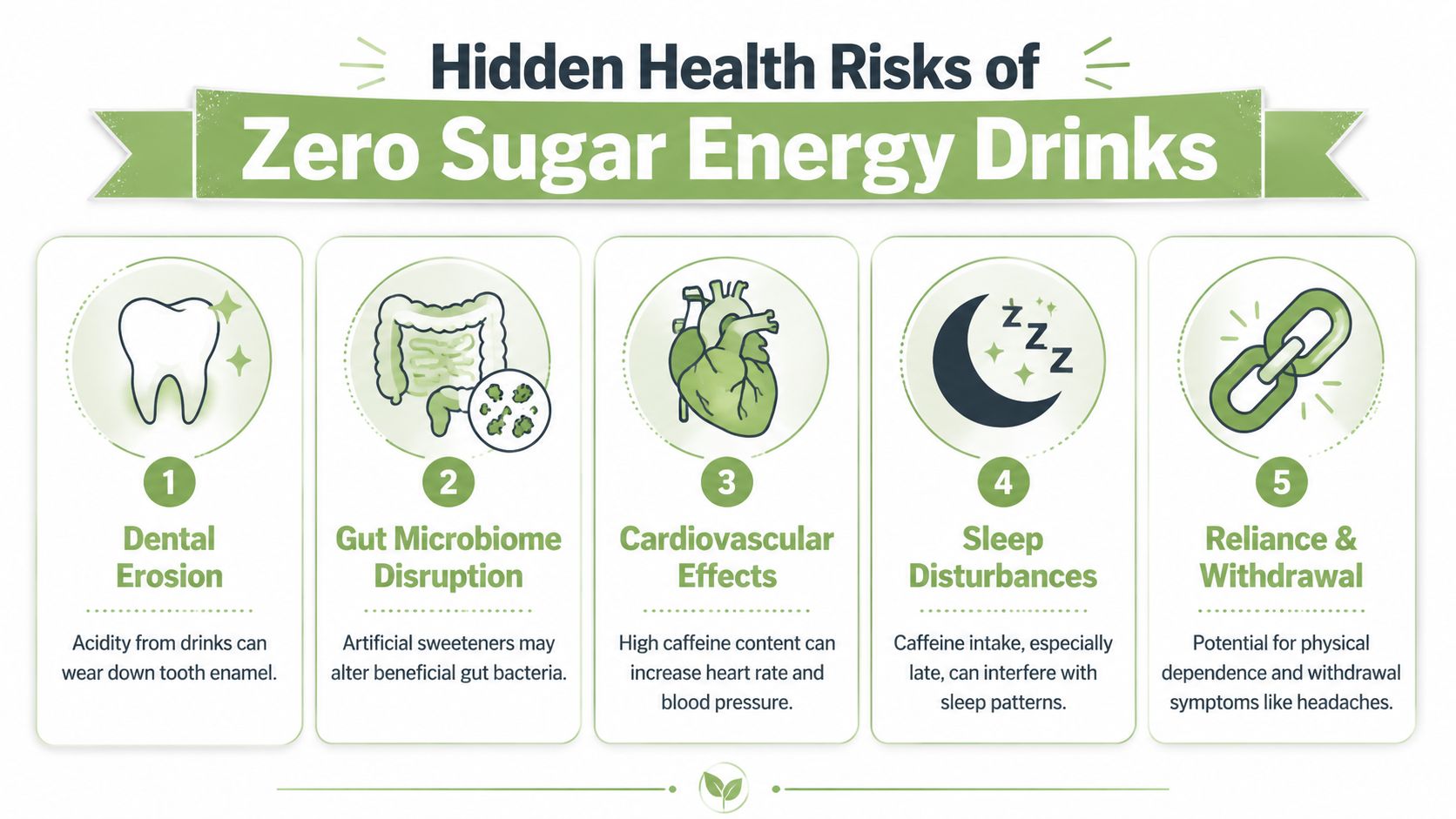
That leaves out several important trade-offs.
Metabolic concerns are not just about sugar
One of the most important findings in this space comes from Australia. Curtin University reported in 2025 that sugar-free energy drinks induced metabolic syndrome and insulin resistance in mice to nearly the same extent as high-fat diets, raising concerns that artificial sweeteners may dysregulate blood sugar and affect the gut microbiome. You can read the university summary in Curtin University's report on sugar-free energy drinks and metabolic harm.
This doesn't mean every person who drinks one can will develop a metabolic problem. It does mean the “metabolically neutral” idea deserves more caution than the branding suggests.
The heart still feels the stimulant load
Sugar-free doesn't mean stimulant-free. That matters because the Australian Heart Foundation reports that energy drinks, including sugar-free versions, are linked to transient rises in blood pressure and abnormal electrical activity in the heart.
For some healthy adults, that may mean a racing feeling, palpitations, or an uncomfortable post-drink buzz. For people with existing sensitivity to caffeine, poor sleep, anxiety, or underlying heart concerns, it can matter more.
The NHMRC recommends that adults limit caffeine intake to 400 mg a day and adolescents stay below 100 mg a day. Since some sugar-free energy drinks can contain 80–200 mg of caffeine per serving, a single can may already take a teen to or beyond that threshold.
Worth remembering: removing sugar does nothing to reduce the core stimulant effect of the can.
Dental damage can still happen
A lot of people switch to zero sugar products for their teeth. That's understandable, but it's only half the picture.
Under the Australian Food Standards Code, a beverage claiming to be sugar-free must contain less than 0.5 grams of sugar per 100 mL. Yet acidity still matters. Some zero sugar drinks rely on acids and preservatives that push pH low enough to contribute to enamel wear. A NSW dental health survey in 2023 found that 32% of adults who regularly consume sugar-free acidic beverages reported early enamel loss.
Why the “healthy” halo is risky
A standard sugary energy drink often looks unhealthy. A sleek zero sugar can often looks disciplined, sporty and modern. That image can lead people to drink them more often, drink them faster, or assume they're a routine wellness product rather than an occasional stimulant beverage.
Here's the balanced view:
- Lower sugar is a real benefit. If someone is choosing between a high-sugar can and a zero sugar version, reducing sugar intake can be sensible.
- It's not the same as choosing a nourishing drink. Artificial sweeteners, high caffeine, acidity and ultra-processed flavour systems still deserve attention.
- Frequency matters. An occasional drink is a different pattern from relying on them every day to get through work, study or training.
The main problem isn't that the label is false. It's that the label is incomplete.
Searching for a Smarter Way to Get Energised
Consumers don't reach for an energy drink because they're reckless. They're tired, flat, under pressure, underslept, or trying to stay sharp through a long day. That need is real.
The better question is whether you want stimulation or support.
Synthetic buzz versus functional energy
Synthetic stimulation is designed to feel immediate. It pushes alertness hard and fast. For some people that's useful in the moment, but it can also feel edgy, abrupt or draining later.
Functional energy is different. It aims to support focus, steadier alertness and a more manageable experience in the body. That's why more Australians are paying attention to ingredient quality, not just calorie count.
Australian market reporting has highlighted a shift toward drinks with natural ingredients and functional benefits, including L-Theanine from matcha, for stress management and focus, as discussed in Coherent Market Insights' report on sugar-free energy drinks.
A more useful way to judge an energy drink
Instead of asking, “How strong is it?”, try asking:
- How does it make me feel an hour later
- Can I still concentrate without feeling wired
- Will it interfere with sleep if I have it in the afternoon
- Does it rely on a short ingredient list or a lab-style formula
- Would I feel comfortable drinking this regularly
The smartest energy source isn't always the strongest one. It's the one you can live with well.
That shift matters in cafés, workplaces and homes. People don't just want a jolt anymore. They want drinks that suit a healthier routine.
Natural Alternatives Organic Matcha and Kombucha
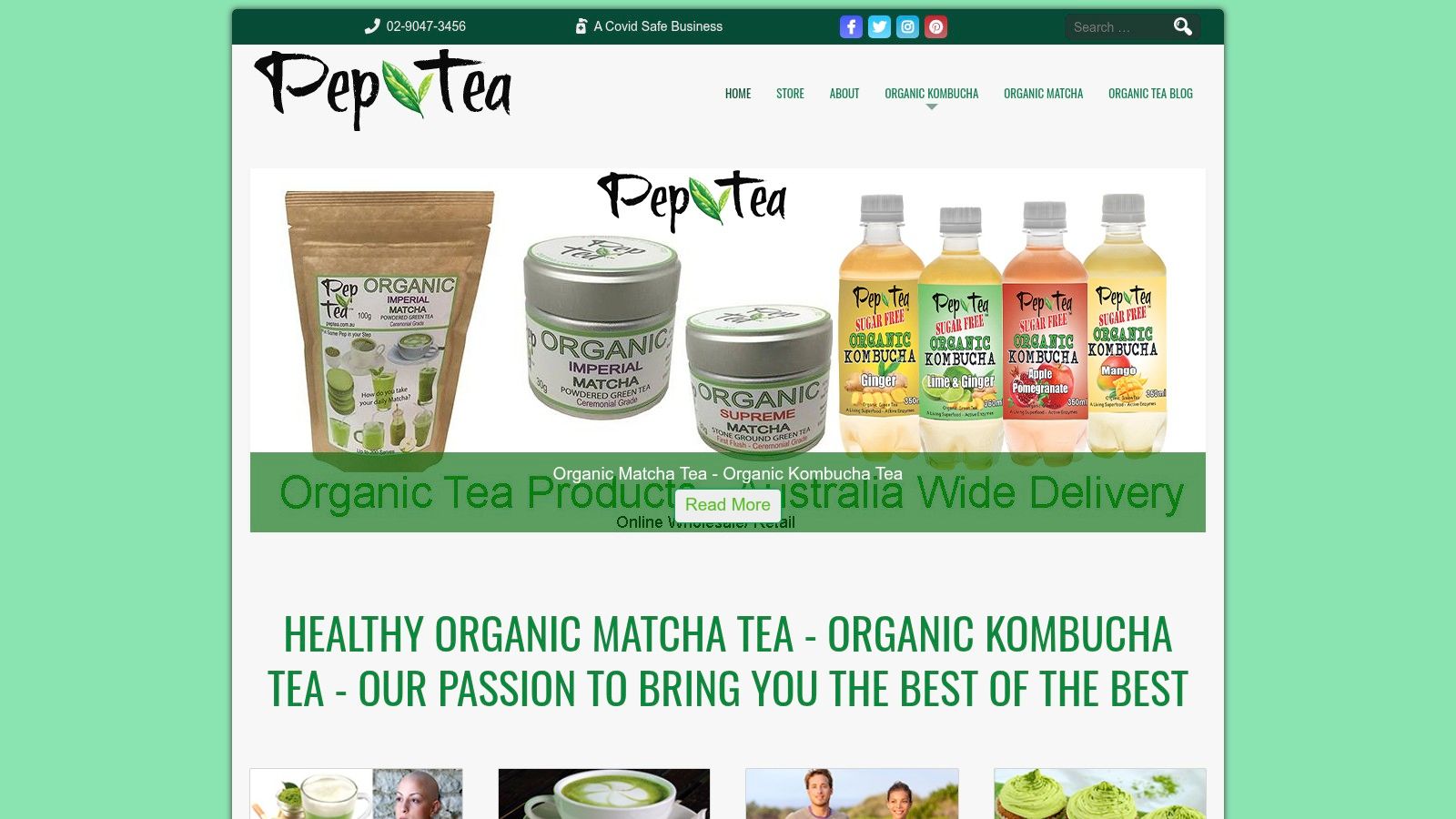
If you want energy without leaning on the usual can formula, two options stand out. Organic matcha offers focused, tea-based stimulation. Properly brewed kombucha offers a lighter, refreshing alternative that fits people trying to move away from ultra-processed drinks.
Why matcha feels different
Matcha isn't marketed as a shock-to-the-system drink. Its appeal is the combination of naturally occurring caffeine and L-Theanine, which many people experience as calmer, smoother focus.
That difference matters because, as noted earlier, the Australian Heart Foundation has linked energy drinks, including sugar-free forms, to temporary increases in blood pressure and abnormal electrical activity in the heart. Matcha sits in a different category of experience. Rather than trying to overpower fatigue with a synthetic-style buzz, it offers a more measured lift.
A simple matcha routine can look like this:
- Morning focus drink. Whisk ceremonial-grade matcha with water for a clean start to the day.
- Mid-morning latte. Add your preferred milk for something more filling.
- Workday reset. Choose matcha when you need concentration but don't want the abrupt feel some canned drinks produce.
Where kombucha fits
Kombucha isn't a direct one-for-one substitute for every energy drink. It's better understood as a refreshing, functional swap for people who want something lively, low in sugar and easier to integrate into everyday life.
When kombucha is properly fermented, it brings a very different profile from a mainstream energy can. The focus isn't maximum stimulation. It's a lighter drinking experience with live cultures and a brewed character that feels more like a real beverage and less like a flavour-engineered product.
At Pep Tea, we make Australian-brewed sugar-free organic kombucha in the Hunter Valley, NSW, which is one practical option for people moving away from artificial energy drinks. If you want a deeper look at what fermentation changes in the final drink, our guide to the benefits of kombucha is a useful starting point.
Which alternative suits which person
| If you want | A better fit may be | Why |
|---|---|---|
| Calm focus for work or study | Matcha | Natural caffeine plus L-Theanine can feel smoother |
| A fizzy afternoon swap | Kombucha | Refreshing and lower in sugar than many soft drinks |
| A café-friendly non-alcoholic option | Matcha or kombucha | Both work well in hospitality settings |
| Less reliance on synthetic formulas | Either | Both move you away from the typical can model |
For readers comparing broader clean energy options for professionals, it's useful to think in terms of routine, not just ingredients. The best alternative is the one you'll enjoy using consistently.
How to Choose a Genuinely Healthy Energy Drink
A healthy-looking label can hide a lot. The safest way to shop is to read the back, not the front.
Start with the ingredient list
The shorter and more recognisable the list, the easier it is to judge. That doesn't mean every unfamiliar ingredient is harmful. It means you can spot whether the product is built from brewed or whole-food inputs, or whether it depends on a long processing chain.
Look closely for:
- Artificial sweeteners. Names such as sucralose and acesulfame-K matter. On some labels, people also watch for additive numbers linked to sweeteners.
- Synthetic flavour systems. “Natural flavour” and “artificial flavour” can both mask a lot of formulation complexity.
- Acids and preservatives. These affect the drink's sharpness and shelf life, but they also matter for teeth and overall product style.
Check how the energy is created
Not all energy drinks deliver the same kind of effect. Ask yourself where the lift is coming from.
A quick checklist helps:
- Is the main effect just a caffeine hit? If yes, think about how it fits your day and sleep.
- Is it brewed or blended? Brewed drinks such as tea and kombucha usually signal a different product philosophy from highly formulated cans.
- Does it mention organic certification? That can help if you're trying to reduce exposure to unnecessary additives.
- Would you call the ingredients food-like? If not, it may still be legal and popular, but it may not match your health goals.
Label-reading shortcut: if the front says “clean” but the back reads like a chemistry set, trust the back.
What to choose in a café or supermarket
In practice, the healthiest option often looks less dramatic than the flashiest one in the fridge.
Choose drinks that lean toward:
- Brewed ingredients
- Organic tea bases
- Naturally fermented products
- Low or no added sugar
- No artificial colours when possible
If you're comparing options for everyday use, our article on natural energy drinks in Australia may help you narrow down what suits your routine.
The aim isn't perfection. It's making one better decision at a time.
Simple Swaps for a Better Boost
You don't need to overhaul your entire routine to move away from zero sugar energy drinks. A single swap can change how your day feels.
Try these examples:
- Morning can to morning matcha. If your first drink is a zero sugar energy can, swap it for a hot or iced matcha. You still get a lift, but many people find the focus feels steadier.
- Afternoon slump to chilled kombucha. If you usually want something fizzy at 3 pm, a sugar-free kombucha can scratch that same refreshment itch without turning the moment into a stimulant event.
- Second caffeine hit to caffeine-free support. Some afternoons call for less stimulation, not more. If that's you, this guide to caffeine-free drinks from Maximum Health Products gives practical ideas for lower-stimulation options.
A better energy ritual can also be more enjoyable:
- Whisk matcha with cold water and ice for a quick pre-work drink.
- Serve kombucha in a proper glass with citrus or mint if you want a café-style non-alcoholic option at home.
- Keep the decision simple. Ask whether the drink is supporting your body or just forcing it onward.
The big shift is mental. You're not giving something up. You're upgrading from a manufactured buzz to a more thoughtful source of energy.
If you're exploring cleaner ways to stay focused and refreshed, Pep Tea offers organic matcha and Australian-brewed sugar-free kombucha designed for everyday rituals, café menus and mindful low-sugar living.