
Tag: matcha tea bags
Matcha Tea Bags Benefits: The Ultimate Guide

Monday morning hits fast. The kettle's on, your inbox is already noisy, and you still want the calm, steady lift that matcha promises without turning the kitchen into a ritual bench. That's where matcha tea bags benefits start to matter in real life, because convenience only counts if the cup still feels worth drinking.
A good tea bag can bridge the gap between premium matcha and an actual human schedule. A bad one tastes thin, bitter, or dusty, and you feel like you've compromised for nothing. The difference isn't just format, it's extraction, bag design, and how much of the tea's natural character survives the brew.
The Modern Morning Ritual
The kettle is boiling while the school run is approaching, a meeting is about to start, and the café queue is already too long. A tea bag earns its place in that morning because it removes the whisk, bowl, and extra preparation that can turn matcha into a weekend ritual. The useful question is whether the quicker format still gives you a cup you want to drink.

Convenience can support quality
A poorly designed bag produces thin, bitter tea that tastes like compromise. A well-made one can deliver a cleaner, more repeatable brew, although it will not offer the same control, texture, or intensity as ceremonial-grade powder whisked in a bowl.
In Australia, matcha has moved from a niche product into the mainstream. The category generated more than $54 million in revenue in 2024 and is projected to exceed $81 million by 2030, with 7.1% annual growth, according to SBS. That market growth reflects a practical shift: people are making matcha part of ordinary wellness routines, not reserving it for cafés or elaborate preparation.
Practical rule: if the format makes you skip the drink, it is the wrong format for daily use.
Tea bags suit people who want matcha's flavour and functional lift without treating every cup like a ceremony. They also give cafés a consistent method across staff, shifts, and busy service periods.
What the format actually changes
A well-designed bag shortens the route from kettle to cup, reduces mess, and removes the need to measure powder or clean a frother. The result is less control over strength and mouthfeel, but greater repeatability. That trade-off matters on rushed mornings, particularly for anyone building a habit rather than pursuing a perfectly whisked serving.
Whisked powder wins for control and intensity. Tea bags win when preparation time determines whether the drink happens at all. In practice, the more convenient format may provide greater day-to-day value because it gets used consistently.
Understanding EGCg and L-theanine
Matcha's effect comes from compounds in the leaf, not its colour alone. EGCg is the catechin most associated with green tea research, while L-theanine contributes to matcha's calmer style of alertness. For a practical explanation, see what EGCg does in green tea. Harvard Health notes that matcha contains abundant antioxidants, including catechins, and that L-theanine has been associated with concentration and alertness (Harvard Health).
Why the pairing feels different from coffee
Coffee often arrives with a sharper sensory hit. Matcha can feel smoother because caffeine is accompanied by L-theanine. In the Australian context, one health source reports that matcha commonly provides about 30 to 40 mg caffeine per 1 g serve and 20 to 45 mg L-theanine per 1 g serve, depending on grade (Alchemist Wellness). That combination helps explain why drinkers describe matcha as supporting sustained alertness rather than a sudden spike followed by a drop.
The same source associates one to two 1 g serves with roughly 100 to 275 mg of EGCG. Use those figures as a reference, not a guarantee. A tea bag's actual result depends on the leaf, the amount it contains, water temperature, steeping time, and how freely the leaves can expand.
A bag also changes the extraction experience. A well-made bag can deliver a clean, steady cup, while a cramped bag or weak portion may taste thin and provide less of the character associated with whisked powder.
What I notice in the cup: when the brew is balanced, it tastes rounder, less grassy, and less aggressive on the finish.
What the compounds do in practice
EGCg provides the antioxidant profile people seek from green tea. L-theanine helps explain the calmer feel of matcha alongside caffeine. Together, they suit drinkers who want focus without feeling overstimulated.
A well-made tea bag will not create the same intensity as ceremonial-grade powder, but it can preserve enough of matcha's functional profile to become a reliable part of a morning routine. If the cup helps you begin work clearly and stay steady through the morning, the convenient format has earned its place.
Tea Bags Versus Loose Powder
This is the comparison that decides whether matcha becomes an occasional treat or a daily staple. Loose powder offers more ceremony, more control, and that vivid green colour people love. Tea bags offer less drama and more repeatability, which is often the better trade for weekday life.
Matcha Format Comparison
| Feature | Tea Bags | Loose Powder |
|---|---|---|
| Prep time | Fast, low-fuss | Slower, needs more steps |
| Consistency | More repeatable portioning | Depends on measuring and whisking |
| Cleanup | Simple | More equipment to wash |
| Texture | Usually lighter body | Fuller, more direct mouthfeel |
| Best use | Daily convenience | Ritual, cafés, special moments |
Loose powder still has prestige. It gives you the most hands-on control and, when whisked well, a more layered flavour. But it asks for a bowl, a whisk, and a little skill to avoid clumps.
Tea bags work differently. They're the practical option when you want a reliable cup without fuss, and high-quality pyramid bags give the leaf more room than flat paper bags. If you want to browse a broader range of tea formats while comparing styles, tea selection is a useful place to look at how different teas are organised for different routines.
What matters more than the romance of the format
A tea bag is not “less serious” just because it's easier. It's serious in a different way. It's built for consistency, portion control, and speed.
Rule of thumb: choose loose powder when you want the ritual, choose a well-made tea bag when you want the habit.
That's the actual decision. If your weekly reality includes early starts, shared kitchens, or café service, the tea bag often delivers better day-to-day value. If you only reach for matcha on slower mornings, loose powder still has a strong case.
Brewing the Perfect Cup
Even a good tea bag can brew badly if the water is wrong. Boiling water can scorch the tea and pull out more bitterness than flavour, which is why temperature matters so much. The sweet spot is around 80 degrees Celsius, a detail that shows up consistently in matcha brewing guidance, including PepTea's own matcha brewing temperature guide.
A simple brewing method that works
- Heat the water, then let it settle. Don't pour straight from a rolling boil. Let it come down to about 80 degrees Celsius so the flavour stays smoother.
- Steep briefly. Start with a short steep, then taste. Tea bags can over-extract if left too long, and that's usually where the bitterness creeps in.
- Press gently, don't squeeze hard. Aggressive squeezing can force out more astringency.
- Use the tea bag once, well. Matcha bags are designed for one clean extraction, not repeated weak steeps.
The quality of the bag matters too. Independent Australian tea research notes that bag construction and steeping time materially affect polyphenol yield, and that solubility can vary enough to act as a quality-control marker for filter-paper permeability (Australian tea quality study). In plain terms, a better bag can improve what ends up in the cup.
Hot, iced, or latte style
A hot cup is the easiest starting point. An iced version works well on warm days, especially if you brew it a little stronger before chilling. For a latte, brew the tea bag in a small amount of hot water first, then add your milk of choice.
That gives you a cleaner base than dropping a tea bag straight into milk. It also keeps the flavour balanced instead of muddy. The goal is not to hide the matcha, it's to let it carry the drink.
Sustainability and Taste Evolution
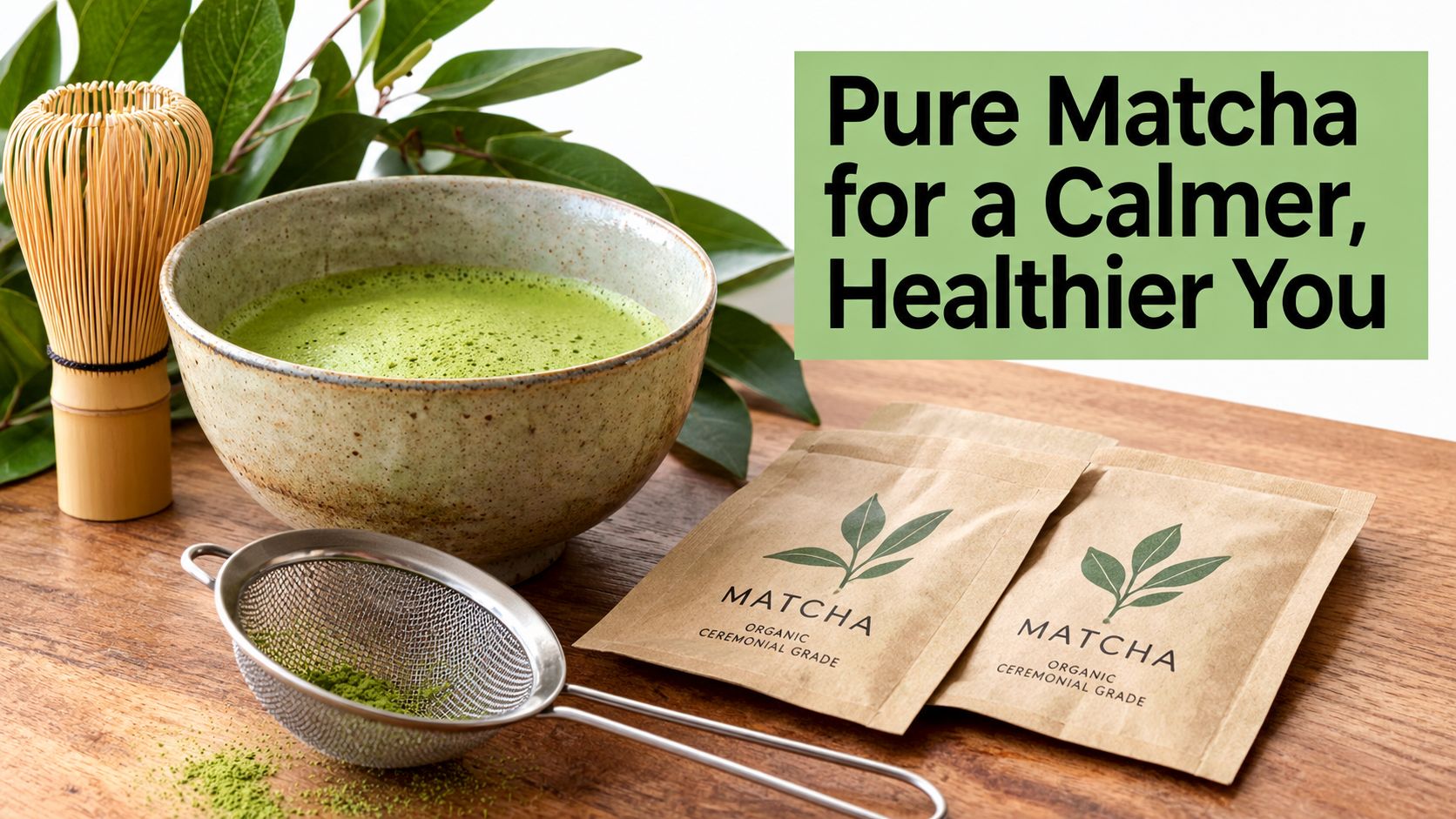
People want convenience, but they also want less waste. That tension has pushed tea brands to rethink packaging, bag shape, and freshness, and it's changed the way matcha tea bags are perceived. A well-made bag now has to do two jobs, brew well and fit a more responsible product story.
Better bags can mean better cups
Tea bags have improved a lot. Modern formats are often made to hold their shape better, give the leaves more room, and preserve freshness more effectively than older bulk-storage habits. That matters because flavour fades when tea sits exposed to light and air, and matcha is especially sensitive to poor handling.
The best part is that convenience no longer has to mean stale flavour. A quality tea bag can protect the tea well enough for daily use while still giving you the bright, fresh character you want from matcha. That's the evolution worth paying attention to.
Why sourcing still matters
The brewing format can only do so much if the tea itself is weak. PepTea's own how matcha tea is made page is a useful reminder that source material and processing shape the final cup. That applies whether the tea ends up in a bowl, a sachet, or a café menu item.
If you care about organic, functional tea, look at both the leaf and the pack. A neat bag with poor tea inside won't impress anyone. A good bag with well-selected tea can make daily matcha feel surprisingly close to a whisked cup, especially for casual drinkers who value freshness over ceremony.
Sustainability only matters if the cup is still enjoyable. When the tea tastes flat, people stop buying it, and the habit disappears.
That's why taste and responsibility need to move together. The smarter product is the one people want to drink tomorrow.
Who Should Switch to Matcha Bags
A tea bag earns its place when the alternative is skipping matcha altogether. It suits people who want a repeatable cup without specialist equipment, while still caring about flavour and function. Busy professionals, parents, café teams, and anyone building a low-friction wellness routine can all benefit from the format, provided they accept that a bag will not offer the same control as whisked powder.
The people who usually get the most value
- Office workers: A tea bag provides a predictable mid-morning drink when back-to-back calls leave little time for preparation.
- Parents and carers: One clean cup is easier to manage before the school rush than a bowl, whisk, and separate cleanup.
- Hospitality teams: Consistent preparation helps when service speed, shared workspaces, or staff changes make specialist brewing impractical.
- New matcha drinkers: The simpler method reduces the learning curve and gives beginners a better chance of enjoying their first cup.
- Home users who dislike mess: A bag removes the powder, whisk, and bowl cleanup that can make regular brewing feel like work.
The format also suits buyers who need clear product information. Australia's food regulator treats caffeine as a safety issue in concentrated products and requires added caffeine to appear in the ingredients statement when it is added to food for sale (Food Standards Australia New Zealand). Check the label, serving guidance, and preparation instructions before choosing a functional drink.
When the tea bag beats the bowl
Choose a tea bag when routine matters more than ceremony, or when a café and workplace need a clean, repeatable service method. Choose loose powder when you want to control dose, texture, strength, and whisking. The right option depends on whether convenience helps you drink matcha consistently without making the quality trade-off unacceptable.
If the format makes healthy habits easier, it's doing useful work.
Matcha's growing presence in Australia has shifted attention from ceremony alone to everyday use, including how easily people can prepare it (SBS). Tea bags fit that practical demand. They can turn occasional interest into a regular habit, as long as the tea tastes fresh enough to earn the next cup.
Conclusion and Your Next Steps
The strongest case for matcha tea bags is simple. They let you keep the functional appeal of matcha, including the caffeine and L-theanine profile people want, without turning every cup into a production. When the bag is well made and the brew is handled properly, the result can be genuinely satisfying, not just convenient.
The trade-off is still real. Loose powder gives you more ceremony and control, while tea bags give you speed, consistency, and a much easier daily habit. For most busy Australians, especially those trying to build a calm, reliable morning routine, that trade makes sense.
If you're buying for home, café service, or a workplace pantry, look for tea that's clearly sourced, properly packaged, and easy to prepare well. That's where quality shows up, not in marketing language, but in the cup itself.
PepTea offers Australian-focused organic matcha and sugar-free kombucha for people who want functional drinks without the fuss. If you're ready to make matcha part of a realistic daily routine, visit Pep Tea and explore the range for home, café, or wholesale use.