
Tag: matcha at home
How to Make an Organic Matcha Latte at Home

You're standing in the kitchen with a steaming kettle, a tin of vivid green powder and one important question: will this organic matcha latte taste smooth and gently sweet, or grassy and bitter? A good latte should have a silky texture, a light umami savouriness and a calm lift that doesn't overwhelm the delicate tea.
The recipe matters, but it isn't the whole story. Grade, leaf shading, powder freshness and whisking technique decide whether milk brings out matcha's character or hides a poor-quality powder. Here's how to choose your ingredients, set up your tools and build a repeatable ritual at home.
Setting Up for Your Best Organic Matcha Latte
Before measuring anything, choose a matcha that's suitable for drinking. Ceremonial-grade organic matcha is generally the better starting point for a latte where the tea should remain noticeable through the milk. Culinary-grade powder can work well when you're adding stronger flavours, using matcha in baking or blending it into smoothies, but it may taste more assertive or less rounded in a simple drink.
Three decisions shape the result.
Start with grade and leaf quality
Ceremonial matcha is made for whisking with water, so it should taste balanced before milk or sweetener enters the bowl. Look for a bright jade colour, a powder with an almost silk-like fineness and an aroma that suggests fresh grass, sweetness and gentle savouriness rather than stale hay.
Culinary matcha has a useful role, too. Its more robust flavour can stand up to oat milk, vanilla, fruit, chocolate and baking, where a subtle ceremonial powder might disappear.
Understand shading
Matcha comes from tea leaves that are shaded before harvest and then processed into tencha, the leaf material that is stone-ground into powder. Shading encourages a deeper green appearance and supports the development of compounds associated with matcha's savoury taste and smoothness, including L-theanine.
A New South Wales study of tea leaves grown on the Central Coast identified L-theanine, caffeine and five catechins, EGC, EC, EGCG, GCG and ECG, as important markers when assessing matcha-relevant leaf quality. The research also found that shading materially altered these constituents, making controlled shading an important production decision for a smoother, less harsh cup. Read the NSW matcha-quality research summary.
Gather a simple setup
You don't need a picture-perfect tea station. You need a bowl with enough room to whisk, water at the right temperature and a powder that dissolves cleanly. A small scale and a proper bamboo whisk make the ritual much easier to repeat, while the PepTea matcha tea accessories can help you assemble the essentials without cluttering the bench.
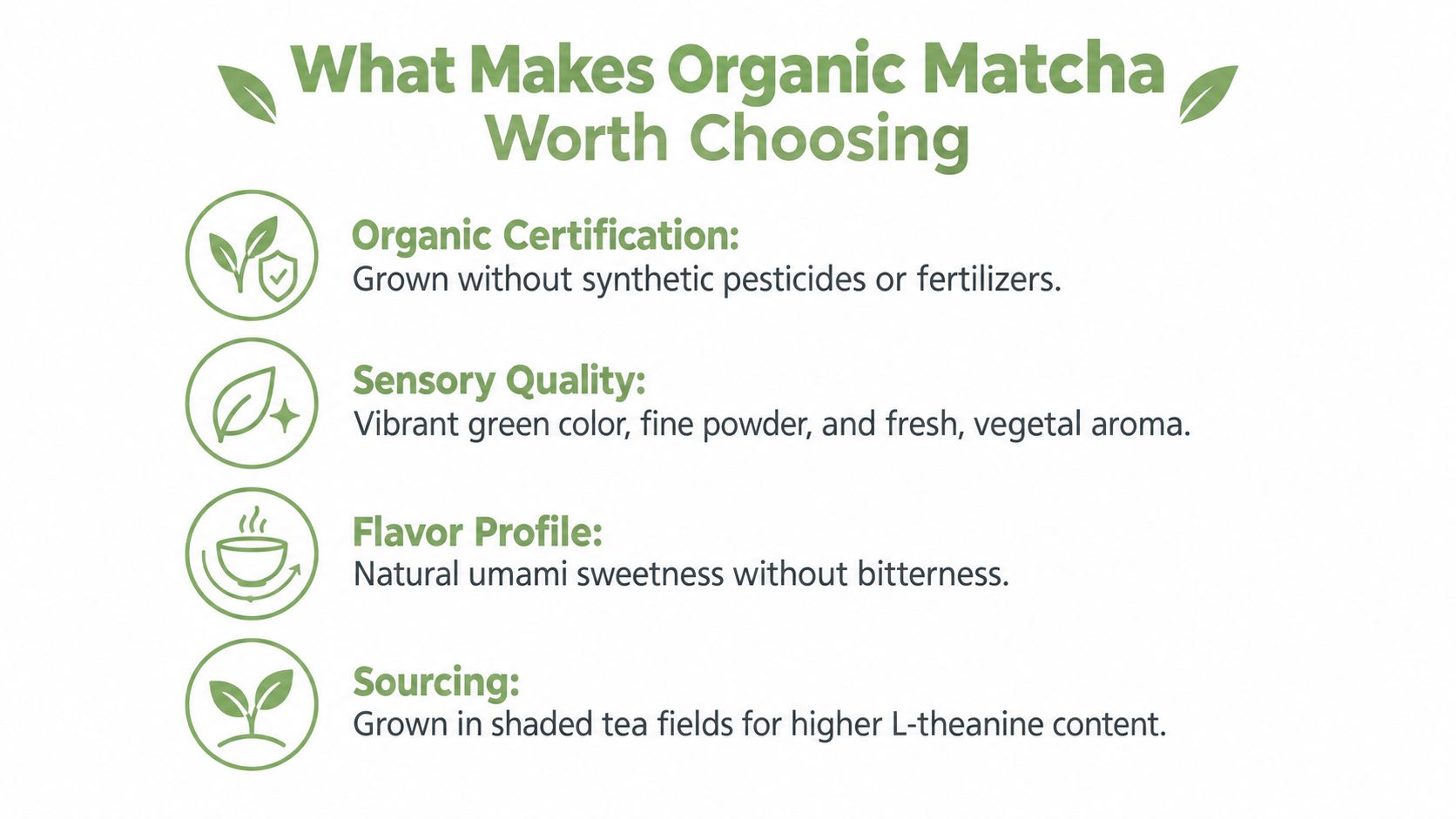
What Makes Organic Matcha Worth Choosing
The word organic describes how the tea is grown and handled, not a guarantee that every cup will taste delicious. Organic certification gives you useful information about farming standards and restricted inputs, while the powder's origin, grade, harvest and storage still affect flavour.
Matcha differs from ordinary infused green tea because you consume the powdered leaf rather than steeping leaves and discarding them. That makes sourcing especially relevant to many drinkers who want to know how the tea was cultivated. Certification should be viewed as one part of the buying decision, alongside a clear ingredient list and transparent origin information.
Read the powder with your senses
A beginner can learn a great deal before taking a sip.
- Colour: A lively green usually looks more promising than a dull olive or brownish powder.
- Aroma: Fresh vegetal notes, marine umami and a soft sweetness suggest a more appealing drinking profile than a flat, dusty smell.
- Texture: Fine stone-milled matcha should feel soft and light. Gritty particles can signal poor milling or clumping caused by exposure to moisture.
- Taste: A quality drinking matcha should offer savouriness and sweetness before bitterness takes over.
Ceremonial-grade matcha is commonly selected for its refined flavour, fine texture and ability to taste good with water. Culinary-grade matcha is built to contribute colour and flavour alongside other ingredients. Neither label removes the need to taste critically.
Keep health language grounded
Matcha naturally contains caffeine, L-theanine and catechins. Shading and leaf selection can influence the balance of these compounds, but a latte shouldn't be treated as a medical treatment or a guaranteed source of calm focus. The most honest description is that matcha may provide a distinctive combination of stimulant energy and tea-derived savoury flavour.
An Australian green-tea quality study found significant variation in L-theanine across tested products, with three samples showing undetectable levels and the highest concentrations appearing in only a subset. That finding supports checking batch quality and supplier information rather than trusting a grade label alone. Explore the difference between regular and organic matcha.
Label check: Look for organic certification, a named origin, a clear grade, a short ingredient list and packaging that protects the powder from air, light and moisture.
Tools and Ingredients You Actually Need
Lay everything out before you start. The core setup is pleasantly small:
- A chasen: This bamboo whisk disperses matcha through water and creates the fine foam that makes a latte feel creamy rather than powdery.
- A chashaku: The traditional scoop is useful for portioning, although a scale is more consistent when you're learning.
- A wide bowl or chawan: A cereal bowl can work if it gives your wrist room to move. A narrow mug makes whisking awkward and encourages clumps.
- A fine mesh sieve: Sifting breaks apart compacted powder before water reaches it.
- A small kitchen scale: Consistent dosing helps you adjust strength deliberately rather than guessing.
- A thermometer: Water between 70 and 80°C is hot enough to dissolve matcha while reducing the risk of a harsh, scalded flavour.
A standard kitchen whisk is a poor substitute for a chasen. Its wires are rigid and widely spaced, so it tends to move powder around rather than distribute it evenly through a small volume of water. A handheld frother can make a serviceable base, but use short bursts and avoid whipping air into a large, bubbly head.
For ingredients, buy ceremonial-grade organic matcha, filtered water and the milk and sweetener that suit your taste. Pep Tea offers organic matcha products for drinkers who want an Australian supplier and a powder-focused approach to home preparation. Keep the tin sealed and away from heat, light and moisture.
Optional tools can wait. An electric milk frother is convenient for thick, consistent foam, and a milk pitcher helps with pouring. You don't need either to make a balanced latte. If Japanese food and tea interest you more broadly, Just Cook It's Japanese cooking guide is a useful companion for learning how ingredients, texture and restraint shape Japanese-style preparation.
For the whisking movement itself, use this guide to whisking matcha before experimenting with latte variations.
Brewing Hot and Iced Lattes Step by Step
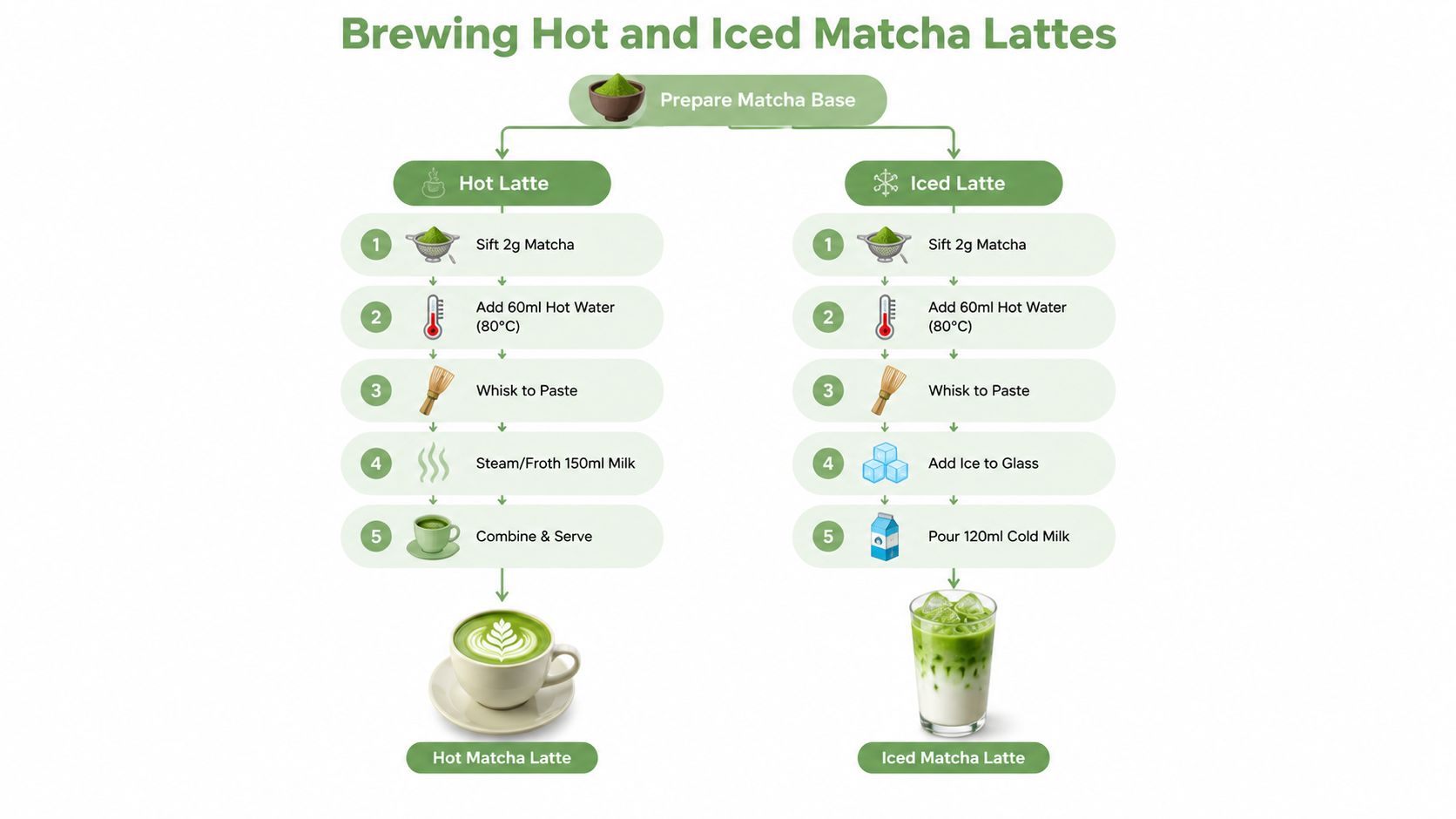
The hot and iced versions begin with the same concentrated matcha base. The difference comes after whisking, when you choose warm frothed milk or chilled milk and ice.
Build the matcha base
- Sift 2 grams of organic matcha into a wide bowl or chawan.
- Add 60 ml of hot water at 80°C, or 175°F. It must not be boiling.
- Use the chasen in a fast W or M motion for 15 to 20 seconds, keeping the whisk close to the base of the bowl.
- Stop when the powder has formed a smooth liquid with a fine, even foam and no visible clumps.
The water temperature controls more than comfort. Boiling water can pull out an aggressive bitterness and make the catechin profile taste harsh. Cooler water gives you more room to preserve matcha's sweetness and umami, although very cold water makes direct whisking more difficult.
Make the hot version
Warm 200 to 240 ml of milk to about 140°F. Don't let it boil. Heat changes the milk's sweetness and texture, while excessive heat can make the final drink taste flat beside the tea.
Froth the milk until it has a fine, pourable texture. Add the matcha base to your cup first, then pour in the milk gradually. A 1:3 to 1:4 matcha-to-milk ratio gives you a balanced starting point, with enough milk for body without turning the tea invisible.
Make the iced version
For iced preparation, use chilled milk and a glass filled with ice. Sift the matcha into a bowl, add the 60 ml of hot water and whisk as usual. The small amount of warm water dissolves the powder more reliably than tipping it directly into cold milk.
Pour the matcha over the ice, add your chilled milk and stir. If you prefer a stronger drink, reduce the milk slightly or increase the matcha gradually. If it tastes too intense, add milk rather than extra sweetener first.
Froth according to your equipment
- French press: Add warm milk, plunge repeatedly until the surface looks smooth and lightly aerated, then pour promptly.
- Handheld frother: Froth in a tall jug with the whisk head below the surface to avoid large bubbles.
- Electric steamer: Stretch the milk briefly, then create a fine whirlpool for a glossy finish.
The best ratio is the one that lets you taste both ingredients. More matcha creates a greener, firmer drink, while more milk produces a softer café-style latte.
Choosing Milks and Sweeteners That Work
Matcha behaves differently from coffee. The milk should soften bitterness without covering the tea's fresh, vegetal character.
Whole dairy milk gives the fullest body and tends to round off grassy notes. Oat milk is often the easiest plant-based pairing because its natural sweetness and creamy texture support matcha without demanding much added sugar. Almond milk keeps the drink relatively clean and light, although some brands can taste thin beside a concentrated matcha base.
Soy milk can soften bitterness effectively, but very hot liquid may cause some varieties to split. Choose a barista-style soy milk and avoid pouring freshly boiled water or overheated milk into the cup. Barista formulations are designed to handle heat and foam more predictably, partly because their protein and fat balance supports a stable texture.
Sweeteners change the flavour as much as the sweetness. Monk fruit and stevia can keep the cup light, honey adds floral warmth, and maple syrup deepens matcha's earthy side. Refined sugar dissolves easily, but it can flatten the contrast between umami, sweetness and bitterness.
| Latent Goal | Best Milk | Best Sweetener | Why It Works |
|---|---|---|---|
| Creamiest hot latte | Whole dairy | Honey | Rich body carries floral sweetness |
| Sweet plant-based latte | Oat milk | Maple syrup | Natural sweetness supports earthy notes |
| Light, clean iced drink | Almond milk | Monk fruit | Keeps the finish relatively delicate |
| Gentle bitterness | Barista soy milk | Stevia | Extra creaminess rounds the tea |
| Minimal added sugar | Oat or almond milk | None | Lets the matcha's own flavour lead |
Taste the latte before sweetening it. A powder that needs heavy sweetening may be poorly matched to the milk, too bitter from overheated water, or not suited to a delicate drink.
Is an Organic Matcha Latte Really Worth the Premium
The premium can be justified, but not every expensive tin offers meaningful value. Australia's organic green-tea category relies heavily on imports, with imports estimated to cover 95 to 98 per cent of domestic consumption by volume, while domestic organic tea production is described as negligible and limited to a few small farms in Queensland and New South Wales. The category is estimated at 12 to 18 per cent of the overall tea market by volume and 25 to 35 per cent by value, which reflects strong premium positioning. See the Australian organic green-tea market analysis.
Matcha sits at the upper end of that market. The same analysis places ceremonial-grade matcha at AUD 30 to 80 per 100 g, while culinary-grade matcha is listed at AUD 18 to 35 per 100 g. That helps explain why an organic matcha latte is usually treated as a premium functional beverage rather than an everyday commodity drink.
Paying more makes sense in two situations:
- You drink matcha regularly and want a powder with a clear grade, credible origin and clean, balanced flavour.
- You drink the tea with minimal milk or sweetener, so the powder's quality remains obvious.
The premium is less convincing when a mid-grade culinary powder has a bright colour but no named origin, harvest information or meaningful supply-chain detail. In that case, the label may be doing more work than the leaf.
Practical rule: Pay extra when the listing identifies the grade and origin clearly. Be cautious when neither appears.
Fixes, Variations, and Where to Go Next
A disappointing latte usually gives you a useful clue.
- Bitterness: Water that's too hot is the common culprit. Use water at 80°C, or 175°F, rather than boiling water.
- Clumping: Powder added straight to milk tends to gather into stubborn pockets. Sift it first, then whisk it with a small amount of water.
- A thin, pale layer: Under-whisked matcha often leaves a weak-looking surface. Whisk the base vigorously and use properly frothed milk.
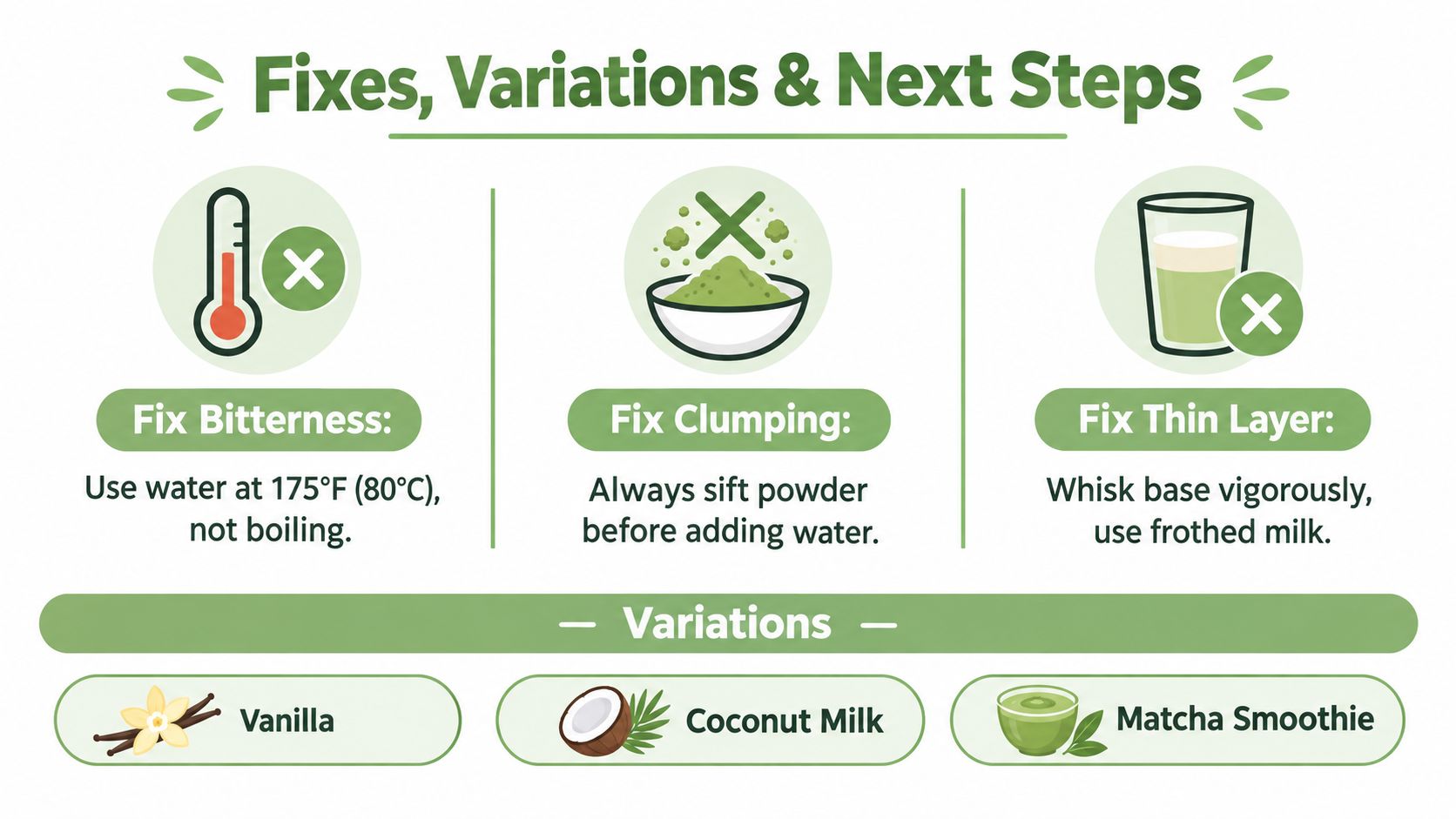
Once the base is reliable, variations become easy:
- Vanilla bean: Add 1 ml vanilla extract or a small scrape of vanilla bean to the warm milk.
- Ginger-lemongrass: Infuse the milk with 2 thin slices of ginger and a small piece of lemongrass, then strain before frothing.
- Coconut-mint: Use coconut milk and add 2 fresh mint leaves while warming, then remove them before pouring.
- Pumpkin spice: Stir 1/4 teaspoon pumpkin spice into the matcha base before adding milk.
A latte can be the beginning of a broader tea habit. Taste ceremonial matcha with water to understand what the milk is changing, then explore roasted hojicha or nutty genmaicha when you want a different profile.
Pep Tea offers organic matcha products for home lattes, whisking and everyday tea exploration, along with Australian-brewed organic kombucha from the Hunter Valley for low-sugar beverage routines. Visit Pep Tea to explore the organic matcha range and choose the powder that suits your next hot or iced latte.
How to Make Matcha Tea from Powder at Home

You're standing at the kitchen bench with an open tin of matcha, a freshly boiled kettle and a spoon ready to go. The tempting move is to pour boiling water straight onto the powder, stir it quickly and hope for the best. The other is to skip the sieve because the powder looks fine enough. Those two shortcuts usually lead to the same disappointing bowl, harsh bitterness and pebble-sized clumps.
A well-made bowl looks different. It has a vivid jade-green colour, a fine creamy foam and a smooth texture that feels closer to warm milk than chalk. The flavour should be grassy and gently sweet, with a clean finish rather than a sharp aftertaste. Once you know how to make matcha tea from powder, the process takes only a few minutes, and each small detail has a clear purpose.
What a Good Bowl of Matcha Looks Like
Your first sip should be smooth, bright and gently sweet. The powder needs to stay evenly suspended, with no dry flecks on the surface or gritty sediment collecting at the bottom. A fine layer of microfoam shows that the matcha has dispersed well. It does not need the thick foam of a cappuccino.
Colour offers a useful clue, though it cannot judge the whole bowl. Vivid green powder usually creates a more appealing drink, while a fresh grassy aroma suggests careful storage. The flavour should be vegetal and clean, without burnt bitterness or a dusty texture.
The two rules to remember: sift the powder before it touches water, and never use boiling water.
Matcha is finely milled tea leaf, not an infusion that you strain and discard. You drink the suspended powder, so every preparation mistake remains in the bowl. A clump becomes a concentrated mouthful of bitterness, while excessively hot water can flatten sweetness and make the tea harsher.
For an Australian-style baseline, combine 2 g of matcha, roughly 1 teaspoon, with 100–120 g of water at 70–80°C. Whisk until smooth, following the preparation guidance in Tea Tonic's Australian matcha guide. A smaller, more concentrated bowl uses 60–80 ml of water at 70–80°C, as shown in the method from Zen Green Tea.
These proportions give you room to correct the two common failures. Sifting breaks apart compacted powder before water can bind it into lumps. Controlled heat preserves the tea's softer flavours, while whisking from side to side spreads the powder through the water and builds a fine foam. The result should feel creamy and lively, not cloudy, thin or aggressively bitter.
Gathering Your Equipment and Matcha
Put everything beside the bowl before heating the water. Preparation feels much easier when you're not searching for a sieve with hot water cooling on the bench.
- Matcha powder: Choose a finely milled powder with a vibrant green colour and a fresh aroma. Ceremonial or premium drinking-grade matcha is generally more suitable for a plain bowl, while culinary-grade powder works well in recipes and milk-based drinks.
- A wide bowl or cup: A small bowl gives your whisk room to move from side to side. A narrow mug can make the whisk catch against the sides, which leaves powder sitting in the corners.
- A fine mesh sieve: Matcha clumps inside its container, even when the powder looks loose. Passing it through a sieve breaks up those compacted pieces before water binds them together.
- A whisk or alternative: A bamboo chasen is traditional, but a handheld milk frother, lidded shaker or fork can also help, depending on the texture you want.
A warm bowl also makes the drink more comfortable to hold and can help maintain its temperature. Australian brewing guidance from T2 Tea includes warming the matcha bowl before adding water.
If you're building a regular home ritual, Pep Tea's matcha tea accessories can help you organise the basic tools around the way you brew. You don't need a ceremonial setup to start, though. The sieve is the most important overlooked item, and a clean wide bowl is more useful than a specialised cup that leaves no room for whisking.
Check that the matcha, bowl, sieve, spoon and whisk are within arm's reach before the kettle goes on.
The Core Preparation Method
Measure and sift before adding water
Place 1 teaspoon, about 2 g, of matcha into the dry bowl. This is a practical Australian starting point for a single serve, and the amount aligns with Zen Green Tea's Australian preparation method.
Hold the fine sieve over the bowl and press the powder through with the back of a spoon. Don't rush this part. If a compact piece remains in the mesh, gently work it through rather than tipping it into the bowl. Sifting creates a loose, even layer that water can reach more easily.
Add controlled heat
Heat fresh water to 70–80°C, keeping it well below boiling. Australian guidance from Fish River Roasters specifically warns against boiling water because excessive heat can make matcha taste bitter.
If you don't have a thermometer, allow freshly boiled water to stand for a few minutes before pouring. The water should feel hot enough to brew the tea, but it shouldn't be bubbling or aggressively steaming.
For a concentrated bowl, add 60–80 ml of water. Pour slowly, beginning with a small splash to wet the powder evenly, then add the remainder. This first contact creates a smooth slurry rather than allowing dry powder to float apart in a larger volume of water.
Whisk across the surface
Use brisk zigzag strokes, moving in a W or M pattern rather than stirring in circles. Keep the whisk close to the base at first to incorporate the slurry, then lift it slightly towards the surface as foam develops.
Whisk for roughly 15–30 seconds, a range reflected in Australian matcha instructions from Tea Tonic. Stop when the surface has a fine pale-green foam and no dry specks remain.
Sensory checkpoint: A smooth surface and clean texture mean the method has worked. Grit points to incomplete dispersal, while sharp bitterness usually points to excessive heat, old powder or overworking.
Taste the bowl while it's fresh. Matcha's flavour should be distinct, but the finish shouldn't make you want to cover it with a large amount of sweetener. If it does, adjust the water temperature and storage before changing the recipe.
Choosing How to Whisk It
The whisk changes the drink more than many first-timers expect. A tool that disperses powder efficiently can create fine foam, while an unsuitable tool may leave large bubbles or a sandy mouthfeel.
| Tool | Foam quality | Ease of use | Cleaning | Best for |
|---|---|---|---|---|
| Bamboo chasen | Fine, creamy microfoam | Requires technique | Rinse prongs and dry upright | Ceremony-style bowls |
| Electric milk frother | Quick, light foam | Very easy | Rinse immediately | Matcha lattes |
| Small lidded shaker | Thin foam, even suspension | Easy and travel-friendly | Simple rinse | Iced matcha |
| Kitchen fork | Larger bubbles, uneven texture | Available in most kitchens | Very easy | An emergency substitute |
A chasen bamboo whisk gives the most refined texture and makes the classic W or M motion feel natural. Its fine prongs need careful rinsing after use, and leaving them wet in a drawer can distort them.
A handheld electric frother is faster and more forgiving, particularly when you're making a milk-based drink. Keep the head submerged to avoid splashing, and stop as soon as the powder is dispersed. Excessive frothing can make the surface airy without improving the underlying texture.
A shaker jar suits an iced serve or a kitchen without a whisk. Add the powder and water, secure the lid and shake until combined, but expect thinner foam. A fork works when nothing else is clean, though it won't create the same fine suspension.
For a closer look at the traditional motion and care routine, use Pep Tea's guide to whisking matcha. The quick rule is straightforward: chasen for plain bowls, frother for lattes, shaker for iced drinks and fork only in a pinch.
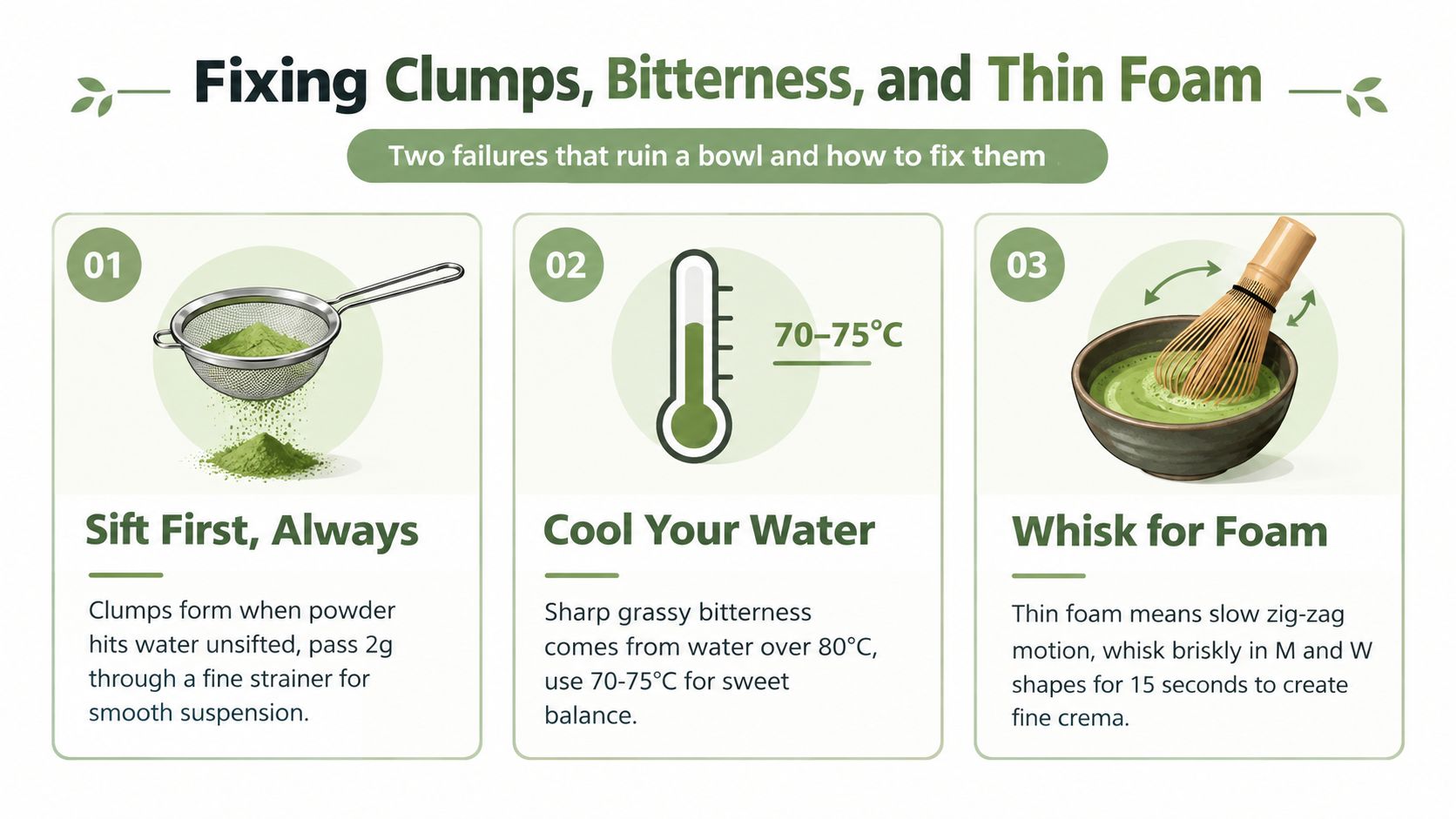
Fixing Clumps, Bitterness, and Thin Foam
A cloudy bowl usually has two separate problems: clumps form when dry powder meets water too quickly, while bitterness often comes from overheated water or stale matcha. Treat each issue at its source, rather than trying to fix the finished bowl with extra sweetener.
When clumps float on top
Sift the full measure through a fine mesh strainer before adding liquid. Then use a small splash of water to make a smooth paste, like wetting flour before mixing a sauce. Once the paste looks even, dilute it with the remaining water and whisk.
A heavy stream can bury dry matcha in compact islands at the bottom or leave floating lumps on the surface. Pour slowly around the bowl, especially if it is small, so the powder receives moisture in stages.
When the flavour turns bitter
For an Australian-style preparation, cool the water to 75–80°C and keep whisking to around 15 seconds. As noted earlier, water that is too hot can draw out a harsher flavour, so temperature is the first adjustment to make.
Open powder also needs protection from air, light, heat and moisture. An airtight container helps preserve its character, but older matcha may still taste flat or sharp. If the bitterness remains after correcting the water, try fresher powder before adding more sweetener.
When the foam looks thin
Whisk across the surface with a quick, shallow zigzag rather than stirring slowly in circles. The motion should agitate the top layer while keeping the whisk near the water, creating smaller bubbles instead of a loose cap of air.
With a frother, use a brief 5-second pulse at the end, then stop. For readers who mix other powders into drinks, Everti's guide to protein powder with water explains the same useful principle: add liquid gradually and control the incorporation. Matcha behaves better when the powder is dispersed step by step, not forced to disappear in one pour.
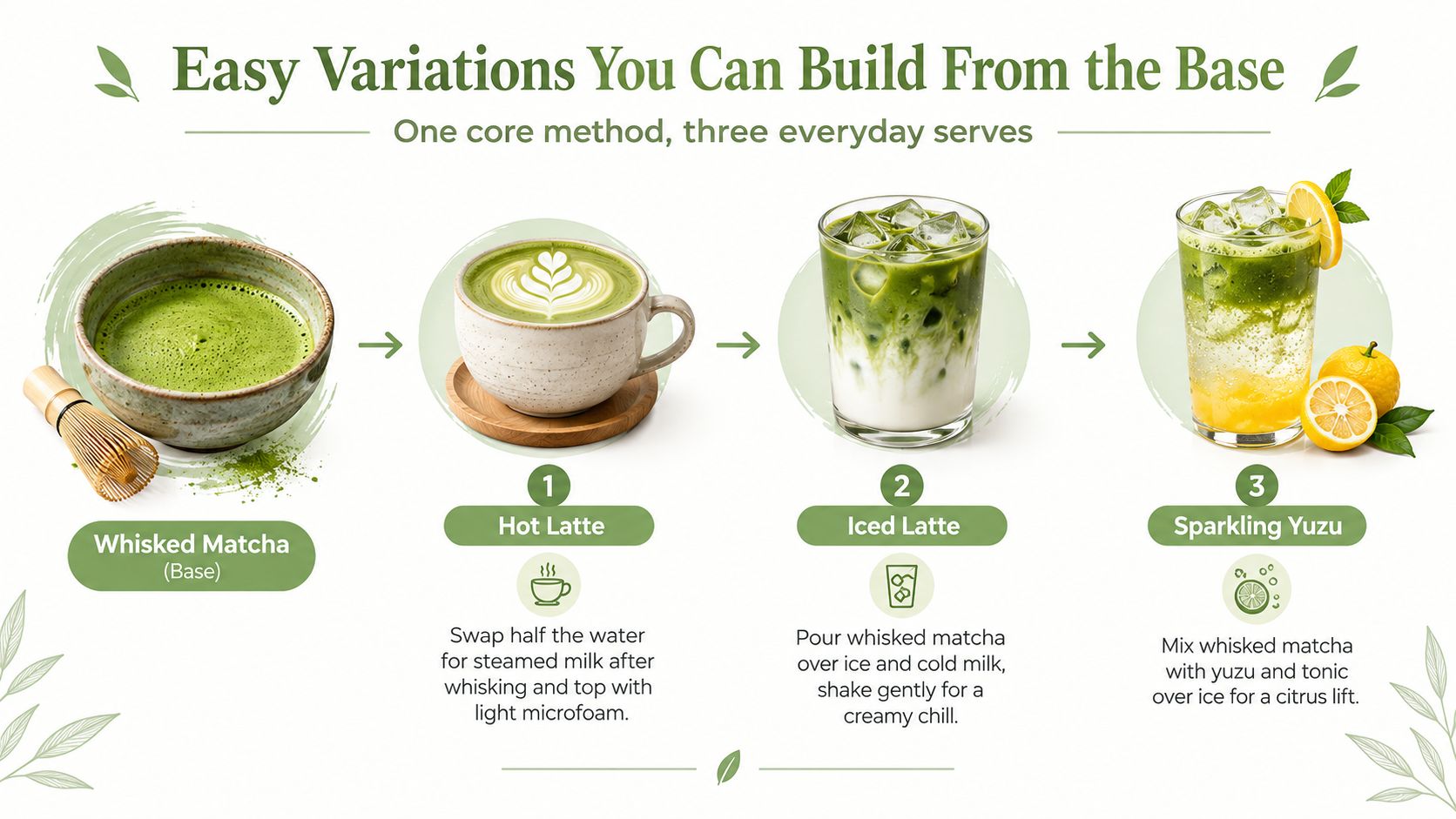
Easy Variations You Can Build From the Base
Once the plain bowl is smooth, you don't need to learn a completely new recipe for every drink. Keep the sift, slurry and whisking habits, then change the finishing liquid or temperature.
A warm matcha latte
Whisk the matcha with the concentrated water base first. Warm or steam milk separately, then replace part of the final water volume with milk and add it gently. A handheld frother can create a light topping without requiring a second complicated technique.
Choose dairy milk or a plant-based option according to taste and texture. Oat milk gives a naturally rounded impression, while a lighter milk keeps the grassy character more visible.
An iced matcha
Dissolve the sifted powder in a small splash of cool water first, forming a smooth paste before adding more liquid. Pour the whisked mixture over ice, then top with cold milk or water and stir or shake gently.
The cold serve makes clumps especially obvious because the powder doesn't have warm liquid to help it disperse. The initial slurry solves that problem without changing the core flavour.
A lightly sweetened serve
Add honey, maple syrup or sugar to the hot water before introducing the powder, so the sweetener dissolves evenly. For a café-style latte, a small amount of condensed milk can be whisked into the milk, although its sweetness will be more pronounced.
Matcha also works in smoothies, baking and chilled desserts. If you use it with another bold ingredient, such as cacao, Yuve's raw cacao powder tips can help you think about balancing strong flavours in blended recipes.
Here's a short visual demonstration of the basic process:
Drink leftover whisked matcha within an hour for the best colour and flavour. It can lose its brightness as it sits, so make only what you expect to enjoy soon.
Sourcing Better Powder and Serving It Well
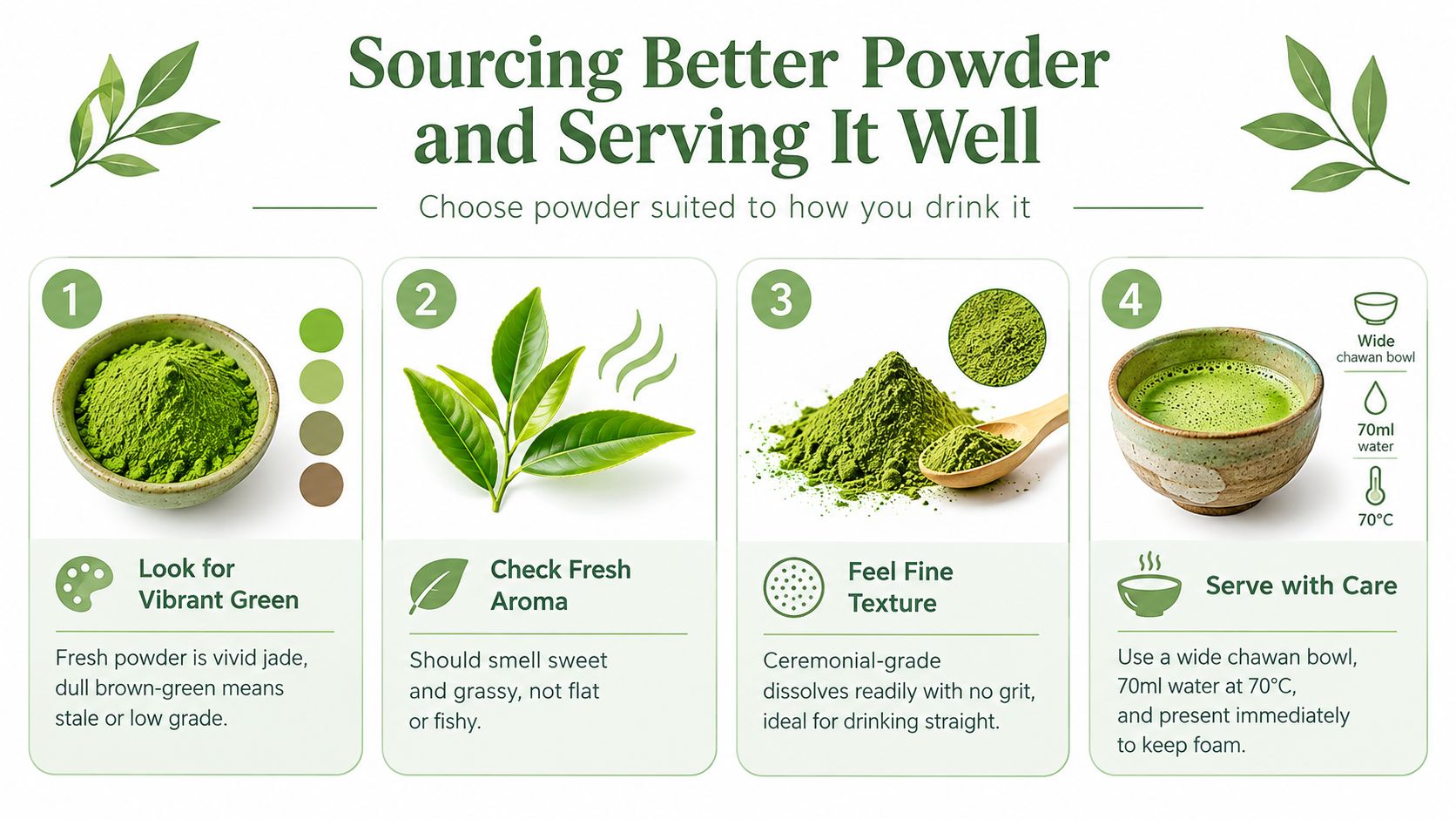
A smooth method can't fully rescue powder that has been stored poorly or chosen for the wrong purpose. Look for a vivid green colour, a fresh grassy or gently sweet aroma and a fine texture that disperses readily.
Ceremonial-grade matcha is suited to drinking plain, where its aroma and finish are easy to notice. Culinary-grade matcha has a stronger presence that can work well in lattes, smoothies and baking, where other ingredients share the bowl.
Protect the powder after opening
Keep matcha in an airtight, opaque container away from light, heat, moisture and strong odours. Refrigeration may help in a warm Australian climate, but allow the sealed container to move towards room temperature before opening so condensation doesn't reach the powder.
Serve the drink immediately after whisking, while the colour is bright and the foam remains evenly distributed. Plain matcha pairs naturally with mild sweets, fruit or light pastries, while a latte can sit comfortably alongside breakfast.
If bitterness continues, use fresher powder, slightly cooler water and a shorter whisk. Frothing milk separately and folding it in gently can create a richer latte without forcing extra air through the matcha itself. Readers wanting more detail on choosing between different powders can consult Pep Tea's guide to distinguishing ordinary and ultimate matcha tea powder.
Pep Tea offers organic Japanese matcha for plain bowls, lattes and recipes, giving Australian home brewers a way to explore different serving styles with powder selected for everyday preparation.
Visit Pep Tea to explore organic Japanese matcha and choose a powder that suits plain tea, lattes or baking. Start with a sieve, controlled water temperature and a few calm whisking strokes, then make your first bowl while the powder is fresh.