
Tag: home brewing kombucha
Kombucha Recipes Australia: 8 Easy Flavour Ideas
Why does kombucha so often get poured straight from the bottle and forgotten? It's already tangy and fizzy, but a few thoughtful additions can turn it into a proper brunch drink, a barbecue cooler or a café mocktail without burying its flavour under syrup.
These kombucha recipes in Australia are built around local tastes and ingredients, from summer mango to lemon myrtle and wattleseed. You'll find quick drinks for a busy afternoon alongside a home-brewed ginger second ferment for anyone ready to get hands-on.
Kombucha is fermented tea made with sugar and a SCOBY, short for a symbiotic culture of bacteria and yeast. The culture helps ferment the sweet tea, creating the drink's characteristic tang. Meanwhile, more Australians are looking for low-sugar drinks and appealing non-alcoholic choices, whether they're hosting a backyard barbecue or updating a café menu. Ready-to-pour bottled kombucha makes the quick recipes easy; for home brewing, good hygiene and careful fermentation matter. Let's get pouring.
1. Ginger Kombucha Spritz
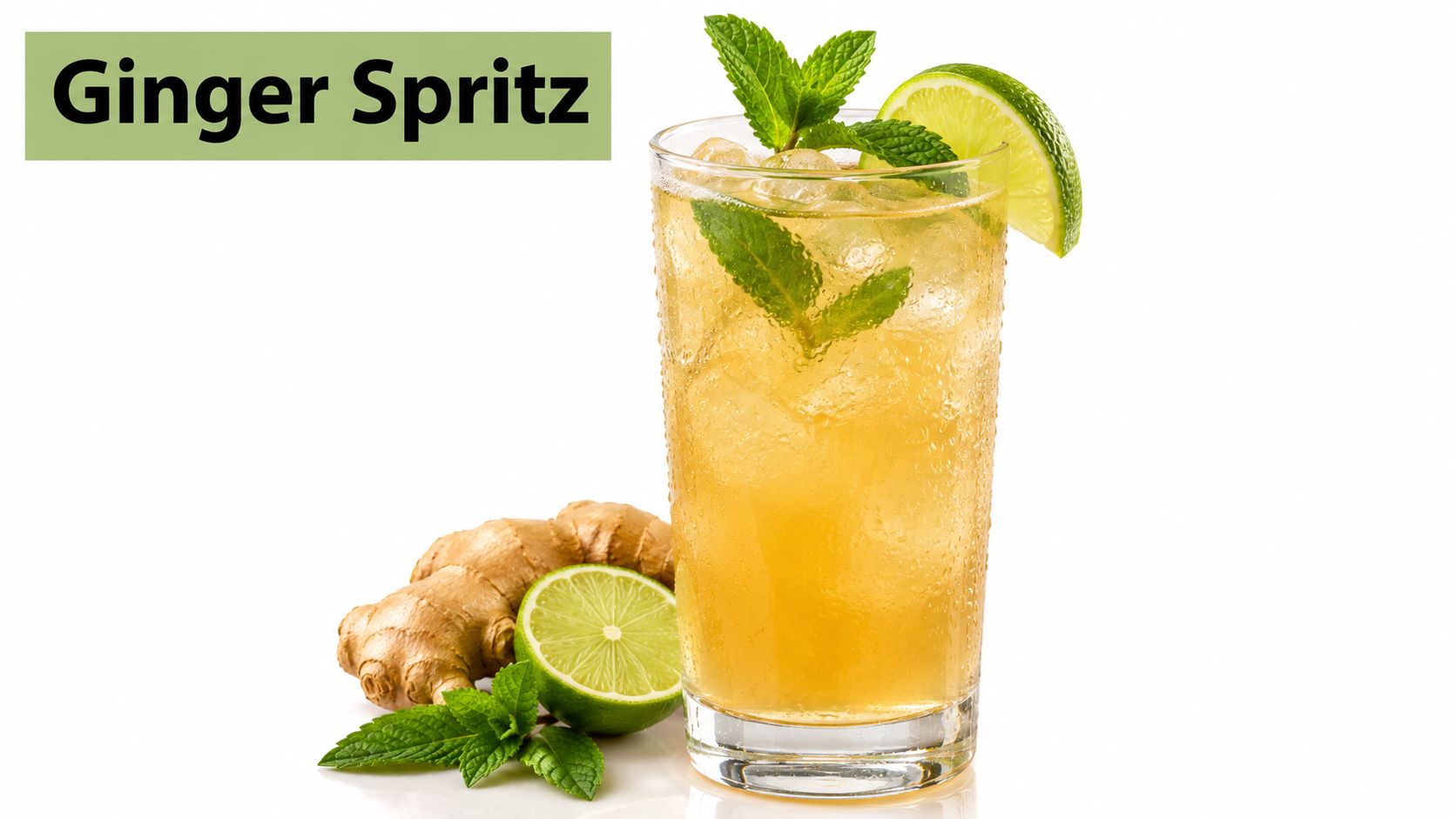
Ginger kombucha has enough character to make a spritz feel special without a long ingredient list. Pour a chilled bottle of PepTea's sugar-free Ginger Kombucha into a tall glass filled with crushed ice. Add a squeeze of lime, clap a few mint leaves between your palms to release their aroma, then stir gently.
Keep the fizz: Chill the kombucha before pouring, and add lime just before serving. Ice and citrus are refreshing; a flat spritz is less so.
This is an easy introduction for anyone who hasn't tried kombucha before. Ginger brings gentle warmth, while the lime and mint keep the drink bright. Serve it at a Sunday gathering as a non-alcoholic alternative to a gin spritz, or offer it beside iced matcha drinks as a simple house mocktail. For a more polished look, add a thin ginger coin rather than sweetening the glass.
The recipe is easy to adjust: use more lime for a sharper finish, or more mint for a fresher aroma. There's no need to add cordial. Kombucha already brings acidity and bubbles, and the ginger flavour does the rest.
For another way to serve kombucha in mixed drinks, browse our kombucha cocktail ideas.
2. Lime and Ginger Kombucha Cooler
For a backyard barbecue, serve this zesty cooler with plenty of ice, fresh lime wheels and gently muddled basil. Combine PepTea's Lime and Ginger Kombucha with the lime, then finish with a little lime zest for a fresh citrus aroma.
Press the basil just enough to release its oils. Too much muddling can make the leaves taste bitter. Keep the kombucha cold and add it just before serving so the drink stays lively while guests settle in.
This cooler works as a lighter alternative to lemonade or sugary cordial, and it fits easily on a café's non-alcoholic menu. For a broader mocktail menu, the ROCKS Whiskey Chilling Stones Mule guide offers another drink idea to consider. Serve the cooler in tall glasses, or set out lime and basil in a dispenser and add the kombucha when it's time to pour.
Taste before adding sweetener. The citrus and ginger already give the drink plenty of character; if it needs more lift, squeeze in fresh lime rather than reaching for syrup.
3. Mango Kombucha Iced Tea
Mango and tea make a sunny, easygoing match. For a quick jug, combine chilled green tea with PepTea's sugar-free Mango Kombucha, then pour over ice and garnish with fresh mango. The tea softens the kombucha's tang; the mango brings a rounded fruit flavour that feels right at a summer brunch or in a café's non-alcoholic drinks section.
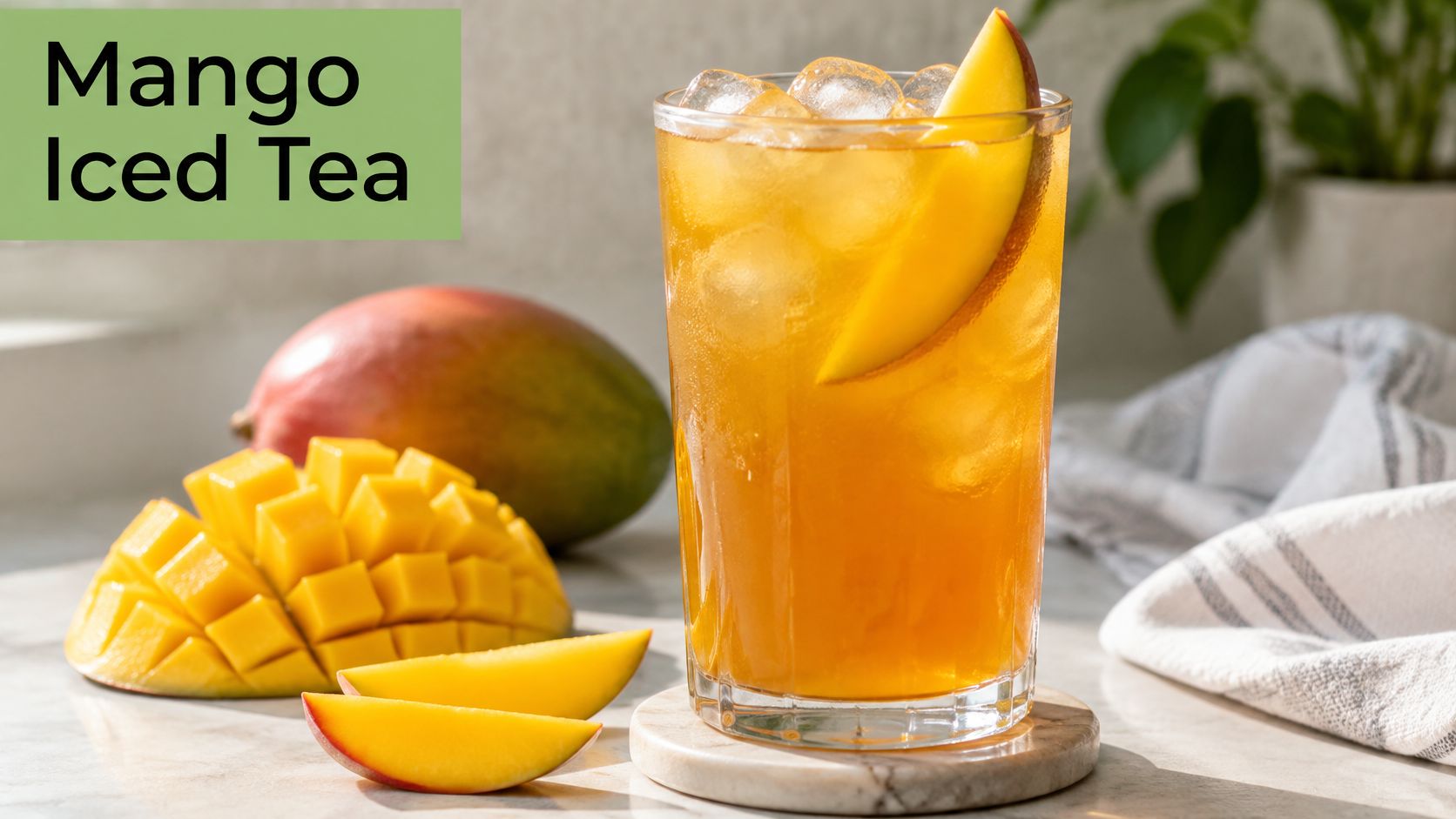
Frozen mango chunks are useful here: they chill the drink without diluting it as they melt. For a green, tea-forward variation, whisk a little matcha with water until smooth before adding it to the jug. Don't tip matcha powder straight into the cold drink, unless you enjoy chasing stubborn green lumps around a glass.
For a jug on the table: Keep the kombucha chilled and add it just before serving. Guests can top up their glasses without the first pour losing its sparkle.
This is a flexible recipe for households that want something more interesting than ordinary iced tea. Add extra green tea for a softer, less tangy result, or let the mango kombucha lead for a fruitier drink. A reusable glass is lovely for a picnic; if you prefer disposable straws, these paper straw sizing and durability tips can help you choose one that suits the glass.
4. Lemon Myrtle Kombucha Fizz
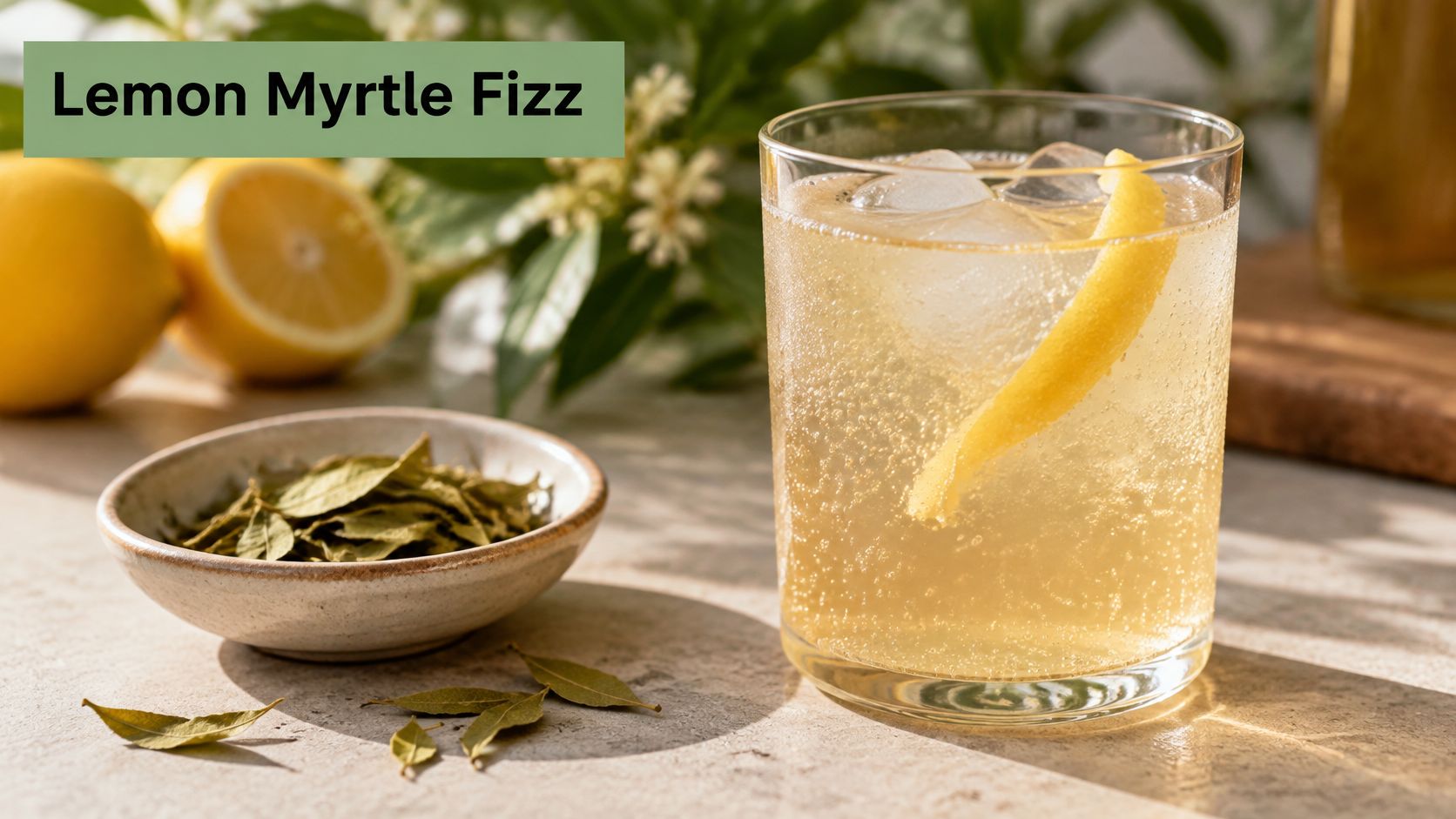
Lemon myrtle brings a distinctly Australian, lemony aroma to a glass of kombucha. To make a quick fizz, infuse a small pinch of dried lemon myrtle in a little warm water, then let the infusion cool completely. Strain it into a glass of chilled plain or lightly flavoured kombucha, add ice, and finish with a lemon slice.
Start with a small amount and taste before adding more. Lemon myrtle can be assertive, and a heavy hand can turn a bright, herbal drink into something that tastes like a cupboard of dried leaves. Straining the infusion well also helps keep the finish clean.
This native-ingredient drink works as a regional café special or a refreshing pour for an Australia Day gathering. For a home-brewed version, add a carefully measured lemon myrtle infusion during a second ferment, then monitor the bottles as they carbonate. The quick glass method is easier to control, especially if you're just getting to know the ingredient.
Serve the fizz with a simple garnish rather than piling on extra flavours. Lemon myrtle has enough personality to carry the drink, and kombucha gives it the tart, sparkling base.
5. Kombucha Matcha Fizz
This is a lively choice for an afternoon café menu: chilled kombucha with a smooth layer of matcha. Sift organic matcha into a small bowl, whisk it with a little warm water until there are no lumps, then pour the mixture into a glass. Slowly add chilled kombucha and ice. A careful pour can leave the drink beautifully layered; stirring it gives you a more even, grassy flavour.
Use ceremonial-grade matcha when you want its clean taste to stand out in a simple drink. Culinary-grade matcha suits bolder combinations or recipes where other flavours take the lead. Either way, start with a modest amount and adjust to taste. Too much matcha can make the drink overly grassy, while poor whisking leaves clumps that no amount of cheerful stirring can rescue.
The fizz makes this a refreshing alternative to a coffee break, though matcha contains caffeine and the amount in your glass depends on how much you use. Pair it with a light lunch or serve it as a signature café drink beside the Ginger Spritz. For more on how matcha and kombucha can fit into a tea routine, explore our guide to green tea benefits, matcha and kombucha.
6. Strawberry and Basil Kombucha Spritz
Strawberries and basil bring a fresh, fragrant character to a brunch spritz. Lightly muddle a few ripe strawberries in the bottom of a glass, add ice and pour over chilled kombucha. Finish with basil leaves, clapped between your hands to release their aroma. If you prefer a clear drink, strain the strawberry mixture before adding the kombucha; leave the fruit in for a softer, more rustic look.
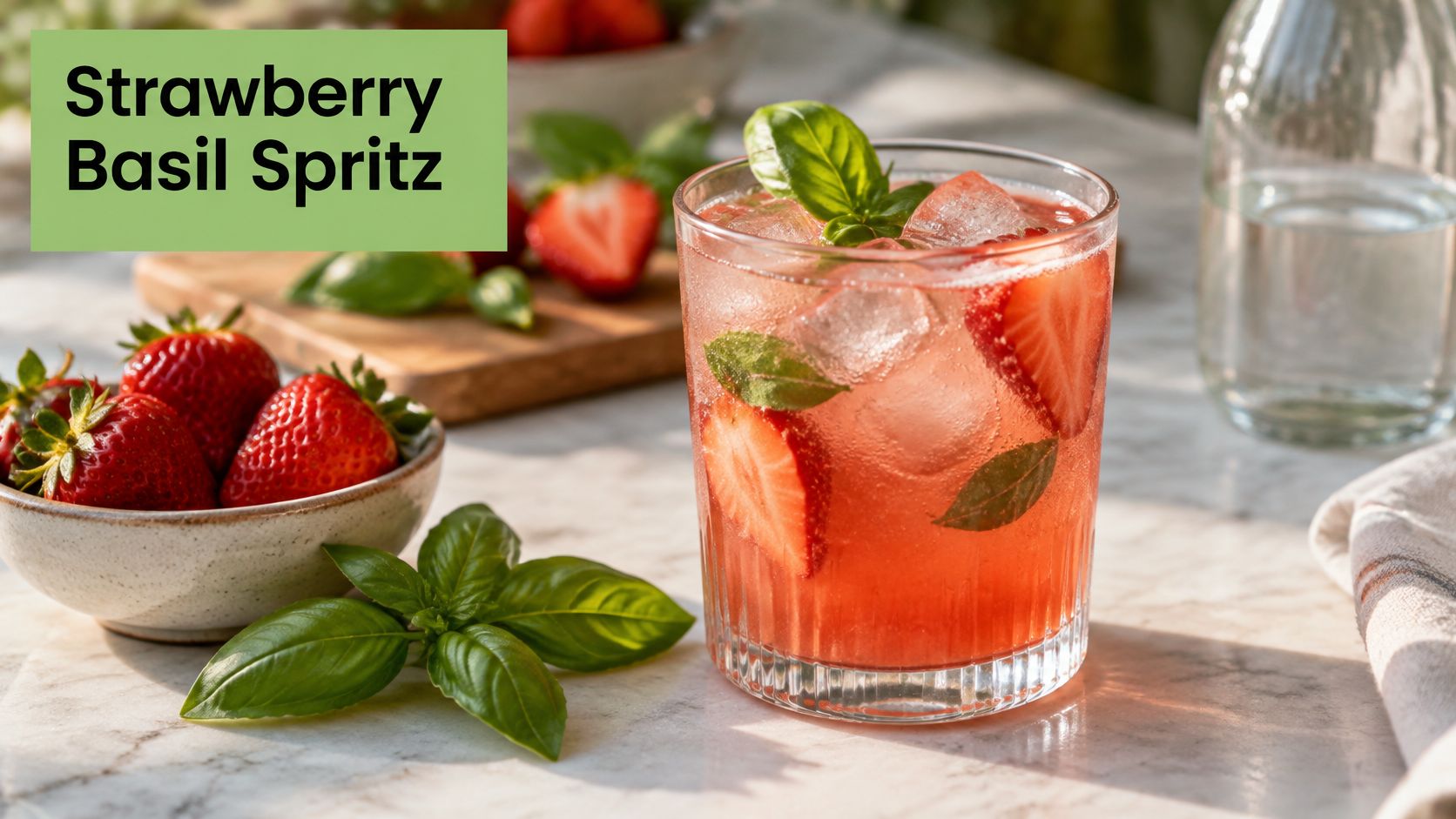
Muddle gently. The aim is to release a little juice, not turn the berries into a thick purée that settles at the bottom. If the strawberries are already sweet and ripe, let them do the sweetening rather than adding syrup. Kombucha's tang keeps the drink lively, and the fruit makes it feel like a treat without needing a juice-heavy base.
This recipe suits a spring lunch, a weekend brunch or a café menu that needs a colourful non-alcoholic option. Make each glass to order for the freshest bubbles, or prepare the strawberry and basil mixture in advance and add the kombucha at serving time. That little bit of timing pays off: sparkling drinks are best when the fizz is still in the glass, not hiding in the jug.
7. Wattleseed and Honey Kombucha Tonic
Wattleseed adds a toasted, coffee-like flavour that makes kombucha feel at home in cooler weather. Whisk a little ground wattleseed into warm water until smooth, let it cool, then stir it into chilled kombucha. Add honey at the end, tasting as you go. The goal is to round out the tang, not turn the drink into a sweetened tonic.
This Australian bush-food-inspired combination works as a seasonal café special or a farmers' market drink. For a warming version, gently warm the wattleseed infusion and honey, then pour them into a mug and top with kombucha once the mixture has cooled. Avoid boiling kombucha; high heat can damage its live cultures and drive off the sparkle. If you want a hot drink, make the wattleseed and honey infusion on its own instead.
Ground wattleseed can clump if you add it straight to cold liquid, so whisking it first makes a smoother finish. Keep the garnish simple and serve in a small glass or mug, where the nutty aroma can come through. It's an unusual flavour pairing, but that's the fun of it: a little native ingredient can give a familiar fermented drink a local accent.
8. Homemade Ginger Kombucha Second Ferment
A second ferment is the hands-on option for home brewers who want fresh ginger flavour and more carbonation. Start with properly fermented kombucha, then transfer it to clean, pressure-rated bottles and add freshly grated ginger. Seal the bottles and monitor them as they carbonate. The yeast and bacteria continue working in the bottle, which is why both flavour and pressure can build.
Use clean equipment throughout, and don't treat the calendar as a substitute for checking the brew. In Australian home brewing, the sweet tea infusion needs careful handling: Food Standards Australia New Zealand guidance advises cooling it from approximately 60°C to 20°C within 2 hours, adding a proven starter promptly, and fermenting until the beverage reaches pH 4.2 or lower. It describes a typical finished pH of at least 2.5 and a typical alcohol safety target of less than 1%. Taste alone can't confirm these measures, so use a calibrated pH meter and appropriate alcohol testing when needed.
Handle bottles carefully: Check them daily, keep them away from children and pets while they're fermenting, and refrigerate them once the fizz is where you want it. Open cautiously over a sink.
Sealed bottles can continue fermenting, increasing both alcohol and pressure. In a national Australian survey of kombucha and other fermented soft drinks, Food Standards Australia New Zealand reported that alcohol could rise during shelf life. That's a practical reason to keep records and chill bottles after carbonation reaches your preference.
For more on controlled bottling and flavouring, see our guide to kombucha second fermentation.
8 Kombucha Recipes at a Glance
| Recipe | Base kombucha | Flavour profile | Best occasion | Difficulty |
|---|---|---|---|---|
| Ginger Kombucha Spritz | Sugar-free ginger kombucha | Tangy, gently warm, and refreshing | Everyday refreshment or gatherings | Easy |
| Lime and Ginger Kombucha Cooler | Lime and ginger kombucha | Zesty, crisp, and ginger-forward | Barbecues, picnics, or lunch | Easy |
| Mango Kombucha Iced Tea | Mango kombucha | Fruity, smooth, and lightly tangy | Summer brunch or an afternoon treat | Easy |
| Lemon Myrtle Kombucha Fizz | Plain or lightly flavoured kombucha | Bright citrus aroma with herbal notes | Australia Day or a native-foods feature | Moderate |
| Kombucha Matcha Fizz | Plain or lightly flavoured kombucha | Grassy, vegetal, tangy, and sparkling | Midday refreshment or an afternoon energy break | Moderate |
| Strawberry and Basil Kombucha Spritz | Chilled ginger or plain kombucha | Fruity, lightly sweet, and herbal | Brunch or a light lunch | Easy |
| Wattleseed and Honey Kombucha Tonic | Plain or lightly flavoured kombucha | Toasty, nutty, and gently sweet | Cooler months or a seasonal café special | Moderate |
| Homemade Ginger Kombucha Second Ferment | Finished plain kombucha | Strong ginger flavour with lively natural fizz | Home brewing or a house-made café drink | Advanced |
From Bottle to Glass: Your Next Pour
New to kombucha? Start with the Ginger Spritz. Pour chilled kombucha over ice, then add lime and mint. The ginger and fermentation tang stay at the centre, and you can adjust the additions to suit your taste.
For café menus, the Lime and Ginger Cooler and Kombucha Matcha Fizz offer different non-alcoholic options. The cooler suits lunch service, while matcha brings a tea-forward flavour and a vivid colour. Serve both chilled, and make sparkling drinks close to order to preserve their bubbles. If you sell house-fermented kombucha, check alcohol levels and labelling rather than assuming tartness means the drink is non-alcoholic.
Home brewers ready for a next step can try the ginger second ferment after getting comfortable with SCOBY care and clean equipment. Use bottles designed to handle fermentation pressure, add ginger carefully and monitor carbonation. Keep notes on flavour and fermentation conditions, then refrigerate the batch when it reaches your preferred fizz. If something seems wrong, taste alone cannot confirm that a batch is safe.
Lemon myrtle, wattleseed and summer mango give these recipes an Australian flavour, whether you're pouring for a barbecue, brunch or café menu. Start with small additions so the kombucha's own flavour still comes through.
Pep Tea offers sugar-free organic kombucha flavours including Ginger, Lime and Ginger, and Mango, alongside an organic matcha range. Its kombucha is brewed in a purpose-built, HACCP-accredited brewery in NSW, making it an Australian-made option for home drinks and hospitality menus. Explore the flavours and try a recipe at Pep Tea.
Pour one at your next brunch or barbecue and see what a few fresh ingredients bring to the glass.
Lemon Ginger Kombucha: Benefits, Brewing, and Buying
You're standing in front of a café fridge, trying to choose between sparkling water, an iced tea, a soft drink and a row of colourful functional beverages. Lemon ginger kombucha catches your eye because it sounds familiar, refreshing and a little more grown-up than lemonade. But the label raises sensible questions. How much lemon and ginger is in the bottle? Is it low in sugar? Does it contain live cultures, and can the alcohol level change during fermentation?
Those questions matter in Australia, where kombucha has moved well beyond a niche wellness drink. The flavour is appealing, but the quality of the fermentation, ingredient dose, storage and labelling determines what you're really buying. Here's how to assess lemon ginger kombucha with the practical eye of a tea and fermentation specialist.
Why Lemon Ginger Kombucha Is Winning Over Australian Drinkers
A café customer may choose lemon ginger kombucha for a simple reason: it offers brightness, spice and fizz in one bottle. Lemon gives the drink a clean, tart edge, while ginger adds warmth that lingers after the sip. That combination feels refreshing in hot weather, yet substantial enough to replace a sugary soft drink or an alcoholic aperitif.
The flavour also suits the way Australians increasingly use drinks. A bottle can sit beside a work lunch, accompany brunch, or become the base of a non-alcoholic menu serve. Health-conscious shoppers may look for a low-sugar option, while café owners want something with more character than plain soda water. Home brewers like the pairing because lemon and ginger are easy to recognise, source and adjust.
A mainstream category, not only a wellness niche
Australian kombucha already has a broad commercial foundation. One market estimate values the category at USD 184.1 million in 2024, with a projection of USD 650.4 million by 2033 at a 15.1% CAGR, while another estimates USD 218.3 million in 2024 rising to USD 765.8 million by 2033 at 15.0% CAGR. These are independent estimates with different market methodologies, but both point towards strong category expansion. Grand View Research's Australian kombucha market outlook
The same outlook identifies conventional kombucha as 89.8% of the market in 2024, with on-trade channels accounting for 60.7% of sales. That mix suggests lemon ginger kombucha can work as an everyday café or retail product, not merely as a specialist health-store purchase.
A federal fermented-beverages issues paper also reported that kombucha sales rose 174% over the previous three years, with New South Wales recording the largest consumer base, closely followed by Queensland. Australian fermented beverages issues paper For a Hunter Valley-brewed product, that local connection is especially relevant, but popularity doesn't remove the need to check what's inside the bottle.
What Makes Lemon Ginger Kombucha Unique
A café may serve two lemon ginger kombuchas that look similar on the label yet taste completely different. The difference usually comes from the tea base, fermentation stage, ingredient dose and alcohol control, rather than the flavour name alone.
Kombucha starts as sweet tea fermented by a SCOBY, a symbiotic culture of bacteria and yeast. The culture converts some sugar into acids, gases and other fermentation compounds. Lemon and ginger are often added during a later flavouring stage, although recipes and timing vary between producers.
Lemon supplies acidity and citrus aroma. Ginger adds heat, fragrance and a warming finish. In the right proportions, those flavours keep a lower-sugar drink lively without making it taste thin. A well-made version should still show fermented tea beneath the botanicals, rather than tasting like sweetened water with generic citrus flavouring.
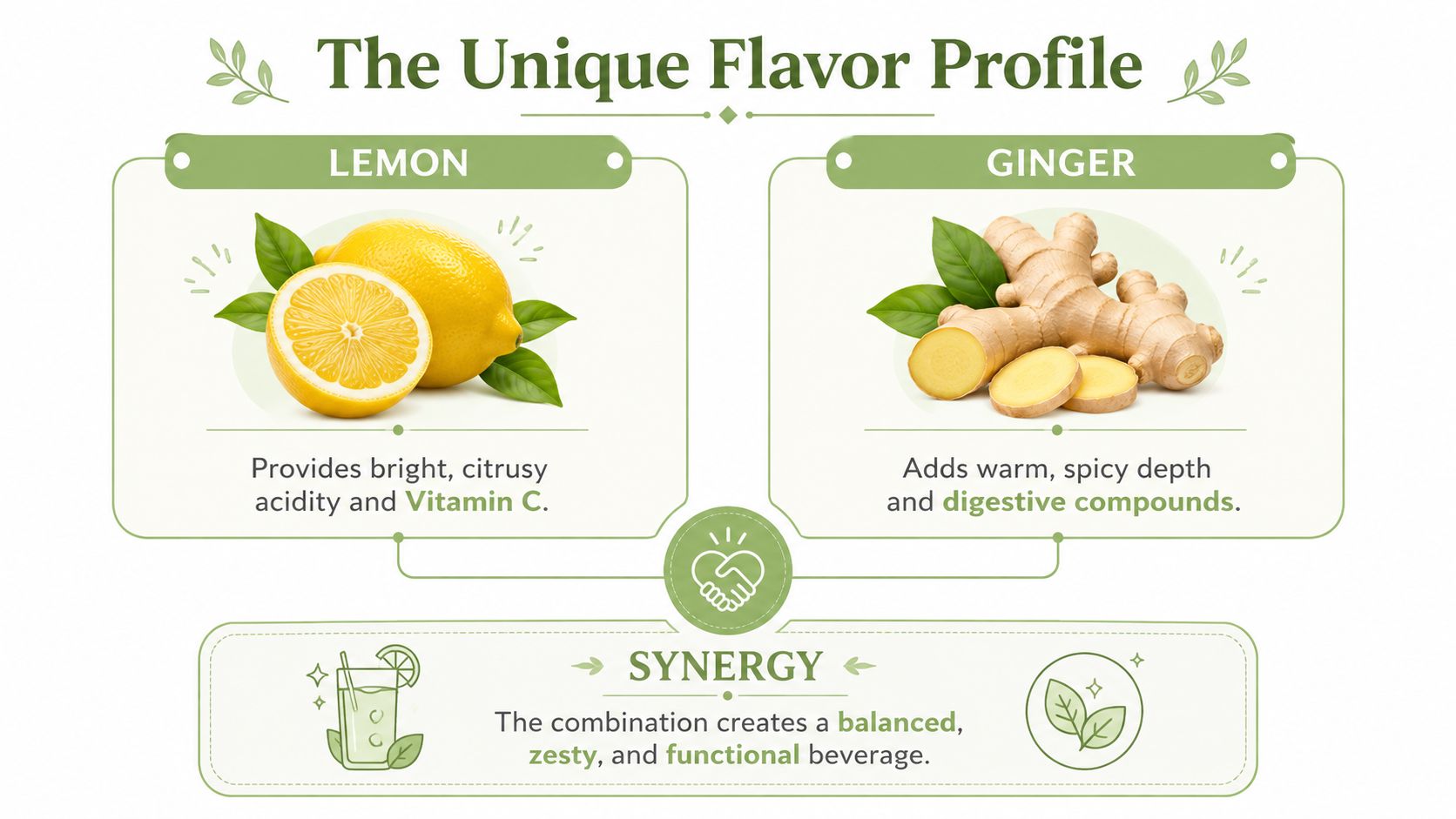
Why timing and dose change the result
Lemon and ginger affect more than flavour. A Western Sydney University study found statistically significant inhibition of S. cerevisiae and Bacillus species at 2–3% additions under low inoculum density. Lemon also inhibited L. plantarum under particular low-inoculum or higher-lemon conditions. The study's findings are discussed in more detail later in this article.
For home brewers, this makes addition timing a practical control point. Adding the ingredients after primary fermentation can make flavour adjustment easier, while fruit sugars may restart yeast activity. For cafés and packaged-product buyers, the formulation also affects consistency, refrigeration needs and alcohol management. Excess ginger can dominate the palate or interfere with culture activity, while too little leaves a sharp lemon tea profile.
Ingredient panels deserve a close read. One Australian listing specifies 0.1% lemon and 2% ginger. Remedy Ginger Lemon product information Those amounts do not determine quality by themselves, but they show why a broad wellness message should be separated from the actual recipe.
A useful tasting test: look for a clear sequence of tea, acidity and ginger warmth. If sweetness or artificial citrus takes over, the formulation is doing little beyond flavour coating.
Probiotic and Nutritional Benefits Worth Knowing
A glass of lemon ginger kombucha can supply fermented tea, organic acids and distinctive plant compounds. Its value depends on the live cultures that remain, the fermentation and processing methods, the amounts of lemon and ginger added, and the sugar left in the finished drink. That makes the recipe more informative than a broad wellness promise.
Live cultures may include organisms from groups such as Lactobacillus, Bifidobacterium and Acetobacter, although the profile varies between products. Culture names do not establish a particular health outcome. A label that identifies the cultures or provides a CFU count gives a clearer basis for comparison than a general probiotic claim.
What lemon and ginger can contribute
Lemon contributes citrus aroma, acidity, vitamin C and antioxidant compounds, depending on its dose and the way the drink is processed. Ginger supplies aromatic compounds, including gingerols, which create its warming character. Fermentation changes acidity and flavour, but it does not guarantee that every nutrient or plant compound becomes more bioavailable.
The Western Sydney University work found that lemon-treated kombucha increased antioxidant activity by 5–15% in a FRAP assay. That result applies to the tested formulation and assay, rather than to every lemon ginger kombucha. The study's research record The practical lesson is straightforward: ingredient concentration and fermentation conditions shape the result, so dosing matters alongside the ingredient list.
For a broader explanation of fermentation, live cultures and practical use, read Pep Tea's guide to the benefits of kombucha.
A realistic daily role
A small serve can replace a sweet soft drink or add variety to a hydration routine. It may suit people who enjoy tart, sparkling drinks and want a fermented option. It cannot correct an unbalanced diet, poor sleep or an underlying digestive condition.
Acidity also matters in everyday use. People with reflux, dental sensitivity, diabetes, pregnancy-related dietary questions or medically restricted diets should check the label and seek individual advice from a qualified health professional.
Australian product pages may highlight live cultures, organic acids and “no sugar” positioning without explaining the limits for every customer. Woolworths product information for Remedy Ginger Lemon A transparent label should help you assess acidity, sweeteners, caffeine, storage and ingredients. For home brewers and cafés, those details also support sensible portioning and menu descriptions.
Brewing and Selecting Quality Lemon Ginger Kombucha
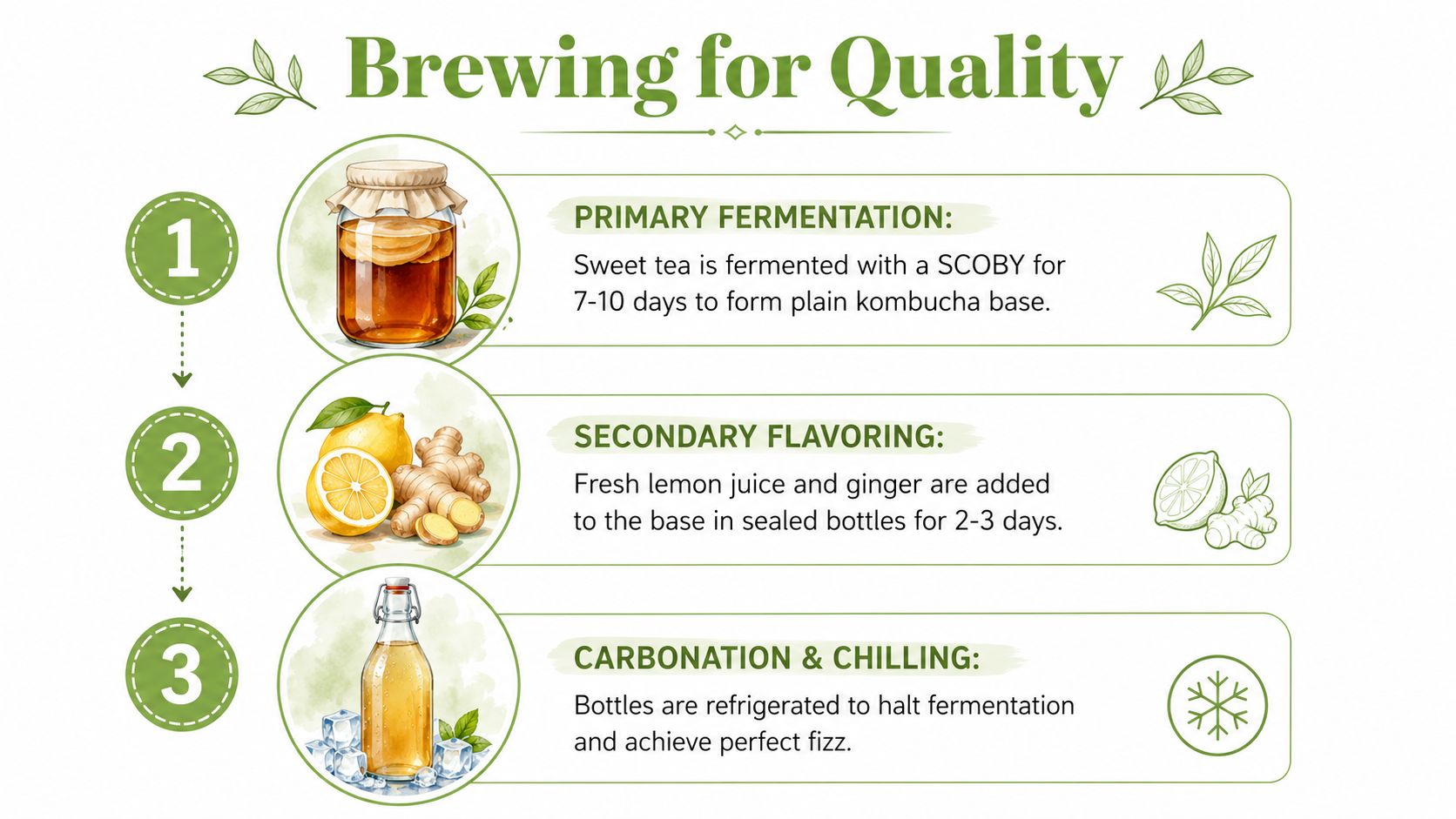
A reliable batch starts with control, not flavour improvisation. Primary fermentation creates the plain kombucha base. A later flavouring stage introduces lemon and ginger, then the sealed drink may develop carbonation before refrigeration slows further activity.
A controlled brewing sequence
For home brewers, the process can be organised around three decisions:
Build a sound base. Brew tea, add the required sugar, cool it properly, then ferment with an active SCOBY and starter liquid. Australian room conditions vary, but a working range of 24–28°C is commonly used for fermentation planning. Time, temperature and culture strength all change the final acidity.
Add flavour with restraint. Fresh ginger root gives a cleaner, more layered heat than powder, while lemon juice supplies direct acidity. Zest brings aromatic citrus oils but can become bitter if overused. A brewer should taste the base first, then make a measured addition rather than tipping in ingredients by guesswork.
Manage the bottle stage. Lemon and ginger can introduce residual sugars or fermentable material. In a sealed bottle, yeast may continue working, creating pressure and increasing alcohol. Refrigeration helps slow that activity, but it isn't a substitute for a validated process.
A purpose-built kombucha brewing container from Pep Tea can help keep the process organised, but equipment won't correct a weak starter, poor sanitation or uncontrolled temperature. Clean vessels, sound tea and careful observation remain the foundation.
Alcohol is a production issue
Australian testing shows why brewers and buyers shouldn't assume kombucha is automatically non-alcoholic. A Food Standards Australia New Zealand survey found 35.2% of sampled kombuchas below 0.5% ABV, 41.9% between 0.5% and 1.15% ABV, and 22.9% above 1.15% ABV. FSANZ coordinated survey of fermented soft drinks
In Queensland, Tasmania and Victoria, beverages above 0.5% ethanol by volume are classified as alcoholic, while jurisdictions using a 1.15% threshold apply a different boundary. The practical lesson is simple: producers need batch consistency, appropriate labelling and testing where necessary.
For troubleshooting, excessive sourness usually points to an overextended fermentation or too little residual sweetness. Weak carbonation may reflect insufficient fermentable material, a loose seal or a short bottle stage. Mould is a safety failure, not a flavour problem. Discard a mouldy batch rather than trying to rescue it.
Serving Ideas and Café Menu Applications
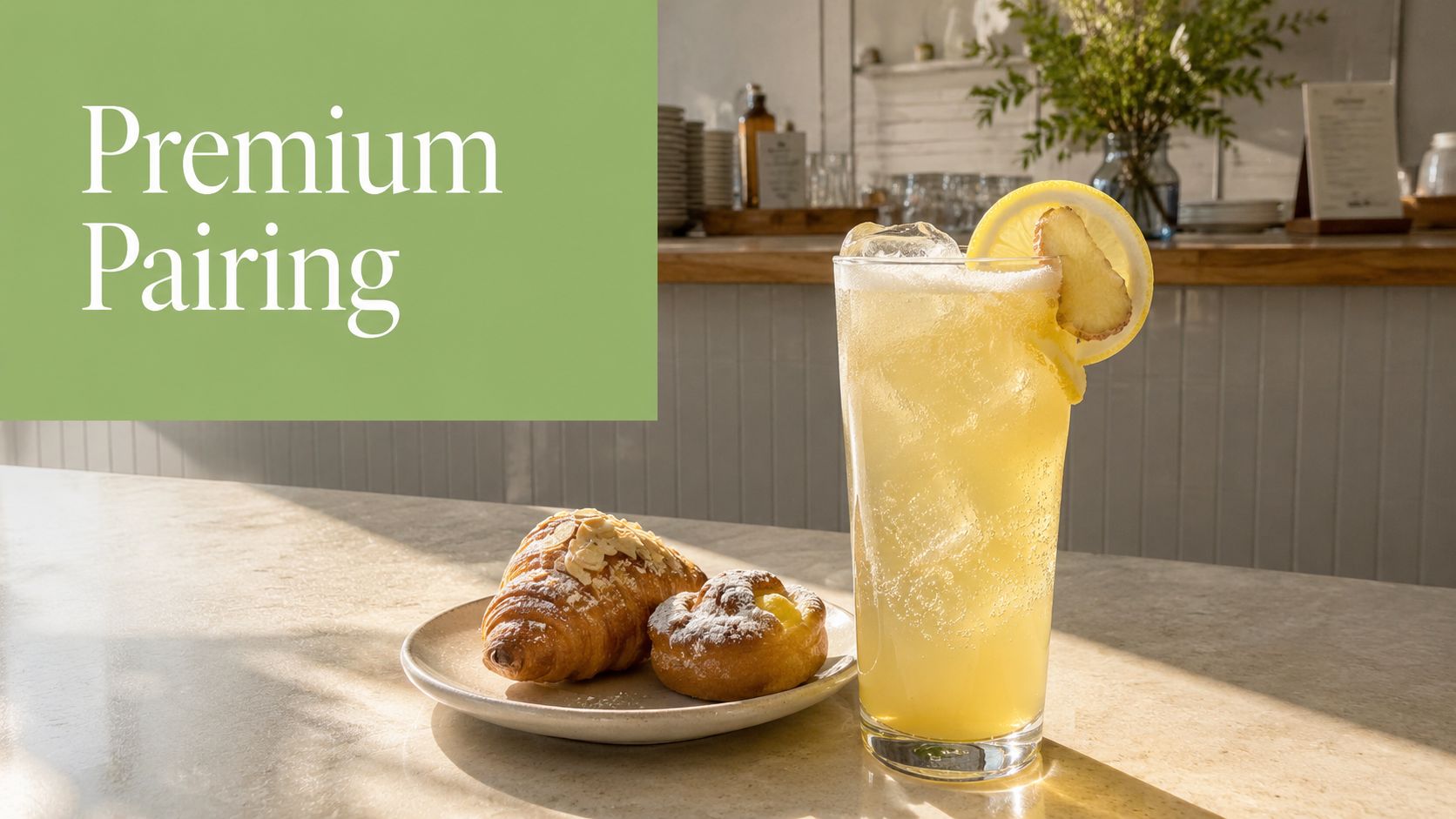
At a café, lemon ginger kombucha can arrive in a clear glass over ice, finished with a lemon wheel and a thin slice of fresh ginger. That presentation makes the ingredients visible and gives customers a quick sensory cue before they taste it. Serve it cold, pour gently and avoid burying the fermented character under syrups.
Three useful menu formats
A kombucha spritz combines chilled lemon ginger kombucha with muddled mint, ice and a small amount of soda water. Keep the additions restrained so the acidity and ginger remain recognisable. A fermented mule uses kombucha as the ginger element, with lime, ice and a non-alcoholic spirit if the venue wants a more structured bar-style serve.
Food pairing is straightforward. Lemon's acidity can cut through rich avocado toast, smoked salmon or pastry, while ginger brings enough spice to sit comfortably beside an Asian-inspired bowl. The drink's tartness can also refresh the palate between bites, especially where a creamy or oily component dominates.
Operational details for venues
Cafés should treat kombucha as a living product. Keep stock within the supplier's recommended cold-chain conditions, rotate it carefully and avoid leaving open bottles at room temperature for long periods. If a venue uses a keg or tap system, the team should confirm compatibility with the producer, maintain clean lines and monitor carbonation and flavour over service.
For winter, a café can offer a room-temperature or gently warmed spiced tea alternative using turmeric and cinnamon, but heating kombucha may affect live cultures and carbonation. Summer menus can use cucumber and basil for a lighter aromatic variation. For wider seasonal planning, Simply Hospitality's seasonal beverage ideas offers useful hospitality context.
Menu wording should stay accurate. “Fermented tea with lemon and ginger” tells customers more than an unqualified promise about gut health, and a clear alcohol statement helps staff answer questions confidently.
How to Choose the Best Lemon Ginger Kombucha in Australia
The best bottle isn't necessarily the one with the loudest wellness language. Start with the ingredient list, then assess processing, storage and taste. A mass-market product may be convenient and consistent, while a small-batch producer may offer a more distinctive fermentation profile. Neither label category guarantees quality.
Look for real lemon and ginger, rather than relying only on “natural flavour”. Check whether the drink is raw or unpasteurised, but remember that those terms still need context. A live product can change in the bottle, and a producer should be able to explain its storage and alcohol-control practices.
A practical comparison
| Quality Factor | Mass-Market Options | Premium/Small-Batch, for example Pep Tea |
|---|---|---|
| Ingredient detail | May provide a shorter or less specific flavour description | More likely to identify tea, cultures and flavour ingredients clearly |
| Processing | May prioritise shelf stability and broad distribution | May retain a more pronounced fermented profile, depending on process |
| Sugar positioning | Check whether fruit juice or concentrates contribute sweetness | Look for a clear sugar statement and an ingredient list you can understand |
| Alcohol control | Confirm the product's labelling and storage instructions | Ask how fermentation consistency and testing are managed |
| Flavour | Often designed for broad appeal | May show clearer tea, citrus and ginger character |
| Cold chain | Storage can vary across transport and retail | Chilled handling and producer guidance are especially important |
Australian food law treats kombucha as a traditional food rather than a novel food, so it doesn't need special pre-approval. It still has to be safe and suitable, and general food laws apply. CHOICE's kombucha guidance also notes that a low-sugar claim in Australia requires 2.5 g sugar or less per 100 mL.
Label questions worth asking
- Cultures: Are live cultures stated, and are specific organisms or CFU information provided?
- Sugar: Is “sugar free” supported by the nutrition panel, rather than inferred from a health claim?
- Acidity: Does the product suit your teeth, reflux history and preferred taste?
- Alcohol: Does the producer explain how ABV is controlled and labelled?
- Storage: Does the bottle require refrigeration, and has it stayed cold through retail?
For an Australian buying guide and retailer context, Pep Tea's guide to buying organic kombucha in Australia provides a useful starting point.
Making Lemon Ginger Kombucha Part of Your Routine
A home brewer pours lemon ginger kombucha after lunch, while a café owner serves the same style over ice with a citrus garnish. In both settings, its value comes from practical use rather than broad wellness promises: fermented tea, ginger warmth, acidity and carbonation in a soft-drink alternative or non-alcoholic menu base.
Start with a small serve and observe how your body handles acidity and carbonation. For cafés, trial it beside brunch or as a seasonal mocktail, then check whether the flavour remains balanced when diluted with ice or paired with food.
A reliable routine also depends on consistent brewing. Home brewers can adjust lemon and ginger gradually, while venues need a repeatable recipe, cold storage and a clear approach to alcohol control. The aim is a drink people can enjoy regularly, with its ingredients and production understood.
Explore Pep Tea's Australian-made organic kombucha options, including its sugar-free Lime & Ginger style, for a practical lemon-and-ginger-style choice.
Pep Tea offers organic tea and Australian-brewed sugar-free kombucha for home drinkers, cafés and wholesale customers. Visit Pep Tea to explore the range and brewing resources.