
What Is Ceremonial Matcha? the Real Difference
Most advice about matcha starts with colour: if the powder is bright green, it must be ceremonial. That's a useful first clue, but it isn't enough. In Australia, products carrying similar “ceremonial” language can vary in origin, processing, flavour and price, while the term itself doesn't provide a universal grading standard.
So, what is ceremonial matcha? It's the highest-grade form of matcha, traditionally made from the youngest tea leaves picked during the first harvest. Those leaves are shaded before picking, processed into tencha, stripped of stems and veins, and stone-milled into an exceptionally fine powder. The result is designed to be whisked with water and enjoyed on its own, not hidden in sugar, milk or flour.
Understanding that journey makes it easier to judge a product by what's behind the label, rather than by packaging alone.
Defining Ceremonial Matcha Beyond the Label
Not every green tea powder is matcha, and not every product called ceremonial matcha offers the same experience. The word has become common in Australian cafés and online shops, but the useful question isn't just, "Does the tin say ceremonial?" It's, "What leaves were used, how were they grown, and how were they processed?"
Ceremonial matcha is made from the youngest leaves of the first harvest, often called ichibancha. These leaves are valued for their bright colour, fine texture and naturally rounded flavour. Producers shade the plants before harvest, then turn the leaves into tencha before grinding them into powder. Because you consume the whole leaf rather than steeping it and discarding it, the raw material and processing have a direct effect on what ends up in your bowl.
Historical accounts trace powdered tea practices from China to Japan in the 12th century, while the Japanese tea ceremony was fully established by the late 15th century. That gives ceremonial matcha a place within over 500 years of ritualised use in Japan, as described in this history of Japanese matcha in Australia.
What you're paying for
A premium price should reflect more than a vivid label. You're paying for careful cultivation, selective harvesting, refined processing, stone milling and appropriate handling. Those choices influence whether the powder tastes creamy and umami-rich or harsh, dusty and bitter.
Ceremonial matcha is traditionally intended for straight preparation with water. That doesn't mean you can't use it in a latte, smoothie or dessert. It means the powder should be pleasant enough to drink without needing other ingredients to cover flaws.
The simplest quality test is also the most revealing: can you enjoy it with water alone?
The term “ceremonial” can help shoppers find the style of matcha they want, but it shouldn't replace checking the product details. Look for a clear Japanese origin, first-harvest information, shade-growing details, tencha processing and sensible storage guidance. These details tell you much more than the front of the pouch.
The Cultivation and Processing of Premium Tencha
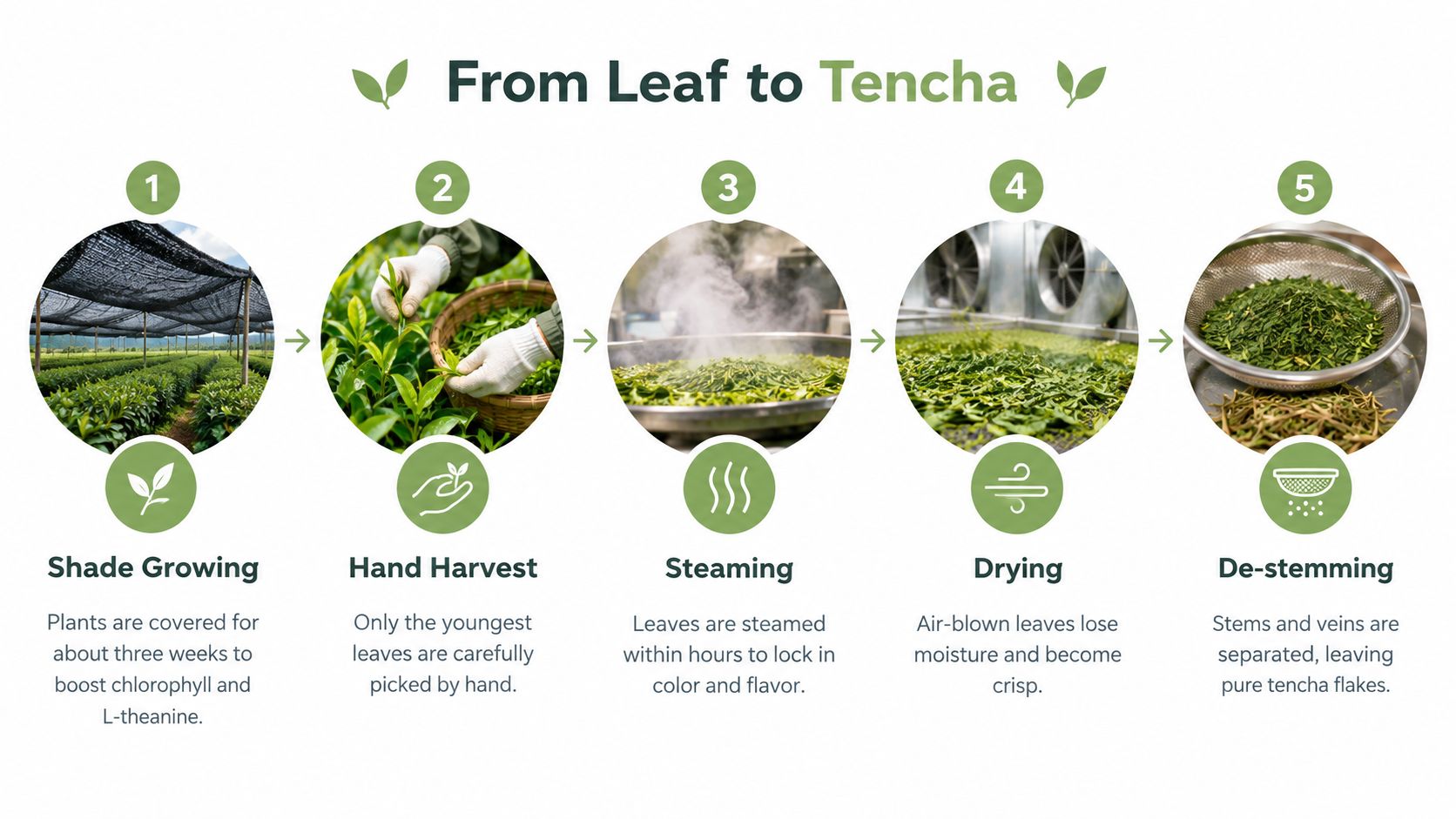
A ceremonial bowl begins in a tea field long before anyone reaches for a bamboo whisk. Farmers first prepare the plants for a controlled period of shade, then harvest the youngest leaves and process them quickly to protect their colour and flavour.
Shade changes the leaf
Producers commonly shade tea plants for about 20 to 40 days before harvest. This limited sunlight encourages the plant to retain more chlorophyll and preserve L-theanine, an amino acid associated with sweeter flavour and reduced bitterness. The result is the deep green colour and savoury-sweet umami that people expect from well-made matcha. See this explanation of matcha grades and shading for more detail.
The plants are then harvested for their youngest leaves, usually during the first spring picking. Timing matters because older leaves tend to produce a more assertive, astringent cup, while tender first-harvest leaves are better suited to drinking straight.
From fresh leaf to tencha
After harvest, the leaves are steamed to halt oxidation and help retain their green character. They're then dried, creating the material that will be refined into matcha. Unlike many other tea styles, the leaves aren't rolled into familiar needle shapes.
The stems and veins are removed next, since these tougher parts can add coarseness and unwanted bitterness. The remaining leaf material is called tencha, the raw material used for authentic matcha. This guide to how matcha tea is made provides a practical look at the stages involved.
Finally, producers stone-mill the tencha into a very fine powder. Slow milling helps create the silky mouthfeel associated with ceremonial matcha, although it also makes production careful and labour-intensive. The finished powder is more than dried green tea ground up at random. It's the product of shade management, selective harvesting and specialised processing.
That craftsmanship also explains why fresh ceremonial matcha can taste so different from ordinary green tea powder. The leaf has been cultivated for a particular flavour profile, prepared for suspension in water and milled finely enough to become part of the drink's texture.
The Biochemical Profile and Health Benefits
Matcha's distinctive appeal comes partly from the fact that you drink the powdered leaf. With ordinary green tea, you steep the leaves and remove them. With matcha, the prepared powder remains in the bowl, so the drink contains the compounds present in the leaf material.
One Australian analytical report for a ceremonial matcha product lists total catechins at 65,200 micrograms per gram, including 56,000 micrograms per gram of EGCG, with L-theanine at 21,300 micrograms per gram and caffeine at 33,300 micrograms per gram. These figures come from the product's published analysis, not from a universal value for every ceremonial matcha, so they're best understood as an example of the biochemical profile that can occur in a carefully produced product. The published ceremonial matcha analysis shows why laboratory information can be more useful than broad wellness language.
Antioxidants and EGCG
Catechins are naturally occurring compounds in tea. EGCG, or epigallocatechin gallate, is one of the best-known tea catechins and is often discussed for its antioxidant activity. Antioxidants help protect cells from oxidative stress, but matcha shouldn't be treated as a medicine or a substitute for a varied diet.
If you'd like a plain-language explanation of the compound itself, Pep Tea's guide to what EGCG is is a useful place to start. The practical takeaway is simple: a high-quality matcha can contribute tea polyphenols to your daily routine, but the product's actual composition depends on cultivar, harvest, cultivation, processing and storage.
L-theanine and caffeine
L-theanine gives matcha much of its character, both in flavour and in how the drink feels. Paired with caffeine, it may support a state of calm alertness, which many people experience as focused energy rather than the sharper lift associated with coffee.
That doesn't mean matcha can never feel stimulating or that everyone will respond in the same way. Caffeine sensitivity varies, and serving size, timing and whether you've eaten all matter. People who are pregnant, managing a medical condition or taking medication should seek individual advice from a qualified health professional.
Matcha is also sometimes described as immune-supporting because tea compounds and a balanced diet may contribute to general wellbeing. Keep the claim proportionate. Ceremonial matcha can be a nutrient-rich, enjoyable beverage, but it isn't an immunity cure.
Ceremonial Grade Versus Culinary Grade Matcha
Ceremonial and culinary matcha aren't rival products where one is automatically good and the other is automatically poor. They're made for different jobs.
Ceremonial matcha is selected for drinking with water. Culinary matcha is generally chosen for recipes where the powder needs to hold its flavour against milk, sugar, flour, fruit or other strong ingredients. It may come from later harvests or use leaf material with a more pronounced bitterness, which can be useful in baking and blended drinks.
| Feature | Ceremonial Grade | Culinary Grade |
|---|---|---|
| Primary use | Whisked with water and enjoyed straight | Lattes, smoothies, baking, sauces and desserts |
| Leaf selection | Young first-harvest leaves | Often later-harvest or more robust leaf material |
| Flavour | Smooth, umami-rich and naturally rounded | More assertive, grassy or astringent |
| Colour | Usually vivid green | Can be green but often less luminous |
| Texture | Very fine and silky | Fine powder, though texture can vary |
| Best buying question | Is it enjoyable without added flavour? | Will it remain noticeable in the finished recipe? |
Choose for the way you'll drink it
If your morning ritual is a small bowl of matcha and water, ceremonial grade makes sense because its delicate sweetness and umami are exposed. Poor-quality powder has nowhere to hide in that preparation.
For a matcha latte, the choice is more personal. A good culinary powder can be practical, especially if you're adding milk and a sweetener. A ceremonial powder can also make an excellent latte, particularly when you want a softer flavour and a cleaner finish. The important point is not to buy the most expensive product automatically. Buy the grade that suits your actual use.
Where the confusion begins
Some Australian listings describe ceremonial matcha as water-only, while others promote the same style for lattes. That isn't necessarily a contradiction. “Ceremonial” describes the intended quality and drinking style, not a rule that forbids every other recipe.
The distinction becomes clearer when you think about flavour. Use ceremonial matcha when the tea itself is the centre of attention. Use culinary matcha when it's one ingredient among several.
How to Identify Authentic Ceremonial Matcha in Australia
Australian shoppers have plenty of choice, but the variety can make comparison difficult. Similar products may use the same words, while prices for comparable-sounding listings can range from about A$35 to A$69.99, as shown in this Australian ceremonial matcha product listing. Price alone can't prove quality, but it should encourage you to inspect the details.
Use a practical checklist
Read the harvest description. Look for first harvest or ichibancha language, rather than relying only on “premium” or “ceremonial”.
Check the colour. Fresh ceremonial matcha is generally a vibrant green. A dull, yellowish or brownish appearance can indicate older material, oxidation or poor storage, although colour should always be judged alongside taste and provenance.
Inspect the texture. The powder should feel exceptionally fine and silky. Grittiness suggests that the product hasn't been milled or refined to the standard expected of a whisked tea.
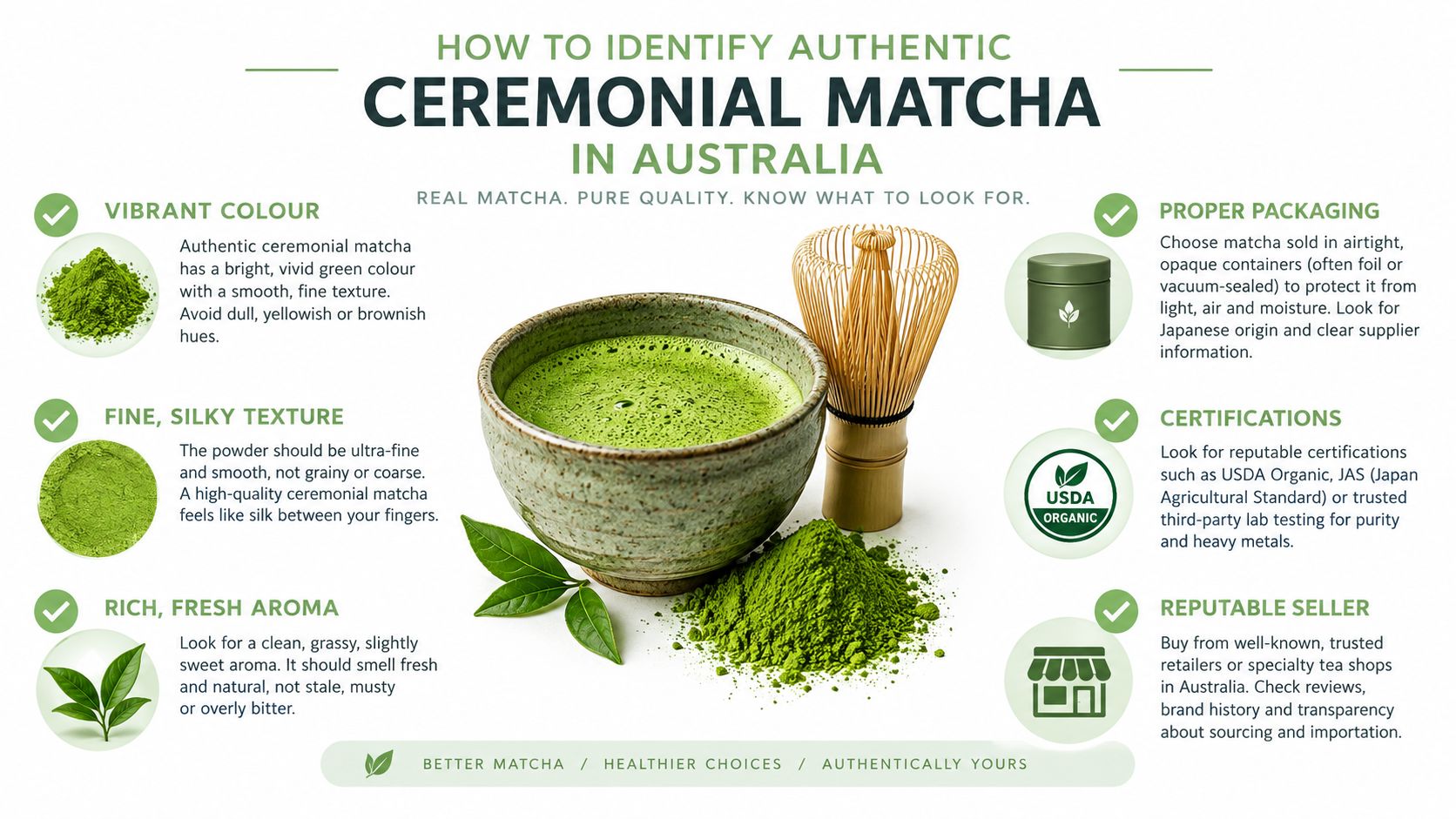
Look for tencha processing. A credible product description should explain that the leaves were de-stemmed and de-veined before stone milling. This overview of ceremonial matcha processing explains why those steps affect texture.
Ask where it was grown and packed. Japanese origin should be clear, not buried under vague language such as “Japanese-style”.
Treat pricing as context, not proof. First-harvest tea, careful shading and stone milling require more work, so an unusually low price deserves closer inspection. A high price doesn't guarantee authenticity either.
Ask for evidence, not adjectives
Look for batch information, organic certification where relevant, storage guidance and analytical information. A supplier that can explain the leaf, harvest and processing gives you something concrete to evaluate.
The most reliable buyer doesn't chase the brightest green pouch. They compare the agricultural and processing story with the sensory result in the cup.
Traditional Preparation and Tasting Notes
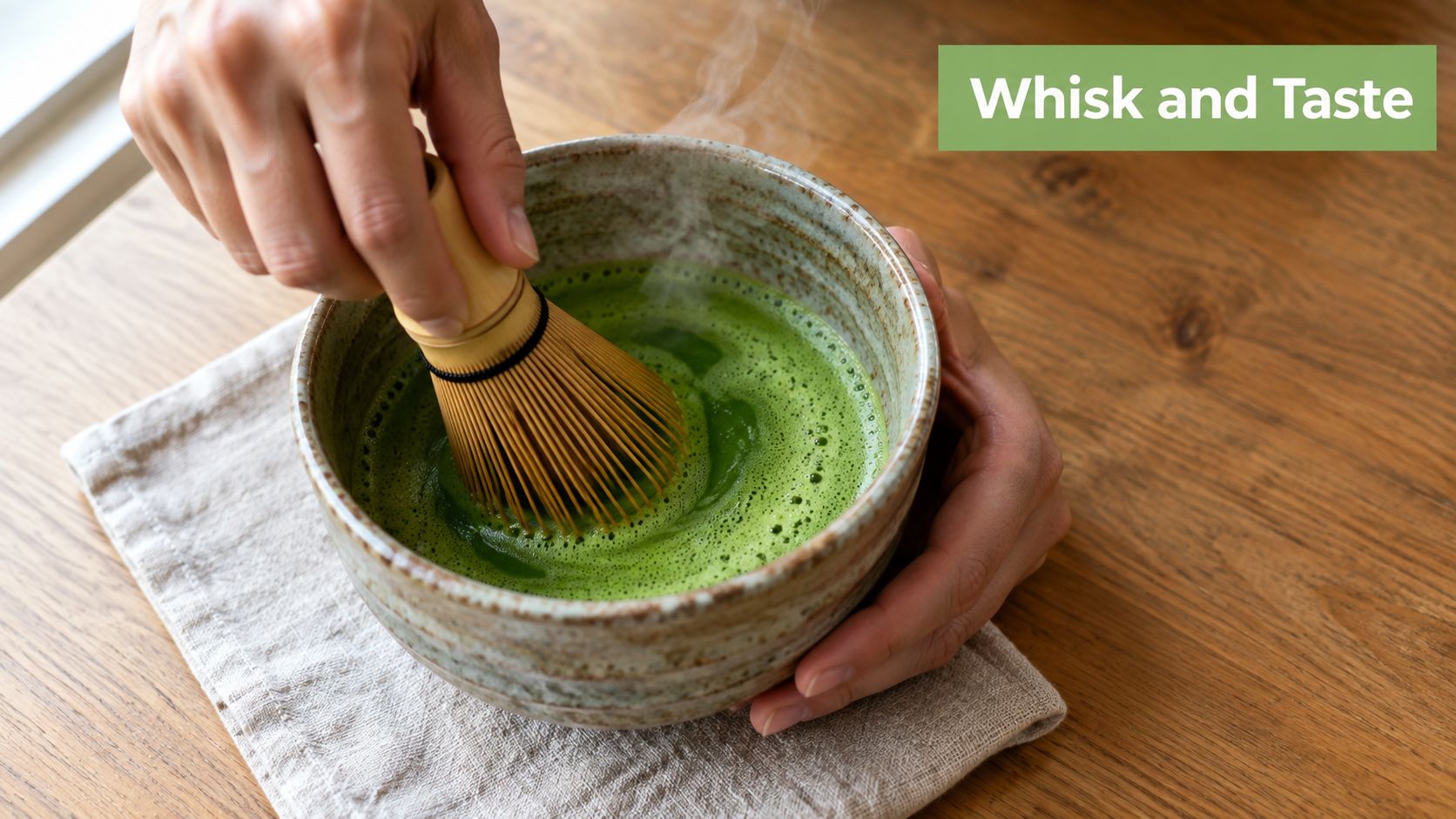
Premium matcha is forgiving once you understand the basics, but it isn't prepared like a teabag. The traditional setup uses a chawan, or bowl, and a chasen, the fine bamboo whisk. A small sieve is also helpful because it breaks up clumps before they become difficult to disperse.
A simple bowl method
Warm the bowl, then discard the warming water.
Sift the matcha into the bowl. Sifting isn't ceremonial theatre. It helps the fine powder combine with water smoothly.
Add a small amount of hot water that has cooled below boiling. Water that's too hot can push delicate flavours towards harshness and flatten the tea's sweeter notes.
Whisk briskly using a light W or M motion, keeping the whisk near the surface rather than stirring slowly around the edges.
Add more water to reach your preferred strength, then drink soon after whisking so the powder stays evenly suspended.
The bowl should feel creamy rather than sandy. Expect fresh vegetal notes, gentle sweetness and a savoury umami finish. A little bitterness can be part of tea's character, but pronounced harshness often points to water that's too hot, too much powder, an older product or unsuitable raw material.
For a closer look at the ritual, explore Pep Tea's guide to the matcha tea ceremony.
Here's a visual demonstration of the whisking rhythm and bowl preparation:
If your first bowl tastes strong, adjust one variable at a time. Try cooler water before reducing the powder, then experiment with a little more water. Matcha rewards attention, but it doesn't require perfection.
Integrating Premium Matcha Into Your Daily Routine
Ceremonial matcha can fit neatly into an Australian morning without turning every cup into a formal tea ceremony. Prepare it traditionally when you have a quiet moment, or whisk it into a small latte when you're heading into work. The quality still matters because a smooth powder gives you more flexibility, especially when you sometimes drink it with water and sometimes with milk.
Many people prefer matcha earlier in the day, when its caffeine and L-theanine profile suits focused work, study or a calm start. If you're sensitive to caffeine, drink a smaller serving, have it with food and pay attention to how your body responds.
Keep the ritual realistic
A useful routine might look like this:
- Morning focus: whisk matcha with water before opening your phone or starting your commute.
- Café-style break: make a simple latte without heavy syrups so you can taste the tea.
- Recipe use: reserve culinary grade for smoothies, baking, ice cream and other recipes where stronger ingredients are involved.
- Thoughtful storage: protect the powder from heat, moisture, light and air, and follow the supplier's storage instructions.
Australia's interest in matcha has accelerated sharply. One market source reports that Australian matcha imports rose 62.91% from 2023 to 2024, while another report says Australia imported 195,319 kilograms of Japanese green tea between January and August 2025, a 131% year-on-year increase, ranking Australia as the eighth-largest export destination for Japanese green tea. These figures are reported in the Australia matcha tea market data, and they help explain why shoppers need clearer quality guidance as more products appear.
The best choice is the matcha you'll prepare and enjoy regularly. For some people, that means a delicate bowl of ceremonial powder. For others, it means keeping ceremonial grade for water preparation and using culinary grade for creative recipes.
Pep Tea offers organic Japanese matcha, including ceremonial-grade powder, alongside Australian-brewed sugar-free organic kombucha from the Hunter Valley, NSW. Visit Pep Tea to explore the matcha range, learn more about preparation and find functional drinks suited to everyday routines.