
Tag: raw kombucha australia
Real Raw Organics Kombucha: An Australian Buyer’s Guide
You're probably standing in front of a fridge full of bright labels right now, looking at words like raw, organic, living, probiotic, and real, and wondering which ones mean something and which ones are just packaging.
That confusion is fair. Kombucha has picked up a lot of wellness language, and not every bottle earns it. Some brews are carefully fermented and cold handled. Others feel more like flavoured fizzy tea dressed up to look the part.
If you've been searching for Real Raw Organics kombucha or trying to work out what matters when choosing a proper kombucha in Australia, the useful question isn't “Which label sounds healthiest?” It's “What signs tell me this was brewed with care, handled safely, and sold transparently?”
That's where this guide helps. We'll keep it practical, plain-English, and grounded in what a buyer can check on the shelf.
The Kombucha Aisle Dilemma
Walk into a health food shop, a local grocer, or even a café fridge, and you'll see the same pattern. Every bottle seems to promise purity, gut support, live cultures, and natural ingredients. At a glance, they all look similar.
The trouble starts when those words blur together. Real sounds reassuring. Raw sounds wholesome. Organic sounds cleaner. Living sounds active and beneficial. But those terms don't all point to the same thing, and they don't all tell you whether the brew was handled properly.
Some brands lean heavily on rustic branding. Murky bottle. earthy colours. farmhouse language. That can be fine, but it can also hide sloppy process. A rough-looking bottle isn't proof of authenticity. Sometimes it's just rough-looking.
A good kombucha should feel transparent, not mysterious. If a brand makes big promises but gives you little detail, that's worth noticing.
That's why a practical buying framework matters more than marketing language. You want to know what's in the bottle, how it was fermented, whether the culture is still alive, and whether the producer seems organised enough to manage a living drink safely.
If you're comparing local options, this guide on where to buy organic kombucha in Australia is a handy next step once you know what to look for.
Why buyers get stuck
A few things trip people up again and again:
- They confuse cloudy with high quality. Some sediment is normal in raw kombucha. A chaotic bottle isn't automatically better.
- They assume “organic” means “raw”. It doesn't. Organic refers to ingredients and farming standards, not whether the drink still contains live cultures.
- They treat all fizz the same. Natural fermentation and added carbonation can produce very different drinking experiences.
- They assume more claims means more quality. Often the opposite is true. Good producers usually explain their process clearly and directly.
That's the kombucha aisle dilemma. Not too few choices. Too many labels saying almost the same thing.
Defining Raw and Organic Kombucha
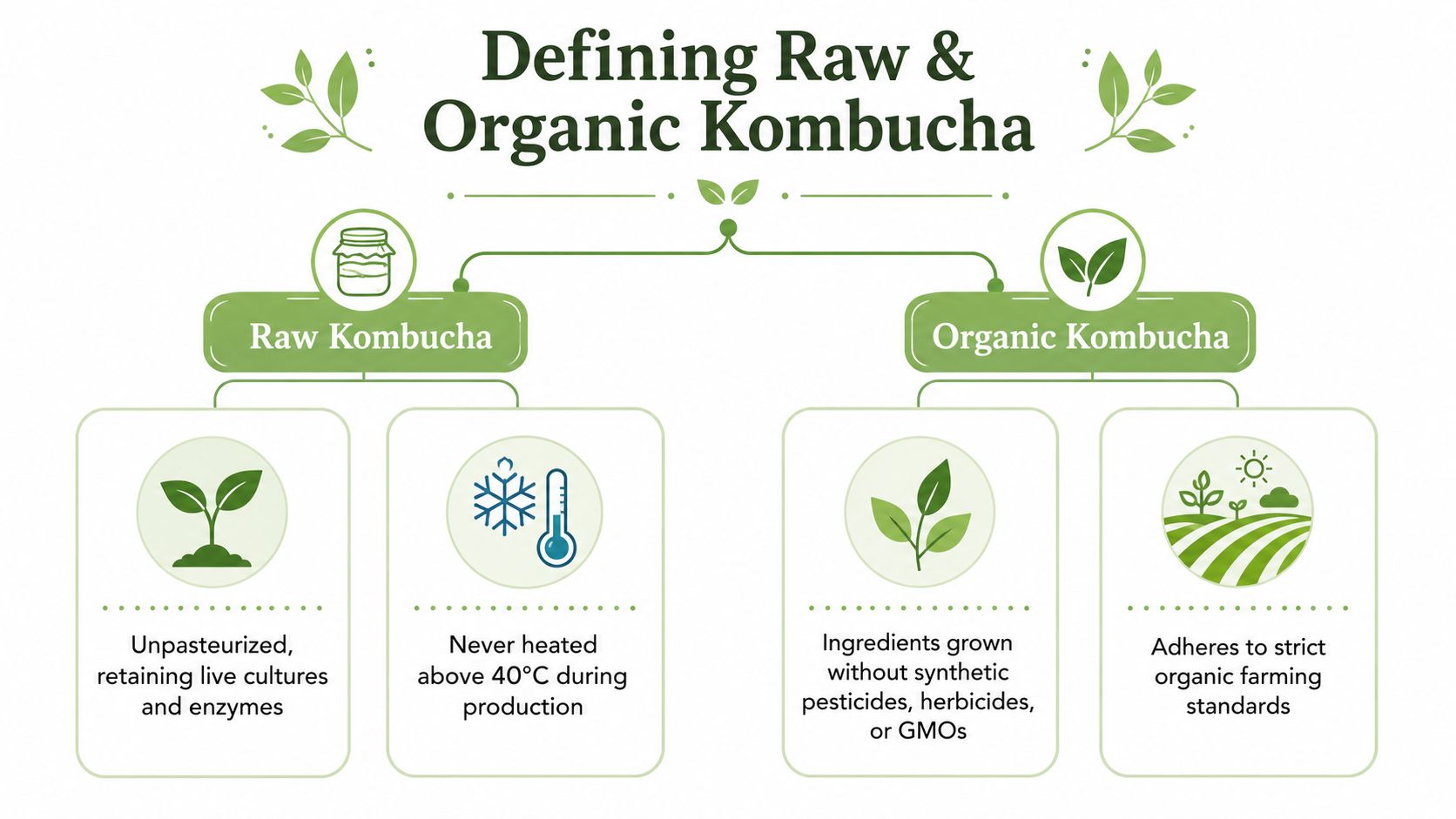
You can save yourself a lot of confusion by sorting kombucha claims into three separate ideas: raw, organic, and living. On the shelf they often get bundled together, but they answer different questions. One is about processing, one is about ingredients, and one is about whether the culture is still active in the bottle.
What raw means in practice
Raw kombucha usually means the drink has not been pasteurised after fermentation. In everyday terms, it has not been heat-treated to the point that the live culture is knocked back or wiped out. That matters because the culture is not a decorative extra. It is part of what makes kombucha kombucha.
A good way to picture it is fresh yoghurt versus a shelf-stable yoghurt dessert. They may look similar from a distance, but they are not handled the same way and they do not offer the same living character. Raw kombucha works in that same practical sense.
Raw also helps explain sediment, which confuses plenty of buyers. A light layer at the bottom, fine strands, or a bit of cloudiness can be normal in a living brew. It can come from yeast, tea particles, or new culture forming. Sediment is not a gold medal for quality, and it is not a warning sign by itself either. It is only one clue, and you need to read it alongside the label, storage instructions, and how clearly the producer explains their process.
If you want a plain-English look at how the culture develops, this guide to making and understanding a kombucha SCOBY helps connect what is happening in the jar to what you later see in the bottle.
What organic actually tells you
Organic kombucha refers to the ingredients used to make it. That usually means the tea, sugar, fruit, herbs, or spices were grown and handled under organic standards rather than conventional farming systems.
That is useful information, but it does not tell you how carefully the kombucha was brewed. A producer can start with organic ingredients and still rush fermentation, over-flavour the batch, or process it in a way that strips out the living character. The reverse can also be true. A kombucha can be raw and alive without every ingredient being organic.
For shoppers, this is the key distinction. Organic tells you about sourcing. Raw tells you about processing.
What living refers to
A living kombucha still contains active microbes from fermentation. On the label, that may appear as live cultures or similar wording. In Australia, that claim should sit comfortably with the rest of the product details, especially refrigeration and shelf-life. If a bottle presents itself as alive but is treated like a soft drink that can sit warm indefinitely, it is fair to ask more questions.
Research on kombucha composition has also found that fermentation can change the drink's profile by producing organic acids and transforming tea compounds, though the result depends heavily on the tea, sugar, culture, and brewing conditions, as described in this review of kombucha processing and composition.
That last part matters. “Living” is not a magic word. It does not guarantee a careful brew, and it does not override basic food safety.
A quick way to separate the terms
| Term | What it points to | What it does not guarantee |
|---|---|---|
| Raw | Minimal post-fermentation heat treatment | Organic ingredients |
| Organic | Farming and ingredient standards | Live cultures |
| Living | Active microbial culture remains in the drink | Careful ingredient sourcing |
Cowboy brands often blur these lines because the blur helps them sell. A better producer makes the distinctions easy to understand. That clarity is what you want. It gives you a practical way to judge the bottle for yourself, especially when you are trying to work out whether the sediment is normal, whether the culture is likely still active, and whether the product looks handled in a way that would meet Australian expectations for a refrigerated, living drink.
Behind the Brew The Authentic Fermentation Process
You pick up a bottle, give it a gentle tilt, and see a little haze drifting through the glass. For plenty of shoppers, that is the moment the doubts start. Is that a sign of a real ferment, or a sign that something has gone wrong? The answer starts with understanding how kombucha is made.
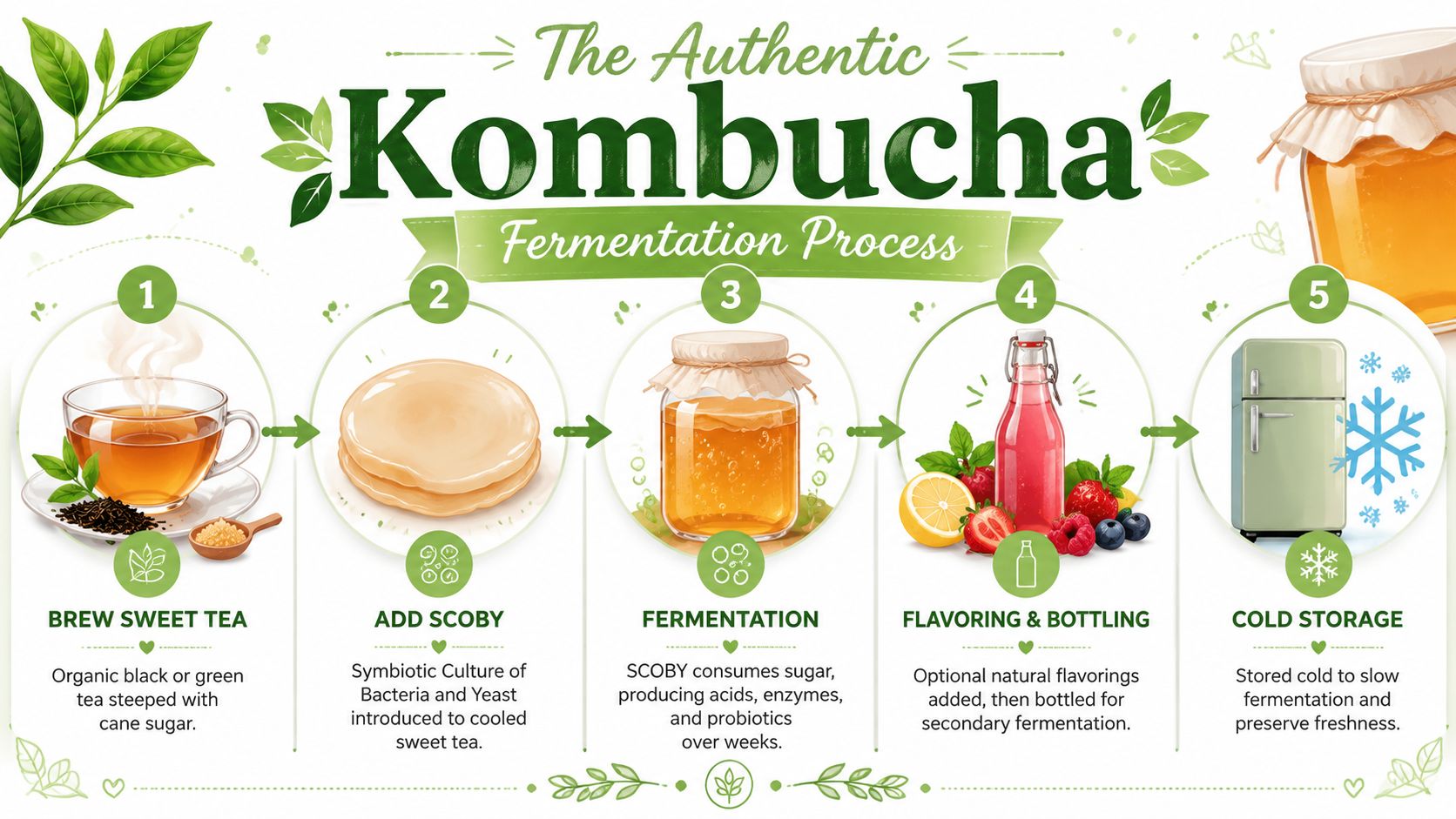
A genuine brew begins straightforwardly. Tea is steeped. Sugar is mixed in while the tea is warm. The liquid is cooled, then the SCOBY and starter liquid are added. After that, the microbes take over and slowly change sweet tea into something brighter, drier, and more complex.
What the SCOBY is actually doing
SCOBY stands for symbiotic culture of bacteria and yeast. The name sounds a bit lab-coat, but the job is easy enough to follow once you break it into stages.
First, the yeast starts feeding on the sugar. As it does, it creates alcohol and carbon dioxide. Then the bacteria use those fermentation by-products and turn them into the acids that give kombucha its clean tang. A good comparison is sourdough or yoghurt. You begin with a simple base, then a living culture reshapes it over time into something with its own character.
That also clears up one of the biggest points of confusion. Sugar is there to feed the ferment at the start. It is not there so the finished drink tastes like cordial.
Why time matters more than branding
Authentic kombucha needs time because flavour does not arrive all at once. In the early stage, the brew can taste flat and sweet. Leave it too long, and the acidity can push too far. The brewer's skill is in knowing when the tea, acidity, fizz, and remaining sweetness are in balance.
That is one of the easiest ways to spot the cowboy end of the market. Some brands build a kombucha image around fruit flavour, buzzwords, and flashy packaging, then deliver something that drinks more like soft drink with a health halo. You can add flavouring after the fact. You cannot fake the layered character that comes from a careful ferment.
A practical test helps here. If the first clear impression is sugary fruit and the tea-ferment note barely shows up, the brewing may not be doing much of the work.
For home brewers wanting to understand the culture itself, this guide on how to make a kombucha SCOBY explains the living side of the process in plain language.
What authentic fermentation looks like in the glass
A well-made raw kombucha usually leaves a few honest clues once it is poured.
- Balanced tartness. The acidity should taste refreshing and clean, not rough or aggressively vinegary.
- Natural-looking fizz. Fine bubbles usually feel more integrated than the sharp pop of a heavily force-carbonated drink.
- Tea still present. Even with ginger, citrus, or berry flavours, you should still get some sense of the tea underneath.
- A drier finish. Real fermentation often leaves the palate cleaner and less sticky than a sugary soft drink.
- Some variation bottle to bottle. Small differences can happen in living products, though a careful producer still keeps that variation under control.
Second fermentation can add more texture and lift, especially when fruit or juice is used thoughtfully. Done well, it creates extra sparkle and depth. Done poorly, it can lead to gushing bottles, muddled flavour, or sediment that looks messy rather than natural.
That point matters in Australia, where a living, fermented drink still has to be handled with care. The process should produce character, not chaos. When you understand that, sediment stops looking mysterious and starts looking like one more clue about whether the bottle in your hand comes from a real brewer or a brand just borrowing the language of one.
Reading the Signs of a Quality Brew
A quality kombucha gives you clues before you even open it. Label detail, ingredient list, sediment, fizz, and handling instructions all tell a story.
Start with what the label can prove
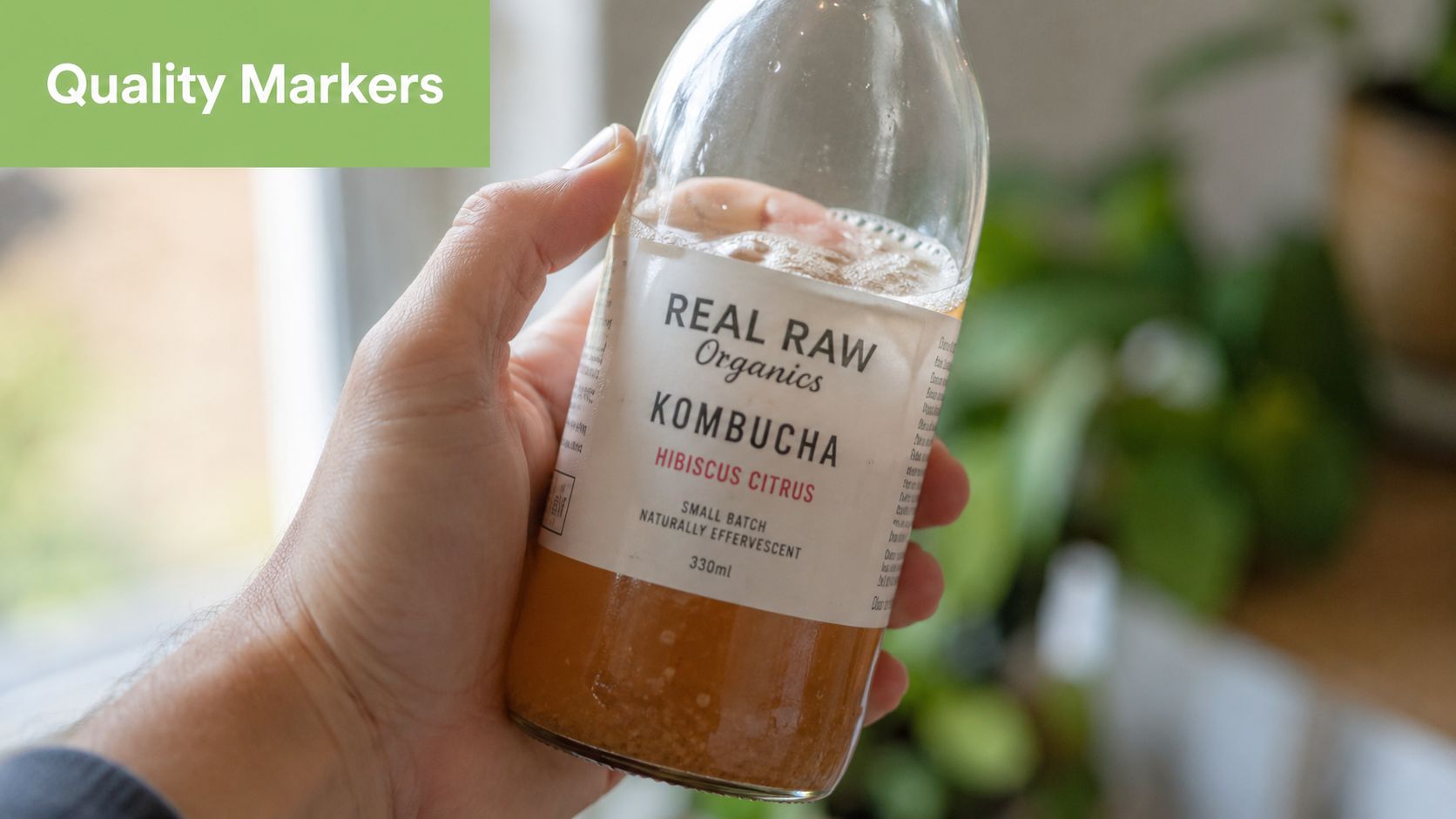
Look for specifics, not mood. “Raw”, “living”, and “organic” are useful starting words, but they should be backed by something concrete such as ingredient transparency, refrigeration guidance, or clear mention of active cultures.
Real Raw Organics states that each 16-ounce jar contains 3 billion live probiotics and says that's three times more than leading brands. The company also says the fizz comes from natural fermentation rather than force carbonation. Those are company-reported figures, so they're best treated as brand claims rather than independent lab findings, as stated on the Real Raw Organics website.
That kind of claim isn't useless. It can tell you how the brand positions its brew. But smart buyers read it as one piece of evidence, not the whole case.
What sediment really means
Sediment confuses people more than almost anything else. They see strands, flecks, or a light haze and assume one of two extremes. Either “this must be ultra-natural” or “this has gone off”.
Neither reaction is reliable.
A little sediment is normal in raw kombucha because it's a living fermented drink. Small particles of yeast, culture, or tea can settle out. That's not automatically a fault. But heavy, messy sediment can also point to less refined filtration, weaker process control, or inconsistent bottling.
A shelf-side way to think about it
- A light haze or fine sediment can be perfectly normal.
- Large floating clumps aren't always dangerous, but they may put off drinkers and suggest rough handling.
- A bottle that looks different every time you buy it can signal inconsistency.
- Clear storage instructions matter. Raw kombucha usually needs cold handling for a reason.
Sediment tells you something. It just doesn't tell you everything on its own.
Check the ingredient list with a brewer's eye
The best ingredient list is usually boring in the best possible way. Tea. sugar for fermentation. culture. maybe fruit, herbs, or spices. That's the basic frame.
If the label leans heavily on sweeteners, flavour systems, or vague “natural” language without much explanation, pause there. Kombucha should taste built, not assembled.
For buyers who want a low-sediment, certified organic Australian option, Pep Tea offers raw organic kombucha brewed in NSW as one example of a producer focusing on controlled fermentation and clean ingredient lists.
Watch how the pour behaves
This short visual is useful because quality often reveals itself once the bottle is opened and poured.
A practical buyer's checklist
| Sign | What you want to see | Why it matters |
|---|---|---|
| Culture claim | Clear language around live cultures | Suggests the drink is still active |
| Storage guidance | Kept refrigerated | Supports cold-chain handling for a living product |
| Ingredient list | Tea, fermentation inputs, recognisable flavourings | Easier to judge what's driving the taste |
| Sediment level | Some is fine, excessive isn't ideal | Helps assess process control |
| Fizz quality | Integrated natural sparkle | Often signals a more careful brew |
Good kombucha doesn't need to look rustic to be real. It needs to look managed.
Navigating Health and Safety in Australia
In Australia, the safety conversation around raw kombucha is less about drama and more about discipline. It comes down to fermentation control, alcohol management, storage, and honest labelling.
Australian food standards require fermented foods and drinks to stay within alcohol limits for their classification, and kombucha is often discussed in Australia because alcohol can vary during fermentation and storage. In practical terms, that puts the focus on labelling, batch control, and cold-chain handling, as described in the referenced note on Australian kombucha safety and alcohol variability.
Why cold storage matters
Kombucha is alive. That's a strength, but it also means the product can keep changing if it isn't stored properly. Warm conditions can push fermentation further than intended, which may affect flavour and alcohol formation.
That's why refrigeration isn't just a merchandising choice. It's part of quality control.
If you're brewing or assessing acidity at home, a digital pH meter for kombucha checks is one of the simplest tools for keeping process decisions grounded in measurement rather than guesswork.
Common questions buyers ask
Is raw kombucha safe?
For many people, a properly produced and properly stored kombucha can fit comfortably into everyday drinking. The key words there are properly produced and properly stored.
A brand should give you confidence that it understands fermentation, not just flavour.
What about pregnancy, children, or avoiding alcohol?
Those situations call for extra caution. Because kombucha is a fermented beverage, people who are pregnant, buying for children, or avoiding alcohol completely should read labels carefully and speak with a qualified health professional if unsure.
That's not fear-mongering. It's just sensible.
Does “raw” mean wild and uncontrolled?
No. In a good brewery, raw should mean carefully controlled without unnecessary heat treatment after fermentation. It shouldn't mean chaotic.
The safest raw kombucha is usually the one made by the most organised brewer.
Packaging matters too
Safety isn't only about what happens in the tank. It also includes what happens after bottling. Container choice, closure quality, and storage all affect the drinking experience.
If you're comparing reusable bottles, takeaway formats, or café service vessels, this explainer on why BPA free matters is a useful refresher on packaging considerations many buyers overlook.
How to Use Kombucha for Consumers and Cafés
Once you've found a kombucha you trust, the next question is simple. How do you use it in daily life without overthinking it?

Kombucha often works best when it replaces something less helpful. A sugary soft drink in the afternoon. A heavy mixer at dinner. Another forgettable fridge option that tastes sweet but doesn't feel refreshing.
For home drinkers
A good raw kombucha suits a few easy moments in the day:
- With lunch if you want something sharper and less sugary than soft drink
- Mid-afternoon when you're after flavour and fizz without reaching for confectionery
- With a savoury meal where acidity helps cut through richness
- As a weekend alcohol alternative poured into a proper glass, not drunk absent-mindedly from the bottle
Serve it cold, open it gently, and pour with a little care if there's visible sediment settled at the bottom.
For cafés and hospitality venues
Kombucha has become a practical menu tool because it can do more than sit in the grab-and-go fridge. It can anchor a non-alcoholic list without feeling childish or overly sweet.
A café or bar can use it in a few ways:
| Use case | Practical idea |
|---|---|
| Straight serve | Chilled bottle or glass pour with garnish |
| Mocktail base | Pair with citrus, herbs, or tonic-style elements |
| Food pairing | Match brighter flavours with brunch or lighter meals |
| Menu upgrade | Offer a fermented option beside juices and sparkling water |
Operators who want to make functional drinks easier to stock and serve also need their back-of-house systems sorted. If you're tightening purchasing and wastage control, this guide on how to optimize hospitality operations is a practical read.
Keep the serve simple
The biggest mistake cafés make with kombucha is overbuilding it. If the brew is good, it doesn't need a dozen ingredients piled on top.
Let the ferment do some of the talking. A strip of citrus peel, a clean glass, and proper chill will often beat an overcomplicated mocktail.
For drinkers at home, the same rule applies. Buy better. Fiddle less.
Your Checklist for Choosing the Best Kombucha
When you're facing a fridge full of options, keep the decision simple. Don't ask which label sounds the most natural. Ask which bottle gives the clearest signs of careful brewing.
The shortlist that matters
- Check whether it's raw or living. You're looking for signs that the culture is still active and the drink has been kept cold.
- Read the ingredients plainly. Tea, fermentation inputs, and recognisable flavourings are easier to trust than a long list of extras.
- Treat probiotic claims sensibly. Specific figures can be useful, but brand-reported numbers are still brand-reported numbers.
- Look at the sediment without romanticising it. A little can be normal. A lot isn't automatically a badge of honour.
- Consider the producer's discipline. Storage, consistency, and clear labelling tell you as much as the front label does.
- Think in Australian conditions. A living fermented drink needs good handling from brewery to shelf to home fridge.
What “real raw organics kombucha” should mean to you
It should mean more than nice packaging and wellness language. It should point to genuine fermentation, careful cold handling, sensible ingredient choices, and an honest approach to safety.
That's the difference between a proper kombucha and a cowboy one. It doesn't need to shout. It just needs to stand up to scrutiny.
If you'd like a local example of what that checklist looks like in practice, explore Pep Tea for Australian organic tea and raw kombucha options brewed with a clean, quality-focused approach.