
Tag: raspberry white chocolate muffins
Perfect Gluten Free Raspberry and White Chocolate Muffins
There's a good chance you're here because you've had one too many disappointing gluten-free muffins. They looked promising going into the oven, then came out heavy, gummy, dry, or oddly wet around the berries. That's frustrating when all you wanted was a soft, bakery-style muffin to go with a quiet morning tea or an easy afternoon break.
The good news is that great gluten free raspberry and white chocolate muffins are absolutely achievable at home. They don't need to taste “good for gluten-free”. They can taste good. The balance is what makes this style such a keeper. Tart raspberries cut through the sweetness, white chocolate rounds everything out, and the right method gives you a tender crumb instead of a dense one.
The Perfect At-Home Café Muffin Awaits
A proper café muffin has a few things going for it. It rises well, keeps a soft centre, and feels a bit generous. You get pockets of fruit, creamy sweetness from the chocolate, and a top that looks like it belongs in a bakery cabinet rather than a rushed weekday bake.
That's why this flavour combo works so well in Australian kitchens. Gluten-free eating isn't a tiny niche anymore. The Australian market for gluten-free products was valued at about USD 444.4 million in 2023 and is projected to reach about USD 730.2 million by 2030, which shows how mainstream these food choices have become, as noted by this gluten-free market context. Home bakers want the same quality they see in cafés, and they want it without guesswork.
Why this muffin earns a repeat bake
The best version of this muffin doesn't try to hide that it's gluten-free. It leans into a method that suits gluten-free flour, uses fruit carefully, and treats moisture as something to manage, not fear.
A few things make the difference:
- The flour blend matters: A good gluten-free plain flour blend gives structure and keeps the crumb from falling apart.
- Raspberries need gentle handling: They bring colour, flavour, and moisture, but they can also turn batter patchy and heavy if they're crushed.
- White chocolate is more than sweetness: It softens the tartness of the berries and gives the muffin that café-style finish.
These muffins are at their best when they feel a little indulgent and a little practical. That's the sweet spot for everyday baking.
There's also a wider reason this kind of bake keeps showing up in cafés and market stalls. Familiar bakery items with clear dietary appeal are easier for both home bakers and small food businesses to work into a regular offering. If that side of the industry interests you, this profitable dessert food truck guide is a useful read because it shows how classic treats stay relevant when they're done well.
The kind of result you're aiming for
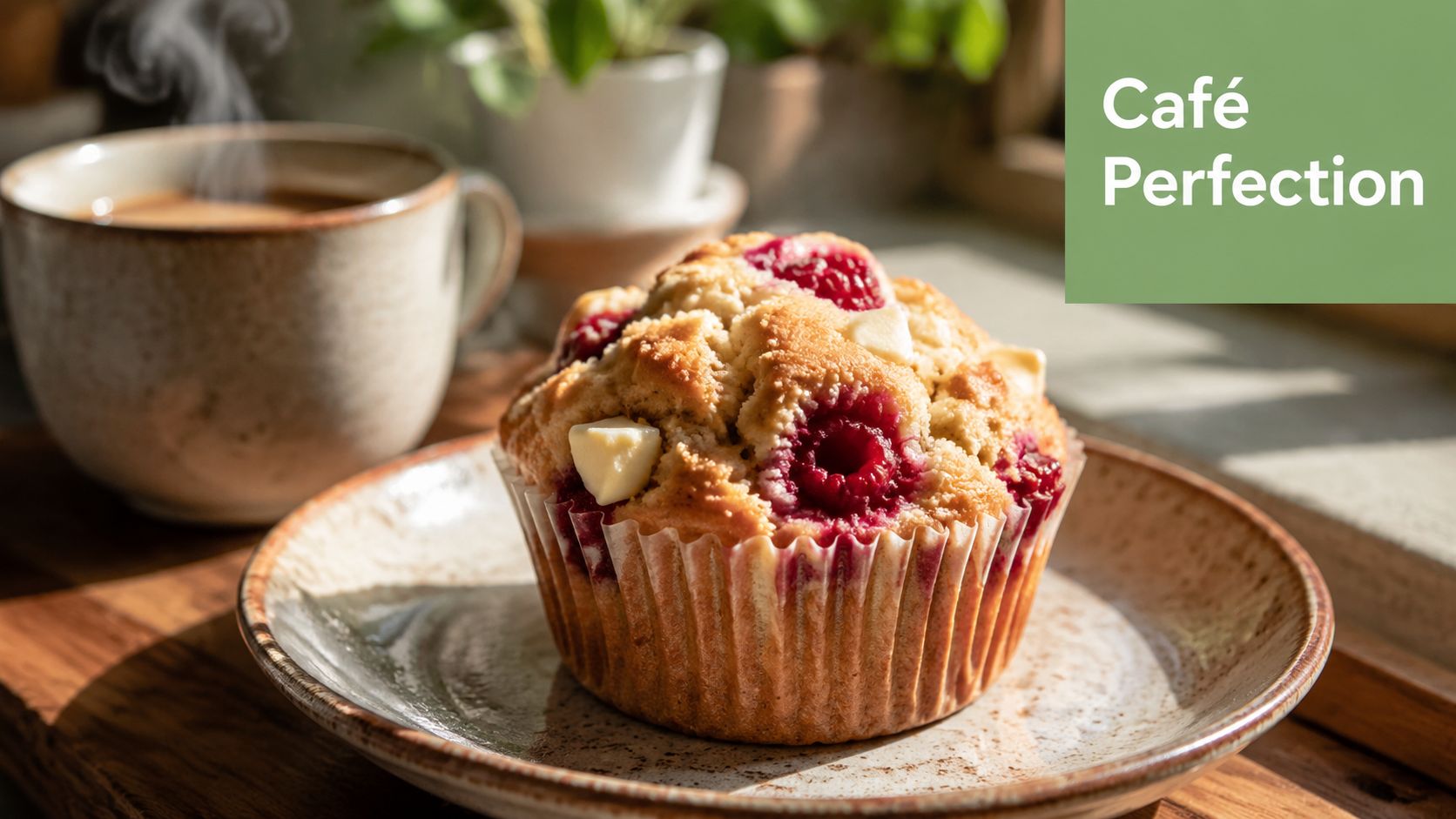
Think of a muffin with a lightly golden top, soft interior, and visible pieces of raspberry rather than a pink, collapsed centre. The white chocolate should hold its shape in little pockets instead of vanishing into greasy streaks.
That's the goal here. Not a fussy bake. Just a dependable one.
Gathering Your Quality Ingredients
A strong muffin starts before you mix anything. With gluten-free baking, ingredients don't just add flavour. They control structure, moisture, and how well the muffin holds together once it cools.
For this recipe, I'd treat the shopping list as part of the method. If one ingredient is off, the texture usually tells on you.
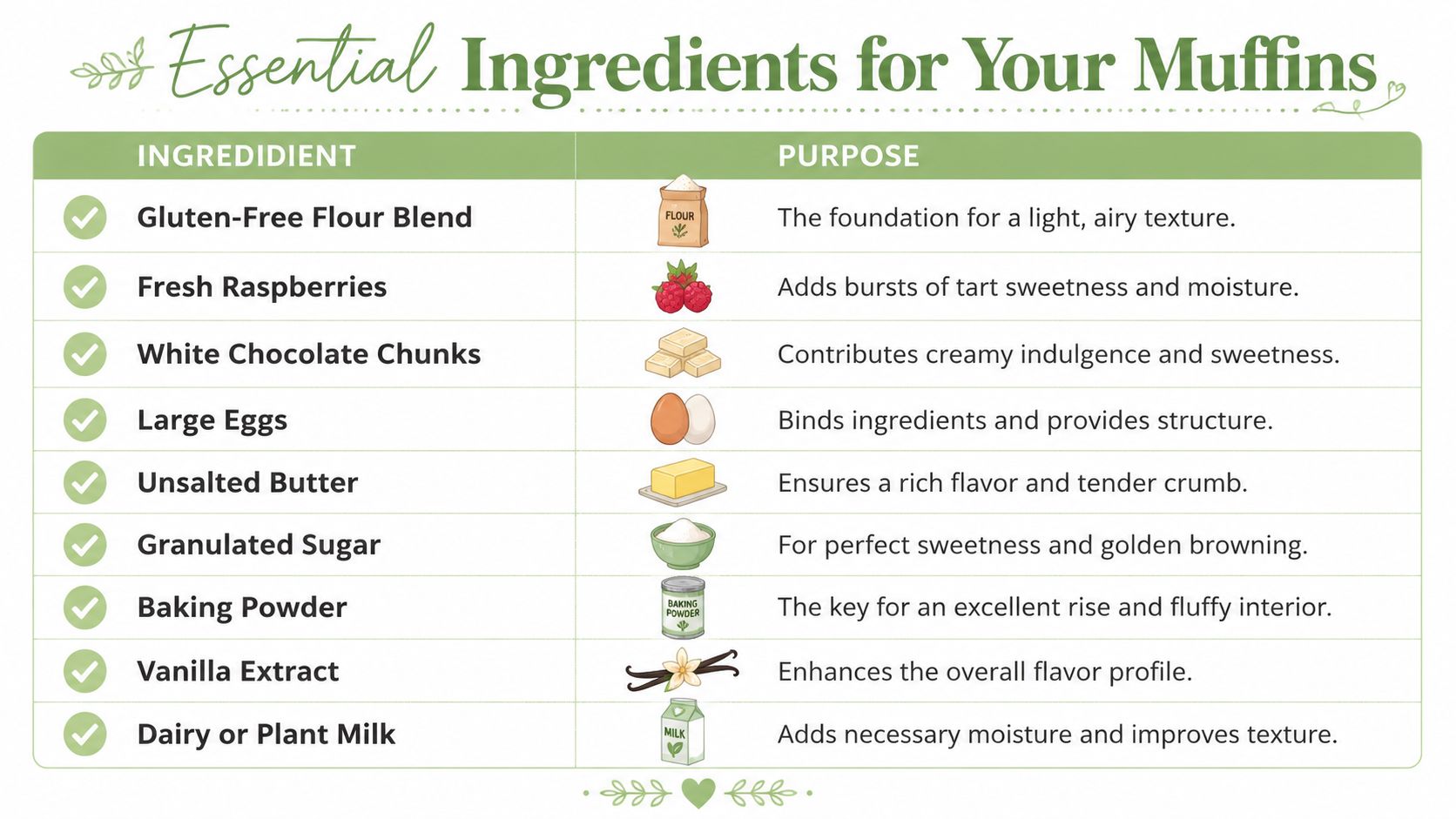
The core ingredient list
Here's a reliable base for 12 standard muffins.
| Ingredient | Metric | Cups and spoons |
|---|---|---|
| Gluten-free flour blend | 260 g | 2 cups |
| Baking powder | 10 g | 2 tsp |
| Fine salt | 3 g | 1/2 tsp |
| Caster or granulated sugar | 150 g | 3/4 cup |
| Unsalted butter, melted and cooled | 115 g | 1/2 cup |
| Large eggs | 2 | 2 |
| Vanilla extract | 10 ml | 2 tsp |
| Milk or unsweetened plant milk | 180 ml | 3/4 cup |
| White chocolate chips or chunks | 120 g | about 3/4 cup |
| Fresh raspberries | 120 g | about 1 cup loosely packed |
What to look for when buying each ingredient
The flour is the first decision. Choose a gluten-free all-purpose blend with xanthan gum included if possible. That saves you from balancing binders yourself and gives the batter a better chance of holding a soft crumb.
White chocolate deserves more attention than people give it. In gluten-free muffin batter, it's best to use chips, drops, or chopped pieces that hold their shape. A product made with a solid cocoa butter base usually behaves better than a very sugary compound-style option.
For raspberries, fresh is the easier path. Australia produces around 5,500 tonnes of raspberries and blackberries annually, and protected cropping systems help make good fresh berries available for recipes like this across much of the year, according to this overview of Australian berry supply.
Ingredient rule: If your raspberries are very soft or leaking juice in the punnet, save them for compote and buy firmer ones for muffins.
The practical trade-offs
Some swaps are fine. Some are where muffins start to go wrong.
- Butter versus oil: Butter gives fuller flavour. Oil can produce a slightly softer crumb, but it changes the taste.
- Fresh versus frozen raspberries: Fresh berries are easier to fold through cleanly. Frozen berries can work, but they usually release more moisture.
- Chips versus chopped block chocolate: Chips distribute more evenly. Chopped chocolate gives bigger pockets and a more rustic finish.
If you're also refreshing your tins, liners, or mixing tools, it helps to explore Chef Shop's baking range before bake day so you're not wrestling with shallow pans or flimsy trays.
For readers already building out a gluten-free pantry, Pep Tea also has a helpful post on adding another great gluten-free range that fits nicely with this style of home baking.
The Step-by-Step Baking Method
Good gluten-free muffins come from order and restraint. Get everything measured first, keep the batter cool enough to protect the chocolate, and don't stir past the point of “just combined”.
Set up before you mix
Preheat the oven well. Line a 12-hole muffin tin. Melt the butter, then let it cool so it's warm rather than hot. Wash the raspberries only if they need it, and dry them carefully.
In a separate bowl, whisk together the gluten-free flour, baking powder, and salt. In another bowl, whisk the eggs, sugar, vanilla, melted butter, and milk until smooth.
This is also the point where a little organisation saves the bake. Keep the white chocolate and raspberries ready to fold in last, not sitting in the wet mixture while you finish other jobs.
Build the batter with a light hand
Add a small splash of the liquid mixture to the dry ingredients first and stir it through. Then add the rest of the wet ingredients and mix until there are no obvious dry patches. You're looking for a thick batter, but not one that feels stiff or chalky.
A useful benchmark from Australian gluten-free baking guidance is that pre-mixing dry ingredients with a small amount of liquid can help reduce the over-hydration problem that showed up in 78% of failed home-baking trials, where gummy texture was the issue. That same guidance notes this is a common failure point in gluten-free muffins.
Now pause and check temperature. If the batter feels warm from the butter, let it sit briefly. White chocolate melts too early if it goes into batter that's too warm.
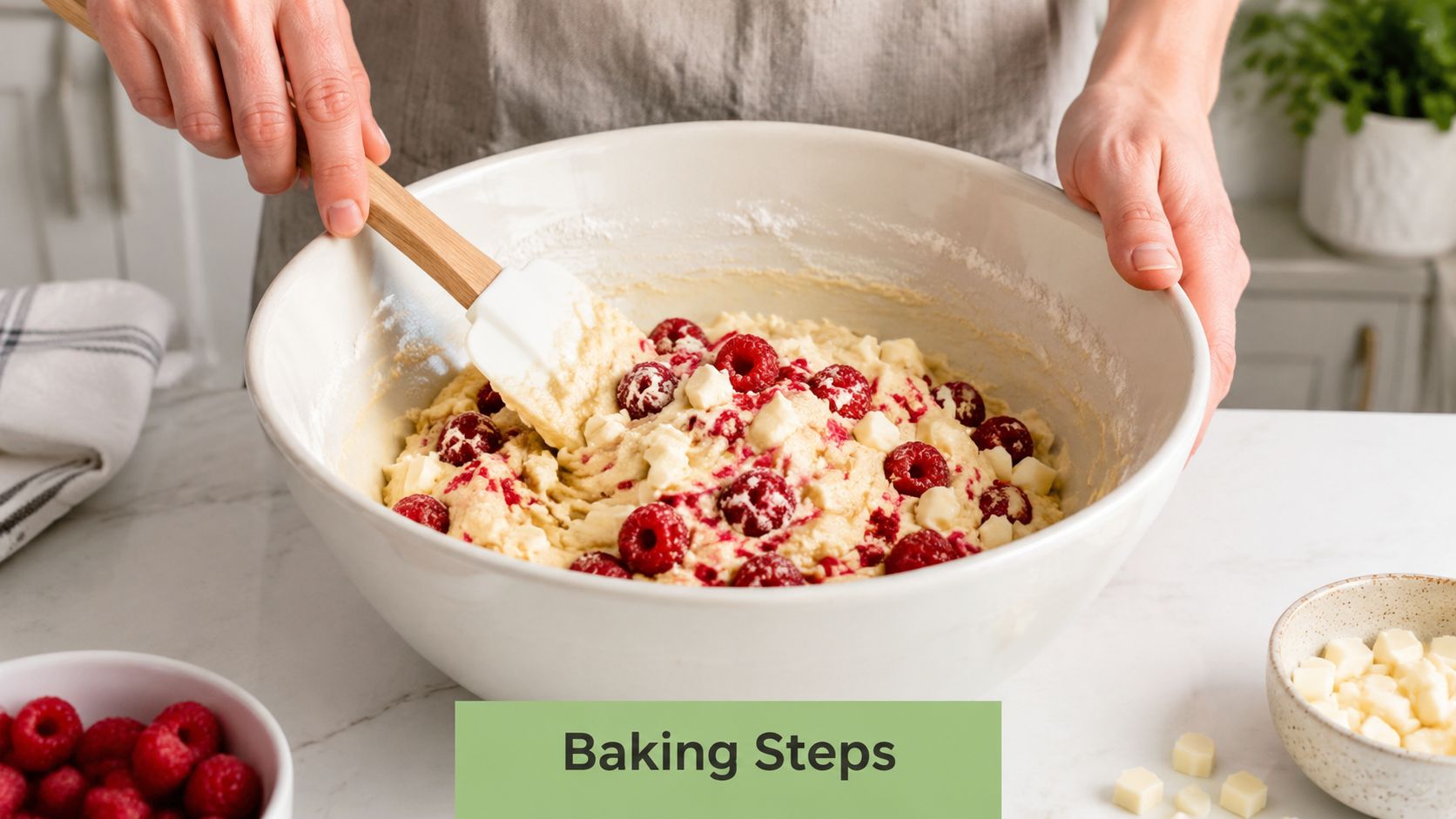
Then fold in the chocolate and raspberries gently. Don't beat them in. Use a spatula and broad strokes from the bottom of the bowl.
If your batter turns bright pink before it reaches the tin, the raspberries have been overworked.
Fill and bake for height and an even centre
Spoon the batter into the muffin tin evenly. Fill each cavity generously so you get a rounded top rather than a flat one. If you like, press a few extra pieces of white chocolate on top for appearance.
Bake using the two-stage method. Start at 205°C for the first 5 minutes, then reduce to 175°C for the remaining 20 to 25 minutes. This method is linked to a 75% success rate in achieving a perfect bake and helps prevent tunneling.
For another flavoured bake that uses a similarly thoughtful approach, Pep Tea's matcha muffins recipe is worth bookmarking.
A quick visual walkthrough can also help if you like to bake by feel as much as by written method.
Know when they're done
The tops should be lightly golden and spring back when touched. A skewer inserted near the centre should come out clean of wet batter. A bit of melted white chocolate on the skewer is fine. Raw batter isn't.
Leave the muffins in the tin briefly, then move them to a rack. Gluten-free muffins often seem delicate straight from the oven, but they settle as the crumb finishes setting.
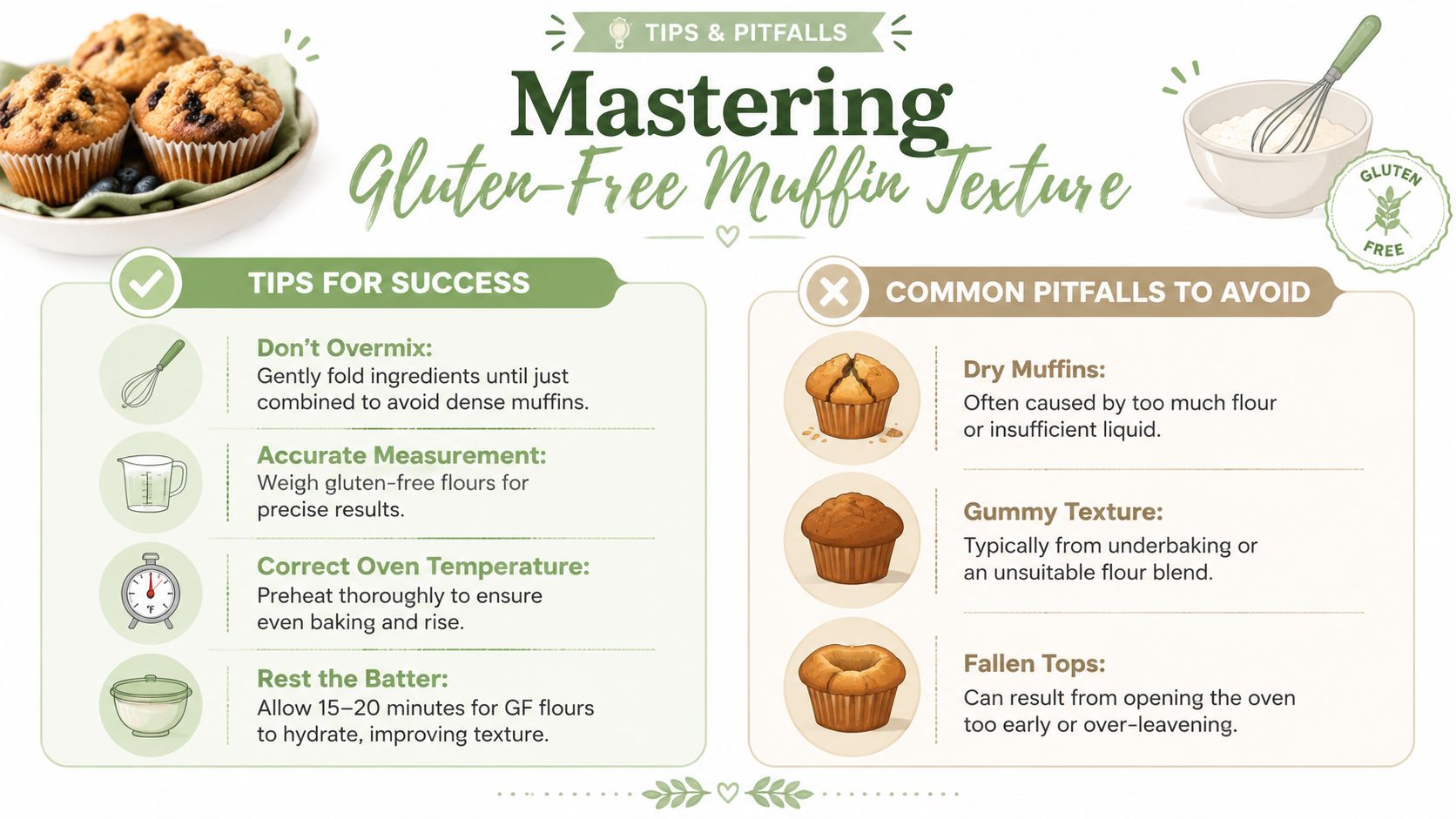
Mastering Gluten-Free Muffin Texture
Texture is where most gluten-free muffin recipes win or lose. Flavour is easy enough to build. Structure takes more care. If your muffins have ever seemed damp in the middle, oddly heavy, or collapsed around the fruit, the issue is usually one of three things. Binder choice, water balance, or fruit handling.
Why xanthan gum matters
In a wheat muffin, gluten gives the batter elasticity and helps trap air. In a gluten-free muffin, something else has to do that job. Xanthan gum is the common answer.
Australian benchmark data on gluten-free baking found that using flour blends with 2.0 to 2.5% xanthan gum by weight produced a 92% success rate for a soft and fluffy crumb, compared with 64% when alginate-based binders were used alone. That's why I strongly favour a flour blend that already includes xanthan gum instead of trying to improvise structure later.
If your muffins crumble once cooled, or break apart halfway through eating, that usually points back to a flour blend that isn't doing enough structural work.
The gummy muffin problem
This is the complaint I hear most often. The muffin looks cooked, but the crumb is sticky and dense.
A common pitfall in gluten-free baking is over-hydration, and it was reported in 78% of failed home-baking trials. The reason is simple. Starches in many gluten-free flour blends absorb water differently, and if the batter is too wet, the centre can stay gummy even after cooling.
Here's what works better:
- Pre-hydrate carefully: Mix the dry ingredients with a small amount of the total liquid before combining everything fully.
- Measure flour by weight when possible: Scooped cups vary too much.
- Don't chase a loose batter: Gluten-free muffin batter is often thicker than standard muffin batter.
Quick diagnosis: If the tops look done but the inside feels gluey, the batter was likely too wet, not just underbaked.
Fruit and chocolate need timing
Raspberries bring their own moisture. White chocolate brings fat. Both can upset the structure if they go in at the wrong moment.
Australian culinary guidance notes that adding berries when the batter is around 20°C can reduce moisture leakage by 45% compared with adding them at room temperature, which helps the muffin keep its shape better. It also helps to fold raspberries in right at the end, using as few strokes as possible.
A few practical fixes help:
| Problem | Likely cause | Better approach |
|---|---|---|
| Pink, streaky batter | Overmixed berries | Fold berries in last with a spatula |
| Greasy chocolate pockets | Batter too warm | Add chocolate at the final fold once batter has cooled |
| Wet base | Excess berry moisture | Use firm fresh raspberries and avoid crushing them |
Fresh fruit usually gives the cleaner result
When bakers ask whether frozen berries are fine, the honest answer is that they can work, but they make this recipe harder to control. Guidance for this style of muffin notes that using fresh raspberries at 150 g instead of frozen ones can reduce soggy-bottom risk by 60%, while frozen berries increase moisture in the batter and can extend baking time. For a clean crumb and better shape, fresh is the easier choice.
Storing, Freezing, and Serving Suggestions
These muffins are best on the day they're baked, when the tops still have a slight crisp edge and the crumb is at its softest. By the next day they're still lovely, but the raspberry moisture starts to settle through the crumb and the white chocolate softens more.
How to store them safely
Moist fruit changes the storage rules. A gap in many online recipes is practical safety advice, and that matters here. Guidance highlighted by this storage-focused gluten-free muffin article notes that baked goods with moist fruit like raspberries should be refrigerated if kept for more than 24 to 48 hours.
For everyday storage, use this approach:
- Same day or next day: Keep them in an airtight container once fully cool.
- Beyond a short room-temperature window: Refrigerate them so the fruit stays safer and fresher.
- For longer keeping: Freeze them.
The key is cooling first. If you seal warm muffins into a container, trapped steam softens the tops and can make the whole batch feel damp.
Cool muffins completely before storing. Warmth in the container turns a tender crumb into a sticky one very quickly.
Freezing without ruining the crumb
Freeze the muffins individually or in a single layer first, then transfer them to a sealed freezer-safe container or bag. That stops the tops from sticking together and makes it easier to thaw only what you need.
To serve, let a muffin thaw at room temperature or warm it gently. Too much reheating melts the white chocolate further and can make the raspberry pockets feel overly hot and wet.
Serving ideas that feel a bit special
These muffins sit nicely between breakfast and treat baking. They work warm, at room temperature, or packed for an afternoon break.
A few favourite ways to serve them:
- With plain yoghurt: Good if you want to balance the sweetness.
- With fresh berries on the side: Best when serving guests at brunch.
- Slightly warmed: This brings back the softness of the crumb and loosens the white chocolate just enough.
They also fit naturally into a modern wellness routine. One muffin with a calm morning drink feels far more satisfying than grabbing something forgettable on the run. That's especially true when the bake has real flavour and proper texture.
Recipe Variations and FAQs
Once you've baked one dependable batch, it's easy to adapt this recipe without losing what makes it work. The safest changes are the ones that respect the batter's moisture level and don't overload the structure.
Variations worth trying
Some swaps are simple and still keep the spirit of the muffin intact.
- Dairy-free version: Use plant milk, dairy-free butter or a neutral oil, and dairy-free white chocolate drops.
- Lower-sugar direction: Reduce the sweetness slightly if your white chocolate is very sweet, but keep enough sugar for structure and browning.
- Berry changes: Blueberries can work well, though they give a different balance. Strawberries need careful chopping because they release more juice.
- Café-style finish: Add a few extra chocolate pieces and a couple of berry fragments to the tops before baking for a better display.
If you like browsing ideas once you've nailed a base recipe, you can Browse healthy recipes for more snack and breakfast inspiration that fits into a practical weekly routine.
Pep Tea also has a broader collection of gluten-free recipe ideas worth saving if this bake puts you in a gluten-free cooking mood.
FAQs bakers ask most
Can I use an egg replacer
You can experiment, but eggs do a lot of work in this muffin. They bind, support rise, and help the crumb set around the raspberries. If you need an egg-free bake, expect some texture changes and test a small batch first.
My batter seems very thick. Is that normal
Yes. Gluten-free muffin batter is often thicker than standard muffin batter. Thick is fine. Dry and hard to spoon is not. If it looks chalky or overly stiff, recheck your flour measurement.
Can I use frozen raspberries
You can, but they're more likely to bleed into the batter and make the muffins wetter. If frozen is all you have, keep them frozen until the last moment and fold very gently.
Any tips for baking these for a café or market stall
Consistency matters more than improvising. Weigh ingredients, use the same scoop for portioning, and don't vary the berry size too much from batch to batch. Presentation also counts. A few visible pieces of white chocolate on top make the tray look more polished.
Bake one test batch in your actual tins and oven before producing a larger run. Gluten-free batter is less forgiving of small equipment differences.
Why did my muffins sink after baking
That usually comes down to excess moisture, underbaking, or opening the oven too early. A well-risen top still needs enough time at the lower temperature stage to set through the centre.
If you enjoy baking that fits into a calm, health-minded routine, have a look at Pep Tea for organic matcha, sugar-free organic kombucha, and more recipe inspiration that brings together flavour and everyday wellness.