
Tag: electric kettle guide
Variable Temperature Kettle: A Guide for Aussie Tea Lovers
A variable temperature kettle is an electric kettle with selectable heat settings, usually from 50°C to 100°C, designed to extract the best flavour from different types of tea without burning delicate leaves. For many Australian tea drinkers, it's worth considering if you regularly prepare matcha, green tea or other brews that taste noticeably different when the water is too hot.
You've probably had this experience. You prepare a beautiful green tea or whisk a bowl of matcha, take the first sip and find a harsh, drying bitterness instead of sweetness and umami. It's easy to blame the tea, but the water may be the true culprit.
A standard kettle gives you one main result, boiling water. A variable temperature kettle gives you more control over the part of brewing that happens before the leaves, powder or infusion ever touches your cup.
Why Your Matcha Might Taste Bitter
The morning ritual starts well. You sift your matcha into a bowl, add water and whisk until a soft layer of foam forms on the surface. Yet the first sip tastes gritty, chalky or aggressively bitter. You try more whisking, less powder and a different mug, but the problem remains.
The missing variable is often water temperature.
Boiling water can pull bitter and drying compounds from delicate tea more aggressively than cooler water. An Australian kettle manual explains that lower-temperature brewing is relevant for sensitive infusions because boiling water can over-extract catechins and contribute to bitterness, while cooler water allows more repeatable control over the result in its guidance for variable-temperature brewing.
Matcha needs particular care because you drink the whole leaf in powdered form rather than steeping leaves and removing them. That makes texture, concentration and water temperature especially noticeable. If your water is too hot, the tea's more delicate flavours can become hidden behind astringency.
The simple brewing adjustment
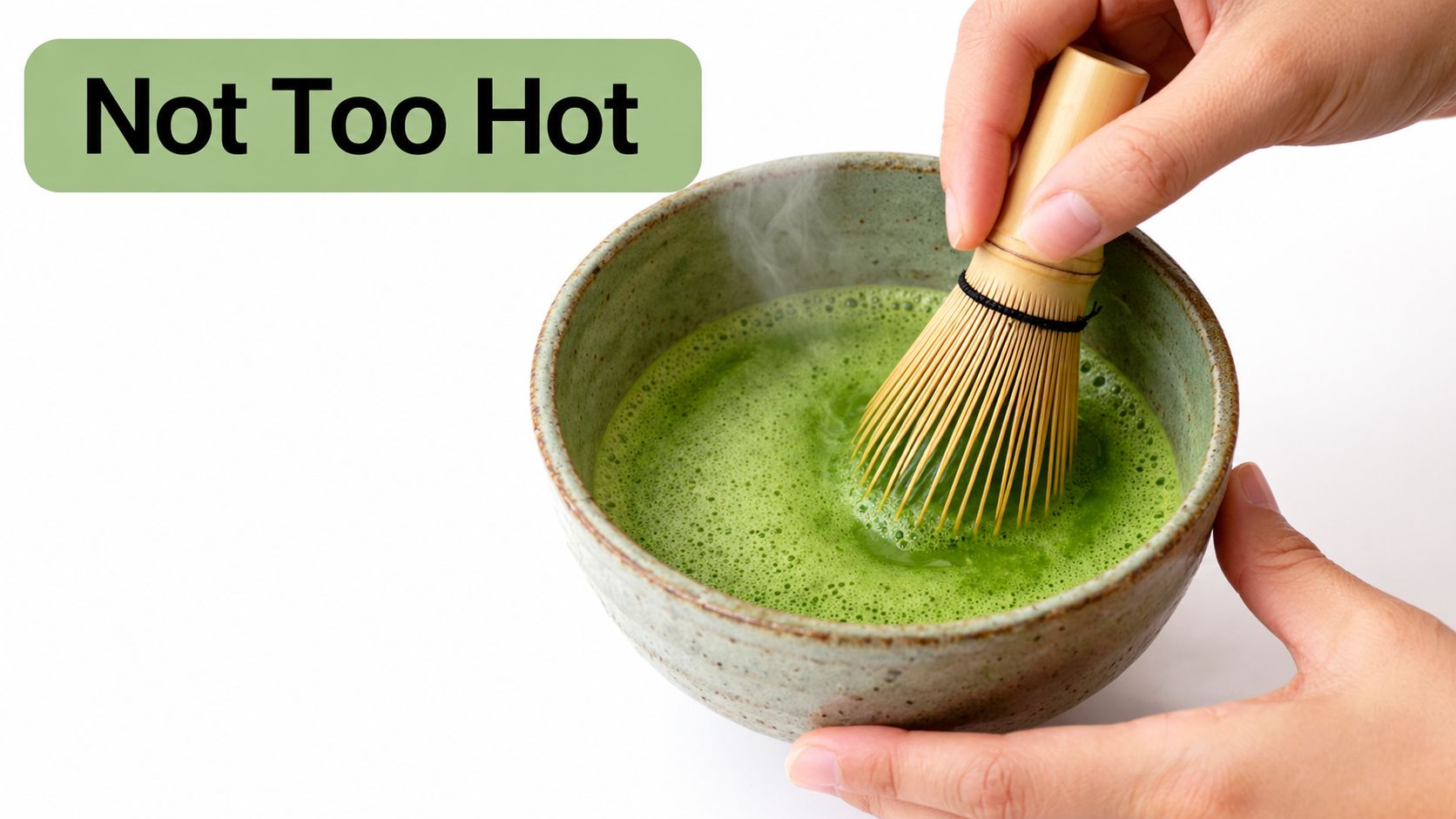
Try changing the water before changing the matcha. Use cooler water, whisk thoroughly and taste the result before deciding that the powder itself is poor quality. A smoother cup can make the natural sweetness, savoury character and creamy body easier to notice.
For a practical guide to the complete process, including preparing the powder and whisking technique, follow this guide to making matcha tea from powder.
This principle also applies if you're using tea as part of a calmer alternative to strong coffee. Resources on natural energy boosters without jitters can help you compare different beverage routines, but the preparation method still matters. A carefully brewed tea can be more enjoyable because it tastes balanced.
Practical rule: If green tea or matcha tastes sharp and drying, adjust the water temperature before adding sweetener.
A variable temperature kettle doesn't improve every tea automatically. It gives you the ability to repeat a temperature that suits the particular drink, which is far more useful than boiling water and guessing when it has cooled enough.
What Is a Variable Temperature Kettle
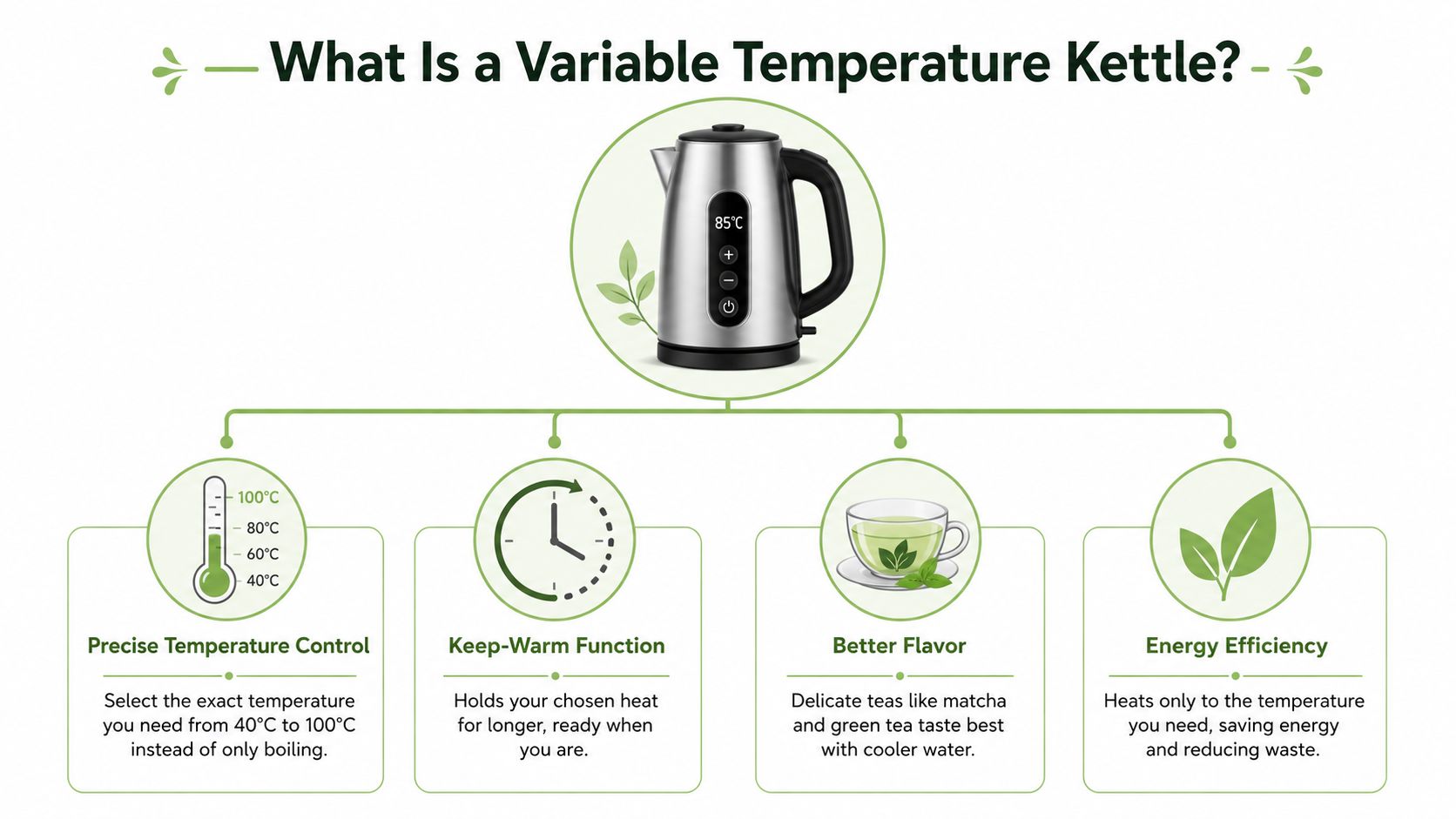
A variable temperature kettle heats water to a selected temperature rather than stopping only at a full boil. Most models in Australia offer a range that broadly spans 50°C to 100°C, although the number of selectable points varies between products.
Smeg Australia's variable kettle range, for example, lists seven settings, at 50°C, 60°C, 70°C, 80°C, 90°C, 95°C and 100°C on its Australian product page. Those settings turn the kettle into something closer to a basic brewing tool. You can choose a gentler temperature for green tea, a warmer setting for oolong or a near-boil for a fuller-bodied infusion.
The category has also spread across different parts of the Australian retail market. Shoppers can find simpler variable-temperature options through mass-market retailers such as Kmart, alongside premium models sold through stores including Myer and Harvey Norman. The difference isn't only appearance. It can include temperature range, display design, pouring control, heat retention and how accurately the kettle reaches its selected setting.
The features that matter
A good model usually combines several functions:
- Selectable heat: You choose a target instead of waiting for boiling water to cool.
- Keep-warm control: The kettle can maintain the selected temperature for later pours, depending on the model.
- Automatic shut-off: The appliance stops heating when it reaches its target or detects a safety issue.
- Clear controls: A readable display or well-marked buttons make repeatable brewing easier.
- Suitable capacity: A compact kettle can suit individual tea preparation, while a larger one may be more convenient for a household.
The key distinction is control, not complexity for its own sake. If you mostly boil water for pasta or make drinks that require boiling water, you may not use the extra settings often. If you drink different teas through the week, those settings can remove a frustrating amount of guesswork.
Here's a visual demonstration of how temperature selection and kettle design can fit into a brewing routine:
Optimal Brewing Temperatures for Tea
There isn't one perfect temperature for every tea. Water that suits black tea can overwhelm green tea, while water that produces a gentle green tea may leave some stronger infusions tasting thin.
Use the following as practical starting points rather than rigid rules:
| Drink | Useful starting point | Why it matters |
|---|---|---|
| Green tea | Around 70°C to 80°C | Helps limit harsh extraction from delicate leaves |
| Matcha | Around 70°C to 80°C | Supports a smoother balance of sweetness and umami |
| Oolong | Around 80°C | Gives semi-oxidised leaves enough heat without treating them like a boil-only infusion |
| Black tea | Around 95°C to 100°C | Provides the heat needed for a fuller, more robust cup |
| Herbal infusions | Near boiling | Suits ingredients that need hotter water to release their flavour |
These ranges reflect the broad brewing guidance published for Australian tea drinkers, including recommendations of roughly 75°C to 85°C for green tea, temperatures near 95°C to 100°C for black tea, and an intermediate range for oolong in this Australian tea FAQ. Your exact preference may depend on the tea's origin, the amount used and how long it steeps.
Why a few degrees can change the cup
Heat affects extraction. As water gets hotter, it can draw flavour compounds from tea more quickly. That can be helpful for a strong black tea, but it can make a delicate green tea taste more drying or bitter.
For matcha, temperature also affects the relationship between texture and flavour. Cooler water won't remove the powder's natural character, but it can make the cup feel less aggressive. If your matcha tastes flat rather than bitter, try improving your sifting and whisking before increasing the heat.
You can find more practical guidance in this matcha brewing temperature guide, then adjust gradually rather than changing temperature, powder quantity and brewing time all at once.
The best setting is the one that gives you a balanced cup and that you can repeat tomorrow.
A variable kettle is useful for more than traditional teacups. It can help with matcha lattes, cocoa and other hot drinks where boiling water may damage flavour or make the drink difficult to combine smoothly. If you enjoy steeping tea in alternative equipment, these French press tea tips from PureHQ Inc. offer another preparation option, although a variable kettle still gives you more control over the water before it reaches the press.
Is a Variable Temperature Kettle Worth It
You have a fresh green tea, a good matcha and a busy morning. A basic kettle boils water quickly, yet the cup turns sharp because the water was hotter than the tea needed. In that situation, a variable temperature kettle can make a noticeable difference. Its value depends on what you drink, how often you prepare it and whether you want the same flavour each time.
A basic kettle remains perfectly suitable for black tea, herbal infusions and cooking water. Green tea and matcha make the case for more control, especially when you prepare them regularly. The feature matters because it connects the kettle's settings with the chemistry of the cup. Smeg's seven settings, for example, may look like a reason to upgrade, but the useful question is whether you will use those options for different teas.
Australian shoppers can face a wide gap between entry-level and premium products. A Kmart model can be listed at $69, while premium options may sit around $299 to $349, according to the Australian buying context described by CHOICE in its kettle buying guide. A higher price does not automatically produce better tea. It may pay for sturdier construction, a more polished interface, a better pour or steadier temperature control. Choose features that fit your habits rather than paying for settings that will stay unused.
The energy question
More controls do not automatically mean much higher electricity use. The bigger influence is usually how much water you heat. Filling the kettle for one mug uses less energy than boiling a full chamber, regardless of whether the kettle has a temperature display.
Heating less water to a lower selected temperature may suit some brewing routines, but a variable kettle should not be purchased solely for dramatic savings. Electricity pricing, fill level and daily use affect the result. Its strongest benefits are flavour control, convenience and consistency.
A useful decision test
Choose a basic kettle if:
- You normally prepare drinks with boiling water.
- You do not notice much difference between a gentler and hotter brew.
- Your budget is better spent on higher-quality tea or other kitchen essentials.
Consider upgrading if:
- You prepare green tea or matcha regularly.
- You make several different types of tea.
- You want to repeat a preferred temperature without waiting for boiled water to cool.
- You use a keep-warm function during a longer tea session.
A premium kettle can be a worthwhile daily tool, but it is not required for good tea. A modest variable model may provide the control you need without charging you for design features you will not use.
Buying and Maintaining Your Kettle
A kettle can look impressive on an Australian benchtop without making better tea. Start with performance: it should reach the selected temperature consistently, show clear controls and include practical safety features. A higher price does not automatically mean greater accuracy, lower running costs or a better pour. Match the appliance to the drinks you prepare.
Australian consumer testing treats temperature accuracy as a real performance measure. CHOICE checks accuracy at each variable-temperature setting and conducts a dry-boil safety test, so temperature control and automatic shut-off deserve attention when comparing models in its explanation of kettle testing.
What to check before buying
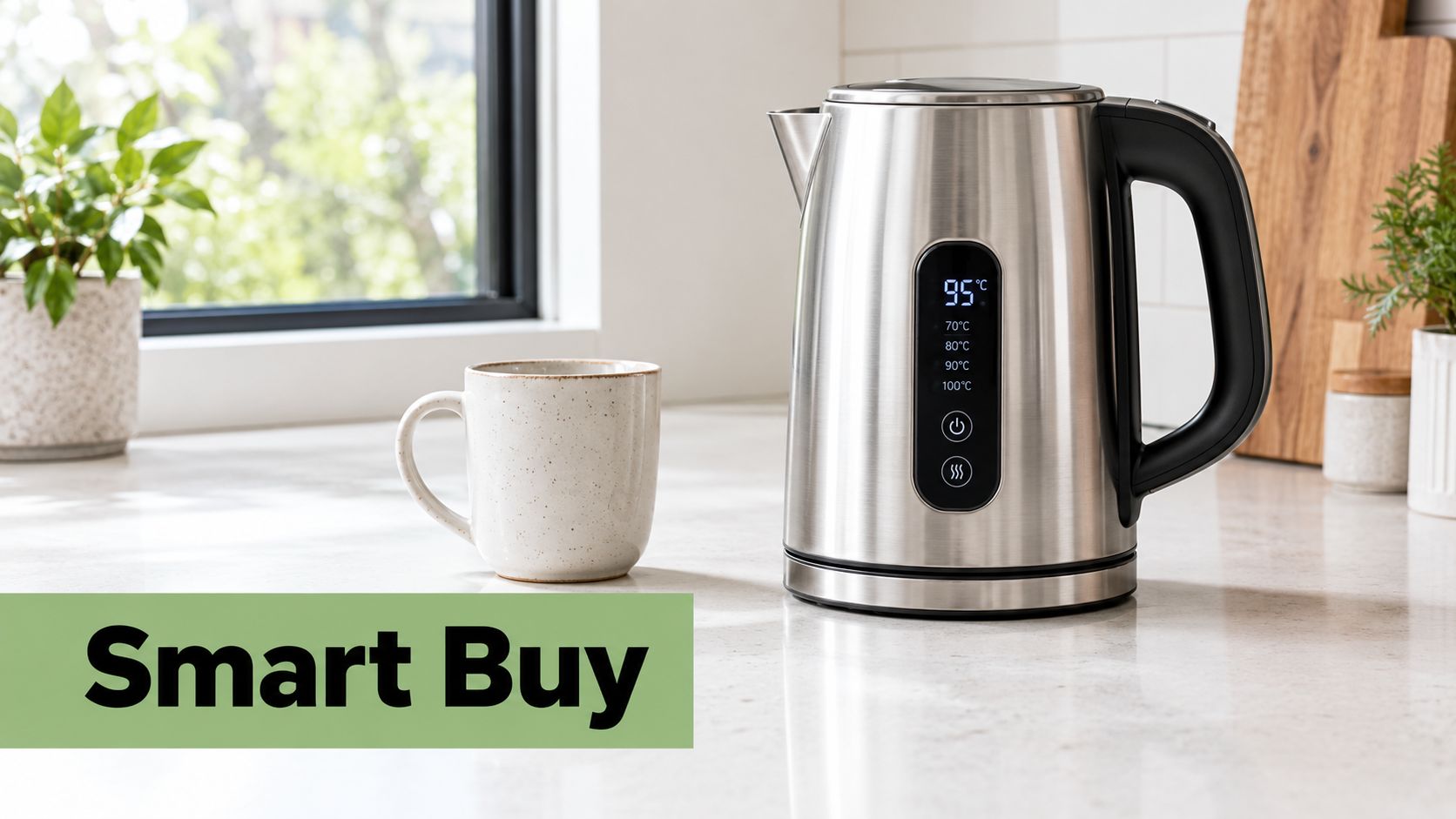
Start with the controls. A readable display and simple temperature selection matter more than a crowded panel. Smeg's seven settings, for example, can be useful when you move between matcha, green tea and hotter brews, provided the selected temperatures suit the chemistry of each drink. Matcha needs water that will not scorch its delicate flavour, while green tea can become harsh when brewed too hot.
For capacity and accuracy comparisons, see our guide to choosing an electric kettle in Australia. Australian products range from compact 1L gooseneck kettles to family-sized 1.7L models, with some combining temperature selection and heat retention in this Australian product listing. Choose the size that fits your usual cups. A larger chamber can encourage unnecessary boiling, while a smaller one may suit a solo morning ritual.
Check the spout. A gooseneck design supports a slower, controlled pour for manual brewing. A wider spout may suit a teapot or French press better.
Keep the water and kettle clean
Mineral deposits can affect flavour and heating performance. Descale according to the manufacturer's directions, particularly if your local water leaves visible residue, then rinse thoroughly so the next cup does not taste of cleaner.
Use a stable, heat-resistant surface, keep the cord away from the bench edge, and avoid overfilling or running the kettle dry. Empty stale water rather than leaving it inside for long periods.
Regular care keeps fresh water, accurate heat and your tea in clean contact.
Elevating Your Daily Tea Ritual
A variable temperature kettle changes the role of water in your routine. Instead of treating every tea as if it needs the same treatment, you can respond to the drink in front of you. Green tea can have a gentler setting, oolong can receive more heat and black tea can still be prepared close to boiling.
That small act of selection encourages a more mindful approach. You notice aroma before drinking, taste the difference between astringency and bitterness, and learn which settings suit your preferred matcha or tea. The kettle becomes useful because it helps you build a repeatable habit, not because it promises to fix every brewing mistake.
Match the tool to the ingredient
Premium tea deserves careful preparation, but equipment can't compensate for stale ingredients, poor storage or an unsuitable recipe. Start with fresh water, use the amount of tea you need and change one variable at a time. If the first cup tastes too sharp, lower the temperature. If it tastes weak, adjust the tea quantity or steeping approach before assuming you need a new appliance.
The same mindset works across a wellness-focused beverage routine. A carefully prepared matcha can be part of a calm morning ritual, while an organic kombucha can offer a low-sugar alternative when you want something refreshing. Neither drink needs exaggerated promises. Their value starts with quality ingredients, thoughtful preparation and choosing a beverage that fits your day.
For Australian households, the best variable temperature kettle is the one that makes those choices simple. It should be safe, easy to clean and accurate enough to help you repeat the cups you enjoy. If you mostly drink one tea, a standard kettle may be all you need. If you move between matcha, green tea, oolong and other infusions, selectable heat can make the difference between guessing and brewing with intention.
Explore organic Japanese matcha and Australian-brewed sugar-free kombucha from Pep Tea, with options suited to home routines, cafés and wellness-focused menus. Visit the range, try your preferred brew at a gentler temperature and discover how better control can bring out more character in every cup.