
Tag: australian tea brands
A Guide to Australian Tea Brands for 2026
You're probably here because you've stood in a supermarket aisle, scanned a café menu, or opened an online tea store and thought, when did tea get this complicated?
It used to feel simple. Black tea bags for the morning, maybe peppermint at night, and that was about it. Now the Australian shelf is full of loose-leaf blends, organic herbal infusions, ceremonial matcha, sparkling kombucha, wellness teas, local brands, imported brands, and products that call themselves Australian without making it obvious what that means.
That mix is exciting, but it can also be a bit murky. If you care about flavour, ingredients, where a product comes from, and how it fits into a healthier routine, you need more than a list of brand names. You need a way to judge quality for yourself.
Welcome to the New World of Australian Tea
Australian tea brands aren't one neat category anymore. They sit across a few different worlds at once.
Some brands still focus on the everyday cuppa. Think supermarket black tea bags, familiar blends, fast brewing, low fuss. Others lean into loose-leaf tea, premium botanicals, or small-batch blending. Then there's the newer functional side of the market, where matcha, herbal wellness blends, and kombucha have become part of how people think about energy, digestion, sugar reduction, and mindful drinking.
That's where many people get confused. They compare products that aren't really trying to do the same job.
A plain breakfast teabag is built for convenience. A ceremonial matcha is built for whisking and drinking on its own. A culinary matcha is meant for lattes, smoothies, and baking. A properly fermented kombucha belongs in a different conversation again, because it's a brewed drink rather than a leaf you steep in a mug.
Why tea shopping feels harder now
The challenge isn't just choice. It's language.
You'll see words like organic, premium, Australian-owned, Australian-made, stone-ground, live cultures, and functional. Some of these terms matter a lot. Some are useful only if the brand explains them properly.
A good tea label should answer basic questions clearly. What is it, where is it from, and why is it made this way?
If a tea brand can't explain those points in plain English, it becomes hard to know whether you're paying for actual quality or just attractive packaging.
A better way to think about Australian tea brands
Instead of asking, “Which brand is best?”, ask these questions:
- What am I buying it for: daily convenience, calm focus, a café-style drink at home, a soft drink alternative, or something to serve guests?
- What does the label tell me: ingredients, origin, certifications, sugar level, brewing style?
- Is the product honest about what it is: Australian-owned, Australian-brewed, imported leaf, local packing, or all of the above?
That mindset makes the tea world much easier to understand. Once you know how to read the category, you can choose what suits your taste, routine, and budget without getting lost in the marketing.
The Modern Australian Tea Landscape
Tea in Australia still has a strong everyday base, but the category is changing shape. The easiest way to understand Australian tea brands today is to stop thinking of tea as one thing.
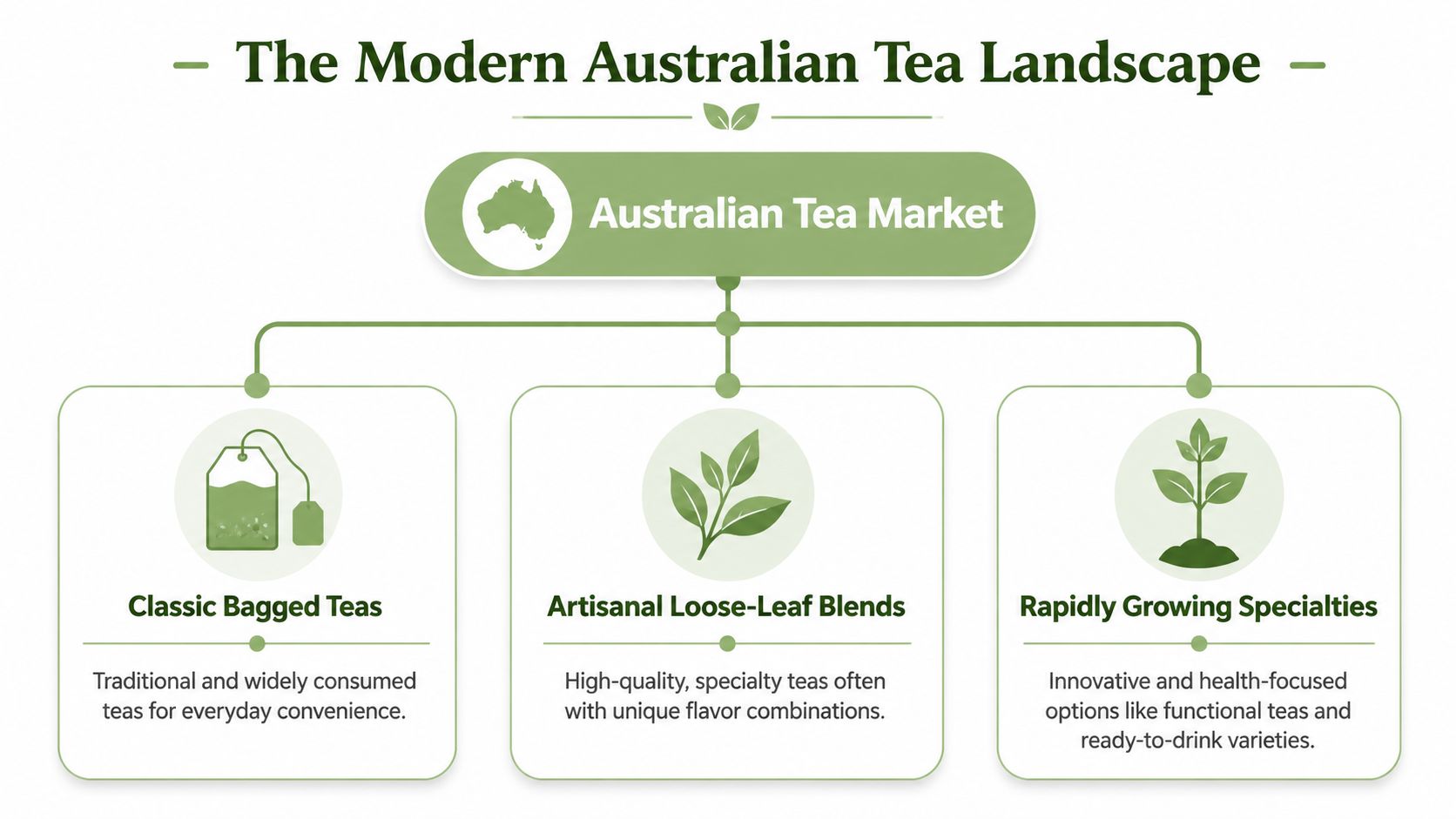
Three big parts of the market
You can picture the market in three broad groups:
| Category | What it usually includes | What buyers tend to want |
|---|---|---|
| Classic bagged teas | Black tea, English Breakfast, Earl Grey, common herbal bags | Convenience, price, consistency |
| Artisanal loose-leaf blends | Loose-leaf black, green, oolong, floral and botanical blends | Flavour, ritual, freshness |
| Rapidly growing specialties | Matcha, functional teas, ready-to-drink kombucha | Wellness, low sugar choices, café-style experience |
These groups overlap, but they solve different needs. That's why comparing a commodity teabag to a ceremonial matcha powder usually leads nowhere. They aren't competing on the same terms.
Why specialty tea keeps gaining attention
Australia's tea market was estimated at USD 535.1 million in 2025 and is forecast to reach USD 780.6 million by 2034, with growth tied to stronger demand for health-focused beverages such as organic and specialty teas, according to IMARC's Australia tea market outlook. That matters because it shows the shift isn't just about novelty. Buyers are moving toward products that feel more purposeful.
Some people want tea with a cleaner ingredient story. Others want premium café drinks at home. Many are trying to cut back on sugary drinks, or they want an afternoon option that feels lighter than coffee.
The old centre and the new edge
The traditional market hasn't disappeared. It still shapes how tea is sold, especially in supermarkets. But newer categories are changing expectations around flavour, origin, and quality cues.
A shopper who once bought one box of standard tea bags may now keep several products at home:
- A black tea for routine
- An evening herbal for winding down
- A matcha for lattes or focused work sessions
- A kombucha in the fridge as a low-sugar alternative to soft drink
That's also why content around functional beverage trends in Australia has become more useful for tea drinkers. Tea now sits inside a wider wellness and café culture conversation, not just the old “hot drink” category.
Australian tea brands now compete on purpose as much as flavour. Buyers want to know what a product fits into, not just what it tastes like.
A Closer Look at Matcha and Kombucha
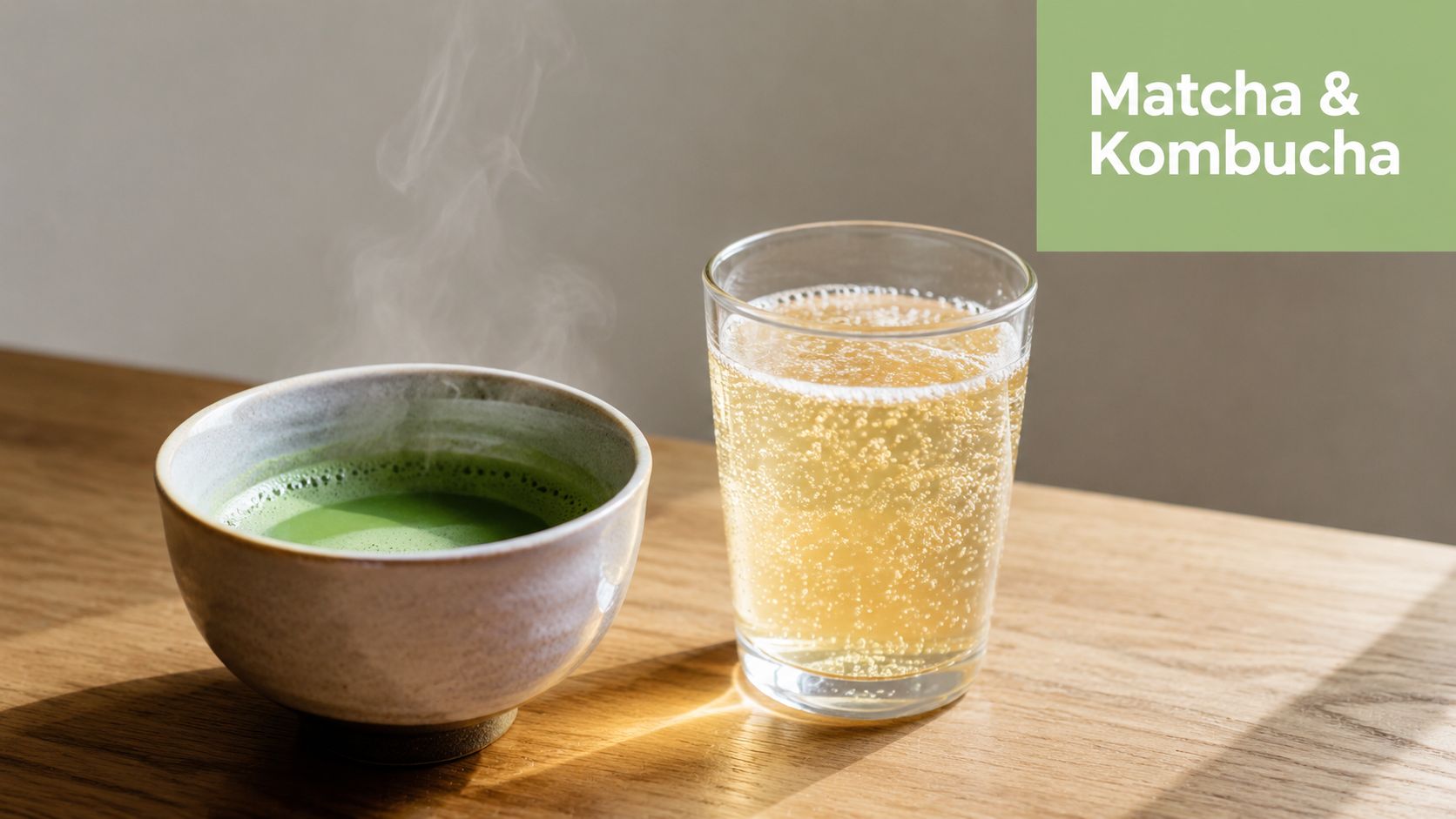
Two products confuse people more than almost anything else in tea. Matcha and kombucha both sit inside the modern tea scene, but they work in completely different ways.
Matcha is not just powdered green tea
Matcha is made from green tea leaves that are processed into a very fine powder. Instead of steeping leaves and throwing them away, you whisk the powder into water and drink the whole leaf. That changes both the texture and the experience.
Good matcha usually looks bright and fresh rather than dull and khaki. It should smell clean, vegetal, and lively. When whisked well, it forms a smooth layer of foam.
Two terms matter most when you shop:
- Ceremonial grade means a matcha intended for drinking directly, often with water.
- Culinary grade means a matcha intended for recipes like lattes, smoothies, baking, or desserts.
Neither grade is “better” in every situation. They're just suited to different jobs.
How to choose the right matcha
If you're new to it, use this simple guide:
- For straight matcha: choose ceremonial grade. You'll notice flavour and texture more clearly.
- For lattes: culinary grade often gives you better value and enough strength to stand up to milk.
- For baking: use culinary grade, because subtle flavour notes get lost once you add other ingredients.
If you'd like a practical look at processing and what affects the final powder, Pep Tea has a useful guide on how matcha tea is made.
Practical rule: Buy matcha based on how you'll use it, not on which label sounds fancier.
Kombucha is tea transformed by fermentation
Kombucha starts as brewed tea, then goes through fermentation with a culture of yeast and bacteria. That's why it tastes different from iced tea. It's lightly tangy, often gently sparkling, and can range from crisp to complex depending on ingredients and brewing style.
People often hear the word fermentation and assume it's mysterious. It isn't. In simple terms, fermentation is a controlled process where the culture interacts with the brewed tea and sugars over time, changing the flavour and producing the tart, lively character kombucha is known for.
Quality matters here because not every kombucha on shelf gives the same experience. Some products lean heavily on sweetness or flavouring. Others put the brewing process at the centre.
What to look for in real kombucha
A well-made kombucha should be clear about a few things:
- Whether it's properly fermented
- Whether it contains artificial additives
- Whether the sugar level suits your preference
- Whether the ingredients list is simple and recognisable
If you want to see kombucha explained visually, this short video is a handy starting point.
Why these two products matter in Australian tea brands
Matcha and kombucha show how broad the tea category has become. One is rooted in traditional tea craft. The other is a modern fermented drink built from tea. Both appeal to people looking for something more intentional than a standard teabag.
They also teach an important buying lesson. A premium tea product should be able to explain its process plainly. If a brand can't clearly tell you what grade of matcha you're buying or how its kombucha is brewed, that's a sign to slow down and look closer.
Beyond the Label What Quality Really Looks Like
A lot of Australian tea brands look polished. That doesn't mean they're all equally transparent.
The tricky part is that “Australian” can mean several different things. A brand might be Australian-owned. It might be blended here. It might be packed here. It might brew here. Or it might use imported tea leaf and rely on Australian branding to do most of the talking.
The question many shoppers don't ask
A useful industry reminder is this: local tea production in Australia is limited and expensive, so an Australian tea brand may not be using Australian-grown leaf at all. The more practical test is whether the brand gives clear information about country of origin, leaf grade, and traceability, because “organic” or “Australian” branding on its own doesn't guarantee quality, as discussed in this sourcing-focused review on Australian tea origin.
That's not a criticism of imported tea. Some of the world's finest tea comes from overseas, and certain products should come from their place of origin. Japanese matcha is the obvious example. The point is honesty.
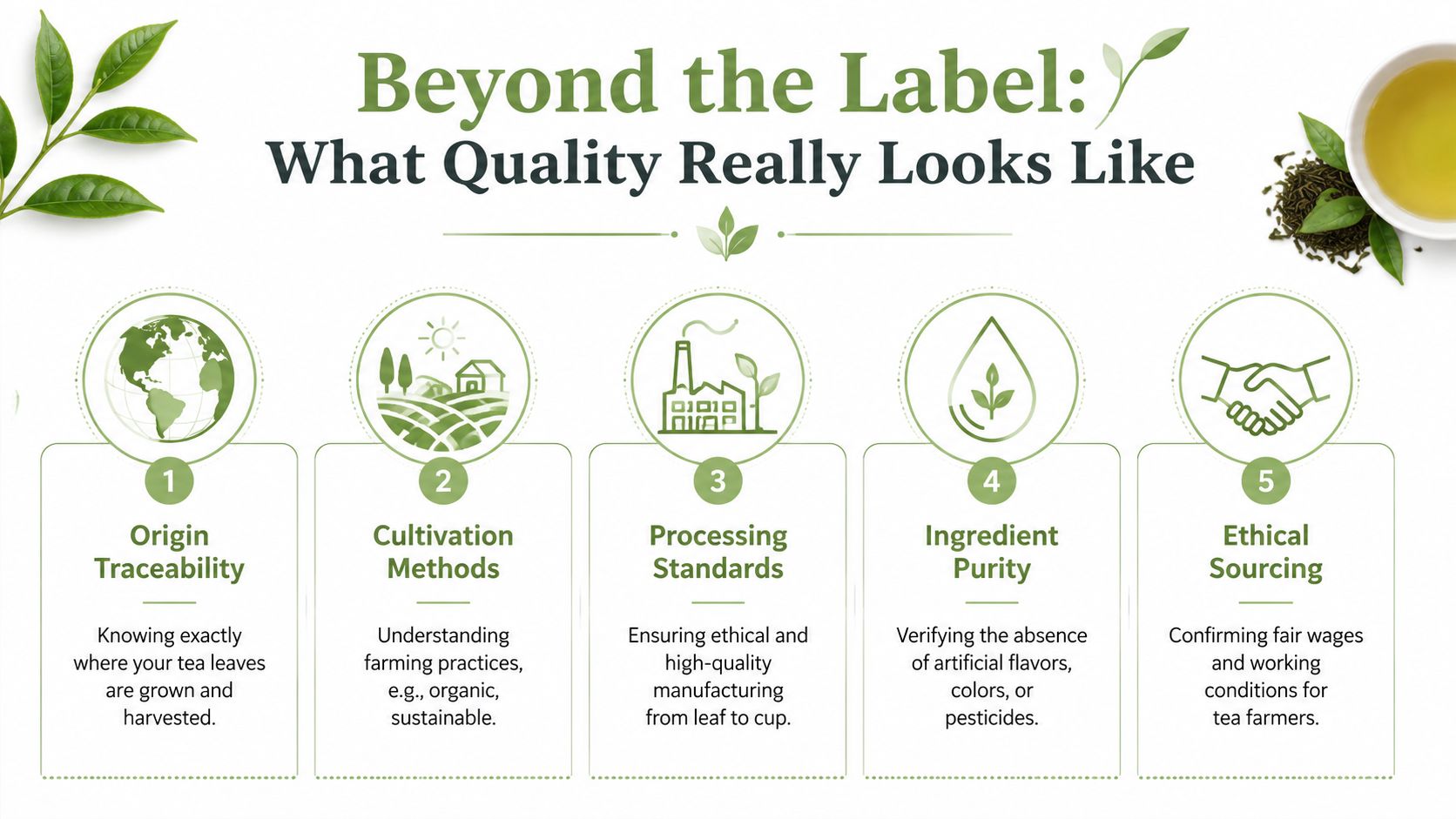
Five signs a tea brand is taking quality seriously
Here's a checklist worth using whenever you compare products.
- Origin is stated clearly. You should be able to tell where the tea leaf was grown, not just where the packet was designed or filled.
- The ingredient list is clean. If it's a tea, you want to recognise what's in it. If it's kombucha, you want the ingredients to make sense for a fermented tea drink.
- The product tells you what kind of tea it is. Matcha grade, loose-leaf style, herbal blend ingredients, and processing details all help.
- Certification has context. Organic certification is useful, but it tells you about standards, not flavour. Pep Tea's overview of organic certification standards is a good example of the sort of clarity shoppers should expect from any tea brand.
- The brand explains processing, not just branding. Stone-ground. Blended. Brewed. Fermented. Packed. Those words should mean something concrete.
Australian-made versus Australian-grown
Readers often get tripped up here, so let's make it plain.
| Label claim | What it may mean | What to ask next |
|---|---|---|
| Australian-owned | The business is local | Where is the tea leaf from? |
| Australian-made | The product was made or brewed here | Are the ingredients local or imported? |
| Packed in Australia | Final packaging happened here | Where was it grown and processed? |
| Australian-grown | The leaf itself was grown here | Which region and what variety? |
Don't stop at the front label. The back panel usually tells you whether the brand is being genuinely transparent.
Quality is about fit, not snobbery
It's easy to think “premium” just means expensive. In tea, real quality is more practical than that. It means the product is suitable for its purpose, handled carefully, and described accurately.
A humble everyday teabag can still be decent if it's fresh and balanced. A ceremonial matcha can be poor if it tastes flat and muddy. An organic claim can be meaningful, but it isn't a shortcut around bad sourcing or weak processing.
That's why smart buyers learn to separate branding cues from quality cues. One looks nice on the shelf. The other tells you what's in the cup.
Choosing Australian Tea Brands for Your Home
Home shopping is where all of this becomes real. Consumers aren't standing in a specialty tea studio asking about harvest style. They're in a supermarket, browsing online, or adding one or two products to a grocery order.
That context matters. Australia's tea market is valued at $1.2 billion, and most spending on packaged tea happens in supermarkets, where major brands dominate and some products cost about 5 cents per teabag, according to World Tea News on Australian tea trends. That creates a very clear split between cheap everyday tea and the more specialised products people buy for flavour, quality, or a specific routine.
Shop by purpose, not by hype
If you want your tea cupboard to be more useful, buy for real situations.
- For a simple daily cuppa: choose a tea you'll make every day. There's no point buying precious leaf if you only want speed before work.
- For clean, focused energy: an organic matcha can make more sense than another ordinary green tea bag, especially if you enjoy lattes or a morning whisking ritual.
- For a fridge staple: kombucha suits people who want something cold, crisp, and less sweet than soft drink.
- For evenings: keep a calming herbal option separate from your caffeinated teas so you're not reaching for the wrong thing at night.
A quick home-buyer checklist
Use this before you click add to cart.
- Read the product type first. Is it loose leaf, bagged tea, matcha powder, or fermented ready-to-drink tea?
- Check origin and ingredients. If a brand hides them, move on.
- Match the product to your habit. Don't buy ceremonial matcha if you only bake. Don't buy a sweet fizzy drink if you wanted a cleaner kombucha.
- Start small. One quality product you'll use beats a cupboard full of “wellness” purchases you forget about.
If you're comparing matcha options specifically, this guide on best matcha powder in Australia is helpful because it focuses on how buyers can judge colour, use case, and label detail rather than chasing trend language.
One practical example
If your goal is a better afternoon drink at home, you might keep one matcha for lattes and one kombucha in the fridge for days when you want something cold instead. That's a more realistic setup than trying to make one product do everything.
Pep Tea, for example, offers Japanese organic matcha and Australian-brewed sugar-free organic kombucha, which makes it a straightforward option for households that want one powdered tea for whisking or recipes and one ready-to-drink fermented tea for the fridge.
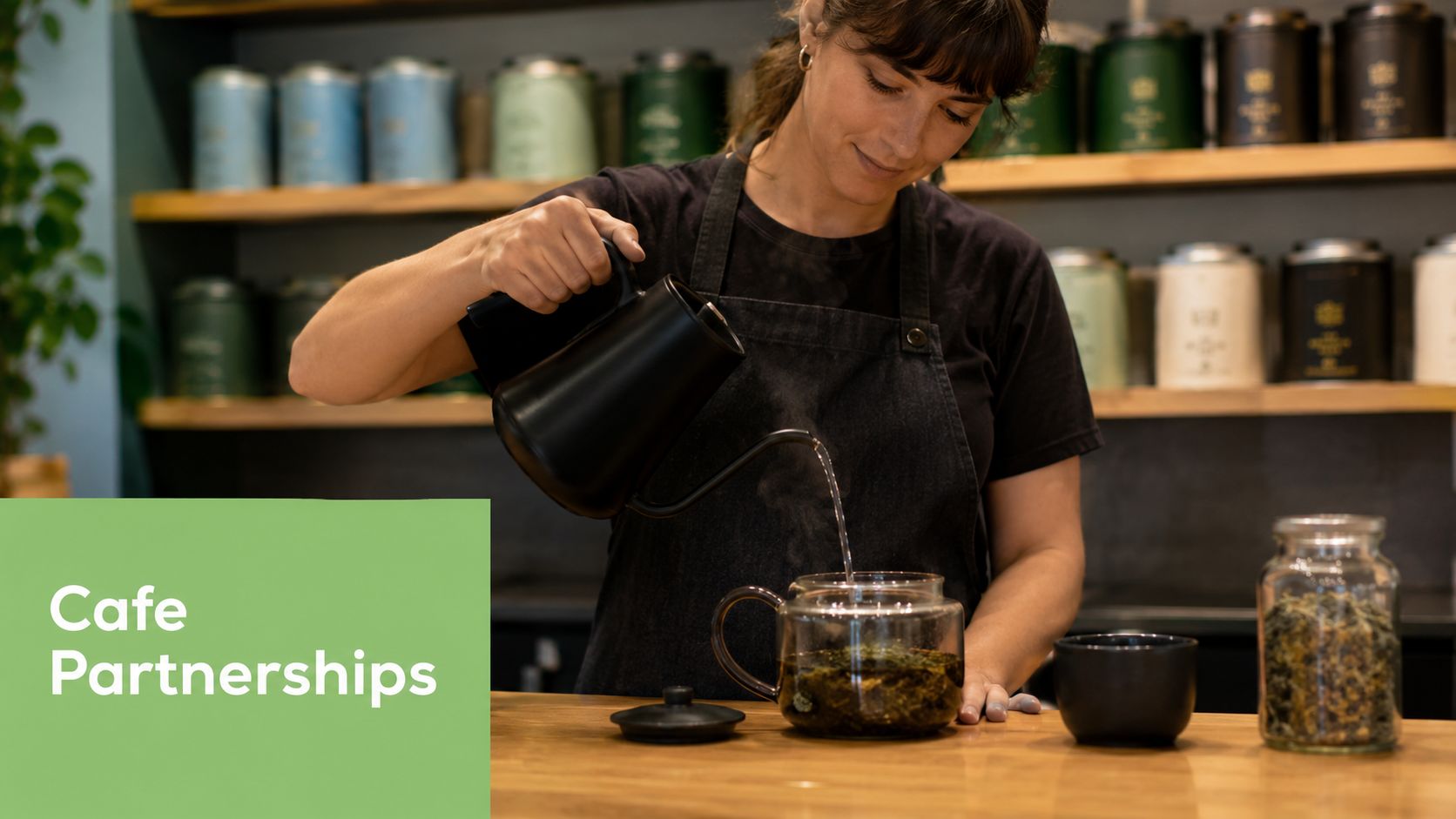
Partnering with Tea Suppliers for Your Café
Cafés don't buy tea the same way households do. A home buyer can forgive inconsistency. A venue can't.
Staff need products that are easy to prepare correctly, stable on the menu, and clear enough to explain in one sentence to a customer who's deciding between an oat flat white, an iced matcha, and a non-alcoholic afternoon drink.
Why tea now deserves menu attention
The hospitality opportunity is bigger than the old tea pot on the side of the menu. Australia's tea market is seeing strong growth in functional and organic segments, with a projected 5.1% CAGR, driven by demand for low-sugar, additive-free, and health-supportive teas, according to Research and Markets on the Australian tea market.
For cafés, that translates into a simple commercial question. Are you giving customers better non-coffee choices, or only the bare minimum?
What café owners should look for in a tea supplier
A strong supplier relationship usually comes down to four things.
- Consistency in the cup. Your matcha should whisk the same way each shift. Your kombucha should pour and taste as expected.
- Clear product positioning. Staff should know whether a matcha is best for straight service or lattes, and how to describe a kombucha without confusion.
- Menu relevance. Organic, low-sugar, and additive-free cues matter more when customers are actively looking for lighter or more functional drinks.
- Operational ease. Products need to fit service speed, storage, and training reality.
Menu ideas that fit the current market
A tea program doesn't have to be huge to be effective.
| Drink style | Why it works in a café |
|---|---|
| Matcha latte | Familiar enough for broad appeal, distinct enough to feel premium |
| Iced matcha | Visual, refreshing, and easy to position as a coffee alternative |
| Kombucha by the bottle or glass | Gives customers a cold, alcohol-free option with personality |
| Loose-leaf pot service | Lifts the perception of tea beyond the standard tea bag |
A café doesn't need dozens of tea SKUs. It needs a small range that staff can serve confidently and customers can understand quickly.
Tea suppliers should make your menu clearer
The best supplier isn't just selling product. They're making your menu easier to execute.
If a supplier can't explain sourcing, preparation, flavour profile, and the right use case for each tea, your team ends up doing the guesswork. That usually leads to uneven drinks and weak menu language. In a café setting, clarity is part of quality.
Your Journey into Australian Tea Starts Here
The Australian tea scene is broader, more interesting, and more demanding than it used to be. That's a good thing. It means you've got more ways to find a tea that suits your taste, routine, and values.
It also means labels need a closer look.
The most useful way to judge Australian tea brands isn't by logo, trendiness, or whether the packet feels expensive. It's by asking clear questions. Where is it from? What kind of tea is it? How is it processed? Does the product fit the way you drink tea?
That's especially important now that tea includes more than the old familiar box of black bags. Matcha asks you to think about grade and preparation. Kombucha asks you to think about fermentation and ingredients. “Australian” asks you to think about ownership, brewing, packing, and origin as separate ideas.
Once you understand those distinctions, the category becomes much easier to enjoy. You stop buying vague promises and start choosing with confidence.
And that's the true pleasure of tea. Not just drinking it, but recognising what makes one product thoughtful, honest, and worth bringing into your daily life.
If you'd like to put that knowledge into practice, explore Pep Tea for organic matcha and Australian-brewed sugar-free kombucha, along with practical guides that help you choose, prepare, and enjoy tea with more confidence.