
Lemon Ginger Kombucha: Benefits, Brewing, and Buying
You're standing in front of a café fridge, trying to choose between sparkling water, an iced tea, a soft drink and a row of colourful functional beverages. Lemon ginger kombucha catches your eye because it sounds familiar, refreshing and a little more grown-up than lemonade. But the label raises sensible questions. How much lemon and ginger is in the bottle? Is it low in sugar? Does it contain live cultures, and can the alcohol level change during fermentation?
Those questions matter in Australia, where kombucha has moved well beyond a niche wellness drink. The flavour is appealing, but the quality of the fermentation, ingredient dose, storage and labelling determines what you're really buying. Here's how to assess lemon ginger kombucha with the practical eye of a tea and fermentation specialist.
Why Lemon Ginger Kombucha Is Winning Over Australian Drinkers
A café customer may choose lemon ginger kombucha for a simple reason: it offers brightness, spice and fizz in one bottle. Lemon gives the drink a clean, tart edge, while ginger adds warmth that lingers after the sip. That combination feels refreshing in hot weather, yet substantial enough to replace a sugary soft drink or an alcoholic aperitif.
The flavour also suits the way Australians increasingly use drinks. A bottle can sit beside a work lunch, accompany brunch, or become the base of a non-alcoholic menu serve. Health-conscious shoppers may look for a low-sugar option, while café owners want something with more character than plain soda water. Home brewers like the pairing because lemon and ginger are easy to recognise, source and adjust.
A mainstream category, not only a wellness niche
Australian kombucha already has a broad commercial foundation. One market estimate values the category at USD 184.1 million in 2024, with a projection of USD 650.4 million by 2033 at a 15.1% CAGR, while another estimates USD 218.3 million in 2024 rising to USD 765.8 million by 2033 at 15.0% CAGR. These are independent estimates with different market methodologies, but both point towards strong category expansion. Grand View Research's Australian kombucha market outlook
The same outlook identifies conventional kombucha as 89.8% of the market in 2024, with on-trade channels accounting for 60.7% of sales. That mix suggests lemon ginger kombucha can work as an everyday café or retail product, not merely as a specialist health-store purchase.
A federal fermented-beverages issues paper also reported that kombucha sales rose 174% over the previous three years, with New South Wales recording the largest consumer base, closely followed by Queensland. Australian fermented beverages issues paper For a Hunter Valley-brewed product, that local connection is especially relevant, but popularity doesn't remove the need to check what's inside the bottle.
What Makes Lemon Ginger Kombucha Unique
A café may serve two lemon ginger kombuchas that look similar on the label yet taste completely different. The difference usually comes from the tea base, fermentation stage, ingredient dose and alcohol control, rather than the flavour name alone.
Kombucha starts as sweet tea fermented by a SCOBY, a symbiotic culture of bacteria and yeast. The culture converts some sugar into acids, gases and other fermentation compounds. Lemon and ginger are often added during a later flavouring stage, although recipes and timing vary between producers.
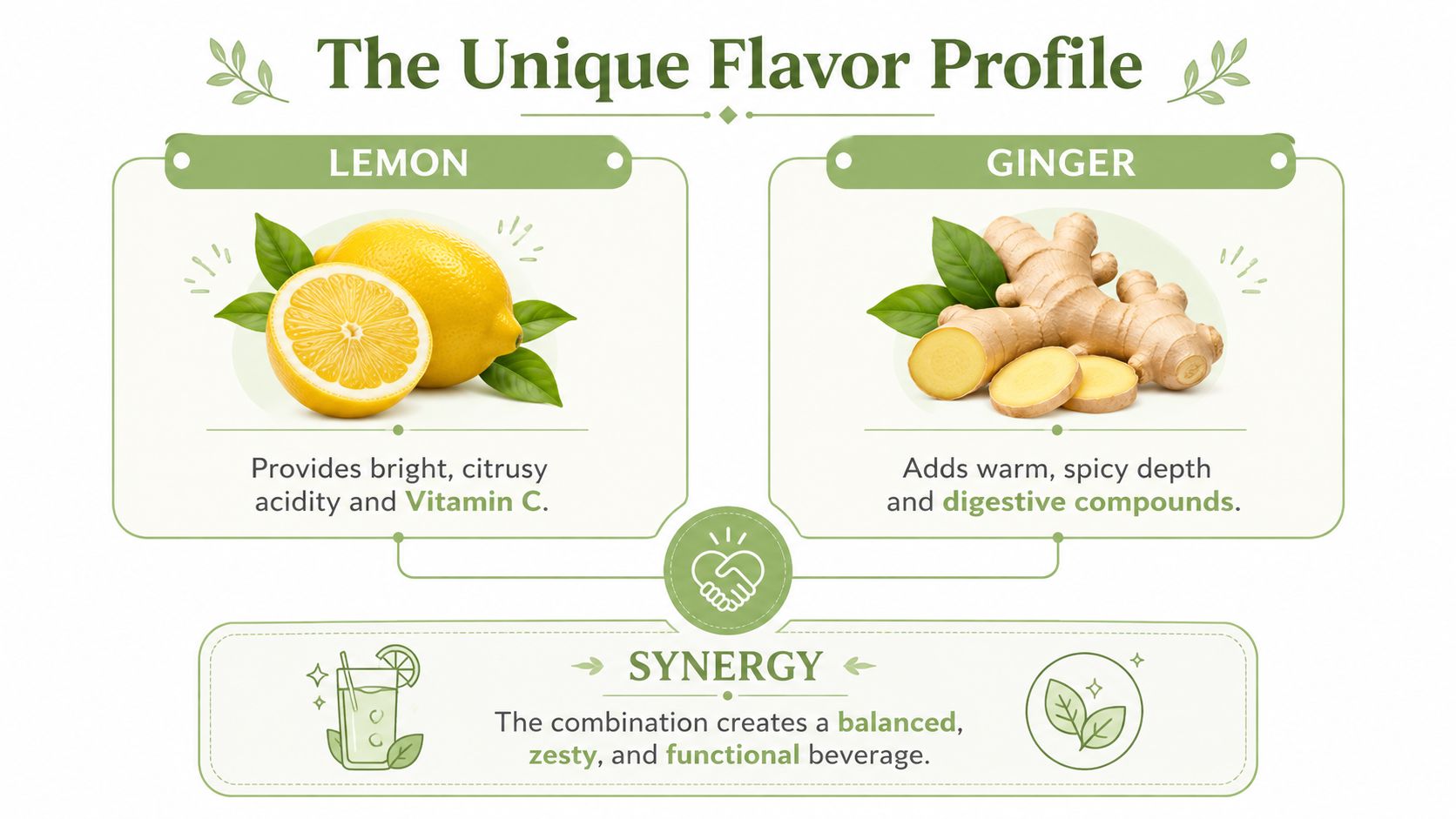
Lemon supplies acidity and citrus aroma. Ginger adds heat, fragrance and a warming finish. In the right proportions, those flavours keep a lower-sugar drink lively without making it taste thin. A well-made version should still show fermented tea beneath the botanicals, rather than tasting like sweetened water with generic citrus flavouring.
Why timing and dose change the result
Lemon and ginger affect more than flavour. A Western Sydney University study found statistically significant inhibition of S. cerevisiae and Bacillus species at 2–3% additions under low inoculum density. Lemon also inhibited L. plantarum under particular low-inoculum or higher-lemon conditions. The study's findings are discussed in more detail later in this article.
For home brewers, this makes addition timing a practical control point. Adding the ingredients after primary fermentation can make flavour adjustment easier, while fruit sugars may restart yeast activity. For cafés and packaged-product buyers, the formulation also affects consistency, refrigeration needs and alcohol management. Excess ginger can dominate the palate or interfere with culture activity, while too little leaves a sharp lemon tea profile.
Ingredient panels deserve a close read. One Australian listing specifies 0.1% lemon and 2% ginger. Remedy Ginger Lemon product information Those amounts do not determine quality by themselves, but they show why a broad wellness message should be separated from the actual recipe.
A useful tasting test: look for a clear sequence of tea, acidity and ginger warmth. If sweetness or artificial citrus takes over, the formulation is doing little beyond flavour coating.
Probiotic and Nutritional Benefits Worth Knowing
A glass of lemon ginger kombucha can supply fermented tea, organic acids and distinctive plant compounds. Its value depends on the live cultures that remain, the fermentation and processing methods, the amounts of lemon and ginger added, and the sugar left in the finished drink. That makes the recipe more informative than a broad wellness promise.
Live cultures may include organisms from groups such as Lactobacillus, Bifidobacterium and Acetobacter, although the profile varies between products. Culture names do not establish a particular health outcome. A label that identifies the cultures or provides a CFU count gives a clearer basis for comparison than a general probiotic claim.
What lemon and ginger can contribute
Lemon contributes citrus aroma, acidity, vitamin C and antioxidant compounds, depending on its dose and the way the drink is processed. Ginger supplies aromatic compounds, including gingerols, which create its warming character. Fermentation changes acidity and flavour, but it does not guarantee that every nutrient or plant compound becomes more bioavailable.
The Western Sydney University work found that lemon-treated kombucha increased antioxidant activity by 5–15% in a FRAP assay. That result applies to the tested formulation and assay, rather than to every lemon ginger kombucha. The study's research record The practical lesson is straightforward: ingredient concentration and fermentation conditions shape the result, so dosing matters alongside the ingredient list.
For a broader explanation of fermentation, live cultures and practical use, read Pep Tea's guide to the benefits of kombucha.
A realistic daily role
A small serve can replace a sweet soft drink or add variety to a hydration routine. It may suit people who enjoy tart, sparkling drinks and want a fermented option. It cannot correct an unbalanced diet, poor sleep or an underlying digestive condition.
Acidity also matters in everyday use. People with reflux, dental sensitivity, diabetes, pregnancy-related dietary questions or medically restricted diets should check the label and seek individual advice from a qualified health professional.
Australian product pages may highlight live cultures, organic acids and “no sugar” positioning without explaining the limits for every customer. Woolworths product information for Remedy Ginger Lemon A transparent label should help you assess acidity, sweeteners, caffeine, storage and ingredients. For home brewers and cafés, those details also support sensible portioning and menu descriptions.
Brewing and Selecting Quality Lemon Ginger Kombucha
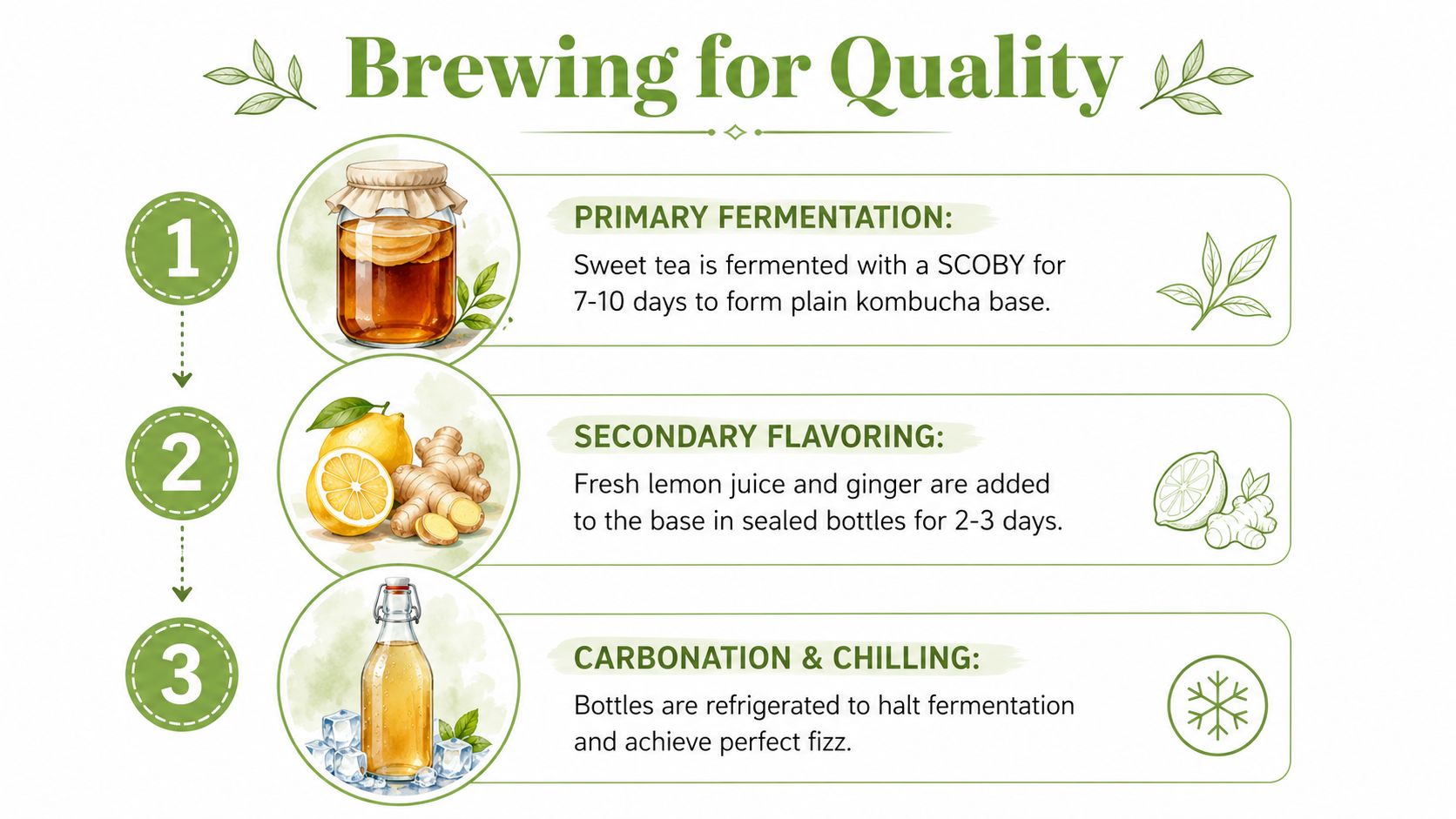
A reliable batch starts with control, not flavour improvisation. Primary fermentation creates the plain kombucha base. A later flavouring stage introduces lemon and ginger, then the sealed drink may develop carbonation before refrigeration slows further activity.
A controlled brewing sequence
For home brewers, the process can be organised around three decisions:
Build a sound base. Brew tea, add the required sugar, cool it properly, then ferment with an active SCOBY and starter liquid. Australian room conditions vary, but a working range of 24–28°C is commonly used for fermentation planning. Time, temperature and culture strength all change the final acidity.
Add flavour with restraint. Fresh ginger root gives a cleaner, more layered heat than powder, while lemon juice supplies direct acidity. Zest brings aromatic citrus oils but can become bitter if overused. A brewer should taste the base first, then make a measured addition rather than tipping in ingredients by guesswork.
Manage the bottle stage. Lemon and ginger can introduce residual sugars or fermentable material. In a sealed bottle, yeast may continue working, creating pressure and increasing alcohol. Refrigeration helps slow that activity, but it isn't a substitute for a validated process.
A purpose-built kombucha brewing container from Pep Tea can help keep the process organised, but equipment won't correct a weak starter, poor sanitation or uncontrolled temperature. Clean vessels, sound tea and careful observation remain the foundation.
Alcohol is a production issue
Australian testing shows why brewers and buyers shouldn't assume kombucha is automatically non-alcoholic. A Food Standards Australia New Zealand survey found 35.2% of sampled kombuchas below 0.5% ABV, 41.9% between 0.5% and 1.15% ABV, and 22.9% above 1.15% ABV. FSANZ coordinated survey of fermented soft drinks
In Queensland, Tasmania and Victoria, beverages above 0.5% ethanol by volume are classified as alcoholic, while jurisdictions using a 1.15% threshold apply a different boundary. The practical lesson is simple: producers need batch consistency, appropriate labelling and testing where necessary.
For troubleshooting, excessive sourness usually points to an overextended fermentation or too little residual sweetness. Weak carbonation may reflect insufficient fermentable material, a loose seal or a short bottle stage. Mould is a safety failure, not a flavour problem. Discard a mouldy batch rather than trying to rescue it.
Serving Ideas and Café Menu Applications
At a café, lemon ginger kombucha can arrive in a clear glass over ice, finished with a lemon wheel and a thin slice of fresh ginger. That presentation makes the ingredients visible and gives customers a quick sensory cue before they taste it. Serve it cold, pour gently and avoid burying the fermented character under syrups.

Three useful menu formats
A kombucha spritz combines chilled lemon ginger kombucha with muddled mint, ice and a small amount of soda water. Keep the additions restrained so the acidity and ginger remain recognisable. A fermented mule uses kombucha as the ginger element, with lime, ice and a non-alcoholic spirit if the venue wants a more structured bar-style serve.
Food pairing is straightforward. Lemon's acidity can cut through rich avocado toast, smoked salmon or pastry, while ginger brings enough spice to sit comfortably beside an Asian-inspired bowl. The drink's tartness can also refresh the palate between bites, especially where a creamy or oily component dominates.
Operational details for venues
Cafés should treat kombucha as a living product. Keep stock within the supplier's recommended cold-chain conditions, rotate it carefully and avoid leaving open bottles at room temperature for long periods. If a venue uses a keg or tap system, the team should confirm compatibility with the producer, maintain clean lines and monitor carbonation and flavour over service.
For winter, a café can offer a room-temperature or gently warmed spiced tea alternative using turmeric and cinnamon, but heating kombucha may affect live cultures and carbonation. Summer menus can use cucumber and basil for a lighter aromatic variation. For wider seasonal planning, Simply Hospitality's seasonal beverage ideas offers useful hospitality context.
Menu wording should stay accurate. “Fermented tea with lemon and ginger” tells customers more than an unqualified promise about gut health, and a clear alcohol statement helps staff answer questions confidently.
How to Choose the Best Lemon Ginger Kombucha in Australia
The best bottle isn't necessarily the one with the loudest wellness language. Start with the ingredient list, then assess processing, storage and taste. A mass-market product may be convenient and consistent, while a small-batch producer may offer a more distinctive fermentation profile. Neither label category guarantees quality.
Look for real lemon and ginger, rather than relying only on “natural flavour”. Check whether the drink is raw or unpasteurised, but remember that those terms still need context. A live product can change in the bottle, and a producer should be able to explain its storage and alcohol-control practices.
A practical comparison
| Quality Factor | Mass-Market Options | Premium/Small-Batch, for example Pep Tea |
|---|---|---|
| Ingredient detail | May provide a shorter or less specific flavour description | More likely to identify tea, cultures and flavour ingredients clearly |
| Processing | May prioritise shelf stability and broad distribution | May retain a more pronounced fermented profile, depending on process |
| Sugar positioning | Check whether fruit juice or concentrates contribute sweetness | Look for a clear sugar statement and an ingredient list you can understand |
| Alcohol control | Confirm the product's labelling and storage instructions | Ask how fermentation consistency and testing are managed |
| Flavour | Often designed for broad appeal | May show clearer tea, citrus and ginger character |
| Cold chain | Storage can vary across transport and retail | Chilled handling and producer guidance are especially important |
Australian food law treats kombucha as a traditional food rather than a novel food, so it doesn't need special pre-approval. It still has to be safe and suitable, and general food laws apply. CHOICE's kombucha guidance also notes that a low-sugar claim in Australia requires 2.5 g sugar or less per 100 mL.
Label questions worth asking
- Cultures: Are live cultures stated, and are specific organisms or CFU information provided?
- Sugar: Is “sugar free” supported by the nutrition panel, rather than inferred from a health claim?
- Acidity: Does the product suit your teeth, reflux history and preferred taste?
- Alcohol: Does the producer explain how ABV is controlled and labelled?
- Storage: Does the bottle require refrigeration, and has it stayed cold through retail?
For an Australian buying guide and retailer context, Pep Tea's guide to buying organic kombucha in Australia provides a useful starting point.
Making Lemon Ginger Kombucha Part of Your Routine
A home brewer pours lemon ginger kombucha after lunch, while a café owner serves the same style over ice with a citrus garnish. In both settings, its value comes from practical use rather than broad wellness promises: fermented tea, ginger warmth, acidity and carbonation in a soft-drink alternative or non-alcoholic menu base.
Start with a small serve and observe how your body handles acidity and carbonation. For cafés, trial it beside brunch or as a seasonal mocktail, then check whether the flavour remains balanced when diluted with ice or paired with food.
A reliable routine also depends on consistent brewing. Home brewers can adjust lemon and ginger gradually, while venues need a repeatable recipe, cold storage and a clear approach to alcohol control. The aim is a drink people can enjoy regularly, with its ingredients and production understood.
Explore Pep Tea's Australian-made organic kombucha options, including its sugar-free Lime & Ginger style, for a practical lemon-and-ginger-style choice.
Pep Tea offers organic tea and Australian-brewed sugar-free kombucha for home drinkers, cafés and wholesale customers. Visit Pep Tea to explore the range and brewing resources.