
Tag: kombucha mocktails
Top 10 Non Alcoholic Tea Cocktails for 2026

Why settle for a sugary mocktail when tea can do far more?
A well-built tea cocktail works like a chef's seasoning. Tea brings structure, aroma, tannin, freshness, and length, so the drink tastes layered rather than just sweet. That is why non alcoholic tea cocktails have become such a smart choice for Australians who want something refined, achievable at home, and better suited to everyday wellbeing.
Tea also gives you room to adjust the drink with purpose. Matcha can add savoury depth and a gentle, focused lift. Kombucha can add acidity, fizz, and a cultured tang that makes a zero-proof serve feel properly grown-up. Start with quality ingredients and the rest becomes much easier, whether you are mixing one glass at your kitchen bench or planning a batch for busy weekend service.
We are especially fond of recipes built on ceremonial grade green tea and well-made kombucha because they carry flavour without relying on heavy syrups. The result is cleaner, brighter, and more balanced. For many people, that also means an afternoon drink that feels refreshing instead of tiring.
This guide is written for two kinds of tea lovers at once. Home drinkers will get clear recipes and practical tips. Café owners, retailers, and hospitality teams will also find a useful commercial lens in each drink, including scaling ideas, menu pairings, and wholesale potential. That café and retailer angle matters because the best tea cocktails should work both as a lovely one-off serve and as a product worth putting on a menu, a shelf, or a seasonal promotion.
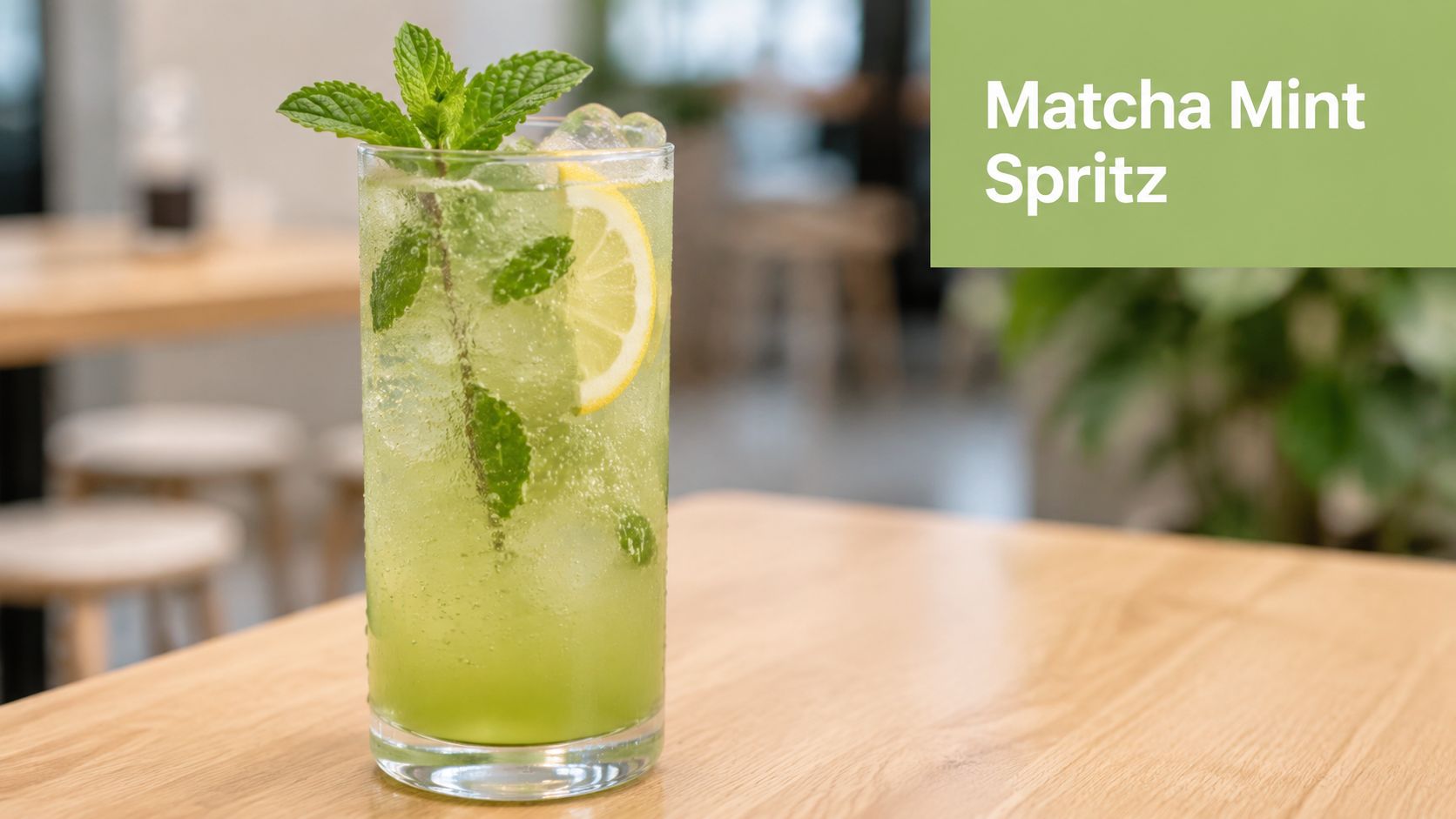
1. Matcha Mint Lemonade Spritzer
A good tea cocktail should wake up your palate, not bury it under sweetness. This one does that beautifully. Ceremonial-grade matcha, fresh mint, lemon juice, and sparkling water create a drink that tastes crisp, green, and clean, with enough lift to feel special on a hot Australian afternoon.
Our favourite base here is ceremonial grade green tea, because it gives you a softer, more elegant finish than lower-grade powders. Matcha also brings functional appeal. A standard 2g serve of ceremonial-grade Japanese organic matcha delivers 100 to 220mg of EGCG, and modern HPLC analyses confirm matcha contains 2 to 3 times more EGCG than steeped green tea, according to matcha EGCG analysis.
How to make it work
Whisk the matcha first with a small amount of warm water, around 70°C, until it's smooth. Add lemon juice, lightly crushed mint, ice, and top with sparkling water right at the end so the drink keeps its sparkle.
- Use gentle heat: Boiling water flattens matcha's delicate flavour and can push bitterness too far.
- Crush mint lightly: Press the leaves to release oils. Don't mash them into green pulp.
- Chill the glass: A cold glass gives the spritzer a sharper, cleaner finish.
Practical rule: Add sparkling water last and serve immediately. This drink is at its best in the first few minutes.
For cafés, this is an easy seasonal special because the colour sells itself and the ingredients are familiar to customers. For retailers, it's a strong recipe card companion beside ceremonial matcha, especially for shoppers looking to cut back on sugary afternoon drinks.
2. Kombucha Ginger Mocktail with Tea Base
What do you pour when you want the bite and ritual of a proper evening drink, but not the alcohol? This kombucha ginger build answers that beautifully. A light tea base gives structure, ginger brings a slow warming lift, and kombucha adds that bright, lively edge that keeps each sip interesting.
It helps to treat this recipe like a well-balanced vinaigrette. Tea is the body, acid is the spark, ginger is the aromatic top note, and kombucha ties it together with fizz and gentle funk. If the tea is too strong, the drink turns astringent. If the kombucha is too sweet, the finish loses its dry, grown-up feel.
A cleaner, more grown-up pour
Brew a green tea base lightly and chill it fully before mixing. Stir in fresh ginger and a squeeze of citrus, then top with sugar-free kombucha at the last moment. Our Ginger or Lime & Ginger styles are especially good here, and you can explore more serving ideas in our non-alcoholic cocktail mixers collection.
This recipe also suits customers looking for healthy soda alternatives, but it drinks with far more nuance than a standard soft drink swap.
For home makers, keep the tea and ginger base in a bottle in the fridge for two days and finish each glass to order. That tiny extra step preserves the kombucha's fizz and keeps the ginger fresh rather than muddy.
For cafés, this is a smart service drink because the prep is simple and the final assembly feels polished. Batch the chilled tea, citrus, and ginger base, then top with kombucha during service so the drink arrives bright and aromatic. It pairs especially well with savoury brunch dishes, grain bowls, grilled chicken sandwiches, or anything with sesame, miso, or light chilli heat.
For retailers and wholesalers, this recipe does double duty. It works as an easy recipe card beside kombucha and loose leaf tea, and it gives stockists a practical zero-proof menu idea they can scale without specialist bar gear. A venue can pour it by the glass, offer it as part of a wellness lunch special, or adapt it into a seasonal bottled cooler with careful cold-chain handling.
Serve in a tall glass over plenty of ice with a thin slice of ginger or a strip of lime peel. The aroma hits first, and that changes how the whole drink reads on the palate.
3. Iced Matcha Green Tea with Yuzu and Sparkling Water
Could a three-part drink feel as polished as a café spritz? This one can. Iced matcha, yuzu, and sparkling water make a crisp zero-proof serve that tastes clean rather than plain.
The balance is what makes it work. Matcha brings savoury depth and a soft, creamy texture. Yuzu adds a high, fragrant citrus note that sits somewhere between mandarin, grapefruit, and lime. Sparkling water lifts everything so the drink finishes bright instead of dense. If straight matcha has ever felt too grassy, this is a gentler way in.
Use chilled green tea to lengthen the drink without washing it out. It works like adding stock to a sauce instead of plain water. You keep flavour, but gain finesse. A spoonful of our Uji matcha latte powder for smooth iced matcha drinks can also help home makers and venues build a more rounded base with less bitterness.
Why it works for both home makers and menus
Australian diners are asking for zero-proof drinks that feel thoughtful, not like an afterthought, as noted earlier. This recipe answers that demand because it looks refined, tastes adult, and needs very little equipment.
For best results, whisk the matcha with a small amount of cool water first until smooth, then add the chilled tea and yuzu. Pour over plenty of ice and top with sparkling water at the last moment. That final step matters. Carbonation is the top note, and it fades fast if the drink sits.
A few practical uses make this especially handy:
- For home entertaining: Serve in a stemless wine glass or flute-style tumbler with a thin strip of yuzu peel. It feels dinner-party ready without being fussy.
- For cafés: Offer it as a light afternoon refresher with Japanese sandwiches, sashimi-style salads, citrus cakes, or sesame-forward brunch plates.
- For retailers and wholesalers: This is a strong recipe-card drink because it shows matcha beyond lattes. Stockists can demo it in tastings, bottle the still base for fast service, or build a seasonal sparkling tea special around it.
The café and retailer angle is especially useful here. One recipe can teach a home customer how to make a better iced matcha and give a venue a simple, premium non-alcoholic menu item with clear upsell potential. That kind of crossover is rare, and worth using.
4. Matcha Lavender Latte with Honey and Almond Milk
Not every tea cocktail needs fizz. Some are better warm, soft, and aromatic. This matcha lavender latte sits in that category. It's the sort of drink people order when they want a pause, not a rush.
Whisk ceremonial matcha with a little warm water until silky. Separately steep culinary lavender, strain it well, then blend with gently heated almond milk and a touch of honey. The milk rounds out the tea, while the lavender gives a floral note that should sit in the background rather than dominate.
A warm serve with café appeal
Matcha's clean energy lift is one reason this drink has such a loyal audience. L-Theanine helps modulate caffeine release, creating a smoother effect that can last 5 to 6 hours, according to matcha L-Theanine and energy duration details. That makes this a lovely option for afternoons when customers want focus without a jagged coffee spike.
If you want a ready-made starting point for the flavour profile, our Uji Matcha Latte is a handy reference for building a smoother matcha-and-milk serve.
- Steep lavender separately: Don't throw buds straight into the finished drink unless you want bitterness and grit.
- Heat milk gently: Around 60 to 70°C keeps the texture creamy.
- Froth last: A little microfoam makes the drink feel café-quality without extra effort.
For a retailer, this recipe helps move matcha beyond the breakfast routine. For a café, it's an easy upsell beside gluten-free slices, almond croissants, or a simple afternoon tea menu.
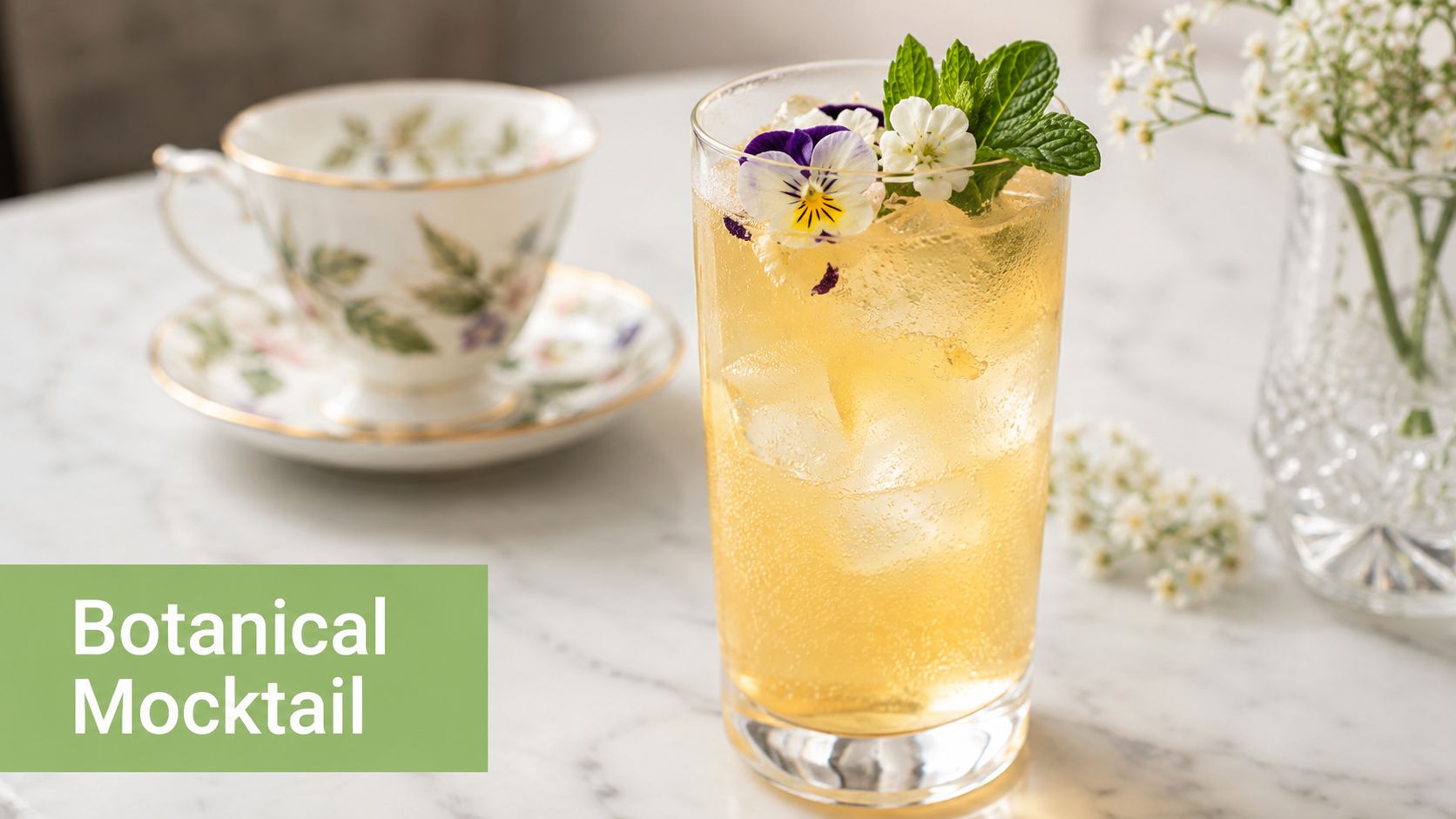
5. Kombucha Elderflower Mocktail with Botanical Tea
This is the garden-party serve. Floral, lifted, and elegant. It's one of the best examples of how kombucha can act like a serious mixer rather than a wellness add-on.
Use a delicate botanical tea such as chamomile, jasmine, or rose as the still base. Add a little elderflower cordial, chill thoroughly, and then top with sugar-free kombucha right before serving. Edible flowers make sense here, but balance is essential. You want perfume and brightness, not potpourri.
Why cafés are embracing this style
In the Australian hospitality sector, 28% of venues have formally expanded their non-alcoholic cocktail menus since 2023, with kombucha and cold-brew tea-based mocktails showing the highest adoption rate among cafés and bars in Melbourne and Sydney, according to alcohol-free menu growth in Australian venues. This drink fits that shift perfectly because it looks premium and photographs beautifully, yet it's straightforward to build during service.
A practical menu pairing is brunch or high tea. It also works well in event catering, where guests often want something celebratory in a flute or wine glass that isn't alcohol.
Keep the botanical tea light. Delicate flowers disappear if the base is over-brewed and tannic.
For retail shelves, elderflower and kombucha create a strong cross-sell story with entertaining, gifting, and spring-summer hosting.
6. Kombucha Turmeric Wellness Shot with Green Tea
Not every serve needs to mimic a cocktail glass. A wellness shot can still count as one of the most useful non alcoholic tea cocktails if it's layered, intentional, and enjoyable enough to repeat.
This version combines green tea, kombucha, turmeric, and ginger in a short, concentrated pour. The flavour should be bright and earthy, with enough acidity to keep it lively. A tiny pinch of black pepper can help round it out and support absorption of turmeric's key compounds.
Keep fermentation quality in mind
Kombucha quality matters more here because there's nowhere to hide rough edges. Sugar-free organic kombucha brewed in Australia's Hunter Valley can deliver live probiotic cultures with HACCP-accredited consistency at pH 3.2 to 3.6, live culture counts of at least 10^6 CFU/mL, and zero added sugar, according to Hunter Valley kombucha brewing standards. That kind of reliability is exactly what cafés and wellness bars need in a mixer.
If you'd like a broader functional drink idea to pair with this serve, our immune booster drink guide is a useful next stop.
- Use small glasses: This is best as a concise, punchy serve.
- Warm gently if extracting spices: Don't boil kombucha.
- Warn customers about turmeric: It stains benches, aprons, and sometimes smiles.
This style makes sense at smoothie bars, gym cafés, and health-focused retailers that want a grab-and-go recipe built around probiotic and tea ingredients rather than sugary shot formulas.
7. Iced Matcha Collagen Mocktail with Bone Broth
This one won't be for everyone, and that's part of its strength. It speaks directly to the wellness crowd that wants savoury, functional drinks with more substance than fruit juice and ice.
The method matters. Dissolve collagen into warm bone broth, whisk matcha separately, combine them, then chill over ice. A touch of vanilla or almond milk can soften the edges, but don't turn it into dessert. The appeal here is a clean, savoury-meets-green profile.
A niche serve for committed wellness customers
Australian health-conscious consumers aged 25 to 55 are increasingly prioritising sugar-free, probiotic-rich beverages as alternatives to alcohol, and non-alcoholic cocktail menus in Australian cafés grew by 34% between 2022 and 2024, according to functional beverage growth among Australian café menus. While this particular drink is more specialised than a spritz, it suits that broader appetite for functional serves.
For a fitness café, think post-class recovery menu. For a retailer, think recipe content aimed at people already buying collagen, broth, and matcha.
Here's a visual example of a wellness-style preparation approach:
The best commercial use for this drink is as a limited special. It starts conversations, builds authority, and tells customers your menu isn't stuck in the old mocktail mould.
8. Kombucha Passion Fruit Spritzer with Herbal Tea
What do you pour when someone wants a drink that feels festive, refreshing, and a little bit grown-up, without a drop of alcohol? This spritzer answers that beautifully. Passion fruit brings bright perfume and a soft tang. Herbal tea gives the drink its backbone. Kombucha adds that lively, sparkling edge that makes a simple fruit mix feel more like a proper café serve.
The easiest way to balance it is to treat it like building a good fruit tart. You need sweetness, acidity, and structure. Hibiscus gives a sharper, ruby-toned base that suits summer menus. Rooibos is rounder and gentler, which helps if your kombucha is already quite tart. Brew the tea a little stronger than you would for a mug, chill it fully, then top with kombucha just before serving so the fizz stays fresh.
Passion fruit can trip people up here. Too much pulp makes the texture muddy, especially in a tall glass. Strain most of it if you want a cleaner café-style finish, then spoon in a little fresh pulp at the end for aroma and visual appeal. Mint is enough for garnish. A heavy garnish stack only gets in the way of the drink's tropical profile.
A smart crossover serve for home kitchens, cafés, and retail counters
As noted earlier, younger Australian drinkers are helping drive demand for alcohol-free options that still feel social and stylish. This recipe suits that shift because it is easy to love on first sip, yet still has enough tea character to stand apart from standard mocktails.
For cafés and retailers, that makes it useful in more than one setting:
- Summer café special: Serve in a wine glass or large tumbler with crushed ice. It pairs well with prawn rolls, grilled halloumi salads, or passionfruit yoghurt cakes.
- Retail sampling pour: Batch the herbal tea ahead, keep the passion fruit separate, and finish with kombucha to order. Customers can taste the tea base clearly, which is helpful if you also sell the blend loose leaf or wholesale.
- Events and catering: Build it as a low-labour welcome drink. The colour sells it quickly, and the ingredients scale without much fuss.
For wholesale conversations, this recipe is particularly handy. A retailer can stock the herbal tea, a café can feature it as a seasonal spritz, and both can tell a clean story around flavour, low-alcohol socialising, and easy menu application. That bridge between home recipe and commercial serve is where tea does its best work.
9. Matcha Chai Latte with Spiced Milk
If the lavender latte is soft and floral, this one is bold and warming. Matcha and chai shouldn't fight each other. They should layer. The best versions let the spice open first, then the green, slightly savoury matcha note comes through on the finish.
Toast whole spices lightly, steep them properly, strain well, and then combine with smooth matcha paste and warm milk. Honey works nicely if you want a sweeter edge, but keep it restrained.
Better bitterness without relying on syrup
One of the biggest problems in this category is over-sweetness. Existing content often skips the challenge of recreating that bitter-sweet cocktail feel without leaning on syrup, even though 68% of consumers actively seek low-sugar options, according to Australian demand for low-sugar clean-label mixers. Chai spices help solve that problem because cardamom, ginger, cinnamon, and clove build complexity without needing much sugar at all.
A good tea cocktail doesn't need to taste sweet to feel complete. Spice, tannin, aroma, and texture can do the heavy lifting.
For cafés, this makes a strong winter special and pairs naturally with banana bread, spiced biscuits, or oat-based bakery items. For home drinkers, it's a smart evening drink when you want comfort without opening a bottle.
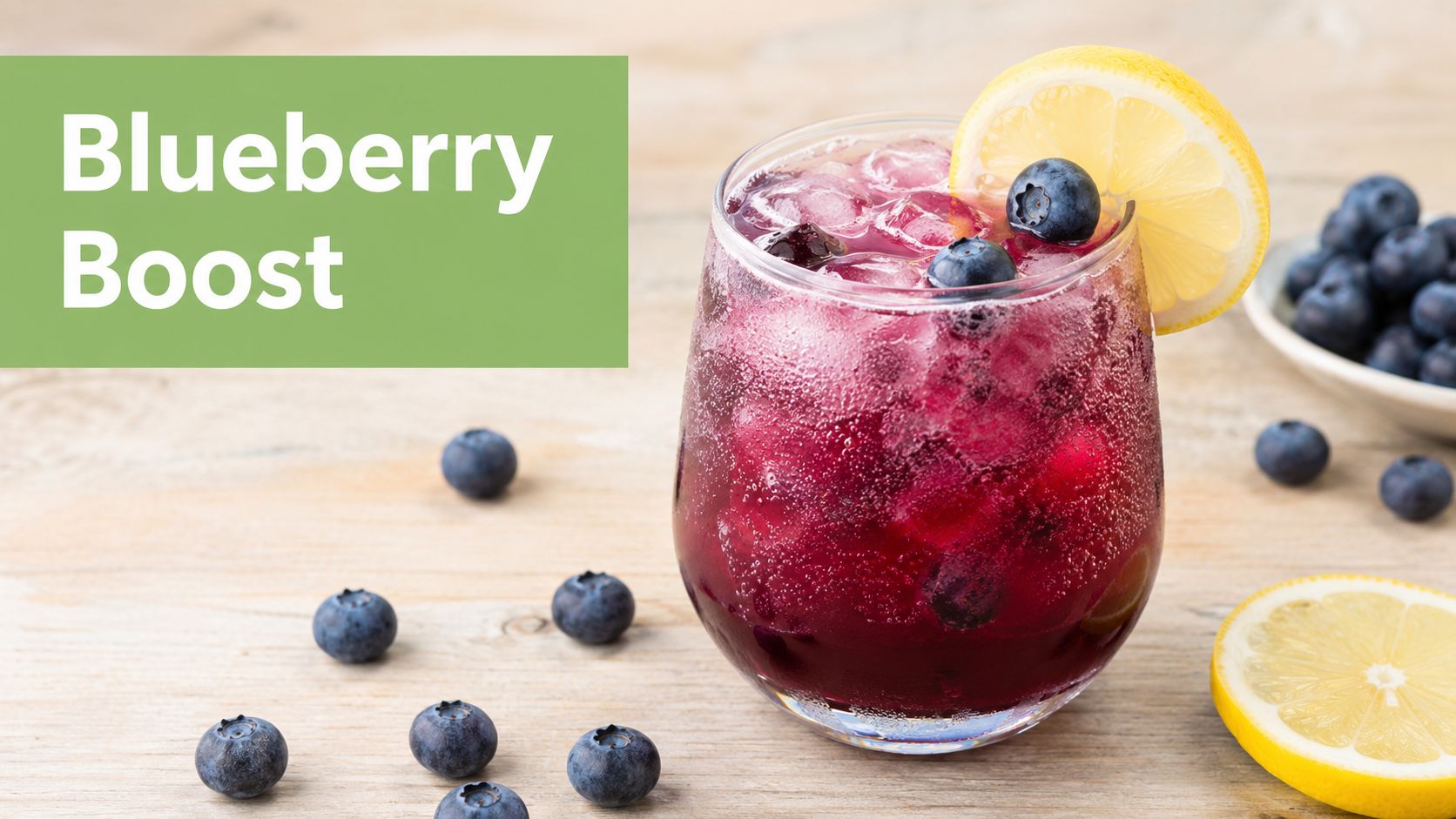
10. Kombucha Blueberry Antioxidant Mocktail with White Tea
This is the jewel-toned showpiece. Blueberries give colour and fruit depth. White tea keeps the structure light and elegant. Kombucha adds acidity and fine fizz, while lemon brightens the whole glass.
Use fresh berries when they're good, or high-quality frozen berries when they're not. Lightly crush or blend, strain if you want a smoother texture, and combine with chilled white tea before topping with kombucha.
Functional appeal with broad market interest
Australian consumer surveys indicate that 36% of health-conscious adults aged 25 to 40 prefer non-alcoholic tea cocktails with functional ingredients like L-Theanine or probiotics over traditional sugary mocktails, according to ready-to-drink mocktail market analysis. This drink lines up with that preference because it feels indulgent in colour and flavour, while still sitting firmly in the wellness space.
It's especially strong for:
- Upscale cafés: It looks premium with minimal garnish.
- Retail demos: Blueberry and lemon are familiar flavours that make kombucha easier for new customers.
- Brunch venues: It's a natural fit where guests want something celebratory but alcohol-free.
White tea is delicate, so keep the brew gentle. That's what gives this drink its elegance.
Top 10 Non-Alcoholic Tea Cocktails Comparison
| Beverage | Implementation Complexity 🔄 | Resource Requirements ⚡ | Expected Outcomes 📊 | Ideal Use Cases 💡 | Key Advantages ⭐ |
|---|---|---|---|---|---|
| Matcha Mint Lemonade Spritzer | Low, quick whisking technique required | Low, ceremonial matcha (premium), mint, lemon, sparkling water | Refreshing, antioxidant boost, sustained calm energy | Warm afternoons, health-focused café breakfast menus | High antioxidants; L-theanine for calm focus; Instagram-worthy |
| Kombucha Ginger Mocktail with Tea Base | Medium, careful kombucha handling to preserve fizz | Medium, live kombucha, green tea, fresh ginger, chilled storage | Probiotic support, digestive aid, subtle spice complexity | Premium non-alcoholic menus, wellness cafés | Probiotics + antioxidants; low sugar; Australian-made credibility |
| Iced Matcha Green Tea with Yuzu and Sparkling Water | Low–Medium, simple assembly, citrus balance needed | Medium, culinary matcha, yuzu (or substitute), sparkling water | Elegant, antioxidant-rich, sustained energy | Japanese-inspired premium menus, cosmopolitan cafés | Accessible cost (culinary matcha); clean minimalist flavour |
| Matcha Lavender Latte with Honey and Almond Milk | Medium, steeping lavender and milk heating required | Medium, ceremonial matcha, culinary lavender, almond milk, honey | Calming "calm focus", soothing aroma, gentle energy | Afternoon wellness rituals, mindfulness offerings | L-theanine + lavender synergy; comforting, wellness positioning |
| Kombucha Elderflower Mocktail with Botanical Tea | Medium, botanical tea selection and cordial sourcing | Medium, kombucha, elderflower cordial, botanical teas, garnishes | Floral, sophisticated flavour with probiotic benefits | Weddings, premium hospitality, garden events | Elegant, complex flavour; low sugar; premium presentation |
| Kombucha Turmeric Wellness Shot with Green Tea | Medium, concentrated prep and turmeric handling | Low–Medium, kombucha, turmeric (fresh/powder), ginger, green tea | Anti-inflammatory, immune support in small shot format | Wellness shots, fitness routines, daily rituals | Concentrated functional benefits; convenient shot format |
| Iced Matcha Collagen Mocktail with Bone Broth | High, multiple heat/whisking steps, careful integration | High, bone broth, collagen peptides, matcha, vanilla (costly) | Protein-rich recovery, skin and joint support | Fitness-focused cafés, post-workout menus, premium wellness venues | High protein/amino acids; recovery and skin benefits; premium appeal |
| Kombucha Passion Fruit Spritzer with Herbal Tea | Low–Medium, pulping/straining fruit and carbonation timing | Medium, kombucha, fresh passion fruit (seasonal), herbal tea, sparkling water | Tropical, probiotic, visually striking summer beverage | Summer menus, outdoor events, social-media-driven offerings | Exotic tropical flavour; strong visual appeal; low sugar |
| Matcha Chai Latte with Spiced Milk | Medium, spice toasting/steeping plus milk preparation | Medium, ceremonial matcha, chai spices, milk (or plant alternative) | Warming, aromatic, comforting sustained energy | Autumn/winter menus, cosy café specials | Warming spices with L-theanine; versatile milk options; seasonal favourite |
| Kombucha Blueberry Antioxidant Mocktail with White Tea | Medium, berry processing and gentle tea brewing | Medium, kombucha, blueberries (fresh/frozen), white tea, lemon | Triple antioxidant synergy for cognitive and immune support | Antioxidant-focused menus, wellness positioning, premium cafés | Strong antioxidant profile; striking purple colour; probiotic synergy |
Start Your Tea Cocktail Adventure Today
What if your next favourite party drink, café special, or retail-ready wellness serve started with tea instead of spirits?
Non alcoholic tea cocktails work because tea already gives you the structure that many mocktails struggle to find. Matcha brings body and a gentle savoury depth. Kombucha adds acidity, fizz, and complexity. Herbal and botanical teas layer in aroma the same way seasoning finishes a good meal. Once you understand that balance, building a drink feels far less intimidating.
Quality ingredients change the result straight away. At Pep Tea, we focus on organic Japanese Matcha and authentically brewed, sugar-free organic Kombucha because they create a clean, reliable base from the first sip. Our matcha is stone-ground, bright, and easy to whisk into both hot and iced recipes. Our kombucha is brewed in the Hunter Valley, NSW, with real fermentation and live cultures, giving home drinkers a refined mixer and giving cafés and retailers a product that holds up on a menu or shelf.
Tea already has a natural place in everyday Australian drinking habits, as noted earlier. What these recipes do is give tea a more social role. It becomes something you can serve in a wine glass at dinner, batch for brunch, or position as a premium zero-proof option beside cocktails, coffee, and sparkling drinks.
That matters at home and in business.
For home makers, these recipes offer a practical way to create drinks that feel grown-up, nourishing, and achievable without needing specialist bar gear. For cafés, the same recipes can become profitable signatures with small adjustments in batch prep, garnish, and glassware. For retailers, they point to a wider opportunity: ingredient bundles, seasonal gifting, and wellness-focused ranges that help customers recreate the experience at home. That café and retailer perspective is what makes tea cocktails especially useful. One good recipe can move from kitchen bench to menu board to retail display with only a few smart tweaks.
If you are deciding where to begin, match the recipe to the moment. The Matcha Mint Lemonade Spritzer suits warm afternoons and easy entertaining. The Kombucha Elderflower Mocktail fits brunch menus and customers who like floral, lighter serves. The Matcha Chai Latte is a natural winter favourite and works beautifully as a café special or retail-led recipe card feature.
Start with one recipe. Make it once as written, then adjust one element at a time, perhaps a little less sweetness, a brighter citrus note, or a different garnish. That is how confidence builds. Tea cocktails work a bit like cooking with a good base stock. Once the foundation is sound, small changes make a big difference.
If you're ready to make better non alcoholic tea cocktails at home, in your café, or on your retail shelf, explore Pep Tea for premium organic Japanese Matcha, Hunter Valley brewed sugar-free organic Kombucha, and practical recipe inspiration that makes functional drinking feel achievable and delicious.
10 Profitable Cafe Menu Ideas for 2026
Beyond the Flat White: Winning Cafe Menu Ideas for 2026
Think your current menu is doing enough? A lot of the most popular advice still says cafés should just tighten the coffee list, add one seasonal special, and call it a day. That's no longer enough for many Australian venues. Customers still want a great flat white, but they also want drinks that feel lighter, more functional, more visual, and more aligned with how they're trying to live.
That shift is already showing up in the market. In 2025, organic coffee and tea held a 31.4% share of the Australia organic beverages market, and the category moved from USD 536.7 million in 2024 towards a projected USD 1,449.8 million by 2030, according to IMARC's Australia organic beverages market analysis. For café owners, that points to a broader move towards clean-label drinks that fit non-alcoholic, wellness-focused menus.
It also means your best cafe menu ideas probably aren't more of the same. They're smarter beverage programs built around quality ingredients, clear positioning, and experiences people want to order again.
This guide gets straight to the point with 10 practical cafe menu ideas for Australian operators. They go beyond the obvious and show how premium organic Matcha and Australian-brewed sugar-free Kombucha can help build a more profitable, resilient, and talked-about menu. If you want inspiration outside the usual espresso lane, it's worth scanning these protein-infused brews and exotic lattes too.
1. Matcha-Forward Signature Café Menu with Ceremonial-Grade Focus
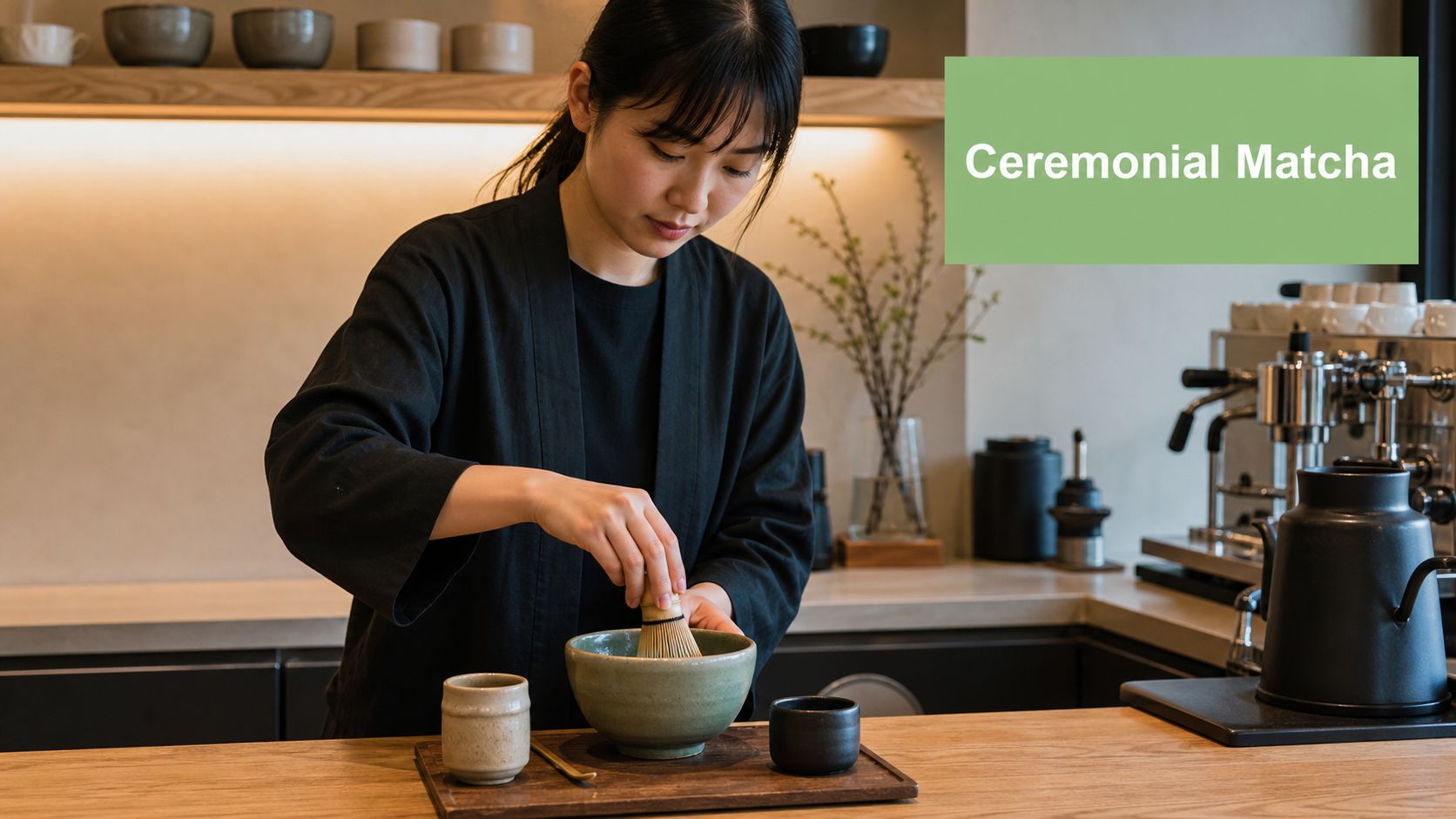
A matcha-first menu works best when you treat it as a category, not a token green latte tucked into the corner. Customers notice when a café has made a real call on quality. They also notice when staff can explain the difference between a bright, smooth ceremonial bowl and a stronger culinary-grade latte.
That's where a specialist setup helps. We like the model used by matcha-led venues such as Matcha DNA in Melbourne, where the menu feels intentional rather than incidental. Traditional whisked service gives customers a ritual. Modern drinks like iced strawberry matcha or a clean vanilla oat matcha latte make the category approachable for people who are curious but not yet committed.
Make the quality difference visible
Ceremonial-grade matcha belongs in whisked tea service and premium lattes where flavour clarity matters. Culinary-grade matcha belongs in baking, smoothies, soft serve, and menu items where it needs to hold its own beside milk, fruit, or sweet elements.
A useful way to teach both staff and customers is to link your menu language to a simple explainer like Pep Tea's guide to ceremonial vs culinary matcha. It removes confusion and gives customers confidence to trade up without feeling pushed.
- Offer two entry points: Keep one pure ceremonial matcha and one house culinary matcha latte on the menu so beginners and enthusiasts both have an easy choice.
- Train the whisking method: A proper bowl, sift, whisk and serve sequence turns preparation into part of the experience.
- Build food around it: Matcha financiers, matcha granola, or a matcha yoghurt pot help the category carry more of your menu.
Practical rule: If your team can't explain why one matcha costs more, customers won't understand it either.
There's also substance behind the premium story. Research published in the National Library of Medicine found ceremonial matcha contained 56.57 ± 2.19 mg/g of EGCG, while culinary matcha contained 50.53 ± 2.41 mg/g, showing both formats deliver high concentrations of the key catechin antioxidant in this matcha composition study.
2. Sugar-Free Kombucha Mocktail & Non-Alcoholic Bar Menu
Many cafés still sell kombucha as a bottled add-on from the fridge. That's a missed opportunity. A stronger move is to give it the same care you'd give a cocktail base and build a non-alcoholic drinks section around it.
This works especially well for brunch venues, early evening cafés, and hospitality spaces that want to serve sober-curious customers without defaulting to sugary sodas. In Australia, kombucha is moving with real momentum. The local market is projected to grow from USD 218.3 million in 2024 to USD 765.8 million by 2033, with a 15.0% CAGR, driven by people moving away from sugary soft drinks towards probiotic-rich options, according to Grand View Research on the Australia kombucha market.
Turn kombucha into a crafted serve
Pep Tea's sugar-free organic Kombucha gives cafés a cleaner base for mocktails because it already fits the low-sugar, wellness-minded brief. Flavours like Ginger, Lime & Ginger, or Mango can become the backbone of a signature drinks list.
A few menu examples:
- Hunter Valley Highball: Lime & Ginger Kombucha, fresh lime, rosemary, ice.
- Ginger Citrus Spritz: Ginger Kombucha, orange slice, mint, chilled soda.
- Mango Garden Cooler: Mango Kombucha, cucumber ribbon, basil, crushed ice.
Use a menu page or counter board to point customers to non-alcoholic cocktail mixers from Pep Tea so the concept feels deliberate and premium.
Kombucha doesn't need to mimic alcohol to feel sophisticated. It just needs balance, texture, and a good glass.
Tasting flights also help. A short paddle of house kombucha serves lets customers compare flavour profiles and often leads to a second purchase, whether that's a takeaway bottle or a return visit for the mocktail list.
3. Wellness-Focused Café Menu with Functional Beverage Pairing System
A long drinks list can make a healthy café feel harder to buy from, not easier. The stronger approach is to guide the decision the way a good waiter does. Start with what the customer wants to feel, then show the best-fit drink and food pairing.
That matters because Australian customers are getting more selective about function, not just flavour. Mintel's analysis of functional food and drink trends in Australia points to growing interest in products linked to energy, gut health, immunity and mental wellbeing. For a café, that is a menu design opportunity. It means ceremonial-grade matcha and sugar-free kombucha can sit at the centre of a considered system rather than appearing as side options for a small niche.
Build the menu around moments, not just drink types
A pairing system works like shelf signs in a well-run grocer. It reduces friction. Instead of asking customers to decode ingredients, you help them choose based on need.
A simple structure could look like this:
- Morning Energy: Ceremonial matcha, iced yuzu matcha, matcha with protein toast.
- Steady Focus: Straight matcha, a lighter oat matcha latte, jasmine tea with a simple almond slice.
- Gut-Friendly Reset: Sugar-free kombucha, kombucha with a yoghurt bowl, fermented drinks paired with fibre-rich snacks.
- Post-Training Recovery: Matcha smoothie, kombucha with eggs on grain toast, higher-protein brunch items.
- Light Afternoon Pick-Me-Up: Sparkling matcha tonic, citrus kombucha, fruit-forward small plates.
The value is clarity. A customer standing at the counter at 8:10 am often does not want to compare six milks, three syrups and four add-ons. They want a smart suggestion that feels current, premium and easy to trust.
Pair the drink with a food job
Many café menus fall flat when they list a wellness drink, then leave the food side disconnected. Pairings work better when each item has a role.
Matcha suits breakfast and early lunch because it pairs cleanly with protein, fruit, yoghurt, oats and nut-based flavours. Kombucha fits lighter plates, especially when a guest wants something refreshing without the sugar hit of soft drink or juice. If a customer orders for gut health, a sugar-free kombucha beside a grain bowl makes more sense than a random pastry upsell. The menu feels intentional.
Staff training matters here. Give your team short, plain-English prompts. “If someone wants steady energy, suggest ceremonial matcha with eggs or yoghurt.” “If they want something refreshing and low sugar, suggest kombucha with a lighter brunch plate.” That kind of guidance is easier to remember and easier to sell.
You can support the idea with a short explainer board and a link to functional beverage trends shaping modern café menus. It gives staff and customers a clearer reason behind the menu structure.
If you're refining the food offer to match the same health-led positioning, these tips for healthier cooking can help keep the kitchen side consistent with the drinks menu.
A pairing system does more than tidy up the board. It helps your café serve the sober-curious, the health-conscious, and the customer who wants something that feels good after drinking it, not just while holding it.
4. Seasonally Rotating Matcha & Kombucha Flavour Menu with Limited Editions
The cafés that win repeat visits are not always the ones with the biggest menu. They are often the ones that give regulars a fresh reason to return.
Seasonal rotation does that well, especially with matcha and kombucha. Both drinks carry flavour cleanly, so you can introduce a limited edition that feels new without rebuilding your bar setup or confusing your staff. For an Australian café, that matters. You want change customers can notice, but operations the team can still run during a busy Saturday brunch.
A strong structure is simple. Keep your bestselling drinks steady, then rotate a small set of seasonal specials built around local produce, weather, and customer mood. It works like a wardrobe. Your core pieces stay reliable, and a few seasonal additions keep everything current.
Build a menu customers can learn quickly
Customers return to what they understand. If the board changes too much, they stop tracking it. If nothing changes, they stop looking.
A practical seasonal format often looks like this:
- Permanent staples: Flat white, batch brew, whisked ceremonial matcha, house kombucha spritz.
- Three rotating drinks: One warm matcha special, one iced matcha special, one kombucha feature.
- One limited food match: A pastry or sweet item that echoes the drink flavour.
That last part matters more than many owners expect. A winter black sesame matcha with a miso caramel scroll feels considered. A summer peach kombucha spritz with a stone-fruit danish feels tied together. The guest remembers the combination, not just the drink.
Use seasonality to signal quality, not novelty for its own sake
Limited editions work best when they answer a clear customer question. What suits the season? What feels premium? What gives a sober-curious guest something interesting that is not alcohol-shaped and sugary?
For matcha, cooler months suit warmer, rounder flavours such as toasted sesame, vanilla pear, roasted strawberry, or cinnamon oat. In warmer weather, cleaner profiles usually sell better, including yuzu, mango, mint, or watermelon. Kombucha gives you similar flexibility, but with more lift and acidity, which makes it useful for bright summer serves and food-friendly spring flavours.
If you use premium inputs such as PepTea Matcha and Kombucha, the seasonal menu also becomes a quality signal. Customers can taste the difference when the base product is good. The fruit or spice should support the drink, not hide it.
Name each release like a house special
A limited release needs a clear identity. Generic titles such as “seasonal matcha” are easy to ignore. Specific names are easier for staff to recommend and easier for customers to remember.
Try names with a sense of place or flavour:
- Winter Cloud Matcha
- Hunter Mango Kombucha Crush
- Spring Citrus Ceremonial
- Ginger Orchard Fizz
Keep each one on for a defined window. Four to eight weeks is usually enough to create interest without dragging the offer out. That short run also helps you test demand before committing to ingredients at scale.
Presentation matters here as well. Layered drinks, textured foam, fruit accents, and glassware that shows colour all improve the chance of social sharing. If your kitchen also produces baked goods, seasonal drinks pair well with display items and can support better merchandising across the counter. Teams looking at workflow and packaging can borrow ideas from sustainable bakery solutions, especially when limited-time products create small-batch prep pressure.
Make the rotation easy to sell
Staff do not need a script. They need one confident sentence.
“Today's special is our Winter Cloud Matcha. Ceremonial-grade matcha with toasted sesame and a softer, nutty finish.”
That kind of recommendation works because it explains the flavour and the reason to care. It also helps health-conscious customers see these drinks as thoughtful menu items, not novelty add-ons. For sober-curious guests, seasonal kombucha specials can fill the same role a house cocktail once did. Something distinctive, grown-up, and worth ordering on purpose.
A seasonal menu should feel alive, but still recognisably yours. That is the balance. Keep the foundation steady, rotate with restraint, and let quality ingredients do the heavy lifting.
5. Matcha & Kombucha Breakfast and Brunch Menu Integration
The missed opportunity in many brunch menus is simple. Matcha sits on the drinks board, kombucha stays in the fridge, and neither ingredient helps shape the food offer. A stronger approach is to treat them as menu builders.
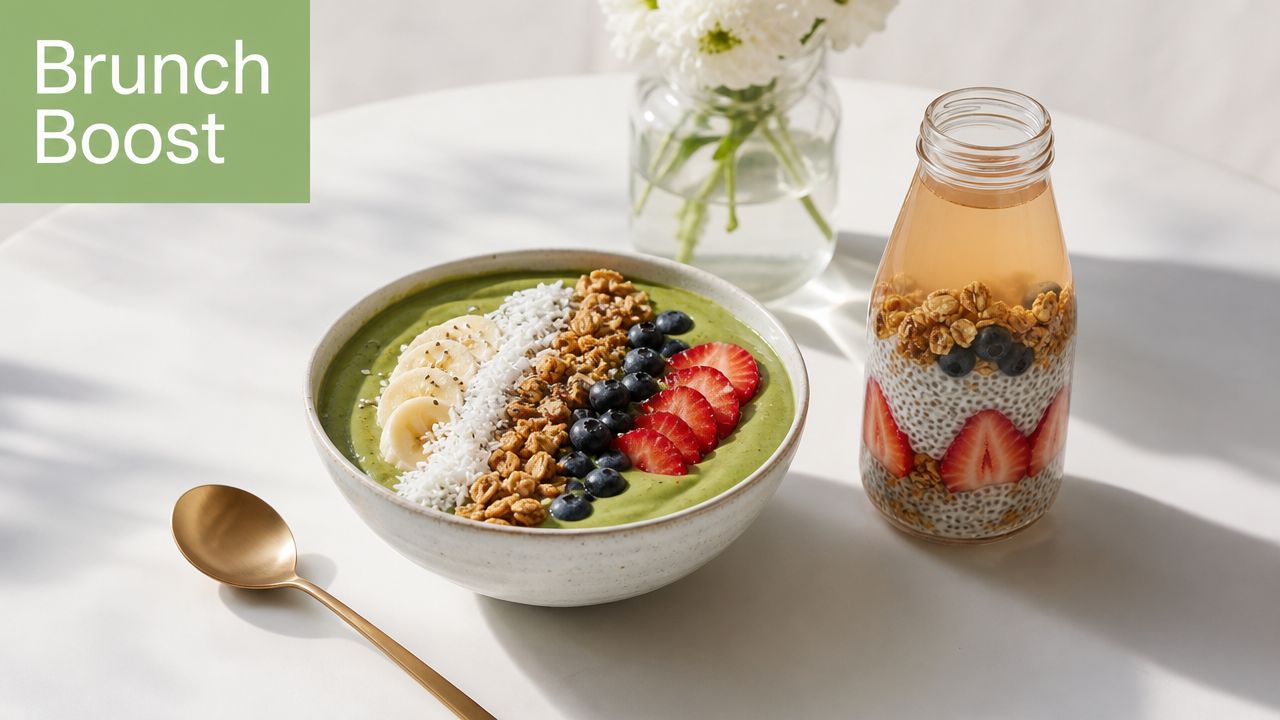
That shift matters because brunch guests do not order in isolation. They build a table. A ceremonial or culinary matcha on the drinks side can support a bowl, pastry, or lighter breakfast item with the same flavour logic. Kombucha can do similar work through dressings, compotes, and pairing cues that make the whole menu feel intentional rather than patched together.
Build dishes that make the beverage program easier to sell
Start with a small cluster of items that share ingredients and prep. That keeps service clean and helps staff explain the menu with confidence.
A practical set might look like this:
- Matcha yoghurt bowl: Greek yoghurt, house granola, kiwi, honey, culinary matcha dusting.
- Green breakfast smoothie: Spinach, banana, oat milk, culinary matcha.
- Seasonal fruit with kombucha dressing: Fresh fruit finished with a lightly reduced kombucha syrup for acidity.
- Matcha pastry special: A weekly item developed with a nearby bakery partner.
The reason this works is the same reason a good wine list supports a restaurant menu. Shared flavour signals reduce friction for the customer. If someone orders a clean, grassy PepTea matcha, a yoghurt bowl with kiwi and honey feels like a natural companion. If they want something lighter and alcohol-free with brunch, a dry kombucha beside fruit, eggs, or toasted sourdough gives them a grown-up option that still suits a daytime café occasion.
For Australian cafés, this also lines up with how health-conscious and sober-curious guests increasingly browse menus. They are often looking for lower-sugar choices, clearer ingredients, and drinks that feel premium without being heavy. Matcha and kombucha answer that need best when they are woven into the meal, not treated as side notes.
Keep the kitchen logic tight
Use ingredients more than once. Banana can go into a smoothie bowl and a smoothie. Citrus can sharpen a kombucha dressing and finish a plate. Matcha can flavour chia pudding, dust a pastry, or become the base of a brunch latte. That kind of crossover protects margins and makes ordering simpler.
Quality matters here. Ceremonial-grade matcha belongs where guests will taste it clearly, such as straight matcha, lattes, or a simple breakfast pairing. Culinary-grade matcha suits smoothies, baked items, and bowls where it works with other ingredients. Using each grade for the right job is a bit like choosing extra virgin olive oil for finishing and a different oil for cooking. Guests may not name the distinction, but they notice the result.
If your kitchen team needs support with prep systems, portioning, or supplier planning, these sustainable bakery solutions offer useful operational ideas, even outside a bakery context.
6. Post-Workout & Recovery-Focused Menu with Matcha & Kombucha Positioning
A café near a gym, Pilates studio, surf club, or park run route doesn't need to become a supplement bar. It just needs to recognise why people are coming in after movement. They want something refreshing, light, and supportive of how they feel.
That's where a recovery-minded menu strip can work well. Matcha gives a cleaner energy position than many sugary drinks. Kombucha gives you a fermented, lower-sugar alternative to soft drink. Add a few solid snack pairings and the concept becomes practical rather than niche.
Keep the language grounded
Use plain words. “Post-gym” is clearer than “performance optimisation”. “Gentle energy” is friendlier than overpromising.
A few combinations that make sense in real cafés:
- Recovery Combo: sugar-free kombucha plus a protein ball or boiled eggs.
- Calm Lift Latte: ceremonial matcha with your house milk choice and a banana loaf.
- Green Refill Smoothie: culinary matcha, yoghurt, banana, ice.
Globally, kombucha is projected to grow at a 13.3% CAGR from 2025 to 2035, with demand linked to sugar-free variants and organic, plant-based fermented drinks in café and specialty channels, according to Market Research Future's kombucha market outlook. That doesn't guarantee every fitness-adjacent venue should stock it, but it does support what many operators are already seeing on the ground. Customers are looking for alternatives that feel functional without feeling punishing.
A post-workout customer usually doesn't want a lecture. They want an easy choice that feels better than a sports drink from the servo.
If you lean into this category, train staff to describe taste first, then function. Flavour still wins the first order.
7. Matcha & Kombucha Kids' Menu with Educational Wellness Positioning
A family-friendly café can include functional drinks without making them feel grown-up or intimidating. The trick is to keep the serves age-appropriate, the flavours gentle, and the messaging aimed at parents, not kids.
This is also where many menus leave money on the table. Parents often want something better than a standard juice box or sugary milkshake, but they don't necessarily want to order from the adult list and split cups by hand. A short kids' range solves that.
Make it playful, not preachy
Small formats work well:
- Mini Green Latte: a lighter, milky matcha serve in a smaller cup.
- Tiny Ginger Fizz: a very small kombucha pour for families already familiar with the taste.
- Banana Matcha Smoothie: culinary matcha blended softly with fruit and milk.
The broader market context supports thinking about smaller formats too. Unilever Food Solutions notes an operational gap in café menus around cost-of-living pressure, solo dining, and the rise of “little treats”, with operators still lacking clear mini-menu formulas for non-alcoholic drinks like matcha and kombucha in its breakfast and café trend article. That's useful for kids' menus because smaller serves can feel more welcoming, less wasteful, and easier for parents to say yes to.
Use friendly names, illustrated boards, and simple staff language. “This one's smooth and milky with just a little matcha” lands better than anything too technical. And if a parent asks about fermentation or caffeine, answer clearly and calmly. Trust matters more than clever copy here.
8. Corporate Wellness Program & Subscription-Based Office Beverage Service
Some of the best cafe menu ideas don't stay inside the café. They travel. Offices, co-working spaces, and studio workplaces are all looking for better everyday beverage options, especially when coffee alone no longer covers what teams want.
A corporate offer can be simple. Weekly kombucha fridge drops. A matcha station for meetings. Monthly wellness boxes with ceremonial matcha, culinary matcha, and sugar-free kombucha flavours. This is less about being flashy and more about being useful.
Sell convenience and consistency
Office buyers usually care about three things:
- Easy replenishment: They don't want to chase stock every week.
- Clear product quality: Organic, low sugar, Australian-made, and easy to explain.
- Staff adoption: Drinks need to taste good enough that people reach for them.
Pep Tea's positioning makes this kind of offer practical. We're Australian-owned and operated, with kombucha brewed in the Hunter Valley, NSW, and premium Japanese organic Matcha at the centre of the range. That local and specialist angle can matter when offices want a supplier that feels more thoughtful than a bulk beverage catalogue.
Create a few packages with clear use cases. One for boardrooms, one for everyday team kitchens, one for wellness activations. Include simple brewing cards and tasting notes. If a client likes the drinks in the office, some staff will later look for them in cafés or buy them direct for home. That crossover is one of the strongest parts of a smart beverage program.
9. Wholesale & Partnership Strategy for Hospitality and Retail
A café menu can become a platform, not just a list of products. That's especially true when you partner with venues that want support, not just cartons delivered to the back door.
Wholesale works best when the product comes with a usable system. Cafés and bars need menu names, staff talking points, tasting notes, and service suggestions. Retailers need shelf language and an easy explanation for why one matcha is ceremonial and another is culinary. Gyms need recovery framing. Hotels need consistent prep.
Give partners a launch kit, not just stock
A strong wholesale support package might include:
- Co-branded menu lines: Ready-to-use drink descriptions.
- Staff training: Simple scripts on whisking, fermentation, flavour profile, and food pairing.
- Seasonal support: Limited-edition ideas that keep the account fresh.
- Sampling assets: Counter cards, mini tasters, and social content suggestions.
This approach suits Pep Tea particularly well because the brand story is coherent. Japanese organic Matcha for authenticity and quality. Australian-brewed sugar-free organic Kombucha for local relevance and everyday usability. Clean-label positioning. Family-friendly tone. That makes it easier for partner venues to plug the products into their own identity without it feeling forced.
Real-world examples are everywhere in hospitality. The venues that win with specialist products usually make adoption easy. They remove ambiguity. They don't ask a busy café manager to invent the whole concept from scratch.
10. Education, Sampling & Events Program to Drive Trial and Adoption
Great products don't always sell themselves, especially if customers are still learning how to drink them. Education turns curiosity into confidence, and confidence turns into repeat orders.
A café can run this lightly. It doesn't need a huge event budget. A short matcha tasting on a quiet weekday morning. A kombucha mocktail flight over the weekend. A “meet the maker” session with your supplier. A family session where parents try ceremonial matcha while kids get mini smoothie samples.
Teach people how to order again
The best education is practical. Show people what they're tasting and why it matters.
Useful formats include:
- Matcha 101 sessions: Taste ceremonial and culinary side by side.
- Kombucha flights: Compare Ginger, Lime & Ginger, and Mango in small pours.
- Brunch pairings: Match one food item with one beverage and let staff explain the pairing.
- QR follow-ups: Share brewing guides, product pages, and wholesale enquiry options after the event.
Research cited by Pep Tea notes that men who regularly consume matcha green tea are approximately 11% less likely to develop heart disease than non-consumers, discussed in Pep Tea's article on matcha green tea benefits. That kind of stat should be handled carefully and never used as a hard sell, but it does show why customers are interested in learning more about matcha beyond flavour alone.
For café owners, the actual gain from events is simpler. Sampling reduces hesitation. A customer who tastes a well-made matcha or kombucha serve is far more likely to order it properly next time.
10-Concept Café Menu Comparison
| Concept | Complexity (🔄) | Resources (⚡) | Expected outcomes (📊) | Ideal use cases (💡) | Key advantages (⭐) |
|---|---|---|---|---|---|
| Matcha-Forward Signature Café Menu (Ceremonial focus) | High 🔄 Staff training, ceremonial protocols, slower prep | High ⚡ Ceremonial-grade matcha, whisking tools, trained baristas | Strong 📊 Premium pricing, brand loyalty, social buzz | Specialty cafés, wellness flagships, educational venues | Differentiates brand, commands premium, authentic experience ⭐ |
| Sugar-Free Kombucha Mocktail & Non-Alc Bar | Medium–High 🔄 Mixology skills, fermentation handling | Medium ⚡ Sugar-free Kombucha stock, cold storage, bar kit | Strong 📊 Attracts sober‑curious, premium margins, upsell potential | Non‑alcoholic bars, hotels, cocktail‑style venues | Positions as craft alternative, probiotic & low‑sugar appeal ⭐ |
| Wellness-Focused Café Menu (Functional pairing system) | High 🔄 Extensive staff education, inventory complexity | High ⚡ Multiple SKUs, add‑ons, POS/loyalty, educational assets | Very strong 📊 Higher AOV, repeat visits, customer data collection | Wellness cafés, boutique chains, data‑driven venues | Personalisation, upsell via intentions, strong differentiation ⭐ |
| Seasonally Rotating Matcha & Kombucha (Limited editions) | Medium 🔄 Regular R&D, seasonal planning, testing | Medium ⚡ Seasonal produce sourcing, marketing, supplier coordination | Strong 📊 Creates FOMO, repeat visits, organic social engagement | Trend‑driven cafés, urban locations, high‑traffic outlets | Generates urgency, social shareability, co‑brand opportunities ⭐ |
| Matcha & Kombucha Breakfast and Brunch Integration | Medium 🔄 Requires kitchen capacity, recipe development | Medium ⚡ Culinary matcha, bakery partnerships, kitchen staff | Strong 📊 Boosts brunch traffic, higher check averages | Brunch cafés, bakeries, weekend‑focused venues | Normalises ingredients, expands sales channels, Instagrammable dishes ⭐ |
| Post-Workout & Recovery-Focused Menu | Medium 🔄 Nutrition knowledge, partner coordination | Low–Medium ⚡ Protein/electrolyte add‑ons, simple labelling, gym ties | Moderate 📊 Builds niche loyalty, co‑marketing opportunities | Gyms, fitness studios, recovery cafés | Targets athletic audience, justifies premium functional pricing ⭐ |
| Matcha & Kombucha Kids' Menu (Educational) | Medium 🔄 Portioning, flavour adjustment, parental messaging | Low–Medium ⚡ Small portions, playful design, child‑friendly flavours | Moderate 📊 Family revenue uplift, early brand affinity | Family cafés, suburban venues, family markets | Builds parent trust, differentiates family offering, long‑term affinity ⭐ |
| Corporate Wellness Program & Subscription Service | High 🔄 B2B sales cycles, account management, logistics | High ⚡ Bulk fulfilment, subscription tech, delivery & training | Very strong 📊 Recurring revenue, bulk orders, workplace penetration | Corporate campuses, coworking spaces, HR wellness programs | Predictable recurring revenue, strong workplace presence ⭐ |
| Wholesale & Partnership Strategy (Hospitality & Retail) | High 🔄 Supply coordination, partner onboarding, QC | High ⚡ Sales team, logistics, training workshops, POS assets | Very strong 📊 Scaled distribution, steady wholesale revenue | Cafés, bars, retailers, gym franchises | Scales brand reach, exclusivity via co‑development, partner support ⭐ |
| Education, Sampling & Events Program | Medium 🔄 Event coordination, facilitator quality matters | Medium ⚡ Sampling stock, educational materials, staff time | Strong 📊 Increases trial, social buzz, conversion to repeat buyers | Pop‑ups, in‑café activations, gyms, markets | Reduces hesitancy, builds advocates, generates experiential content ⭐ |
Your Next Step Turning Ideas into Action
The strongest café menus in 2026 won't win just because they add more items. They'll win because they make sharper choices. They'll know who they serve, what those customers want from a drink beyond caffeine, and how to turn quality ingredients into something memorable enough to bring people back.
That's why the best cafe menu ideas in Australia right now sit beyond the flat white. They still respect café staples, but they expand the role of the beverage menu. Matcha can be a ritual, a premium latte, a brunch ingredient, and an educational talking point. Kombucha can be an everyday fridge grab, a polished mocktail base, a recovery drink, and a clean-label option for people cutting back on sugar or alcohol.
The commercial upside comes from relevance. Health-conscious customers want more than sugary add-ons. Sober-curious customers want proper non-alcoholic options. Families want smaller, better choices. Office buyers want drinks that align with workplace wellness. When your menu answers those needs clearly, it becomes more resilient.
For Australian operators, local context matters too. Buying from a supplier that understands the market helps. Pep Tea's combination of premium Japanese organic Matcha and proudly Australian-brewed sugar-free organic Kombucha gives cafés a practical way to build quality into the menu without losing approachability. The Hunter Valley connection, the focus on real fermentation, and the emphasis on low-sugar, functional drinks all support the kind of menu many venues are trying to build now.
A final point is worth keeping front of mind. Trends can spark attention, but repeat business comes from execution. If you introduce matcha, train the whisking properly. If you launch kombucha mocktails, give them names and glassware that feel intentional. If you create a wellness menu, keep the language simple and honest. Customers can tell when a concept is genuine.
Start with one or two ideas from this list, not all ten at once. Build a core serve. Test a seasonal special. Add one brunch item. Run one tasting event. Then watch what customers reorder, what staff feel confident serving, and what naturally fits your venue.
That's how a stronger beverage program grows. Not through gimmicks, but through consistent quality, clear positioning, and products people want to drink. If you're ready to lift your menu with authentic organic Matcha and locally brewed sugar-free Kombucha, Pep Tea's wholesale range is a smart place to begin.
Explore Pep Tea for premium organic Matcha, Australian-brewed sugar-free Kombucha, and wholesale support designed for cafés, hospitality venues, and retailers looking to build a more modern functional drinks menu.