
Tag: L-theanine energy
Matcha Latte Benefits: What the Science Actually Says

The most popular advice about matcha latte benefits is also the least precise: “It's a healthier coffee.” Sometimes that's a reasonable swap. Sometimes it's a large, sweetened café drink with a wellness halo and only a modest amount of matcha.
The useful question isn't whether matcha is healthy in isolation. It's what's in the beverage you're drinking, including the matcha dose, grade, milk, sweeteners, preparation and serving size. The evidence supports promising benefits from matcha's catechins, caffeine and L-theanine, but human trials are still limited, and a latte isn't automatically equivalent to plain matcha whisked with water.
Why a Matcha Latte Is Not the Same as Matcha Tea
A traditional bowl of matcha and a café latte share the same powdered tea, but they're different drinks. A café latte is usually built around steamed milk, sometimes sweetened, with a relatively small amount of powder. That changes the concentration of the compounds people associate with matcha, as well as the drink's energy and sugar content.
Matcha itself is made by consuming the whole tea leaf rather than steeping leaves and discarding them. Research cited in Australian university material reports that catechins can make up up to 30% of green tea leaf dry weight, while EGCG can account for up to 60% of total catechins (matcha chemistry research). That makes matcha a concentrated source of tea compounds, but the amount in your cup still depends on how much powder you use.
The four questions that matter
When I assess a matcha latte, I look at four things:
- Dose: How many grams of matcha went into the cup?
- Grade: Is it a fresh, vibrant powder intended for drinking, or a more assertive culinary powder intended for blended recipes?
- Preparation: Was the matcha properly sifted and whisked, or stirred into hot milk?
- Add-ins: Is the drink unsweetened, lightly sweetened, or built around syrup and flavoured powder?
An Australian café benchmark places mainstream matcha drinks at roughly 56–81 mg of caffeine per serve (Starbucks Australia Matcha Misu Latte). That's enough to make the drink stimulating, while generally sitting below a standard coffee. It doesn't tell us the exact catechin or L-theanine content, though, because recipes and powder doses vary.
A practical rule: Treat “matcha latte” as a recipe, not a health category. The ingredients and proportions decide whether it's a functional everyday drink or an occasional sweet treat.
The rest of the answer comes down to how those four variables affect the beverage as served. Matcha may support alertness and provide concentrated bioactive compounds, but those advantages can be diluted by a low powder dose or offset by a heavily sweetened recipe.
What Counts as a Quality Matcha Latte
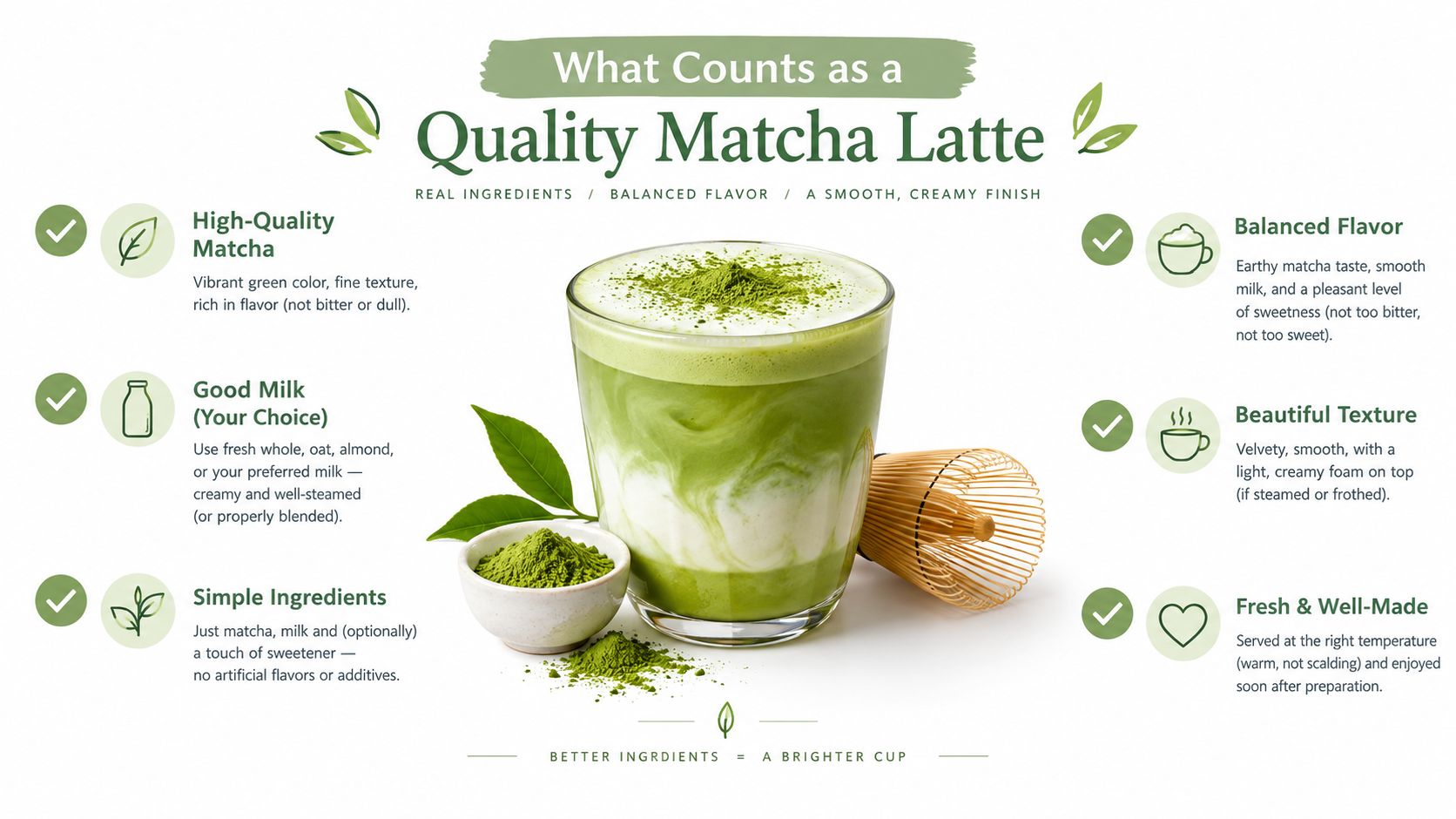
A quality matcha latte starts with a powder that tastes good enough to drink without hiding it under syrup. Ceremonial-grade matcha is generally made from tender, carefully processed leaves and is valued for its smooth texture, bright colour and savoury sweetness. Culinary-grade matcha is more intense and often more astringent, which makes it useful in baking, smoothies and strongly flavoured drinks.
Both are matcha. The label alone doesn't prove a specific health outcome, and “ceremonial” isn't a universal medical or nutritional standard. For a daily latte, choose a powder with clear Japanese sourcing, a vivid green appearance, fine texture and a fresh harvest or packaging date where available.
Prepare the powder before adding milk
Water that's too hot can make matcha taste harsh. For a smoother drink, use water around 70–80 °C, sift the powder, add a small amount of water and whisk until it becomes a lump-free paste. Then add warmed milk.
This method distributes the powder through the drink instead of leaving clumps floating on top. It also gives you more control over bitterness, which is especially helpful when using a higher-quality powder with delicate grassy and umami notes.
A traditional serving can use more matcha than a typical café recipe. Australian-style guidance commonly describes a serving of about 2 g of powder, with around 60–70 mg of caffeine (Australian matcha serving guide). The caffeine figure is a useful practical benchmark, but it will vary with the tea and dose.
A simple quality checklist
Look for:
- Matcha as the main ingredient, rather than a sweetened “matcha-flavoured” blend.
- Bright green colour, not a dull or brownish appearance.
- Fine, smooth powder, which whiskes more evenly.
- Transparent sourcing, ideally identifying where the tea was grown and processed.
- A recipe you can taste, with little or no syrup needed.
The latte format can still be a good way to enjoy matcha. It just needs enough real powder and not so many additions that the tea becomes decoration.
Antioxidant Power and EGCg Concentration
Matcha's antioxidant reputation rests mainly on catechins, a group of tea polyphenols. The best-known member is epigallocatechin gallate, usually written as EGCG or EGCg. These compounds show antioxidant activity in laboratory tests, but chemical activity in a controlled experiment does not establish a specific health benefit for people drinking a matcha latte.
The whole-leaf format changes the comparison with steeped tea. Because the powdered leaf is consumed rather than removed after brewing, matcha can provide more catechins. One Australian source reports that a standard serving may contain about two to three times the catechins of a cup of steeped green tea. An Australian product laboratory report measured total catechins at 65,200 μg/g and EGCG at 56,000 μg/g (Australian matcha catechin analysis). These are measurements from tested products, not a guarantee for every powder sold in Australia.
Growing conditions also affect matcha's chemistry. Shading before harvest changes the balance of compounds in the plant, including chlorophyll and L-theanine. A 2020 analysis measured matcha's fibre, vitamin C, caffeine, chlorophyll, phenolics and antioxidant activity, showing that its composition extends beyond colour and flavour (2020 matcha composition analysis).
What the measurements can and can't tell you
Tests such as ORAC and DPPH measure chemical activity under controlled conditions. They cannot show that a matcha latte will prevent disease, repair cellular damage or create a noticeable change in how you feel. A high catechin reading is evidence about composition, not proof of an outcome.
Human trials provide a more relevant test. An Australian systematic review screened 122,429 records and identified only 8 randomised controlled trials. Those trials reported significant reductions in body weight, body mass index and blood pressure, plus improvements in plasma cholesterol and lipids, with all reported results at p<0.05 (Australian systematic review of green tea catechins). The review concluded that supplementation in the range of 300–1500 mg per day may help reduce anthropometric and cardiovascular biomarkers in people with obesity and people with type 2 diabetes.
That range describes supplementation, not a café recipe. Extracts and concentrated preparations may contain far more catechins than the amount in a served latte. For a plain-language explanation of what EGCg is and why it matters, Pep Tea provides a useful chemistry overview.
The practical comparison is straightforward. Matcha's whole-leaf format can increase catechin exposure, while the actual amount still depends on the powder dose, product and preparation.
| Source | Serving Size | EGCg (mg) | Total Catechins (mg) | Notes |
|---|---|---|---|---|
| Matcha | Varies by powder dose | Product-dependent | Product-dependent | Whole-leaf powder is consumed |
| Steeped green tea | Varies by tea and brewing | Product-dependent | Product-dependent | Leaves are removed after brewing |
| Green tea catechin preparation | Research-dependent | Research-dependent | 300–1500 mg/day supplementation range | This range comes from the Australian systematic review, not a standard latte |
The matcha powder supplies the catechins, so its grade and dose matter when assessing the finished drink. The latte format changes the serving context, which is why ingredient-level antioxidant claims need to be read alongside the actual recipe.
Sustained Energy From Caffeine and L-Theanine
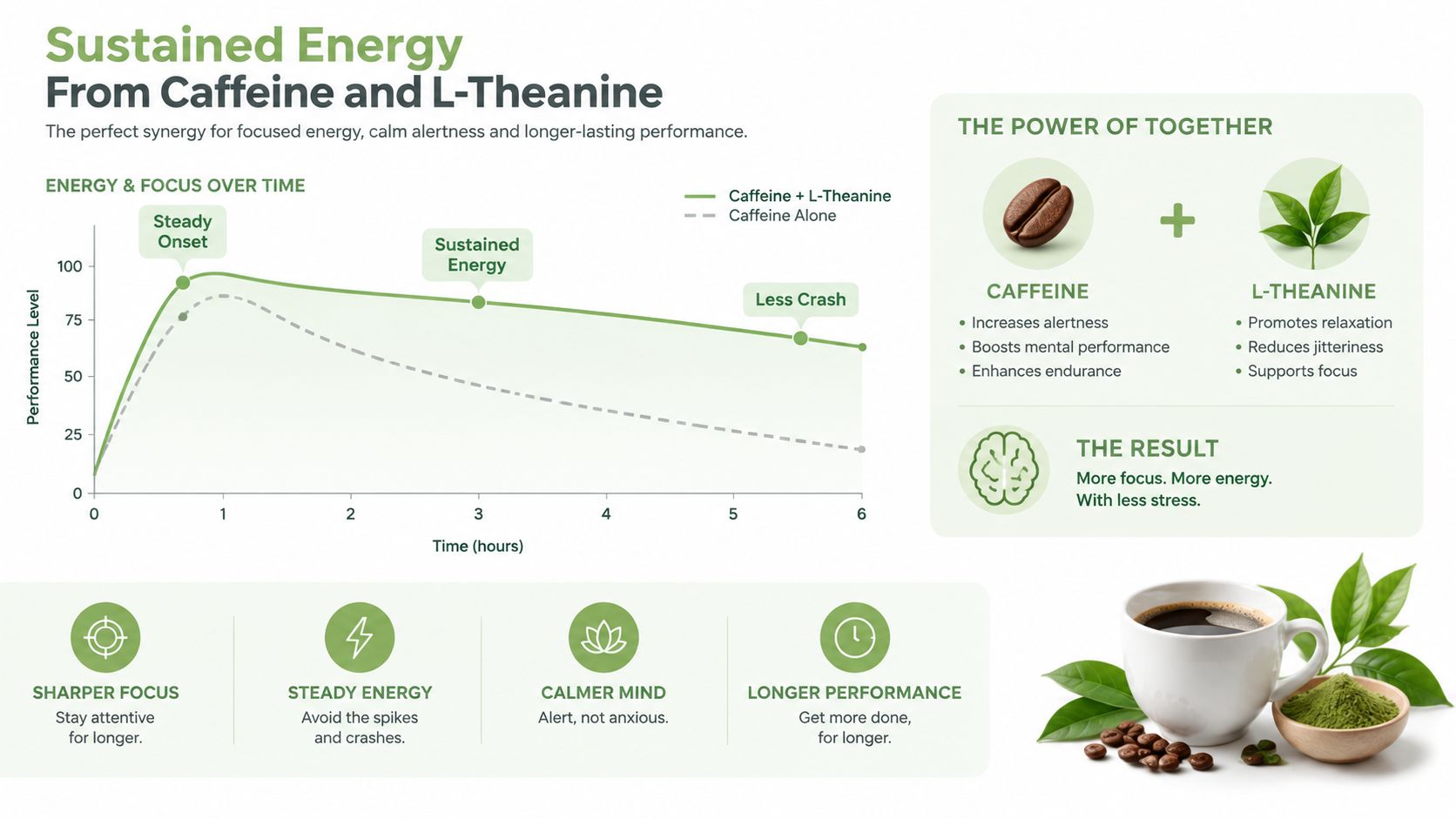
A matcha latte's most credible everyday benefit is its caffeine, not a guaranteed wellness effect. It can provide moderate stimulation with a smoother feel than some coffee drinks, partly because matcha supplies caffeine alongside L-theanine.
Caffeine supports alertness through the brain's adenosine signalling. L-theanine is an amino acid found naturally in tea, and technical reviews link the caffeine and L-theanine combination with smoother cognitive performance than caffeine alone (technical review of matcha composition and effects). The pairing may help explain why some drinkers experience focused attention rather than a pronounced buzz. Individual responses still vary, and the latte format can change the overall experience.
A useful benchmark
One clinical review cited a daily intake of about 2.07 g of matcha providing 72.5 mg of caffeine, 50.3 mg of theanine and 171.0 mg of catechins (technical review of matcha composition and effects). That is a research benchmark, not a fixed amount for every scoop or café recipe.
A mainstream Australian matcha drink can provide roughly 56–81 mg caffeine per serve (Australian café matcha caffeine benchmark). This generally places matcha above a typical brewed green tea and below a standard coffee, although the comparison depends on preparation. More powder or a larger café serve increases the total caffeine.
Milk does not remove caffeine. It can make a large latte taste and feel gentler because the caffeine is spread through more liquid, while the drink may still contain more caffeine than expected.
How to use the lift well
Choose an earlier serving if caffeine affects your sleep. A matcha latte may also suit a focused work period or exercise session, particularly when it replaces a sweeter drink or a stronger caffeine hit.
Food can make the experience feel gentler by slowing digestion, but it does not cancel caffeine. Include coffee, black tea, cola, energy drinks and chocolate when considering your overall intake.
Calm focus still contains caffeine. If you are caffeine-sensitive, L-theanine may change the drink's feel, but it cannot guarantee good sleep after a late serve.
Matcha grade does not set a fixed caffeine level. Dose, leaf material, harvest and preparation all influence the finished cup. Pep Tea explains the relationship between matcha, green tea and L-theanine in its educational resource.
Metabolic and Cognitive Benefits in Human Trials
Matcha's metabolic and cognitive claims need a clear distinction between plausible mechanisms and measured human outcomes. Catechins may affect pathways associated with cardiovascular markers, while caffeine and L-theanine may support alertness. Those possibilities do not show that a sweetened latte causes weight loss, removes anxiety or improves sleep.
An Australian review of green tea catechin trials reported improvements in body measurements, blood pressure, cholesterol and lipids among the small group of randomised studies. Its conclusion about 300–1500 mg per day referred to catechin supplementation in relevant populations, not to every café latte. As noted earlier, the amount of matcha in a served drink can differ substantially from a research dose.
What researchers measured in people
Australian-facing coverage of a 2023 review describes only five experimental studies in which matcha was given to people, generally at doses around 2–4 g per day (Australian-facing summary of matcha research). The findings were mixed. Some studies reported lower stress and anxiety, better memory or cognition, and improved sleep in older adults. Other results showed little sleep effect in younger adults, no mood effect, and no additional weight-loss benefit in people with obesity.
This evidence supports continued interest in matcha, while leaving its clinical role uncertain. A trial serving of plain matcha is not interchangeable with a large latte containing milk and syrup.
| Claim | Evidence | Typical Result |
|---|---|---|
| Better alertness | Caffeine and L-theanine have a plausible combined effect | May support attention and calm wakefulness |
| Cardiovascular markers | Green tea catechin trials reported improvements in several markers | Promising, but not proof that a latte prevents disease |
| Weight loss | Human matcha evidence is limited and mixed | No reliable standalone weight-loss result |
| Anxiety reduction | Some experimental findings point to lower stress or anxiety | Inconsistent and dependent on the person and dose |
| Sleep improvement | Results differ between groups | Not a dependable sleep aid |
The research base is generally small or short, and many preparations do not resemble a milk-based café drink. Milk changes the recipe, while syrup changes its nutritional profile, so ingredient-level claims cannot automatically be transferred to the beverage as served.
Matcha may fit a heart-conscious, balanced lifestyle and may help some people with attention. It isn't proven to replace sleep, movement, medical treatment or a nutritious eating pattern.
How Milk, Sugar and Serving Size Change the Equation
The latte format changes more than taste. Milk adds volume, protein and energy, while sweeteners can turn a low-sugar tea into a dessert-style drink. The result may still be enjoyable, but its overall nutritional profile is no longer represented by the matcha powder alone.
Research and commentary on matcha often focus on the leaf's catechins, caffeine and L-theanine. Café buyers experience the whole recipe. A small unsweetened home latte and a large syrup-based café drink may share a name while delivering very different amounts of matcha, sugar and milk.
Milk isn't the main concern, sugar is
Milk proteins may interact with tea catechins, and the effect on antioxidant absorption remains debated. Human results don't support a simple rule that dairy cancels matcha's benefits, so there's no need to avoid milk automatically.
Sweetener deserves more attention. Honey, vanilla syrup and pre-sweetened powders can shift the drink away from the low-sugar profile people expect from plain matcha. If you're buying a drink, ask whether the café uses pure matcha powder or a flavoured blend, then request no syrup or a reduced amount if that suits your palate.
For people planning drinks around travel, ingredient labels and serving choices are easier to manage with practical resources such as this guide to practical nutrition for travelers.
Choose the format that matches your goal
| Situation | Better choice | Why |
|---|---|---|
| Hot at home | Pure matcha, water and warmed unsweetened milk | You control dose and sweetness |
| Iced at home | Whisk matcha with a little water before adding cold milk | Reduces clumps and keeps the flavour clear |
| Café order | Ask for pure matcha and no syrup | Separates the tea from the dessert-style additions |
| Flavoured baking or smoothies | Culinary-grade matcha | Stronger flavour works with other ingredients |
A “matcha-flavoured” powder may contain little real matcha and can be dominated by sugar or other ingredients. Read the label rather than relying on the green colour.
For a controlled home version, follow Pep Tea's method for making a sugar-free matcha latte. The key idea is simple: keep the matcha real, keep the powder dose sensible and let sweetness be optional.
Serving Contexts, Quality Choices and Smart Use
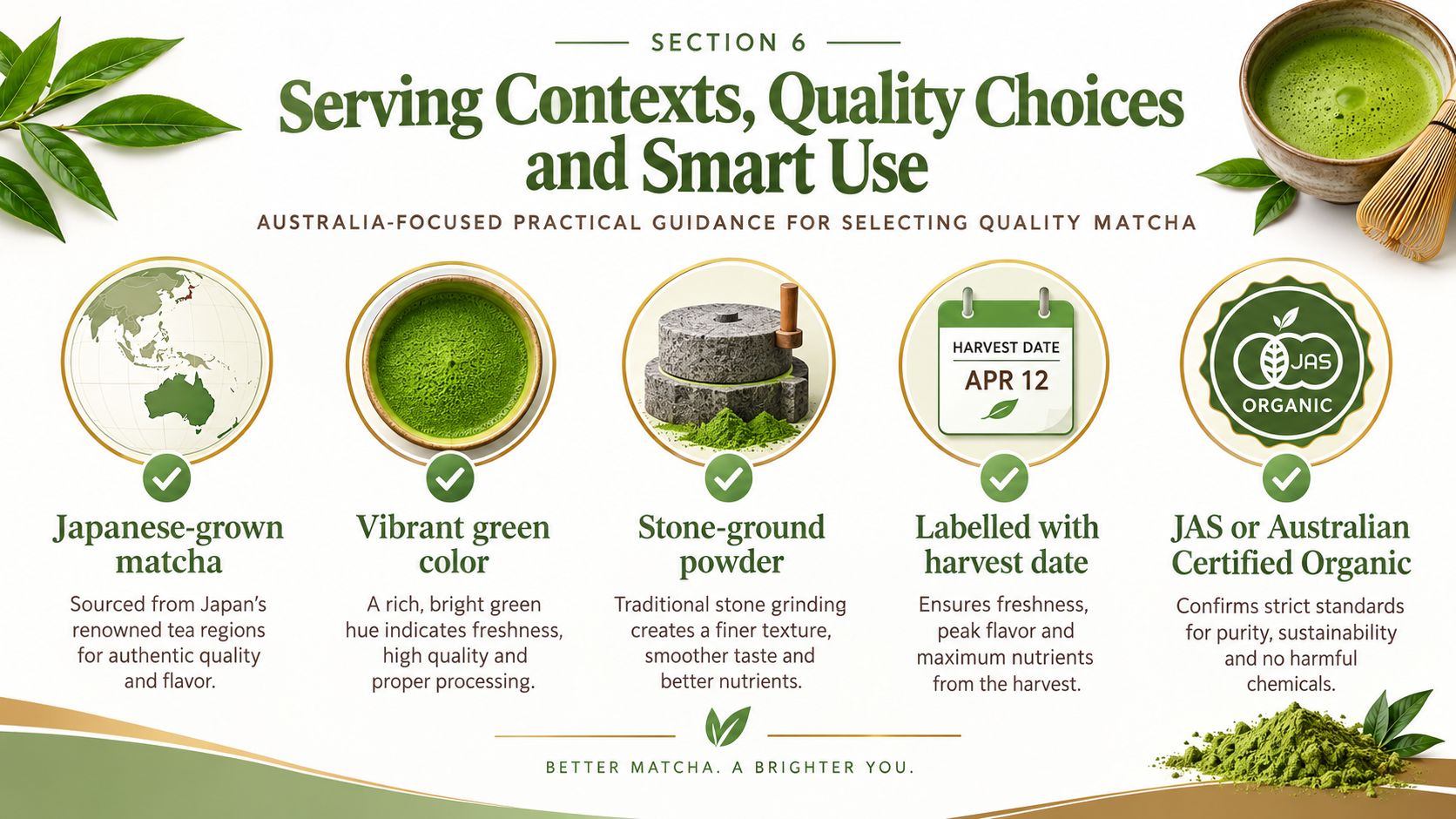
A useful matcha latte starts with buying decisions, not health promises. Choose Japanese-grown matcha from a supplier that identifies the product clearly, look for a vibrant green colour, and favour powder that's stone-ground and fresh. Organic certification, such as JAS or Australian Certified Organic certification, can also help shoppers assess production standards.
For a daily latte, a pleasant drinking-grade powder makes sense because flavour determines whether you'll keep using it. Reserve culinary grade for smoothies, baking and recipes where matcha is combined with fruit, yoghurt or other assertive flavours.
A dependable home method
For a 200–250 mL serve, start with 1–2 g of matcha, whisk it with about 60 mL of water at 80 °C, then add warmed milk. These quantities are a practical recipe framework, not a guarantee of a particular caffeine or catechin content.
Morning is the easiest timing. A pre-workout latte can be a coffee alternative, while sleep-sensitive drinkers may prefer to avoid matcha after 2 pm. Anyone who notices anxiety, palpitations or disrupted sleep should reduce the dose or stop and discuss persistent symptoms with a qualified health professional.
People who are pregnant, take blood thinners or iron supplements, or manage anxiety should be especially cautious with caffeine and tea compounds. Keep to one small serve unless a doctor or pharmacist advises otherwise, and consider the timing of matcha around iron supplements or meals.
What to ask at a café
Ask:
- Is the drink made with pure matcha?
- How much powder goes into the cup?
- Does the powder already contain sugar?
- Can you make it without syrup?
- Can I choose a smaller size?
At home, keep a fine sieve, a bamboo whisk or handheld frother, a small bowl and a reliable way to judge water temperature. If you're helping a remote team explore café culture, a guide to latte tasting for remote managers offers useful ideas for comparing preparation and flavour, even though the same tasting approach can be adapted to matcha.
Pep Tea offers organic Japanese matcha alongside Australian-brewed, sugar-free organic kombucha made in the Hunter Valley, NSW. If you want to compare clean, low-sugar beverage options, visit Pep Tea to explore the range and choose a matcha suited to your preferred latte style.