
Tag: katakuchi
Matcha Bowl with Spout: Latte Perfection

You whisk the matcha carefully. The colour looks right. The foam finally sits on top in a soft green layer. Then you pour it into your mug and half of it runs down the outside of the bowl, onto the bench, and into that annoying puddle near the spoon.
If that sounds familiar, you’re not doing anything wrong. You’re just using the wrong vessel for the last part of the job.
A matcha bowl with spout fixes one of the most frustrating parts of making matcha at home or in a café. It helps you whisk properly, then pour cleanly. That sounds simple, but it changes the whole experience. Your latte looks better, your bench stays cleaner, and the texture you worked for makes it into the cup.
The Secret to a Spill-Free Matcha Latte
A lot of people assume the hard part of matcha is the whisking. It isn’t always. Often, the pour is where things fall apart.
You can make a smooth bowl of matcha, heat your milk well, and still end up with streaks down the side of your mug because a standard bowl has no clean pouring point. The liquid rolls over the rim wherever gravity sends it. That’s fine if you’re drinking straight from the bowl. It’s less fine when you’re topping an iced latte, filling a takeaway cup, or trying to keep service moving in a busy café.
The familiar home kitchen problem
At home, the mess is mostly annoying. You wipe the bench, rinse the bowl, and try again.
In hospitality, it becomes a workflow issue. Staff lose time. The presentation slips. Foam breaks while the person pouring slows down to avoid spills. A drink that should feel calm and polished starts to feel fiddly.
A good matcha pour should feel controlled from the first tilt, not like you’re hoping for the best.
Milk also matters here. If you’re building a latte, your poured matcha has to meet milk that’s still silky and in the right range. If you want a useful reference point for that side of the drink, this guide to ideal milk temperature for lattes gives practical context for getting the texture right.
The simple tool that changes the result
That’s where the spouted bowl comes in.
A matcha bowl with spout is designed for one specific problem. It lets you whisk in an open bowl, then pour with precision. No awkward tipping. No dribbling down the side. No sacrificing foam just to get the liquid into the cup.
For home enthusiasts, it makes your morning ritual neater and easier. For café owners, it turns a beautiful but messy drink into something more repeatable.
What Exactly Is a Matcha Bowl With Spout
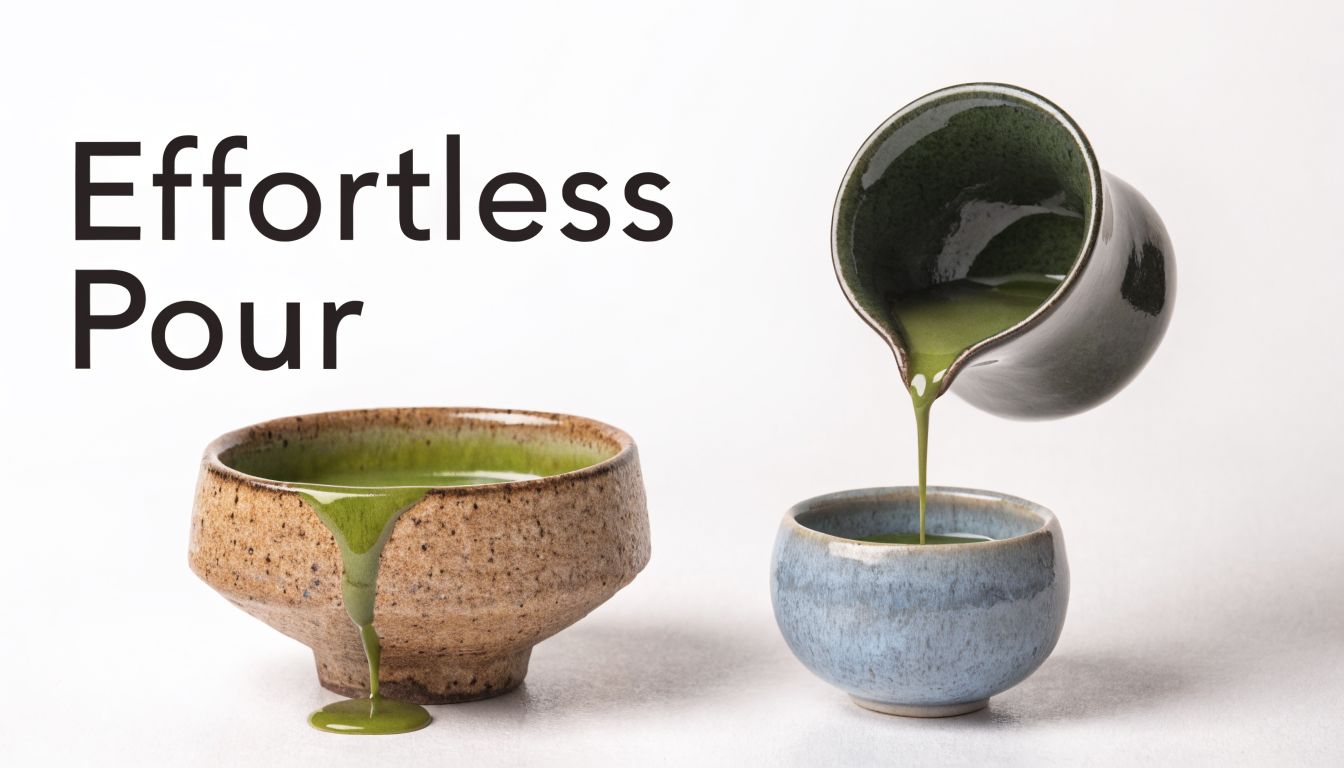
You will often see this bowl called a katakuchi. In practical terms, it is a whisking bowl with a shaped pouring lip on one side, made to move matcha cleanly from bowl to cup.
That sounds like a small change. It is not.
A standard chawan is brilliant for preparing and drinking matcha in the bowl itself. A matcha bowl with spout keeps that open, whisk-friendly shape, then adds control at the moment many home baristas and café staff struggle with most. The pour.
Built for whisking first, pouring second
The best way to understand a spouted matcha bowl is to start with the job matcha asks the bowl to do. You are not steeping leaves and waiting. You are combining very fine tea powder with water, breaking up small clumps, and whisking enough air into the surface to create a light foam.
That process works better in a bowl that gives the whisk room to move.
Harmony Leaf’s katakuchi product guide describes this style as a wide ceramic bowl with a rounded interior and a pouring lip. Those details matter because the curved base helps the chasen sweep through the liquid more freely, while the lip gives you a clear exit point when it is time to transfer the matcha into a mug, latte glass, or mixing vessel.
For an Australian café, that means fewer messy handoffs during service. For a home barista, it means your bench stays cleaner and your foam has a better chance of reaching the cup intact.
The shape explains the purpose
A spouted matcha bowl works like a mixing bowl with a proper pouring edge. The comparison is simple, but useful. A regular bowl can hold the liquid, yet it does not guide it well once you tilt it.
A good katakuchi usually includes:
- A broad opening so the whisk can move quickly without knocking the sides
- A curved interior so powder and water collect in the centre instead of hiding in corners
- Ceramic walls with some weight so the bowl feels steady in the hand during whisking
- A defined spout so the finished matcha lands where you intend
Each feature answers a specific problem. More room helps with whisk speed. A rounded base helps with consistency. A proper lip helps with transfer.
An old tea form adapted to modern service
The bowl itself sits within a much older tea tradition. Powdered tea was prepared in China during the Song Dynasty, and that style of tea preparation later influenced Japanese tea culture, including the development of the chawan, as outlined in this history of chawan and tea culture.
The spouted version reflects a modern need. Many people still enjoy matcha straight from the bowl, but cafés, home latte drinkers, and dessert makers often need to whisk in one vessel and pour into another. The katakuchi answers that exact workflow.
That is why this tool matters beyond definition. It is not only a ceramic bowl with a lip. It is a practical bridge between traditional matcha preparation and the cleaner, faster service expected in homes and cafés across Australia.
Why the Spout Is a Game Changer for Your Matcha
It is 8:15 on a Sydney breakfast rush. One person wants an iced strawberry matcha, another wants oat milk, and a third wants theirs extra strong. At home, the pressure looks different, but the problem is the same. You whisk a lovely bowl of matcha, then lose control in the last two seconds as it dribbles down the side of the bowl instead of into the cup.
That final pour decides more than people realise.
A spout improves three parts of the process at once. It gives you a cleaner line into the cup, helps protect the foam you just whisked, and saves time when you need to make more than one serve. For anyone building a reliable setup, whether that is a home station or a café bar, the right matcha tea whisk and bowl set makes the whole workflow easier to repeat.
Precision without the drips
The most obvious benefit is control.
A standard bowl often lets liquid spread along the rim before it drops. That spread turns into drips on the bench, streaks on the cup, and wasted matcha. A shaped spout brings the liquid into a narrower stream, so you can aim into a mug, a latte glass, or a bottle without the usual mess.
It works a bit like the difference between pouring from a saucepan and pouring from a milk jug. Both hold liquid. Only one is designed to send it where you want it to go.
That matters in a café where speed counts, but it also matters at home. Less wiping up means the ritual stays enjoyable instead of fiddly.
Better texture in the cup
Texture is the part many beginners miss.
Freshly whisked matcha has a delicate layer of fine foam across the top. If the pour comes out in a broad, uneven sheet, that foam breaks apart before it reaches the drink. A spout guides the liquid more cleanly, which gives the foam a better chance of staying intact as it moves from bowl to cup.
The bowl does not create good foam on its own. Your sift, water temperature, and whisking technique still do the heavy lifting. The spout protects that work during transfer.
If your matcha looks silky in the bowl but flatter in the glass, the weak point is often the pour rather than the whisk.
Faster service, fewer repeated motions
The speed benefit becomes clear once you make matcha regularly.
Ippodo Tea’s page on spouted chawan notes that some Mino-yaki styles are designed for whisking multiple servings and pouring with less loss, which offers a key operational advantage for cafés and busy home cooks alike: fewer repeated prep cycles, less waste around the rim, and more even portioning across drinks. You can see that product guidance on Ippodo’s site at https://ippodotea.com/.
For Australian cafés, that matters because matcha is no longer an occasional extra. It sits in the same service rhythm as coffee, chai, and iced drinks. A bowl that lets staff whisk, pour, and reset quickly helps keep quality steady during a rush.
Home baristas benefit too. If you are making two morning lattes, or one drink plus a matcha cream or syrup for dessert, a spouted bowl cuts down the stop-start feeling of the process. It is the same reason kitchens use pouring jugs for sauces and batters. Cleaner transfer improves consistency.
That crossover between beverage service and food presentation is easy to spot in other hospitality tools as well, including packaging choices covered in this paper ice cream cups buying guide.
Why this matters in real Australian use
In many Australian homes, matcha now sits beside the espresso machine rather than in a once-a-week tea drawer. In cafés, it has to perform under pressure, not just look good on a shelf.
A spouted bowl suits both settings because it solves a practical handoff problem. You whisk in one vessel and pour into another with less mess, better control, and more predictable results.
| Situation | Standard bowl | Spouted bowl |
|---|---|---|
| Home latte | Pour can spread across the rim | Cleaner line into the mug |
| Iced drinks | Harder to aim around ice | Better control into tall glass |
| Busy café service | More wiping and rework | Quicker, tidier portioning |
| Recipe prep | Tricky to divide neatly | Easier to pour into cups or jars |
For a tea drinker, that means better-looking matcha with less cleanup. For a café owner buying wholesale, it means a tool that supports consistency and pace during service.
The spout is small. Its effect on the workflow is not.
How to Choose the Right Spouted Matcha Bowl
Choosing a spouted matcha bowl is a bit like choosing milk jugs for café service. The right one makes the job easier every single day. The wrong one feels fine in your hand for ten seconds, then starts causing small frustrations with every whisk and pour.
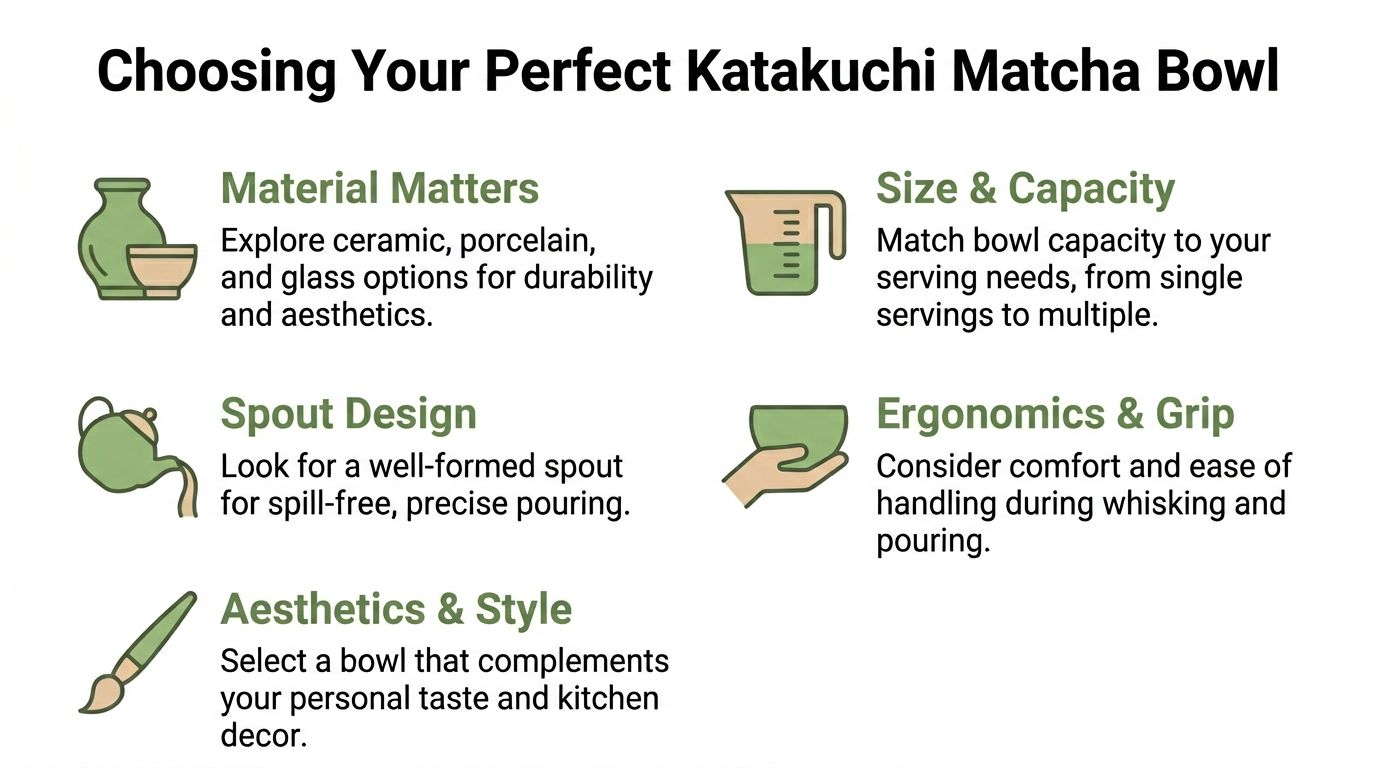
For an Australian home barista, that usually means finding a bowl that feels pleasant to use before work and pours neatly into the mug you already love. For a café owner or wholesale buyer, the question is broader. You need a bowl that helps staff repeat the same result during a busy service, with less waste and less bench cleanup.
Start with the job the bowl needs to do
A bowl for occasional straight matcha does not need the same capacity as one used for back-to-back iced lattes. If you mainly make one serve at home, a smaller bowl can feel more balanced and easier to store. If you prepare larger drinks, split pours, or recipe bases, more room in the bowl gives the whisk space to move and lowers the chance of splashing over the rim.
That is why capacity matters in a practical way, not just on a product label.
For many cafés, a bowl around 500 ml or larger is a sensible starting point because it leaves room for whisking and controlled pouring. For home use, smaller bowls often feel more comfortable, especially if you value a slower ritual and a lighter vessel.
Material changes how the bowl behaves
Material is not only about looks. It affects grip, heat, weight, and how confident the pour feels.
| Material | Best for | What to expect |
|---|---|---|
| Ceramic | Daily use at home or in cafés | Good heat retention, stable in the hand, forgiving to whisk in |
| Porcelain | Minimal, refined setups | Smoother finish, usually lighter, often a sharper visual style |
| Glass | Visual preparation and presentation | Attractive to watch, but can feel hotter, lighter, and less secure when wet |
Ceramic is usually the most practical all-round option. It has enough weight to stay steady while whisking, and it tends to feel more controlled during the pour. That balance matters if you are trying to reproduce café-quality matcha at home, or standardise service across staff in a venue.
Check the shape, not just the photos
A bowl can look beautiful online and still be awkward in use.
Start with the interior. A rounded base helps the chasen move freely, much like a curved mixing bowl helps a whisk catch everything instead of pushing ingredients into corners. You get fewer clumps stuck at the edges and a more even texture with less effort.
Then look closely at the spout. A well-formed spout should guide liquid into a narrow stream. If it looks shallow, uneven, or decorative rather than functional, you may get drips down the side of the bowl after each pour. That is annoying at home and costly in a café where tiny delays add up across a full shift.
What to test before you buy
A quick checklist helps separate a display piece from a working tool:
- Capacity: Enough room for your usual recipe without crowding the whisk.
- Rounded interior: Better whisk movement and less powder trapped around the edge.
- Defined spout: Cleaner stream, less dripping, and more accurate pouring into cups or glasses.
- Balanced weight: Comfortable to lift when full, not clumsy or too delicate.
- Grip: A finish that feels secure even with damp hands.
A useful comparison comes from serviceware buying in other parts of hospitality. This paper ice cream cups buying guide covers a different product, but the same buying logic applies. Capacity, handling, material, and real service conditions should shape the choice.
Match the bowl to the user
The best spouted bowl depends on who is using it and how often.
- Home barista: Choose comfort, a manageable size, and a spout that pours neatly into your usual cup or glass.
- Busy café: Choose durability, larger capacity, and a shape that different staff members can use consistently without retraining their pour every shift.
- Retail customer buying a gift: Choose a bowl that looks attractive but still has a rounded interior and a properly formed spout.
- Wholesale buyer for café supply: Choose pieces that support repeatable drink quality and efficient service, because those are the details venues notice after the first week of use.
If you want a practical benchmark for how the bowl fits into the full preparation setup, this matcha whisk and bowl set shows the core tools that work together.
Mastering Your Whisk and Pour Technique
Owning a good bowl helps, but technique is what turns the tool into a better drink.
Step one with the bowl
Start by warming the bowl with hot water, then empty and dry it. A warmed bowl helps keep the preparation stable and makes whisking feel smoother.
Next, sift your matcha into the bowl if you can. Sifting isn’t fussy for the sake of it. It breaks up clumps before water hits the powder, which makes a smoother drink with less effort.
The whisking motion that works
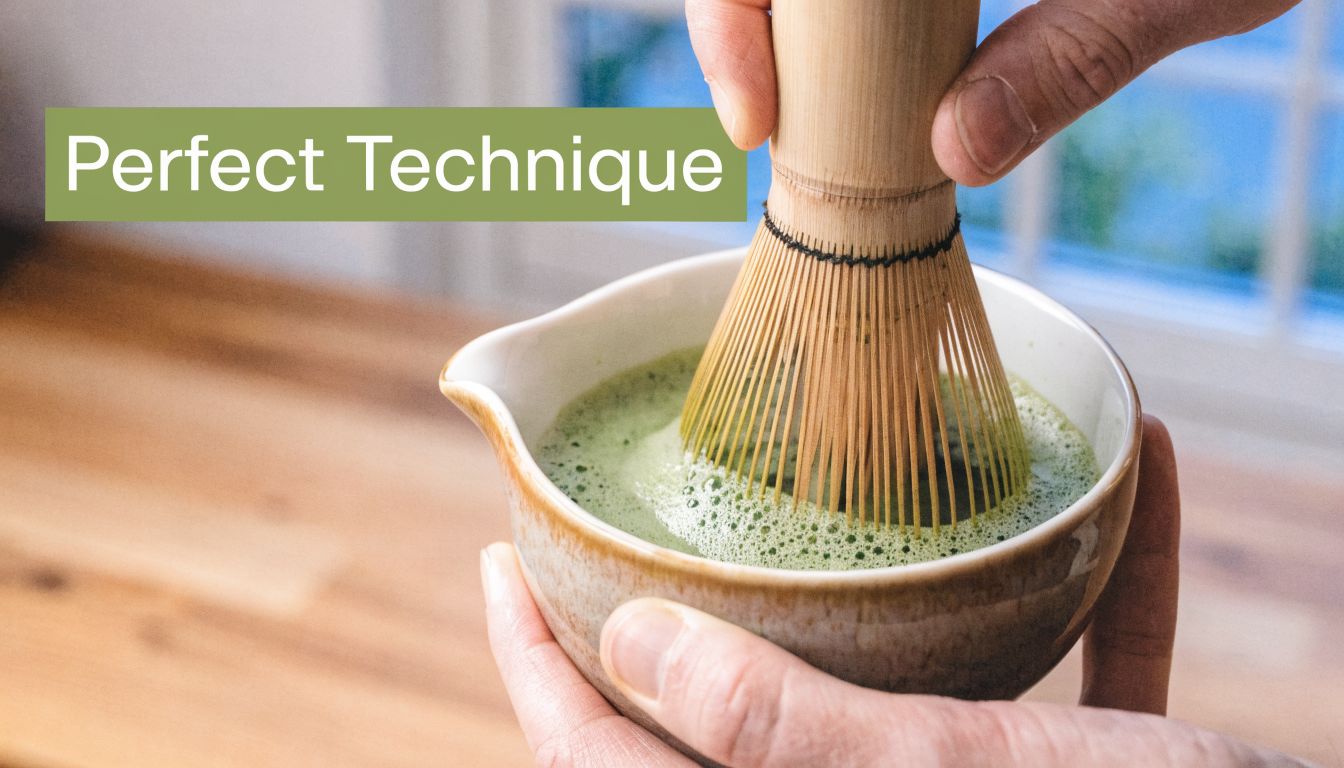
Add a small amount of hot water and begin whisking with a chasen.
Don’t stir in circles like soup. Use a quick M or W motion with your wrist, keeping the whisk tips near the surface as the foam begins to build. The aim is a fine froth, not giant bubbles.
Small correction: If your whisk is scraping heavily at the base, you’re probably pressing too hard. Let the whisk move lightly and quickly.
A rounded bowl helps here because the whisk can travel freely. You’re less likely to get powder stuck in corners, and the movement feels more natural.
How to pour without collapsing the texture
Once the matcha is whisked, pause for a second. Let the surface settle just enough that you can see the pour.
Grip the bowl firmly with one hand and guide the spout toward the centre of your cup or glass. Tilt smoothly. Don’t jerk the bowl upward at the end. That sudden stop is what often causes the final drip.
For lattes, pour the matcha first or over the milk depending on the style you want. Either works, but the key is keeping the stream controlled.
A visual guide can help if you’re refining your hand motion:
A simple routine to repeat
- Warm the bowl so the preparation starts evenly.
- Sift the matcha to avoid stubborn lumps.
- Add water gradually rather than flooding the powder.
- Whisk fast with the wrist until the top looks fine and frothy.
- Pour from the spout in one smooth tilt instead of hesitating halfway.
If you want a practical latte method to pair with this bowl technique, this make matcha latte guide gives a simple reference for building the drink itself.
Creative Recipes Beyond the Traditional Tea
Saturday morning at home or the middle of a café rush, the same problem shows up fast. You need matcha that is smooth, evenly mixed, and easy to pour without green streaks across the bench. A spouted bowl helps with all three, which is why it suits both the home barista chasing café-quality drinks and venues that need speed without slipping on consistency.
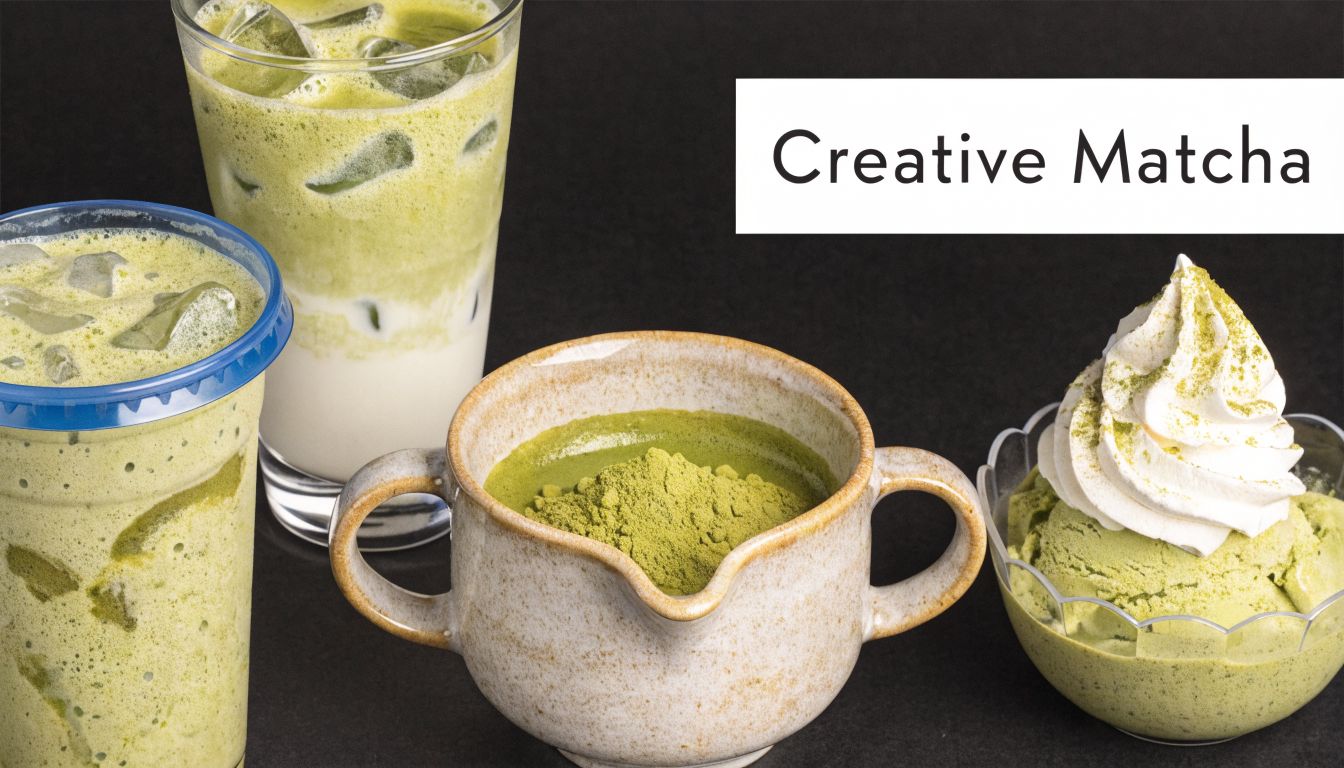
The useful part is not just the whisking. It is what happens after. Once your matcha is properly blended, the spout lets you place that liquid exactly where you want it, whether that is over ice, into a muffin mix, or across the top of sparkling kombucha for a layered special. For Australian cafés, that control means cleaner service and less waste. For home use, it means fewer failed pours and a result that looks far more polished.
Iced matcha latte
An iced latte shows the benefit straight away because ice cubes tend to interrupt the pour. A regular bowl often sends matcha around the cubes and onto the rim of the glass. A spout narrows the stream, so more of the matcha lands in the drink instead of on your hands.
Whisk the matcha with hot water until smooth and lightly frothy. Fill a glass with ice, add cold milk, then pour the matcha slowly over the top. If you want a distinct layered look, pour against the inside of the glass. If you want a more blended drink, pour into the centre and stir once.
Matcha pancake or muffin batter
This bowl is handy in the kitchen too, especially for small batches.
Start by whisking matcha with a little warm liquid to make a loose paste. That step matters because dry matcha dropped straight into batter often forms tiny green clumps, a bit like cocoa powder that refuses to mix in. Once smooth, pour it into your pancake or muffin batter and fold gently.
For pancakes, the spout helps you portion batter onto the pan with better control. For muffins, it makes filling cases neater, which is useful if you are baking for a market stall, a café cabinet, or just trying not to clean batter off the tray later.
Matcha kombucha spritzer
A kombucha spritzer gives matcha a brighter, more refreshing style. It works well for warm weather menus and for customers who want something lighter than a milk-based drink.
Whisk a small serve of matcha, let it cool slightly, then pour it into a glass with ice and chilled kombucha. The flavour changes depending on the base:
- Plain kombucha base: Keeps the matcha front and centre.
- Ginger kombucha: Adds a gentle kick.
- Citrus-leaning kombucha: Brings out the fresher green notes.
This kind of recipe also shows why the bowl matters for service. If you are trialling specials in a café, a controlled pour makes it easier to repeat the same look from one glass to the next. If you are making drinks at home, it makes creative matcha feel less fiddly.
A spouted matcha bowl is a mixing bowl, measuring helper, and pouring jug in one. That is the quiet reason it gets used so often. It earns space in the cupboard because it solves practical problems, not because it is decorative.
Caring For Your Spouted Matcha Bowl
A good bowl can last for years if you treat it gently. The basics are simple, but they make a real difference.
Daily care that keeps it looking good
Rinse the bowl soon after use. Matcha can leave a green tint if it dries onto the glaze, especially around the spout.
Wash with warm water and a soft sponge. If you use detergent, keep it mild and rinse well so no scent or residue lingers for the next bowl.
What to avoid
A few habits shorten the life of handmade ceramics.
- Don’t use abrasive scrubbers: They can mark the glaze and dull the surface.
- Don’t knock the spout against the sink: That edge is often the most vulnerable point.
- Don’t stack carelessly: The rim and pouring lip can chip if bowls rub together.
Dry the bowl fully before storing it. If it lives on an open shelf, give it enough space that you’re not bumping it every time you reach for a mug.
A matcha bowl with spout is a working tool, but it’s still ceramic. A bit of care keeps the pour clean and the bowl pleasant to use.
Elevate Your Matcha Ritual With the Right Tools
A matcha bowl with spout does more than make pouring tidy. It improves how matcha is whisked, transferred, and served. That matters whether you’re making one calm morning latte at home or building a sharper non-alcoholic menu in a busy Australian café.
The right bowl makes the whole process feel more natural. You whisk with confidence, pour with control, and waste less of the drink you’ve just prepared. That’s a small shift in equipment, but a big shift in results.
If you’re building out your setup, a dedicated collection of matcha tea accessories can help you pair the bowl with the right whisk and serving tools.
If you’re ready to put these techniques into practice, explore Pep Tea for organic matcha, brewing accessories, and café-friendly options that make it easier to create smooth, vibrant matcha at home or in service.