
Tag: bitter matcha fix
How to Make Matcha Not Taste Like Grass: Fix It Today

An overly grassy bowl is almost always fixable by lowering the water temperature to 70–80°C and adding a creamy base, rather than just using stronger matcha. Start with about 2 g of powder, whisk it properly, then dilute it with milk or chilled water until the flavour suits you.
You've probably had the experience: the colour looks beautiful, the whisk is ready, and then the first sip tastes like freshly cut lawn with a bitter finish. That doesn't necessarily mean your matcha is bad. More often, boiling water, clumps, too much powder, or the wrong serving style has pushed its natural vegetal character too far.
For many Australians, matcha is a big sensory jump from regular black tea. Australian tea-buying data found that 35% of people aged 14 and over purchased regular tea in an average four-week period, compared with 11% for green tea, in the 12 months to March 2015, based on 15,913 respondents. Roy Morgan's tea data helps explain why a strong powdered green-tea flavour can feel unfamiliar.
The good news is that learning how to make matcha not taste like grass is less about hiding the drink and more about controlling heat, texture, concentration and dilution.
Why Your Matcha Tastes Grassy
You whisk up a bright green bowl, take a sip, and get hit with raw lawn, bitterness, or a strange stale edge. That usually points to a specific problem, not a lost cause. Matcha is more concentrated than brewed green tea because you drink the leaf itself, so heat, texture, and dose all show up clearly in the cup.
Start with temperature, because it changes flavour fast. Freshly boiled water pulls out more bitterness and leaves the finish dry, especially in a small, concentrated mix. A lower range gives you a softer, sweeter result and makes it easier to judge the powder fairly. PepTea's matcha brewing temperature guide lays out why gentler water gives you better control.
Then read the flavour before you change everything at once.
Read the flavour before changing the recipe
Your first sip usually tells you what to fix:
- Freshly cut grass or raw greens: the powder itself may lean strongly vegetal. This often shows up more in culinary matcha.
- Drying, puckering bitterness: the water was likely too hot, or the drink is too concentrated.
- Grainy, uneven flavour: the matcha was not sifted or whisked into a smooth suspension.
- Flat, stale green flavour: storage, age, or air exposure may be dulling the powder.
Each fix does a different job. Sugar can soften bitterness, but it will not solve scorched powder. Milk can round off aggressive notes, but it will not remove clumps. If you want a better cup, diagnose the problem first, then change one variable at a time. Keep the amount of matcha steady while you test water temperature or dilution, otherwise it gets hard to tell what improved the flavour.
Off-notes can also come from the vessel itself. If your bottle or shaker carries residue from previous drinks, effective bottle cleaning tablets remove that variable before you blame the matcha. A clean bottle will not rescue overheated powder, but it does stop old protein, sweetener, or tea residue from muddying the aroma.
That diagnostic mindset matters in Australia, where plenty of tea drinkers still find matcha stronger and greener than what they usually reach for. IndexBox's Australian tea market overview shows the category has a solid local base. Matcha usually lands better when the format matches the drinker, whether that is a latte, an iced drink, a smoothie, or a straight bowl made with more care.
Mastering the Basic Preparation Method
A smooth cup starts with a small, controlled preparation. Use a bowl or wide mug, a fine sifter, a bamboo whisk or electric milk frother, a digital scale if you have one, and water that has cooled below boiling.
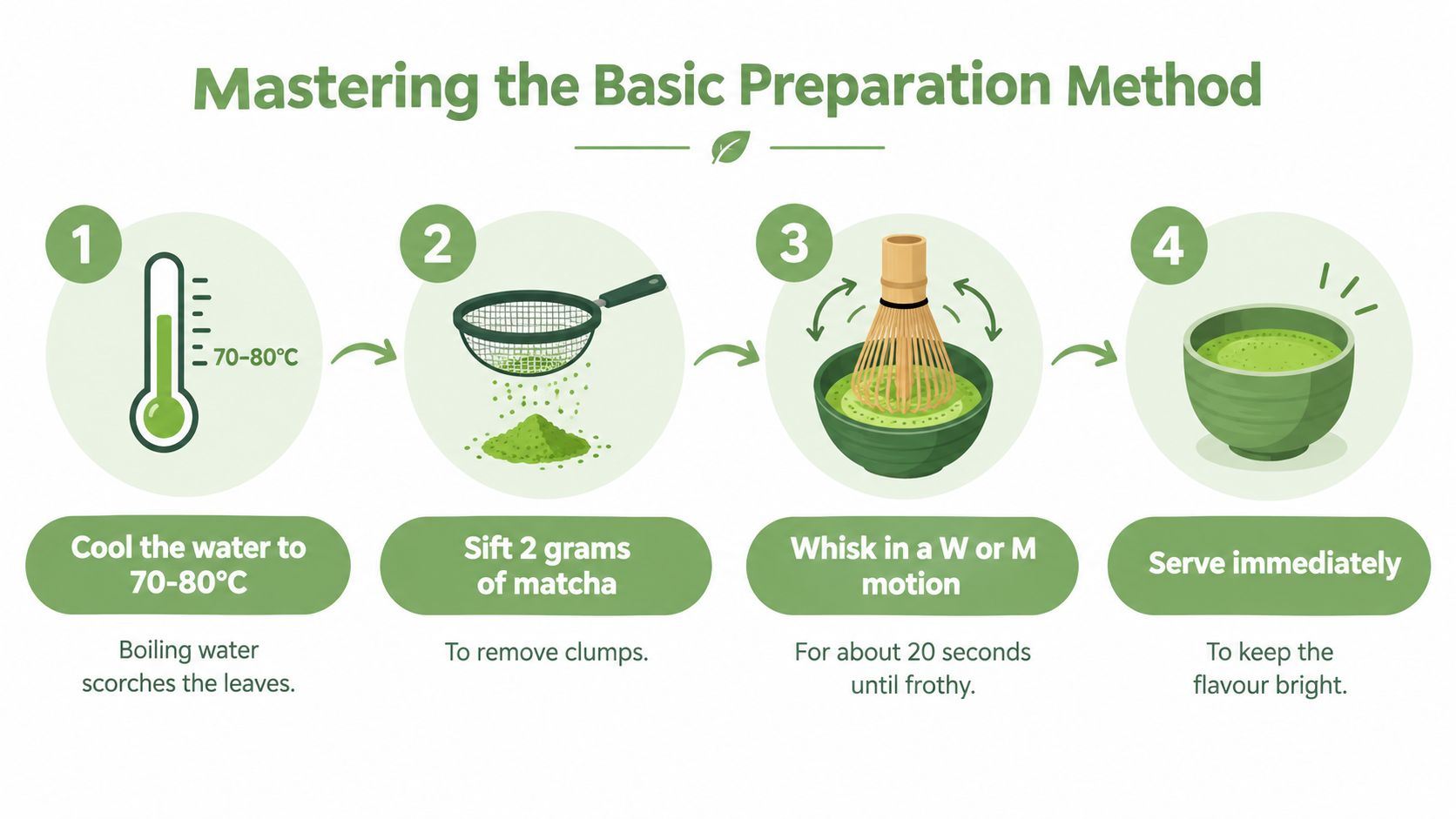
Use less heat and better dispersion
Cool the water. Heat water, then let it cool to 70–80°C. For a particularly grassy powder, begin around 70–75°C. If you don't have a thermometer, leave freshly boiled water to cool for several minutes instead of pouring it directly onto the matcha.
Sift approximately 2 g of matcha. Push the powder through a fine sieve into your bowl. This breaks up compacted particles before they become bitter clumps in the finished drink.
Make a paste first. Add 10–15 mL of the warm water and work it into a smooth slurry. Don't rush this step. A paste gives the powder an even starting point and prevents dry pockets from surviving into the final cup.
Whisk in the remaining water. Add enough water to reach approximately 50–60 mL in total, then whisk rapidly in a W or M motion until the surface looks lightly foamy.
Serve immediately. Matcha begins to settle as it stands. The final sips can taste stronger and more bitter because the powder has collected at the bottom.
This controlled method follows Australian preparation guidance that recommends approximately 2 g of matcha with 50–60 mL of water at 70–80°C. SBS Food's matcha recipe also uses a paste before gradually adding the remaining water, which is a simple way to improve texture.
Troubleshoot with a café-style test
If the drink still tastes sharp, keep the dose and water volume unchanged and compare cooler water. A useful sensory trial is 65°C, 70°C and 75°C, tasted immediately after whisking. Australian brewing guidance recommends cooler water when bitterness develops, and explains that warmer water can increase tannin-driven astringency. You can read the broader comparison in this Australian green-tea brewing guide.
For café service, consistency matters more than guesswork. Weigh the powder, measure the water and check the temperature. If you change all three at once, you won't know what improved the flavour.
You'll find a fuller walkthrough of the drink itself in PepTea's guide to making matcha tea from powder, but the essential principle is simple: cooler water, a smooth slurry and immediate service.
Transforming the Taste with Milk and Sweeteners
If plain matcha still feels too intense, a latte is usually the most reliable next step. Milk changes the drink's texture and spreads the powder through a larger volume, so the concentrated green flavour feels rounder rather than so direct.
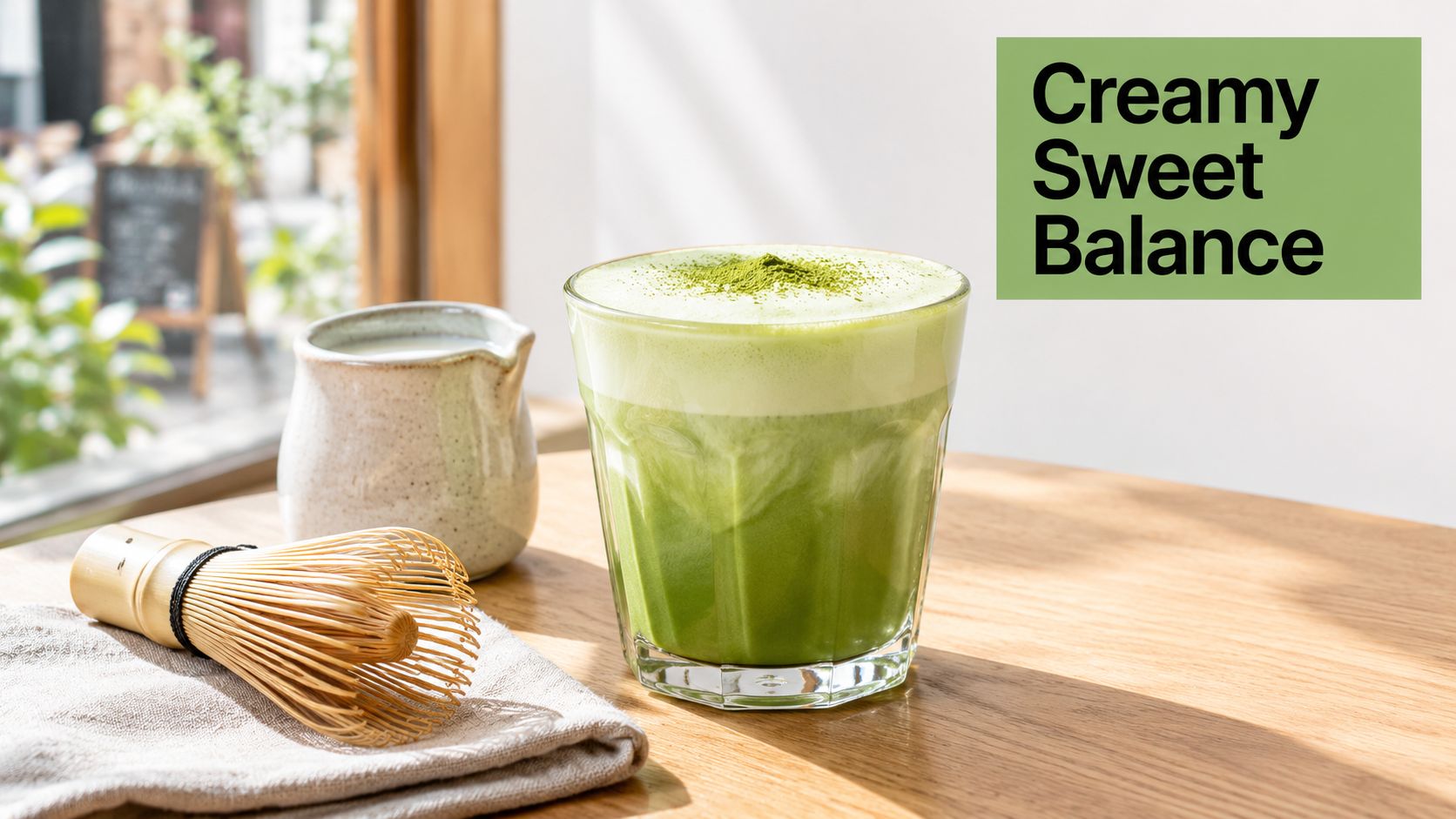
Dairy milk brings creaminess and a familiar café profile. Oat milk adds body and gentle sweetness, while macadamia milk gives a lighter, nutty finish. Unsweetened plant-based milk is a sensible choice if you want to keep the drink aligned with a low-sugar routine. The best option depends on the matcha and your palate, so taste the base before adding a sweetener.
Compare the serving formats
| Format | What it does to the flavour | Best use |
|---|---|---|
| Straight bowl | Keeps the umami and vegetal notes prominent | Fresh, balanced matcha |
| Hot latte | Adds body and softens sharp edges | First-time drinkers and cosy café drinks |
| Iced latte | Makes the flavour feel lighter and more refreshing | Warm Australian days |
| Smoothie or baking | Shares the matcha with other ingredients | Stronger culinary powder |
For a practical latte, whisk the matcha with a small amount of warm water first, then add approximately 150–200 mL of steamed or chilled milk. An iced version works particularly well when you pour the whisked matcha over ice and add milk afterwards. The cold dilution reduces the immediate impact of the vegetal notes without requiring extra sugar.
A smoother drink isn't a caffeine-free drink. Milk, vanilla and sweetener change perceived bitterness and grassiness, but they don't remove the naturally occurring caffeine in matcha.
Sweetness should support the tea, not bury it. A small amount of honey, maple syrup or an approved sugar-free syrup can balance bitterness. Too much sweetness creates a different problem, especially if you're trying to keep a clean-label or sugar-free drink on the menu.
Australian and New Zealand food guidance says naturally occurring caffeine in tea isn't subject to the same maximum limits as caffeine added to beverages, although a standard serving of these foods will normally not exceed 100 mg. FSANZ's caffeine safety information is useful for explaining why matcha can feel stronger than an ordinary brewed green tea.
This video shows the latte process in a visual format:
For a measured home version with milk and optional sweetener, follow PepTea's matcha green tea latte recipe. If you're caffeine-sensitive, pregnant or breastfeeding, or preparing a drink for a child, consider total daily caffeine intake rather than judging the drink by its sweetness.
Understanding Matcha Grades and Flavours
Preparation can only take you so far. If your matcha is naturally forceful, cooler water may reduce bitterness, but it won't turn the powder into a delicate, sweet tea. The grade, cultivation, harvest and processing all contribute to the flavour you're working with.
Ceremonial-grade matcha is intended for drinking with water. It usually offers a finer texture and a more balanced combination of umami, sweetness and gentle vegetal flavour. That doesn't mean it has no grassiness. Authentic matcha can still taste green, savoury and seaweed-like, but the finish should feel more integrated rather than aggressively drying.
Culinary-grade matcha is designed to hold its character alongside other ingredients. Its stronger profile can be useful in cookies, cakes, smoothies, ice cream and savoury recipes, where milk, fruit, flour or fat changes the overall balance. Used as a plain bowl, it may taste more assertively vegetal.
Match the powder to the drink
Choose ceremonial grade when you want to drink matcha mostly with water. Choose culinary grade when you're mixing it into a recipe where a green-tea flavour needs to remain noticeable.
Colour can provide a clue, but it isn't a complete quality test. A vivid green powder may still taste harsh if it has been overheated, while a well-prepared matcha with some vegetal character can be enjoyable. Aroma, texture, freshness and the aftertaste matter as much as appearance.
Organic sourcing is another part of the purchasing decision, but it shouldn't be treated as a guarantee that every cup will taste mild. PepTea offers Japanese organic matcha in ceremonial and culinary styles, so the useful question is not “Is it organic?” It's “Is this grade suited to the way I plan to drink or cook with it?”
Storage affects the result too. Keep the powder sealed, away from heat, light and moisture, and avoid leaving it open beside the kettle. If a powder has lost its fresh aroma and tastes dull or flat, changing technique may not be enough.
When Grassy Notes Are Actually a Good Thing
Not every green flavour is a fault. Matcha is made from powdered tea leaves, so a pleasant vegetal note is part of its identity. The aim isn't to remove every trace of grassiness. It's to separate fresh, savoury character from the harsh bitterness caused by poor extraction or an unsuitable powder.
A well-balanced cup can taste like fresh greens, toasted seaweed, soft umami and gentle sweetness at the same time. Those flavours give matcha its personality. If you force the drink to taste completely neutral with heavy dilution and lots of sweetener, you may lose the reason to drink matcha in the first place.
Tell freshness from over-extraction
Pleasant grassiness usually arrives with aroma and a clean finish. Over-extraction feels more aggressive. It can leave your mouth dry, make the bitterness dominate, or create a burnt impression that lingers after the sip.
This distinction helps you decide whether to keep experimenting with the recipe or replace the powder. If the flavour improves when you cool the water and dilute the drink, technique was the main issue. If it remains blunt, stale or drying even after careful preparation, the grade, freshness or source may not suit a water-based cup.
Matcha is also part of a changing Australian beverage scene. Among surveyed Australians aged 18–24, 40% reported ordering matcha in the previous six months, while 36% ordered flavoured iced matcha, according to Ujiha's Australian matcha flavour guide. Those figures point to a practical lesson for cafés and home drinkers: matcha doesn't need to be introduced only as a strong traditional bowl. Iced and flavoured formats can preserve its character while making the first experience more approachable.
Your Quick Checklist for a Smooth Cup
When the next bowl tastes like grass, don't reach for more powder. Work through the variables in order:
- Start with temperature: Use water at 70–80°C, beginning nearer the lower end if the flavour is harsh.
- Sift before mixing: Break up clumps so the powder disperses evenly.
- Build a paste: Combine the powder with a small splash of water before adding the rest.
- Whisk thoroughly: Use a W or M motion until the drink is smooth and lightly foamy.
- Dilute deliberately: Add chilled water, ice or 150–200 mL of milk if a straight bowl feels too concentrated.
- Sweeten lightly: Use a small amount of honey, maple syrup or sugar-free syrup only after correcting heat and texture.
- Choose the right grade: Use ceremonial matcha for water-based drinking and culinary matcha for recipes.
- Serve promptly: Don't let the powder settle into a bitter final mouthful.
- Check the powder: If careful preparation doesn't soften the flavour, reassess freshness and grade.
The most useful habit is to diagnose before disguising. Cooler water fixes over-extraction, sifting fixes clumps, and milk fixes concentration. Sweetener has a place, but it should be the finishing adjustment, not the rescue plan.
The best matcha routine is the one you'll repeat. A balanced iced latte can be a better introduction than a perfect but intimidating straight bowl.
If your drink contains matcha, remember that a smoother flavour doesn't change its caffeine content. Australian guidance also states that highly concentrated caffeine products, including products with caffeine concentrations of 5% or more in solid or semisolid form, or 1% or more in liquid form, are banned from retail sale to the public. FSANZ's guidance on caffeine powders distinguishes those products from ordinary tea ingredients.
Pep Tea offers organic Japanese matcha in drinking and culinary formats, along with Australian-brewed sugar-free organic kombucha from the Hunter Valley, NSW. Try the temperature and latte methods above, then visit Pep Tea to explore matcha for your next smooth home drink or café menu.