
Matcha Tea Preparation: A Practical Guide for 2026
“Just add a teaspoon and hot water” is convenient advice, but it's a poor foundation for consistent matcha tea preparation. A spoonful isn't a dependable dose, and an expensive tin won't rescue powder that's badly dispersed. Start with a scale, controlled water temperature and a repeatable whisking method instead.
Consistency matters even more when your usual matcha disappears from the shelf. Australian reporting on matcha supply pressures describes growing café demand alongside shortages and higher prices. The useful skill isn't memorising a recipe for a particular tin. It's knowing what to adjust when the next batch tastes different.
Setting Up Your Matcha Station
A practical matcha station should make measuring, sifting and whisking easy. You don't need a ceremonial display, but you do need enough room to work without tipping powder across the bench.
Matcha differs from ordinary green tea because you consume the powdered leaf rather than discard it after steeping. It's made from shade-grown tencha leaves that are steamed, dried and finely stone-ground, then suspended in water, as described in Gourmet Traveller's Australian matcha guide. That makes dispersion a preparation priority, not a finishing flourish.
The tools worth bench space
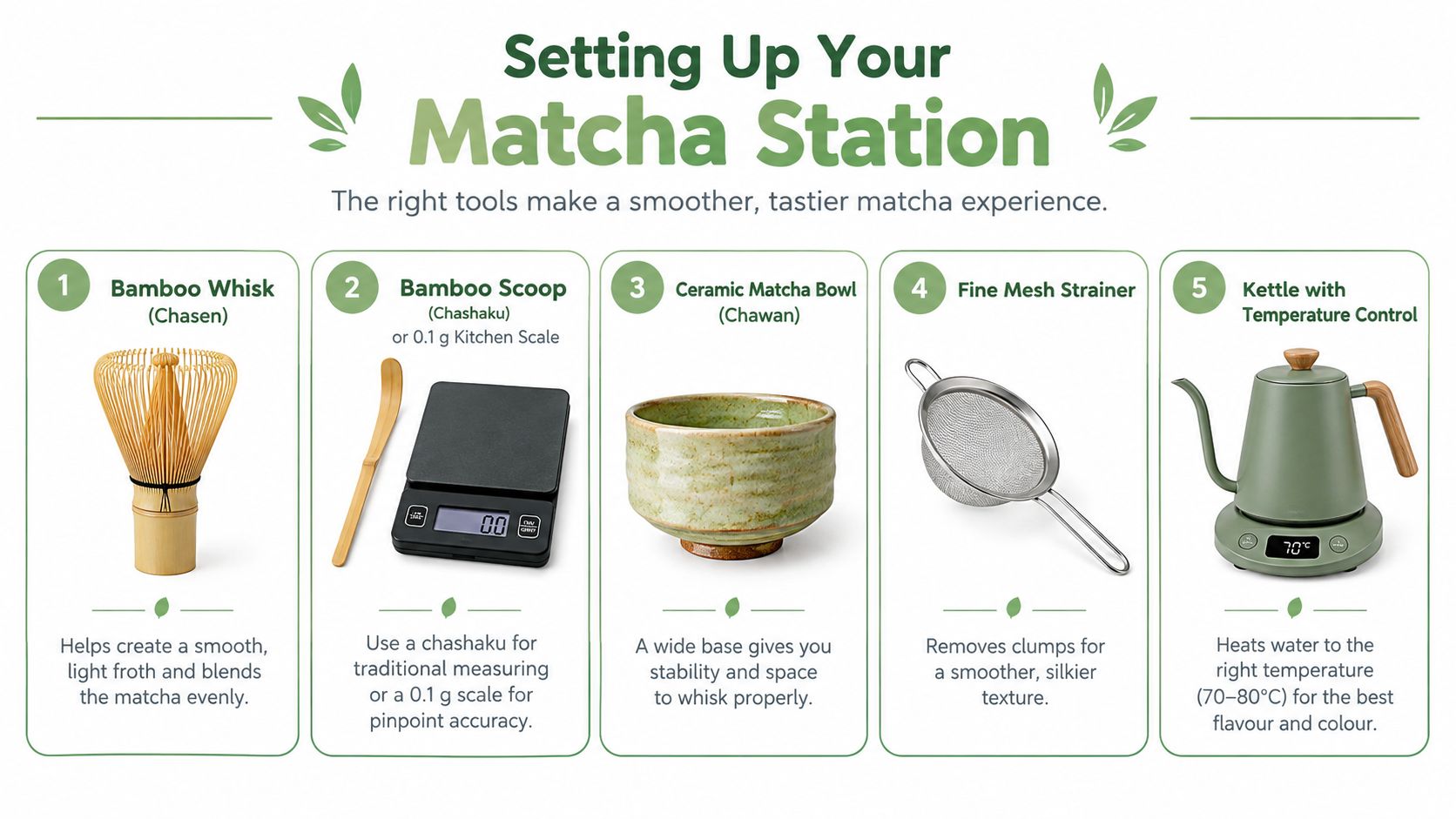
- Bamboo chasen: Choose this for the traditional whisking method. It gives you control over both mixing and surface foam.
- Kitchen scale: Use the scale for repeatability. A bamboo chashaku is useful for transferring powder, but don't treat a scoop as a fixed weight.
- Fine sieve: Sift directly into the bowl so dry clumps don't become wet lumps.
- Wide ceramic bowl: Give the whisk room to travel across the liquid rather than trapping it inside a narrow mug.
- Temperature-controlled kettle: Remove the guesswork from your water preparation.
Use this checklist to organise the station before opening the tin.
For water, work within 70–80°C rather than using it straight from a boiling kettle. Boiling water can bring bitterness forward and flatten aroma, while Australian preparation guidance commonly starts with 1–2 g of powder for a 200–250 mL drink, using a smaller quantity of water to make the concentrate first, as outlined in this matcha latte preparation guide.
Practical rule: Spend on accurate measuring and effective mixing before buying decorative accessories.
Choose for the drink you make
Treat ceremonial and culinary labels as starting points, not a substitute for tasting. Compare aroma, colour, bitterness and texture in the drink you intend to serve. A powder you enjoy straight may not be your preferred choice once milk enters the cup.
If you're assembling equipment, compare the components of a matcha tea set in Australia against what you already own. Buy the missing functional pieces rather than duplicating a useful bowl or scale.
The Traditional Whisk Method
The first contact between powder and water deserves more attention than the final flourish of foam. Pouring water onto an unsifted mound makes the whisk do unnecessary work. Start with loose, evenly distributed powder.
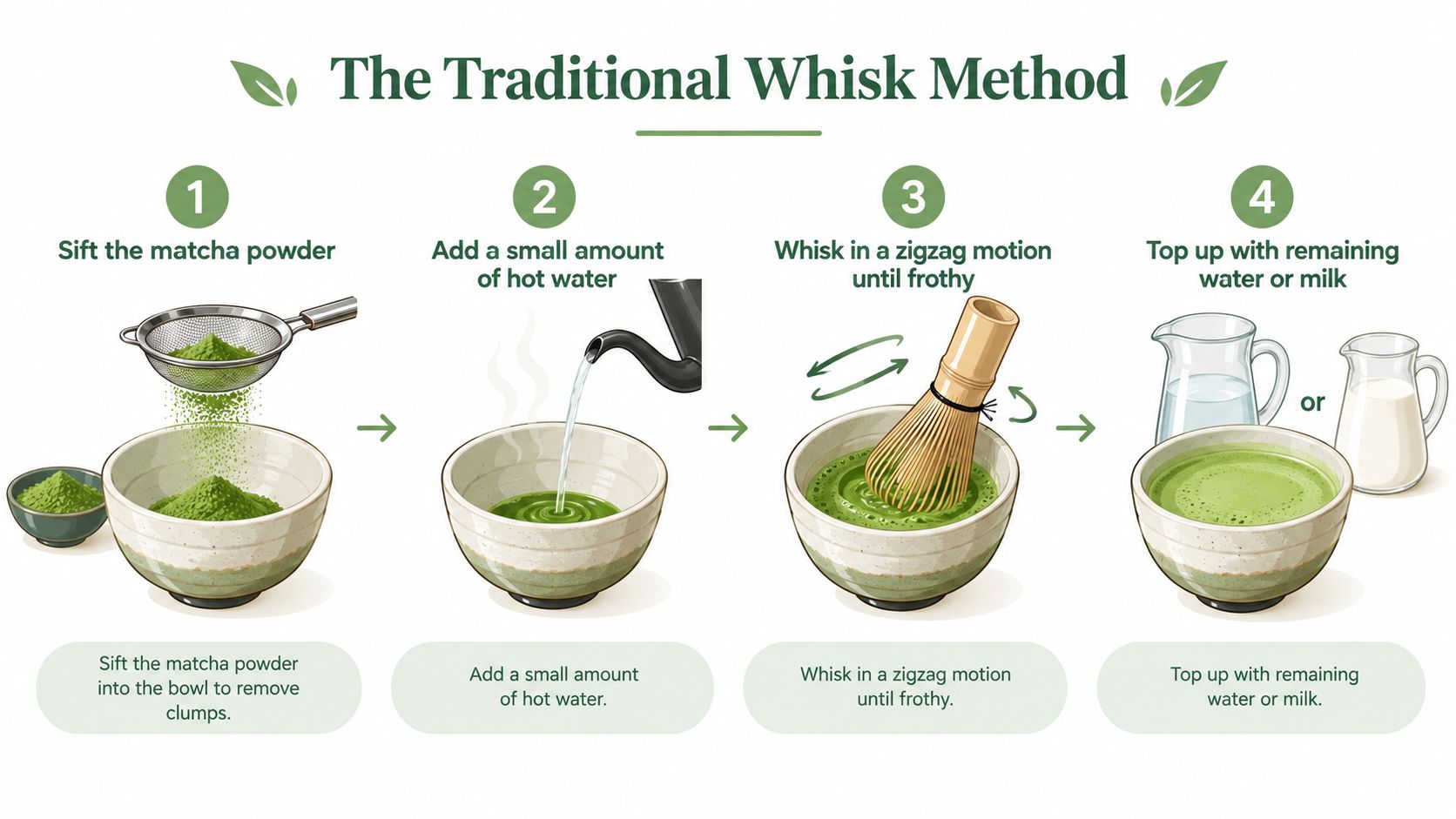
The sequence below shows the basic workflow. For the most controlled result, fully disperse the concentrate before making any final adjustment with water or milk.
Build the suspension before chasing foam
A useful home-barista baseline is approximately 2 g of sifted matcha with 50–60 mL of water, whisked for 15–30 seconds using rapid W- or M-shaped strokes, following this gram-based matcha preparation method.
- Weigh and sift. Put the bowl on your scale, tare it and measure the powder. Pass it through the sieve rather than trying to crush dry lumps after adding water.
- Add a small splash from your measured water and gently work it into a smooth slurry. Pause here. If you can still see dry pockets, incorporate them before adding the rest.
- Add the remaining water. Keep the bowl steady and begin short, brisk strokes across the base. Move your wrist rather than swinging your whole arm.
- As the mixture becomes uniform, raise the whisk slightly towards the surface. Continue with lighter strokes until the top looks finely aerated rather than covered in large, uneven bubbles.
The critical transition is from mixing through the liquid to refining the surface. Don't lift the whisk so early that you create attractive foam above poorly dispersed powder. Equally, don't keep scraping the bottom once the drink is uniform.
Judge the cup, not just the photograph
Circular stirring moves the liquid around, but it's less effective at creating the uniform suspension described in the preparation method above. A pale, lightly frothy surface is a useful cue, yet mouthfeel matters more: the drink shouldn't contain obvious powdery lumps.
For a visual companion, watch the whisk movement and the change in height as the surface develops.
Serve promptly rather than leaving the bowl on the bench while you prepare everything else. Matcha particles settle during holding, so arrange your cup and any accompaniments before whisking.
For a separate resource on safety considerations, consult IFM Gourmet's guide to safe matcha from IFM Gourmet Food Store. Keep technique and suitability separate: a beautifully whisked bowl still needs an appropriate serving size.
Lattes, Iced Matcha, and Everyday Drinks
The concentrate is the starting point for café-style drinks, not the finished recipe. Milk, ice and flavourings change how strongly you perceive the tea, so decide on the finished drink before reaching for a larger cup.
Don't compensate for every weak latte by adding more powder. First check whether the cup contains more milk or melted ice than your usual recipe. Changing the liquid quantity may restore balance without changing the caffeine dose.
Hot matcha latte
Pre-warm the serving cup, then prepare the concentrate separately. Steam or warm your chosen milk gently, aiming for a texture you can pour rather than a stiff cap you have to spoon out.
There isn't a milk-steaming temperature established in the preparation references used here, so don't borrow the water setting and assume it applies to milk. Follow suitable guidance for your milk and equipment, and keep the result consistent between drinks.
- Combine deliberately: Pour a little milk into the concentrate and swirl, then add the remainder.
- Keep the tea recognisable: Taste before adding sweetener. If you can't identify the matcha, review the milk quantity first.
- Watch the cup: A cold, heavy mug can leave a carefully prepared hot drink lukewarm.
The pour should bring milk and tea together, not hide an unmixed layer beneath the foam.

Iced, shaken and lightly flavoured
For an iced latte, prepare the concentrate, let it cool, then pour over chilled milk and ice. Use the established serving volume as your starting point rather than filling any glass to the rim. This iced matcha latte method offers a dedicated workflow for that format.
A chasen suits careful concentrate preparation. For an everyday iced drink, a cocktail shaker or small blender is an alternative worth testing, especially when you want the ingredients thoroughly combined rather than layered. Don't shake hot liquid in a sealed vessel.
Standardise the glass, milk quantity and ice before deciding that a new matcha needs a stronger dose.
For flavour, try ginger, citrus zest or a sugar-free syrup sparingly. Treat these as recipe suggestions, not a requirement to sweeten matcha. If you enjoy textured café drinks, Just Cook It's step-by-step grass jelly tea guide provides a separate recipe to explore.
For an adult non-alcoholic serve, try cooled concentrate with a little sugar-free organic kombucha. Our Ginger or Lime & Ginger options offer a different direction from a milk-based drink; combine gently rather than shaking a carbonated mixer.
Getting the Caffeine Dose Right
A bowl, teaspoon or large iced cup doesn't tell you how much caffeine you're drinking. Powder weight is the useful control, while product-specific caffeine information, when available, is more informative than a grade name.
Australian guidance gives a broad estimate of 19–44 mg of caffeine per gram, making a 2 g preparation approximately 38–88 mg, with variation between products and servings, as explained in our guide to whether matcha tea has caffeine. These are estimates, not a laboratory result for your tin.
Typical caffeine in a matcha serve by size and powder weight
| Serve | Powder | Caffeine range | Best for |
|---|---|---|---|
| Usucha-style bowl | Weighed baseline dose described above | Baseline estimated range above | Tasting matcha without milk |
| Standard hot or iced latte | Same baseline dose | Same estimated range, provided no other caffeinated ingredient is added | Keeping the tea dose consistent across formats |
| Smaller, lighter drink | Reduced weighed dose | Lower than the baseline for the same powder, but product-dependent | Adjusting a recipe to personal preference |
| Double-matcha iced latte | Double the usual weighed dose | Higher than the baseline; calculate from supplier information | A clearly identified stronger serve, not a routine default |
Milk and ice change concentration and flavour, not the quantity of powder already measured into the drink. If you reduce the powder, consider reducing the milk or water too, rather than accepting a washed-out result.
Ceremonial doesn't mean lower caffeine. Testing cited in Australian consumer guidance on matcha caffeine variation reported higher average caffeine concentrations in ceremonial samples than culinary samples. Choose a grade for its suitability to the drink, not as a caffeine-management shortcut.
Count the whole day
Healthdirect's caffeine advice states that around 400 mg daily is generally considered safe for healthy adults, while pregnant or breastfeeding people should limit intake to 200 mg daily. Those figures aren't targets or guarantees of individual tolerance.
- Include other sources: Count coffee, tea, energy drinks and chocolate alongside matcha.
- Identify stronger recipes: Cafés should make larger powder doses clear rather than relying on cup size to communicate strength.
- Ask about individual suitability: Children and caffeine-sensitive guests shouldn't be treated as smaller versions of a standard adult order.
If coffee is also part of your routine, Everti's discussion of double shot espresso caffeine content is a useful companion when reviewing your drinks. Use actual serving information wherever possible rather than assuming every coffee or matcha contains the same amount.
Common Mistakes and How to Fix Them
“You bought the wrong grade” is often an unhelpful diagnosis. Before replacing the tin, check whether the preparation has changed. A new mug, an unmeasured pour or a rushed mixing step can make a familiar powder taste disappointing.
Fix the process before replacing the powder
| Problem | What to change |
|---|---|
| Harsh bitterness after using boiling water | Return to the controlled kettle setting established earlier before adding sweetener. |
| Powdery lumps | Sift into a dry bowl and inspect the initial slurry before continuing. |
| Uneven texture after circular stirring | Use the cross-bowl whisking movement rather than repeatedly tracing the rim. |
| A latte that tastes mostly of milk | Check the finished liquid quantity and ice before increasing the tea dose. |
| Different strength every morning | Replace the heaped teaspoon with a recorded weight. |
| Flat or disappointing flavour | Compare the powder's aroma and condition with what you normally use, then test it without flavourings. |
These fixes don't mean every powder will taste excellent. They help you separate a preparation fault from a product you don't enjoy.
When the usual tin runs out
Treat a replacement matcha as a small recipe calibration, not an automatic like-for-like swap. Make it with your established method first so you have a fair comparison. Record what you notice before changing anything.
- Compare colour and aroma: Use them as observations, not a universal quality score. Taste still decides whether the powder suits your menu.
- Change temperature independently: If the replacement tastes harsher, test a cooler setting within the established working range.
- Adjust quantity carefully: A stronger dose might help a latte, but it also changes caffeine exposure.
- Reassess milk and sweetness: Don't preserve an old recipe blindly if it overwhelms the replacement tea.
For café teams, write the revised recipe beside the workstation and identify the powder being used. Otherwise, different staff may each “correct” the drink in a different direction, making customer feedback difficult to interpret.
A repeatable method gives you a fair test of the tea. Without one, you're judging the powder and your preparation at the same time.
You won't make every tin taste identical, and that shouldn't be the goal. Aim for a drink that's balanced, clearly identifiable and straightforward to reproduce, even when the supplier or batch changes.
Pep Tea offers Japanese organic matcha for straight tea, lattes and everyday recipes, alongside preparation guidance for home drinkers and hospitality teams. Visit Pep Tea to explore the matcha range, choose a powder for your preferred drink or enquire about café supply.