
Ceremonial vs Culinary Matcha: A Complete Guide for 2026
Most advice on ceremonial vs culinary matcha gets one thing wrong straight away. It treats “ceremonial” and “culinary” like official Japanese grades, as if one is formally certified as superior and the other is a lesser version.
That's not how matcha works.
In practice, those labels are best understood as usage terms. They tell you what a powder is intended for. One is generally suited to being whisked with water and enjoyed on its own. The other is usually built to perform in lattes, smoothies, desserts, and baking. That distinction matters far more than the badge on the tin.
A lot of Australian shoppers are understandably confused. One source notes that in Japan there is no official grading system for “ceremonial” versus “culinary”, and that these labels were created by Western brands to indicate intended use. The same source says 68% of Australian matcha buyers in 2025 reported confusion over grade terminology in a Nielsen AU survey on functional beverage trends, according to Ooika's explanation of ceremonial vs culinary matcha.
If you remember only one idea, make it this one: buy matcha for the job you want it to do.
Here's a quick side by side view before we get into the details:
| Feature | Ceremonial matcha | Culinary matcha |
|---|---|---|
| Main purpose | Drinking with water | Mixing into recipes |
| Leaf selection | Young, tender spring leaves | Older or later harvest leaves |
| Colour | Bright, vivid green | More muted green |
| Taste | Sweet, umami, low bitterness | Bolder, earthier, more astringent |
| Texture | Very fine and silky | Often less delicate |
| Best uses | Straight matcha, mindful sipping | Lattes, smoothies, baking, desserts |
| Price | Usually higher | Usually more accessible |
Practical rule: If you want to taste the matcha itself, choose ceremonial style. If milk, fruit, chocolate, or heat are involved, culinary usually makes more sense.
From Leaf to Powder The Production Journey
Both ceremonial and culinary matcha begin with the same plant, Camellia sinensis. The split happens in the field.
For ceremonial-grade matcha, growers focus on the youngest, most tender leaf material. One detailed production guide explains that ceremonial matcha is made from the youngest two leaves at the tip of new shoots, harvested in spring, typically mid-April to mid-May, after 4 weeks of shading under bamboo mats or dark cloth that can block up to 90% of sunlight to build chlorophyll and L-theanine, as outlined in this explanation of how matcha is made.
That shading step changes everything. Less direct light pushes the plant toward a deeper green colour and a softer flavour profile. The leaves are being prepared for a bowl where there's nowhere to hide.
Two leaves, two futures
Think of two tea leaves from the same garden.
The first is selected from the delicate spring flush. It's shaded carefully, picked young, then handled with a lot of restraint because the final powder needs to taste balanced with nothing more than water.
The second comes from a later harvest or from older leaves chosen for strength rather than delicacy. It still becomes matcha, but it's expected to hold its own in a latte, biscuit batter, smoothie, or soft serve. That demands a sturdier personality.
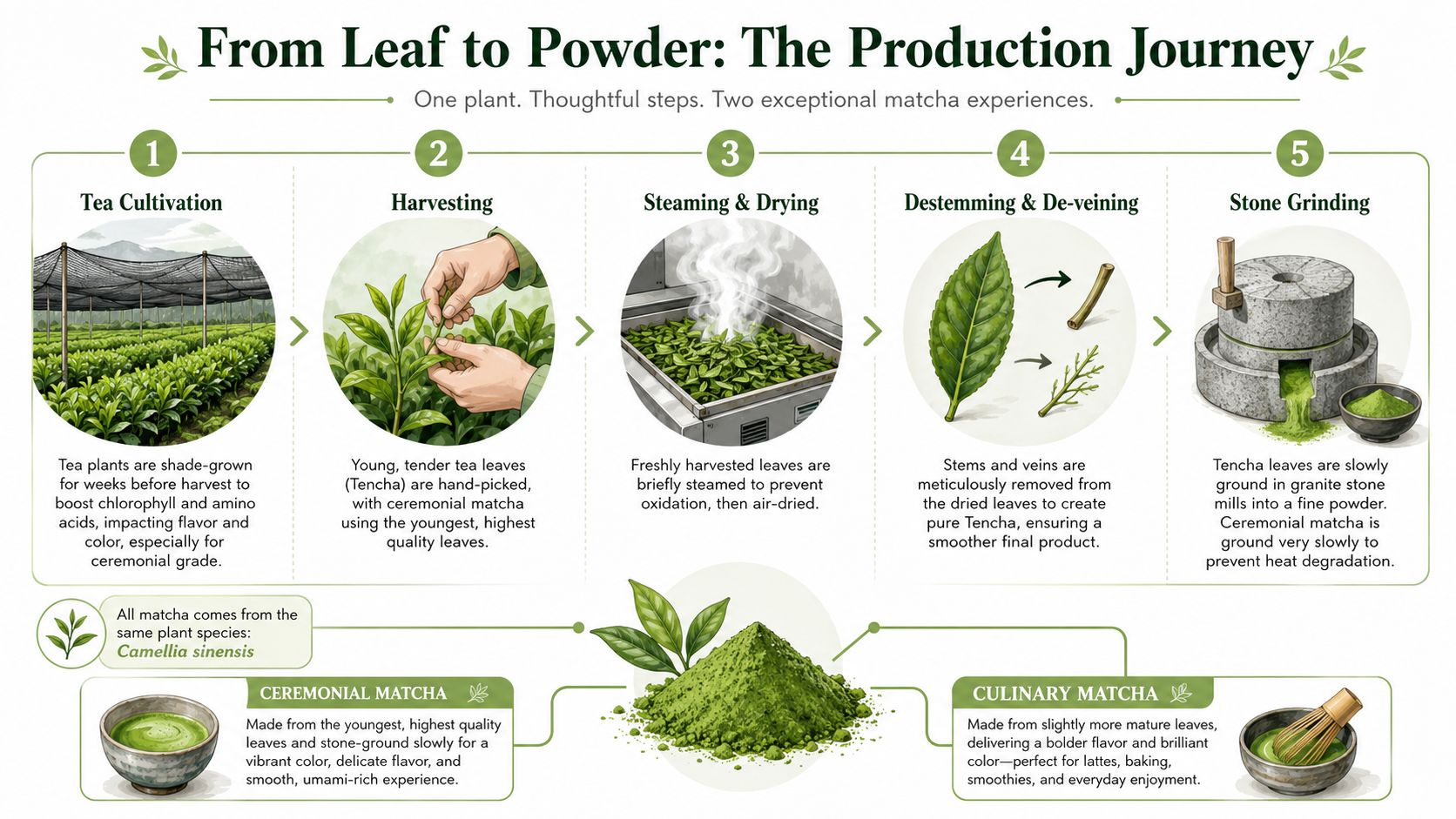
The production path after harvest is careful for both styles. Leaves are steamed to stop oxidation, dried, and stripped of stems and veins to create tencha before grinding. But when the goal is premium drinking matcha, each decision is tighter and less forgiving.
Why the field matters more than the label
You can't fix poor leaf selection later with fancy packaging. The matcha's character is shaped early by:
- Shading method: Longer, more intensive shade growing supports the sweet, soft style people expect from ceremonial matcha.
- Harvest timing: Spring leaf material is prized for delicacy, while later harvests lean stronger and more assertive.
- Leaf age: Younger leaves tend to deliver a gentler cup. Older leaves bring more bite.
- Final purpose: Producers don't process every batch with the same intended use in mind.
If you want a deeper look at that farm-to-powder process, how matcha tea is made is worth reading.
A Difference You Can See Smell and Taste
Open the tin before you taste anything. Your eyes will usually tell you a lot.
Ceremonial matcha tends to look lively and bright. Culinary matcha often appears more subdued. One Australian reference explains that ceremonial matcha comes from the youngest leaves of the first harvest and can show more than 15% higher chlorophyll concentration, which helps create that vivid green colour and sweet, umami-forward flavour. The same source notes that culinary matcha is generally duller green, more astringent, and better suited to lattes and baking, according to Pure Matcha's guide to ceremonial and culinary differences.
What to look for in the powder
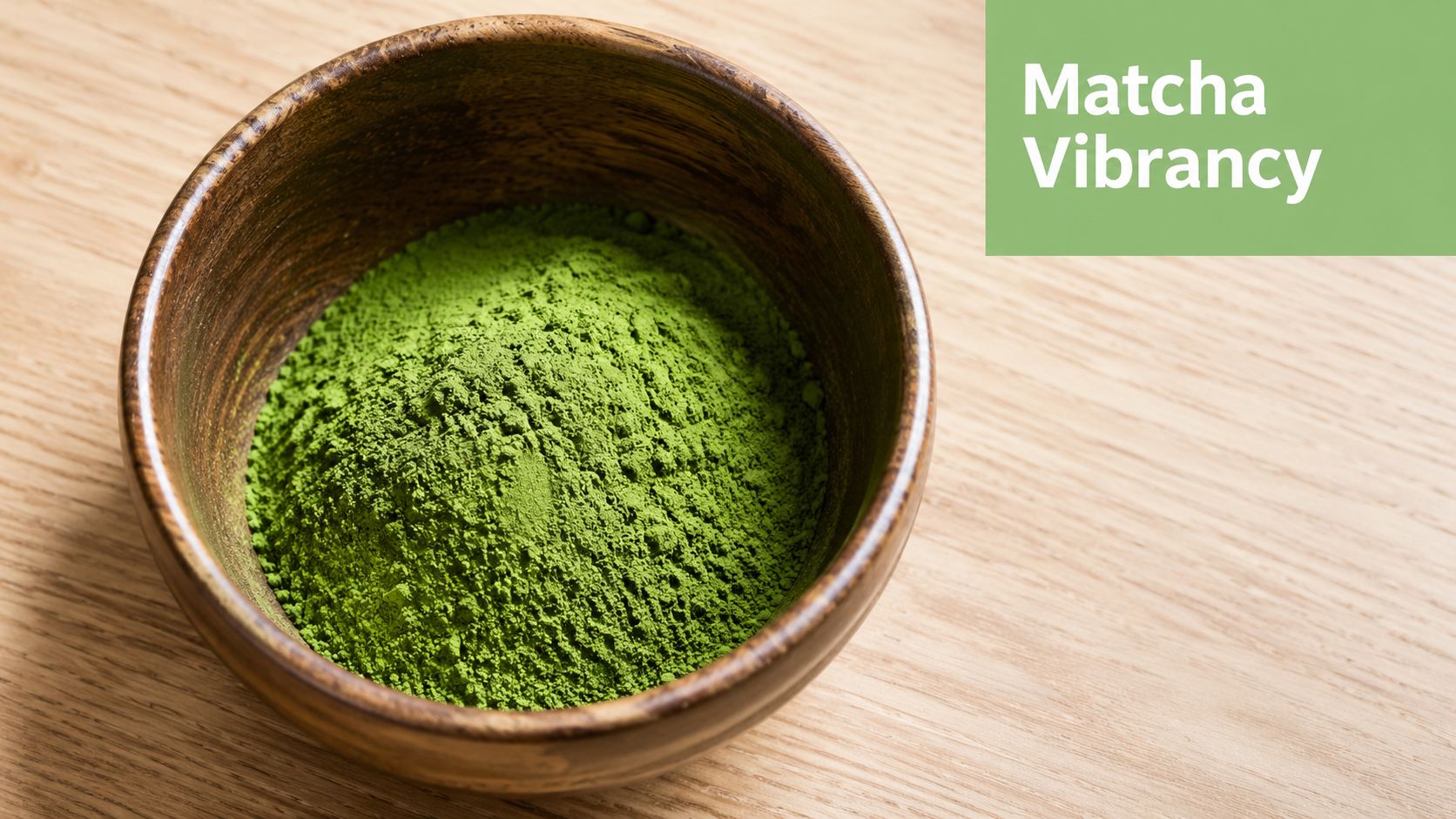
A good ceremonial powder often looks almost luminous. It usually has a finer, softer appearance in the bowl. Culinary powder can still be good quality, but it's commonly less radiant and a touch more practical than precious.
Use this quick sensory check:
- Colour: Ceremonial usually leans bright green. Culinary often looks flatter or more olive-toned.
- Aroma: Ceremonial tends to smell fresh, grassy, sweet, and savoury. Culinary is usually bolder and more direct.
- Texture: Drinking-grade matcha should feel very fine. A recipe-focused powder may feel a little less silky.
- Taste: Ceremonial aims for softness and umami. Culinary aims for presence.
What happens in the cup
Whisk ceremonial matcha with water and you should notice a smooth, rounded taste with minimal bitterness. It's the sort of matcha you sip slowly because the flavour is the point.
Culinary matcha behaves differently. On its own, it can taste firmer, earthier, and more drying. Add milk or sweetener, though, and that structure becomes an advantage. The stronger flavour keeps showing up instead of disappearing behind the rest of the drink.
A latte made with delicate ceremonial matcha can taste lovely, but it can also be a waste of subtle flavour. A strong culinary matcha often performs better because it was built for that role.
Why Is Premium Matcha More Expensive
The price gap between ceremonial and culinary matcha isn't just branding. A lot of it comes down to labour, pace, and how much powder a producer can realistically make.
Traditional stone milling is the clearest example. Authentic Japanese matcha made this way is ground very slowly to keep the powder fine and to avoid heat building up during processing. According to The S's Traditions explanation of matcha production, a traditional stone mill yields only 30 grams per hour, and producing 100 grams of premium powder can take roughly 3 to 4 hours.
That helps explain why good ceremonial matcha doesn't come cheaply. It's not only about exclusivity. It's about throughput. You can't rush this process and still expect the same result.
Where the cost comes from
Ceremonial matcha usually costs more because several high-effort choices stack together:
- More selective picking: The youngest leaf material is limited and carefully chosen.
- More demanding cultivation: Shade growing takes planning and close management.
- Traditional milling: Slow grinding preserves texture and character, but output is low.
- Smaller margin for flaws: When matcha is meant to be drunk plain, every rough edge shows.
Culinary matcha is usually more economical because it can be made from later harvests or slightly older leaves, and some producers use more modern grinding systems with higher output. That doesn't make it inferior across the board. It makes it fit for a different use case.
Expensive doesn't mean better for every job
A common mistake is assuming the most expensive matcha is always the smartest buy. It isn't.
If you're making an iced vanilla matcha latte, blending matcha into banana oats, or whisking it into muffin batter, subtle sweetness and fine aromatic detail can get buried. In those settings, a bold culinary powder often gives you a clearer matcha flavour at a more sensible cost.
Worth remembering: Price tells you something about craftsmanship. It doesn't tell you whether that matcha is right for your recipe.
Calm Focus vs Bold Flavour Nutritional Contrasts
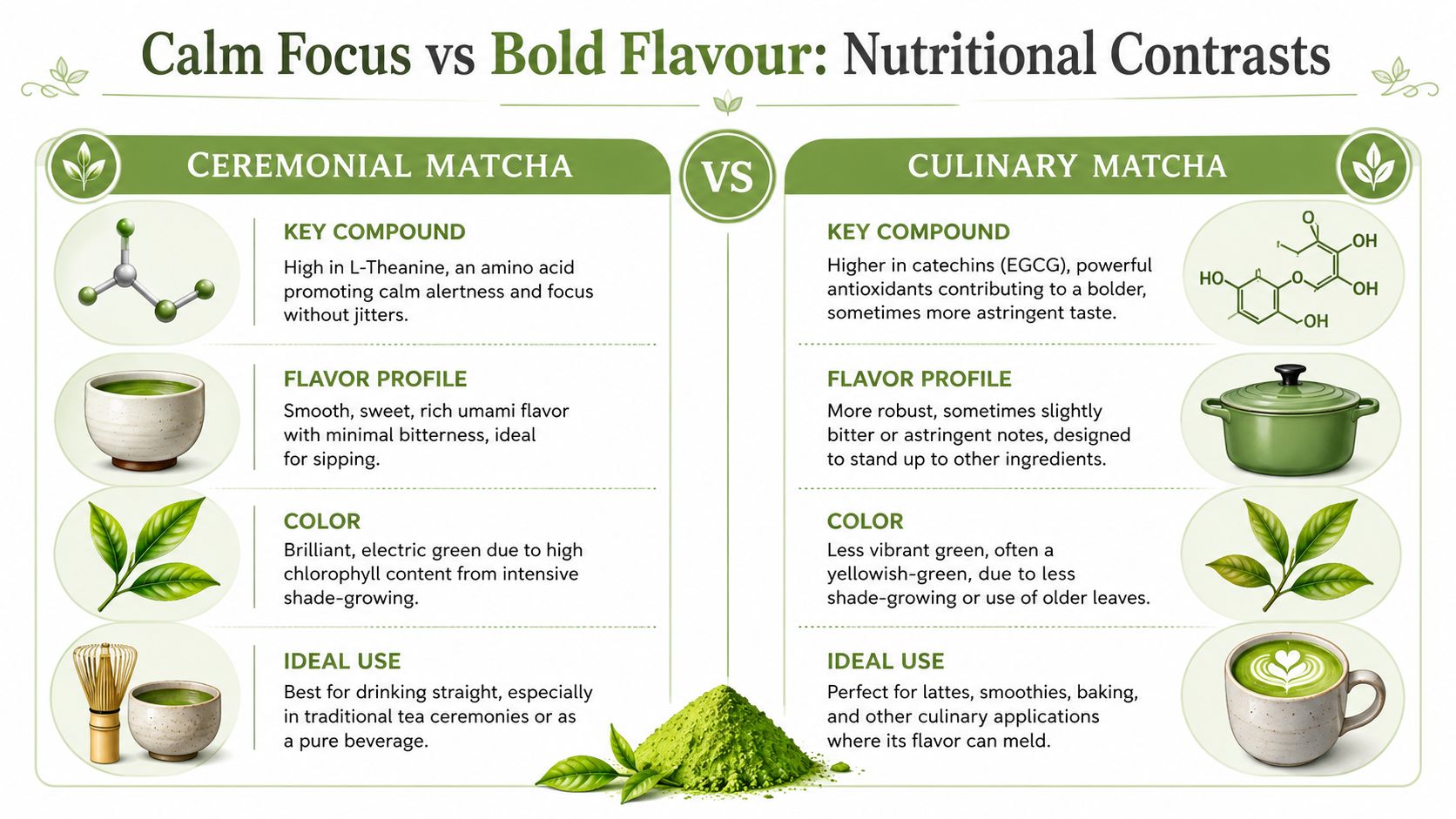
Here's the part that often gets oversimplified. “Ceremonial” and “culinary” are not official nutrition categories from Japan. They are marketing labels that usually point to intended use, so the key question is not which one is “healthier” in the abstract. It is which powder suits the way you use it.
Both styles come from the same plant, and with matcha you consume the whole leaf in powdered form rather than steeping and discarding it. That is why both can contribute catechins, chlorophyll, caffeine, and L-theanine. The differences are usually a matter of degree, driven by factors like shading, harvest timing, and leaf selection.
Ceremonial-style matcha is often associated with a softer, steadier feeling and a sweeter, more umami-led cup. Culinary-style matcha tends to taste stronger, greener, and more direct, which is exactly why it works so well in recipes. Flavour shapes perception here. A smoother matcha can feel gentler to drink plain, while a punchier one can feel more lively because the bitterness and astringency stand out more clearly.
What that can feel like in a cup
L-theanine is one reason matcha is often described as giving calm focus instead of the sharper lift some people get from coffee. Still, it helps to keep expectations sensible. Ceremonial-style matcha is not a special wellness tier, and culinary matcha is not suddenly lacking in benefits. They tend to deliver a different balance of taste and sensation.
A practical way to read the difference is this:
| Matcha type | Typical feel | Flavour expression | Best fit |
|---|---|---|---|
| Ceremonial | Smoother, calmer, more centred | Sweet, umami, softer finish | Morning bowl, mindful break, straight whisking |
| Culinary | Brisker, more assertive | Stronger green tea character | Lattes, smoothies, baking, recipes |
If you want a clearer primer on how these labels are used, our guide to different grades of matcha explains where the names help and where they can mislead.
A good rule is to judge matcha the way you would judge cooking chocolate versus single-origin chocolate for eating. Both come from cacao. Both have value. You just notice different qualities depending on how you use them.
A lot of tea drinkers also ask about antioxidants such as EGCg. Matcha is well regarded partly because the whole leaf is consumed, so both styles can fit neatly into a daily routine. The more useful question is simple. Which one will you enjoy often enough to use well?
For a visual explainer, this video gives a helpful overview:
Choose for the experience, not the label
If you like whisking matcha with water and noticing sweetness, creaminess, and a lingering umami finish, ceremonial-style powder usually makes more sense.
If your usual order is an iced latte, a smoothie, or weekend baking, culinary-style matcha is often the smarter pick because its flavour stays present once milk, oats, vanilla, or sugar enter the mix.
That is the key distinction. Not a formal Japanese hierarchy. A difference in application.
The Right Matcha for the Job How to Use Each Grade
The easiest way to stop overthinking ceremonial vs culinary matcha is to treat them like different kitchen tools. You wouldn't use a chef's knife for peeling apples if a small paring knife is the better fit. Matcha works the same way.
One producer notes that culinary-grade matcha often uses slightly older leaves or later harvests, creating a more astringent, less umami-rich profile suited to lattes and baking, while ceremonial-grade matcha sticks to first-flush, fully shaded, hand-picked, stone-ground tencha for delicate sweetness and frothability, as described in Pure Matcha's production notes.
Best uses for ceremonial matcha
Ceremonial matcha shines when water is the main companion.
Try this simple method at home:
- Sift a small amount of matcha into a bowl to remove clumps.
- Add a splash of warm water and make a smooth paste.
- Pour in more warm water and whisk briskly until a fine foam forms.
- Drink it straight away while the aroma is fresh and the texture is lively.
This style suits anyone who wants to notice sweetness, umami, and a softer finish. It's also the better choice for a traditional presentation at home or in a café tasting.
Best uses for culinary matcha
Culinary matcha comes alive when other ingredients enter the mix.
It works especially well for:
- Lattes: Its bolder profile cuts through dairy and plant milks.
- Smoothies: Banana, mango, yoghurt, oats, and spinach won't overpower it as easily.
- Baking: Muffins, cookies, cheesecakes, pancakes, and slices hold the flavour well.
- Desserts: Matcha icing, custard, ice cream, and energy balls all benefit from that stronger edge.
A practical trick for lattes is to sift the powder first, whisk it with a little warm water into a slurry, then add milk. That avoids green clumps floating on top.
If you'd like a clearer overview of which powder suits which preparation, different grades of matcha gives a useful starting point.
If your recipe includes milk, sweetener, fruit, chocolate, vanilla, or baking heat, culinary matcha is usually the safer pick.
How to Choose and Buy Authentic Matcha in Australia
The smartest matcha buyers in Australia ignore the hype first and read the details second.
The biggest myth to let go of is this: ceremonial and culinary are not official Japanese regulatory grades. They are market terms used to guide intended use. Once you understand that, shopping gets much easier. You stop asking, “Which one is the top grade?” and start asking, “Which one suits what I'm making?”
A checklist that actually helps
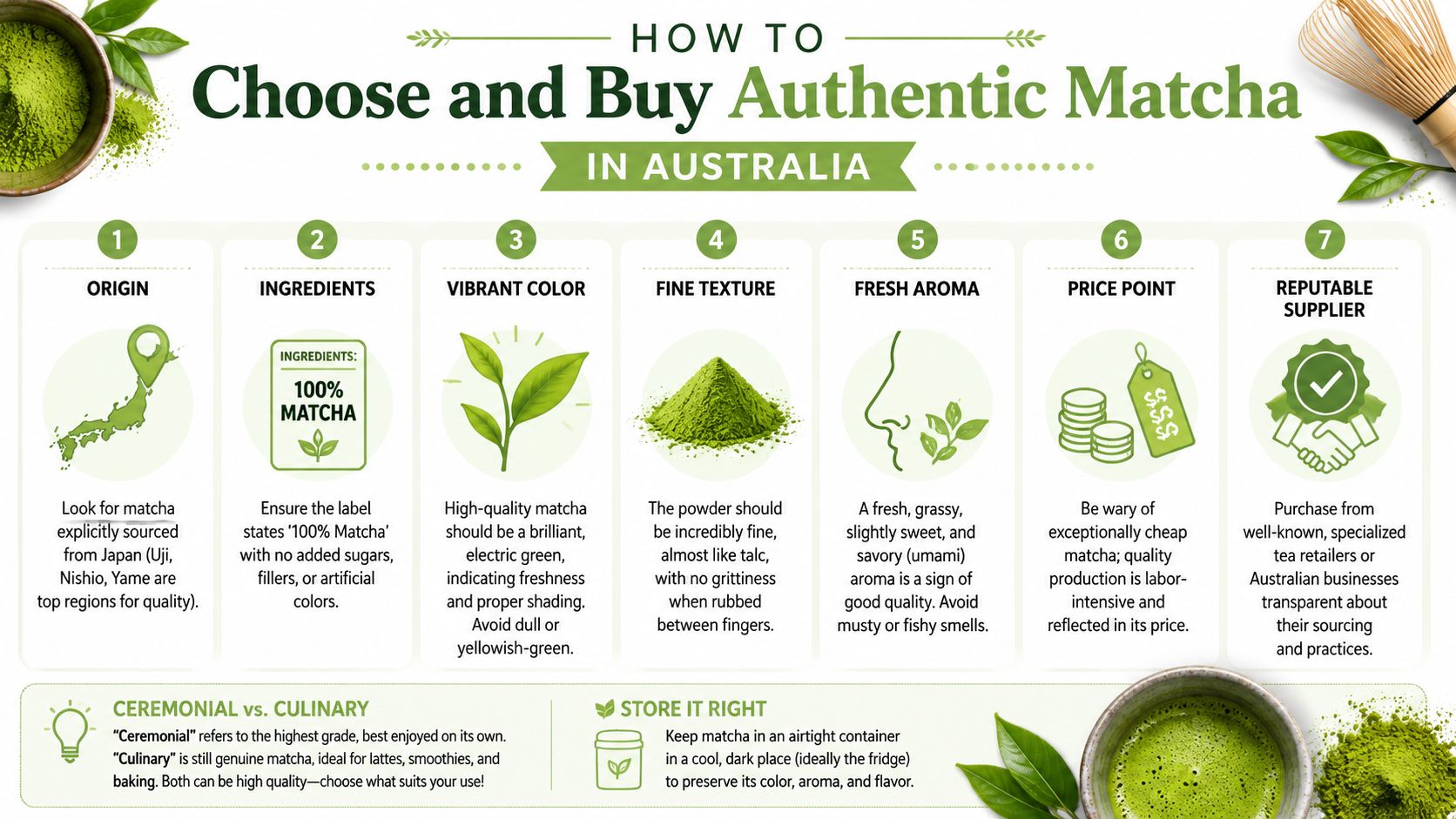
Use this buying checklist when comparing tins online or in store:
- Origin matters: Look for matcha sourced from Japan.
- Ingredient list: It should say 100% matcha. No fillers, sugars, or flavouring if you want a pure product.
- Colour check: Fresh, high-quality matcha should look bright and lively, not flat or brownish.
- Texture clue: Fine powder usually signals better milling and a smoother cup.
- Aroma test: Fresh matcha should smell grassy, clean, and slightly savoury.
- Packaging: Airtight tins or well-sealed packs help protect freshness.
- Seller transparency: Good retailers usually tell you where the matcha comes from and how it's meant to be used.
What to avoid
A few red flags show up again and again:
| Sign | Why it matters |
|---|---|
| Dull, khaki, or brown-leaning powder | Often points to age, poor handling, or lower quality leaf material |
| No origin information | Makes it hard to assess authenticity |
| Vague “superfood blend” wording | May mean it isn't pure matcha |
| A very cheap price with premium claims | Can signal mismatch between marketing and quality |
Storage matters after purchase too. Matcha loses its best character when exposed to air, light, heat, and moisture. Keep it sealed, cool, and out of direct light. If you buy it for plain drinking, freshness becomes even more important.
For a broader look at buying quality tea online, organic green tea online can help you compare what trustworthy tea retailers tend to disclose.
Your Matcha Questions Answered
Can I drink culinary matcha plain
Yes. You can whisk culinary matcha with water and drink it on its own.
The catch is expectation. If you want a soft, creamy bowl with gentle sweetness, culinary matcha can feel sharper, more bitter, or a bit more drying on the palate. If you already enjoy stronger green tea flavours, though, plain culinary matcha may suit you just fine.
Is ceremonial matcha always better
Use decides what “better” means.
This is the part many shoppers miss. “Ceremonial” and “culinary” are not official Japanese grades sitting on a legal ladder from best to worst. In Australia and other Western markets, they are usually shorthand for intended use. Ceremonial usually points to matcha chosen for drinking with water. Culinary usually points to matcha chosen for lattes, smoothies, desserts, and baking.
So if you are making usucha at home, ceremonial-style matcha often gives a smoother result. If you are blending with milk, chocolate, banana, or vanilla, culinary matcha is often the smarter buy because its bolder character still comes through.
Is more expensive matcha always worth it
Price matters most when the matcha is the whole show.
In a plain bowl, you can notice the finer texture, sweeter aroma, and cleaner finish that often come with a better matcha. In a banana smoothie or brownie batter, those subtleties can disappear quickly. Paying more only makes sense if your preparation lets you taste what you paid for.
What's the easiest way to choose between ceremonial vs culinary matcha
Start with your cup, not the label.
Ask yourself, “Will I mostly drink this with water, or with other ingredients?” That one question clears up a lot of confusion. Water-first drinkers should usually choose ceremonial-style matcha. Latte and recipe fans should usually choose culinary-style matcha.
How should I store matcha once opened
Keep it tightly sealed and away from light, air, heat, and moisture.
A cool cupboard is usually enough. If you store it in the fridge, use a very well-sealed container and let it come back to room temperature before opening. That helps stop condensation from settling into the powder.
Is it worth keeping both at home
For plenty of households, yes.
A small tin for straight whisking and a separate pouch for lattes or baking is a practical setup. It is a bit like keeping one olive oil for finishing and another for cooking. You use each one where it performs best, and you waste less money trying to make one product do every job.
What's the biggest mistake beginners make
Treating “ceremonial” as proof of quality all by itself.
A better approach is to read the full picture. Look at intended use, origin, freshness, colour, texture, and how clearly the seller explains the product. A trustworthy matcha listing should help you choose the right powder for your habits, not just wave a premium label around.
If you're ready to try both styles with confidence, explore Pep Tea for premium organic Japanese matcha and a broader range of functional organic drinks, including Australian-brewed sugar-free kombucha from the Hunter Valley, NSW.