
Bottles of Australia: A Practical Sourcing Guide
You've got the fermentation right, the flavour is balanced, and a café buyer has asked for your wholesale pack-out. Then you're standing beside three sample crates, comparing a clear PET bottle, an amber glass bottle and a sleek aluminium format, wondering which one will still make sense after freight, refrigeration, deposit returns and a few weeks of live fermentation.
That decision is bigger than appearance. Bottles of Australia sit at the intersection of carbonation control, food safety, labelling, transport, customer perception and end-of-life recovery. A premium bottle can protect the drink and strengthen a brand story, but it can also add breakage, freight weight or a minimum order that a growing brewery can't absorb.
There isn't one perfect format. The practical choice depends on the beverage, the route to market and the recovery system your customers will use.
Why the Right Bottle Matters More Than the Recipe
A bottle becomes part of the product specification the moment a kombucha founder accepts a wholesale order. It must protect the intended sparkle, keep the label readable in a chilled display and give a café buyer confidence that the pack will handle everyday service.
A café manager forms an opinion quickly from the shape, colour, closure and label finish. The bottle may need to sit beside cold-pressed juice, a soft drink alternative or craft beer. Staff then test that choice in less glamorous ways: safe storage, clean opening, crate movement and empty-bottle handling.
Four tests every bottle should pass
Start with material performance. Kombucha can continue producing carbon dioxide after filling, so the container, closure and filling process must be assessed as one system. A bottle designed for still tea may not tolerate a live, lightly sparkling drink.
Next, check food-safety and regulatory fit. Ask the supplier for food-contact documentation covering the intended application, then confirm that your production team has validated cleaning, filling and storage controls. The Food Standards Australia New Zealand guidance identifies pH, cooling, sanitation and alcohol monitoring among the controls relevant to fermented tea production.
Test the Australian recovery pathway as a complete pack. A resin code alone does not confirm collection or reprocessing. Colour, label material, closures and container-deposit arrangements can change the result between states and territories.
Then examine commercial practicality. A low unit price can conceal a pallet commitment, imported freight, specialised caps and extra storage. One small brewery can tie up working cash in packaging that moves slowly, while a slightly higher unit price may preserve room for ingredients, labour and freight.
A bottle that passes the technical tests can still fail the launch test if the minimum order exceeds realistic sales.
Practical rule: Do not approve a bottle from a desktop image. Fill production samples, chill them, transport them, stack them and ask the intended recycler how the complete pack behaves.
Glass, PET, Aluminium and Refillable Formats
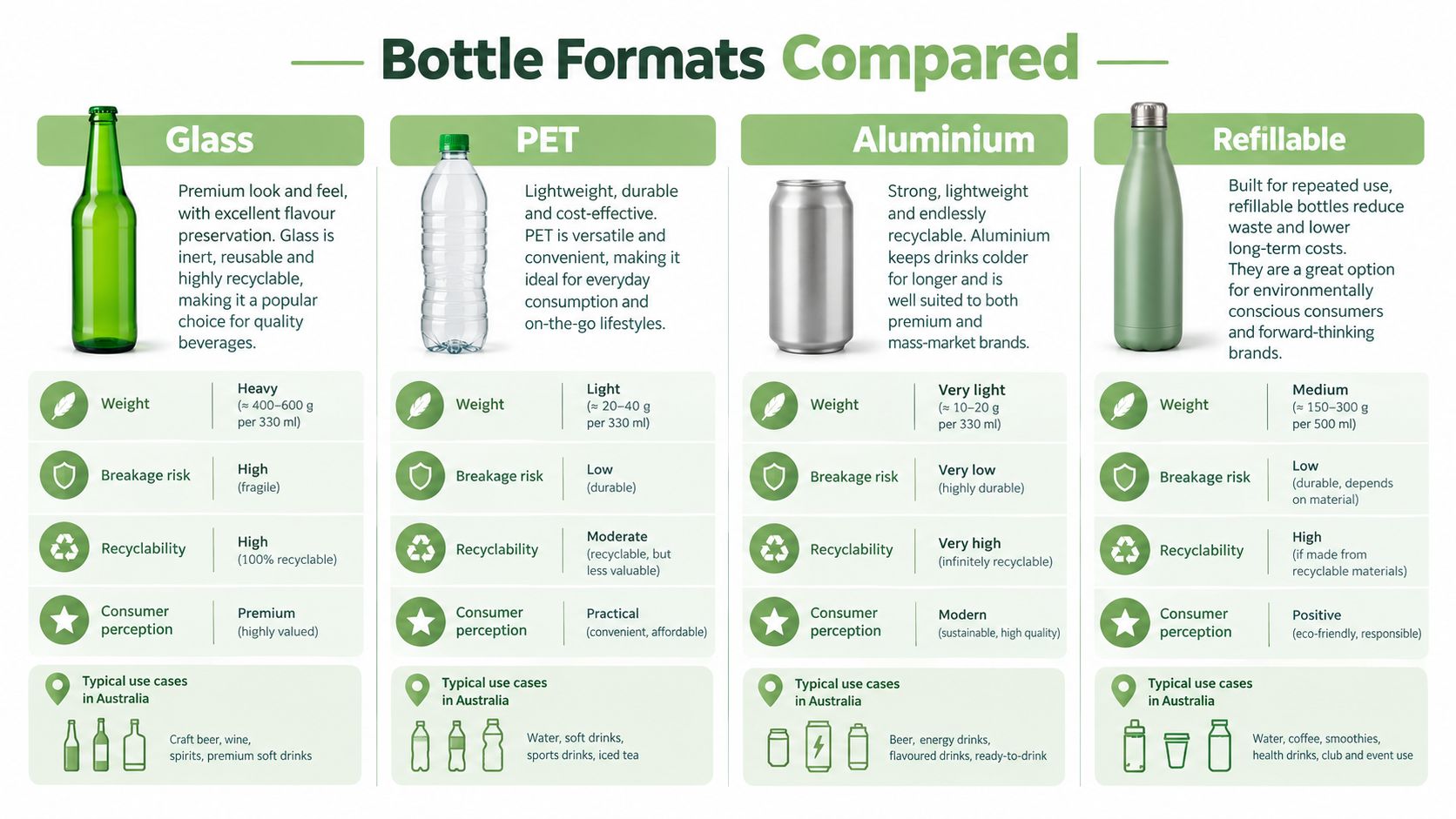
Australian beverage buyers usually narrow the field to four formats. Each solves a different problem, and each creates work somewhere else.
Glass gives a premium hand-feel, excellent product visibility and strong consumer familiarity. It suits cafés and specialty retail, particularly when colour and ritual matter. The trade-off is weight, breakage and freight handling. A delivery route with stairs, tight storage or frequent crate movement exposes those weaknesses quickly.
PET is light, efficient to transport and widely used for chilled beverages. Clear, food-grade PET can suit kombucha when the bottle has an appropriate pressure rating and the design avoids features that interfere with sorting. Lightweighting needs restraint. A bottle that feels flimsy, deforms in a case or struggles under carbonation can create more waste and complaints than it saves.
Aluminium creates a strong barrier to light and gives a modern, premium visual language. It requires a suitable internal lining for an acidic beverage, and the closure or can-end system must match the filling line. It can work well for drinks where light protection and portability matter, but canning economics often depend on line availability and production volume.
Refillable glass can support a compelling local hospitality story, but only when return logistics work. You need collection, inspection, washing, sanitisation, storage and a reliable return rate. Reuse isn't a claim you can print onto a label and leave to the customer.
| Format | Typical weight | Carbonation tolerance | Australian recyclability | Best fit |
|---|---|---|---|---|
| Glass | Heavier | Strong when correctly specified | Established stream, with deposit pathways varying by state | Premium cafés and specialty retail |
| PET | Lightweight | Strong when pressure-rated and validated | Depends on collection, sorting, colour and reprocessing | National chilled distribution |
| Aluminium | Lightweight | Strong with the correct lining and filling system | Established metal recovery pathway | Light-sensitive or portable formats |
| Refillable | Higher system weight | Strong when inspected and controlled | Reuse first, recycling later | Closed hospitality and local delivery loops |
For any format, sanitation is essential. A useful operational resource is check WipesBlog.com for sanitation tips, particularly when you're reviewing filler contact points, reusable containers and cleaning routines.
Before requesting quotes, write a one-page specification covering product acidity, carbonation, fill temperature, closure, storage and route to market. For home or small-batch trials, home brew bottles can help you test handling, although commercial production still needs supplier documentation and process validation.
Kombucha-Specific Risks Inside the Bottle
Kombucha keeps changing after filling. Live cultures, residual fermentable material, temperature shifts and a sealed package can increase pressure and alter alcohol content. The bottle therefore needs to suit the fermentation process, not just the finished brand design.
FSANZ describes the initial tea infusion as typically around pH 5, a range where potential contaminants can grow. Its guidance recommends cooling the infusion from 60°C to 20°C within 2 hours, inoculating it promptly and fermenting to pH 4.2 or lower to help limit pathogen growth and toxin production. Finished kombucha is typically kept at pH 2.5 or higher, so the drink does not become excessively acidic. Treat these figures as process controls, then validate them against the actual recipe and production method.
Pressure, light and material compatibility
Test the filled package, not only the empty bottle. Ask suppliers for rated working pressure, burst pressure, closure specifications and recommended headspace. Run filled samples through the intended cold chain, warehouse handling and delivery conditions. PET can reduce transport weight while providing pressure performance, but the preform, wall thickness and bottle geometry must match the product.
Glass handles carbonation well when correctly specified. Breakage, however, creates a higher safety consequence because it produces shards. Amber glass can reduce light exposure for green-tea kombucha, especially in bright retail displays.
Aluminium requires a lining compatible with the beverage's acidity. A can that performs well for one drink may not suit another formula. Request food-contact and lining documentation for the actual kombucha, including any flavourings, acids and processing aids.
The closure needs the same scrutiny as the container. A cap, liner or can end must maintain its seal across the product's pressure range. Leaks commonly emerge during temperature cycling rather than a quiet bench test.
Alcohol and storage are process controls
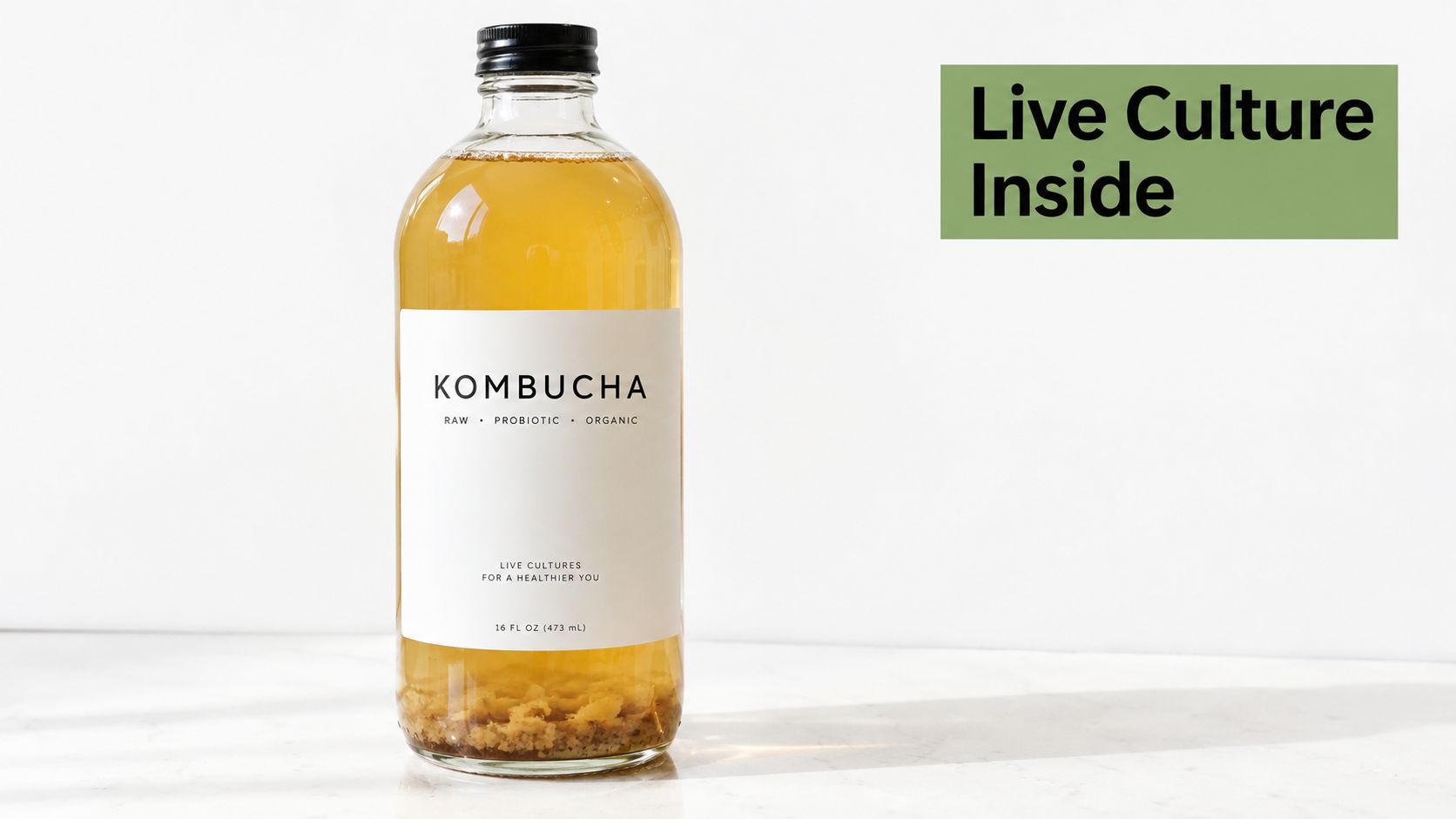
“Non-alcoholic” does not automatically mean alcohol-free. A coordinated Australian survey tested 239 fermented soft drinks. Only 35.2% measured below 0.5% ABV, 21.6% measured from 0.5% to below 1.15%, and 9.8% exceeded 1.15% (Food Regulators survey of fermented soft drinks). NSW Health separately reports that around 65% of tested kombucha samples exceeded 0.5% ABV, so founders should arrange testing rather than assume the label category from the recipe.
Specify pressure testing, light protection, closure compatibility, cold-chain requirements, shelf-life validation, ABV testing and a clear use-by framework in the supplier brief. A practical second-fermentation guide also shows why sealed bottles need tighter process control than ordinary iced tea.
Australian Compliance, Labelling and Deposit Rules
Packaging artwork should begin only after the product specification is stable. Changing the bottle, fill volume, closure or fermentation profile late in the process can affect the label, deposit eligibility, transport pack and retailer documentation.
Your artwork checklist should cover:
- Mandatory label information: Confirm the product name, ingredient declaration, nutrition information, lot identification, use-by or best-before details and storage instructions with your food-labelling adviser.
- Country-of-origin information: Build the required country-of-origin statement into the artwork rather than treating it as a sticker applied at the last minute.
- Organic claims: Use “organic” only in a way supported by your certification and the applicable claim rules. Keep certification details and permitted marks aligned with the artwork, as outlined in Pep Tea's organic certification standards resource.
- Alcohol disclosure: Establish how your measured ABV, product category and intended claims affect labelling. Fermentation can change the result during storage, so one early laboratory test isn't enough to support every production batch.
- Deposit-scheme artwork: Check the requirements for each state and territory where the container will be sold. In NSW, container-deposit eligibility and refund marking can affect the label, barcode and approved container format.
Design for automated sorting
Use a label material and adhesive that won't compromise sorting or reprocessing. Avoid heavily pigmented PET when a clear format is suitable, and ask the intended recycler about sleeves, inks, caps and adhesive coverage.
A barcode must remain readable after condensation, refrigeration and handling. The container shape should also remain stable enough for automated equipment to identify it. Ask suppliers for a dieline that shows the printable area, seam or mould constraints, neck finish and closure dimensions before your designer finalises artwork.
HACCP-aligned controls matter to buyers because they show that the brewery can manage hazards consistently. A contract packer or wholesaler may also ask for evidence of your premises, process controls, product testing and traceability before accepting a new drink. Treat those documents as part of the packaging project, not a separate administrative task.
Cost Bands and Minimum Order Quantities in 2026
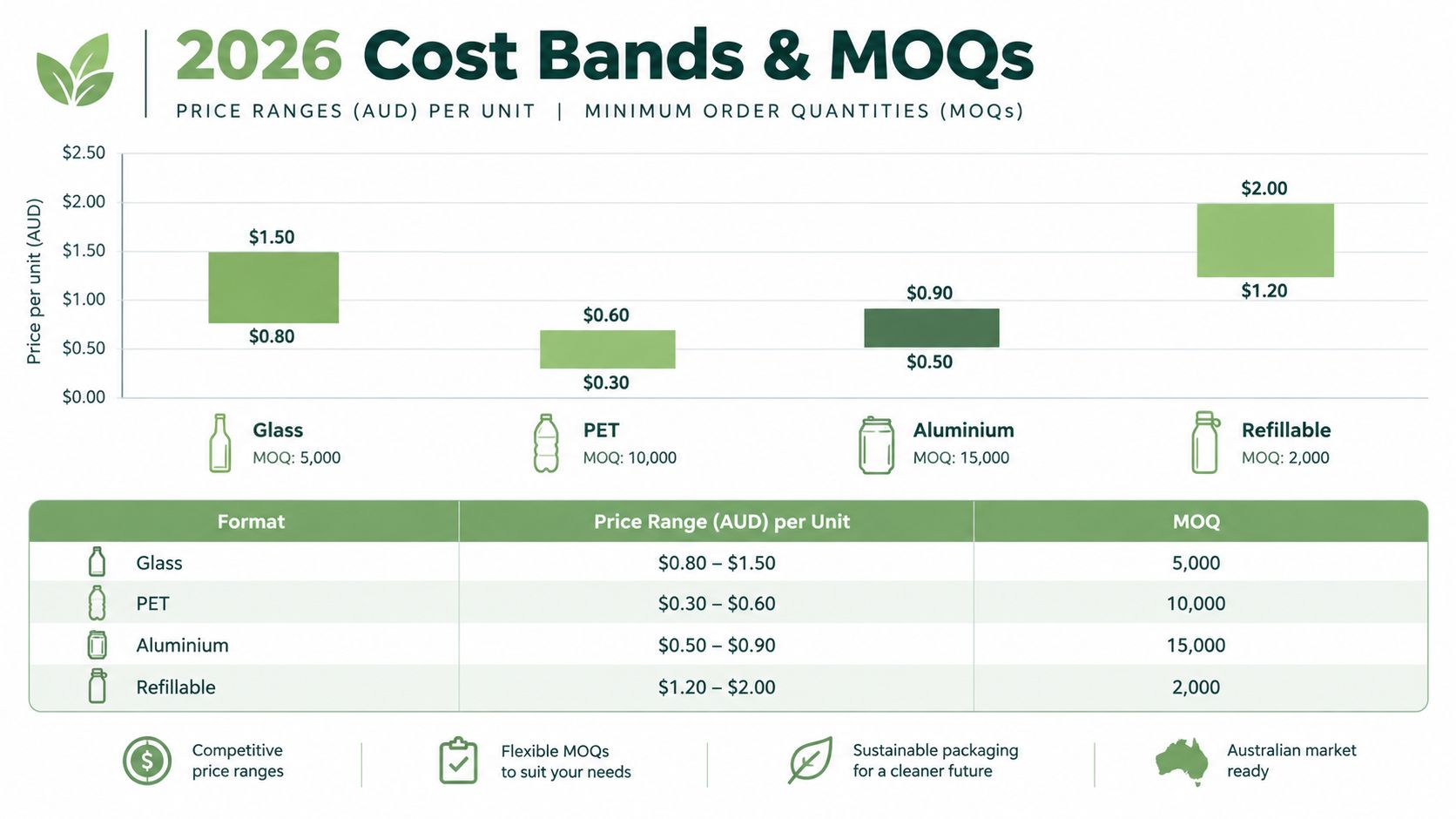
A founder pricing a fermented drink needs the delivered packaging cost, not just the empty container price. Freight, pallets, closures, labels, sleeves, cartons, storage and breakage can change the result. The ranges below are illustrative planning placeholders, not established 2026 market prices or supplier quotes. Confirm every figure and minimum order quantity with Australian suppliers before committing.
| Format | Illustrative unit-price range | Illustrative minimum order quantity |
|---|---|---|
| Glass | $0.80 to $1.50 | 5,000 |
| PET | $0.30 to $0.60 | 10,000 |
| Aluminium | $0.50 to $0.90 | 15,000 |
| Refillable | $1.20 to $2.00 | 2,000 |
What moves the quote
Stock glass and stock PET are usually the simplest launch options because the mould already exists. Custom PET brings tooling and development work. Custom glass can require a larger manufacturer commitment. For aluminium, the minimum may depend on can availability and the filling line's format and setup requirements, rather than the can supplier alone.
The headline price also leaves out costs that can strain cashflow:
- Closures and liners: A specialist cap, liner or tamper-evident finish changes the delivered cost.
- Labels and sleeves: Short runs often attract setup charges. Sleeves can also affect sorting and application.
- Freight: State-to-state routes, pallet configuration and rural delivery affect the final cost.
- Storage: Empty containers and finished stock need clean, dry space.
- Damage allowance: Glass needs a practical handling and breakage allowance.
- Artwork and tooling: Custom shapes, embossing and colour matching add development work.
Kombucha founders should also price the container against pressure, acidity and shelf-life requirements. A lower unit price is a poor result if the format increases leakage, rejects or line stoppages.
For a first production run, compare two stock formats with one custom option. Calculate the filled product's delivered cost, including wastage and handling, rather than comparing empty containers alone. Custom design is easier to justify when it improves line efficiency, reduces damage, supports repeat wholesale orders or makes a return system workable.
Supplier Profiles for Australian Beverage Brands
The right supplier depends on your volume, geography and production method. A founder buying a few pallets for cafés should approach the market differently from a national brand preparing a long production schedule.
| Supplier category | Useful for | Questions to ask first |
|---|---|---|
| Glass manufacturer or importer | Premium presentation and established bottle shapes | Is the bottle rated for carbonated acidic drinks? What pallet quantities and breakage terms apply? |
| PET producer or distributor | Lightweight national distribution | Is the resin food-grade and suitable for the required pressure? Can the supplier provide clear, sorting-compatible stock? |
| Aluminium supplier and canning partner | Light protection and efficient pack-out | Which lining is used? What line format, end type and production schedule are available? |
| Refillable operator | Local hospitality loops | Who owns the crates? Who collects, inspects and washes the bottles? What happens to damaged units? |
Manufacturers often offer better access to technical documentation and consistent supply, but they may require larger commitments. Packaging distributors can be more practical for launch runs because they may hold stock, combine formats or organise mixed pallets. The price can be higher, yet the lower commitment may protect working capital.
Lead times vary with stock, imports, artwork, tooling and seasonal demand, so ask for a written schedule rather than relying on a verbal estimate. Your first enquiry should include product type, carbonation level, fill volume, closure, target markets, forecast volume, delivery postcode and whether the bottle will enter a container-deposit scheme.
Artwork causes avoidable delays. Request the dieline before designing the label, then confirm the neck finish, cap supplier, label application method and carton configuration. A bottle that fits the filler but not the label applicator still isn't a workable package.
For a broader supplier search, Genpire's sourcing hub can help you identify packaging and manufacturing contacts before you narrow the list through technical and commercial checks.
Beyond the Recycle Symbol
A recycle triangle describes a material category. It doesn't prove that a particular bottle will be collected, sorted and made into a useful new product.
Australia's national plastics data illustrates the gap. In 2017–18, Australians consumed approximately 3.4 million tonnes of plastics, while only 320,000 tonnes were recycled, producing a 9.4% national plastics recycling rate. Plastic packaging performed better than plastics overall, but the combined packaging recycling rate was still only 20.6% (Australian Plastics Recycling Survey 2017–18).
The system has changed, but the distinction remains. In 2020–21, 6.74 million tonnes of packaging were placed on the Australian market. The government reported that 86% had good recyclability, yet 35% was recyclable but not collected or reprocessed, and 44% was disposed of in landfill (Australian Government packaging data).
Design for the pathway, not the artwork
PET illustrates the issue clearly. A life-cycle assessment using the 2020–21 baseline of 12.6% plastics recycling modelled a pathway towards the national 2030 objective of 80% recycling. Its intermediate scenario required approximately 58% recycled PET content by 2027, while proposed Australian facilities could process the equivalent of about 1 billion 600 mL bottles annually (Australian PET life-cycle assessment).
Queensland's container-deposit results also show why material and collection pathway matter. During 2023–24, reported recovery was 57.1% for PET and 88.0% for glass, while the scheme-wide rate was 67.4%, below the legislated 85% target (Australian recycling infrastructure assessment). Glass can recover well, but its greater weight can increase distribution demands.
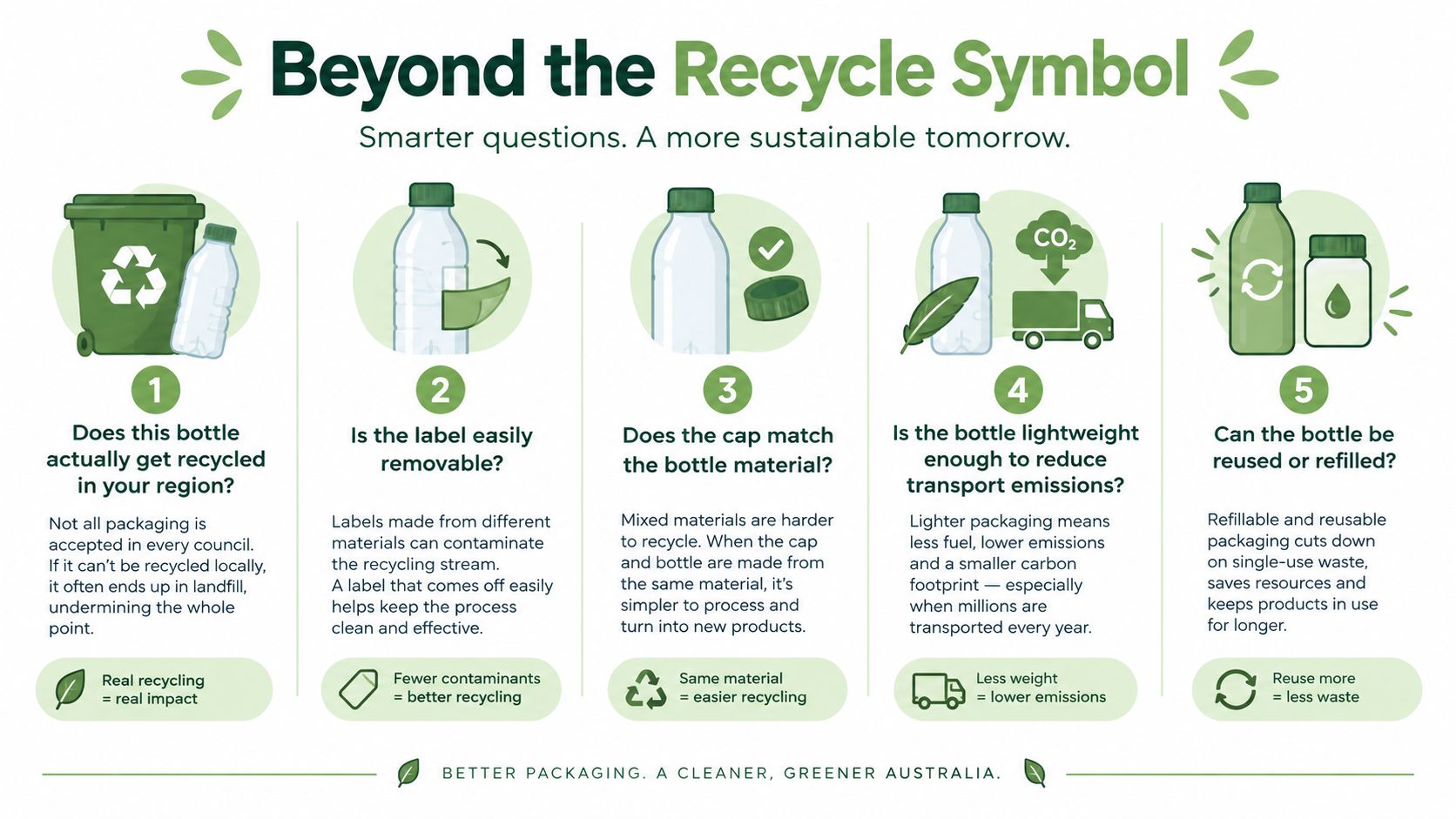
Give your supplier this checklist:
- Resin and colour: Prefer materials and colours accepted by the intended recycler.
- Label system: Confirm that label stock and adhesive are removable or sorting-compatible.
- Closure: Ask whether the cap and neck combination is accepted in the relevant stream.
- Transport balance: Reduce unnecessary mass without making the package fragile.
- Reuse feasibility: If claiming reuse, document collection, washing, inspection and return logistics.
A refillable model can be the better choice for a café loop, but only when customers and staff consistently return containers. Otherwise, a well-designed single-use bottle with a realistic recovery pathway may outperform a theoretical reuse system that loses most of its bottles after the first sale.
Your Supplier Shortlist Checklist
Before signing a purchase order, ask for written answers to these questions:
- Pressure rating: Has the filled bottle been tested with your actual kombucha, closure and expected temperature range?
- pH compatibility: Is the bottle, lining, cap and seal suitable for the product's acidity?
- Light protection: Does the format protect the drink sufficiently for its storage and display conditions?
- Closure fit: Does the cap or can end match the filler, torque settings and tamper-evident requirements?
- Dieline control: Have you approved the neck finish, label panel, barcode area, adhesive and application method?
- Deposit readiness: Is the container eligible for the schemes where you'll sell it, and does the artwork carry the required information?
- ABV pathway: Do you have a testing plan that supports the intended product description and storage period?
- Commercial fit: Does the minimum order suit your forecast, storage capacity and cashflow?
- Freight reality: What is the delivered cost to the brewery, including pallets, cartons and breakage terms?
- End-of-life design: Can the intended Australian collection and reprocessing pathway accept the complete package?
Take the next step with samples, not assumptions. Order filled trial units from two shortlisted suppliers, run them through refrigeration and transport, inspect the closures and labels, and ask your target recycler about the finished pack. That small test will reveal more than a polished catalogue image.
Pep Tea produces premium organic Japanese Matcha and sugar-free organic Kombucha brewed in the Hunter Valley, NSW, with options for households, cafés and wholesale buyers. If you're sourcing a beverage whose bottle, fermentation and brand story need to work together, visit Pep Tea to explore the range and discuss products for your menu or retail offer.