
Tag: what is scoby
What Is SCOBY and Why Kombucha Needs One

A SCOBY is a symbiotic culture of bacteria and yeast that ferments sweetened tea into kombucha, not a mushroom or a single organism. Its fermentation needs monitoring, with acidity reaching pH 4.2 or below to help inhibit pathogen growth while a typical finished drink remains at or above pH 2.5.
The familiar advice to pop a rubbery disc into sweet tea and let it look after itself misses something important. A living culture isn't automatically a protective culture, and a healthy-looking jar doesn't tell you everything about the finished drink.
For Australian home brewers and cafés, understanding a SCOBY means knowing what you're looking at, what needs measuring, and when to start again rather than rescue a questionable batch.
What Is SCOBY in Plain Language
SCOBY stands for Symbiotic Culture of Bacteria and Yeast. In everyday brewing language, it means the mixed microbial starter that ferments sweetened tea into kombucha.
Symbiotic means the microbes live together and use products of one another's work. It's a bit like cooks in a shared kitchen, each preparing something the others can use.
A SCOBY is a cooperating microbial community, not simply the rubbery disc you can lift out of a jar.
Why people call it a kombucha mushroom
The mushroom nickname comes from the look of the pale, slippery mat. It's also easier to photograph than the microbes living in the tea. The mat is called a pellicle, but it's only the visible part of the culture.
The pellicle is like the foam on a beer: you can see it, but it isn't the whole brew. Microbes live in the liquid as well, so the starter culture includes more than the disc.
- The pellicle is the visible cellulose mat associated with the culture.
- The living brew contains microbes too. The liquid is part of the culture, not just a bath for the disc.
- The starter culture is the living community used to begin fermentation.
A starter, not a safety guarantee
If you're asking “what is SCOBY?”, its job and limits both matter. It starts fermentation, but it can't replace clean equipment, a reliable starter or careful handling. For home brewers and cafés, the culture is one practical control point: judge the liquid and the brewing process, not just the mat's appearance.
The name also promises neither a particular health benefit nor an alcohol-free drink. It describes the culture, not a nutritional guarantee or the final drink's contents.
That takes some mystery out of kombucha. You don't need to treat the jar like a magical pet, or worry because the surface isn't perfectly neat. Learn what the culture is doing, and assess the brew rather than judging it by the disc alone.
How a SCOBY Turns Tea into Kombucha
Start with brewed, sweetened tea that has cooled before the culture goes in. At this point, you've prepared the ingredients for fermentation, but you haven't yet made a controlled finished drink.
The basic sequence is easier to understand when you follow what happens to the sugar.
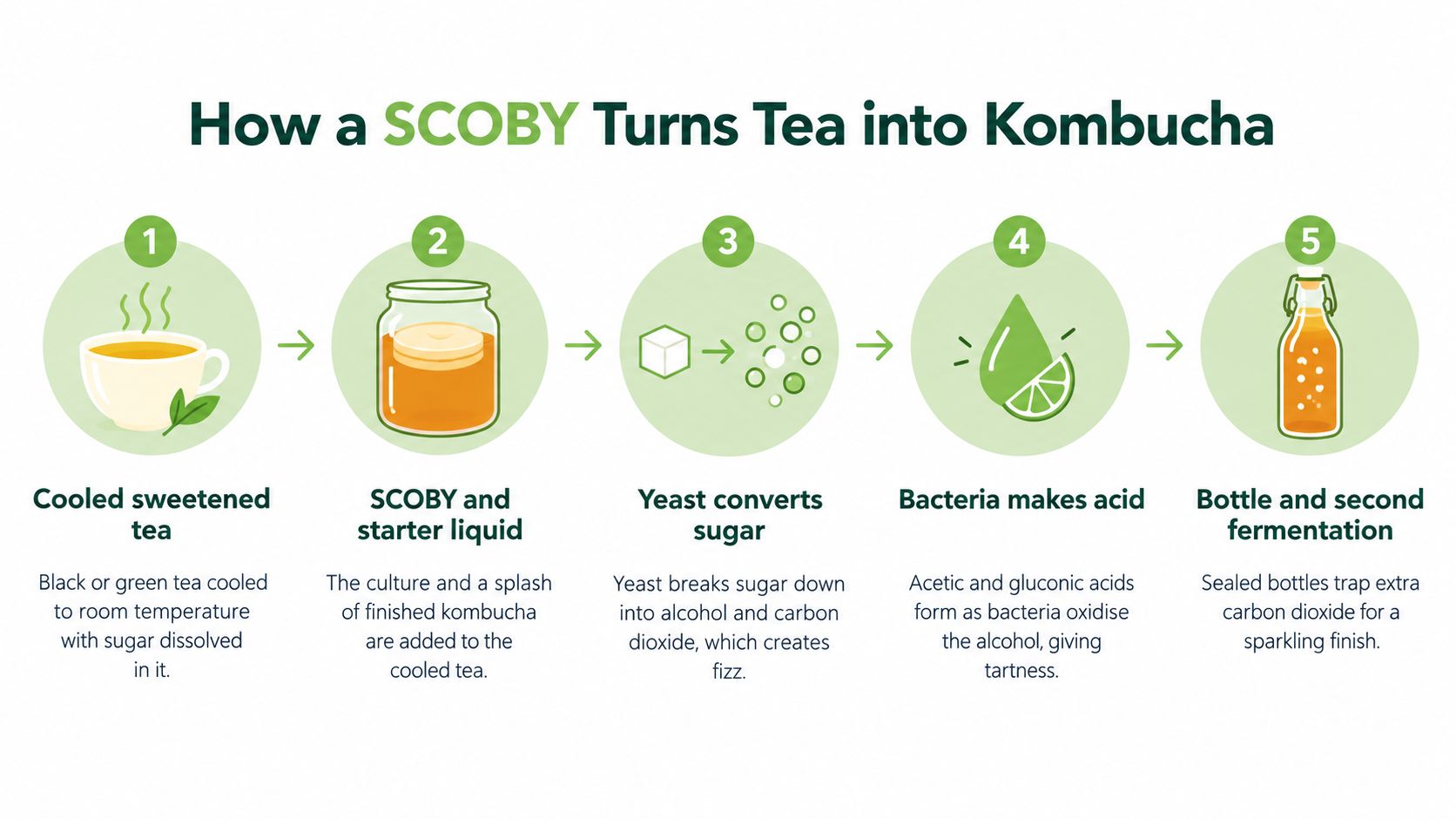
The microbial handoff
Yeasts convert sucrose into glucose and fructose, then produce ethanol and carbon dioxide. Acetic-acid bacteria use fermentation products to generate organic acids, especially acetic acid, as described in FSANZ's guidance on foods requiring special care.
Think of a shared kitchen. One group prepares ingredients that another group can use, and the finished flavour comes from their combined work rather than a single organism doing everything.
That helps explain why kombucha develops its characteristic sharpness instead of remaining sweet tea. The culture influences the drink's acidity, carbonation, aroma and tartness.
Why adding a SCOBY isn't an instant transformation
Acidity develops during fermentation. You can't assume the tea has reached a suitable acidity just because you've added a culture or noticed a fresh layer forming.
Time and temperature matter because you're managing living microbes, not dissolving an instant drink powder. Poorly controlled fermentation can create problems with contamination, excessive acidity or excessive alcohol.
A practical brewing approach therefore includes:
- A viable starter, introduced promptly once the tea has cooled.
- A controlled process, rather than relying on a calendar alone.
- Checks on the finished drink, because flavour and appearance don't establish every safety measure.
For a closer look at the liquid component used to begin a batch, our guide to kombucha starter tea explains the terminology around starting a brew.
The accompanying video offers another way to follow the brewing process.
It's tempting to focus on the fizz because that's what you notice in the glass. But a brewer has to consider the whole process, including what happens before the drink becomes pleasantly tart and what can continue happening after bottling.
What a Healthy SCOBY Is Made Of
Looking into a kombucha jar can feel like looking into an unfamiliar aquarium. There's a surface layer, cloudy liquid and sometimes material hanging beneath the mat or settling at the bottom.
Naming those parts helps you assess the jar without assuming every odd texture means spoilage.
The mat, the brew and the sediment
The cellulose pellicle is the pale, rubbery mat that often forms at the surface. A developing layer can look cloudy, streaky or uneven rather than resembling a tidy shop-bought pancake.
Brown yeast strands and sediment can also occur in an otherwise normal brew. Their presence alone isn't proof of contamination, just as a perfectly smooth mat isn't proof that every aspect of fermentation is under control.
A useful component breakdown separates the ingredients from the organisms and the structure they create:
- Tea provides the liquid base for the brew.
- Sugar supplies fuel for fermentation.
- Yeast carries out the initial sugar conversions.
- Acetic-acid bacteria contribute the organic acids.
- Cellulose forms the visible scaffold of the pellicle.
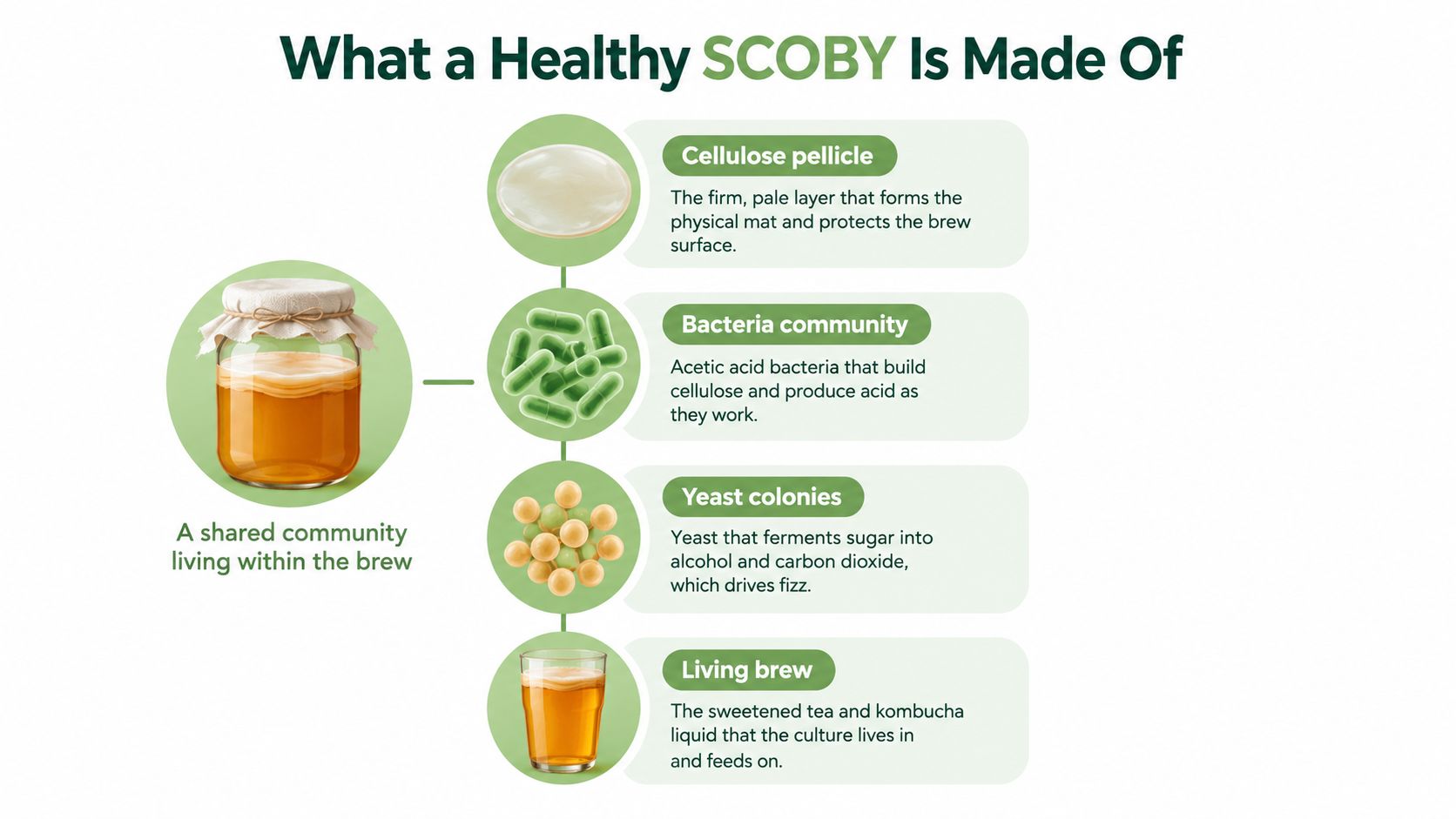
Don't overlook the liquid
The brew holds active culture, so lifting out the mat doesn't separate all the microbes from the drink. Throwing away the liquid while carefully saving only the disc misunderstands where the community lives.
The supplied SCOBY care explanation from Cultured Guru describes the culture as residing in both the floating cellulose layer and the liquid kombucha.
That doesn't mean every cloudy liquid or brown strand should be waved through as normal. It means you need to distinguish familiar fermentation features from genuine warning signs.
Practical distinction: A brown strand beneath the surface isn't the same observation as a fuzzy patch growing on top.
When you inspect a jar, try naming what you're seeing before judging it: pellicle, liquid, strand or sediment. Then consider its appearance alongside the starter's history and the way the batch has been handled.
That approach is more useful than expecting every healthy culture to look identical. It also prevents the opposite mistake, accepting anything strange just because kombucha is a living ferment.
How to Tell a Safe SCOBY from a Risky One
You can't certify a SCOBY as safe by looking at it. You can identify warning signs, check the starter's history and monitor the process, which together give you a more useful basis for deciding whether to keep brewing.
FSANZ treats kombucha as a food requiring special care. Contamination can come from the SCOBY itself or from dirty equipment, so a known culture doesn't excuse poor handling.
Begin with the starter and the cooling process
Use a proven, uncontaminated starter, not an unknown environmental culture. FSANZ also recommends cooling brewed tea rapidly from 60°C to 20°C within two hours before adding the culture, and monitoring fermentation to reach pH 4.2 or below, with a typical finished product remaining at or above pH 2.5, in its Australian food-safety guidance for kombucha.
The same guidance says immunocompromised people should not consume kombucha. A home brewer's confidence in their jar doesn't override that advice.
For practical decisions, separate what you can observe from what you need to measure:
- Inspect the surface for fuzzy growth or unusual coloured patches.
- Notice the smell without treating a tangy aroma as proof of safety.
- Monitor acidity rather than guessing from sourness.
- Check handling history when accepting a culture from someone else.
A digital pH meter can support acidity monitoring. It doesn't detect every contaminant or measure alcohol, so don't treat a satisfactory reading as a complete safety clearance.
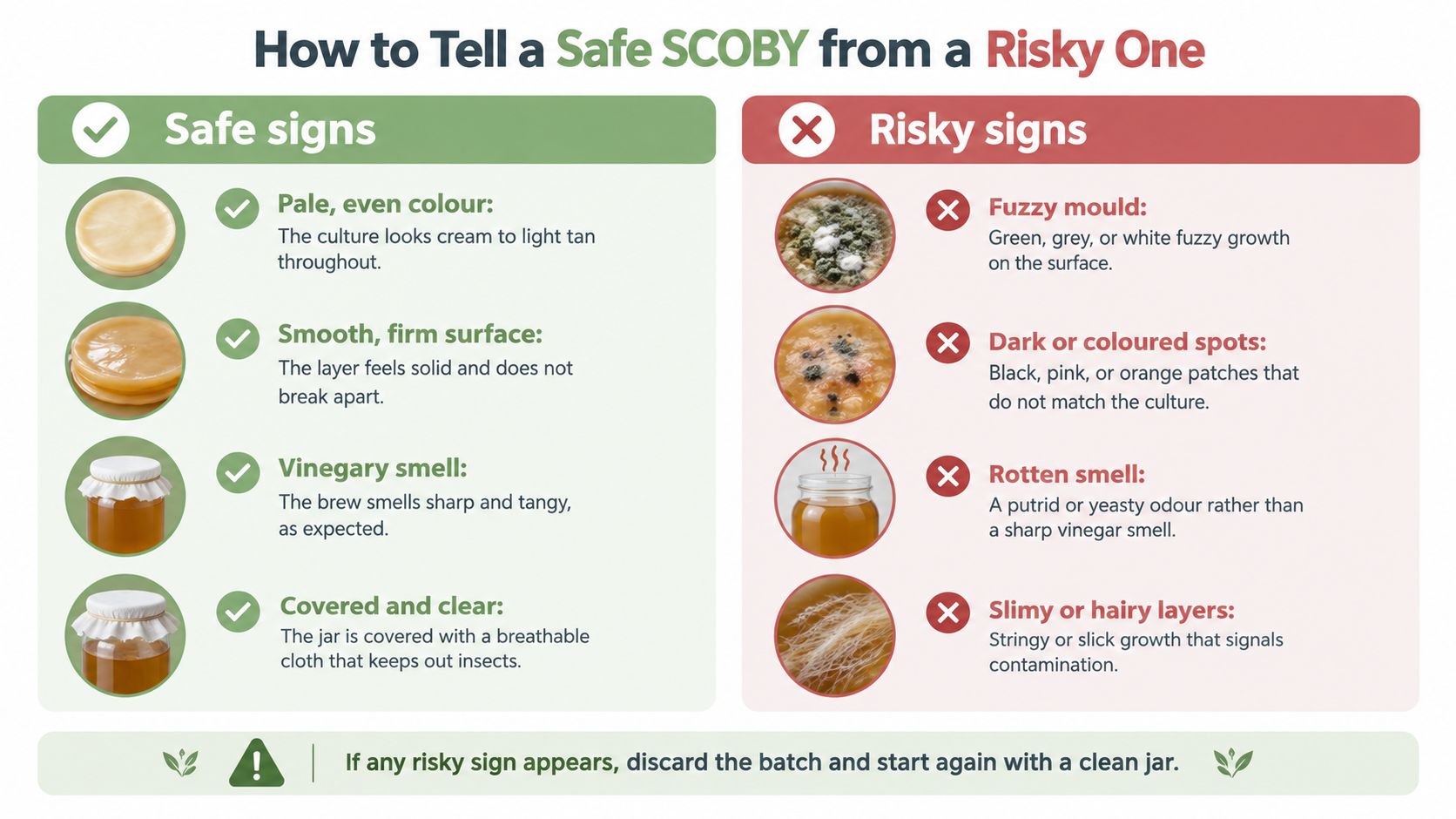
When to discard the whole batch
Fuzzy mould means discarding the entire batch, including its liquid and culture. Don't scrape the surface and carry on, and don't taste a suspicious brew to decide whether it's worth saving.
Unusual colours or persistent rotten, musty or otherwise off-putting odours are also reasons to stop rather than improvise a rescue. The Crave the Good SCOBY guide likewise distinguishes ordinary pellicle variation from fuzzy mould and advises discarding a mouldy batch.
Read visual checklists with care. Normal yeast strands can be stringy, and normal young pellicles can be uneven, so texture alone isn't a reliable verdict; nor are the infographic's “safe signs” a guarantee.
When in doubt: Losing a batch is preferable to serving a drink you can't confidently assess.
The useful mental checklist is simple: clean gear, a known starter, prompt cooling, watched acidity and no heroics with a suspicious jar.
Why a SCOBY Does Not Mean Alcohol-Free
A SCOBY can help turn sweet tea into kombucha, but it cannot guarantee the finished drink is alcohol-free. The culture is part of the fermentation process, not a label for what ends up in the bottle. Calling kombucha fermented, living or probiotic does not confirm its alcohol content.
Yeast in the culture produces ethanol as fermentation proceeds. Like a small engine that keeps running while it has fuel, fermentation can continue after bottling if sugar remains and storage conditions allow it. That means alcohol levels may change after the bottle is filled.
What Australian surveillance found
FSANZ's published alcohol surveillance summary discusses alcohol content and labelling in fermented soft drinks, including kombucha. The findings are a reminder that alcohol content and labelling deserve attention. They do not establish the alcohol content of every product on sale today, or of a particular bottle.
For home brewers, the practical point is to assess the finished drink rather than relying on the culture's appearance or name. For cafés, control needs to continue beyond fermentation: manufacturing, transport, storage and retail conditions can all affect the product over its shelf life.
Ask about the product you're actually drinking
If you avoid alcohol, check information for the specific drink. A general description of kombucha cannot answer what is in a particular bottle.
- Check the label for alcohol information and storage directions.
- Ask the vendor if the label doesn't answer your question.
- Use menu wording carefully when customers rely on a non-alcoholic description.
This matters to pregnant consumers, children, religious communities and anyone who chooses to avoid alcohol completely. Calling a drink natural is not a substitute for clear product information.
For readers weighing religious requirements, this discussion of whether kombucha is halal offers a starting point. The specific product and its fermentation still matter.
“Sugar-free” describes sugar, not alcohol. Neither an ingredients list nor the presence of a SCOBY can confirm the finished drink's alcohol content.
Caring for a SCOBY at Home or in a Café
The right choice isn't always to keep your own fermentation jar. You might enjoy managing a living culture, prefer a shared starter from a knowledgeable friend, or just want a finished drink you can pour.
Choose according to the responsibility you're prepared to take on, not whether home brewing seems more authentic.
Compare the practical options
| Option | What to establish before choosing it | Who it may suit |
|---|---|---|
| Proven starter culture | Its origin, handling instructions and suitability for brewing | Someone who wants to learn a controlled home process |
| Gifted pellicle or SCOBY hotel culture | The donor's batch history, storage and handling practices | A brewer willing to ask questions before accepting it |
| Commercially fermented bottle | Product information, storage directions and alcohol details | Households or cafés wanting the drink without managing fermentation |
A SCOBY hotel is a container used to hold spare cultures. The friendly name doesn't establish how well those cultures have been stored, so ask about the brew rather than accepting the jar on appearance alone.
The comparison below is a visual overview, not a reliable price list or brewing timetable. Costs, readiness and contamination risk need to be established for the actual supplier and process, rather than inferred from a category.
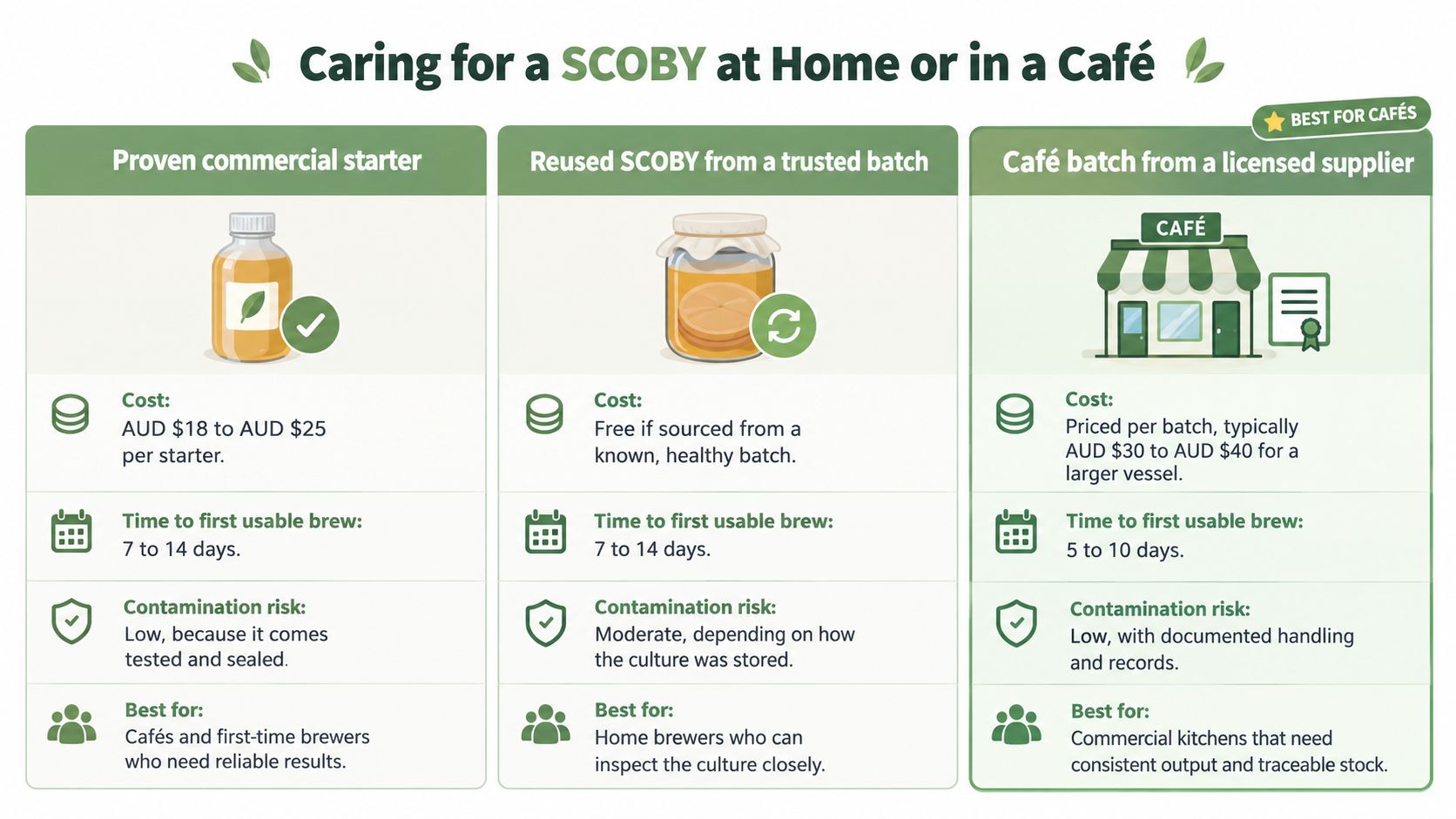
Match the routine to your setting
A normal week with a home brew might involve checking your notes, observing the surface and sediment, and measuring acidity as the ferment develops. It shouldn't involve deciding the drink must be ready because the weekend has arrived.
Use clean vessels, let prepared tea cool appropriately before adding the culture, and keep the jar somewhere you can monitor it. Follow a proven brewing method rather than combining fragments of advice into an improvised recipe.
A busy café may reasonably choose a different routine. Staff might prefer to receive finished bottles, follow storage instructions and serve a consistent drink rather than add fermentation monitoring to opening and closing duties.
For that option, Pep Tea makes raw, living, sugar-free organic kombucha with organic green tea and live cultures in a HACCP-accredited, purpose-built brewery in the Hunter Valley, NSW. It's an Australian-brewed option for everyday drinking or café service, with alcohol-related menu descriptions still needing product-specific confirmation.
The choice isn't between committed brewers and people taking a shortcut. It's between different levels of hands-on work, documentation and responsibility.
Choosing a Reliable Kombucha Next Step
Understanding a SCOBY should make your choices clearer, not turn kombucha into another complicated wellness project. You can appreciate a living drink without keeping a culture, and you can enjoy home brewing without treating fermentation as something that looks after itself.
The most useful change is to stop judging the whole process by the floating mat. A reliable decision considers the starter, the handling and the finished product together.
Keep a short brewing checklist
- Know what you're looking at. Learn to distinguish the mat, brew and ordinary sediment before interpreting every change.
- Cool before culturing. Prepare the tea properly and follow the rapid-cooling guidance rather than leaving it unattended.
- Discard mouldy batches completely. Don't save the disc, skim the surface or offer a questionable drink to someone else.
- Read the label when alcohol matters. Ask the vendor if the available information isn't specific enough for your needs.
Those checks are useful whether you're making a jar at home, assessing a gifted starter or organising a café drinks menu. They replace vague confidence with questions you can answer.
Choose one manageable next step
If you want to brew, start by finding a proven starter and a coherent method you can follow. Make sure you have suitable equipment and a way to monitor the process before preparing the tea.
If you mainly want something refreshing with lunch or an alternative for your café fridge, buying a commercially brewed kombucha is a reasonable choice. You don't need to become a home fermenter to appreciate tart tea flavour and a sparkling finish.
For hospitality buyers, make your next action a supplier conversation about ingredients, storage and product information. For households, it may be as easy as choosing a flavour and checking that the bottle suits your preferences.
There's no need to build a health routine around promises a SCOBY can't make. A well-informed choice can be much simpler: a drink you enjoy, handled properly, that fits comfortably into your day.
Pep Tea offers Australian-brewed, living sugar-free organic kombucha for households and café menus, without the work of maintaining your own SCOBY. Visit Pep Tea to explore the range and find a flavour that suits your everyday routine.