
Tag: pesticide free tea
Does Organic Tea Have Pesticides: Understanding Organic Tea
Certified organic tea in Australia should not contain synthetic pesticides because the standard explicitly prohibits them, and Australia's tea residue limit is often 0.05 mg/kg, compared with the European Union's 0.01 mg/kg. But the word organic on its own isn't the whole story, because the safety difference often comes down to whether a tea is properly certified, where it was grown, and how transparent the brand is about testing.
A lot of people ask, “does organic tea have pesticides?” and expect a simple yes or no. The honest answer is more useful than that. If your tea is certified organic, that's very different from a pack that merely uses feel-good language like “natural”, “pure” or “organically grown”.
That distinction matters even more when you drink matcha, because you consume the whole leaf, and when you drink kombucha, because the final brew starts with tea. If the base ingredient isn't clean, the finished drink doesn't magically become cleaner.
Tea labels can get confusing for Australian shoppers. The front of the pack might look wholesome, earthy, even premium. But a certification mark tells you far more than the colour scheme or the marketing copy ever will. Once you know what to look for, it gets much easier to shop with confidence.
So Does Your Organic Tea Contain Pesticides
If the tea is certified organic in Australia, the answer is that it shouldn't contain synthetic pesticides. That's the reassuring part. The part many people miss is that not every tea sold as “organic” gives you the same level of confidence.
Tea is one of those products where the details matter. A loose-leaf black tea, a green tea bag, a ceremonial matcha and a bottle of kombucha might all sit in the same kitchen, but they don't carry the same exposure risks or the same certification signals. That's why the blanket question “does organic tea have pesticides” often leaves people more confused than informed.
The short version
Here's the practical way to understand it:
- Certified organic tea means synthetic pesticides are prohibited under the certification standard.
- A generic organic claim isn't always enough on its own if you can't see a recognised certification mark.
- Source matters because tea plants can absorb more than just pesticides from their environment.
- Product type matters because matcha is consumed differently from steeped tea.
Practical rule: Don't judge tea safety by the word “organic” alone. Judge it by the certification behind it.
There's another reason this topic trips people up. People often assume “organic” means every possible contamination issue has been solved. It hasn't. Organic certification is powerful, but it answers one part of the question very well and other parts only partially.
For most shoppers, that's good news. You don't need to become a chemist to buy better tea. You just need to know how to separate a certified claim from a marketing claim, and how to read the cues that matter most.
Decoding The Organic Label on Tea in Australia
The easiest way to understand certified organic is to compare it with qualifications. If someone says they're a great cook, that might be true. If they've completed formal training and passed assessments, you have something independent to rely on. Tea works the same way.
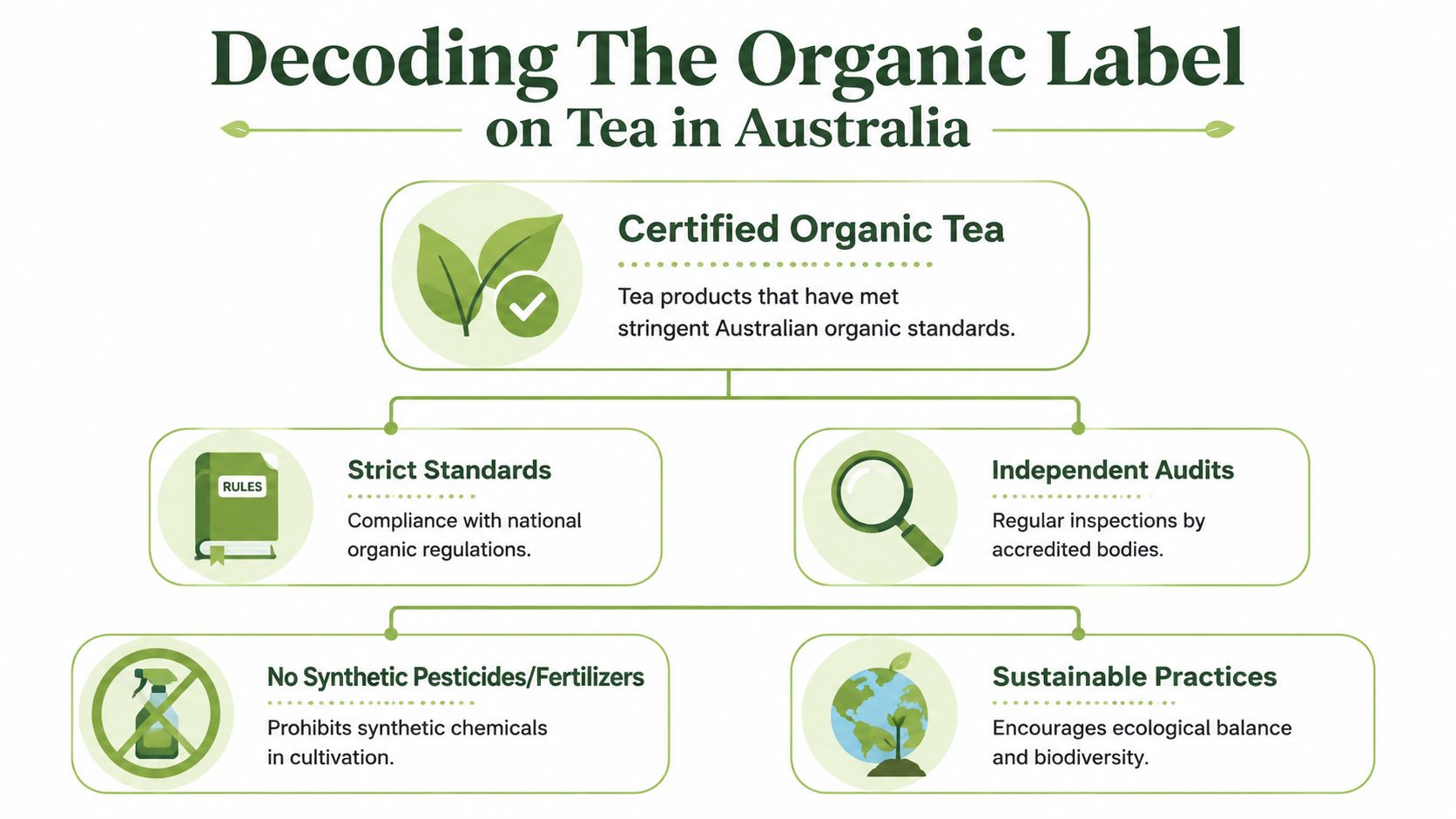
In Australia, organic tea is certified to contain zero synthetic pesticides because the Australian Certified Organic standard explicitly prohibits their use. The same standard also prohibits synthetic chemicals, herbicides and artificial preservatives, which is why many health-conscious buyers treat certification as a meaningful safety marker rather than a branding extra. The underlying standard is discussed in this overview of organic certification standards and is reflected in the explanation from Pure Matcha on Australian organic tea standards.
What certification actually tells you
A proper organic certification logo isn't decorative. It tells you the product has been assessed against a defined set of rules.
That matters because tea packaging is full of soft language that sounds healthy but doesn't carry the same weight, such as:
- Natural means very little by itself.
- Eco-friendly may describe packaging or brand positioning, not farming inputs.
- Pure is a marketing word, not a certification category.
- Organically grown can sound reassuring, but without a recognised certifier, you're still relying on the brand's own wording.
Why this matters in daily shopping
When you're standing in a supermarket aisle or browsing online, you're often making a decision in seconds. A certification mark simplifies that decision. It says, in effect, that the tea wasn't just described as clean. It was produced under rules designed to keep synthetic pesticides out of the process.
A recognised certification logo does the heavy lifting that marketing language can't.
That doesn't mean every uncertified tea is automatically poor quality. It means you don't have the same level of independent assurance. For many Australians, especially those drinking tea every day, that assurance is worth looking for.
The consumer takeaway
If you remember one thing from this section, make it this: certified organic is a stronger claim than organic-looking.
A genuine certification gives you a clearer line from farm to finished product. It's one of the simplest ways to cut through label noise and make a more informed choice.
Conventional vs Organic Tea A Look at Pesticide Residues
The gap between conventional tea and certified organic tea becomes clearer when you look at residue findings and the rules that govern them.
A Tea Leaves Australia article on tea pesticide limits notes that the Australian Pesticides and Veterinary Medicines Authority sets tea Maximum Residue Levels often at 0.05 mg/kg, while the European Union threshold is 0.01 mg/kg. That means Australia's limit is five times higher, and products that fail EU standards can sometimes still be sold legally in Australia.
That point alone surprises many tea drinkers. People assume “legal” automatically means “as strict as possible”. In food regulation, it often means “within the limits set by that country”.
What conventional tea can carry
Documented findings in the material above show why some buyers prefer certified organic tea for peace of mind.
One example: a 2012 Greenpeace China investigation found that 100% of tested tea samples from China contained at least three types of pesticides, and 78% (14 out of 18) contained pesticides harmful to human consumption. Another reported survey found conventional tea could contain up to 17 different pesticide types. These figures don't mean every conventional tea is identical, but they do show why residue concerns haven't come from nowhere.
Organic vs. Conventional Tea at a Glance
| Aspect | Certified Organic Tea | Conventional Tea |
|---|---|---|
| Synthetic pesticides | Prohibited under certification standards | May be used in cultivation |
| Residue concern | Certification is designed to avoid synthetic pesticide residue exposure | Residues may be present within legal limits |
| Consumer confidence | Based on independent standards and audits | Often depends on regulatory compliance alone |
| Australian market context | Bypasses the residue limit gap discussed above | Some products legal in Australia may not meet stricter EU limits |
| Label clarity | Strongest when backed by recognised certification | “Conventional” may not be obvious on front-of-pack packaging |
Why legal limits don't settle the whole question
A residue limit is not the same thing as zero residue. That's where people often get tripped up. Conventional tea may comply with the law and still contain detectable pesticide residues.
Certified organic tea appeals to many buyers because it aims to remove that concern at the farming stage rather than managing it at an allowable threshold later.
If you want the simplest route to avoiding synthetic pesticide residue, certified organic is the cleaner choice.
There's also a trust issue. Tea is often imported, blended, repacked and sold under familiar household brand names. Unless a product gives you a strong certification cue, you may be relying on a chain of decisions you can't see.
For Australians who drink several cups a day, that can be reason enough to choose tea with a clearer paper trail and stricter production rules.
Why This Matters More for Matcha and Kombucha
Matcha changes the conversation because you're not just brewing leaves and discarding them. You're drinking the leaf itself in powdered form. That makes the quality of the leaf much more important.
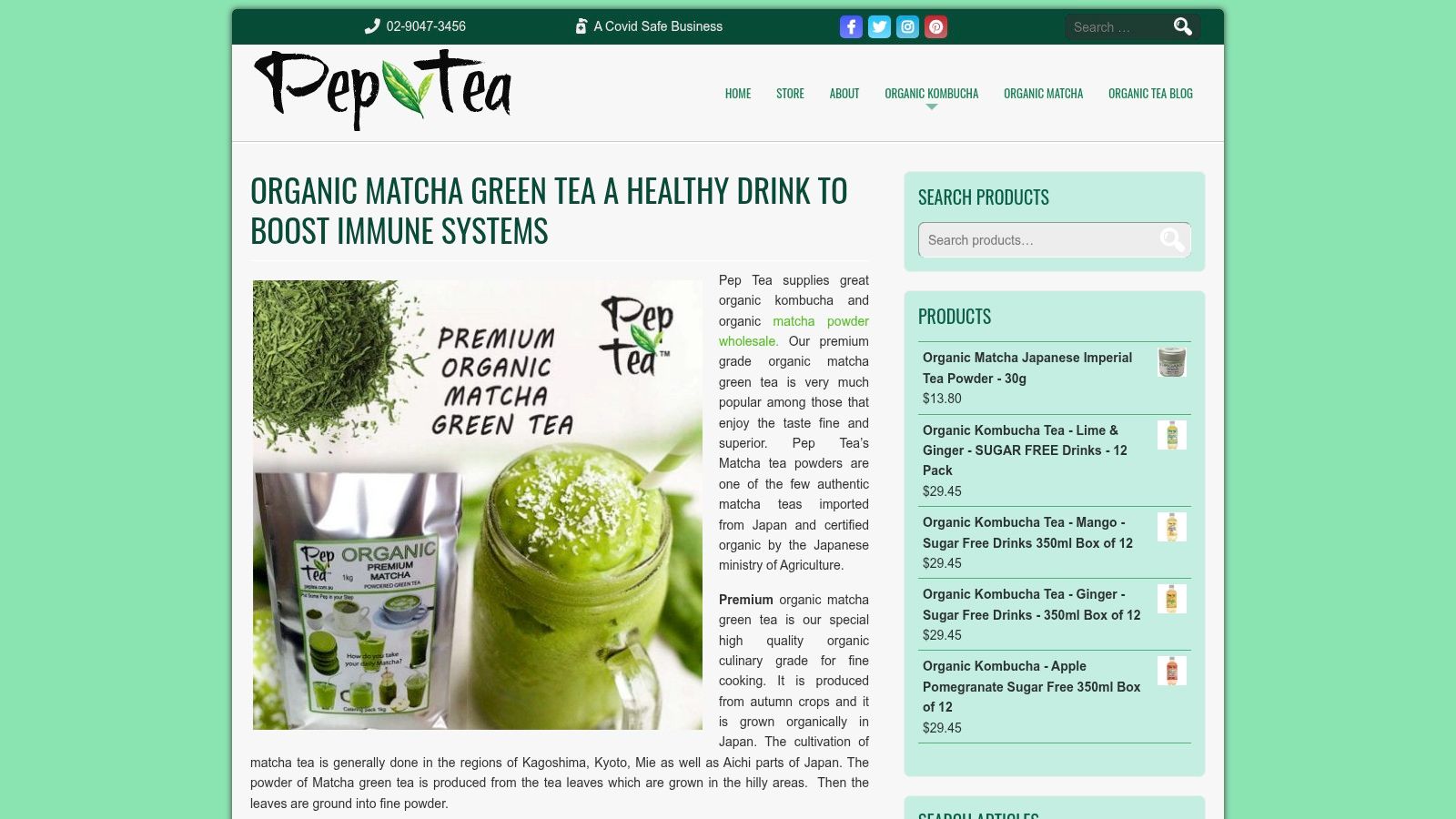
If regular steeped tea is like cooking vegetables in water and then straining them out, matcha is more like blending the whole lot into your drink. That's why many experienced tea drinkers are far stricter about matcha sourcing than they are about an ordinary tea bag.
Matcha is a whole leaf product
For premium matcha, certification and origin matter. Pure Matcha's explanation of Organic JAS matcha states that true organic matcha certified under the Organic JAS standard is produced from tea plantations in southern Japan, including Uji, where pollution and soil contamination are described as lower than in other tea-producing regions, with zero traces of chemical pesticides or fertilisers during cultivation.
That's a strong reason to pay attention to Japanese certification, not just broad organic wording. It's also why tea lovers often compare flavour and sourcing together. If you want a helpful example of how sourcing language and taste notes come together, this guide to Buttery umami matcha is a useful reference point.
For readers trying to understand quality tiers, this comparison of regular and ultimate matcha tea powder also helps clarify why not all matcha behaves the same in the bowl, latte or smoothie.
Kombucha is only as clean as its tea base
Kombucha can sound like a completely separate category, but it starts with tea. If the base tea is poor quality, heavily processed or murky in origin, fermentation doesn't erase that history.
The cleaner the tea, the cleaner the starting point for a drink many people choose for its simple, natural feel. That's especially relevant for sugar-free and low-sugar kombucha drinkers who are already trying to make more mindful choices.
Why these products raise the stakes
This topic matters more for matcha and kombucha for three practical reasons:
- Matcha increases exposure relevance because the powdered leaf goes straight into the cup.
- Kombucha depends on ingredient integrity because fermentation starts with tea, not with a blank slate.
- Premium buyers usually care about more than flavour. They care about origin, process and clean production.
The more directly you consume the leaf, the more the quality of that leaf matters.
That doesn't mean other teas don't matter. It means these two products make the certification question harder to ignore.
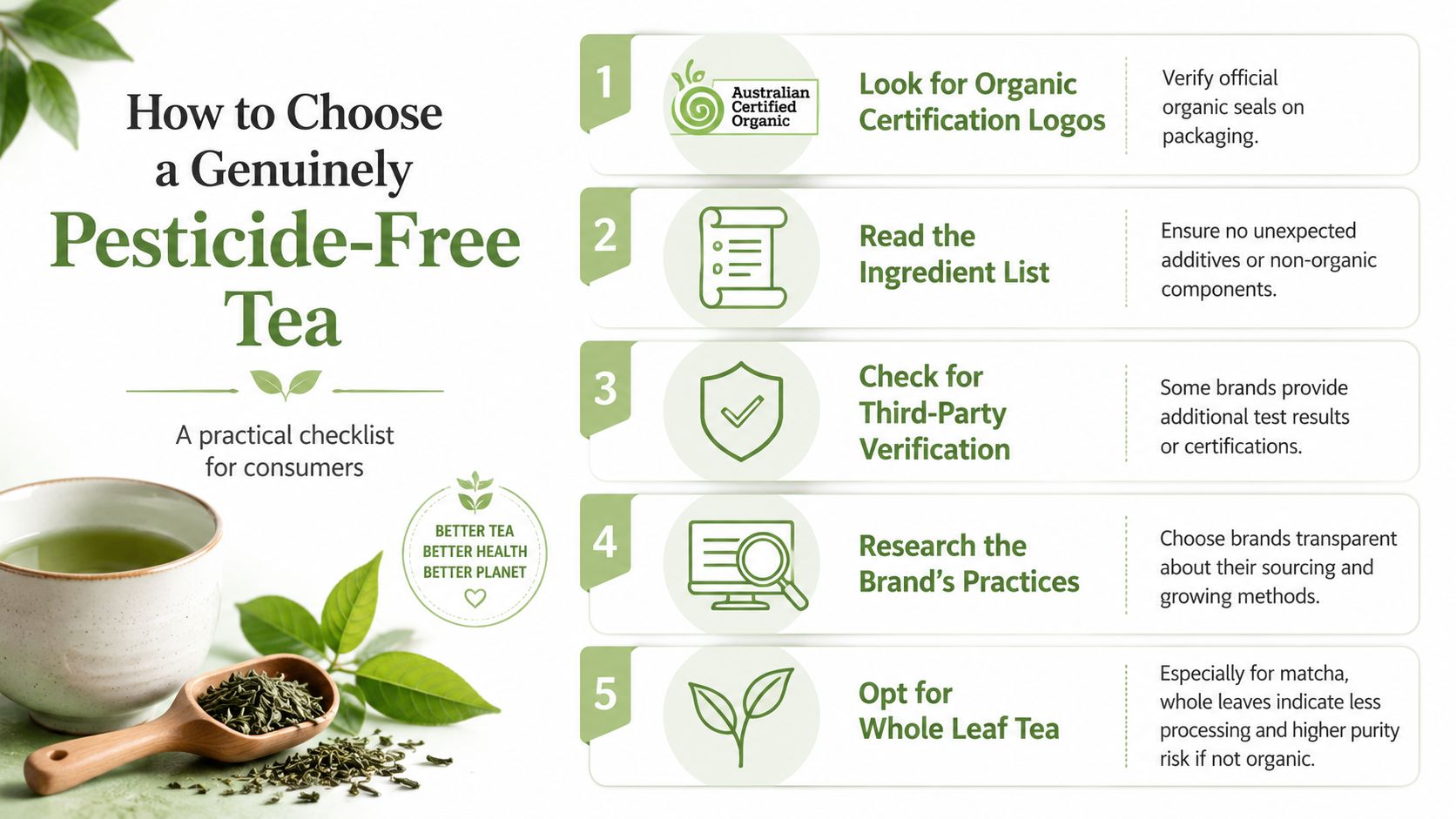
How to Choose a Genuinely Pesticide-Free Tea
Tea shopping gets easier when you stop reading the front of the pack first. Start with the proof points instead.
For Japanese matcha, one of the strongest signals is Organic JAS. According to Matcha Direct's explanation of Organic JAS certification, this certification is a third-party verified process that prohibits all synthetic pesticides and chemical fertilisers, and any product carrying the official JAS mark is guaranteed to have no pesticide residues from farm to finished powder.
A simple shopping checklist
Use this when you're choosing tea online or in-store:
- Look for recognised certification logos. For Australian products, check for established organic certification marks. For matcha from Japan, look for Organic JAS.
- Read past the front label. Words like “clean”, “pure” and “natural” aren't enough on their own.
- Check the ingredient list. Simpler is usually better. Tea should look like tea, not a list of fillers and vague flavour systems.
- Look for brand transparency. Brands that explain sourcing and standards usually make shopping easier.
- Be stricter with matcha. Because you consume the leaf, this is the category where weak sourcing claims matter most.
Questions worth asking before you buy
Not every tea buyer wants to interrogate a packet, but a few simple questions help:
| Question | Why it matters |
|---|---|
| Is it certified organic, or just described that way? | This separates verified claims from marketing language |
| Where was it grown? | Region can influence overall quality and confidence |
| Is the brand transparent about standards? | Clear brands are easier to trust |
| Is it matcha or a steeped tea? | Whole leaf products deserve more scrutiny |
If you also enjoy coffee and want to compare how other beverage buyers think about sourcing and residue concerns, this overview of sustainable coffee options gives a useful parallel.
For readers browsing green tea more broadly, a curated organic green tea collection can also make it easier to compare product types and certification cues side by side.
Buy the proof, not the mood. Tea packaging can suggest wellness. Certification is what confirms it.
The labels that should make you pause
A few claims deserve extra caution:
- Organically grown, with no recognised certifier named
- Pesticide free, with no explanation of verification
- Premium imported tea, with no origin detail
- Wellness tea blend, where the tea source is unclear
These aren't automatic deal-breakers. They're prompts to look closer.
What Organic Certification May Not Cover
Organic certification does an important job. It tackles synthetic pesticides. But it doesn't automatically answer every safety question a careful tea drinker might have.
One of the most overlooked issues is that tea plants can absorb naturally occurring substances from the soil. As noted in this discussion of fluoride and heavy metals in tea, organic certification doesn't regulate naturally absorbed contaminants in the same way, and some organic teas may still accumulate fluoride or heavy metals like lead depending on where and how they're grown.
The hidden confusion
Many shoppers often find this confusing. They hear “organic” and reasonably assume “completely clean”. In practice, organic means the farming system avoids prohibited synthetic inputs. It doesn't mean the plant is isolated from its environment.
That's especially relevant for tea because the leaf is the product. What the plant absorbs matters.
What a careful buyer should do with that information
This isn't a reason to panic or stop drinking organic tea. It's a reason to go one step further in your thinking.
A more complete quality picture includes:
- Certification for pesticide-related assurance
- Source region for broader environmental confidence
- Brand transparency about testing and quality control
- Product type awareness, especially for matcha
Organic certification solves one major problem well. It doesn't replace good sourcing.
That nuance is reassuring. Once you understand it, you can make sharper choices instead of assuming every tea with an organic-looking label is identical. The strongest products tend to pair recognised certification with careful sourcing and clear communication.
Your Questions on Organic Tea and Pesticides Answered
Can I wash or brew away pesticides from conventional tea?
Brewing may change what ends up in the cup, but it doesn't turn conventional tea into certified organic tea. If avoiding synthetic pesticide concerns matters to you, it's better to choose certified organic from the start.
Is decaffeinated organic tea still pesticide-free?
If it's properly certified organic, the key issue remains the same. Certification is what matters most, not whether the tea contains caffeine.
Is matcha worth being fussier about?
Yes. Matcha deserves more scrutiny because you consume the powdered leaf itself, not just an infusion.
Does local or transparent sourcing help?
Usually, yes. A brand that clearly explains its certification, origin and standards is easier to trust than one relying on vague wellness language.
Does organic mean completely risk-free?
No food claim is that simple. Organic certification is excellent for avoiding synthetic pesticide use, but thoughtful shoppers should still care about origin, transparency and overall quality.
If you're looking for a cleaner cup with clearer sourcing, explore Pep Tea for premium organic matcha and Australian-brewed organic kombucha. We're passionate about making healthy tea choices easier to understand, whether you're choosing ceremonial-grade matcha for calm energy or a refreshing low-sugar kombucha for everyday wellness.