
Tag: matcha tips
Best Matcha Latte Recipe for Café-Style Flavour at Home

You've picked up a vivid green matcha latte on the way to work, taken two sips, and realised it tastes more like sweetened milk than tea. At home, the same drink can be smoother, fresher, and much easier to adjust. The difference usually isn't an expensive coffee machine. It's fresh matcha, controlled water temperature, proper sifting, and milk that can hold its texture.
Australia's matcha habit has moved well beyond a niche tea order. The market generated more than AUD 54 million in 2024 and one industry forecast expects it to exceed AUD 81 million by 2030, a projection covered by SBS News. That growth has brought better access, more café experimentation, and higher expectations for the cup.
This is the best matcha latte recipe I use as a practical starting point. It works hot or iced, with dairy or plant milk, and gives you enough control to make a café-style drink without hiding the tea under syrup.
Why Your Morning Matcha Latte Costs Too Much
A Sydney or Melbourne takeaway can cost close to A$8, while cafés in major Australian cities commonly charge AUD 6 to AUD 8 per serve, according to Australian tea market coverage. One occasional purchase is easy to justify. Five weekday drinks, however, can put roughly A$40 a week toward takeaway matcha.
Home preparation changes the calculation without requiring bargain-basement powder. A carefully portioned latte costs around A$2 a serve with ceremonial matcha, or roughly A$1.20 with culinary matcha, depending on the matcha, milk, and sweetener. At five drinks a week, that is about A$10 for ceremonial matcha or A$6 for culinary matcha, compared with roughly A$40 from a café.
The lower cost also gives you control over the cup:
- Matcha grade: Ceremonial matcha offers a cleaner, more delicate flavour, while culinary matcha can bring stronger bitterness at a lower serving cost. Neither replaces good technique.
- Sweetness: Use honey, maple, a sugar-free option, or nothing, rather than accepting a café's preset balance.
- Milk: Dairy, oat, almond, soy, and coconut milk change the texture and how clearly the tea comes through.
- Tea flavour: With enough matcha and restrained sweetness, umami and gentle vegetal notes remain noticeable instead of disappearing under syrup.
Supply can affect the choice. If ceremonial matcha is difficult to find or too expensive, fresh culinary matcha is a practical substitute for a daily latte. Sifting it carefully, controlling the water temperature, and choosing milk that froths well will matter more than paying for a premium label alone.
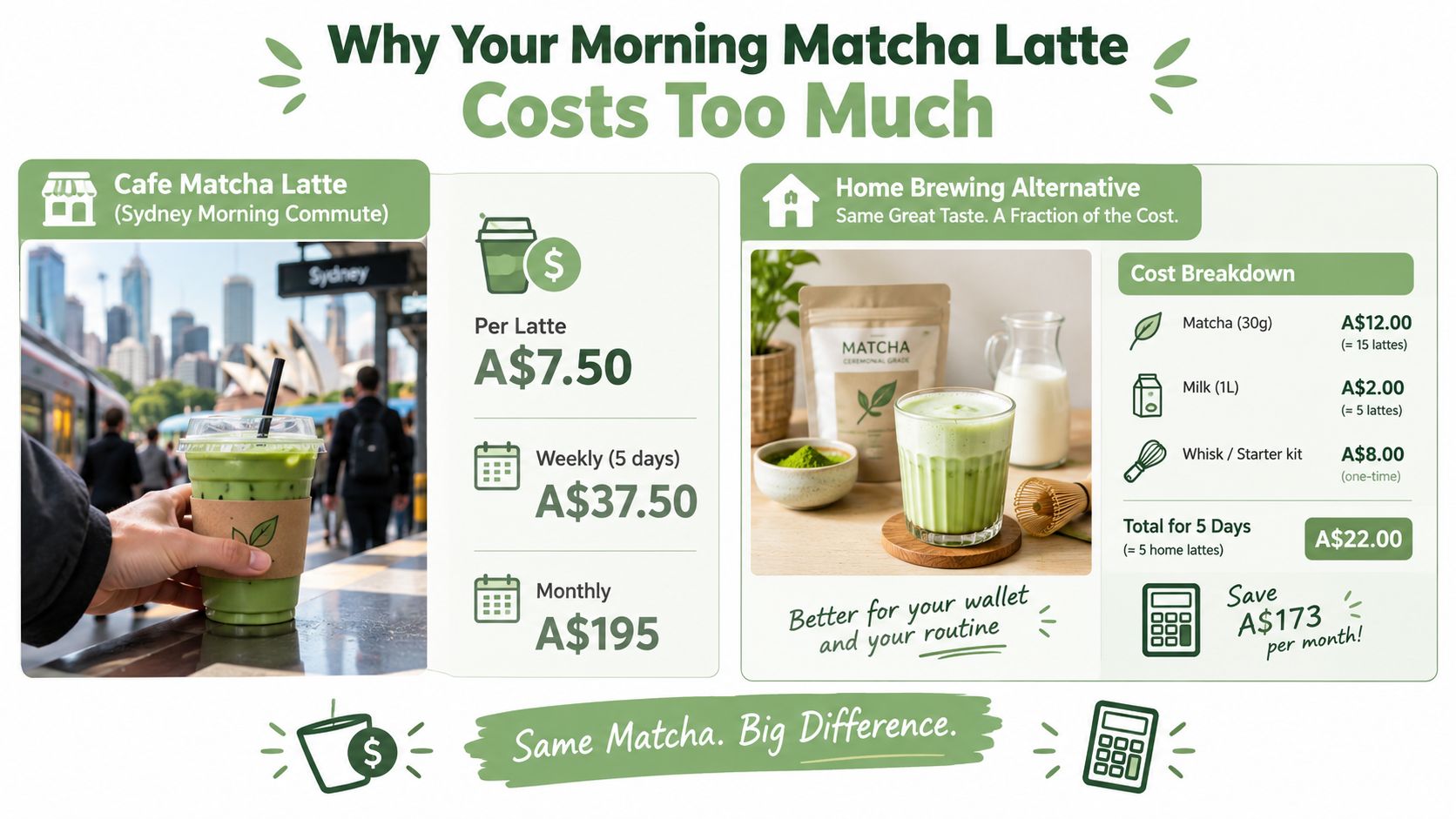
The home method costs about the same as one takeaway drink once the basic ingredients are in your kitchen. The return is a fresher, more adjustable cup, with attention and technique doing more work than expensive equipment.
The Core Method for a Smooth, Vibrant Cup
The smoothest latte starts with a small matcha concentrate, not powder dumped directly into a full glass of milk. Matcha is finely ground tea leaf, so it won't dissolve like sugar. Sifting and emulsifying suspend the particles evenly and prevent dry pockets from floating through the drink.
Start with a fine matcha base
Measure 2 g, about 1 teaspoon, of matcha into a small bowl, wide mug, or matcha bowl. Pass it through a fine sieve before adding water. This takes a few seconds and removes the compacted pieces that a spoon tends to leave behind.
Add 60 ml of water at 70–80°C. This temperature range is the most important control in the recipe. Australian matcha preparation guidance recommends this window because it helps preserve flavour, reduces bitterness, and supports a more stable foam, as described in this Australian matcha latte method.
Build a paste, then whisk
First, work the water into the powder to make a thick paste. Use a bamboo chasen or small whisk and press any remaining lumps against the side of the bowl. Don't rush straight to a large volume of water. The paste stage gives every particle a chance to hydrate evenly.
Add a second small splash of the remaining water if the paste feels tight, then whisk rapidly for 15–20 seconds in a W or M motion. A circular stir moves liquid around the bowl but doesn't incorporate air as effectively. The target is a glossy, fully suspended base with fine pale-green bubbles across the surface.
Practical rule: If your water has just boiled, let it cool before it touches the matcha. Water above the recommended range is the fastest route to a harsh cup.
Warm 150–200 ml of milk and pour it into the matcha base. For an iced latte, use cold milk and pour the whisked matcha over ice. Keep the milk volume toward the lower end when you want a stronger tea flavour, and use the higher end for a softer, milkier drink.
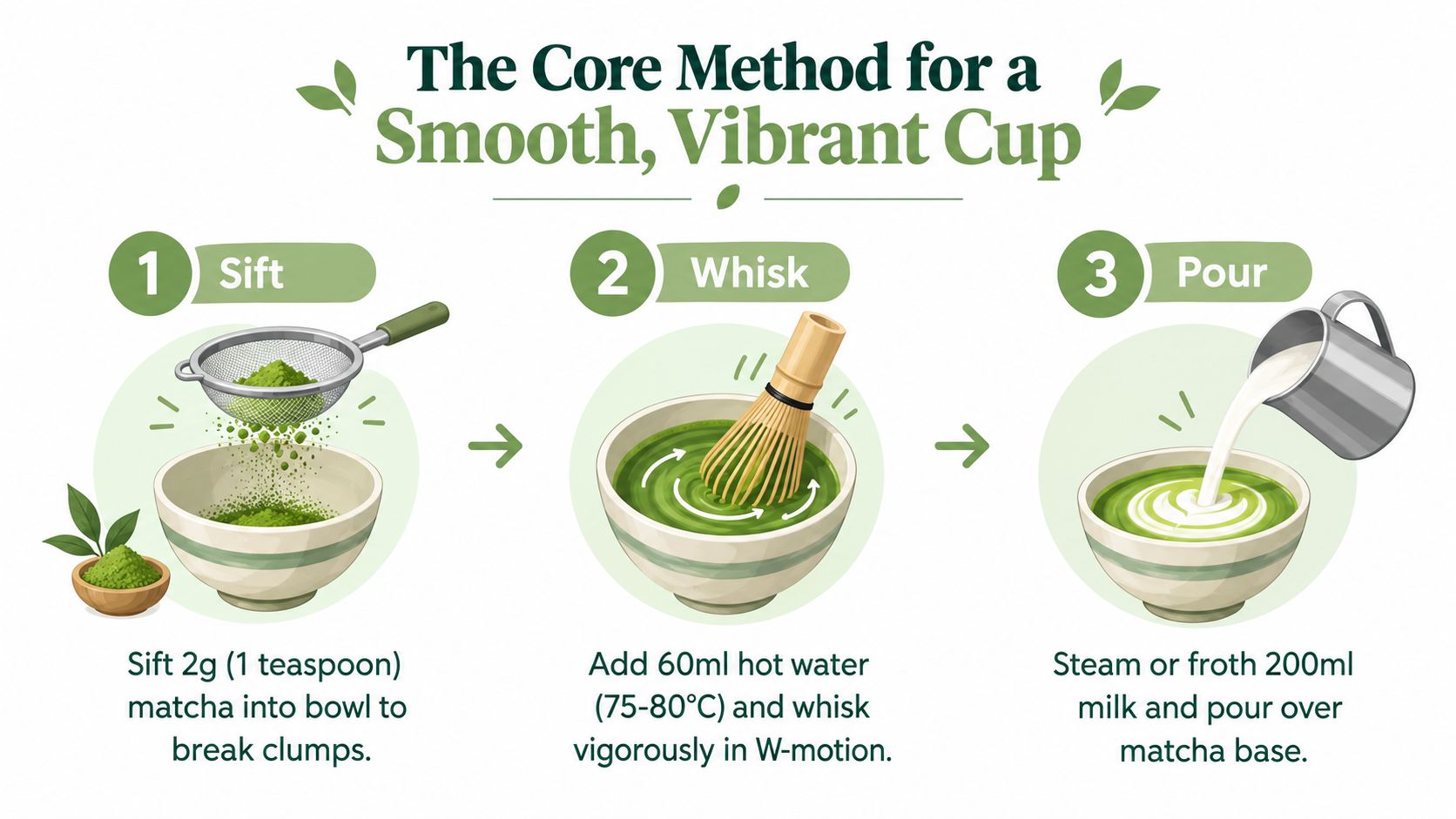
For a visual demonstration of the whisking technique, see PepTea's guide to whisking matcha.
A bamboo chasen is traditional, but a handheld electric frother or small wire whisk works perfectly well for a home latte. The method matters more than the tool.
Choosing the Right Matcha Grade for Your Budget
Ceremonial and culinary matcha aren't interchangeable in every drink, but the more expensive option isn't automatically the better latte powder. Ceremonial matcha is generally selected for drinking with water, where its colour, aroma, texture, and finish have nowhere to hide. Culinary matcha is made for recipes in which milk, sweetener, fruit, chocolate, or flour share the stage.
| Attribute | Ceremonial Grade | Culinary Grade |
|---|---|---|
| Flavour | Smooth, umami-rich, vegetal, gently sweet | Deeper, toastier, and more astringent |
| Colour | Brighter, vivid green | Often darker or duller green |
| Price guide | Typically A$35–A$60 per 30 g tin | Typically A$15–A$25 per 100 g pouch |
| Best use | Straight matcha, lightly milky drinks | Everyday lattes, iced drinks, baking |
| Main advantage | Clean finish and refined aroma | Strong value and enough flavour to stand up to milk |
Those price ranges reflect the product examples described in the brief, not a universal retail rule. Matcha availability and pricing vary as Australian demand expands across cafés, supermarkets, and specialty tea suppliers. PepTea's explanation of matcha grades is useful when you're comparing a drinking powder with one intended for cooking.
My rule is simple: choose ceremonial grade when the tea itself is the focus, and save with culinary grade for regular lattes, smoothies, iced drinks, and baking. Ceremonial grade matters less than many people think when you're adding a substantial amount of oat milk, sweetener, vanilla, or ice. In that situation, a fresh culinary matcha can taste more balanced than an older, expensive tin.
Storage also affects the result. Keep opened matcha sealed, away from heat and strong light, and use clean, dry utensils so the powder retains its colour and aroma.
Milk Options and How to Froth Each One
Milk changes the latte more than most expect. It affects sweetness, body, foam, and how strongly the matcha comes through, so the right choice depends on whether you want a traditional creamy drink, a plant-based café texture, or a refreshing iced version.
| Milk | Flavour Impact | Foam Quality | Best Temperature |
|---|---|---|---|
| Full-cream dairy | Rich, rounded, naturally sweet | Stable, fine microfoam | Around 65°C |
| Oat milk | Creamy, lightly sweet, cereal-like | Usually the most stable plant foam | Around 60–65°C |
| Almond milk | Nutty and lighter-bodied | Light foam, stronger with barista blends | Warm gently |
| Soy milk | Creamy with a mild bean note | Holds foam well, but can split if overheated | Keep below boiling |
| Coconut milk | Tropical and aromatic | Thin foam, better for iced drinks | Froth cold or warm gently |
Full-cream dairy gives the most forgiving hot latte. Warm 150 ml gently to around 65°C, then froth until the surface looks glossy rather than bubbly. Overheated milk loses sweetness and can make the tea taste flatter.
Oat milk is usually the easiest plant-based substitute for a café-style texture. Barista versions often contain ingredients that improve body and emulsification, which helps them produce a more persistent foam. Soy can also foam well, but high heat may cause it to split, so stop before the milk simmers.
Almond milk heats quickly and tends to create a lighter drink. Choose a barista blend if foam matters. Coconut milk adds an appealing tropical note but usually stays thinner, so I prefer it cold over ice rather than trying to force it into a dense hot foam. PepTea's matcha coconut milk recipe is a useful format for that combination.
Two reliable cold versions
For a shaken iced latte, combine the sifted matcha with the hot water paste first, then add 200 ml cold milk and ice to a jar. Seal it firmly and shake until the drink looks evenly green and lightly foamy.
For a cold-foam finish, froth a small amount of cold milk separately with a handheld frother or French press, then spoon it over an iced matcha latte. If you're preparing drinks for a household or café, a larger piece of equipment such as this Chef Inox Elite jug milk frother from Simply Hospitality can make repeated batches easier.
Rice milk and very low-fat dairy are less reliable when you want stable foam. They can still make a pleasant latte, but expect a thinner surface and let the matcha carry more of the texture.
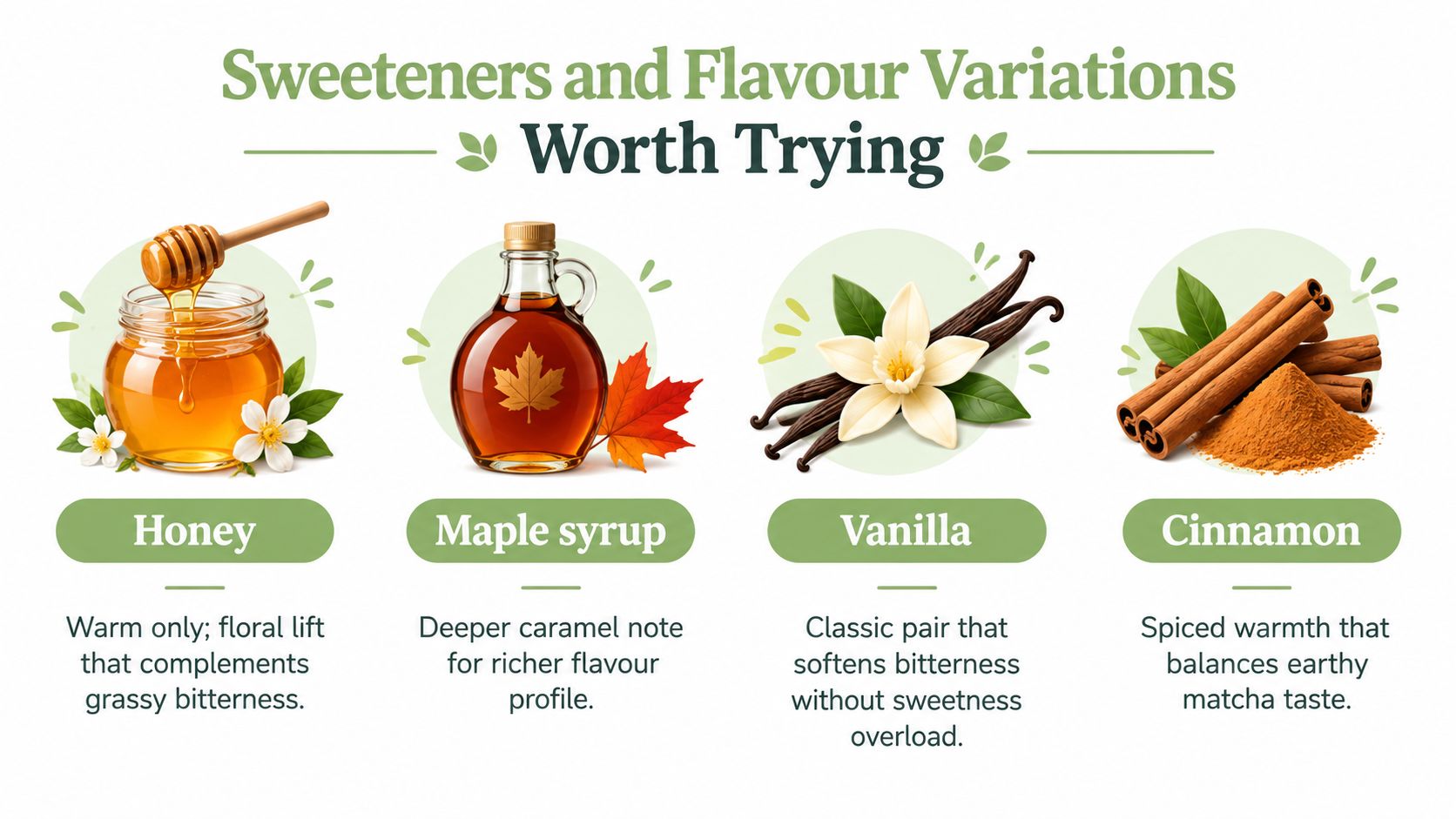
Sweeteners and Flavour Variations Worth Trying
Sweetener should support matcha's flavour, not bury it. Start with a small amount, taste after the milk is added, and remember that oat milk already brings its own sweetness.
- Honey: Begin with 1 teaspoon in the warm matcha paste. Its floral character can lift grassy notes, but don't add it to a cold drink if it won't dissolve properly.
- Maple syrup: Use 1 teaspoon for a deeper caramel note, especially with oat milk.
- Caster sugar: Add 1 teaspoon to the hot paste if you want a neutral sweetness that disappears cleanly into the drink.
- Monk fruit or stevia: Follow the product's serving guidance, because concentrations vary. These options suit a low-sugar routine, but some products leave a lingering aftertaste.
- No sweetener: Use this with a good ceremonial matcha when you want to notice its umami, aroma, and gentle vegetal sweetness.
Vanilla is one of the most useful additions. A few drops round out bitterness without turning the latte into a dessert. A pinch of fine sea salt can make sweetness feel more pronounced, while 1 teaspoon cocoa creates a matcha-mocha profile with a darker finish. For an iced tropical version, add a splash of coconut cream and reduce the milk slightly so the drink doesn't become heavy.
These small adjustments fit neatly into everyday low-sugar cooking. For broader ideas on balancing sweetness and flavour in family drinks, see these balanced cooking tips for Melbourne families.
Cinnamon works best as a finishing dusting rather than a large dose whisked into the base. It adds warmth, but too much spice can cover the tea's more delicate notes.
Fixing the Most Common Home Matcha Problems
A bitter latte isn't proof that you dislike matcha. In most home kitchens, it points to a process problem, usually water that's too hot or powder that hasn't been emulsified properly.
Bitter taste
Boiling water extracts a harsher flavour and overwhelms matcha's softer notes. Cool freshly boiled water for about 60 seconds before adding it, then stay within the 70–80°C range.
Clumps
A spoon can mix matcha into milk, but it won't break up compacted powder as reliably as a sieve and rapid whisk. Sift the dry matcha before adding any liquid, then make a paste before increasing the water volume.
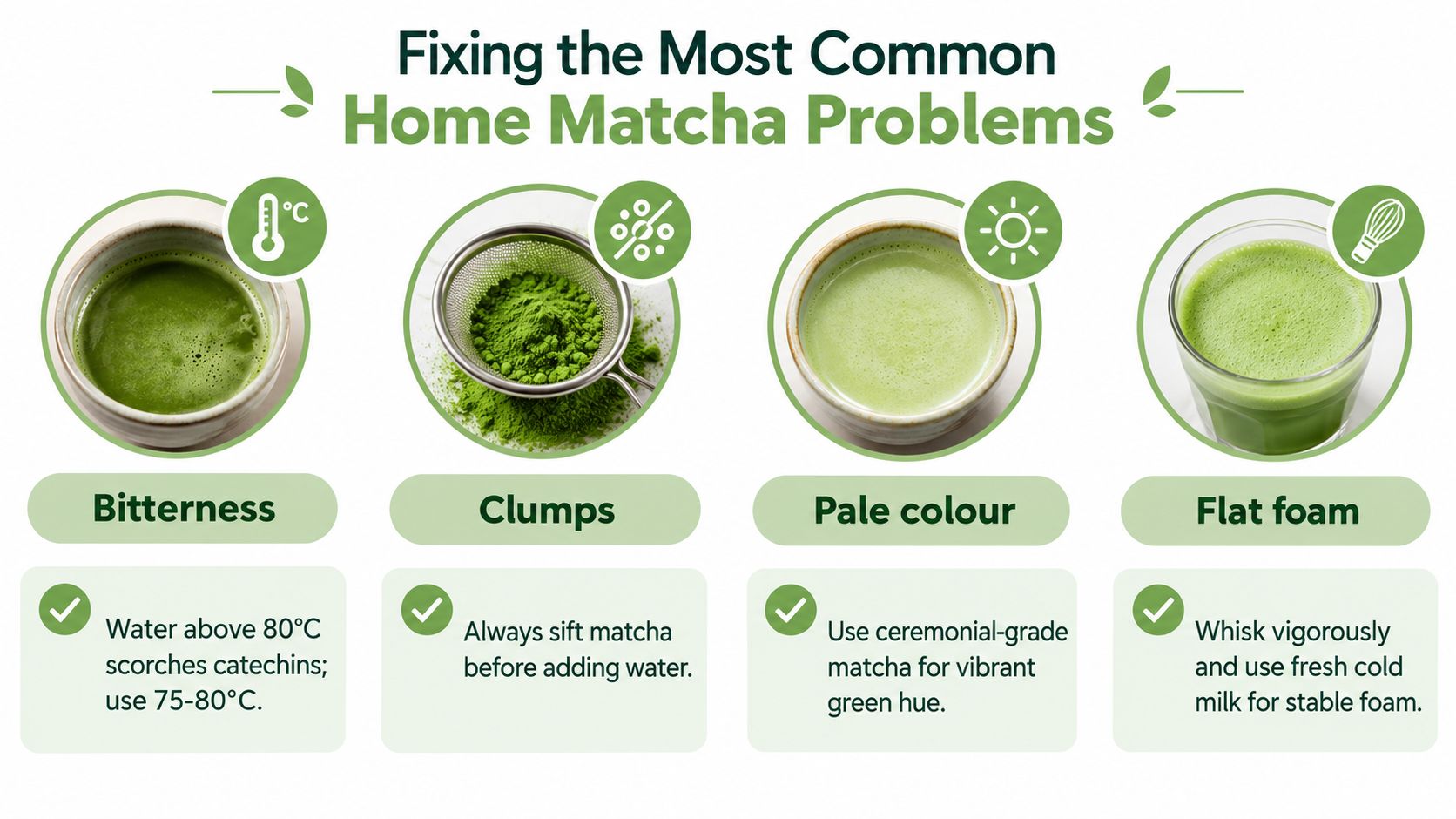
Pale colour
A weak green colour usually comes from too much milk, older oxidised powder, or using a small amount of culinary matcha in a large drink. Reduce the milk to 150 ml and use 2 g matcha before reaching for more sweetener.
Flat or disappearing foam
Overheated milk and low-protein plant milks produce large bubbles that collapse quickly. Warm dairy or barista plant milk gently toward 65°C and whisk the matcha vigorously until it has fine surface bubbles.
The most useful diagnostic is to change one variable at a time. If you alter the powder, milk, sweetener, water, and whisking method together, you won't know what fixed the cup.
Matcha can settle after standing, even when you've prepared it correctly. Serve it soon after mixing, and give an iced version another shake if it sits while you're getting ready.
Quick Answers and What to Brew Next
The recipe is easy to remember once the proportions become familiar:
- Sift: Use 1–2 teaspoons of ceremonial or culinary matcha.
- Whisk: Add 60–80 ml water at 70–80°C and whisk with a chasen or frother until smooth and foamy.
- Pour: Add 150–200 ml of steamed, warmed, or cold milk.
How hot should the water be?
Keep it between 70 and 80°C. Water that's too hot can create bitterness, while cooler water may leave the paste less expressive and harder to blend.
Does matcha contain caffeine?
Matcha contains caffeine, and the Australian Good Food recipe notes that it can contain up to three times as much caffeine as steeped tea, as reported by Good Food. The amount in your cup depends on the powder dose and preparation, so treat matcha as a caffeinated drink rather than assuming it's automatically gentle.
Can I use pre-mixed matcha latte powder?
You can, but check the ingredient list. Pre-mixed powders may include sweeteners or milk ingredients, which limits your control over flavour and sugar. Plain matcha gives you more flexibility with milk, sweetness, and strength.
How should I store an opened tin?
Seal it tightly and keep it away from heat, moisture, and direct light. Matcha's colour and aroma are strongest when the powder is protected from air and used while fresh.
Is a matcha latte different from matcha with milk?
A matcha latte is built around a whisked matcha base combined with a larger volume of warm or cold milk, often with foam and optional sweetener. Matcha with milk can be simpler, with less milk and little or no frothing, so the tea remains more prominent.
For readers ready to upgrade their everyday tin, PepTea offers organic Japanese matcha in ceremonial and culinary formats. The brand also makes sugar-free organic kombucha in the Hunter Valley, NSW, including Ginger, Lime & Ginger, and Mango, which works well as a palate-cleansing afternoon drink alongside a morning matcha ritual.
Explore the Pep Tea range for organic Japanese matcha suited to both straight preparation and lattes, then compare it with sugar-free kombucha for a refreshing, low-sugar drink later in the day. Choose the grade and milk that match your routine, and make your next café-style cup at home.
Matcha Latte Recipe Reddit Guide: How to Make One at Home

If you've ever made a matcha latte at home and ended up with something thin, grassy, or weirdly bitter, you're in good company. The first cup often teaches the wrong lesson, because matcha punishes sloppy ratios and hot water faster than many expect.
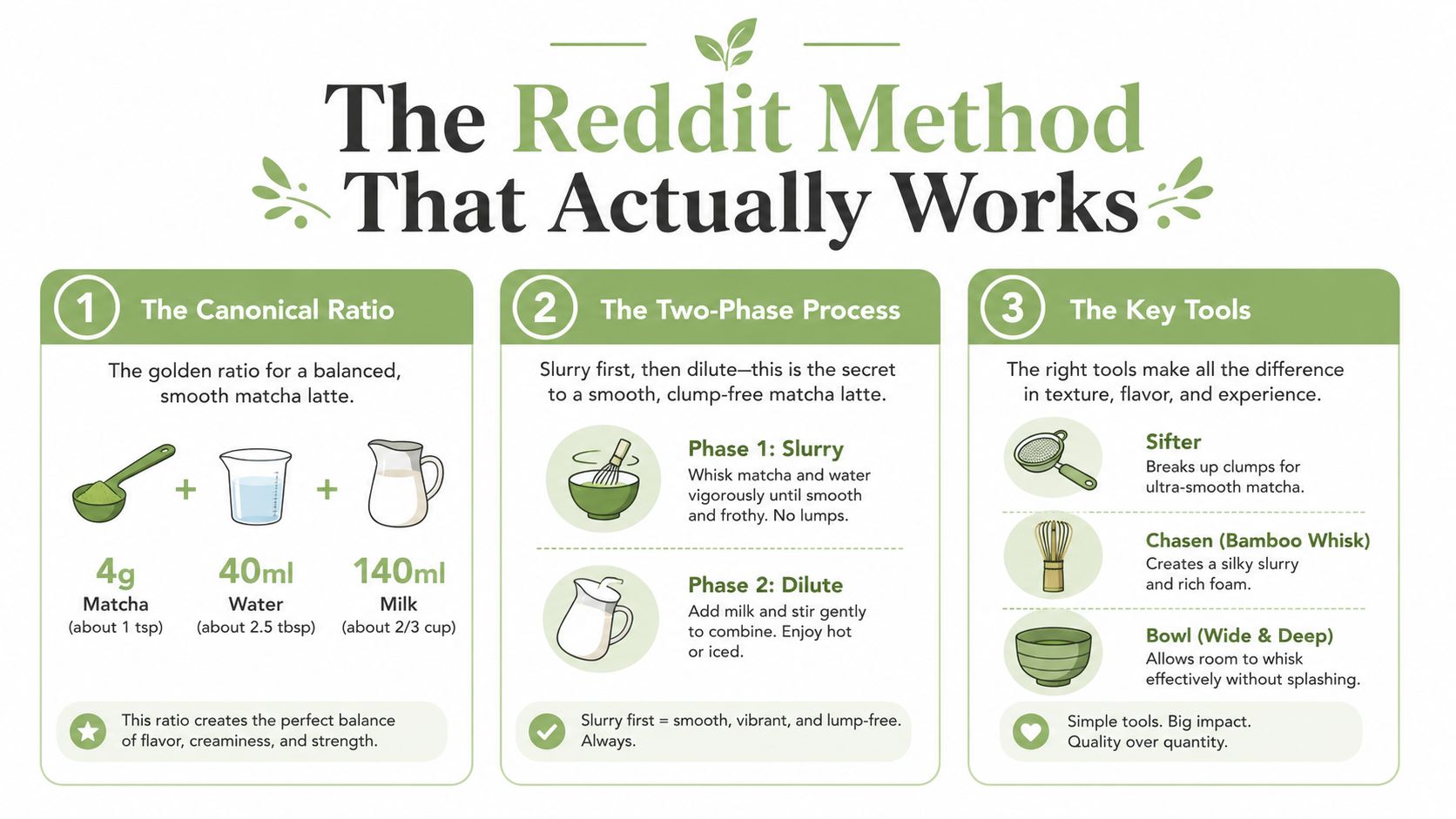
That's why the matcha latte recipe Reddit crowd matters. Across r/Matcha and r/MatchaEverything, home drinkers have slowly converged on a reliable benchmark, 4 g matcha, 40 mL water, and 140 to 160 mL milk, with a practical two-stage method that makes the drink smoother and less clumpy. One thread describes 4 grams matcha, 40 millilitres hot water, and about 100 to 150 millilitres oat milk, another condenses the formula to 4/40/140, and an iced version lands at 4 g matcha, 40 mL water, and 160 mL milk for a 12 oz latte (Reddit matcha latte recipes).
That crowd-sourced consistency is the core story. It isn't a fad ratio, it's a community-standard that keeps showing up because it works in ordinary kitchens, with ordinary tools, and with milk choices that suit Australian café habits at home.
The Reddit Method That Delivers
The first time you make matcha, it's easy to treat it like instant coffee. You sprinkle powder into milk, stir once, and wonder why the drink looks speckled and tastes flat. Reddit's best advice cuts straight through that mistake, because the powder needs to be fully hydrated before milk ever enters the bowl.
Why the crowd settled on one ratio
The repeated benchmark is 4 g matcha, 40 mL water, and 140 to 160 mL milk, which sits close to a 1:10 powder-to-water ratio and a roughly 1:4 milk-to-water finishing ratio for a single serve. That gives the powder enough liquid to disperse properly, while still keeping the finished drink full and creamy instead of thin. The same structure also appears in an iced version built around 4 g matcha, 40 mL water, and 160 mL milk for a 12 oz latte, which shows the method holds up in both hot and cold drinks (Reddit matcha latte recipes).
Practical rule: if the powder meets too little water, it clumps. If it meets too much milk too early, it never fully opens up.
The two-phase method behind the benchmark
Reddit's strongest recipes do not start with milk, they start with a slurry. Users consistently recommend sifting, then whisking the matcha into a small water phase before adding milk or ice. That sequence keeps the fine powder from sitting dry in the cup, and it gives the matcha room to hydrate before dilution. It is the reason the method keeps showing up in good home recipes instead of disappearing after one viral post.
For home baristas, that matters more than chasing a one-off version from a single creator. The strongest matcha latte recipe Reddit posts point to the same logic, a small hydrated base first, then milk to finish. That is the version worth keeping on repeat, especially if you are using oat milk and want something that feels café-made rather than muddy.
The 4-40-140 Hot Matcha Latte Method
A hot matcha latte works best when the cup is ready before the whisk starts. Pre-warm the mug so the drink holds heat instead of cooling fast, and sift the powder so the finest clumps do not survive the first stir. Those two small steps stop a lot of the grainy, uneven cups people run into at home.
Build the slurry first
Measure 4 g matcha and sift it into a bowl or wide cup. Add 40 mL hot water, kept around 75 to 80°C rather than boiling, because hotter water can push the flavour toward bitterness. Whisk the matcha into the water in a W or zigzag motion for about 15 to 30 seconds, until the surface looks smooth and the powder is fully dispersed (matcha latte guidance).
That motion matters because it moves the whisk across more of the surface, which breaks up fine particles more evenly than a lazy circle. The goal is not foam at this stage. The goal is a clean, even base that can take milk without turning speckled or gritty.
A good slurry also gives you a clearer read on the matcha itself. If the colour looks dull or the flavour tastes thin at this stage, milk will not fix it later. It will only soften the problem.
Finish with milk, not the other way round
Once the slurry looks smooth, pour in 140 mL milk for the standard hot serve. That keeps the drink balanced and gives you the benchmark 4/40/140 ratio that keeps showing up in the stronger Reddit versions. If you want a slightly larger café-style cup, the same method can stretch a little, but the drink still needs enough matcha presence to taste like tea, not sweet milk.
Froth the milk for 10 to 15 seconds if you want a silkier texture, and keep it around 60 to 70°C so it stays sweet instead of tasting cooked. That temperature range matters more than people expect, especially if you use oat milk, which can flatten when overheated. A short froth is usually enough for a home setup, and it keeps the drink from turning airy when you really want body.
Home-barista shortcut: pre-warm the bowl or cup, then work quickly. Matcha tastes cleaner when the drink stays hot enough to serve right away, not lukewarm by the time you sit down.
For anyone following the matcha latte recipe Reddit trail, this is the version that holds together in a normal kitchen. It is simple, but it is not careless, and that difference shows up in the cup.
Choosing the Right Milk for Your Latte
Milk choice changes matcha more than you might expect. The same 4 g matcha base can taste round and dessert-like in one milk, then sharp and thin in another, even when the whisking is identical. That's why Reddit threads keep circling the question without ever settling it completely, because the “best” milk depends on whether you want creaminess, sweetness, or a cleaner tea finish.
How the common options behave
| Milk type | Creaminess | Natural sweetness | Froth stability | Best with |
|---|---|---|---|---|
| Oat milk | High | Medium to high | Strong | Iced lattes, café-style drinks |
| Dairy milk | High | Medium | Strong | Hot lattes, fuller body |
| Soy milk | Medium to high | Low to medium | Good | Ceremonial-grade matcha |
| Almond milk | Low to medium | Low | Weaker | Light drinks, lower-calorie preference |
Oat milk has become the natural fit for Australian café-style matcha because it gives body without fighting the tea's flavour. Dairy is still the easiest route to a plush, classic latte texture. Soy can work beautifully with cleaner, higher-quality matcha because it doesn't drown out the tea note, while almond milk tends to read thinner unless you specifically want a lighter cup.
Matching milk to the drink you want
If you want a latte that feels rounded and café-like, choose oat. If you want the matcha to taste more like tea than dessert, soy is often the cleaner call. Almond works when you want restraint, but it's the least forgiving if the powder wasn't whisked properly in the first place.
If you're comparing plant milks for different recipes, Pep Tea's matcha coconut milk guide sits in the same practical territory, because question is always texture first, flavour second.
Good matcha doesn't need a heavy milk mask. The better the powder, the less you have to rely on sweetness to make the cup feel complete.
For anyone testing the matcha latte recipe Reddit formula at home, start with oat if you want the safest result. Switch to soy if you're chasing a cleaner finish, or dairy if you want the richest texture with the least fuss.
The Iced Matcha Latte Without the Watery Bottom
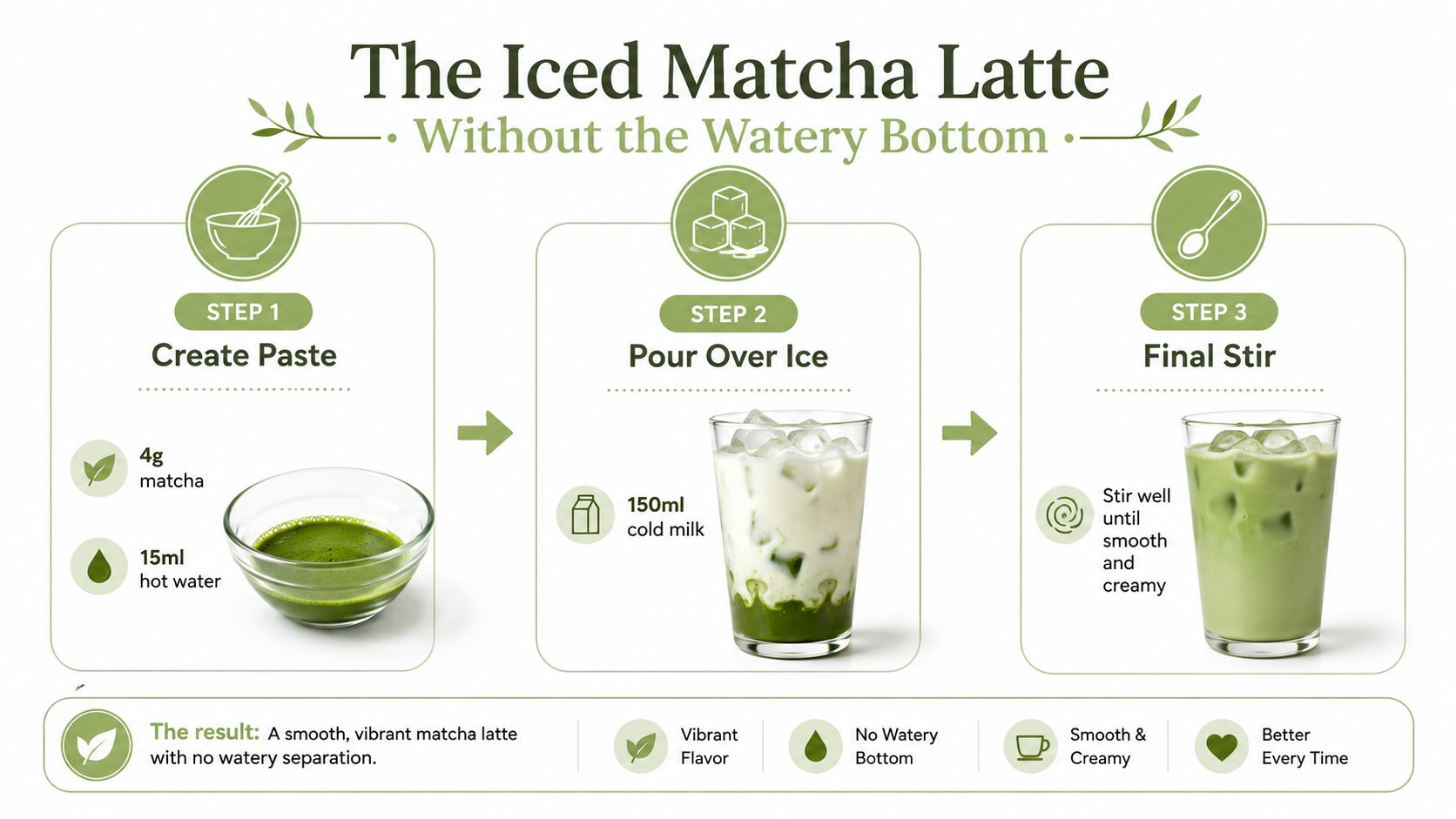
Iced matcha fails in one very specific way. The cup looks gorgeous for a minute, then the ice melts, the milk thins out, and the green layer on top turns into a sad puddle at the bottom. The fix is to separate hydration, whisking, and dilution so the drink stays strong from first sip to last.
The paste first method
Use 4 g matcha powder and add 15 mL water first, just enough to make a paste. Then add another 45 mL water for whisking, so the powder can fully disperse before the milk goes in (iced matcha Reddit recipe). After that, pour over plenty of ice and add 120 mL milk. The sequence matters because it separates the wetting stage from the flavour-building stage, which helps stop clumps and keeps the drink strong enough after dilution.
A tall glass works better than a short one here, because it gives the layers room to sit visibly before you stir. Large cubes are more useful than crushed ice if you want slower melting and a cleaner layered look. Cold milk is fine, but don't start with such a large ice load that the drink loses its tea flavour before you've even picked it up.
When a shaker makes more sense
The café-style shaken version is faster and more uniform. It's the better choice when you're making a takeaway iced latte or want a drink that feels brisk rather than layered. A shaker blends the matcha and milk more aggressively, so you lose the visual separation, but you gain speed and consistency.
If you want a more detailed visual walkthrough, Pep Tea's how to make iced matcha latte guide fits neatly with this method. The linked YouTube tutorial below is also useful if you prefer to watch the pour order instead of reading it.
The chilled version rewards patience more than the hot one does. If you rush the order, you get weak flavour and a watery bottom, and that's the exact problem the Reddit-derived method is trying to avoid.
The Sugar-Free Matcha Latte That Actually Tastes Good
A lot of home recipes hide matcha behind sugar, syrup, or sweetened instant powder. That can make the drink easier to drink, but it also buries the very flavour people are usually chasing in the first place. If the matcha is good enough, and the ratio is tight enough, the cup doesn't need to be sweet to feel satisfying.
Why less dilution often tastes better
A smaller, stronger latte can taste smoother than a bigger one with more milk and more sugar. That's especially true when you use a better-grade matcha and keep the water phase tight, because the tea flavour stays present instead of getting washed out. Reddit recipes often lean sweet, but they don't really solve the core problem, which is balance.
Unsweetened matcha is also where milk choice matters most. Oat milk can make a sugar-free latte feel rounder, soy keeps the tea more visible, and dairy adds richness without needing syrup. Almond milk is the least forgiving in a no-sugar cup because it doesn't contribute much body on its own.
Optional sweeteners, if you still want them
If you want a little sweetness without turning the drink into dessert, use a light hand. Honey, maple, or monk fruit can sit in the background without flattening the tea note. The point is not to make matcha taste like a flavoured milkshake, it's to soften the edges just enough for your palate.
A better sugar-free latte is often a smaller latte. Stronger matcha, less dilution, and the right milk can do more for flavour than another spoon of sweetener.
That approach fits the direction many Australians are already heading, toward cleaner drinks with a more functional feel and less sugar load. It also lines up neatly with Pep Tea's own organic matcha positioning, which keeps the focus on authenticity and natural flavour rather than masking the tea.
Troubleshooting the Most Common Matcha Latte Problems
Most bad matcha lattes fail for one of three reasons. The powder clumps, the drink tastes harsh, or the foam looks pale and collapses quickly. Once you know which symptom you're seeing, the fix is usually simple.
Quick diagnosis
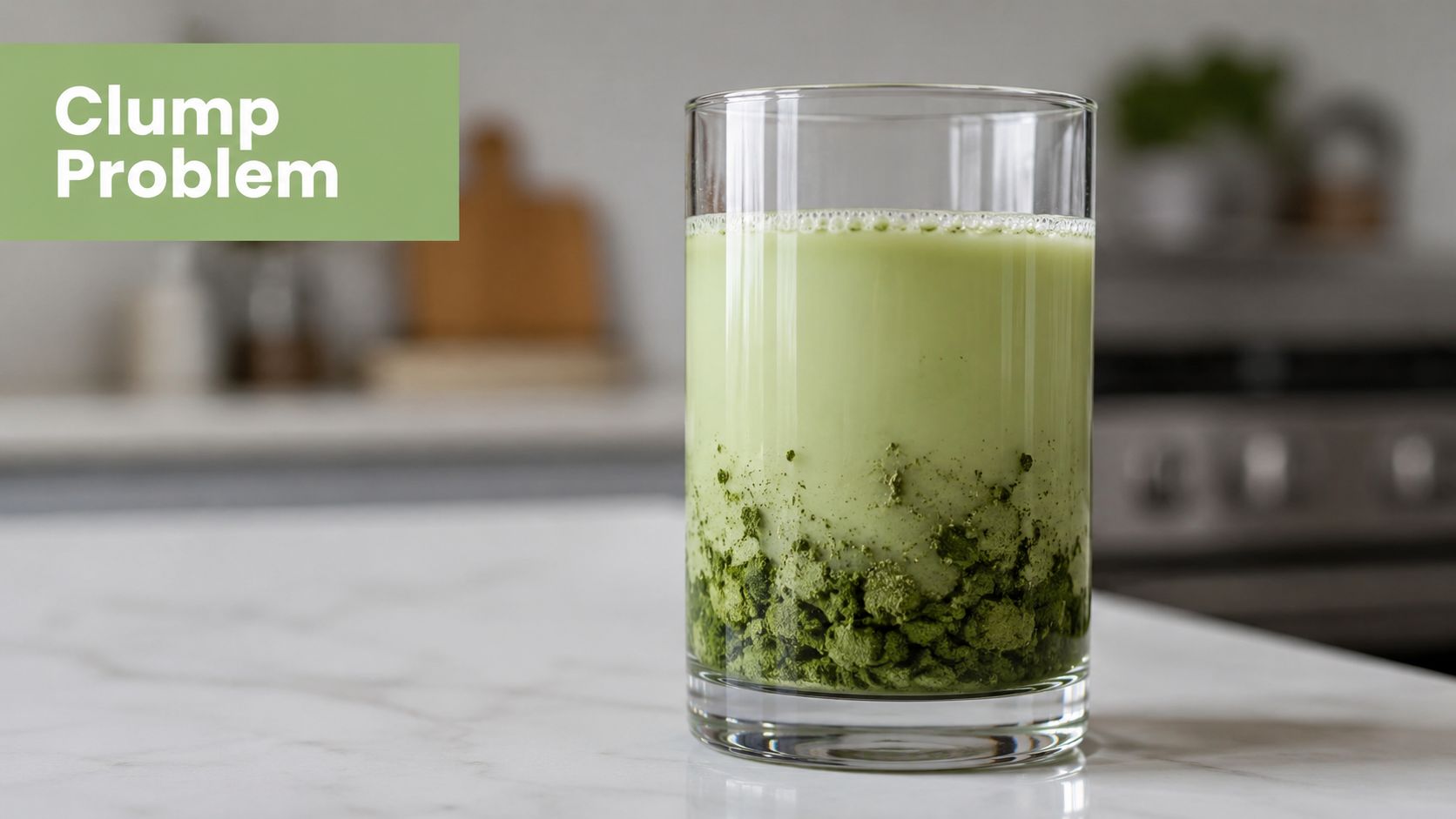
A clumpy cup usually means the powder never fully hydrated. Sifting helps, but the slurry step matters just as much. Give the matcha enough water to disperse before the milk goes in, and whisk until the surface looks even rather than speckled.
Bitterness usually points to heat or handling. Water that is too hot can push the tea toward a sharper finish, and overwhisking can make the drink feel thin and aggressive. Keep the water around 75 to 80°C, then stop once the slurry is smooth, as shown in matcha latte guidance.
Pale foam that disappears fast is usually a milk problem. The milk may not have enough structure, or it may have been froth warmed too little to hold microfoam. Warm it gently, then give it a short final froth instead of chasing a big airy cap that falls apart in the cup.
A bamboo chasen still gives the most reliable surface texture, especially if you care about a fine, even foam. A handheld milk frother is easier to use and works well once the matcha is already hydrated. A shaker bottle is the fastest option, though the texture is rougher, and an electric whisk sits between the two, quick enough for home use but less polished than a chasen.
For whisking technique that helps the slurry come together, Pep Tea's how to whisk matcha guide is a practical reference. The base has to be right first. No frother fixes a clumpy slurry.
Taking the Reddit Recipe From Home to Your Café Menu
The home version scales cleanly into café service because the logic stays the same. A good venue doesn't need to reinvent matcha, it needs to reproduce the same ratio, texture, and pour order every shift. That's especially useful for Australian cafés that want one signature hot latte, one signature iced latte, and a sugar-free option without sending staff down a rabbit hole.
Menu structure that makes sense
A straightforward menu can run from the same base. Use the 4/40/140 style as the internal benchmark, then scale the milk volume to suit your cup size and whether the drink is served hot or iced. A 12 oz iced serve maps well to the Reddit-style formula already mentioned, and a larger glass can stretch the same method without changing the flavour logic.
Ceremonial-grade matcha makes the strongest case on a menu where the drink is sold as a premium tea beverage, while culinary-grade matcha makes more sense in baking, blended drinks, or cost-sensitive applications. That isn't about hype, it's about matching quality level to the drink's role. If the matcha is the hero, use the cleaner powder. If it's one ingredient among several, the cheaper grade can be the practical choice.
Training staff for consistency
Staff need the same physical sequence every time. Sift, whisk the slurry, then add milk or ice. If one shift dumps powder straight into milk and another uses a proper slurry, the drink won't taste like the same product.
Consistency sells the second cup, not just the first one.
If your venue wants a reliable organic source for that menu build, one option is Pep Tea's organic matcha range, which is positioned for cafés, wholesale, and home use in Australia. It fits the same practical standard the Reddit recipes point toward, just in a form a venue can stock and repeat.
If you're ready to turn a clumpy home experiment into a drink you'll want to remake, explore Pep Tea's organic matcha and tea range at Pep Tea. We keep the focus on clean ingredients, café-friendly recipes, and practical brewing support so you can make a smoother matcha at home or serve one with confidence in your venue.