
Tag: matcha nutrition
Matcha Latte Calories and How to Reduce Them
A matcha latte isn't automatically a light drink. In Australia, the phrase can describe anything from a low-energy sachet prepared at home to a flavoured café drink with several hundred calories. The matcha powder matters, but milk, portion size, syrups and toppings usually shape the final energy load far more.
That's why a single online answer to “how many calories are in a matcha latte?” can be misleading. A standard iced drink, a pistachio version, a bubble tea serve and a supermarket sachet aren't nutritionally interchangeable. Learning to read the recipe behind the label is the practical way to manage matcha latte calories without giving up the creamy, earthy drink you enjoy.
The Truth About Matcha Latte Calories
Many Australians order matcha expecting a universally wholesome alternative to coffee or hot chocolate. Pure matcha has a reputation for being clean and functional, but a café latte is a prepared recipe, not just green tea in a cup. Once milk, sugar, flavour syrup, cream or toppings enter the picture, the energy content can change sharply.
Australian menus make that variation clear. McCafé lists a Matcha Latte at about 184 kcal, while Jamaica Blue lists its Medium Matcha Latte at 177 kcal. Starbucks Australia lists an Iced Matcha Green Tea Latte at 240 kcal for a Grande, whereas its flavoured iced products range from 318 kcal to 339 kcal, depending on the recipe and size. These examples are shown in this Australian matcha latte guide, and they make one point hard to miss: “matcha latte” isn't a reliable calorie description on its own.
The label hides the recipe
A café menu may tell you the drink name and size without clearly showing the milk, sweetener concentration or topping formula. Two drinks with the same name can therefore have very different kilojoule and calorie counts.
Starbucks Australia's Pistachio Flavoured Matcha Latte rises from 318 kcal in a Small to 626 kcal in a Venti, while the listed serving sizes also increase from 273 mL to 591 mL. That's a difference of more than 300 kcal, driven by the combined effect of a larger serve and flavouring. The Starbucks Australia product listing provides the serving details.
Practical rule: Treat the flavour name and cup size as nutrition information, not decoration.
A matcha latte can still fit comfortably into a balanced routine. The useful question isn't whether matcha is “good” or “bad”. Ask instead: what's in this particular drink, and how often am I choosing it?
Breaking Down the Ingredients and Energy Load
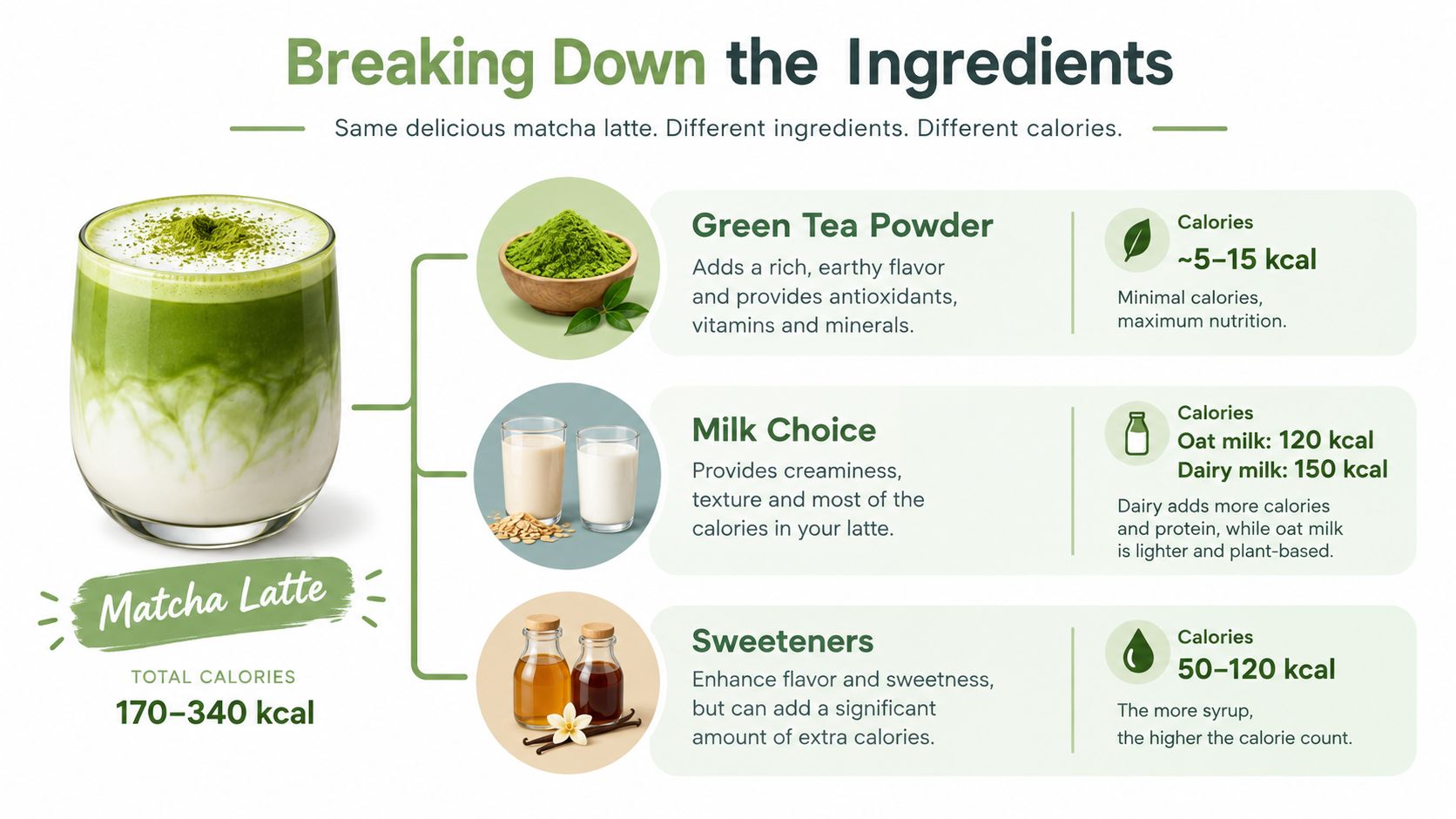
A matcha latte has three main energy contributors: the powder, the liquid base and anything added for sweetness or flavour. Pure matcha is usually the smallest contributor. The larger differences come from the volume and type of milk, plus sugar-containing powders, syrups and toppings.
Matcha powder is rarely the main issue
Matcha is finely ground green tea leaf, so it contributes flavour, colour and naturally occurring compounds such as catechins and L-theanine. In a latte, however, the powder itself generally accounts for far less energy than a generous serving of milk or sweetened flavour base. Increasing the powder dose may make the drink stronger and more bitter, but it isn't usually the most effective way to reduce matcha latte calories.
The liquid base has a much bigger practical effect. A neutral Australian calories guide gives an at-home range of about 52 kcal with almond milk to 154 kcal with whole dairy, showing how milk choice can outweigh the matcha itself. Those figures are discussed in the Australian matcha latte nutrition overview.
Milk and sweeteners set the total
Milk contributes energy through its natural or added carbohydrate, fat and protein. Plant-based options also vary, particularly when they're sweetened or formulated for café steaming. The word “oat” or “almond” doesn't automatically mean low-energy, so check the product or café nutrition information where it's available.
Sweeteners create another layer of variation:
- Plain powder: Gives you control over the final drink, especially when mixed with unsweetened milk.
- Pre-mixed powder: May include sugar and milk solids before you add any extra sweetener.
- Flavoured syrup: Can turn a simple tea latte into a dessert-style drink.
- Toppings: Creamy foams, sauces and confectionery-style additions add energy without making the cup feel much larger.
Woolworths lists Twinings Matcha Latte Sachets at 251 kJ per serving, about 60 kcal, with 12.2 g of carbohydrate and 10.4 g of sugars, while Morning Made Matcha Latte Original is listed at 80 kJ per serving, about 19 kcal, with 0.2 g of sugars. The contrast appears in the Morning Made product information. It's a formulation comparison, not a judgement about every sachet.
For a home recipe, you can enter the exact milk and sweetener quantities into a recipe calorie calculator. That's more useful than relying on a generic matcha latte estimate when your ingredients differ from a café recipe.
One more detail deserves attention: caffeine isn't the same thing as calories. Matcha can contribute caffeine even when the drink is prepared with little energy. For a clearer explanation of what affects caffeine in the cup, see how caffeine works in a matcha latte.
Comparing Popular Australian Cafes and Retail Brands
Real menus show why matcha latte calories need an Australian context. The figures below come from café and retail listings, but they shouldn't be treated as a universal ranking. Recipes, sizes and preparation methods differ, and a product can change over time.
| Brand / Product | Size / Serve | Calories (kcal) |
|---|---|---|
| McCafé Matcha Latte | One serving | 184 |
| Jamaica Blue Matcha Latte | Medium | 177 |
| Chatime Matcha Latte | Regular | 192 |
| Chatime Matcha Latte | Large | 246 |
| Starbucks Iced Matcha Green Tea Latte | Tall, 354 mL | 184 |
| Starbucks Iced Matcha Green Tea Latte | Grande, 473 mL | 240 |
| Starbucks Pistachio Flavoured Matcha Latte | Small, 273 mL | 318 |
| Starbucks Pistachio Flavoured Matcha Latte | Tall | 390 |
| Starbucks Pistachio Flavoured Matcha Latte | Grande | 519 |
| Starbucks Pistachio Flavoured Matcha Latte | Venti, 591 mL | 626 |
| Twinings Matcha Latte Sachets | One serving | About 60 |
| Morning Made Matcha Latte Original | One listed serving | About 19 |
The Jamaica Blue figures come from its Australian iced matcha menu information. Chatime's Regular and Large values, including the 54 kcal difference between sizes, are listed by Macro Menu Australia. Starbucks' standard iced figures and flavoured examples come from the linked Australian product listings cited above.
What the comparison tells you
The café examples cluster differently from the low-energy retail products because they're prepared as milk-based drinks, often with a larger liquid volume. The flavoured Starbucks range shows how quickly a sweetened recipe can move into dessert territory. A standard iced matcha and a pistachio matcha may share a green colour, but they don't share the same nutritional profile.
Retail sachets require label reading too. Twinings' sachet contains substantially more energy and sugar than Morning Made's listed serving, despite both being sold as matcha latte products. A pre-mixed base can be convenient, but convenience doesn't tell you how much sugar or milk powder is included.
The useful comparison isn't brand versus brand. It's unsweetened versus sweetened, smaller versus larger, and plain versus flavoured.
When ordering, ask whether the powder is sweetened, which milk is used and whether the syrup is optional. That short conversation can reveal more than the drink name.
How to Order and Brew Lighter Matcha Lattes
You don't need to drink matcha plain to lower the energy content. The strongest approach is to control the ingredients that contribute most, while keeping enough milk to create the texture you like.
Ordering at a café
Use a specific order rather than asking vaguely for a “healthy” matcha. Café staff may interpret that request in different ways.
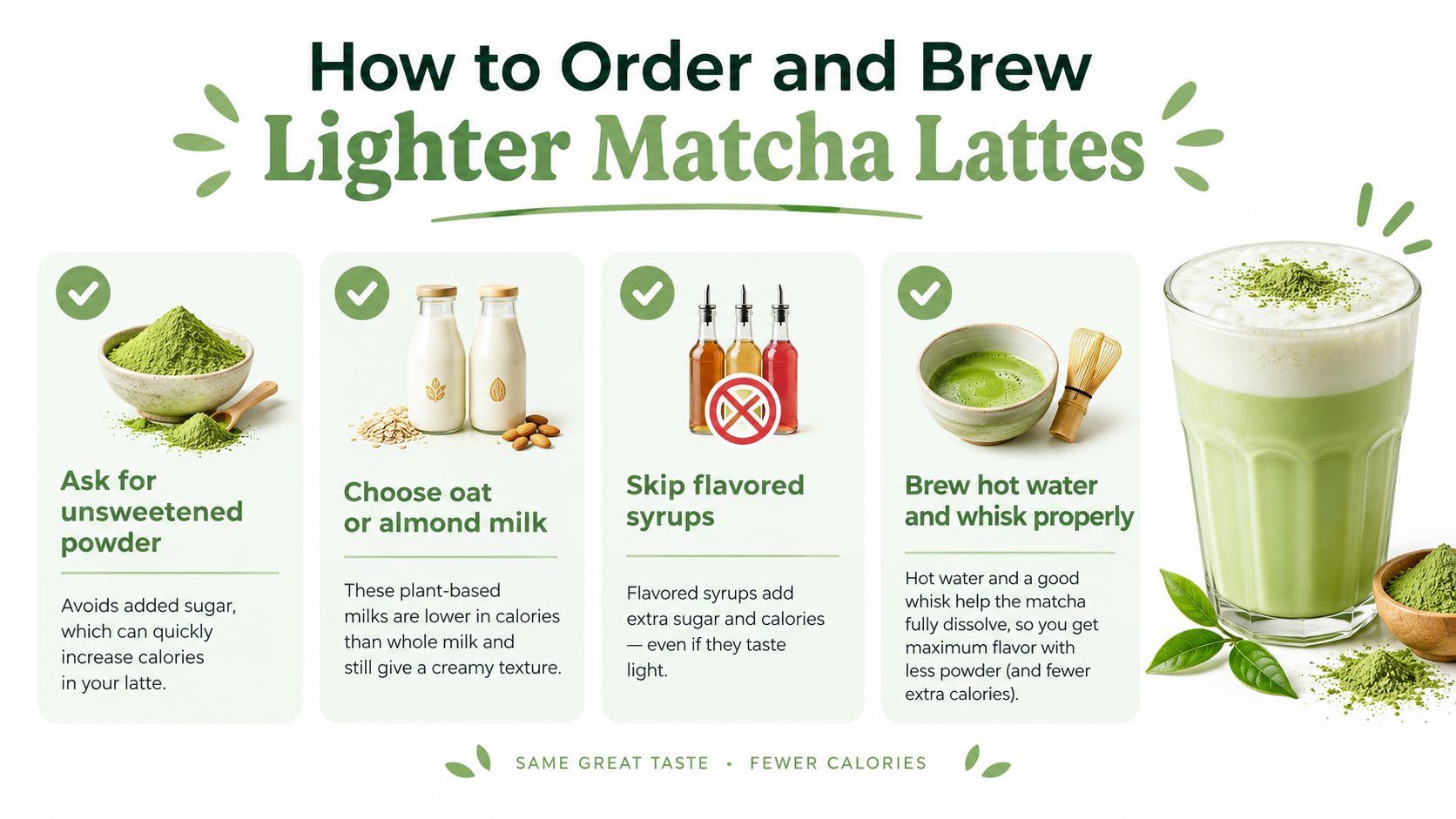
- Ask for unsweetened powder. Some café bases are already sweetened, so removing an added syrup won't necessarily remove all the sugar.
- Choose your milk deliberately. Unsweetened almond milk can be a lower-energy option, while oat and dairy recipes vary by brand and pour size. If the café publishes nutrition information, use that rather than guessing.
- Skip flavoured syrups and dessert toppings. Pistachio, white chocolate, cream foam and sauce are the additions most likely to change a simple latte into a richer treat.
- Choose a smaller size if you want the same style of drink less often. The Chatime comparison demonstrates that serving volume alone can create a measurable difference.
- Ask for the recipe if you're tracking closely. “Is the matcha sweetened, and what milk do you use?” is more useful than relying on the menu title.
Making one at home
Home preparation gives you control without removing the ritual. Whisk the powder with a small amount of hot water first, then add chilled or warmed unsweetened milk. Proper whisking disperses the tea and helps the drink taste smoother, which can reduce the temptation to cover bitterness with sugar.
A simple method looks like this:
- Sift the matcha if it's lumpy. This creates a more even texture.
- Add hot, not boiling, water. Very high heat can make the flavour seem harsher.
- Whisk briskly until smooth. A bamboo whisk or handheld frother works well.
- Pour in unsweetened milk. Adjust the amount for a stronger tea flavour or creamier finish.
- Taste before sweetening. If you need sweetness, add a small amount deliberately rather than using a pre-sweetened base by default.
Start with the powder and milk you actually want, then add sweetness only if the finished drink needs it.
This method also makes it easier to compare your home recipe with a café drink. You'll know whether the difference comes from milk, sweetener or serving size instead of blaming the matcha.
Clean Energy and Sustained Focus Without the Crash
A lower-calorie drink can be useful, but the quality of the whole beverage matters too. Pure, unsweetened matcha supplies the tea leaf itself, while a heavily flavoured latte can deliver much more sugar and energy without necessarily providing a better tea experience.

Matcha contains naturally occurring catechins, including antioxidant compounds, and L-theanine. L-theanine is an amino acid found in tea that many people associate with a calmer, more settled experience alongside caffeine. That doesn't make matcha a medical treatment or guarantee a particular feeling, but it helps explain why some drinkers prefer it for focused work.
The caffeine amount depends on the quantity of powder used and the recipe. It also deserves attention if you're sensitive to caffeine or already drink coffee during the day. A lower-calorie latte isn't automatically suitable at every time of day, especially if it affects your sleep or makes you feel uncomfortable.
Sweetness changes the experience
A strongly sweetened drink can taste immediately rewarding, but it can also make the earthy character of quality matcha difficult to notice. When you reduce syrup gradually, your palate has more opportunity to recognise vegetal, creamy and lightly umami notes.
That matters for cafés and home drinkers alike. A café menu can offer a satisfying non-alcoholic option without relying on heavy flavouring, while a home routine can use organic Japanese matcha, unsweetened milk and careful whisking. The result is a drink built around tea rather than a sweet dessert base.
Choose the version that supports your day, not just the version with the most appealing name. Clean energy starts with a clear ingredient list and a serving you can enjoy consistently.
Building a Mindful Matcha Routine at Home
A home matcha habit makes the recipe visible. You choose the powder, measure the milk, decide whether sweetness is needed and can prepare a smaller or larger drink according to the occasion. That control is often more valuable than searching for one universal matcha latte calorie number.
For a weekday cup, use authentic stone-ground Japanese matcha with a naturally vibrant colour and balanced flavour. A ceremonial-grade matcha is suited to whisking with water or milk, while a culinary-grade matcha is practical for smoothies, baking and other recipes where stronger flavours are already present. Neither grade removes the need to check the rest of the recipe.
Keep the routine simple:
- Whisk matcha with hot water.
- Add unsweetened milk.
- Taste before adding sweetener.
- Reserve flavoured versions for an occasional treat.
- Notice how the drink fits into your overall day.
Australia's café and retail market shows that milk, added sugar and portion size drive matcha latte calories far more than the green tea label suggests. Once you understand that, you can enjoy matcha with less guesswork and make choices that suit your preferences.
Pep Tea offers premium organic Japanese matcha for mindful home preparation, along with Australian-brewed sugar-free organic kombucha from the Hunter Valley, NSW. Explore the range at Pep Tea and choose a clean, low-sugar option for your next daily drink.