
Tag: matcha milk powder
Matcha Milk Powder Guide: How to Use It Well

You've probably seen matcha milk powder on a café menu, in a supermarket sachet, or beside the oat milk at home and wondered what you are truly buying. Is it matcha with milk powder, or is it a sweetened latte mix with only a little tea? The answer matters because the ingredient list affects colour, flavour, texture, caffeine, sweetness, and how consistently the drink performs.
Australia's matcha market generated more than A$54 million in revenue in 2024 and is projected to exceed A$81 million by 2030, with powder holding a 55.08% share of revenue in 2024, according to Australian matcha latte powder market reporting. Matcha milk powder is already suited to cafés, retail shelves, home lattes, smoothies, and baking. The practical question is how to choose and use it without sacrificing the character of the tea.
What Matcha Milk Powder Actually Is
Matcha milk powder is a pre-blended drink mix. It usually combines finely ground Japanese green tea with dairy or plant-based milk solids, a sweetener, and functional ingredients that help the powder dissolve, remain stable, or produce foam.
That makes it different from pure matcha. Ceremonial-grade and culinary-grade matcha are generally sold as tea powder, so you add the milk, water, and sweetener separately. A traditional café matcha latte also starts with matcha whisked with water, followed by steamed milk. It isn't the same product as a pre-mixed latte powder.
| Format | Main Ingredients | Prep Method | Typical Use |
|---|---|---|---|
| Matcha milk powder | Matcha, milk solids, sweetener, stabilisers or creamer | Mix with hot or cold liquid, then froth | Fast home drinks, cafés, takeaway menus |
| Pure matcha | Stone-ground tea leaves | Sift and whisk with water, then add milk separately | Traditional tea, controlled lattes, baking |
| Café latte | Pure matcha, water, fresh dairy or plant milk | Whisk matcha, steam or froth milk | Made-to-order café service |
Read the ingredient list before the front label
Australian matcha milk powders commonly contain sugar, dextrose, maltodextrin, skim milk powder, non-dairy creamer, vegetable oil, emulsifiers, and stabilisers. These ingredients aren't automatically a problem. Manufacturers use them to improve shelf stability, reduce clumping, create body, and help the drink froth.
The trade-off is that every added ingredient changes the tea. Sugar can soften bitterness but may dominate delicate umami. Creamer can create a fuller mouthfeel, while dextrin and milk solids may make the drink appear paler or feel chalky if the powder is over-diluted. Excess heat can also affect colour and texture.
Use the guide to what matcha powder is to refresh the distinction between pure matcha and blended products. For a broader look at powdered green tea products, the VitzAi.com green tea powder review offers useful comparison context, although you should still judge any product by its own ingredient panel.
Start with three checks:
- Matcha position: Ingredients are listed from greatest to least amount. Matcha appearing near the beginning generally gives you more confidence that tea is central to the blend.
- Sweetener level: Decide whether you want a ready-sweetened latte or a product that leaves room for your own honey, sugar, or syrup.
- Milk source: Check whether the blend contains skim milk, lactose, plant milk, coconut ingredients, or a non-dairy creamer.
How to Prepare a Matcha Latte With Powder
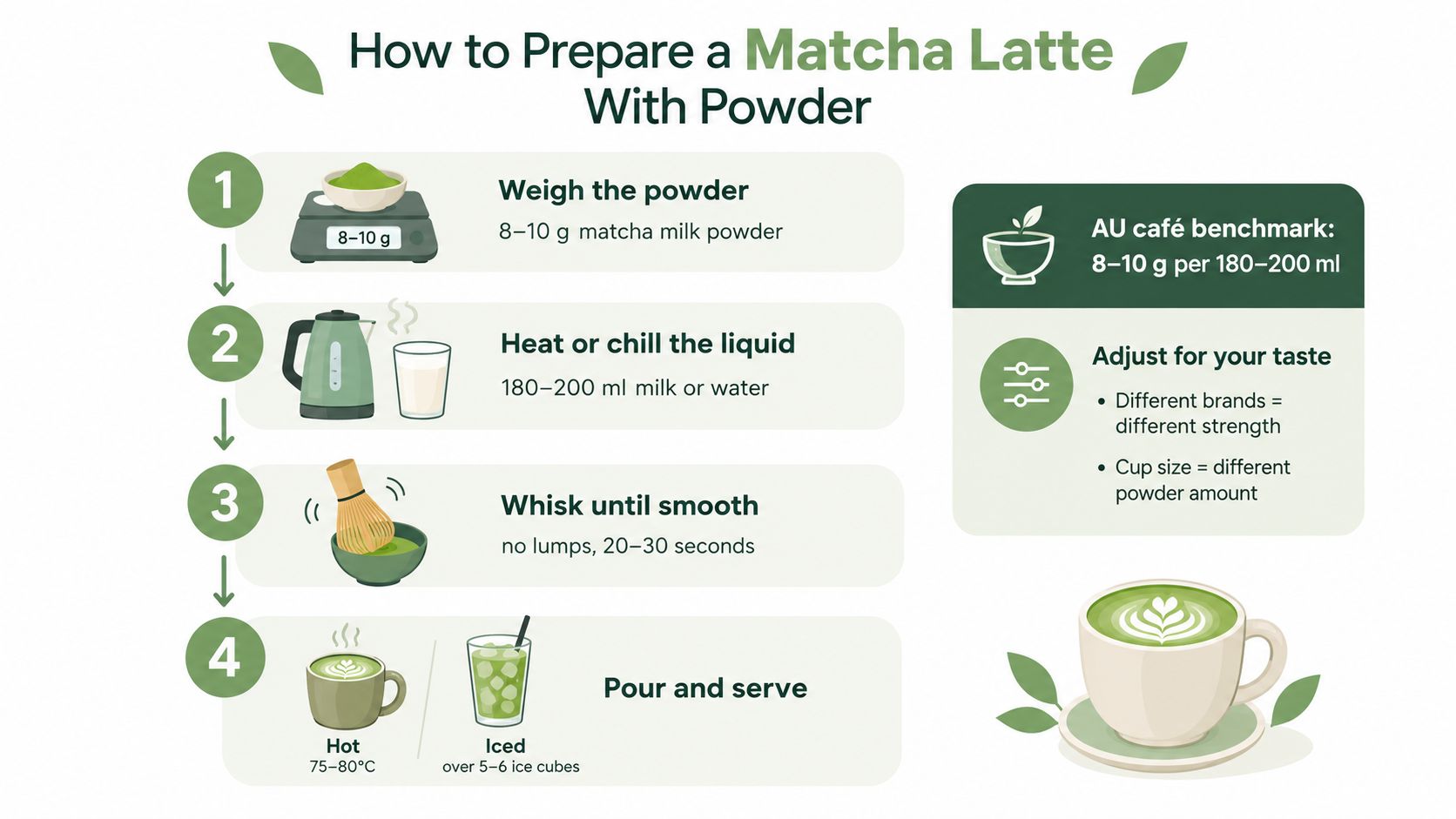
A reliable drink starts with a repeatable dose. An Australian retail benchmark uses 4 g of powder with 200 mL of water for a latte-style preparation, as described in Australian matcha powder market coverage. For café testing, a practical starting point is 8 to 10 g of matcha milk powder per 180 to 200 mL of milk or water, then adjust for the brand's strength, sweetness, and cup size.
Hot preparation
- Measure the powder. Weigh it rather than relying on a heaped spoon. Consistent dosing matters behind a bar and makes home recipes easier to repeat.
- Add a small amount of liquid. Use warm water or milk first and stir it into a smooth paste. This prevents dry pockets from surviving beneath the surface.
- Add the remaining liquid gradually. Water around 75 to 80°C is a useful working range for a hot latte. Very hot liquid can scorch milk solids and make the tea taste harsh.
- Froth until glossy. A steam wand gives the smoothest microfoam, while a handheld frother works well at home. Stop once the drink looks even and lightly aerated.
A sealed jar can replace a whisk for the dissolving stage. Add the powder and liquid, leave enough room for movement, and shake firmly before pouring into a cup. If you're interested in beverage formulation beyond tea, this comparison of high-protein coffee for athletes is a useful reminder that powders need thorough mixing to avoid sediment and uneven texture.
Iced preparation
For an iced matcha latte, dissolve the powder in a small amount of warm water first. Pour that concentrate over cold milk, stir or shake until smooth, and then build the drink over ice. Adding powder directly to cold milk often produces floating specks and stubborn clumps.
Service rule: Taste the liquid before adding ice. If the drink already seems weak, ice will make the problem more obvious.
A quick calibration method is to make one sample at your intended dose and compare its intensity with a single espresso-strength drink. You're not trying to make matcha taste like coffee. You're checking whether the tea still carries through the milk.
For more traditional whisking guidance, see how to make matcha tea from powder.
Choosing the Right Milk for Hot and Iced Drinks
The right milk depends on the drink you want, the equipment available, and the customer you're serving. No single milk performs perfectly in every matcha milk powder recipe.
Full-cream dairy gives a rounded texture and carries sweetness well. It's a dependable choice for a classic hot latte, although low-fat dairy can produce a thinner drink and may make the powder's texture more noticeable.
Oat milk is popular in café service because its mild flavour allows matcha to remain present while its texture usually stretches well under steam. Different brands behave differently, so test the exact product you plan to serve rather than assuming every oat milk will foam identically.
Soy milk can provide substantial body and a stable foam, especially for customers seeking a more protein-rich plant option. Its distinctive flavour can either complement or compete with grassy matcha.
Almond milk produces a lighter drink with a nutty note, but its foam can be less durable. Coconut milk brings a clear tropical character and works especially well with vanilla, mango, lime, or ginger. A coconut-based matcha can be explored through Pep Tea's matcha coconut milk recipe.
| Milk Type | Texture & Body | Froth Stability | Flavour Carry | AU Cost Note |
|---|---|---|---|---|
| Full-cream dairy | Rich and rounded | Reliable when steamed correctly | Carries sweetness and umami | Often a practical café baseline |
| Oat | Creamy and smooth | Generally strong with barista-style products | Mild, allowing matcha to lead | Compare brands before costing a menu |
| Soy | Full and protein-driven | Can produce good foam | More distinctive than oat | Useful for a protein-conscious audience |
| Almond | Light and clean | Usually less durable | Nutty and delicate | Suits lighter drinks and iced formats |
| Coconut | Thick or silky, depending on product | Variable | Tropical and noticeable | Best positioned as a flavoured variation |
Cold drinks need more control
Cold milk dissolves powder more slowly than warm liquid. Make a smooth concentrate first, then add the chilled milk and ice. Avoid filling a glass with ice before mixing, because the drink becomes harder to stir and the extra dilution can flatten the colour.
Customers comparing dairy options may also find this practical guide to calories in one percent milk useful. For cafés, the important point is to list the milk clearly and cost each version separately. Milk choice affects flavour, foam, portion size, and ingredient cost.
Recipe Variations Beyond the Standard Latte
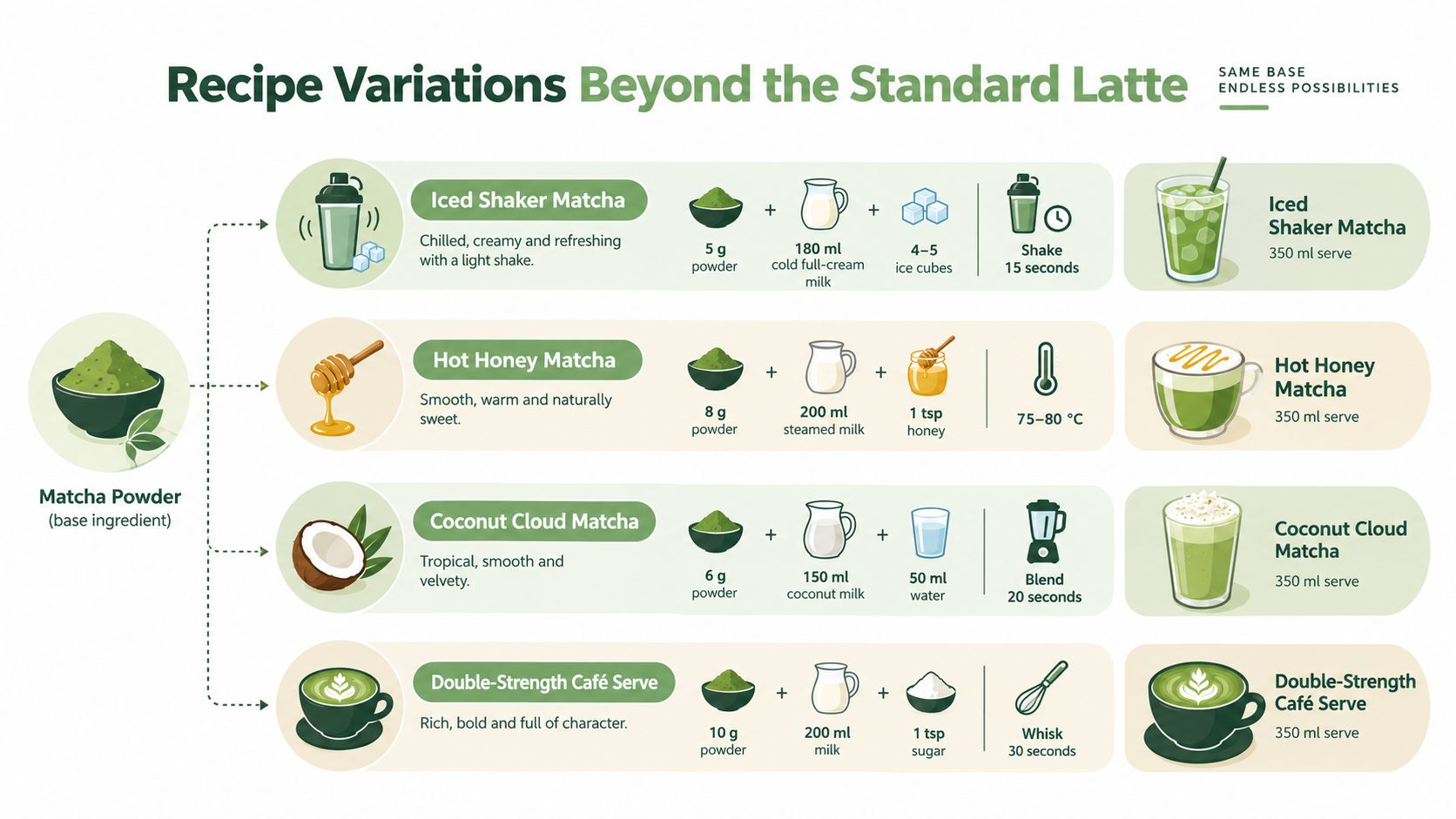
Matcha milk powder works beyond the familiar hot takeaway cup. Because the blend already contains milk solids and sweetener, it can be convenient in recipes where you want tea flavour and body in one scoop.
Iced shaker matcha
For a 350 mL serve, combine 5 g matcha milk powder, 180 mL cold full-cream or oat milk, and 60 mL chilled water in a sealed shaker. Add ice and shake hard for 15 seconds. The movement creates a light foam without a steam wand.
Use oat milk for a softer café-style texture, or full-cream dairy for a sweeter, fuller result. If your blend is already sweetened, taste before adding syrup.
Breakfast smoothie
Blend 6 g powder, 150 mL oat milk, one frozen banana, and a spoon of cashew butter. The banana masks some of the grassy character that can appear in a less refined blend, while cashew butter adds richness.
This is a good place for culinary-grade matcha or a latte blend that you wouldn't necessarily drink with water. Keep the mixture cold so the colour stays fresh and the banana remains the dominant texture.
Matcha baking mix
For cookies or a single-serve mug cake, combine 8 g matcha milk powder with 15 g sugar as part of the dry ingredients. Replace a small portion of the flour with the powder and add 20 mL extra milk to protect the crumb from drying.
Check the blend before adding sugar. A pre-sweetened powder may need little or none, particularly in a café recipe where toppings or icing add sweetness later.
Honey and ginger matcha
Warm 200 mL full-cream milk with a slice of bruised ginger. Mix 4 g powder with a small amount of warm water, then add the infused milk and 10 mL honey. Keep the milk warm rather than boiling so the drink stays smooth.
For a plant-based version, oat milk provides gentle sweetness, while coconut milk gives the drink a more obvious tropical direction. Ginger, honey, and coconut can each become strong flavours, so use them as accents rather than allowing them to hide the matcha completely.
Substitutions, Storage, and Shelf Life
A café can run out of a blend without removing matcha from the menu, but the substitute needs to be written down and tested. For one serve, replace 8 g matcha milk powder with 4 g culinary-grade pure matcha, 150 mL milk, 2 g skim milk powder, and 4 g sugar. This recreates some of the body and sweetness, although it won't reproduce the original blend exactly.
At home, a screw-top jar is a practical alternative to a steam wand. Shake the liquid and powder for 20 seconds, open the lid carefully, and pour immediately. Don't use a jar with a damaged seal or fill it completely, because the mixture needs room to move.
| Scenario | Storage Time | Container | Emergency Substitute per Serve |
|---|---|---|---|
| Unopened tin | Up to 12 months from production | Sealed tin, below 25°C, away from light | Use a tested pure-matcha blend if required |
| Opened pouch | 4 to 6 weeks once sealed | Airtight container with desiccant | Pure matcha, milk powder, and sugar formula |
| Café service jar | Rotate using FIFO | Labelled 500 g jar with tight lid | Pre-weighed substitute recipe |
| Home working supply | Use promptly after opening | Original pouch inside an airtight container | Pure matcha prepared separately |
Manage stock before it becomes a menu problem
Australia's Japanese green tea imports reached 195,319 kilograms between January and August 2025, a 131% year-on-year increase, according to reporting on Australia's matcha supply and import growth. That growing demand sits alongside shortages that began in 2024 and worsened through 2025, with tighter supply and record import costs affecting cafés, as reported by the ABC's coverage of matcha shortages and prices.
For a café, sensible controls include:
- Hold a safety stock: Keep roughly four weeks of cover where the product is central to the menu.
- Qualify another supplier: Test a second blend before the first supplier becomes unavailable.
- Avoid single-lane dependence: A product that relies on one import route creates more exposure during shortages.
- Use FIFO: Label the open date and move older stock forward.
- Record the recipe: Staff need the dose, milk volume, temperature, and substitution formula in one place.
Mixed tea products can also fall under different Australian biosecurity conditions. The Australian Government's plant product import guidance explains that tea made purely from Camellia sinensis is considered minimal biosecurity risk, while mixed products may require different conditions. The government also advises that plant-origin tea materials must be thoroughly dried before entry, which matters for blends containing other ingredients.
Why Some Matcha Milk Powders Disappoint
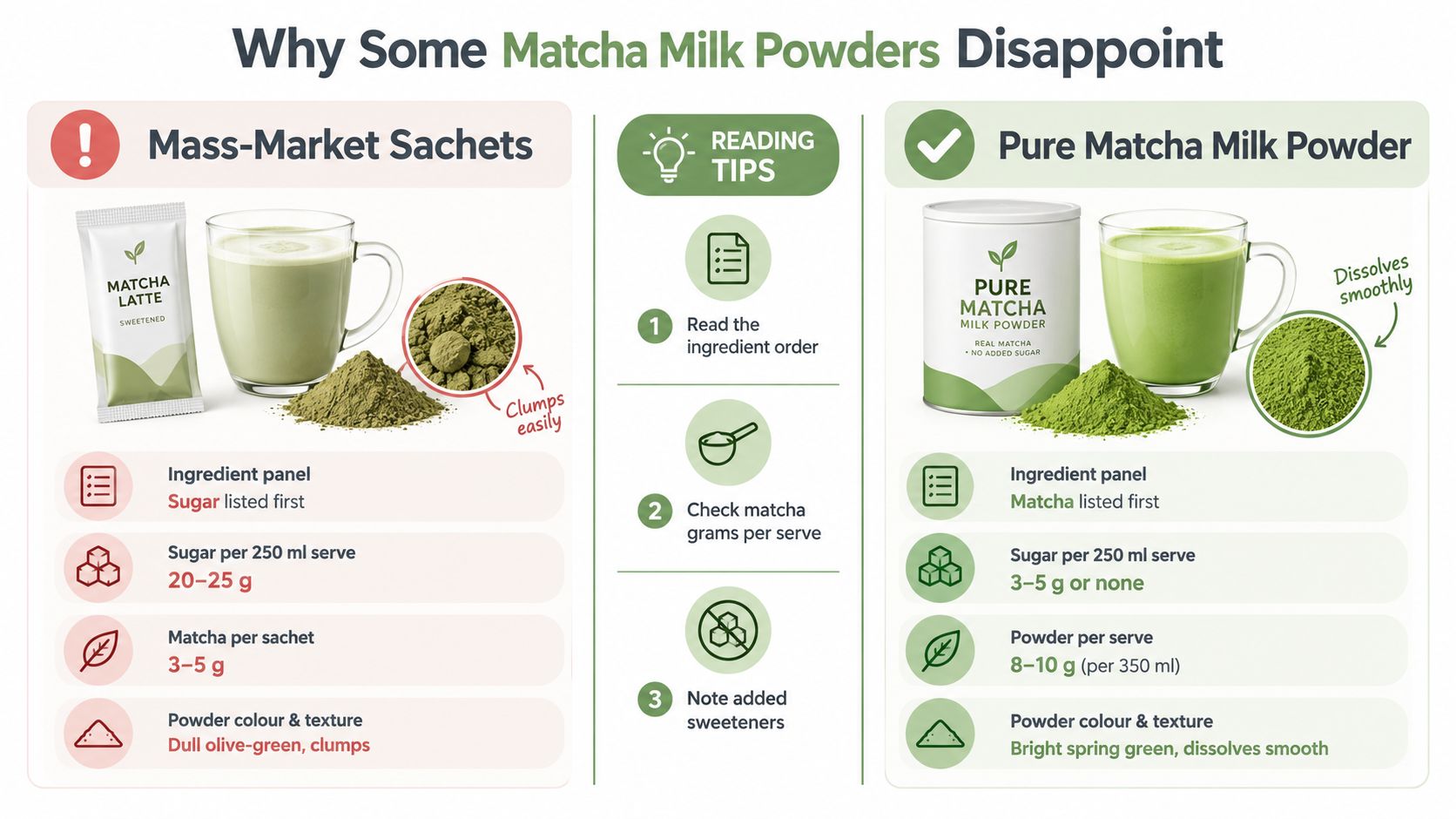
A sweeter powder isn't automatically a better shortcut. Many mass-market sachets are designed to taste immediately pleasant, so sugar, maltodextrin, dextrin, vegetable fat creamer, or other milk-style ingredients can dominate the blend before the tea has a chance to show its colour and savoury character.
The ingredient panel tells you more than the packaging. Some products list sugar or maltodextrin first, followed by creamer and only a small amount of matcha, sometimes below 10%. That can produce a muted olive-green colour, a powdery finish, and a latte that tastes more like sweetened milk than tea.
What the extras change
Sugar reduces perceived bitterness but can make it difficult to control sweetness across hot, iced, and blended drinks. Dextrin can improve powder handling, yet too much may leave a chalky texture. Creaming agents add body, but they can leave a film on cups and make commercial frothers harder to clean.
The tea itself may also feel flat when milk solids coat the palate. You get thickness without much umami, and the bright green colour expected from matcha becomes less convincing.
Label test: Look for matcha high in the ingredient order, check the grams of tea per serve, and identify every added sweetener before you judge value.
Unflavoured blends built around a higher proportion of matcha can give a more defensible café drink, while pure ceremonial-grade matcha gives you maximum control over dosing and sweetness. The trade-off is extra preparation. You'll need to weigh, sift, whisk, and add the milk separately, but you can adjust the drink for each customer and recipe.
For a café, also watch the cleaning burden. A powder that clumps or leaves residue may slow service even when its purchase price appears attractive. A product that dissolves cleanly, tastes balanced, and has a written recipe can cost less operationally than a cheaper blend that needs repeated reworking.
Practical Takeaways and Where to Go Next
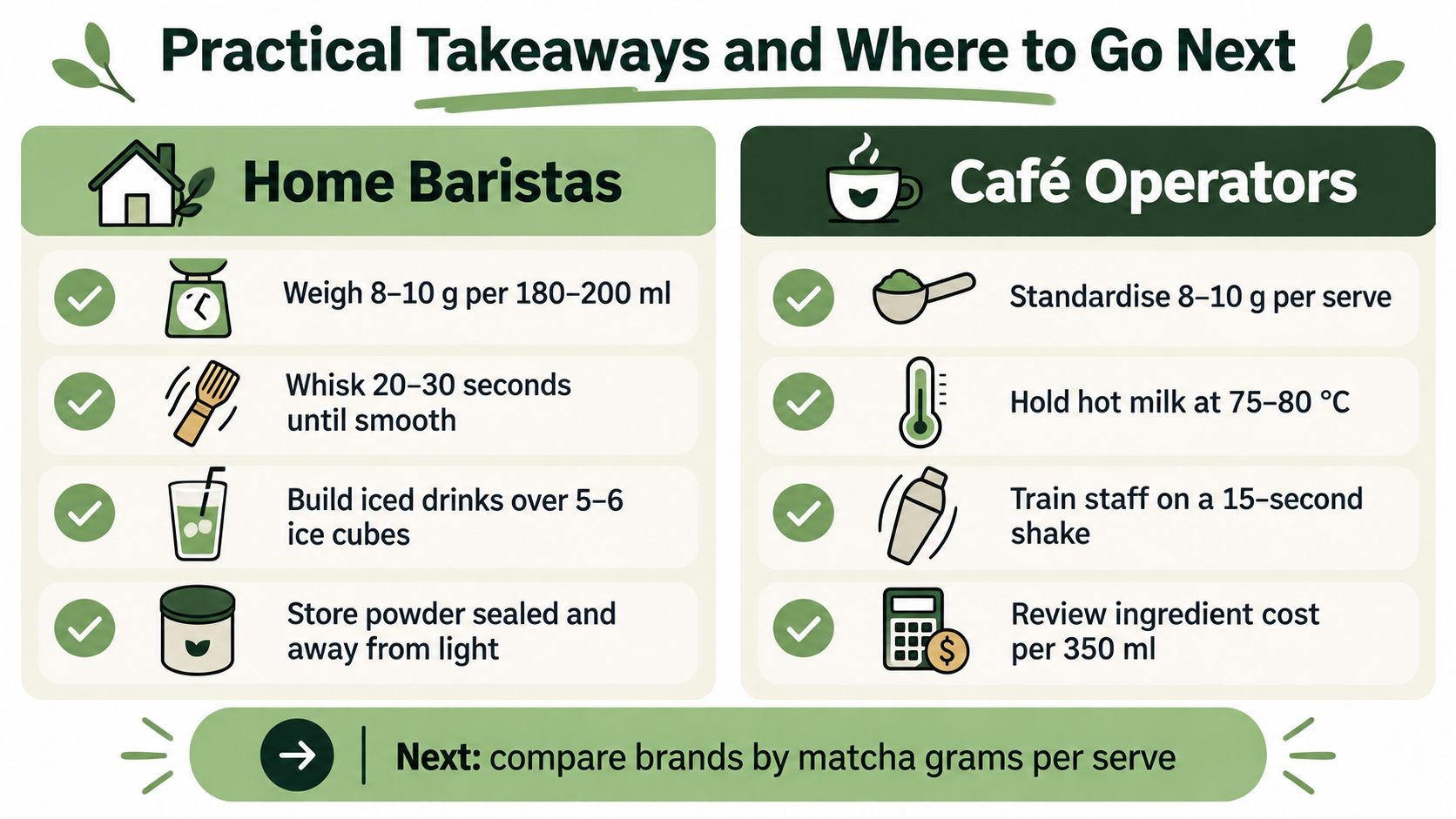
The best matcha milk powder is the one that suits the drink you're making. A sweetened blend may be convenient for a quick iced latte, while pure matcha is better when you want control over tea intensity, milk choice, and sugar. Cafés need to judge both sensory quality and service performance.
For home baristas
- Weigh the powder: Start with the product's recommended serve, then adjust by taste rather than adding sweetness automatically.
- Use filtered water below 80°C: This helps protect the texture and reduces the harshness associated with overheated liquid.
- Sift before mixing: Sifting breaks up compacted powder and makes a smoother paste.
- Build iced drinks carefully: Mix the concentrate before adding milk and ice.
- Taste it plain first: Assess bitterness, sweetness, and tea strength before adding honey or syrup.
- Store it well: Keep the powder sealed, dry, and away from light.
For café operators
Standardise the recipe by cup size and train staff to use the same dose, liquid volume, and frothing method. Record the cost of the powder, chosen milk, sweetener, and any toppings before setting the menu price.
Keep stock organised with FIFO rotation and a supply buffer. Review the ingredient panel whenever you change supplier, because a substitution can alter sweetness, colour, foam, and customer expectations even when the name on the menu stays the same.
Australia's matcha audience includes traditional tea drinkers, latte customers, home cooks, and people looking for alternatives to heavily sweetened drinks. A clear ingredient list and a consistent recipe help you serve all of them honestly.
If you're ready to compare organic, single-origin, and sugar-free matcha options for home or café use, explore the range from Pep Tea and choose a format that gives you the level of sweetness and control you want.
Pep Tea offers organic Japanese matcha in ceremonial and culinary grades, along with guidance for hot lattes, iced drinks, and baking. Visit Pep Tea to compare matcha options and find a practical fit for your pantry or café menu.