
Tag: matcha guide
How to Whisk Matcha for the Perfect Frothy Cup in 2026

Ever had that moment? The matcha you make at home is a bit… clumpy. A little gritty. But the one at your favourite Aussie café is perfectly smooth, with a beautiful layer of foam on top. The difference isn't just the tea; it's the technique. The secret to unlocking that creamy texture and rich, umami flavour is all in the whisk.
Proper whisking is what separates a good matcha from a truly great one. It aerates the powder, suspends it in the water, and creates the delicate froth that defines the entire experience. This guide will show you exactly how to do it.
Why Proper Whisking Is the Key to Great Matcha
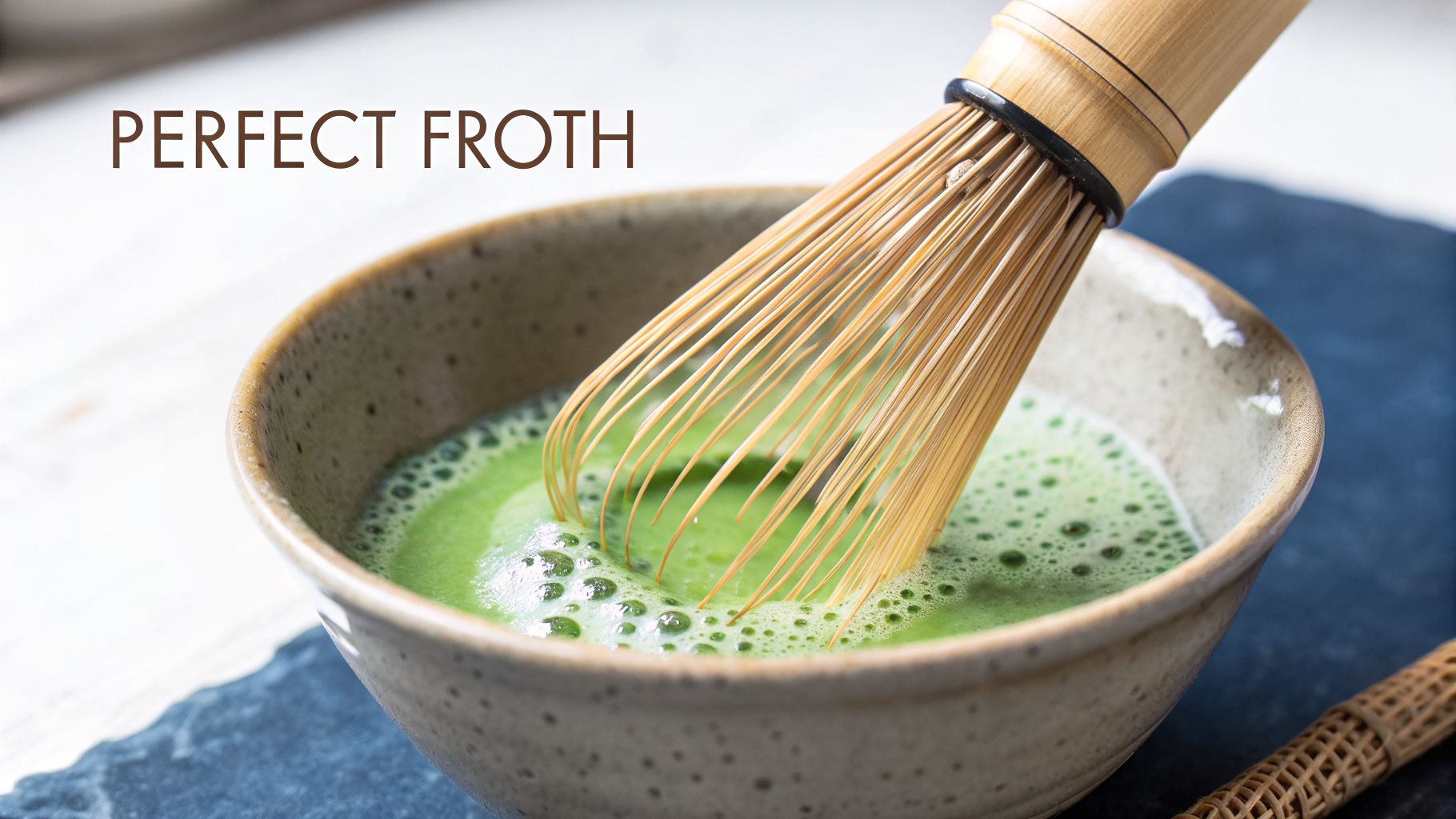
Learning how to whisk matcha correctly is more than just mixing tea and water. It’s a foundational skill that completely transforms the drink, turning a high-quality powder into something genuinely exceptional. This isn't just for a traditional Japanese tea ceremony; it’s just as vital for your daily ritual at home in Australia.
When you whisk vigorously, you’re not just stirring. You're forcing the fine, stone-ground tea particles into suspension, distributing them evenly throughout the water. Without this, the matcha powder quickly settles, leaving you with a gritty sediment at the bottom and a watery, unsatisfying drink. A good whisk ensures every single sip is consistently smooth and full-bodied.
Unlocking Flavour and Texture
The rapid motion of a traditional bamboo whisk, known as a chasen, whips thousands of tiny air bubbles into the liquid. This aeration is what creates that signature layer of creamy microfoam on top.
This delicate foam serves a few crucial purposes:
- Softens Bitterness: The foam mellows any inherent sharpness in the tea, allowing the naturally sweet and savoury umami notes to come forward.
- Creates a Creamy Mouthfeel: It gives the matcha a velvety, almost latte-like texture, even when it's made with nothing but water.
- Enhances Aroma: The froth helps release the fresh, vegetal aroma of the matcha, making it a full sensory experience.
Whisking isn't just a step; it's the bridge between a simple powder and a complex, rewarding experience. It’s what makes our Pep Tea organic ceremonial matcha truly shine, ensuring you enjoy the full depth of its flavour and health benefits.
This guide will take you beyond basic stirring. We'll get into the specific motions and tips needed to achieve that perfect, café-quality froth. We'll cover the tools, techniques, and nuances that will get you whisking correctly from your very first try, turning your kitchen into your new favourite matcha spot.
Gathering Your Essential Matcha Toolkit
You might be tempted to grab a fork or your electric milk frother, and look, we get it. It seems like an easy shortcut. But if you want to make an authentic, genuinely delicious bowl of matcha, using the right tools isn't just for show—it's the first step that actually matters.
Preparing matcha is as much about the process as the final drink. The tools were designed for a reason, and they work. It's like drinking good wine from a proper glass versus a coffee mug; the vessel itself fundamentally changes the experience.
The one tool you simply can’t skip is the traditional bamboo whisk, or chasen. This isn't just any whisk. Its dozens of fine, flexible tines are perfectly engineered to do three things at once: break up any stubborn clumps, aerate the tea, and suspend the fine powder evenly throughout the water.
A metal whisk, on the other hand, often imparts a faint metallic taste that clashes with the matcha's delicate flavour. Its rigid tines just can't produce that same creamy, micro-fine froth. The chasen works with the tea, not against it, coaxing out the best texture and taste.
Choosing the Right Chasen
Not all bamboo whisks are the same. You'll see them categorised by the number of prongs (or tines) they have, and this detail isn't just for tea ceremony masters; it directly affects the kind of matcha you can make.
- 80-Prong Chasen: This is your perfect daily workhorse. It has the ideal density and flexibility to whip up a beautiful, frothy foam for usucha (thin tea)—the light, everyday style of matcha most of us drink.
- 100 to 120-Prong Chasen: With more tines, this whisk is much denser. It's designed to create an exceptionally fine, silky foam, making it the go-to for koicha (thick tea). This style has a consistency almost like warm honey, and achieving that level of smoothness is impossible without a denser whisk.
The art of hand-carving a chasen from a single piece of bamboo has a deep history, stretching back to Japan's Muromachi period (1336-1568). It's a tradition born from centuries of perfecting the tea ceremony, and we get to bring that same craftsmanship right into our modern Aussie kitchens.
Completing Your Matcha Set
While the chasen is the hero, a couple of other pieces make the whole process smoother and more consistent.
First is the chawan, or matcha bowl. Its wide, flat bottom is a key design feature. This specific shape gives you the space you need to whisk vigorously in that essential 'W' or 'M' pattern, helping you build a rich froth without splashing tea all over your counter.
Then there’s the chashaku, a simple and surprisingly elegant bamboo scoop. It’s carved to measure out the perfect amount of matcha powder—roughly one gram—for a single serving. Using it takes the guesswork out of your ratios, so you get a consistent bowl every single time.
Having these three items on hand turns making tea from a chore into a mindful ritual. If you want to start with a beautifully curated setup, a complete matcha tea set available in Australia is a brilliant way to get everything you need in one go.
Mastering the Usucha Whisking Technique
Usucha, or 'thin tea', is the matcha you'll likely come back to every day. It’s light, vibrant, and crowned with a delicate layer of foam. Getting this right is the foundation of a great matcha practice, whether at home or in your café, and it's much simpler than it looks once you understand the rhythm.
The journey to a perfect bowl starts before any powder even hits the ceramic. First, prepare your tools. Soaking the tines of your bamboo whisk (the chasen) in warm water for a minute or two is a small ritual that pays off. This simple act 'blooms' the bamboo, making it soft and pliable, which is exactly what you want to prevent the delicate tines from snapping during the vigorous whisking to come.
This visual guide shows the essential trio for your daily matcha ritual.
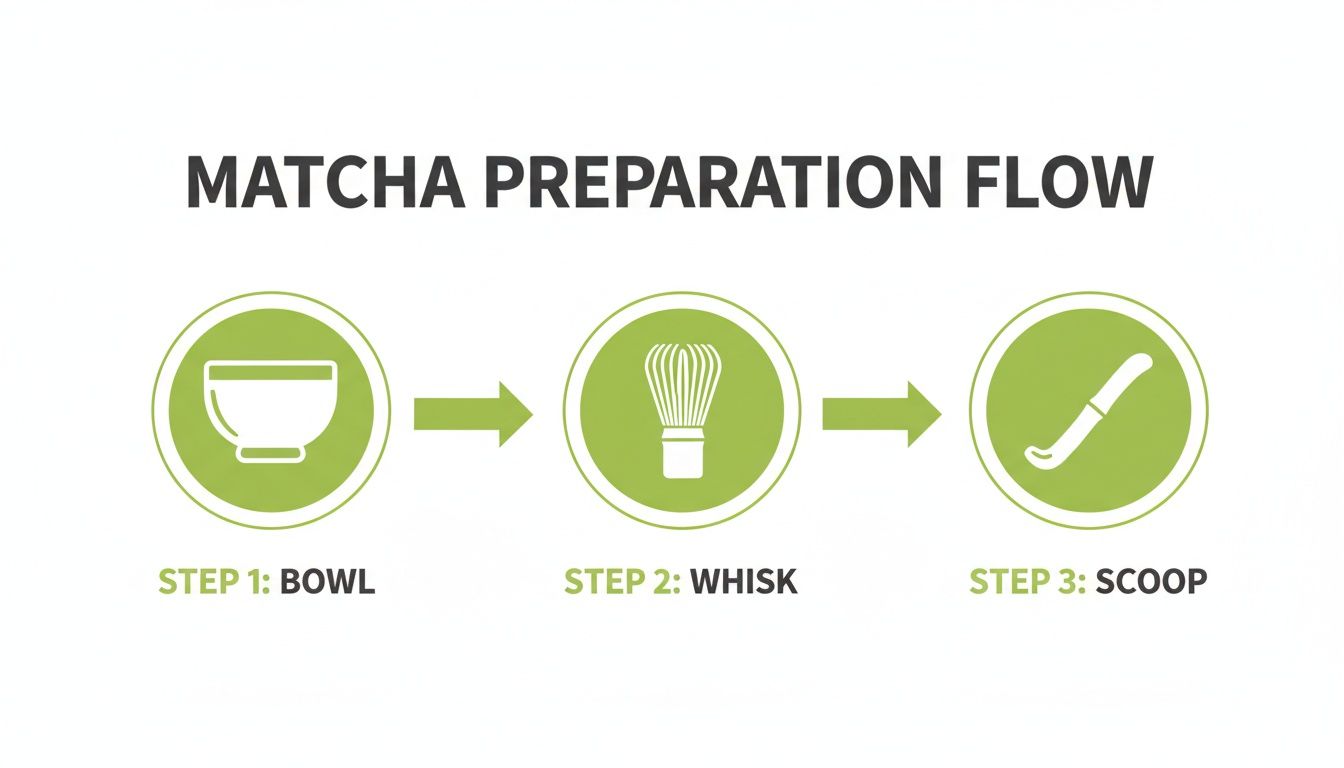
Here you can see how the wide matcha bowl (chawan), the multi-pronged bamboo whisk (chasen), and the traditional scoop (chashaku) work in concert to create the perfect cup.
The Non-Negotiable Sifting Step
Next is the single most important—and most often skipped—step: sifting. Using a small, fine-mesh sieve, press your matcha powder into a warmed bowl. This isn't just for show. It breaks up the tiny clumps that naturally form from static and humidity, guaranteeing a silky-smooth texture and preventing those bitter, undissolved pockets from ruining your drink.
For a classic bowl of usucha, the ratio is key. We find the sweet spot is two scoops from your chashaku, which is about half a teaspoon (roughly 1-2 grams) of a quality organic ceremonial grade matcha. Add this to about 60-80ml of hot water.
And on that note, temperature is everything. Aim for water around 70-80°C. Anything hotter, especially boiling water at 100°C, will scorch the delicate tea leaves. You'll taste it immediately as bitterness, and you'll lose many of the beneficial compounds like antioxidants.
The Whisking Motion
Now for the main event. Hold the chasen lightly from the top, keeping your wrist loose and relaxed. All the power should come from your wrist, not your arm.
- Make a Paste: Start by gently stirring to combine the sifted matcha and water. You're aiming for a smooth, uniform paste with no dry spots.
- Whisk Vigorously: Lift the whisk just off the bottom of the bowl and start a rapid back-and-forth motion. Trace a 'W' or 'M' shape across the bowl, fast enough to hear a soft 'swooshing' sound.
- Build the Froth: Keep this brisk movement going for about 20-30 seconds. You'll see a beautiful layer of tiny, delicate bubbles form—this is the coveted microfoam that defines a good usucha.
- Finish with Grace: Once you have a thick, even froth, slow down your whisking. As a final touch, gently draw the whisk up through the centre of the foam to create a small peak.
Usucha vs Koicha Whisking At a Glance
While usucha is your daily go-to, koicha ('thick tea') is a different experience entirely—a thick, intense, and deeply ceremonial preparation. Understanding the difference in technique is crucial.
| Attribute | Usucha (Thin Tea) | Koicha (Thick Tea) |
|---|---|---|
| Consistency | Light and frothy, like a latte | Thick and viscous, like warm honey |
| Matcha Ratio | 1-2g matcha to 60-80ml water | 3-4g matcha to 30-40ml water |
| Whisking Motion | Rapid 'W' or 'M' zig-zag | Slow, deliberate kneading motion |
| Flavour Profile | Bright, fresh, slightly sweet | Intense, rich, deep umami |
| Occasion | Daily enjoyment, lattes, café service | Special occasions, formal tea ceremonies |
Koicha requires a much slower, more deliberate hand to blend the higher concentration of matcha into a smooth, thick liquid. Usucha, on the other hand, is all about aerating the tea to create that signature froth.
Your usucha is now ready to be savoured directly from the bowl. Once you’ve nailed this technique, you have the perfect base for all sorts of other creations. For a refreshing twist on a warm day, you might want to check out our guide on how to make a delicious iced matcha latte.
Moving On to Koicha: The Ultimate Matcha Experience
So, you’ve mastered the art of a frothy, vibrant bowl of usucha. You know the right temperature, the right ratios, and the right wrist action. If you’re starting to feel the pull towards something deeper, it’s time to talk about koicha, or 'thick tea'.
This isn’t just another way to make matcha. It’s a completely different encounter with the tea itself. Traditionally reserved for formal Japanese tea ceremonies, koicha is a profound, intense, and deeply savoury ritual.
Forget the foam. With koicha, the goal is a smooth, viscous liquid with the consistency of molten dark chocolate. It’s a preparation designed to showcase the full spectrum of a tea’s character, highlighting its most complex, umami-rich notes.
Making the switch requires a serious change in your ratios. For koicha, you’ll be using roughly double the matcha powder and half the water you’d use for usucha. This high concentration means there’s nowhere for a low-quality tea to hide; any hint of bitterness or imperfection will be front and centre.
The Koicha Kneading Motion
The whisking technique is also a world away from the rapid ‘W’ or ‘M’ motions of usucha. Here, you’ll adopt a slow, deliberate kneading action.
- Start by gently folding your sifted matcha into the small amount of hot water.
- Slowly and methodically move the chasen through the bowl, using gentle circular and back-and-forth patterns.
- Think of it as ‘kneading’ the powder and water together. You’re pressing and coaxing them into a single, perfectly blended substance.
This patient process creates a glossy, smooth paste without a single clump. It’s a meditative technique that demands focus and a far gentler touch.
Koicha isn’t just a drink; it's an experience. It demands the best from your tea and your technique, rewarding you with an intensity of flavour that a thin preparation simply can't match.
For this, a chasen with a high prong count is almost a necessity. One with 100 or 120 tines is ideal, as the dense bristles are much more effective at smoothly blending the thick mixture and creating that signature glossy sheen.
Perfecting Your Koicha Technique
Ready to try? You’ll want a wide chawan (tea bowl) to give you room to work.
Measure out 4 grams of a premium-grade powder—something like our Pep Tea Imperial Organic Matcha is perfect for this. Add just 30ml of 80°C water. Now, begin to gently knead the mixture with your chasen for about 50 strokes, until a thick, uniform paste forms.
The emulsification you achieve here is key. Proper preparation is what allows you to taste the full, unadulterated character of an exceptional tea, delivering a potent, well-blended synergy of L-Theanine and antioxidants for that signature clean energy without the crash.
When you’re ready for a koicha that truly sings, using a top-tier powder isn't just a recommendation—it’s essential. We strongly suggest exploring our Imperial Organic Matcha Japanese Ceremonial Grade for this special ritual.
Troubleshooting Your Common Matcha Problems
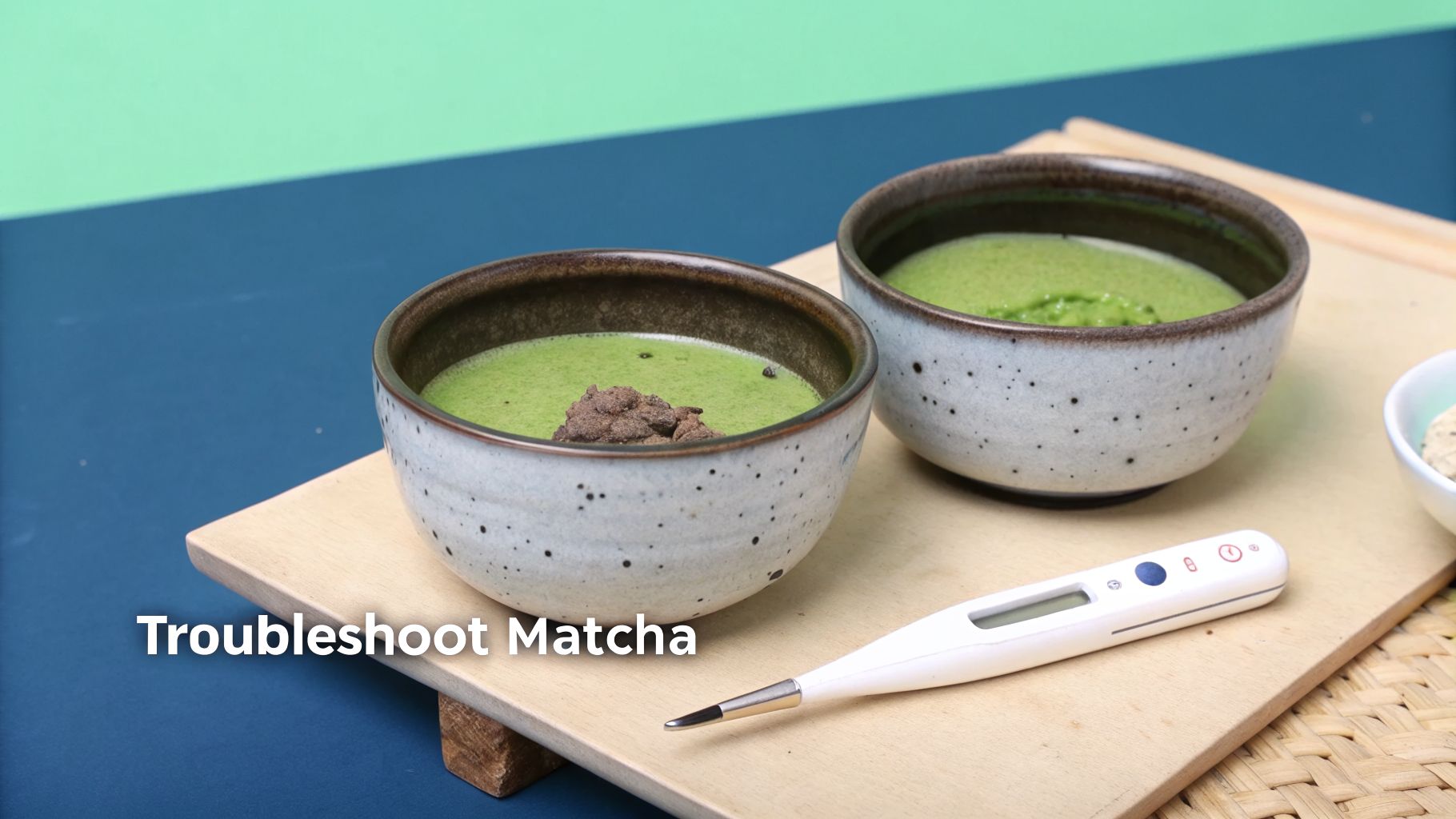
Even when you follow the steps, some days a bowl of matcha just doesn’t come together. Don’t worry, it happens to everyone. A few small adjustments are usually all it takes to turn a frustrating cup into a perfect one.
Let’s walk through the most common issues we see, both in busy Aussie cafés and for home baristas. Mastering these quick fixes is the key to a consistently great brew.
Why Is My Matcha Lumpy?
There’s nothing worse than a sip of matcha ruined by a gritty, undissolved clump of powder. If this is happening, the fix is almost always the same: you need to sift your matcha.
Matcha powder is so incredibly fine that it loves to clump, thanks to static and humidity. No amount of whisking will reliably break up those dense little pockets once water is added.
Pushing the powder through a fine-mesh sieve before you add water is non-negotiable. This one simple step guarantees a silky-smooth foundation every single time.
Why Does My Matcha Taste Bitter?
If your matcha has a harsh, bitter, or almost burnt taste, the culprit is almost certainly your water temperature. This is the single most common mistake people make.
Matcha is delicate. Water that’s too hot—anything boiling or even just over 80°C—will scorch the leaves. This completely changes the chemistry of the tea, destroying the amino acids (like L-theanine, which provides that calm-alert feeling) and releasing a flood of bitter tannins.
The Fix: Always let your boiled water cool for a few minutes before pouring. Better yet, use a temperature-controlled kettle set between 70-80°C. This simple change is what protects the matcha’s delicate sweet and umami notes.
Why Won’t My Matcha Froth?
Struggling to build that signature layer of creamy microfoam? A few things could be going on, and they’re all easy to solve once you know what to look for.
Freshness is Everything: Matcha has a short shelf life once the tin is opened. Old, oxidised powder will look duller and simply won’t froth well. Always use fresh, high-quality matcha and store it in an airtight container in the fridge.
Water Quality Matters: Very hard or very soft water can sometimes interfere with froth formation. If you’ve tried everything else, switching to filtered water might just be the ticket.
Revisit Your Technique: A weak froth often comes down to the whisking motion. You need a fast, energetic M- or W-shaped pattern that comes from the wrist, not a slow stirring motion from your arm. Make sure you’re using a wide-bottomed bowl that gives your chasen enough room to move, and whisk vigorously for a solid 20-30 seconds.
Your Matcha Whisking Questions Answered
We get a lot of questions at Pep Tea about getting the whisking technique just right. It’s the part of the process where things can go wrong, but it’s also where the real magic happens.
Here are the answers to the most common issues we hear about from our Australian customers, designed to help you perfect your daily ritual.
Can I Use a Milk Frother to Whisk Matcha?
Yes, a handheld electric frother is a popular shortcut, especially if you’re making a matcha latte. It's fast, and it certainly creates foam.
But here’s the trade-off: a frother tends to create large, airy bubbles and doesn't suspend the matcha particles as evenly as a traditional bamboo chasen. The texture just isn’t the same.
For a pure matcha experience with water, the chasen is non-negotiable. It creates a far smoother, more integrated emulsion. For lattes, where milk can mask textural imperfections, a frother is a perfectly fine substitute when you're short on time.
Why Is My Matcha Not Frothing?
If you’re struggling to get that beautiful, creamy layer of foam, a few things could be at play. First, check your water temperature. Anything over 80°C will kill the froth before it even forms and scorch the tea, making it taste bitter.
Second, freshness is everything. Old or low-grade matcha loses its vibrancy and its ability to foam well. You need fresh, high-quality ceremonial grade matcha for the best results. It's just not a process you can fake with inferior powder.
Finally, look at your technique. You need a rapid 'W' or 'M' motion, driven from the wrist, not the arm, in a wide bowl. Also, make sure your chasen is in good shape and has been soaked in warm water before you start. This makes the bamboo pliable and far more effective.
Remember: Great froth comes from the combination of fresh matcha, the right temperature, and vigorous wrist action. If one of those elements is missing, the foam will suffer.
How Do I Clean and Care For My Bamboo Whisk?
Proper care for your chasen is simple, but it makes a huge difference to its lifespan. After whisking, rinse it immediately under warm running water. Never use soap—it will get into the bamboo and taint every bowl of matcha you make from then on.
Next, just whisk it in a clean bowl of fresh, warm water to work out any remaining residue from the tines.
To dry it, the best method by far is to place it on a kusenaoshi (a ceramic whisk holder). This is what helps it maintain its signature tulip shape and allows air to circulate evenly. If you don't have a holder, stand it upright on its handle and let it air dry completely before putting it away. Proper drying is the key to preventing mould.
What Is the Best Water Temperature for Matcha?
The ideal water temperature for whisking matcha is between 70°C and 80°C. Using boiling water is probably the single most common mistake people make, and it’s the number one reason they experience bitterness.
Water that's too hot literally scorches the delicate tea powder. This process destroys beneficial compounds like L-theanine (the compound responsible for that calm-alert feeling) and releases a flood of tannins, resulting in a harsh, astringent flavour.
If you don't have a temperature-controlled kettle, there's an easy fix. Simply boil your water, then let it sit and cool for about two to three minutes before pouring it over your matcha. This simple pause makes a world of difference.
Ready to put your new whisking skills to the test? With Pep Tea, you get premium, organic matcha that delivers on flavour and quality every time.
Explore our range of ceremonial and culinary grade organic matcha today.