
Tag: matcha flavour
Is Matcha Sweet? a Practical Guide to Matcha Flavour

Pure matcha powder itself isn't sweet. Its natural flavour is vegetal and umami, while sweetness in a matcha drink almost always comes from added sugar, syrup, honey, sweetened milk, or a pre-sweetened blend.
So why does a pale green café latte often taste gently sweet, creamy and almost dessert-like, while a plain bowl of whisked matcha can taste grassy, sharp or savoury? The answer lies in the difference between matcha's sensory sweetness and the sweetness added during preparation.
That distinction matters in Australia, where “matcha” on a café menu may refer to anything from pure Japanese green tea powder to a flavoured latte mix. Once you know what's in the cup, you can choose a sweeter-tasting matcha without automatically choosing a sugary one.
Why Most People Ask If Matcha Is Sweet
A typical café order explains the confusion. You ask for an iced matcha latte, and the drink arrives pale green, cold, creamy and smooth. The first sip may taste softly sweet, especially if the café has used oat milk, vanilla syrup or a pre-sweetened matcha base.
That experience teaches your palate to associate matcha with sweetness. Try a different preparation at home, though. Whisk plain matcha powder with water and you'll notice a much more concentrated flavour, with fresh grassiness, savoury depth, bitterness and a drying sensation on the tongue.
Neither drink is necessarily misleading. They are just different formulations.
The powder and the finished drink are not the same thing
Australian products make this distinction clear. Pure matcha is sold as green tea powder without sugar, while sweetened sachets and latte blends list ingredients such as sugar or organic cane sugar. One Australian sweet matcha sachet lists sugar first and matcha green tea at 12%, while an Australian-made latte blend places organic unrefined cane sugar ahead of matcha powder and reports 4.0 g sugars per 100 g. These examples show that the sweetness comes from the recipe, not from the tea leaf itself. See the Australian sweet matcha product example.
The same principle applies when you order. “Plain matcha latte” may mean no extra syrup, but it doesn't always mean pure, unsweetened matcha. The powder could already contain sugar, dextrose, flavouring or another sweetening ingredient.
A useful question to ask
Before deciding whether matcha is sweet, separate the experience into two questions:
- What does pure matcha taste like? Usually vegetal, umami-rich, bitter and faintly sweet in a savoury sense.
- What does this particular drink contain? It may include milk, syrup, honey or a sweetened matcha mix.
That small distinction closes the gap between a sharp home-brewed matcha shot and the comforting café drink many Australians know first.
What Matcha Actually Tastes Like on Its Own
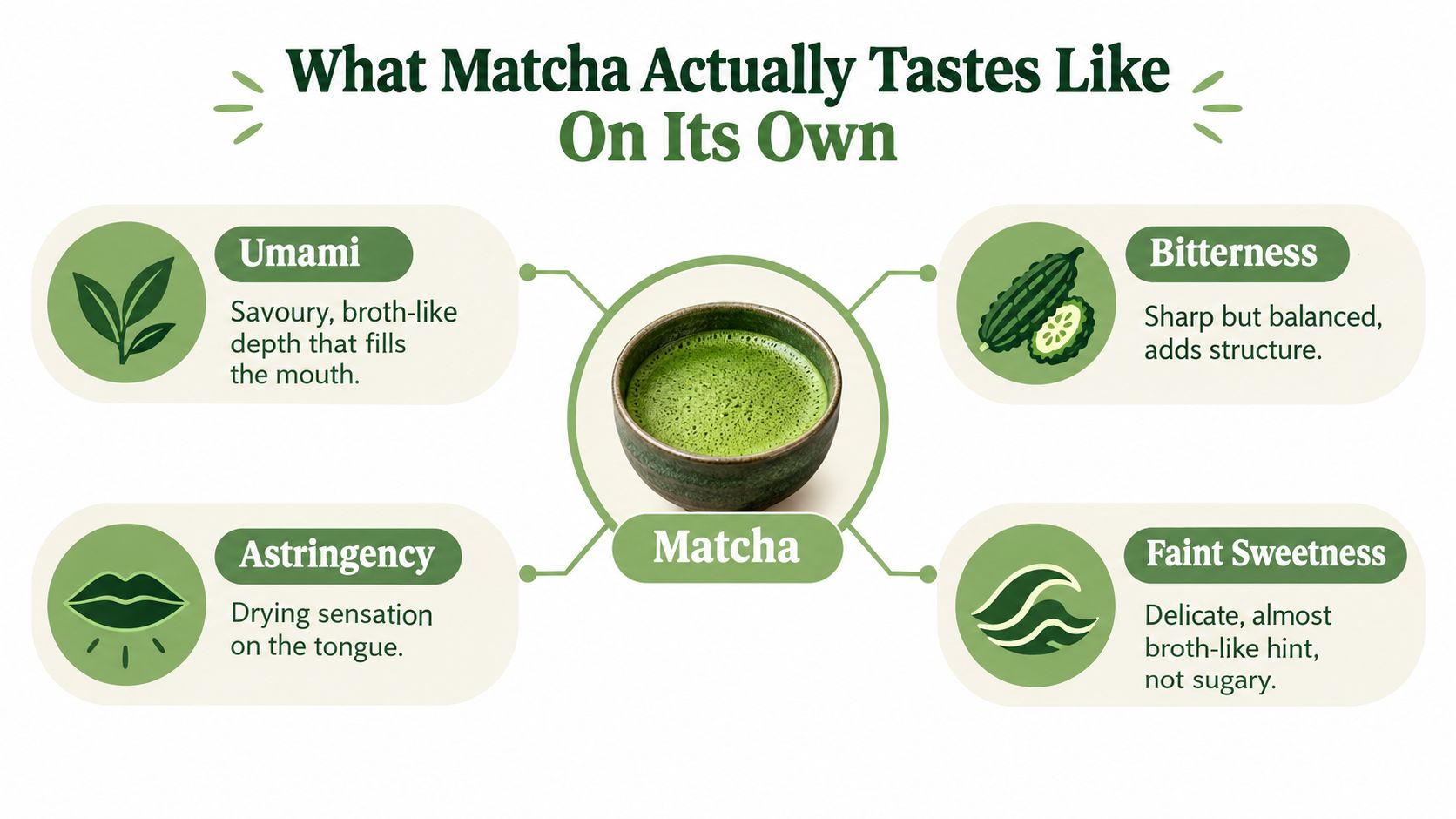
Pure matcha has a layered flavour rather than a simple sweet or bitter profile. The balance changes with the tea's growing conditions, grade, freshness, water and whisking technique, but four sensations appear repeatedly: umami, bitterness, astringency and faint sweetness.
Umami comes first in a good cup
Umami is the savoury, mouth-filling quality that makes matcha feel substantial. Some people describe it as broth-like, buttery or seaweed-like, although a well-made matcha can be more delicate than those comparisons suggest.
L-theanine, an amino acid naturally present in tea, contributes to this depth. An Australian lab-tested ceremonial matcha reported 21.3 mg/g of L-theanine and 65.2 mg/g of total catechins. That composition helps explain why the cup can feel savoury and softly sweet at the same time, without tasting like sugar. Review the Australian matcha potency lab results.
The sweetness here is subtle. It may appear as a rounded finish after the initial green flavour, rather than as the immediate sweetness of fruit juice or a latte syrup.
Bitterness gives matcha structure
Matcha also contains catechins, a group of tea polyphenols. Epigallocatechin gallate, or EGCG, is one of the best-known catechins and contributes to the plant-like bite associated with green tea.
A little bitterness can make matcha feel lively and complete. Too much can dominate the bowl, particularly when the powder is lower grade, the water is too hot or the serving is overly concentrated.
Astringency is different from bitterness
Astringency is the dry, puckering feeling that remains on the tongue. It can feel chalky or tightening, as though the moisture has been drawn from your mouth.
Catechins can contribute to both bitterness and astringency, but the sensations aren't identical. Bitterness is a taste. Astringency is more of a mouthfeel. Recognising the difference helps you diagnose a difficult cup instead of just deciding that you dislike matcha.
Tasting cue: If the finish feels savoury and rounded, you're noticing matcha's umami and theanine. If your mouth feels dry and tight, astringency is probably leading the experience.
For a broader look at the powder itself, the guide to what matcha powder is can help connect the production method with the flavour in your bowl. If you're preparing tea during a physically demanding shift, you may also find this practical resource on tea hydration for hot job sites useful. The key point remains simple: pure matcha may have a faint natural sweetness, but it isn't a sugary drink.
Why Some Matcha Tastes Sweeter Than Others
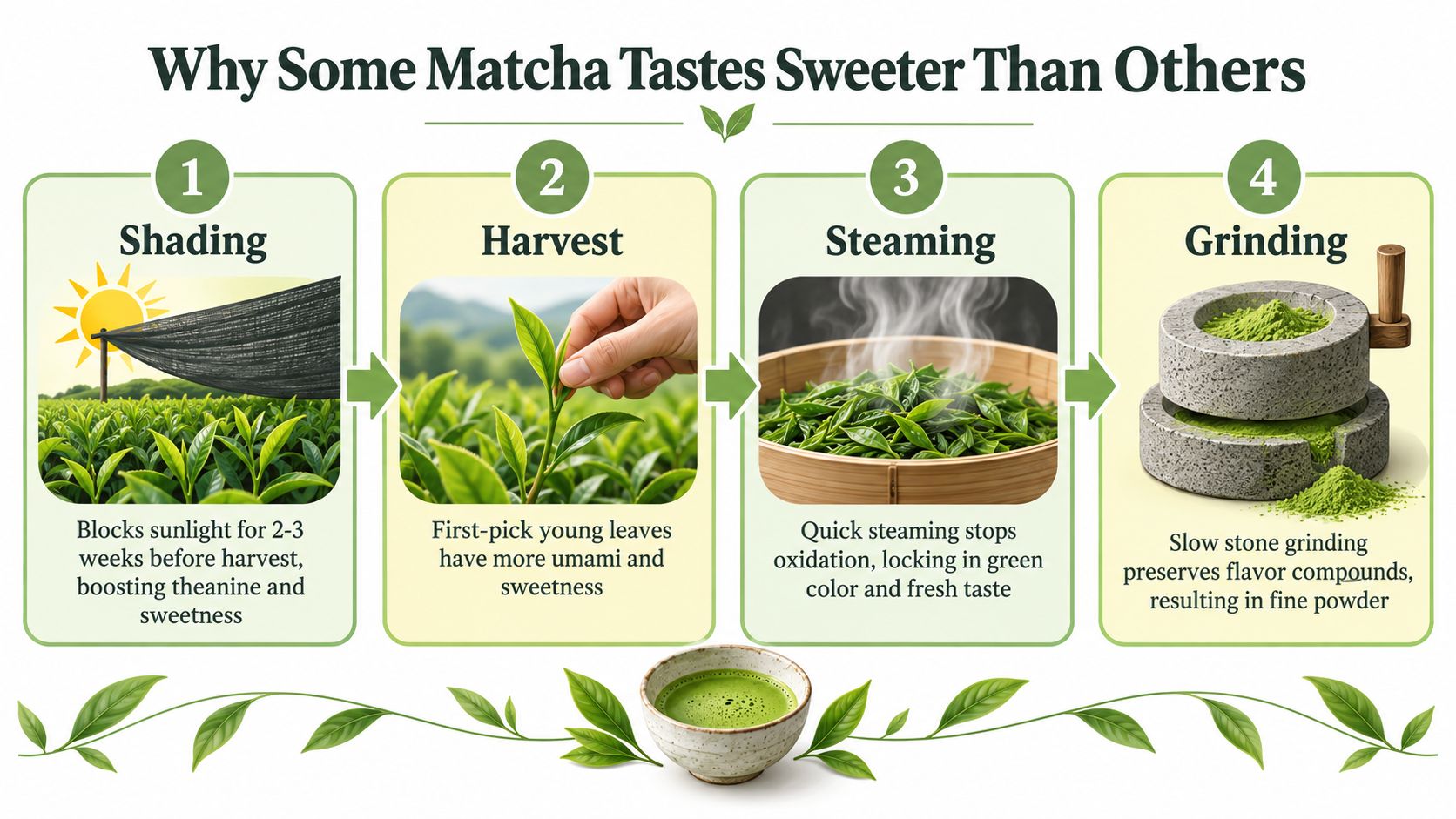
The flavour is shaped long before the powder reaches your whisk. Farming choices, leaf selection and milling all influence whether a matcha tastes rounded and umami-rich or sharp and astringent.
The most important factor is often shading before harvest. Tea plants grown for matcha may be covered from direct sunlight before the leaves are picked. Australian technical guidance explains that shading suppresses the conversion of L-theanine into catechins, helping preserve a more naturally sweet umami profile. Read the Australian guide to ceremonial matcha production.
Shading changes the balance
Sunlight gives the tea plant energy, but it also encourages the chemistry that produces a more assertive, bitter profile. Shade-grown leaves retain more of the savoury character associated with L-theanine and develop a richer green appearance.
That doesn't mean every shaded matcha tastes sweet, or that bitterness is automatically a sign of poor quality. It means the balance can move towards umami, softness and lingering sweetness when the grower uses shading carefully.
Young leaves bring delicacy
Higher-grade matcha commonly uses younger, more tender leaves from the top of the plant. These leaves can produce a finer texture and a more refined flavour than older, tougher leaves.
Older leaves tend to bring stronger vegetal notes and more noticeable astringency. That bolder profile can be useful in baking or a latte, where milk and other ingredients need a flavour that won't disappear.
Milling protects texture and flavour
After harvesting and processing, the leaves are ground into an extremely fine powder. Traditional stone-grinding is slow and gentle, helping create the smooth texture expected from a well-made matcha.
Faster or rougher milling can generate more heat and may affect delicate flavour compounds. The result may taste flatter, harsher or more bitter. When you explore PepTea's matcha grades, pay attention to the intended use as well as the word “premium” or “ceremonial”.
A matcha grown in full sun, made from older leaves and processed for a bold culinary application won't taste like a carefully shaded powder intended for whisking with water. Sweetness is partly a farming and processing outcome, not just a recipe decision.
Ceremonial vs Culinary Matcha and Sweetness
Ceremonial and culinary matcha are often presented as if they were completely separate products, but the labels don't have a universal legal definition. “Grade” can be useful as a guide, yet colour, aroma, texture and intended use give you more reliable information.
| Attribute | Ceremonial Grade | Culinary Grade |
|---|---|---|
| Perceived sweetness | Often softer, rounder and more naturally umami-forward | Usually more assertive, vegetal and less sweet on its own |
| Bitterness | Typically lower when the powder is well made and properly prepared | More noticeable, which helps it stand up to milk and food |
| Colour | Vivid green to jade-like | Green can be deeper, duller or more yellow-toned |
| Texture | Fine, smooth and pleasant with water | May feel more robust, especially in a concentrated drink |
| Best use | Plain whisked matcha or lightly diluted drinks | Lattes, iced drinks, smoothies, baking and cooking |
Choose by preparation, not prestige
If you want to drink matcha with water and notice its natural flavour, choose a fresh, well-sourced ceremonial-style powder. Its softer balance makes it easier to appreciate the umami and faint sweetness without adding anything.
For a latte, culinary matcha can be practical. Milk, fruit, yoghurt or baked ingredients carry and soften the tea's sharper edges. A stronger powder may also be preferable in an iced drink, where dilution and cold temperatures can mute flavour.
A product described as ceremonial can still taste unpleasant if it's stale, poorly stored or prepared with boiling water. Conversely, culinary matcha can make a satisfying drink when you enjoy a more pronounced green tea character.
Selection rule: Buy ceremonial-style matcha for tasting the powder itself. Buy culinary-style matcha when other ingredients are meant to share the stage.
If you're comparing formats or pack sizes, an external AQEEK Coffee matcha selection offers another example of how ceremonial matcha is positioned for drinking applications. The label is a starting point, not a guarantee that the cup will taste sugary.
How to Make Matcha Taste Sweeter Without Sugar
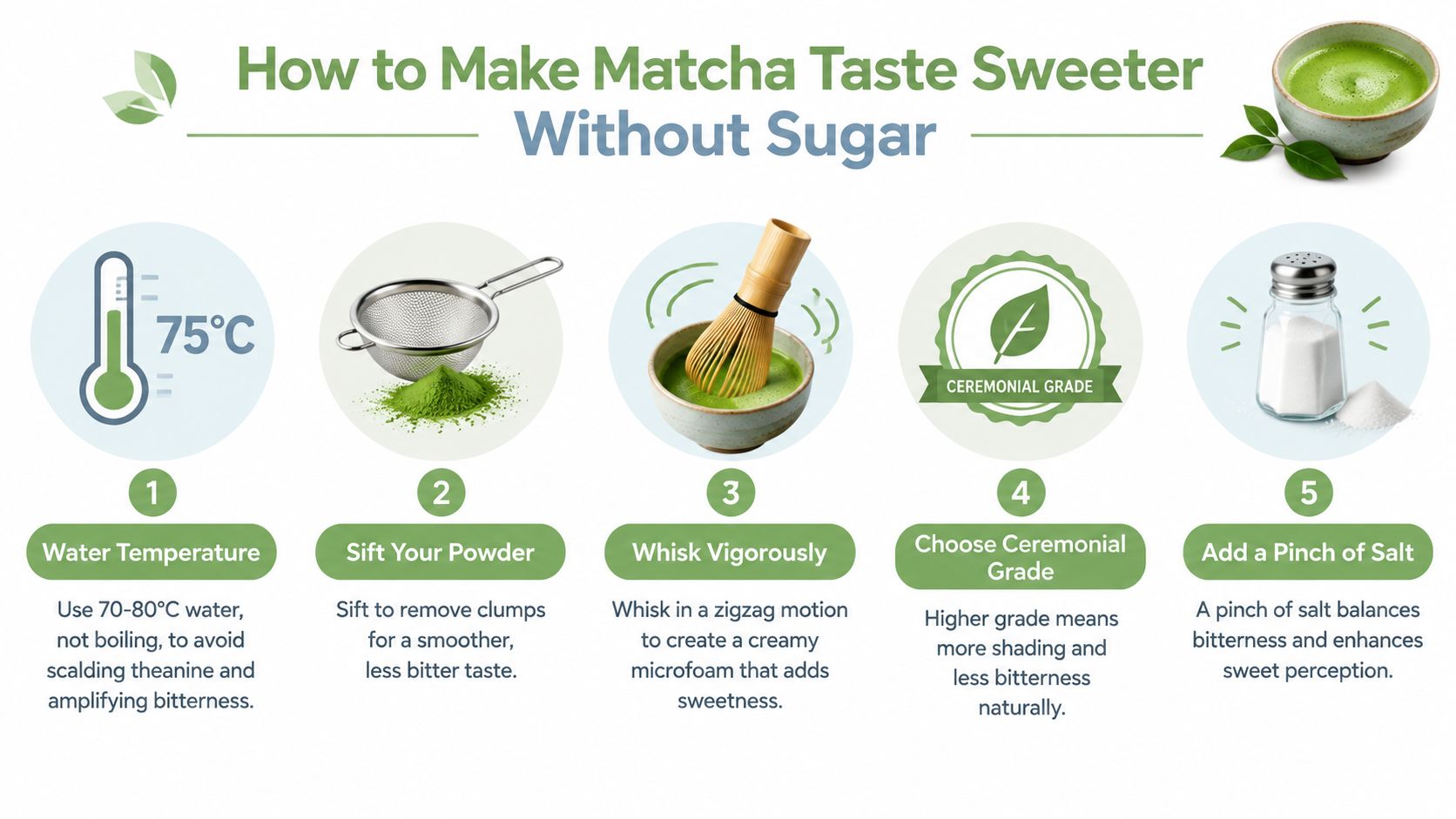
You can make matcha seem sweeter without adding sugar. The goal is to reduce harsh bitterness, preserve theanine and give the powder a smoother texture, so your palate can notice its softer notes.
Start with the water
Use water around 70–80°C, rather than freshly boiling water. Excessive heat can make the cup taste more bitter and may overwhelm the delicate savoury qualities you want to preserve.
A temperature-controlled kettle makes this easy, but you can also pour boiling water into a separate cup and let it cool briefly. The exact temperature matters less than avoiding water that is aggressively hot.
Prepare the powder properly
Sift the matcha before whisking. Clumps dissolve unevenly, leaving some mouthfuls thin and watery while others taste intensely bitter.
Add a small amount of water first and work the powder into a smooth paste. Then add the rest of the water and whisk briskly in a W or M motion. This creates a fine foam and distributes the powder evenly, which can make the texture feel creamier and less abrasive.
Let ingredients support the tea
Milk changes the entire experience:
- Oat milk often contributes body and a naturally sweet impression.
- Dairy milk adds creaminess and softens sharp green notes.
- Nut milks can taste lighter and may leave a thinner cup, depending on the product.
A tiny pinch of fine sea salt can suppress bitterness and make existing sweet notes easier to notice. A few drops of lemon or yuzu can brighten the umami. Vanilla extract can add an impression of sweetness without adding sugar, although it changes the drink's flavour.
For a dependable starting point, try the sugar-free matcha latte method from PepTea. This video also shows the kind of whisking and frothing movement that helps create a smooth drink.
A simple unsweetened method
- Sift your matcha into a bowl.
- Add a small splash of 70–80°C water and whisk into a paste.
- Add the remaining water and whisk in a W motion until lightly frothy.
- Pour the matcha into warm oat or dairy milk.
- Add either a tiny pinch of salt or a drop of citrus, not both at first.
- Taste before making another adjustment.
Small changes work better than adding several ingredients at once. You'll learn which lever improves the cup for your palate.
Why Café Matcha in Australia Usually Tastes Sweet
Many Australian café customers encounter matcha as a latte rather than as plain whisked tea. That format naturally introduces sweetness through the milk, and cafés may also use pre-sweetened powders, syrups or blended bases to make each drink consistent.
A matcha latte mix can contain sugar, dextrose, honey powder or flavouring before the barista adds any extras. Vanilla syrups, flavoured powders and condensed milk can push the drink further towards dessert. In these cases, the word “matcha” identifies the tea flavour, but it doesn't tell you how much of the drink's sweetness comes from the powder.
Read the menu language carefully
Terms such as “matcha mix,” “premium blend” or “latte base” may indicate that the product contains more than matcha. The wording isn't enough to determine the ingredients, so ask directly.
Useful questions include:
- “Is the matcha pure powder or a pre-sweetened mix?”
- “Do you whisk it to order?”
- “Does the latte include vanilla syrup by default?”
- “Can I have it with unsweetened milk and no syrup?”
- “Could I taste a small amount of the matcha with water?”
A café may not be able to provide a plain tasting portion, but the question tells the barista exactly what you're trying to control.
Ordering scripts for a lower-sugar drink
Try: “Could I please have pure matcha, no syrup, with unsweetened milk?” If the café uses a sweetened base, ask whether they have plain matcha powder available.
You can also order a small matcha whisked with water, then add milk yourself. That approach gives you more control than relying on the café's standard recipe.
The practical lesson is straightforward. A sweet café matcha is usually a prepared beverage, not evidence that matcha powder is naturally sweet. Check the ingredient list where possible, and remember that plain powder contains no sugar itself.
Finding Your Sweet Spot With Matcha
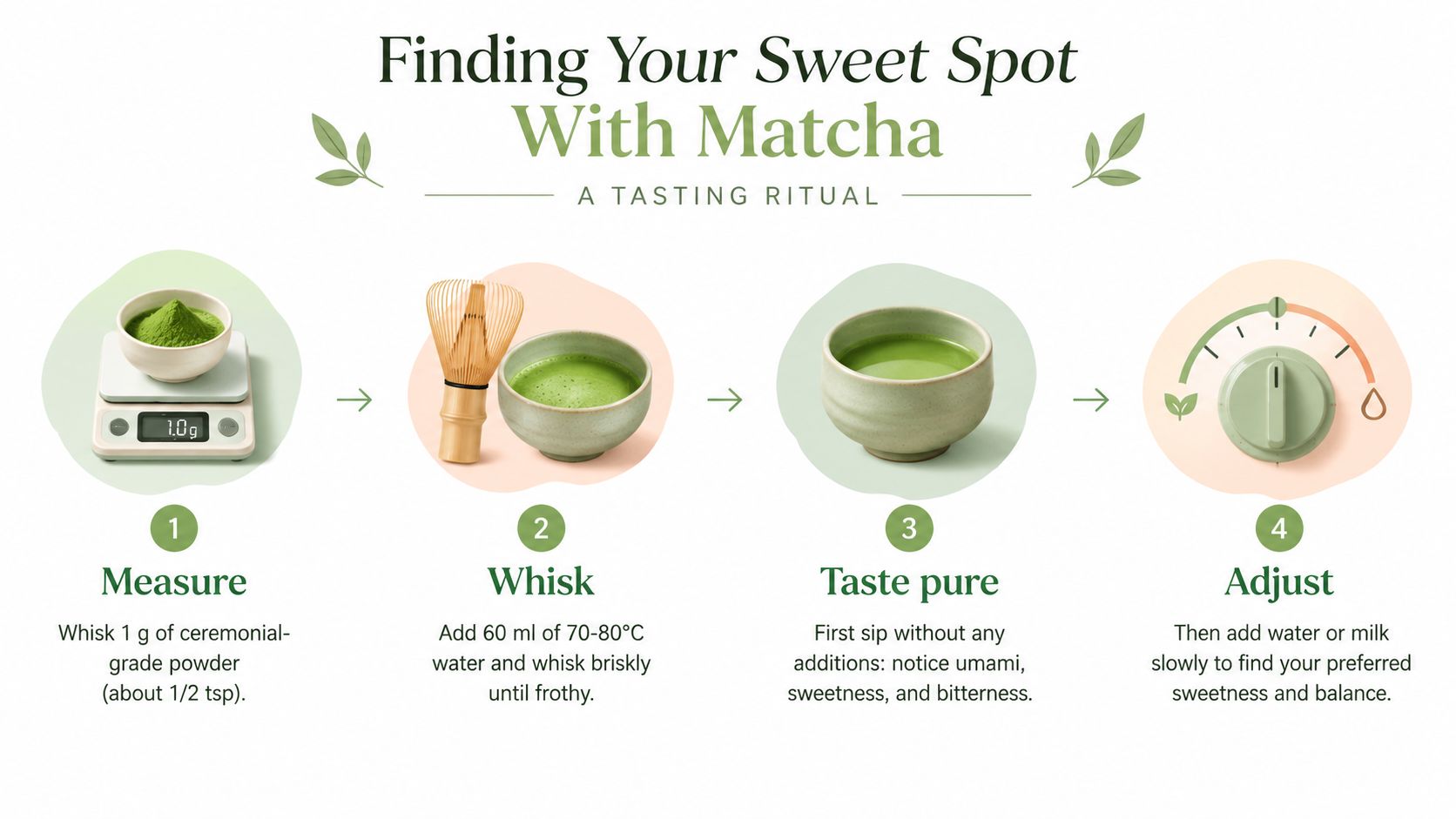
A short tasting ritual can show you exactly where matcha's natural flavour ends and your preferred additions begin. Use a small bowl, a fine sieve and a bamboo whisk if you have them.
Taste it in four stages
- Measure: Weigh 1 g of ceremonial-grade powder, roughly half a teaspoon.
- Whisk: Add 60–80 ml of water at around 80°C and whisk until smooth and lightly frothy.
- Taste pure: Take a small sip without milk or sweetener. Notice the umami, green freshness, bitterness, astringency and lingering finish.
- Adjust: Add a little water, milk or ice, tasting after each change.
You don't need to force yourself to enjoy a concentrated bowl. The purpose is to identify what the powder tastes like before you customise it.
Choose the style that suits your day
- Pure matcha: Choose this when you want to explore flavour and prepare the drink with water.
- Lightly adjusted matcha: Add milk, a pinch of salt or a little citrus when you want softness without making the drink sugary.
- Café-style matcha: Choose a latte with syrup or a sweetened base when you want comfort and dessert-like flavour, treating it as a flavoured beverage rather than straight tea.
Matcha can also fit into smoothies, baking, iced drinks and other recipes, where culinary powder's stronger profile can work well. The right choice depends on the role you want the tea to play.
Keep three ideas in mind:
- Taste matcha on its own at least once before adding anything.
- Adjust sweetness through the grade, water temperature, whisking and milk before reaching for sugar.
- Treat café matcha as a formulated drink, because its sweetness may come mainly from added ingredients.
There isn't one correct matcha recipe. A few repeatable adjustments will help you find a cup that feels smooth, balanced and pleasant without assuming that pure matcha should taste like sugar.
Pep Tea offers organic Japanese matcha for whisking, lattes and culinary use, along with Australian-brewed organic kombucha made in the Hunter Valley, NSW. Visit Pep Tea to explore matcha options and choose a low-sugar beverage that suits your daily routine.