
Tag: L-theanine tea
Sencha Tea Benefits: A Practical Guide for Australians

You're halfway through the afternoon, your inbox is still full, and another coffee sounds less appealing than it did an hour ago. You want something refreshing, low in sugar and capable of helping you stay attentive without turning your evening into a battle with caffeine. That's where sencha tea benefits become relevant for Australian routines.
Sencha is more than a green-coloured drink. It's a steamed Japanese whole-leaf tea containing catechins, caffeine and L-theanine, served as part of a beverage habit that can also contribute to fluid intake. The evidence is encouraging in some areas, but it's more modest and nuanced than many wellness claims suggest.
Understanding Sencha and Its Place in Australian Wellness
Sencha is made from green tea leaves that are steamed, rolled and dried soon after harvesting. Steaming limits oxidation, helping preserve the tea's bright colour and fresh, grassy flavour. In the cup, you may notice vegetal, marine or lightly savoury notes, depending on the tea's origin and preparation.
That makes sencha a different experience from a standard black tea or a strong coffee. A person working from a café in Sydney might choose it during an afternoon focus block, while someone in Newcastle may brew it at home as a lower-sugar alternative to a soft drink. The appeal isn't only its taste. Sencha fits a wider Australian interest in organic food, functional beverages and more intentional daily habits.
Roy Morgan consumer research found that Australians who buy green tea are 49% more likely than the average Australian to agree that they try to buy organic food whenever they can. The same group is 51% more likely to avoid dairy and 57% more likely to eat an almost fully vegetarian diet. These findings don't prove that sencha causes cleaner eating habits, but they show why green tea connects naturally with an established wellness-oriented consumer segment. (Roy Morgan's Australian tea research)
Sencha is a beverage, not a supplement
The useful distinction is simple. Sencha may provide hydration, polyphenols and gentle stimulation, but it isn't a treatment for a medical condition and it won't compensate for poor sleep, an unbalanced diet or excessive caffeine intake.
The Australian Bureau of Statistics reports that water-based beverages, including tea and black coffee, account for 11.2% of intake, while average non-alcoholic beverage intake was 1,926 g per day in 2023. (ABS food and nutrition data) Those figures help frame the practical question Australians should ask: not whether sencha is healthy, but how it fits into the drinks they already consume.
Practical rule: Treat sencha as a daily drink with useful properties, not as a miracle product with guaranteed outcomes.
The Active Compounds Driving Sencha Tea Benefits
Sencha's functional profile comes from several naturally occurring compounds in the leaf. The most important are catechins, L-theanine and caffeine. Their effects depend on the tea itself, how it's brewed and how much you drink.
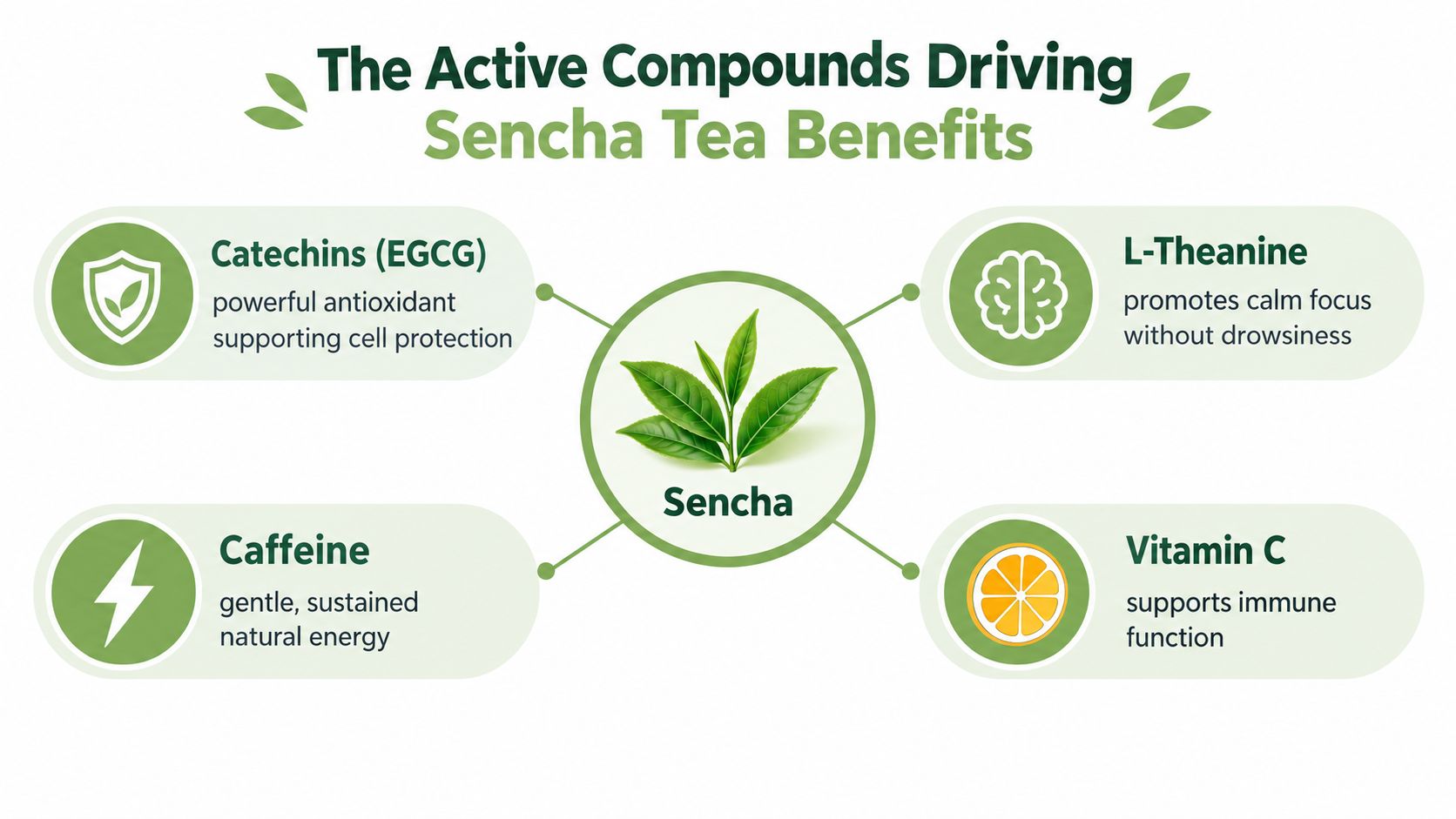
Catechins and oxidative stress
Catechins are green-tea polyphenols. A review reported 12.9 to 23.6 mg of catechins per gram of dry matter for Sen-cha tea bags. (Review of tea polyphenols and catechins) The exact amount in your cup will vary with the leaves, portion, water temperature and steeping time, so the dry-leaf figure shouldn't be treated as a guaranteed serving amount.
These compounds act as antioxidants in laboratory and biological contexts. Researchers have linked green-tea catechins with antioxidant, anti-inflammatory, antimicrobial, antidiabetic and cardiovascular effects through their bioactive polyphenol activity. That wording matters. It describes potential biological activity, not a promise that a cup of sencha will prevent disease.
Readers who want a clearer explanation of one prominent catechin can explore what EGCG is and why it matters. EGCG is often discussed in green-tea education, but it's only one part of sencha's broader chemical profile.
L-theanine and caffeine
L-theanine is an amino acid naturally found in tea. Caffeine is a stimulant. Together, they help explain why some people experience green tea as more balanced than coffee, although individual responses vary and sencha isn't guaranteed to feel calm for everyone.
A useful analogy is a dimmer switch rather than an on/off button. Caffeine can increase alertness, while L-theanine is associated with a more relaxed mental state. The result may feel like calm focus, but research on L-theanine has limitations. A systematic review identified human randomised trials and reported that 200 to 400 mg per day may help reduce stress and anxiety in people exposed to stressful conditions, while also emphasising the need for larger and longer studies. (Systematic review of L-theanine research)
The University of Canberra also ran a clinical trial involving a green-tea-derived L-theanine beverage. It enrolled 60 healthy adults aged 18 to 65 with mild to moderate sleep disturbances and used a randomised, double-blind, placebo-controlled, parallel-group, four-arm, dose-response design. The protocol involved nightly use over a 3-week period, tracking sleep and stress-related measures. (University of Canberra clinical trial record)
Sencha contains L-theanine, but a brewed cup shouldn't automatically be equated with the doses used in isolated L-theanine trials. That's the difference between discussing a mechanism responsibly and making a broad wellness promise.
Comparing Sencha With Matcha and Other Green Teas
Sencha and matcha both come from green tea, but they're prepared and consumed differently. Sencha leaves are steeped in water and then removed. Matcha leaves are ground into powder, so you consume the leaf itself. That difference changes the drinking experience and can affect how much of the leaf's compounds enter your serving.
Matcha is commonly shade-grown before harvest, while sencha is generally cultivated as a leaf tea exposed to sunlight. Gyokuro is also shade-grown and has a rich, umami-focused profile. Hojicha is roasted, giving it a toasty flavour and a different sensory character from fresh, steamed sencha.
| Tea Type | Cultivation and Processing | Caffeine and L-Theanine Profile | Best Use Case |
|---|---|---|---|
| Sencha | Steamed, rolled and dried whole leaves, usually steeped and removed | Provides caffeine, L-theanine and catechins through an infusion | Everyday hydration, a fresh afternoon brew or multiple tea moments |
| Matcha | Shade-grown leaves are processed and stone-ground into powder | The whole powdered leaf is consumed, so the overall exposure can be more concentrated than a steeped tea | Focused morning use, lattes, smoothies and culinary recipes |
| Standard green tea | Processing varies, with leaves generally steeped rather than eaten | Provides green-tea compounds through the brewed liquid | Familiar daily drinking and straightforward preparation |
Choose by routine, not by marketing
Sencha suits people who want a lighter, leaf-based infusion. Matcha may suit someone who wants a more concentrated ritual or enjoys blending tea into food. Hojicha can appeal to drinkers who prefer roasted notes, though the relevant caffeine experience still depends on the product and preparation.
If you're comparing tea and coffee for alertness, timing and tolerance, this guide to comparing caffeine and focus offers useful context. It's still important to remember that caffeine responses are personal. A person who feels comfortable with sencha in the afternoon may find the same timing disruptive, particularly if they're sensitive to stimulants.
For a deeper breakdown of the categories, see the difference between matcha, green tea and sencha-style teas. The right choice depends on whether your priority is sipping, concentrated preparation, cooking, flavour or caffeine control.
Translating Sencha Benefits Into Real-World Health Outcomes
The strongest human evidence relevant to sencha comes from research on green tea as a broader category. That means the findings are useful, but they shouldn't be presented as if every sencha cup produces a fixed medical effect.
A meta-analysis of 13 studies found small but statistically significant reductions in systolic blood pressure of 2.08 mm Hg, diastolic blood pressure of 1.71 mm Hg, total cholesterol of 0.15 mmol/L and LDL cholesterol of 0.16 mmol/L compared with control. (Green tea meta-analysis) The blood-pressure effect appeared strongest in participants whose baseline systolic pressure was at least 130 mm Hg.
Those results suggest a modest cardiometabolic contribution, not a replacement for medical care. If you have high blood pressure or cholesterol, keep following advice from your GP and don't use sencha as a substitute for prescribed treatment.
Hydration is part of the picture
Better Health Channel states that tea can help meet daily fluid recommendations and provides antioxidants and polyphenols. (Better Health Channel guidance on water and tea) This everyday framing is more useful than treating sencha like a capsule. A warm, unsweetened cup can replace a sugary drink while contributing to your overall fluid intake.
The practical outcome depends on your wider pattern:
- Use it consistently: A regular unsweetened beverage habit is more realistic than an occasional “detox” approach.
- Watch additions: Sugar, syrups and creamy mixers change the nutritional profile of the drink.
- Keep expectations measured: Sencha may support a healthy routine, but it can't independently create cardiovascular health.
- Consider your baseline: The clinical blood-pressure result was stronger in people who began with higher systolic readings.
Stress and focus require similar caution. L-theanine research gives a plausible explanation for the calm-focus reputation, but brewed sencha isn't identical to a controlled trial beverage. The most defensible takeaway is that sencha may be a useful, enjoyable daily adjunct within a balanced lifestyle.
Brewing Sencha for Maximum Flavour and Function
Boiling water is the fastest way to make sencha taste harsh. Hotter water and longer steeping can draw out more bitterness and astringency, while cooler water tends to preserve a softer, sweeter profile.
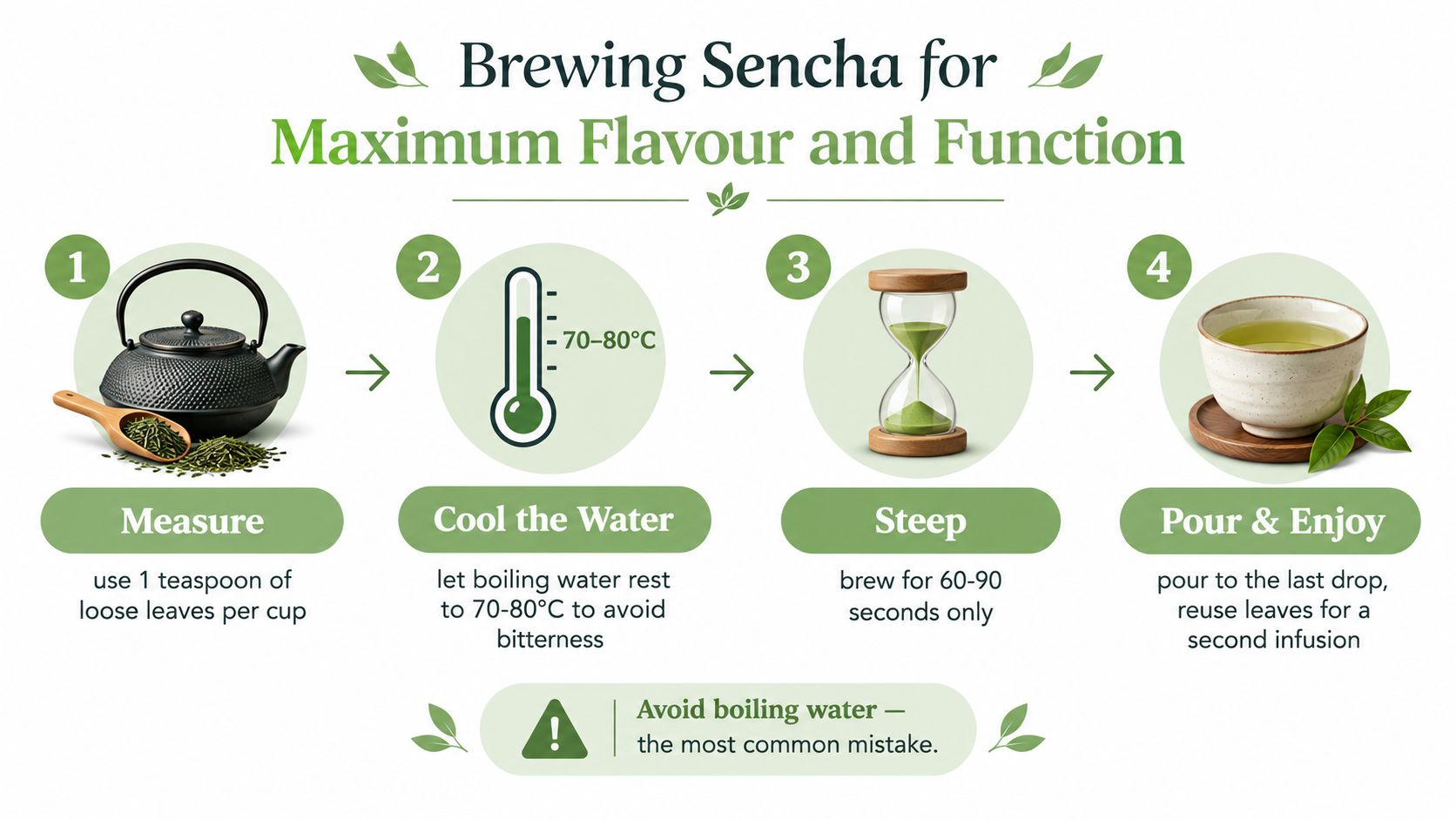
A reliable starting method
- Measure the leaves. Use about one teaspoon of loose sencha per cup. Whole leaves usually give you more control than very fine tea dust because you can adjust the infusion without immediately overwhelming the water.
- Cool the water. Let freshly boiled water rest until it reaches roughly 70°C to 80°C. A temperature-controlled kettle, such as the Pep Tea glass kettle with temperature control, makes this easier.
- Steep briefly. Start with 60 to 90 seconds. If the result is too light, extend the next brew slightly. If it's bitter, reduce the temperature or steep for less time.
- Pour completely. Empty the pot into your cup so the leaves don't continue extracting. You can reuse them for a second infusion, adjusting the time to suit the flavour.
The exact method isn't a rigid prescription. Leaf size, water quality and personal taste all matter. Filtered water can help if your tap water has a strong mineral or chlorine character, and a small teapot or infuser gives leaves room to open.
Here's a visual demonstration of the preparation process:
Brewing adjustment: If your cup tastes sharp, change one variable at a time. Lower the water temperature first, then shorten the steep if needed.
Integrating Sencha Into a Modern Daily Routine
Sencha works best when it replaces a less useful habit rather than becoming another task on an already crowded schedule. You might brew it after breakfast, use it before a mid-morning meeting or make a cold infusion for a warm day.

Match the timing to your sensitivity
Sencha still contains caffeine, so timing matters more than the label “natural”. If caffeine affects your sleep, keep sencha earlier in the day. If you're anxiety-sensitive, begin with a weaker infusion and avoid stacking it immediately with coffee or energy drinks.
Pregnancy is another situation where personalised advice matters. Caffeine limits and individual health circumstances vary, so pregnant people should discuss their total intake with their midwife or doctor rather than relying on generic tea advice.
A simple routine might look like this:
- Morning: Brew sencha alongside breakfast when you want a lighter alternative to coffee.
- Afternoon: Use a shorter infusion before a focused work session.
- Warm weather: Cold-brew leaves in the refrigerator for a smoother, less astringent drink.
- Training days: Consider the timing of tea alongside other caffeine sources instead of treating it as a separate total.
Some drinkers also enjoy rotating beverages. For example, an occasional golden latte can offer a different flavour profile and ritual. Cartograph Coffee's guide to a turmeric golden latte is a useful reference for that style of drink, though it isn't a substitute for understanding your overall caffeine or sugar intake.
Avoid turning sencha into a sweetened café-style dessert by default. Unsweetened brewing keeps the tea's grassy character clear and makes it easier to assess whether the drink genuinely fits your routine.
Common Questions About Drinking Sencha Every Day
Can sencha stain your teeth?
Tea contains compounds that may contribute to surface staining over time, particularly with frequent drinking. Rinsing with water after tea and maintaining regular brushing can help, but ask your dentist for personal advice if staining concerns you.
Does sencha affect iron absorption?
Tea may interfere with the absorption of non-haem iron when consumed with meals. People with diagnosed iron deficiency, or those at higher risk, should ask their GP or dietitian about timing rather than assuming tea is always harmless around food.
Is organic sencha worth choosing?
Organic certification can provide clearer production standards and help shoppers who want to reduce exposure to certain agricultural chemicals. It doesn't guarantee a particular catechin level or prove that the tea will deliver a specific health outcome, so also consider freshness, transparent sourcing and clean flavour.
Is sencha better than matcha?
Neither is universally better. Sencha is a steeped whole-leaf tea with a lighter drinking style, while matcha is powdered and consumed as part of the beverage. Choose sencha for an easy everyday infusion and matcha when you prefer a concentrated preparation or want to use green tea in a latte, smoothie or recipe.
What are the main sencha tea benefits?
The most defensible benefits are fluid intake, polyphenol consumption and gentle caffeine-based alertness, with green-tea research suggesting modest cardiometabolic effects. The experience will depend on preparation, sensitivity and the rest of your diet and lifestyle.
Pep Tea offers organic tea products centred on Japanese matcha and Australian-made sugar-free kombucha, alongside practical education for brewing and everyday wellness. Visit Pep Tea to explore options that can complement your sencha routine and choose a clean, low-sugar beverage for home or café use.