
Tag: l-theanine benefits
What Is L-Theanine: Your Guide to Calm Focus & Sleep
L-theanine is a natural amino acid found almost exclusively in tea, and it's the reason a good cup can feel calm and alert at the same time. In brewed tea, you'll usually get only 5.8 to 32 mg per 200 mL from 3 g of dried leaves, while clinical studies often use 200 mg or more per day, so the experience in your mug is usually gentler than in a supplement. If you've ever wanted clearer focus without the coffee crash, you're in the right place.
Tea lovers often talk about that smooth, settled feeling after a proper matcha or green tea, and there's real chemistry behind it. L-theanine sits right at the intersection of everyday brewing and modern wellness, which is why it keeps turning up in conversations about concentration, sleep support, and stress-aware routines. If you also like comparing tea nutrients, our guide to the benefits of magnesium and L-theanine is a useful companion read, especially if you're curious about how different calming ingredients fit together in real life. For matcha drinkers, our Uji Matcha Powder page is a handy example of how this tea amino acid shows up in premium tea rather than as a synthetic add-on.
Your Guide to the 'Calm Alertness' Amino Acid
You know that feeling when you want to think clearly, but you don't want the wired edge that coffee can bring. That's the exact gap L-theanine fills for many tea drinkers. It's a tea amino acid, not a stimulant, and it's one of the main reasons tea can feel different from other caffeinated drinks.
In simple terms, what is L-theanine? It's a naturally occurring compound in Camellia sinensis, the tea plant, and it's part of what gives high-quality tea its smooth, rounded character. A 2024 review notes that white, green, oolong, and black teas typically contain 0.9% to 3.1% of leaf dry weight, with brewed tea from 3 g of dried leaves providing about 5.8 to 32 mg per 200 mL. The same review also notes that L-theanine can make up up to 50% of total amino acids in tea leaves, which helps explain why the tea leaf itself matters so much. PubMed review on tea composition and L-theanine
Why tea feels different from a supplement
Tea gives you a food-first experience. The theanine arrives alongside other tea compounds, so the cup feels like part of a ritual, not just a dose. That matters for people who want a calmer kind of focus without turning every wellness choice into a pill routine.
Practical rule: if you're after the tea experience, start with the cup, not the capsule.
That's also why this ingredient shows up so often in matcha conversations. Matcha uses the whole leaf, so the theanine conversation becomes much more relevant than it is with many ordinary tea bags. It's a good fit for people who want their morning drink to support a smoother mental rhythm.
A broader look at tea and wellness can also be useful when you're comparing calming ingredients, and the organic matcha brewing approach makes more sense once you understand that theanine is part of the leaf itself, not an added flavour trick. The more you understand the leaf, the more sense your cup makes.
How L-Theanine Actually Works in Your Brain
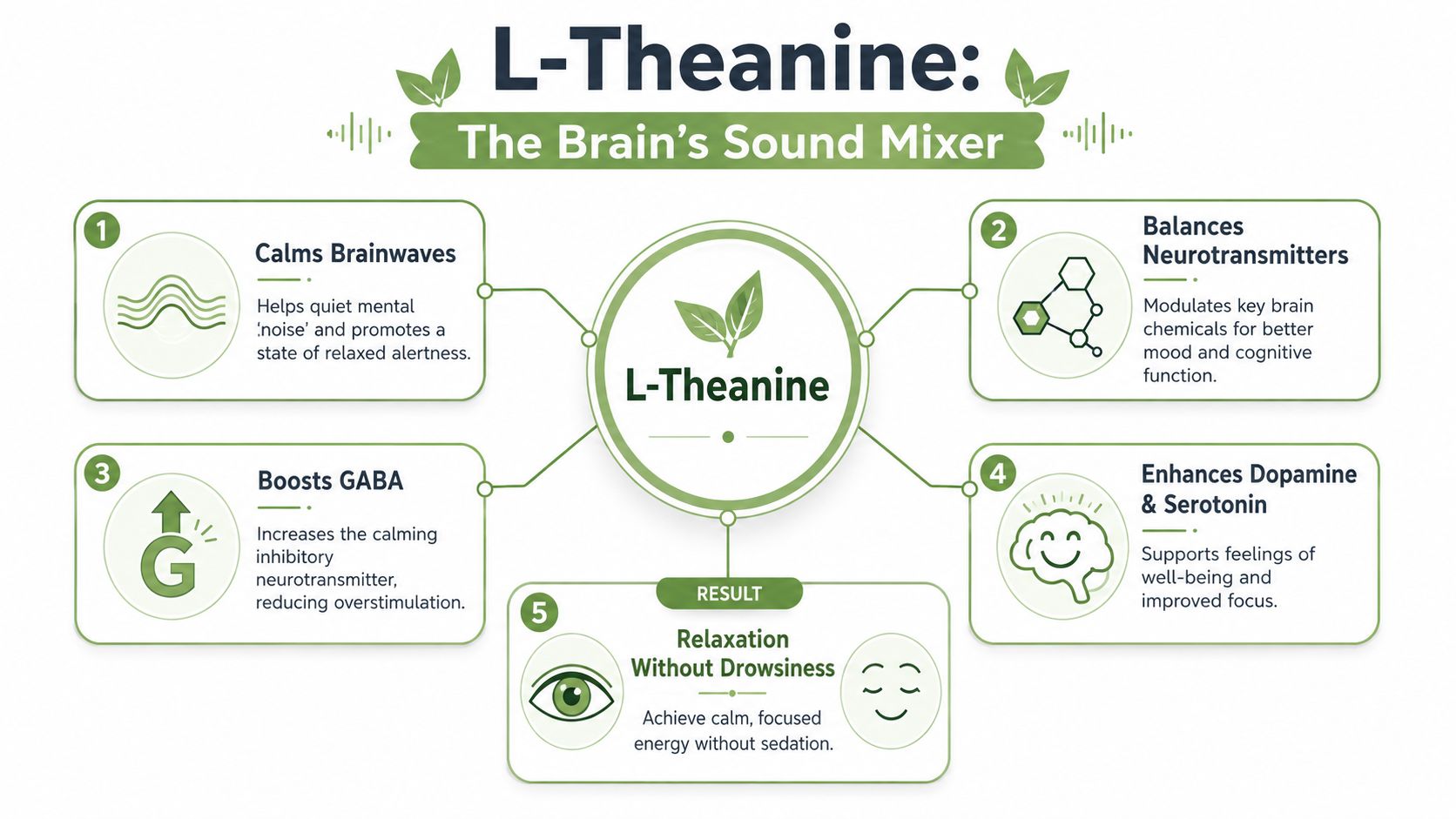
Think of L-theanine like a volume dial for mental noise. It doesn't switch your brain off, and it doesn't force sleepiness. Instead, it seems to help your mind settle into a state that feels more organised, less cluttered, and easier to work with.
A calmer signal, not a blanker mind
The often-used shorthand is that L-theanine supports alpha brain wave activity, which is the pattern many people associate with relaxed alertness. That's why tea can feel mentally bright without feeling harsh. In plain language, it helps take the edge off mental overdrive so your attention has a better chance of sticking.
It also interacts with key neurotransmitter systems that shape mood and alertness, including GABA, serotonin, and dopamine. You don't need a neuroscience degree to use that information well. Just remember that this compound isn't trying to sedate you, it's trying to make your brain feel less overclocked.
Simple takeaway: L-theanine doesn't erase thoughts, it lowers the background static.
That's why many people describe tea as the drink they reach for when they need to write, read, or think through a tricky problem without feeling scattered. If overthinking tends to hijack your day, a good companion resource is coping with overthinking and anxiety, because the mental state people want from tea is often the same one they're trying to rebuild elsewhere.
For readers who like a more structured look at functional ingredients, the idea of natural focus enhancers fits well with tea. The internal logic is simple, a tea amino acid helps shift the feel of the drink from merely caffeinated to more balanced. That's a big reason matcha keeps a loyal following among people who want sharpness with a softer landing.
The Evidence-Backed Benefits of L-Theanine

L-theanine gets attention for three reasons that matter in daily life, relaxation, focus, and sleep support. Research summaries consistently describe it that way, and they also note that it may promote relaxation without sedation and may enhance attention when paired with caffeine. That pairing matters because tea, especially matcha, naturally gives you both ingredients in one cup. WebMD overview of theanine uses and risks
Relaxation without feeling knocked out
This is the part most tea drinkers notice first. L-theanine is associated with a calmer internal pace, but not the heavy feeling you'd expect from something sedating. That makes it easier to use during the day, at work, or before a busy afternoon.
Focus that feels smoother
Caffeine can sharpen attention, but it can also make some people feel jumpy. Tea changes that equation because L-theanine is naturally part of the mix. The result many people describe is cleaner focus with fewer rough edges, especially in matcha-based drinks where the whole leaf is involved.
Sleep support that starts earlier in the day
L-theanine isn't a sleeping pill. What it may do is reduce the mental churn that keeps people awake when they're tired but overstimulated. A 2025 systematic review of sleep trials found 13 eligible studies involving 550 participants, used 50 to 900 mg/day, and reported sleep benefits in 9 of the 13 trials, with the strongest effects at 200 mg/day or higher. The same review says studies using up to 250 mg daily reported mostly minimal adverse effects. 2025 systematic review of sleep trials
For people who get stuck replaying the day at night, that distinction matters. You're not chasing unconsciousness, you're trying to quiet the mental static enough for sleep to arrive naturally. If that sounds familiar, a broader read on organic green tea caffeine can help you compare how tea energy differs from coffee energy in practice.
Finding L-Theanine in Your Daily Brew
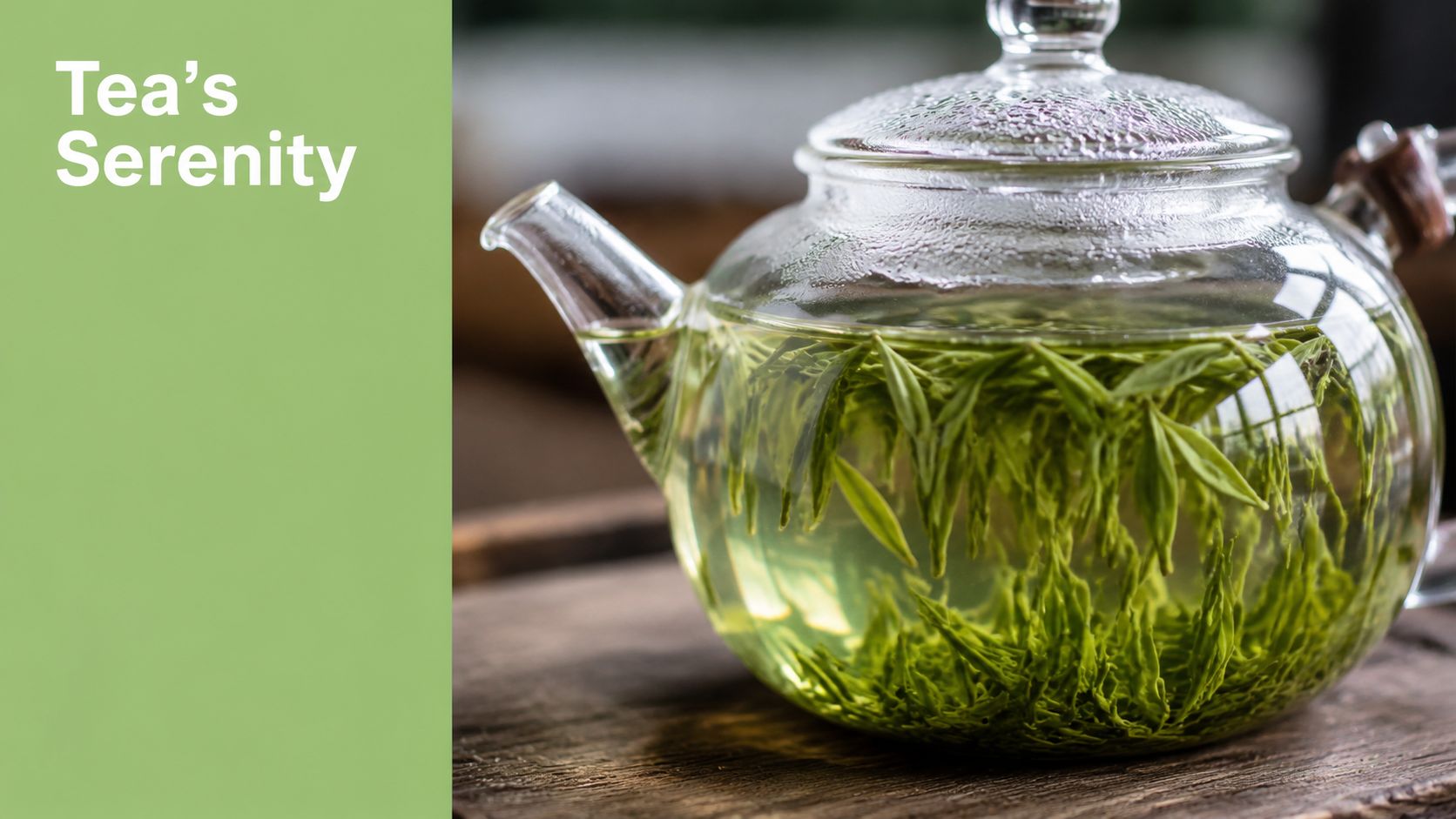
If you want L-theanine in a form your body already recognises, tea is the obvious place to look. It appears in all Camellia sinensis teas, but the amount shifts with leaf type, growing method, and preparation. That's why two cups of tea can feel noticeably different even when they're both “green tea”.
Why matcha often stands out
A peer-reviewed review reports that among Japanese teas, gyokuro and matcha contain more L-theanine than sencha, and it identifies L-theanine as a bioactive compound in tea that may influence brain function under stress. That makes matcha especially relevant for people who want a richer, smoother tea experience with a stronger functional profile than standard brewed tea often delivers. Review on Japanese tea composition
The reason is easy to grasp. Matcha is made from the whole leaf, so you're not just drinking flavour, you're consuming the leaf material itself. That gives it a different relationship with both taste and function than a light tea infusion.
What this means in a real cup
A 250 mL cup of green tea provides only about 8 to 30 mg of L-theanine, while many clinical studies use 200 mg or more per day in supplement form. That comparison shows why a standard brew feels subtle, and why matcha tends to feel more substantial. News-Medical summary of green tea L-theanine amounts
Useful rule of thumb: tea is usually a gentle source of theanine, while supplement research often works at much higher levels.
For Australian tea drinkers, that's the practical takeaway. If your goal is a daily calming ritual, a well-made matcha or green tea can be enough. If your goal is to mirror clinical research, the cup and the capsule are not the same thing, and it helps to understand that before you set expectations.
Safe Dosages and What to Expect
A lot of confusion around L-theanine comes from people comparing a cup of tea with a supplement study and expecting the same result. That's not how it works. A daily brew usually gives you a modest amount, while clinical research often uses higher, more concentrated doses.
Tea amounts versus study amounts
A brewed cup gives you a small-to-moderate exposure, not a strong pharmacological hit. The tea-based range above, roughly 5.8 to 32 mg per 200 mL, is very different from the 200 mg/day or higher used in many trials. That gap is why tea feels like a steady ritual and supplements feel more direct.
Safety data in the reviewed sleep literature is also reassuring. The 2025 systematic review found sleep benefits in trials using 50 to 900 mg/day, and studies using up to 250 mg daily reported mostly minimal adverse effects. 2025 sleep review
What to expect from tea, not capsules
If you're drinking matcha or green tea, the likely experience is a gentle shift rather than a dramatic one. You may feel more settled, less frazzled, and better able to keep your attention on one thing. That's a realistic goal for a beverage.
Practical rule: judge tea by consistency and feel, not by chasing a supplement-style effect from one cup.
Mainstream consumer health guidance also treats the long-term picture cautiously, noting that the ingredient isn't a primary treatment and that short-term tolerability is better established than long-term safety. That's a sensible way to think about it, because tea is part of an everyday pattern, not a cure-all. For people who want to reduce uncertainty in the evening, pairing tea knowledge with a broader routine around lighting, screens, and wind-down habits often makes more difference than chasing a bigger dose.
Bringing L-Theanine into Your Routine with Pep Tea

A good L-theanine routine starts with the kind of drink you'll enjoy every day. For a quiet morning, whisking a bowl of matcha gives you a more complete tea experience than a rushed, bitter brew. For a smoother afternoon, the same ingredient can work beautifully in a latte or a blended drink.
Easy ways to use it at home
A simple matcha latte works well when you want calm energy without a heavy feel. Whisk 1 to 2 teaspoons of matcha with a small splash of warm water until smooth, then add steamed milk or a plant-based alternative. If you like a lighter result, keep the sweetness low and let the tea flavour stay front and centre.
Culinary-grade matcha also fits into smoothies, yoghurt bowls, and baking. That's useful if you want the tea flavour without making another hot drink. The point is to make the ingredient part of a habit, not a project.
What cafés can do with it
Cafés can build simple menu ideas around the same logic. A signature Zen Latte or a low-sugar iced matcha drink gives customers a clear, functional option without leaning on hype. Sugar-free kombucha also works well as a non-alcoholic base when a venue wants something refreshing, adult, and lighter than soft drink.
If you're comparing product formats, here's the simplest way to think about them.
- Ceremonial matcha: best for a clean, traditional cup with the most refined flavour.
- Culinary matcha: better for lattes, smoothies, and kitchen use.
- Sugar-free kombucha: a useful café option when customers want a fermented drink with a crisp finish.
That mix gives both home drinkers and cafés a practical way to use tea in real routines, not just in wellness marketing.
When to Speak with a Health Professional
L-theanine from tea can be a lovely part of a daily routine, but it isn't a replacement for treatment. If anxiety, insomnia, or low mood are persistent, a doctor or registered dietitian is the right place to start. That matters even more if you're already taking medication, are pregnant or breastfeeding, or have an ongoing health condition.
A tea habit can support wellbeing, but it shouldn't be used to mask symptoms that deserve proper care. If you're thinking about a supplement rather than tea, it's smart to ask a professional about dose, timing, and possible interactions first. A simple conversation can save a lot of guesswork.
Pep Tea offers premium organic matcha and sugar-free kombucha for Australians who want clean, functional drinks with real care behind them. If this guide has helped you understand what L-theanine is, visit Pep Tea to explore matcha options that fit a calmer, more focused daily ritual.