
Tag: kombucha recipe
Mango Passion Fruit Drinks: A Flavour & Recipe Guide

You're probably here because one of two things happened. You had a mango passion fruit drink somewhere that tasted bright, juicy and perfectly balanced, then tried to remake it at home and ended up with something flat, too sweet, or oddly sharp. Or you're staring at ripe fruit on the bench and wondering how cafés make this flavour combo feel so polished.
The good news is that mango passion fruit is one of the most forgiving tropical pairings once you understand what each fruit is doing. Mango brings body, round sweetness and that soft, almost creamy finish. Passion fruit brings perfume, tang and lift. Get the ratio right, and the drink tastes fuller without becoming heavy.
That balance also suits the way many Australians like to drink now: fresh flavour, less cloying sweetness, and ingredients that feel real rather than artificial. Used well, mango passion fruit can move across still drinks, spritzes, kombucha, iced matcha and café specials without losing its identity.
The Allure of Mango Passion Fruit Flavours
A great mango passion fruit drink lands in layers. First comes the aroma from the passion fruit. Then the mango fills out the middle so the drink doesn't taste thin. At the end, the tartness keeps your palate awake and ready for the next sip.
That's why this pairing works so well in everything from a quick sparkling cooler to a more thoughtful café serve. It gives you both comfort and freshness. One fruit softens. The other brightens.
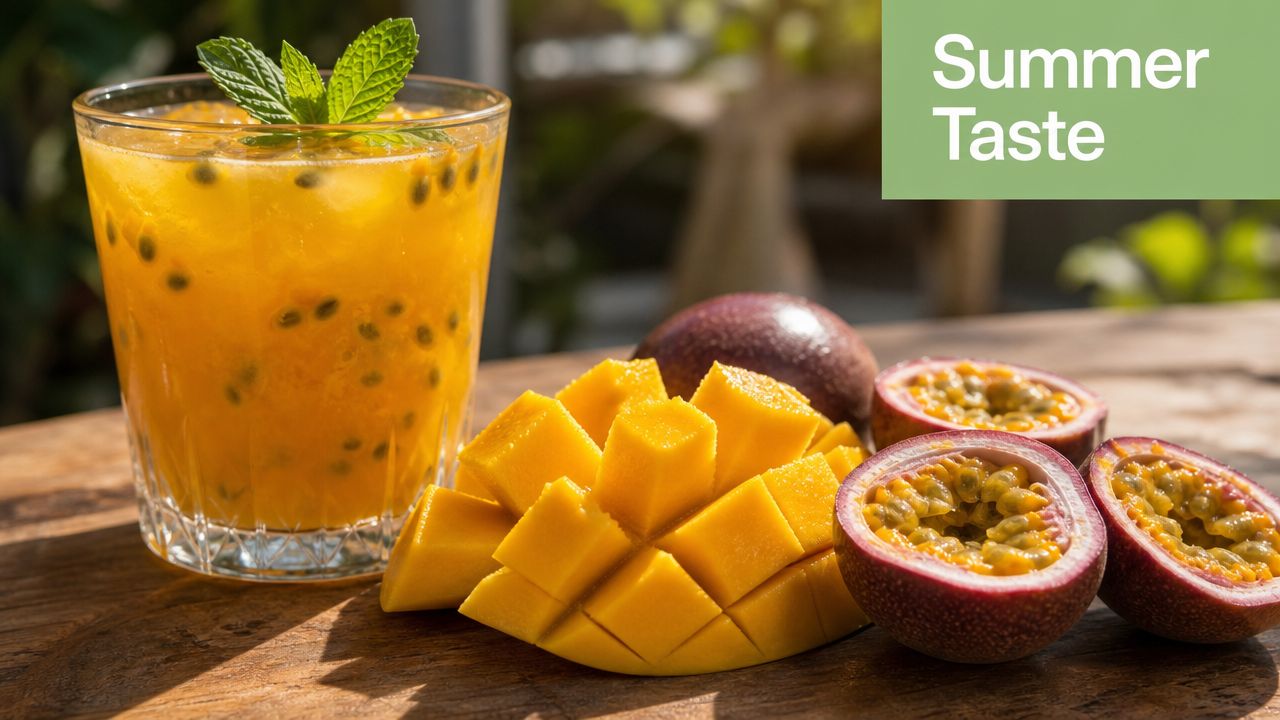
Why the pairing feels complete
Mango on its own can be lovely, but in drinks it sometimes needs help. It's naturally dense and can read as one-note if there isn't enough acid around it. Passion fruit fixes that fast. It adds a tart edge and a floral top note that makes the whole glass smell alive.
This is also why the combination works for more than juice. You can use it in:
- Syrups for sodas, mocktails and dessert drinks
- Second-fermented kombucha where fruit sugar and acidity create a livelier profile
- Layered matcha drinks where tropical fruit softens earthy notes
- Café batched bases for faster service during busy periods
A good tropical drink shouldn't just taste sweet. It should taste lifted.
The role of ingredient quality
When the ingredient list is short, quality matters more. Ripe fruit tastes fuller and needs less fixing. Organic ingredients can also make the finished drink feel cleaner and more focused, especially in recipes where tea, fruit and fermentation all sit in the same glass.
That's one reason we're fussy about what goes into functional drinks. If you're pairing tropical fruit with kombucha or matcha, there's nowhere for dull flavours to hide. Real fruit, properly fermented bases, and fresh preparation make the difference between “nice enough” and “I'd order that again”.
Crafting a Versatile Mango Passion Fruit Syrup
A reliable syrup is the engine room of a good mango passion fruit menu. Once you've got one bottle in the fridge, you can build sparkling drinks, mocktails, iced teas and dessert-style serves in minutes.
The trick is not making it taste like jam. You want concentration, not heaviness.
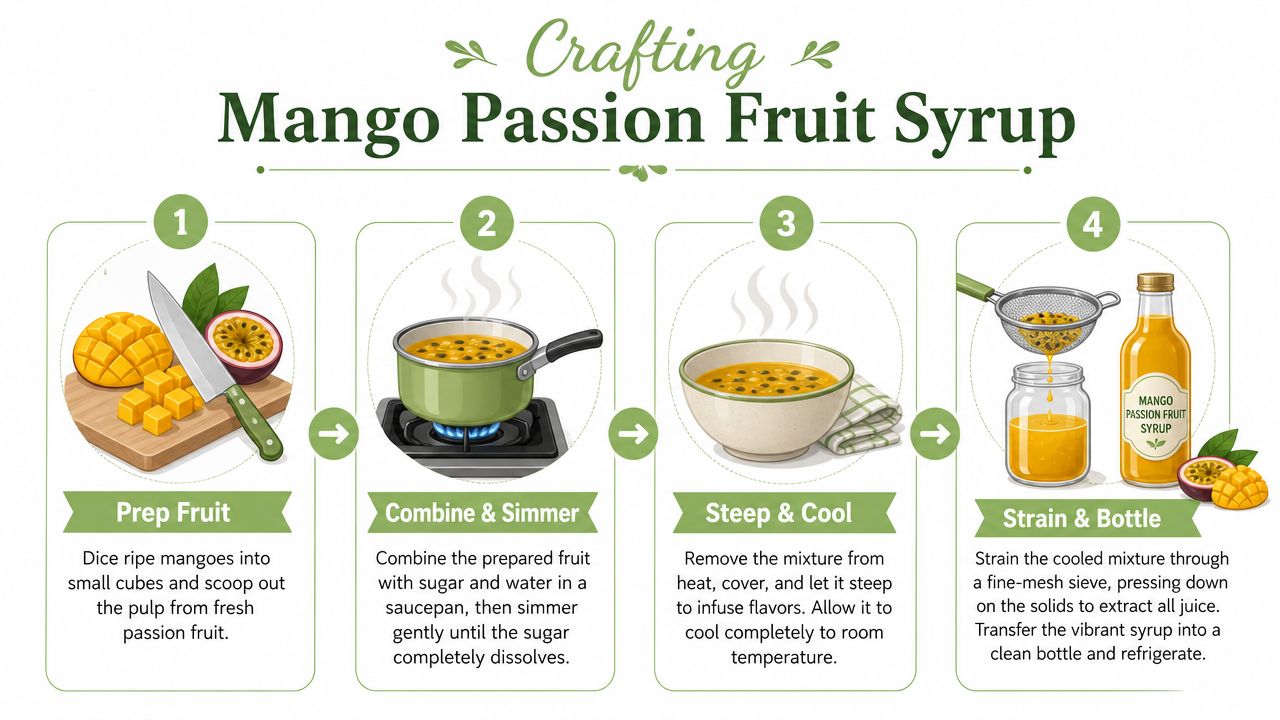
A practical flavour ratio
In Australian recipes, 1 cup (250ml) of passionfruit pulp is often paired with 1,300g of mango to create a balanced sweet-tart flavour, and passionfruit has a lower glycaemic index than mango, which makes it a thoughtful inclusion when you're blending fruit for drinks, as noted in this Australian mango and passionfruit sauce recipe.
You don't need to make a huge batch, but that ratio teaches an important lesson. Mango usually needs more volume. Passion fruit needs less, because its flavour is intense.
What to use
For a home batch, work with ripe fruit and keep the method simple.
Mango
Fresh ripe mango gives the best texture and aroma. Frozen mango works well if fresh fruit is expensive or inconsistent.Passion fruit
Scoop the pulp from ripe fruit. If you like a silkier syrup, strain some or all of the seeds out later.Sugar and water
Sugar isn't there only for sweetness. It also helps carry flavour and gives the syrup body.A pinch of salt
Not enough to taste salty. Just enough to sharpen the fruit.
Step-by-step method
Prep for clarity and control
Dice the mango quite small so it breaks down quickly. Scoop the passion fruit pulp into a bowl and check for any underripe pieces. If the fruit smells flat rather than fragrant, the syrup will too.
Add your fruit to a saucepan with water and sugar. Keep the heat gentle. A hard boil can mute delicate top notes and push the syrup toward a cooked-fruit flavour.
Simmer, steep and strain
Once the sugar dissolves, let the mixture simmer lightly until the mango softens fully. Turn off the heat, cover the pan, and let it sit. That rest gives the passion fruit time to infuse without overcooking it.
Strain through a fine sieve, pressing the solids gently. If you press too hard, you can force fibrous pulp through and end up with a cloudy syrup that separates faster in the bottle.
Practical rule: Stop reducing while the syrup still looks slightly looser than you think it should. It thickens as it cools.
How to adjust the flavour
If the syrup tastes too sweet, don't immediately add more sugar-free mixer later and hope for the best. Fix the base first.
Use this quick guide:
| Syrup problem | What it usually means | How to correct it |
|---|---|---|
| Too thick | Reduced too far | Stir in a little water while warm |
| Too tart | Passion fruit is dominating | Blend in more mango puree |
| Too dull | Fruit wasn't ripe enough | Add fresh passion fruit pulp before a brief reheat |
| Too pulpy | Straining was too light | Pass through a finer sieve |
Storage and café prep
Bottle the syrup in a clean glass container and chill it once fully cool. For home use, smaller bottles are easier because you'll open them more often and expose less syrup to air each time.
For cafés, batch one master syrup, then portion part of it into service bottles. That keeps your main batch cleaner during rush periods and gives staff a more consistent pour for each drink.
Second Fermentation for Mango Passion Fruit Kombucha
Second fermentation is where kombucha becomes lively, fragrant and properly drinkable rather than merely sour. It's also the stage where mango passion fruit can go from pleasant to brilliant, because the fruit adds both flavour and fuel for carbonation.
The key is restraint. Too much fruit pulp, too little headspace, or fruit that isn't fully ripe can all create problems.
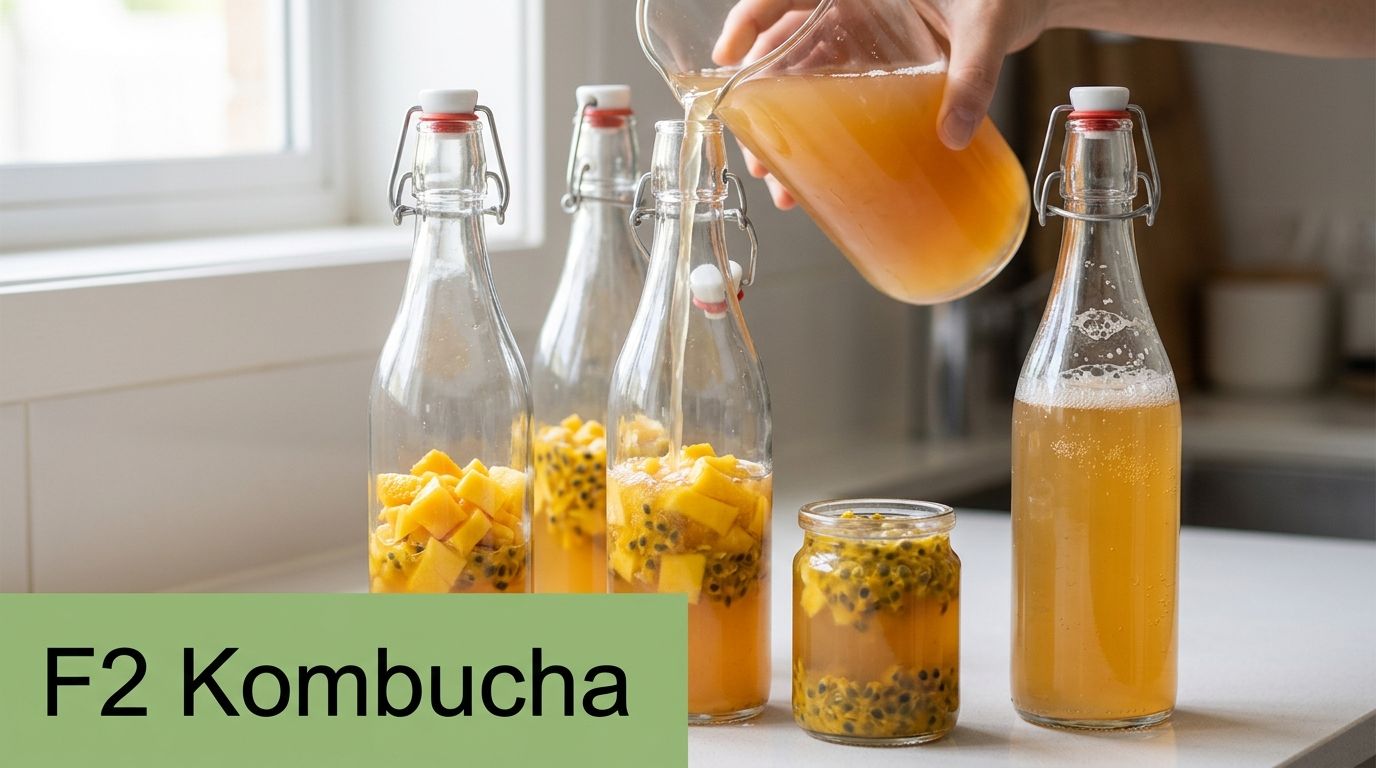
Start with ripe fruit only
A critical safety point often missed in home recipes is that unripe passion fruit seeds can contain cyanogenic glycosides, which are cyanide precursors. Always use fully ripe, mature fruit for infusions and fermentations, as explained in this passion fruit safety overview.
That matters even more in kombucha because fermentation doesn't rescue poor fruit choices. It amplifies what you put in.
How the second ferment works
In plain language, your kombucha still contains live cultures after the first ferment. When you bottle it with fruit, those cultures keep working on the available sugars. That creates carbonation and pulls fruit character into the liquid.
Mango adds roundness and gentle sweetness. Passion fruit keeps the finish bright, so the kombucha doesn't taste sticky or overripe.
A reliable home method
Use clean, fermentation-safe bottles with secure lids. Add a small amount of mango puree or finely chopped ripe mango, plus a spoonful of ripe passion fruit pulp, then top with plain kombucha and leave some headspace.
Don't pack the bottle with fruit. More fruit doesn't always mean more flavour. It often means blocked pours, excess sediment and harder pressure control.
Choose texture wisely
Smooth puree gives more even flavour. Fruit chunks can work, but they're less predictable.Leave room at the top
Headspace helps manage pressure and gives the liquid room to carbonate.Keep bottles warm, not hot
Moderate room temperature helps the second ferment along without pushing it too fast.Burp carefully if needed
If your bottles are building pressure quickly, open them briefly over a sink.
If you hear an aggressive hiss the moment the cap loosens, chill the bottle before opening it again.
A ready-made benchmark for flavour direction is this passion fruit kombucha option, which shows how bright tropical acidity can sit comfortably inside a kombucha profile.
Common problems and what they mean
No fizz
Usually, the kombucha was too cold, the seal wasn't tight enough, or the fruit amount was too timid. It can also happen if the base kombucha had already fermented too far and had less energy left for bottle conditioning.
Too much pressure
This often comes from overfilling fruit, warm storage, or leaving bottles too long before chilling. Mango pulp can also trap gas in a way that makes the bottle seem quiet until it's suddenly not.
Here's a useful visual walkthrough before you bottle your next batch:
Murky, sludgy pours
That's usually a fruit-prep issue rather than a fermentation fault. Strain your syrup or puree more thoroughly if you want a cleaner café-style pour. If you like a rustic finish at home, that's fine too, but warn guests before they tip the last mouthful into the glass.
For cafés and small-batch service
If you're serving mango passion fruit kombucha in a hospitality setting, consistency matters more than novelty. Keep your fruit base standardised, label batch dates clearly, and refrigerate promptly once carbonation is where you want it.
Staff also need one clear opening protocol. Tropical kombucha can foam hard if handled roughly. Open cold bottles slowly and pour on an angle, just as you would with other lively fermented drinks.
Stunning Mango Passion Fruit Mocktails and Sparklers
Mango passion fruit shines in non-alcoholic drinks because it already has built-in drama. You've got sweetness, acidity, aroma and colour before you add anything fancy. The job of the mocktail is to support that, not bury it.
That popularity also makes sense locally. Australia's passionfruit industry includes about 130 commercial growers and produced approximately 5,200 tonnes of fruit last year, underscoring how established the flavour is in our food culture, as noted in this Australian passionfruit industry report.
Three easy serves that look polished
Tropical Spritz
Build this in a tall glass with ice, mango passion fruit syrup, sparkling water and lightly slapped mint. It's the cleanest expression of the syrup, and the bubbles push the passion fruit aroma upward.
Best for: brunch, warm afternoons, and customers who want something refreshing rather than creamy.
Sunrise Cooler
Shake the syrup with coconut milk and ice, then pour into a chilled glass. The coconut softens the tart edge and gives the drink a rounder finish.
Best for: a snack-like serve, especially when someone wants a more filling alcohol-free option.
Chilli Mango Tango
Add a very thin slice of fresh red chilli to the syrup before shaking with ice and soda. You don't want a spicy drink. You want a soft warmth at the back of the palate that makes the fruit taste brighter.
Best for: menus that want one conversation-starting drink without going too far.
Garnish should hint at flavour, not confuse it. If the drink tastes tropical, garnish tropical.
How to make them taste balanced
Many homemade mocktails fail because every element pulls in the same direction. Sweet juice, sweet cordial, sweet garnish. That's when the drink tastes childish rather than café-worthy.
Use contrast instead:
- For lift add sparkling water or mineral water
- For aroma use fresh mint, citrus peel, or a spoon of passion fruit pulp
- For texture bring in coconut milk or crushed ice
- For tension add chilli, fresh lime, or unsweetened tea as a lengthener
For broader alcohol-free serving ideas, this guide to fruity non-alcoholic kombucha cocktails is useful for café teams building a more grown-up menu.
Presentation details that matter
Glassware changes the mood of the drink. Highballs feel clean and modern. Stemmed glasses make a spritz feel more celebratory. Short tumblers suit creamy serves.
Try these finishing touches:
| Drink style | Best garnish | Why it works |
|---|---|---|
| Spritz | Mint sprig and passion fruit float | Fresh aroma and visual contrast |
| Creamy cooler | Toasted coconut rim | Adds texture and signals richness |
| Spicy sparkler | Thin chilli slice and mango cheek | Warns the palate and looks striking |
If you're serving families or groups, set up a small garnish station and let everyone finish their own glass. It makes a simple syrup-based drink feel much more special.
An Unexpected Pairing with Organic Matcha
At first glance, matcha and mango passion fruit can sound like they belong in different worlds. One is grassy, savoury and deep. The other is sunny, lush and aromatic. In the glass, though, they often solve each other's problems.
Matcha can feel too assertive if there isn't enough softness around it. Mango gives it body. Passion fruit trims the edges and keeps the drink from becoming heavy.
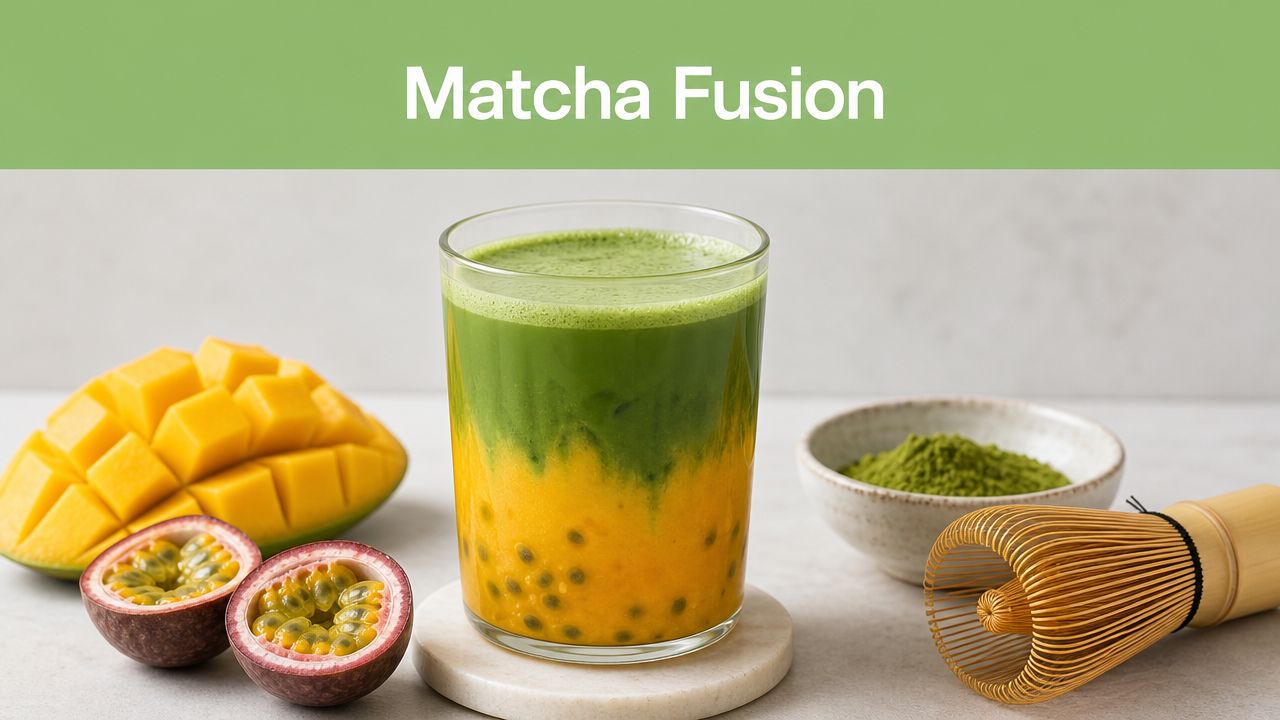
Why the flavour pairing works
Think of it as a triangle. Matcha brings earthiness and a gentle bitter line. Mango contributes sweetness and texture. Passion fruit delivers acidity and perfume. Remove any one of the three and the drink becomes less interesting.
This pairing also suits people who want a drink that feels indulgent but still purposeful. In organic matcha, epigallocatechin gallate, or EGCg, makes up 60% of the catechins, which is why it's often highlighted as a key antioxidant component in matcha, as explained in this organic matcha benefits article.
The smartest matcha pairings don't hide the tea. They give it a better frame.
A layered iced mango passion fruit matcha latte
Build the fruit base
Start with chilled mango passion fruit syrup or a slightly thicker fruit puree in the bottom of the glass. If it's too thin, the layers will blur immediately.
Add ice next. Plenty of it. Ice isn't only there to chill the drink. It slows mixing and helps create visual separation.
Prepare the matcha properly
Whisk culinary-grade or ceremonial-grade organic matcha with a small amount of water until smooth. Then add your milk of choice. Pour this gently over the ice so it settles above the fruit layer.
If you want a more wellness-focused variation, this immune booster drink idea offers another way to think about combining vibrant ingredients with tea.
Two mistakes to avoid
Don't over-sweeten the fruit layer
Matcha already benefits from mellow companions. If the fruit is too sugary, the tea disappears.Don't use weak matcha
A timid whisked tea gets lost under tropical flavour. Choose a quality organic matcha with enough depth to stay present.
Which grade should you use
Ceremonial-grade is lovely if the drink is matcha-forward and minimally sweetened. Culinary-grade works beautifully in lattes and blended recipes where the tea needs to hold its own against fruit and milk.
That doesn't mean culinary-grade is second best for this job. It often gives a stronger, more grounded matcha note in flavoured drinks, which can be exactly what you want.
Scaling for Your Café or Hospitality Venue
A mango passion fruit special is easy to make once. The main challenge is making it quickly, consistently and profitably across a full service.
That starts with one decision. Don't let every staff member freestyle the fruit component. Create one batched base, train one standard pour, and build several menu items from it.
Batch for speed, not just convenience
Your syrup or fruit base should pour cleanly, taste the same each time, and fit multiple drinks. A single batch can support spritzes, kombucha serves, iced teas, sodas and matcha specials if the sweetness is kept in check.
Set up a simple workflow:
- Prep and strain fruit base before service.
- Store master batch cold in labelled containers.
- Decant into smaller service bottles at the bar or coffee station.
- Record the date and staff initials on each bottle.
That system reduces waste and makes troubleshooting easier if a batch tastes off.
Menu language that actually sells
Customers respond to flavour first, then function. “Mango passion fruit” does more work on a menu than vague wellness wording.
Try descriptions like:
- Hunter Valley brewed kombucha with mango passion fruit
- Iced matcha with tropical mango passion fruit
- Sparkling passion fruit mango spritz with mint
- Creamy coconut mango passion fruit cooler
Short descriptions are easier for front-of-house staff to remember and repeat.
Costing and staffing reality
Fruit-based drinks can look profitable on paper and still cause service bottlenecks if prep isn't organised. That's why labour matters as much as ingredient cost. If you're checking whether a new non-alcoholic range makes sense in your venue, a tool like this restaurant labor cost calculator can help you estimate how prep time affects the margin.
Train the team on flavour cues
Don't train staff with recipe cards alone. Train their palate.
Have them taste:
- The base syrup on its own so they know the target balance
- The over-sweet version so they can recognise when soda or coconut milk won't rescue it
- A correct finished serve with the intended garnish and glassware
That makes service stronger because staff can spot mistakes before the drink leaves the pass.
One product mention that fits service
For venues that want a ready-to-pour fermented option on the menu, Pep Tea's Manga Organic Kombucha Tea is one example of a kombucha product built around mango and passion fruit flavour, which can simplify service when a café doesn't want to run its own fruit-forward fermentation program.
Seasonal promotion works well here too. Tropical flavours feel natural in warm weather, but they can also brighten winter menus when paired with sparkling water, tea, or a creamy matcha format.
If you'd like to turn these ideas into everyday drinks at home or on your menu, explore Pep Tea for organic matcha, Australian-brewed sugar-free kombucha, and more beverage inspiration built around clean, functional flavour.