
Tag: green tea weight loss
Best Green Tea for Weight Loss in Hindi: 2026 Guide

If you've searched for the best green tea for weight loss in Hindi, you've probably seen the same advice repeated again and again. Pick any brand. Drink it twice a day. Watch the fat disappear.
That advice isn't honest.
Green tea can play a useful role in a healthy routine, but it isn't a shortcut. What matters most isn't flashy packaging or a random “top 10” list. It's tea quality, EGCG content, how you drink it, and what else you're doing with food, movement, sleep, and stress.
This guide takes a clearer approach. Instead of another brand list, it explains why some green teas are far more worthwhile than others, why matcha stands out, and how to use tea in a practical way that supports wellness without overpromising.
The Honest Truth About Green Tea and Weight Loss
A lot of Hindi-language content treats green tea like a fat-loss trick. That's the first myth to drop.
Apollo Hospitals notes that “there is no solid scientific evidence that green tea consumption significantly reduces excess body weight in obese people,” and it should be seen as a supportive tool alongside diet and exercise, not a standalone solution.
That single point clears up a lot of confusion. If you're drinking green tea but still eating in a calorie surplus, sleeping poorly, and barely moving, tea won't rescue the situation. If you're already building better habits, green tea may support the process.
What people often get wrong
Many readers assume “healthy drink” automatically means “weight-loss drink”. It doesn't.
Green tea sits in a more realistic category:
- It may support appetite awareness for some people
- It may replace sugary drinks if you normally reach for juice, soft drink, or sweet café beverages
- It may fit well before exercise or between meals
- It doesn't melt fat on its own
Green tea works best when it supports habits that already make sense.
That's also why some people benefit from broader support, not just a pantry change. If someone is dealing with persistent weight concerns, medical factors, or appetite regulation issues, structured care such as ProMD Health integrated wellness care can be more useful than relying on one drink.
A better way to think about it
Instead of asking, “Which tea burns the most fat?” ask these questions:
- Am I using tea to replace something less healthy?
- Am I choosing a high-quality tea with meaningful active compounds?
- Am I pairing it with exercise and sensible eating?
- Am I expecting support, not miracles?
That mindset is far more helpful than chasing hype. It also makes the phrase best green tea for weight loss in Hindi much more straightforward to answer. The best choice isn't the loudest brand. It's the tea that gives you real quality and fits into a routine you are able to maintain.
How Green Tea Actually Supports Your Metabolism
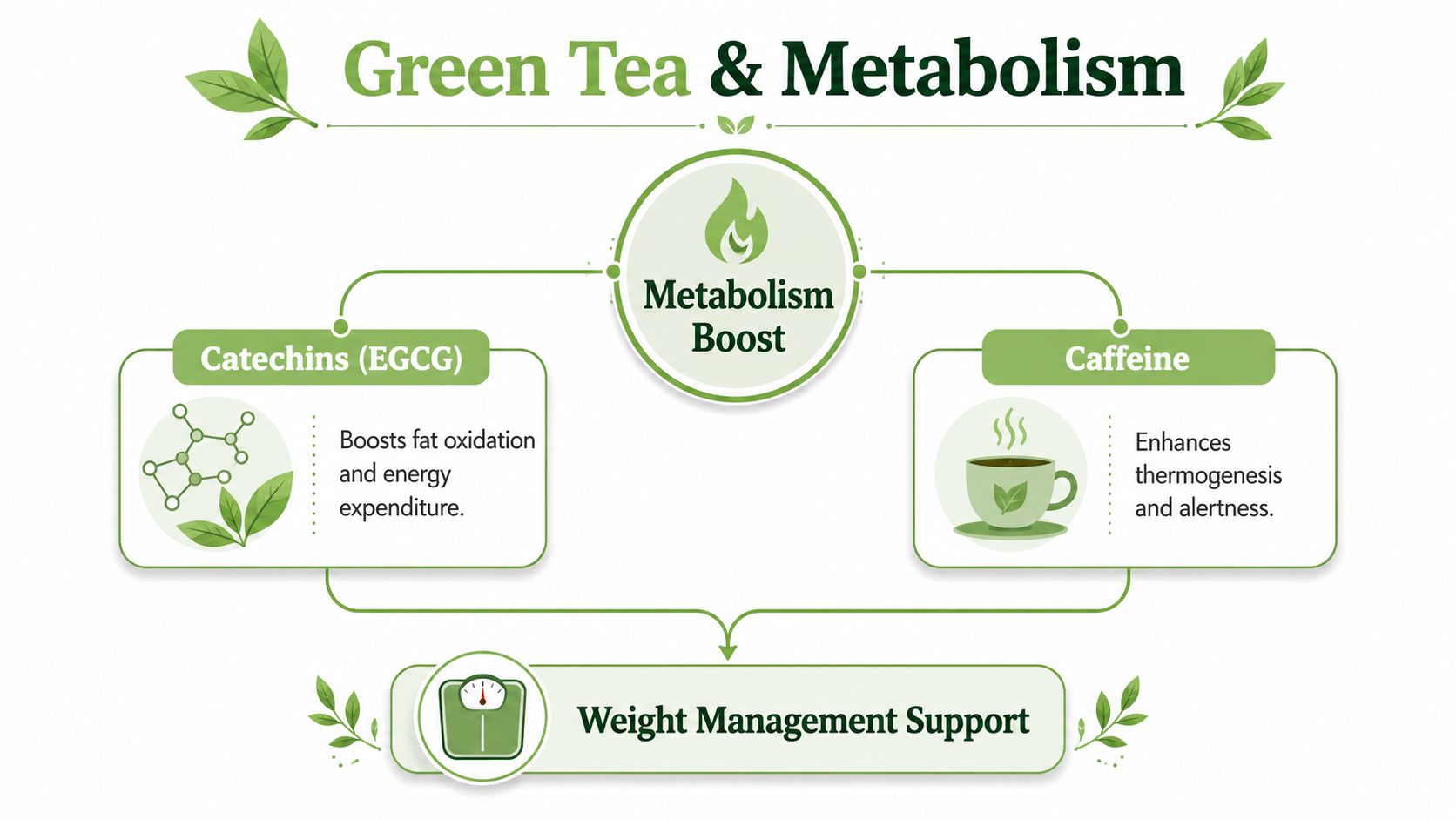
Green tea helps through a small metabolic nudge, not a dramatic body transformation. The two key players are catechins, especially EGCG, and caffeine.
The simple version of the science
Think of your metabolism as your body's energy engine. Green tea doesn't replace the engine. It just gives it a gentle push.
EGCG is a catechin found in green tea. It's linked with fat oxidation, which means your body becomes a bit better at using fat for energy. Caffeine adds a mild stimulant effect, which can support thermogenesis, meaning the body uses energy to produce heat.
Together, those compounds may help with:
- Fat use during activity
- A slight lift in energy expenditure
- Better focus before a walk or workout
- Replacing higher-calorie beverages
What the evidence actually says
A Cochrane review discussed by CHOICE found that green tea preparations cause only modest weight loss, but a secondary analysis found that regular consumption over 12 weeks was linked to 1.3 kg greater weight loss than non-consumers. That's useful, but it also shows the effect is not huge.
People often expect green tea to do the heavy lifting. It won't. The effect is better described as incremental.
Practical rule: Green tea can support momentum. It doesn't create momentum from nothing.
Why that still matters
Small effects aren't useless. They're useful when they stack with other good habits.
For example, green tea may help if you:
- Drink it before exercise and feel more switched on
- Swap it for sweet milk tea or packaged drinks
- Use it as part of an organised morning routine
- Pair it with better food choices and consistent movement
If you're looking at the bigger picture, it also helps to learn about evidence-based metabolic foods so tea becomes one part of a sensible pattern, not the whole plan.
The takeaway
Green tea supports metabolism through EGCG and caffeine, but the support is modest. That's not bad news. It's just realistic news. Once you accept that, you can stop looking for magic and start choosing tea more intelligently.
Why Not All Green Teas Are Created Equal
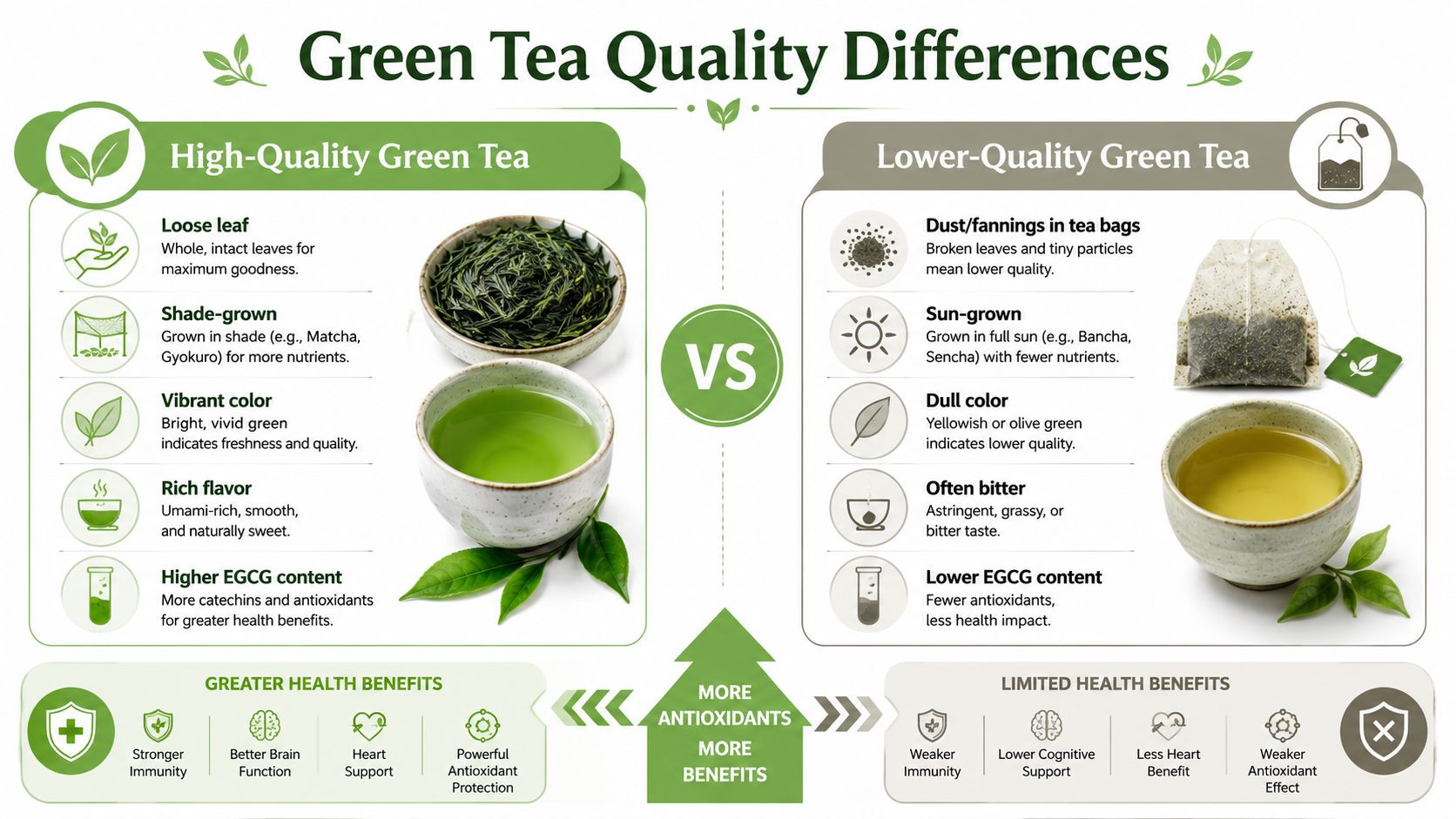
Most articles answering “which brand is best?” skip the most important detail. Not all green tea delivers the same amount of useful compounds.
That's why one person drinks cheap tea bags and notices nothing, while another chooses a better product and has a very different experience.
EGCG content matters more than branding
A key point from Lybrate's discussion is that the effectiveness of green tea for weight loss hinges on its EGCG concentration, which varies dramatically between products. It also notes that studies show 200–300mg of EGCG per serving is needed for a metabolic boost, and low-grade tea bags often don't reach that level.
So when readers ask for the best green tea for weight loss in Hindi, the better question is this: what kind of green tea gives me a worthwhile amount of EGCG?
Green Tea Formats Compared
| Feature | Standard Tea Bags | Loose-Leaf Tea | High-Grade Matcha |
|---|---|---|---|
| Leaf quality | Often lower-grade particles or dust | Better whole-leaf integrity | Finely stone-ground whole leaf |
| Flavour | Can taste flat or bitter | Fresher and more layered | Rich, vibrant, full-bodied |
| Nutrient access | Limited to what infuses into water | Better infusion potential | You consume the whole leaf |
| EGCG potential | Often lower | Moderate to good | Typically the strongest option |
| Best for | Convenience | Everyday tea drinkers | People prioritising potency and quality |
What to look for instead of a hypey label
A useful buying checklist looks like this:
- Leaf form: Whole leaf or powder usually tells you more than brand popularity.
- Colour: Dull, brownish-green tea often signals poorer freshness or handling.
- Processing: Careful processing helps preserve flavour and active compounds.
- Ingredient transparency: If a product leans on trendy add-ins but says little about the tea itself, be cautious.
If a tea is marketed for fat loss but tells you nothing about quality, that's a warning sign.
Cheap tea bags aren't always a bargain
A lower price can be fine if you want a light daily drink. But if your goal is metabolic support, quality becomes the key filter.
That's where many “best brand” lists fall apart. They compare names, flavours, and celebrity appeal, but they don't explain why one tea format may be more meaningful than another. Once you start judging tea by quality and EGCG potential, the conversation changes completely.
Spotlight on Matcha The Antioxidant Powerhouse
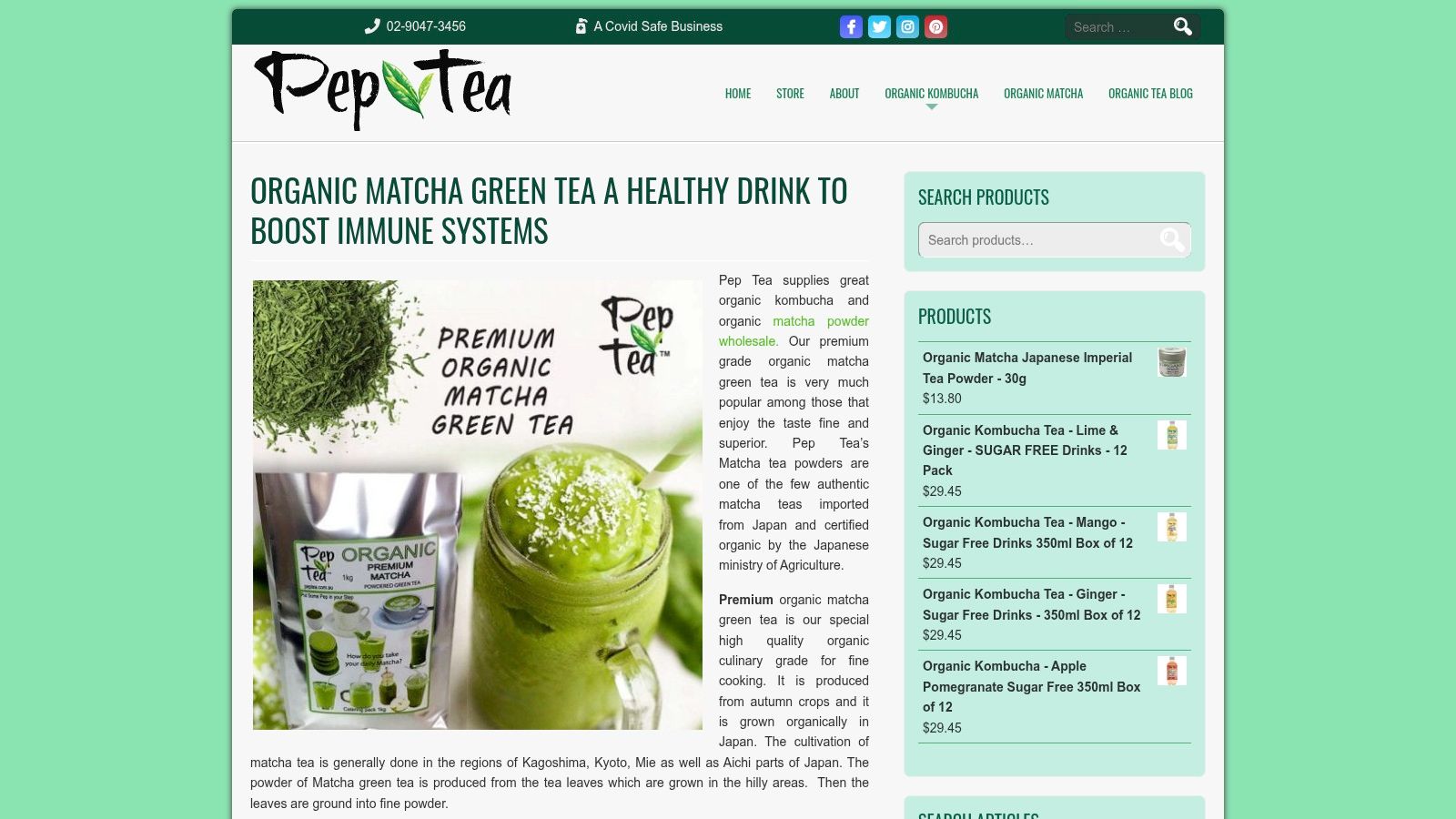
If standard green tea is a gentle wellness drink, matcha is the concentrated version. The reason is simple. With matcha, you consume the powdered leaf itself rather than just steeping leaves in water and discarding them.
That makes matcha especially interesting for readers who want the strongest green tea option in a practical daily form.
Why matcha stands out
Matcha is rich, vibrant, and more substantial than regular brewed green tea. Because it's a powder, every sip contains the leaf material itself. That's one reason it has become a favourite among people who want a cleaner pre-workout drink or a calmer alternative to coffee.
The most compelling point here comes from Pure Matcha's review of the evidence. It reports that high-grade organic matcha powder can increase fat-burning by 17% during exercise, largely due to its high EGCG concentration, which enhances thermogenesis and can block digestive enzymes when consumed 30 minutes before activity.
That's a very different claim from “drink tea and lose weight on the couch”. It ties the benefit to exercise, timing, and quality.
Matcha also suits real life
People often ask whether matcha is too intense, too grassy, or too hard to prepare. It doesn't have to be.
A good matcha offers:
- Smooth energy
- A more concentrated green tea experience
- Easy use in hot drinks, iced drinks, and smoothies
- A simple option before walking, gym work, or yoga
For readers who want to understand the broader nutritional appeal, this guide on matcha tea powder as a powerhouse of antioxidants gives helpful context.
Ceremonial or culinary
This is another point that often confuses people.
Ceremonial-grade matcha is usually chosen for drinking straight because the flavour is smoother and more refined. Culinary-grade matcha is often better for lattes, baking, smoothies, or recipes where other ingredients are involved.
If your main goal is a daily wellness drink, quality matters more than trendy packaging. Choose matcha that looks vibrant and tastes clean, not dull and harsh.
When seeking the “best” green tea in Hindi, matcha deserves a serious look. Not because it's fashionable, but because it solves the biggest problem in this category: weak tea with weak payoff.
Your Practical Guide to Using Green Tea and Matcha
Knowing what to buy is only half the job. The other half is using it in a way that fits your day.
When to drink it
Timing can make tea feel more useful.
Before exercise works well for many people. Matcha is especially popular here because it feels light, focused, and easy on the stomach. If you're using matcha in an exercise routine, the earlier research discussed above points to taking it 30 minutes before activity.
Between meals can also be helpful. Some people find a warm cup reduces the urge to snack mindlessly in the afternoon.
Earlier in the day is often best if you're sensitive to caffeine.
How to brew green tea properly
Poor brewing ruins a lot of green tea. If the water is too hot, the tea can turn harsh and bitter.
A simple approach:
- Heat water, but don't use boiling water straight away
- Steep briefly
- Taste and adjust next time
- Drink it plain if possible, especially if weight management is the goal
If you usually load green tea with sugar or honey, you may cancel out part of the benefit. Start with a milder tea and let your palate adjust.
How to make matcha without lumps
Matcha sounds fancy, but the method is easy.
- Sift the powder if it clumps
- Add a small amount of water first
- Whisk until smooth
- Top up with more water or unsweetened milk
A basic matcha latte works well with unsweetened milk and no syrup. If you want flavour, cinnamon can help without turning it into dessert.
For a more detailed routine, this article on the best way to drink green tea for weight loss is useful.
Easy ways to include it
Different routines suit different people:
- Morning swap: Replace a sugary café drink with plain green tea or a simple matcha.
- Pre-walk ritual: Have matcha before a brisk walk or training session.
- Smoothie add-in: Blend matcha into a low-sugar smoothie.
- Afternoon reset: Choose green tea instead of biscuits and another coffee.
A visual guide can help if you're new to prep techniques.
What not to do
Some habits undo the point:
- Don't treat tea like compensation for overeating
- Don't assume more is always better
- Don't buy poor-quality tea and expect premium results
- Don't ignore sleep, meals, and movement
The best green tea routine is the one you can repeat calmly, not the one that sounds extreme online.
Beyond Tea The Gut Health Link with Kombucha
Weight management isn't only about metabolism. Daily choices around digestion, cravings, and drink habits matter too.
That's where kombucha enters the picture in a different way from green tea. Kombucha is a fermented tea, and many people enjoy it as part of a gut-friendly routine. It isn't a fat-loss shortcut either, but it can be a smart replacement for sugary soft drinks or alcohol-heavy habits.
Why the swap matters
A lot of people focus on one “super drink” while ignoring the bigger issue. They still consume sweet beverages through the day.
Switching to kombucha can help because it offers:
- A more interesting alternative to soft drink
- A fermented tea option that fits wellness routines
- A refreshing choice for people trying to cut back on sugar-heavy drinks
- A social, alcohol-free option for cafés and home gatherings
Gut health and everyday habits
People often talk about the gut in overly complicated terms. In plain language, your digestive system influences how you feel day to day. When your routine is all over the place, food choices usually are too.
That doesn't mean kombucha solves weight issues. It means it can fit into a broader pattern that feels cleaner and easier to sustain.
A helpful drink is often the one that replaces a less helpful habit.
For readers interested in how fermented tea fits into this picture, this overview of the benefits of kombucha is a good starting point.
A sensible role for kombucha
Use kombucha as a complement, not a cure. If green tea or matcha supports focus and routine, kombucha can support the other side of the equation by giving you a more satisfying alternative to sugary drinks.
That combination makes more sense than chasing single-product promises.
Frequently Asked Questions About Green Tea
Can I lose weight by drinking green tea alone
Probably not in any meaningful way. The evidence discussed earlier shows green tea is better seen as a supportive tool, not a standalone solution. If there's no improvement in diet, movement, or overall routine, results are likely to be disappointing.
Which is better for weight management, green tea or matcha
If you're choosing based on potency and leaf use, matcha usually has the stronger case because you consume the whole powdered leaf. Standard green tea can still be a good choice, especially if you want something lighter and simpler.
How many cups should I drink
There isn't one perfect number for everyone. It depends on the product, how strong it is, and how you respond to caffeine. A practical approach is to start modestly and pay attention to sleep, digestion, and overall comfort.
Can I drink green tea at night
You can, but many people do better having it earlier in the day because of the caffeine content. If evening tea affects your sleep, shift it to morning or afternoon.
What should Hindi-speaking buyers look for first
Look beyond “best brand” lists. Focus on:
- Tea format
- Quality
- Freshness
- Ingredient transparency
- Whether it fits your actual routine
Is a tea bag enough
Sometimes, yes, if your main goal is replacing a less healthy drink. But if you're specifically interested in metabolic support, low-grade tea bags are often not the strongest option. That's why quality becomes the deciding factor.
If you want a cleaner, more realistic way to build a tea routine, explore Pep Tea for premium organic matcha and sugar-free organic kombucha made with an Australian wellness mindset.