
Tag: fermented drinks
Store Bought Kombucha vs Homemade
The phrase store bought kombucha vs homemade often leads to the assumption that the home version wins by default. It's cheaper, it feels more hands-on, and the word “live” gets people thinking it must be the fresher, healthier choice.
That shortcut misses the trade-off. Homemade kombucha can offer a richer antioxidant profile in some comparisons, but it also carries more room for contamination, batch variation, and plain old brewing mistakes. Commercial kombucha can be less variable and easier to trust on a busy shelf, though some products are processed in ways that change their live-culture profile and sensory character. The smarter choice depends on what you value most, quality, safety, consistency, cost, or convenience.
| Factor | Homemade | Store-Bought |
|---|---|---|
| Control over ingredients | High, you choose the tea, sugar, and flavouring | Lower, recipe is set by the producer |
| Safety oversight | Depends on your hygiene and process | Usually higher, with commercial controls |
| Live cultures | Can stay active if handled well | Can be reduced by pasteurisation or stabilisation |
| Antioxidant profile | Can be higher in some studies | Can be lower in some comparisons |
| Cost | Usually cheaper over time | Usually more expensive per litre |
| Convenience | Requires patience and attention | Ready to drink |
The Assumption That Homemade Kombucha Is Always Better
Homemade kombucha gets an easy reputation boost because it sounds purer. You're mixing tea, sugar, and a culture in your own kitchen, so it feels more natural than something bottled in a factory. That instinct makes sense, but it doesn't automatically make the home version the better drink for every person or every setting.
The strongest argument for homemade is control. You decide the tea base, sweetness, fermentation time, and flavouring, which gives you a lot of flexibility. Cost is another draw, especially in Australia, where one retailer estimates homemade kombucha can come in at about $1 to $1.50 per litre versus roughly $10 per litre for commercial bottles, a big retail gap for households and hospitality buyers alike homemade kombucha can cost about $1 to $1.50 per litre.
What people usually mean when they say better
Usually, they mean one of three things. They want more live culture, less sugar, or better value. Homemade can support all three goals if you brew carefully, but none of them comes for free.
Practical rule: if you're judging kombucha only by taste or price, you're missing half the picture. Safety and consistency matter just as much as the label on the bottle.
Commercial kombucha also has genuine strengths. It's made to be consistent, easier to transport, and more predictable on shelf. For cafés, grocers, and venues, that consistency often matters more than the romance of a jar on the counter.
The fairest way to think about store bought kombucha vs homemade is this, homemade rewards effort and attention, while store-bought rewards reliability and convenience. If you're brewing for your own kitchen and enjoy the process, home fermentation can be a great fit. If you need something stable, repeatable, and easy to serve, a well-made commercial product can be the more practical option.
How Store-Bought and Homemade Kombucha Are Made
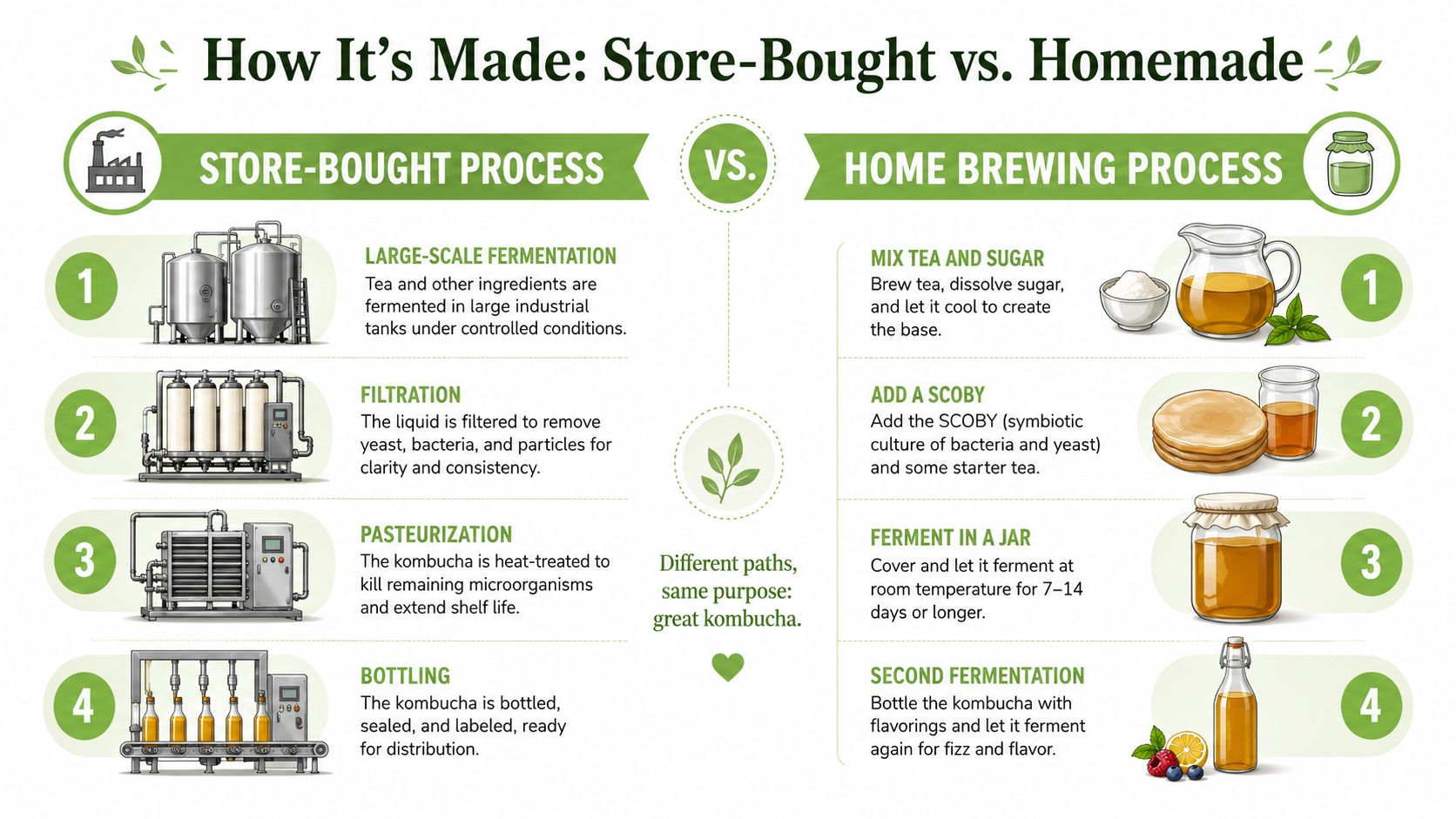
Homemade kombucha starts with sweet tea and a culture, then sits through fermentation in a jar. The brewer controls the tea strength, the sugar level, the room temperature, and the flavouring stage, which is why two home batches can taste completely different. That flexibility is part of the appeal, but it also means the outcome depends heavily on the brewer's habits.
A common starting point is a SCOBY, which stands for Symbiotic Culture Of Bacteria and Yeast. In home brewing, the tea ferments in a covered vessel, then often moves into a second stage for flavour and carbonation. That second stage is where fruit juice, ginger, or other additions can create a more finished drink, but it's also where pressure can build if the bottles aren't handled properly.
For a plain-language primer on the drink itself, see Pep Tea's guide to what kombucha is.
Where commercial production changes the drink
Store-bought kombucha is usually brewed with scale and shelf life in mind. Some products are pasteurised, filtered, or stabilised so they won't keep fermenting in the bottle. According to Yemoos, that process can leave commercial kombucha with less variety of bacteria and yeast, and many commercial products are pasteurized, which the source says removes probiotic content from the drink commercial kombucha vs home.
That doesn't automatically make commercial kombucha inferior. It means the producer is managing risk, pressure, and consistency differently. A factory can also use ingredients such as kombucha extract or added sweeteners, and that can change the final flavour and live-culture profile in ways home brewers don't always expect.
One useful shortcut is to think in terms of priorities. A home brewer can chase freshness and experimentation. A commercial producer has to solve for shelf stability, transport, and consumer safety at scale. Both methods produce kombucha, but they don't produce the exact same drink.
Safety and Quality Differences You Should Know About
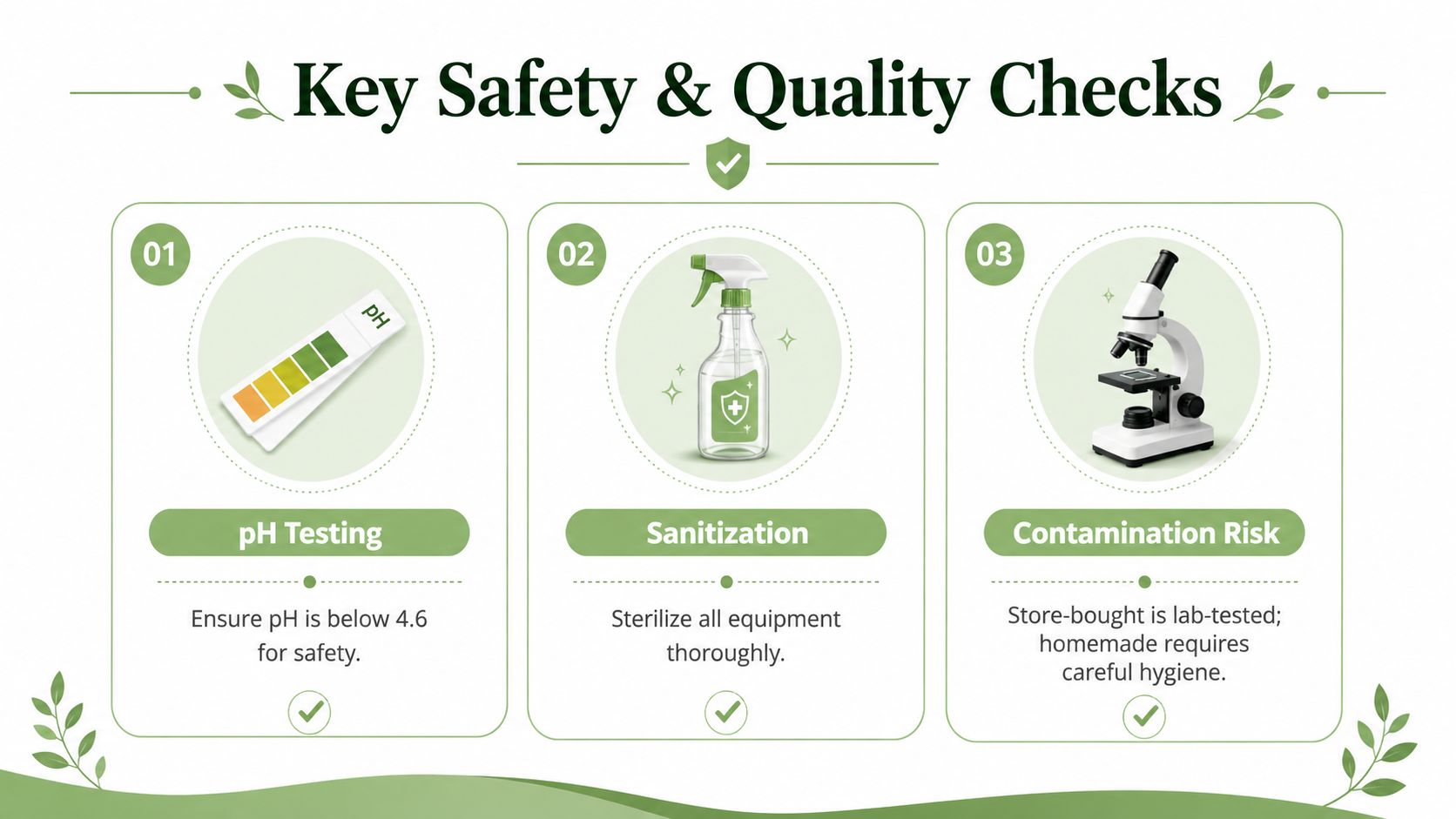
Safety is where the romantic version of home brewing can fall apart. Kombucha depends on acidity, cleanliness, and careful storage, and if any of those slip, the batch can go from pleasant to unsafe. That's why food safety guidance for consumer brewing keeps coming back to the same basics, sanitation, pH, and proper storage, all of which matter more in a kitchen than many people realise safe preparation, handling and storage guidance.
The home environment is the main issue. Unlike a commercial brewery, your kitchen isn't controlled for contamination risk, and the equipment you use may not be sterilised as thoroughly as it should be. Brew Dr. Kombucha also warns that contamination is more likely in home brewing, and notes that improperly manufactured ceramic vessels have been linked to lead poisoning because kombucha acids can leach lead from ceramic glaze buy or make kombucha.
What safe home brewing actually demands
You don't need lab gear to brew at home, but you do need discipline. The brew should be kept in glass or other food-safe containers, the tea must cool before starter liquid goes in, and anything that looks fuzzy or mouldy needs to be thrown out. If you want a broader food-safety lens for handling fermented drinks and hospitality service, Irish hospitality food safety guidance is a useful reference point for the kind of hygiene thinking that keeps problems from starting in the first place.
Homemade kombucha can be perfectly fine when the process is controlled. The risk isn't the idea of fermentation, it's sloppy handling, unsafe containers, and ignoring early warning signs.
Commercial kombucha brings different safeguards. Producers can use testing, documented processes, and food-safety systems that aren't realistic for most households. That's why a certified, HACCP-produced product can be the smarter choice for cafés and retailers that need consistency and less operational risk.
For readers comparing options, Pep Tea's real, raw organic kombucha fits that commercial safety-and-quality logic, especially when serving customers who expect dependable flavour and handling.
Nutrition and Probiotic Profiles Compared
The nutrition question is more interesting than the marketing would have you believe. A 2019 antioxidant analysis comparing homemade and commercial kombucha found that homemade samples had statistically higher concentrations of caffeine, catechin, epicatechin, EGCG, and total antioxidants, with the differences reported as significant at p < 0.05 antioxidant analysis of homemade vs commercial kombucha. A separate summary of the same research said homemade kombucha had, on average, twice the total antioxidants of store-bought kombucha homebrew is better.
That's a real difference, but it needs careful reading. Higher antioxidant counts don't prove better health outcomes, and they don't make every homemade batch superior in every way. They do show that home fermentation can preserve or produce a more complex chemical profile than some commercial products.
The probiotic part is where processing matters
Commercial kombucha may be processed to stop fermentation, and that can change the live-culture picture. If a drink is pasteurised or heavily stabilised, it may no longer behave like a living fermented beverage in the same way a fresh home brew does. On the other hand, home kombucha only keeps those active cultures if the brewer manages the batch correctly.
| Factor | Homemade | Store-Bought |
|---|---|---|
| Caffeine and tea compounds | Can be higher in some batches | Can be lower in some commercial products |
| Total antioxidants | Higher in the cited comparison | Lower in the cited comparison |
| Live cultures | Ongoing microbial activity if handled correctly | May be reduced by pasteurisation or stabilisation |
| Batch consistency | Varies by brewer | Usually more consistent |
| Shelf stability | Shorter, more variable | Usually stronger |
For a plain explanation of how probiotics fit into fermented drinks, Pep Tea's probiotic guide is a helpful companion read.
The honest takeaway is simple. Homemade kombucha can have a stronger antioxidant profile in the research cited here, but commercial kombucha may still be the better product for a café fridge or a retail shelf because it stays consistent and predictable. Better numbers on paper don't always mean better experience in the glass.
Cost and Time Investment for Home Brewing versus Buying
Cost is where a lot of people make their decision, and the gap can be wide. In the Australian figures provided, homemade kombucha can cost about $1 to $1.50 per litre, while commercial kombucha commonly sells at around $10 per litre, which implies roughly a 6.7x to 10x retail premium for store-bought bottles Australian retailer price comparison. That difference is hard to ignore if you're drinking it regularly.
The US comparison tells a similar story. Brew Buch estimates a typical store-bought 16-ounce bottle at about $3.99, with the initial home setup around $37.38, after which a 128-ounce batch costs about $0.12 per 16-ounce serving price of kombucha. Another source places homemade kombucha at $0.25 to $0.50 per 16-ounce bottle, versus $3 to $5 for store-bought price of kombucha.
The hidden cost is time
Home brewing isn't a grab-and-go habit. It asks for monitoring, bottling, waiting, and cleaning, and the batch itself can take around two weeks from start to finish in beginner guides. Store-bought kombucha wins on convenience because it's already finished, chilled, and ready when you want it.
That time difference matters for hospitality too. A café can't afford a drinks programme that depends on whether a jar fermented properly this week. It needs reliability, portion control, and service speed, which is why buying from a trusted producer often makes more sense than brewing in-house.
Practical rule: choose home brewing if the process itself is part of the value. Choose store-bought if the drink needs to behave like any other stocked menu item.
Packaging waste and refrigeration are part of the total cost as well. Bottled products bring more packaging, while home brewing uses fewer ready-to-ship containers but demands your own fridge space and attention. If you're running a venue, those details can change the overall cost of the drink more than the sticker price does.
Who Should Brew at Home and Who Should Buy from a Certified Producer
Home brewing suits people who like the process as much as the drink. If you enjoy cleaning jars, tracking fermentation, and tasting batches as they evolve, it can be a rewarding habit. It also makes sense if you want more control over ingredients and you're prepared to treat sanitation seriously.
A simple decision filter for home drinkers
- Choose home brewing if you have time, patience, and a food-safe setup.
- Choose a certified product if you've had contamination problems before, don't want to manage pressure in bottles, or prefer a consistent taste.
- Choose store-bought if convenience matters more than experimentation.
Cafés and hospitality venues sit in a different category. They need a kombucha that pours the same way every time, tastes the same across cases, and fits service standards without extra staff training. That's where a certified organic, HACCP-produced Australian kombucha becomes the smart operational choice, because the business isn't just buying flavour, it's buying consistency and reduced risk.
Retail buyers have their own priorities. Shelf stability, customer trust, and clean label communication matter more than the romance of fermentation. If a product can't hold up in distribution or creates avoidable quality issues, it becomes a liability rather than an asset.
A quick buyer's checklist
- For cafés: look for reliable supply, clear ingredients, and a product that can be served fast.
- For retailers: look for shelf clarity, strong packaging, and a brand story that's easy to explain.
- For home buyers: think about your own tolerance for batch variation and kitchen upkeep.
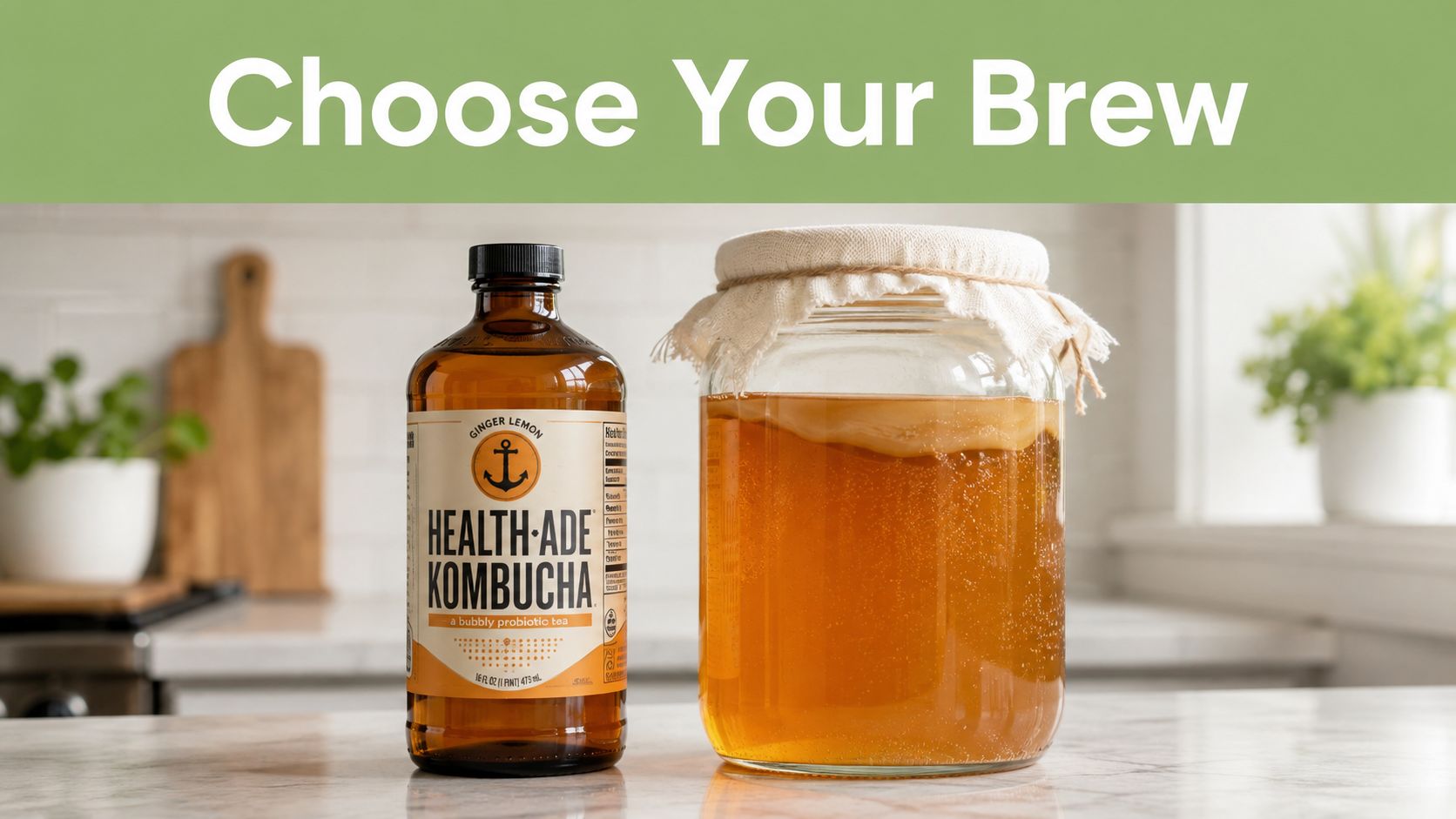
The best choice isn't always the most artisanal one. It's the one that fits the way you drink, serve, and store kombucha. If you're managing a business, certified production usually wins. If you're brewing for pleasure and you're happy to learn the craft, home fermentation can be worth the effort.
Practical Tips for Reading Labels and Testing Your Own Batches
Start with the label if you're buying kombucha. Look for wording that tells you whether the drink is pasteurised, filtered, or stabilised, because those processes can affect live-culture content. Also check for added sweeteners and flavourings, since some bottles are closer to a flavoured beverage than a living fermented tea.
For home batches, use your senses and a few basic checks. A healthy brew should smell pleasantly tart, not rotten or mouldy, and any fuzzy growth on the surface means the batch needs to go. If you test pH, keep an eye on acidity, because kombucha that isn't acidic enough is more vulnerable to spoilage.
Keep the home process simple
- Sanitise equipment well: jars, funnels, and bottles need to be clean before every batch.
- Watch the temperature: a stable room is better than a cold corner.
- Use safe containers: glass is the easiest place to start.
- Trust visual signs: mould looks fuzzy, not smooth.
If you're new to brewing, don't try to outsmart the process. Start with a simple recipe, keep notes on timing and taste, and make one change at a time. That's how you learn whether you actually enjoy making kombucha, rather than just liking the idea of it.
For many people, the answer in the store bought kombucha vs homemade debate is a mix of both. Brew at home if you want the ritual and can manage the care it needs, or buy from a trusted producer if you want safety, consistency, and less mess. If you'd like a reliable, Australian-made option, explore Pep Tea for organic kombucha made for everyday wellness, café service, and simple, practical enjoyment.