
Tag: egcg supplement australia
Best Green Tea Capsules for Weight Loss: A 2026 AU Guide
If you're looking at green tea capsules because you want a simple, natural push with weight management, that's a fair question. Many individuals aren't chasing a miracle. They want something practical that fits a busy week, doesn't feel extreme, and won't undo their efforts with food, exercise, and sleep.
Green tea capsules do have a place. Some extracts are concentrated, some are poorly labelled, and some are much better than others. But capsules also raise a bigger question. Is isolating one compound the best long-term strategy, or does a whole-food tea ritual give you broader support that feels easier to stick with?
Searching for a Natural Edge in Weight Wellness
A lot of Australians start in the same place. You're standing in the supplement aisle, or comparing bottles online, and nearly every label seems to promise metabolism support, fat burning, or appetite help. Green tea capsules often sound more trustworthy than louder weight loss products because green tea already has a healthy reputation.
That instinct makes sense. Green tea is familiar, plant-based, and less intimidating than heavily marketed stimulants. But the label can still be confusing. One bottle lists total extract, another lists catechins, another mentions EGCG, and another hides everything inside a “blend”.
Finding a capsule is not the primary challenge. The difficulty lies in determining if the supplement is high-quality, whether it suits your specific needs, and if it supports habits you can realistically maintain.
Good weight wellness usually comes from stacking small decisions that you can repeat, not from finding one heroic product.
That wider view matters. Weight support is rarely just about one supplement. It's usually tied to movement, sleep, meal quality, stress, and consistency. If you want a thoughtful read on improving health span through lifestyle choices, that broader lens is worth your time.
Understanding Green Tea's Link to Weight Management
Green tea gets linked with weight management because it contains catechins, a group of natural plant compounds. The one you'll see most often on labels is EGCG, short for epigallocatechin gallate. If you've ever wondered why some products list EGCG in milligrams instead of just saying “green tea extract”, this is the reason. EGCG is one of the main compounds people are trying to measure.
What EGCG is thought to do
In simple terms, green tea compounds may help your body use energy a bit more efficiently. You'll often hear words like thermogenesis and fat oxidation. They sound technical, but the core idea is straightforward.
- Thermogenesis means your body is producing heat as it uses energy.
- Fat oxidation means your body is using fat as a fuel source.
- Metabolic support means those processes may get a gentle nudge, especially when green tea is paired with healthy habits.
That doesn't turn green tea into a magic pill. It means the compounds may support processes your body already has.
What one clinical trial found
A 2015 randomised controlled trial involving women with central obesity found that a high dose of green tea extract, 856.8 mg EGCG daily, taken for 12 weeks, led to a statistically significant weight loss of 1.1 kg, plus reductions in BMI and waist circumference, with no side effects reported.
That result is useful for two reasons. First, it shows why researchers focus on specific EGCG amounts rather than vague extract claims. Second, it reinforces that the effect is modest, not dramatic. That's exactly how green tea should be viewed. As support, not rescue.
Why labels can be misleading
Two bottles can both say “green tea”, but deliver very different amounts of the compounds people care about. One might contain a concentrated extract. Another might contain a lower-strength powder with a much smaller active dose.
If you want a broader look at how green tea differs from matcha and why that matters nutritionally, this guide on the benefits of matcha green tea is a helpful companion.
Practical rule: If a label doesn't clearly tell you how much EGCG you're getting, it's hard to judge whether the product is likely to be meaningful.
How to Choose the Best Green Tea Capsules in Australia
If you're comparing the best green tea capsules for weight loss, don't start with branding. Start with the label. The most important question is not “How many capsules are in the bottle?” It's “What exactly is in each serve?”
A useful market comparison found that some higher-strength products available in Australia, such as Zenwise, provide 363 mg of EGCG per 725 mg serving, while some other local brands average 240 mg. The key lesson from that comparison is simple. Check the EGCG amount itself, not just the total extract on the front of the bottle, as noted in this Australian-market comparison of green tea extracts.
| Feature | What to Look For | Red Flag |
|---|---|---|
| EGCG content | A clearly stated EGCG amount per serve | Only “green tea extract” listed with no EGCG detail |
| Standardisation | A label that explains the extract is standardised | Vague wording with no active compound breakdown |
| Serving size | A practical daily serve you can understand easily | Tiny print or confusing multi-capsule maths |
| Caffeine | Transparent caffeine information, especially if you're sensitive | No mention of caffeine at all |
| Purity | Clear manufacturing and quality details | Buzzwords without any testing or compliance detail |
| Ingredients | Short, readable ingredient list | “Proprietary blend” or filler-heavy formula |
Read the active ingredient panel first
Many shoppers make the same mistake. They look at the biggest number on the bottle. A capsule can sound impressive because it contains hundreds of milligrams of “extract”, but that doesn't tell you how much EGCG is inside it.
A stronger label usually gives you more than one layer of information:
- Total extract amount
- Catechin or polyphenol detail
- EGCG amount
- Caffeine amount
If those details are missing, you're buying with very little context.
Watch for the wording that hides the truth
“Proprietary blend” is one of the least helpful phrases in the supplement world. It can make a formula sound advanced while telling you almost nothing. If a company won't disclose the key active amount, you can't compare it properly with another product.
Also be careful with labels that lean hard on vague phrases such as natural metabolism support or antioxidant complex but don't explain the actual dose.
Think about your own tolerance
A capsule that looks strong on paper may not suit you if you're sensitive to caffeine or if concentrated extracts tend to upset your stomach. That doesn't mean the product is bad. It means the “best” option is always partly personal.
Some people do fine with capsules taken alongside food. Others notice they feel edgy, nauseous, or too wired. A good product should be transparent enough that you can predict that risk before you buy.
The best label is the one that lets you make an informed decision without guessing.
A quick buyer checklist
Before you buy, ask these questions:
- Does the label state EGCG in milligrams?
- Is the extract standardised, or is it just loosely described?
- Can you see the caffeine content?
- Are the other ingredients minimal and clearly named?
- Does the brand give you confidence about quality and compliance in Australia?
That checklist won't guarantee results, but it will help you avoid weak or opaque products.
A Word of Caution Safety and Side Effects
Green tea is natural. Concentrated green tea extract is still something to treat carefully.
Capsules can be more intense than a normal cup of tea because they deliver a concentrated amount in a small serve. For some people, that's convenient. For others, it's where problems start. The most common issues are fairly predictable: jitteriness, sleep disruption, nausea, or a generally unsettled stomach. If you already react strongly to coffee, pre-workouts, or energy drinks, it makes sense to be cautious here too.
When extra care makes sense
Some readers should slow down and get professional advice before trying any green tea extract capsule.
- If you take regular medication, ask your GP or pharmacist whether a green tea extract could interfere.
- If you have a history of liver concerns, don't assume a herbal product is automatically low risk.
- If you're pregnant, breastfeeding, or highly caffeine sensitive, a capsule may be less suitable than a gentler food-based option.
A safer way to approach extracts
Start with the smallest sensible serve on the label, not the most aggressive routine you can tolerate. Take it with food unless the packaging clearly advises otherwise. Stop if you feel unwell.
If a supplement makes you feel shaky, nauseous, or off, that's useful feedback. You don't need to “push through” because it's marketed as natural.
This is also where whole-food forms of tea often feel easier. A cup or bowl of tea gives you a more gradual experience. The ritual slows you down, and the dose is easier to manage than swallowing a concentrated extract and hoping it suits you.
Beyond the Capsule The Case for Whole-Food Matcha
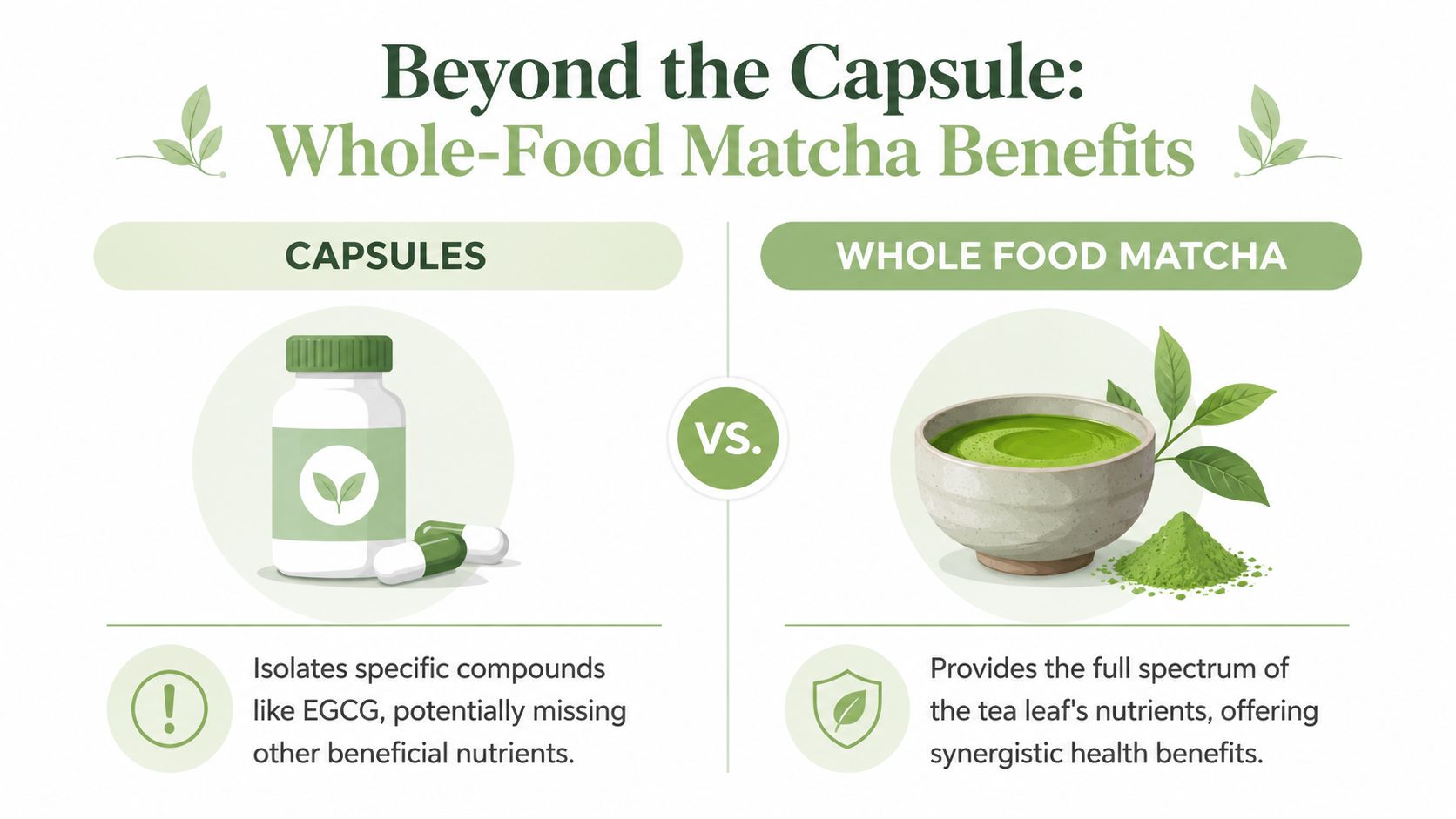
Capsules isolate. Matcha nourishes more broadly.
That's the biggest shift in perspective. A green tea capsule usually focuses attention on one target compound, often EGCG. Matcha is different because it's the whole tea leaf, finely stone-ground into powder. When you drink it, you're consuming the leaf itself rather than an isolated extract.
Why whole-food form matters
A capsule can be useful if your only goal is concentrated intake. But a whole-food approach offers a wider nutritional picture.
With matcha, you're not just chasing EGCG. You're also getting naturally occurring compounds that help shape the overall experience, including L-theanine. That matters because many people want energy support without feeling overstimulated.
Here's the practical difference:
- A capsule is often about dose concentration
- Matcha is about compound synergy
- A tea ritual supports daily consistency
- Whole-food intake tends to feel more connected to meals, hydration, and routine
The calm-focus factor
One reason matcha has such loyal followers is that it feels different from harsher stimulants. Many tea drinkers describe it as cleaner and steadier. That's one reason whole-leaf green tea traditions have lasted so long. The experience isn't just about “fat burning”. It's about alertness, satisfaction, and rhythm.
This can matter more than people expect. Weight wellness gets easier when your routine feels good enough to repeat. If your support tool feels clinical, inconvenient, or irritating on the stomach, you're less likely to stick with it.
Matcha fits a long-game mindset
The best green tea capsules for weight loss may help some people. But “best” depends on what problem you're trying to solve.
If you want the most concentrated extract, capsules may win that comparison. If you want a habit that supports energy, focus, mindful eating, and a more enjoyable relationship with wellness, whole-food matcha is often the stronger option.
A good starting point is understanding exactly what matcha powder is and how it differs from standard green tea products.
Whole-food choices often do more than deliver an active compound. They help build a routine that people can live with.
Your Daily Wellness Ritual with Matcha and Kombucha
Many individuals do not struggle because they lack information. They struggle because their day gets busy, cravings hit, and healthy choices need to be simple. That's where a tea-based ritual can help.
A capsule asks for compliance. A ritual invites participation.

Morning
Start the day with matcha instead of reaching straight for something harsher or sweeter. Whisked matcha gives you a deliberate pause before the day speeds up. That small action can shape what happens next. You're more likely to eat breakfast mindfully, less likely to chase quick sugar, and more likely to notice your hunger properly.
Some people prefer it straight. Others like it as an iced matcha or a lighter latte. If you want ideas you can use during the week, these matcha drink recipes for weight loss make the habit feel more practical.
Afternoon
The afternoon slump is where many routines fall apart. Energy dips, concentration drops, and sugary snacks start looking reasonable. A chilled kombucha can be a smart swap here because it gives you flavour, fizz, and a more intentional break from the desk or kitchen bench.
For many people, that matters as much as the ingredients. Replacing a soft drink or mindless snack with something refreshing can change the pattern of the whole afternoon.
Why this pairing works well
Matcha and kombucha do different jobs in a routine.
- Matcha in the morning suits focus and a steady start.
- Kombucha in the afternoon can replace sweeter drinks and make healthier choices feel less restrictive.
- Together, they support a more food-based, habit-friendly approach.
This doesn't need to become a strict protocol. Keep it simple. Use the parts that make your day easier.
A wellness ritual works best when it feels enjoyable enough to keep doing on ordinary Tuesdays, not just on highly motivated Mondays.
Frequently Asked Questions
| Question | Answer |
|---|---|
| Are green tea capsules better than drinking green tea? | Not automatically. Capsules can offer concentrated EGCG, but whole-food tea can be easier to tolerate and easier to build into a long-term routine. |
| What should I check on a capsule label first? | Start with the stated EGCG amount. Then look for standardisation, caffeine details, and clear ingredient disclosure. |
| Do green tea capsules work on their own? | It's better to think of them as support, not a standalone fix. Habits around food, movement, sleep, and consistency still do the heavy lifting. |
| Is matcha a good alternative if I don't want capsules? | Yes. Matcha gives you the whole tea leaf rather than an isolated extract, which many people prefer for a broader wellness approach. |
| Can green tea capsules cause side effects? | They can. Some people notice jitters, stomach upset, or sleep issues, especially with concentrated products or if they're caffeine sensitive. |
| Is kombucha useful in a weight wellness routine? | It can be a practical replacement for sugary drinks and can make healthier choices feel more satisfying. The main benefit is often behavioural and routine-based. |
If you'd rather build a sustainable tea ritual than rely only on capsules, explore Pep Tea for premium organic matcha and Australian-brewed sugar-free kombucha. It's a simple place to start if you want clean energy, better daily habits, and a more whole-food approach to wellness.