
Tag: diet soda alternatives
Sugar Free Carbonated Drinks: A Guide to Healthier Fizz
You're in the supermarket, staring at a fridge full of cans and bottles. One says zero sugar. Another says diet. Another leans hard on words like “natural”, “clean”, or “better for you”. Then there's sparkling water, kombucha, flavoured soda water, and a few bright-coloured drinks that look suspiciously like soft drink wearing a wellness costume.
It's no wonder people get confused.
For a lot of Australians, cutting back on sugary soft drink feels like an obvious good move. Cancer Council South Australia notes that a typical 600 mL bottle of soft drink contains 16 teaspoons of sugar in its discussion of diet drinks and alternatives, which helps explain why lower-sugar options keep getting attention in the drinks aisle Cancer Council SA on diet drinks and sugar. But once sugar comes out, a new question appears. What exactly has replaced it, and does that make the drink healthy, or less sugary?
That question matters because these drinks aren't fringe products anymore. In the same Cancer Council South Australia article, almost 1 in 4 teenagers aged 15 to 17 years (24.2%) said they drank sugar-free soft drink, sports drinks and energy drinks every day, based on the South Australian Population Health Survey Cancer Council SA on youth consumption patterns.
Navigating the World of Sugar Free Carbonated Drinks
If you've ever picked up three different fizzy drinks and flipped each one over to compare labels, you've already realised the category is messy.
Some sugar free carbonated drinks are basically water plus bubbles. Some are classic soft drinks rebuilt with high-intensity sweeteners. Some aim for a “healthy soda” identity. Others come from fermentation, where sugar is used in the brewing process and then reduced rather than swapped for an additive.
That's why the label on the front rarely tells the full story.
Why the category feels so confusing
A drink can be sugar free and still be very different from the one next to it. One bottle might contain only carbonated water and natural flavour. Another might rely on a blend of aspartame and acesulfame potassium. Another might be acidic, sweet, colourful, and heavily processed, even though the sugar line reads zero.
Practical rule: “Sugar free” tells you one thing. It doesn't tell you the whole nutritional story.
The confusion gets bigger because shoppers often compare the wrong drinks. They compare zero sugar cola with regular cola, and stop there. In real life, the more useful comparison is often zero sugar cola versus sparkling water, or kombucha versus artificially sweetened soda, or a flavoured fizzy drink versus unsweetened tea.
The real question isn't just sugar
The more helpful question is this: what is this drink made from, and what role do I want it to play?
A few simple examples make that clearer:
- If you want hydration first, plain water or unsweetened sparkling water usually makes the most sense.
- If you want a soft drink flavour without sugar, a diet or zero sugar soda may suit that job.
- If you want fizz with a more food-like ingredient story, a naturally fermented option can be worth a closer look.
- If you drink it every day, ingredient quality matters much more than marketing language.
There's also a broader market shift behind all of this. Data Intelligence estimates the global sugar-free carbonated drinks market reached USD 147.0 billion in 2025 and is projected to reach USD 262.2 billion by 2033, with a projected 7.5% CAGR from 2026 to 2033 Data Intelligence market projection for sugar-free carbonated drinks.
So yes, there's more choice than ever. That's useful. It also means you need a better filter than “zero sugar = healthy”.
The Spectrum of Sugar-Free Fizz Explained
Not all fizzy drinks belong in the same basket. Once you split them into a few simple families, the aisle gets much easier to read.
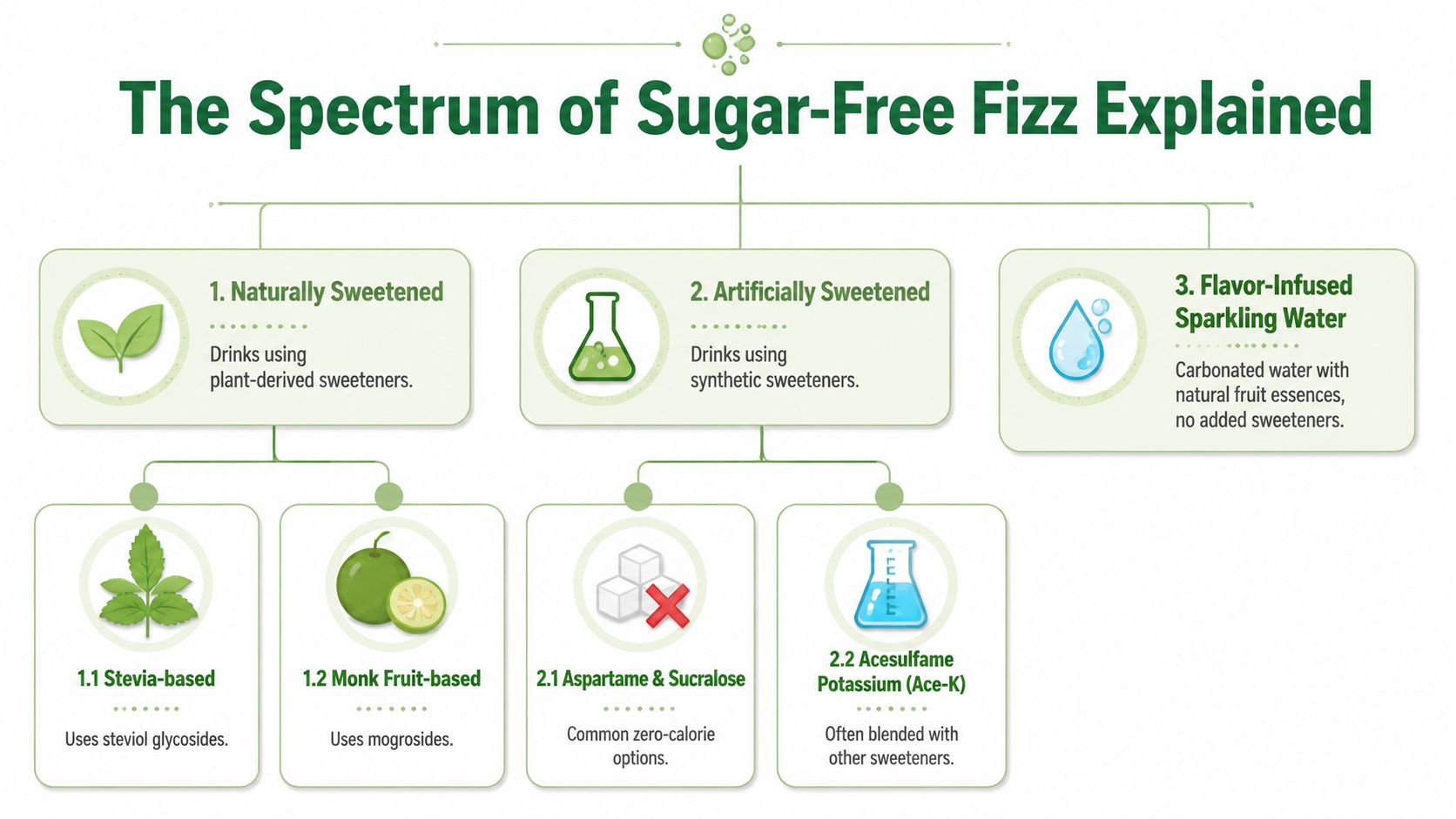
Sparkling water and mineral water
This is the simplest end of the spectrum.
These drinks are mostly just water with carbonation. Some are naturally mineral-rich. Others are filtered water with bubbles added later. If they're unflavoured and unsweetened, they're usually the most straightforward choice in the whole category.
They suit people who like fizz but don't want sweetness.
A flavoured sparkling water can still fit here if it contains only carbonated water and flavour essence, without added sweeteners, leading many people to discover they don't need a drink to taste like soft drink to enjoy it.
Diet soda and zero sugar soft drink
This is the familiar soft drink lane. Cola, lemon, orange, energy-style drinks, and other sweet fizzy beverages often fall into this group when sugar is removed and replaced with non-nutritive sweeteners.
The aim is simple. Keep the sweetness, keep the fizz, keep the recognisable flavour profile, and cut the sugar and calories.
That makes these drinks useful for people moving away from full-sugar soft drinks. But they're still best understood as soft drinks with a different sweetening system, not the same thing as water.
If you browse healthy soda drink options, this is the point where it helps to compare ingredient lists rather than front-label claims.
Naturally fermented fizzy drinks
Then there's a different path. Fermented drinks use a brewing process to create flavour, tang, and bubbles. Kombucha is the clearest example.
This category often feels less obvious because it doesn't fit the old “soft drink vs diet drink” logic. Fermentation can create a drier, more layered taste. It can also change how sweetness appears on the palate. Instead of trying to mimic a sugary soft drink exactly, these drinks often offer a different drinking experience altogether.
Some people switch to kombucha not because it tastes like cola, but because it gives them fizz without the same “liquid lolly” feel.
A simple mental map
Here's a quick way to sort the fridge in your head:
| Drink type | Main idea | Usually sweet? | Best thought of as |
|---|---|---|---|
| Sparkling water | Water plus bubbles | No | Hydration with fizz |
| Flavoured sparkling water | Water, bubbles, flavour | Usually no | Light flavoured hydration |
| Diet or zero sugar soda | Soft drink rebuilt without sugar | Yes | Sugar-free soft drink |
| Fermented fizzy drink | Brewed and carbonated through fermentation | Sometimes lightly, sometimes not | A functional or food-like alternative |
If you remember one thing, make it this. Sugar free carbonated drinks range from plain water with bubbles to highly engineered soft drinks. The label category is broad. The ingredients decide where a drink really sits.
Decoding the Sweeteners Behind the Zero Sugar Promise
Once sugar disappears from a fizzy drink, sweetness usually has to come from somewhere else. That “somewhere else” is where many people get stuck.
Some drinks use artificial sweeteners. Some use plant-derived sweeteners. Some lean on flavour and acidity more than sweetness. Others reduce sugar through fermentation rather than replacing it outright.
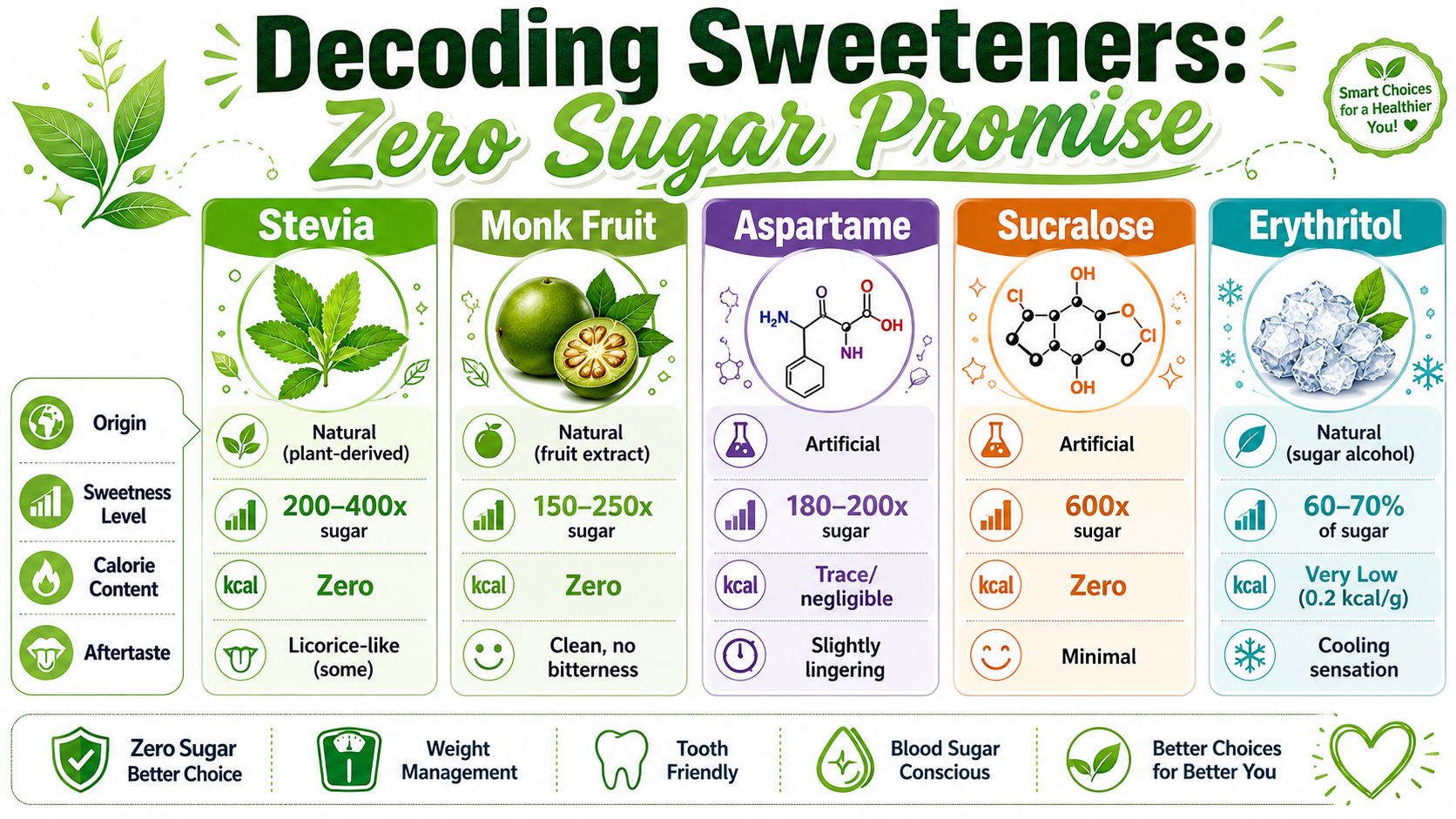
The common sweeteners you'll see on labels
Coca-Cola's ingredient information explains that reduced-, low-, and no-sugar beverages commonly use sweeteners such as aspartame, sucralose, acesulfame potassium, saccharin, cyclamates, or stevia Coca-Cola ingredient FAQ on sweeteners.
That matters because these aren't all the same.
Some are used because they're extremely sweet in tiny amounts. Some are blended together to smooth out aftertaste. Some can taste cleaner to one person and harsher to another. If you've ever said, “I can always tell when a drink is diet,” you were probably noticing that sweetener profile.
Why drinks often use a blend
Sugar doesn't just make a drink sweet. It also affects body, mouthfeel, and the way flavour lands and fades.
When formulators remove sugar, they have to rebuild that experience in a different way. That's why many sugar free carbonated drinks use more than one sweetener. One sweetener may bring the upfront sweetness, while another fills out the middle or helps the finish feel less thin.
Here's the simple version:
- Aspartame often appears in classic diet-style soft drinks.
- Sucralose can deliver a strong sweetness with a different finish.
- Acesulfame potassium is often used in blends.
- Stevia appeals to shoppers looking for a plant-derived option.
- Saccharin and cyclamates still appear in some formulations.
None of that automatically tells you whether a drink is right or wrong for you. It tells you what kind of sweetness experience the brand is trying to create.
Fermentation is a different route
Some drinks don't aim to copy soft drink sweetness at all. Fermentation creates a tart, lively profile that can reduce the need for added sweeteners.
That's one reason kombucha sits in its own lane. The result can be fizzy and refreshing without chasing the exact flavour arc of a conventional zero sugar cola. For people who are tired of artificial sweetener aftertaste, that can be a meaningful difference.
A short explainer can help if you want the basics visually.
What to notice as a drinker
You don't need a chemistry degree. You need a few useful questions:
- Does the sweetness taste clean or lingering?
- Is the drink trying to mimic soft drink, or offer a different style?
- Do you feel good drinking it regularly, or only occasionally?
- Can you recognise and accept the ingredient list?
A sugar-free label answers the calorie question. The ingredient list answers the quality question.
If you start there, labels become much less mysterious.
Beyond Zero Sugar Health and Wellness Considerations
A drink can be sugar free and still not be the best choice for everyday drinking.
That's the part many labels leave out. They focus on what's missing, not what's still present. Acidity, sweeteners, flavouring systems, and the overall level of processing still matter.
Zero sugar doesn't equal a health drink
Independent review material highlights an important gap in the conversation. Artificially sweetened beverages avoid sugar, but their broader health effects are still debated and may include associations with metabolic risk, with the evidence described as controversial and not fully settled review discussion on artificially sweetened beverages and unresolved health questions.
That means “better than regular soft drink” and “good as an everyday staple” are not the same claim.
Water still sits in a category of its own. Unsweetened sparkling water also plays a very different role from sweetened zero sugar soft drink. One is basically hydration with bubbles. The other is closer to a treat, even if it contains no sugar.
Think about what the drink contributes
A useful way to compare drinks is to ask what they bring to the table.
- Plain water brings hydration, with no sweetness to maintain.
- Unsweetened sparkling water adds texture and enjoyment, but stays simple.
- Diet soft drink removes sugar, yet often remains acidic and nutritionally non-contributory.
- Fermented tea drinks may offer a more ingredient-led alternative, depending on the product and formulation.
UNC Health Appalachian makes the broader point clearly: removing sugar alone doesn't automatically make a carbonated drink “healthy”, because zero-sugar beverages can still be highly processed and their long-term effects remain uncertain UNC Health Appalachian on zero-sugar soda and health context.
That's why many people now compare drinks by ingredient quality, not just calories.
Everyday use versus occasional use
Context matters here.
If someone is replacing full-sugar cola with zero sugar cola, that can be a practical sugar-reduction step. But if someone is deciding what to drink with lunch every day, the comparison should probably widen to water, sparkling water, unsweetened tea, or a more thoughtful functional option.
For workplaces, schools, and shared fridges, that same logic applies. A guide to healthy vending choices for Oklahoma offices is useful because it frames beverages as part of an environment people use repeatedly, not as a one-off purchase. The principle translates well to Australia. Daily choices shape habits.
If you enjoy sweeter fizzy drinks but want options with a different ingredient profile, some people also look at sugar-free energy drink alternatives to compare caffeine, sweetness style, and overall formulation.
The best “healthy fizz” question is often not “Does it have sugar?” It's “Would I feel good choosing this often?”
That one question cuts through a lot of marketing.
How to Read Drink Labels Like an Expert
Front-of-pack claims are designed to sell the drink. The back label tells you what you're holding.
If you want to get better at choosing sugar free carbonated drinks, start with the ingredient list and nutrition panel before you look at buzzwords.
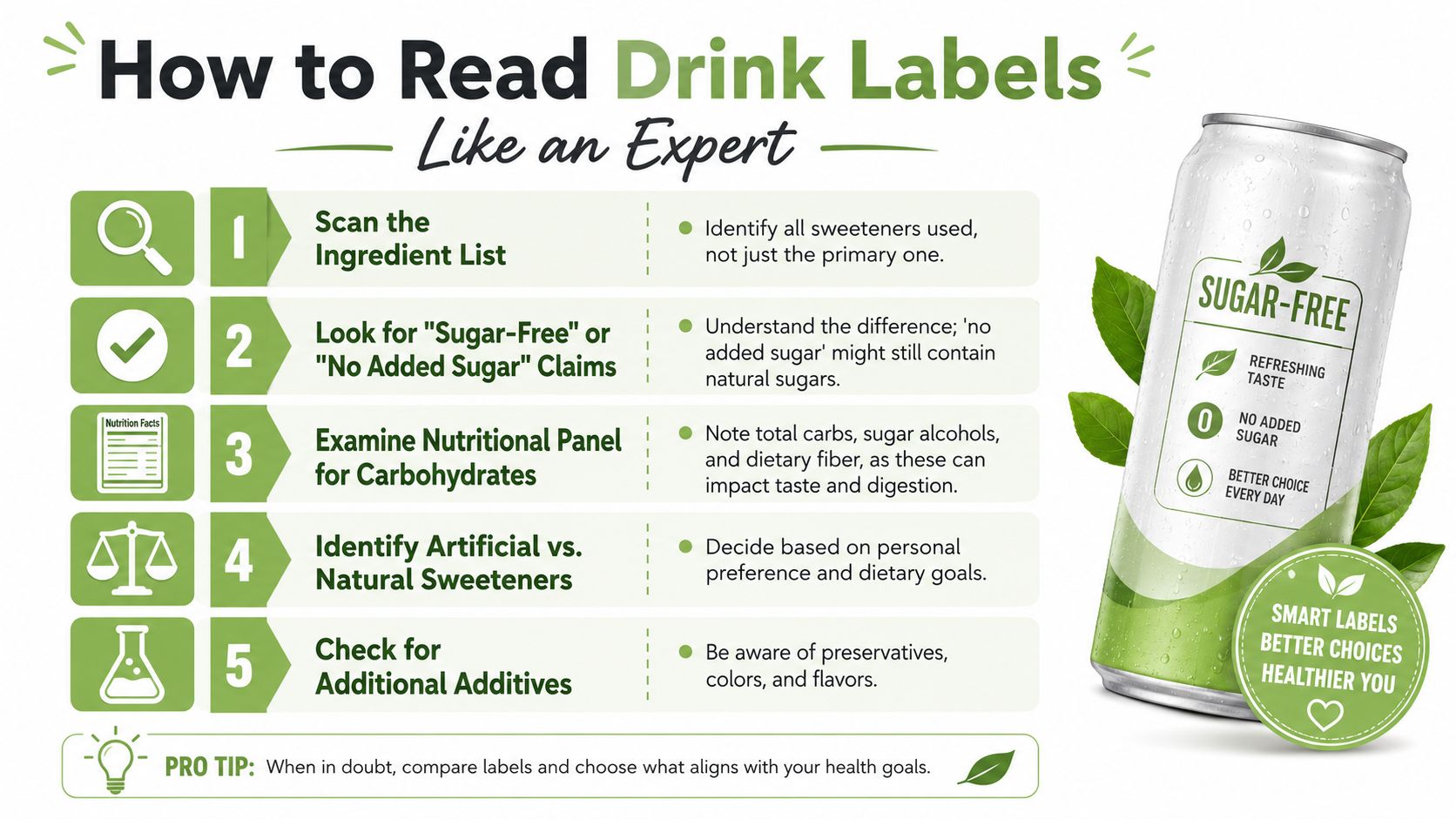
The five-part label check
- Find the sweetener first. Look for names such as aspartame, sucralose, acesulfame potassium, stevia, saccharin, or cyclamates. This tells you how the “zero sugar” promise is being delivered.
- Check whether it's sweetened at all. Some sparkling waters have no sweetener and rely only on flavour essence. That's very different from a diet-style soft drink.
- Read the ingredient list length. A shorter list isn't always perfect, but it often tells you the drink is simpler.
- Look for extra additives. Colours, preservatives, acids, and flavour enhancers can change how processed the drink feels overall.
- Use the nutrition panel as a backup, not the whole story. Zero sugar and low calories can still sit alongside a heavily engineered formula.
A fast side-by-side mindset
Here's a practical way to compare two bottles in under a minute:
| What to check | Simpler fizzy drink | More processed zero sugar drink |
|---|---|---|
| Ingredient list | Short and easy to follow | Long and technical |
| Sweetness source | None, or minimal | One or more high-intensity sweeteners |
| Drinking role | Hydration or light refreshment | Treat-style soft drink replacement |
| Overall feel | Cleaner and less sweet | Stronger flavour and sweeter finish |
A few label traps people miss
“No added sugar” and “sugar free” don't always mean the same thing in practice. A drink can also sound natural on the front while still using a complex formula inside.
That's why the healthier choice often isn't the loudest one.
If you're shopping for a more traditional soft-drink-style option, no sugar ginger beer choices can be a good example of why label reading matters. Two products may both say “no sugar”, yet taste and read very differently once you flip the can around.
Read the first three ingredients, then the sweetener system. That gives you the quickest picture of what kind of drink you're buying.
Once you start doing this regularly, the aisle stops feeling random. You can spot the difference between simple fizz, sweetened soda, and a functional drink at a glance.
Serving Ideas for Home and Hospitality Venues
Good sugar free carbonated drinks don't have to be treated like a compromise. Served well, they can feel just as considered as wine, beer, or a cocktail.
For home drinkers, the easiest upgrade is presentation. A proper glass, citrus peel, fresh herbs, chilled temperature, and the right pairing can make a simple fizzy drink feel much more satisfying.
At home
Try a few low-fuss combinations:
- With lunch pair unsweetened sparkling water with lemon or cucumber for something crisp.
- For an afternoon pick-me-up pour a fermented fizzy drink over plenty of cold glassware and garnish with fresh mint.
- For a no-alcohol evening serve use kombucha as a base, then add citrus, ice alternatives, and a herb garnish.
If you want to keep drinks cold without diluting flavour, guides on alternative ways to keep drinks refreshing can be surprisingly handy, especially for sparkling drinks that lose character when watered down.
In cafés and hospitality venues
Customers don't just want “something with no sugar”. They often want a drink that still feels adult, intentional, and menu-worthy.
That opens the door for:
- A premium non-alcoholic list with sparkling water, unsweetened options, and fermented drinks.
- Food pairing suggestions so the drink feels selected, not apologetic.
- Signature house serves built around tea, citrus, ginger, or herb notes.
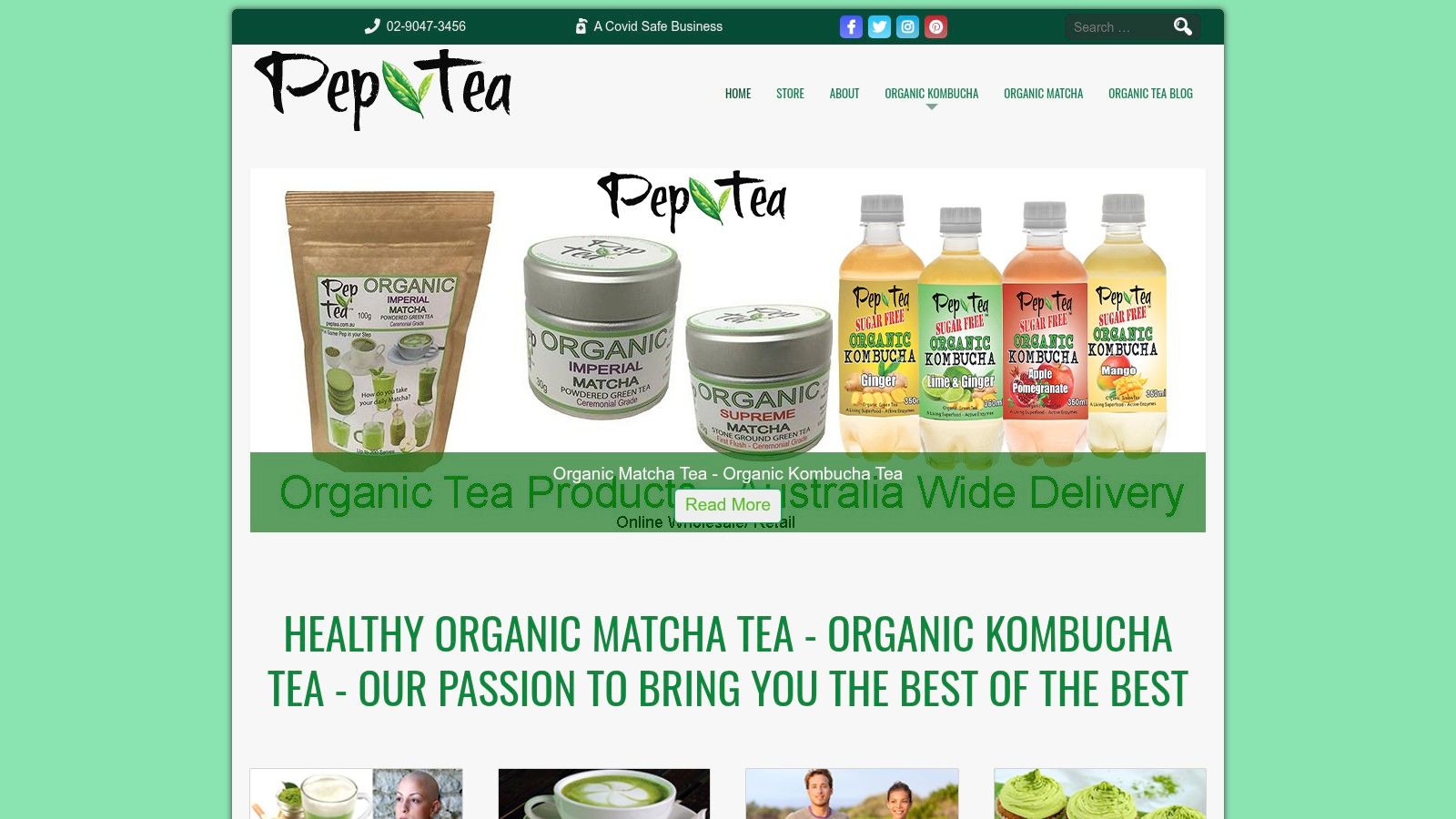
One factual example in this space is Pep Tea's sugar-free organic kombucha, brewed in the Hunter Valley, NSW. In a venue, a product like that can sit as a bottled serve, a cocktail alternative, or part of a zero-proof menu, depending on the style of service.
Cold temperature, proper glassware, and garnish can completely change how people perceive a healthier fizzy option.
That matters at home, and it matters even more across a café counter.
Frequently Asked Questions About Sugar Free Drinks
Are sugar-free carbonated drinks okay for children
It depends on the drink and how often it's consumed. A sugar-free soft drink is still a soft drink in style, especially if it's sweet, acidic, and heavily flavoured. Water and simpler drinks generally make more sense as everyday options.
Can sugar-free drinks help with weight management
They can help some people reduce sugar intake if they replace full-sugar soft drinks. But they aren't a magic solution. A drink being sugar free doesn't automatically improve overall diet quality.
Are they better than water
Usually not for everyday hydration. Water and unsweetened sparkling water remain the simpler benchmark. Sugar-free fizzy drinks are often better understood as alternatives to soft drink, not upgrades on water.
How much is too much
There isn't one universal answer. The better question is how often you rely on very sweet, highly processed drinks. If it's a daily habit, it's worth looking at simpler options and rotating in drinks with a cleaner ingredient profile.
What's a good option when entertaining
Offer a mix. Include plain sparkling water, a more flavourful sugar-free option, and a naturally fermented drink for guests who want something different. If you're planning a larger event, examples of a polished mobile bar setup, like ABC Hire's top-tier bar experience, can spark ideas for presenting alcohol-free drinks with the same care as cocktails.
If you're looking for fizz with a more thoughtful ingredient story, explore Pep Tea for Australian organic kombucha, matcha, and other functional drink options that fit a lower-sugar lifestyle without leaning on the usual soft drink formula.