
Matcha Tea Sifter: Smooth, Clump-Free Brews

You whisk. You pour. You take a sip. And instead of a smooth, vivid bowl of matcha, you get little green lumps, a sandy finish, and a drink that feels far less special than the powder you started with.
That’s one of the most common matcha frustrations I see. It happens to beginners, and it happens to café teams too. People often blame the whisk, the water, or their technique. Usually, the underlying issue started a few seconds earlier.
The fix is simple. Use a matcha tea sifter.
This tiny tool looks modest, but it changes almost everything about the cup in front of you. It helps your powder fall light and fluffy into the bowl, makes whisking easier, and gives your matcha a better chance to taste smooth, creamy, and balanced. If you’ve invested in quality powder, whether you drink it straight, make lattes, or build it into a café menu, sifting is one of the easiest ways to respect the tea.
The Secret to Lump-Free Matcha Begins Here
A lot of people have the same first matcha experience. They buy a beautiful tin of green powder, maybe inspired by a café latte they loved, and they expect the home version to feel calm, rich, and silky. Instead, the powder sticks together, floats in clumps, and turns the whole ritual into a small annoyance.
That moment matters because matcha is personal. You’re not just making a drink. You’re preparing something you’ve chosen for flavour, focus, and a better daily rhythm. When the texture is gritty, it’s disappointing in a way that feels bigger than it should.
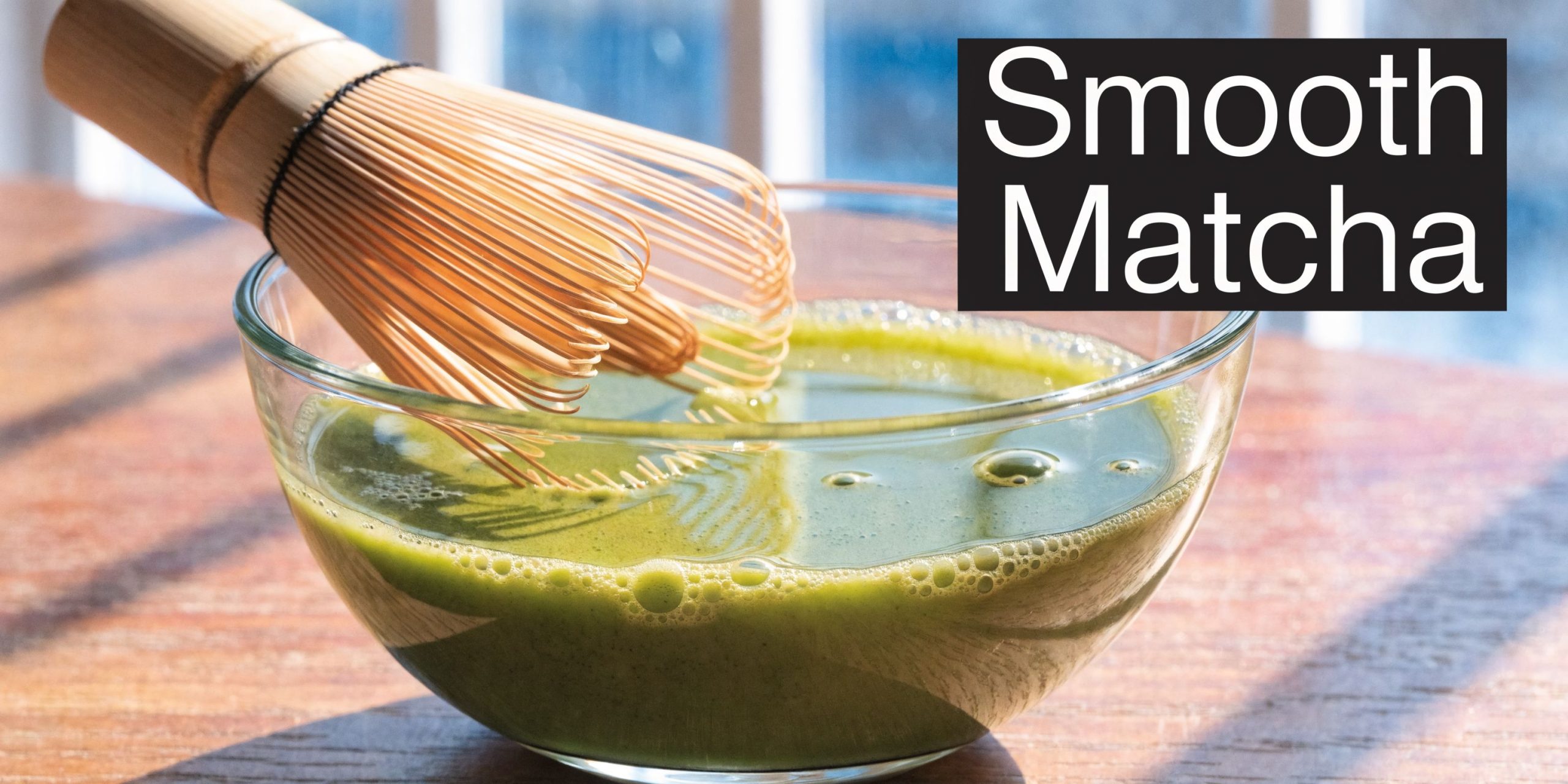
The small tool that changes the whole bowl
A matcha tea sifter is the quiet hero here. Before any water touches the powder, the sifter breaks up tiny compacted bits so the matcha lands in the bowl as a soft, even layer. That gives your whisk a fair chance to do its job.
If you’ve been exploring different grades and styles, it also helps to compare how preparation changes the experience across different powders. Looking at options such as high-quality matcha tea from Key West Coffee Company can be useful because it reminds you that quality and technique work together. Good powder still needs good handling.
A great whisk can’t fully rescue matcha that went into the bowl already clumped.
For beginners, that’s encouraging. It means you probably don’t need stronger wrists or a more complicated ritual. You just need one extra step that takes only moments and makes the rest of the process easier.
For café owners, the same lesson applies at scale. If the base isn’t smooth, the final drink won’t be either, no matter how polished your service is.
Why Sifting Matcha Powder Is Non-Negotiable
The first thing to know is that clumps don’t mean your matcha is poor quality. In fact, fine matcha often clumps precisely because it’s so delicate. The powder is extremely light, and it reacts quickly to moisture in the air and to static.
In Australian preparation settings, that matters even more. Humidity and storage conditions can make a fresh tin behave very differently from one day to the next.
What a matcha tea sifter does
The Japanese name for this tool is chakoshi. In practical terms, it’s a fine-mesh strainer designed to turn compressed powder back into a loose, airy mound before whisking begins.
According to this reference on a matcha tea sifter and tea strainer, a chakoshi in premium matcha preparation commonly uses mesh apertures finer than 10 microns, and matcha clumps formed by static and moisture can reach 50 to 100 microns. The same source notes that unsifted matcha can lead to a grainy texture with 20 to 30% reduced froth volume, because clumps reduce powder-water contact area by 40%. It also states that sifting can increase effective surface area by 3 to 5x, lifting extraction efficiency from 65% to 95% in a 2g/60ml brew.
Those numbers sound technical, but the takeaway is simple. When the powder is evenly dispersed, water can reach more of it quickly and consistently.
Why clumps create bigger problems than you think
A clump isn’t just a lump sitting in your bowl. It acts like a barrier.
Instead of each fine particle meeting water and whisk movement, parts of the powder stay trapped inside little packed pockets. That leads to a few familiar issues:
- Uneven mixing means some sips taste dull while others taste sharp or bitter.
- Poor suspension means sediment drops faster to the bottom.
- Weaker froth means the top of the bowl looks flat rather than lively.
- Less control means you keep whisking harder, which often makes the ritual feel frustrating.
Why this matters for premium matcha
The better the matcha, the more you want to protect what makes it special. If you’re working with a fine ceremonial powder, proper prep helps you taste the softness, sweetness, and savoury depth the producer intended. If you want to understand how grade affects preparation, our guide to https://peptea.com.au/different-grades-of-matcha/ is a helpful place to start.
It’s also useful to compare sift-friendly powders when learning. Browsing products such as Ceremonial Grade Matcha from AQEEK Coffee can help you notice how very fine powders benefit from careful handling.
Practical rule: If your matcha is worth buying, it’s worth sifting.
Improve Flavour, Texture, and Crema
People often think the matcha tea sifter is only about removing lumps. That’s true, but it’s only the beginning. Sifting changes how the drink feels, how it tastes, and how the foam forms on top.
Those three things are closely linked. Better particle distribution gives you better contact with water. Better contact gives you smoother whisking. Smoother whisking gives you a more balanced cup.
Texture starts before the whisk
Texture is often where the difference is first noticed.
When matcha falls through a fine mesh, it becomes light and even. That means your whisk meets a fluffy powder bed instead of stubborn little pebbles. The result is a bowl that feels softer across the tongue, with less graininess and less sludge left behind.
If your goal is a velvety usucha or a café-style latte base, this matters. A smooth base carries milk better, blends more cleanly, and leaves less sediment at the bottom of the cup.
Flavour becomes more balanced
Unsifted matcha doesn’t dissolve evenly. Some parts stay trapped in little clumps while others overexpose to water and agitation. That’s one reason a bowl can taste oddly bitter in one sip and flat in the next.
A more even powder bed supports a more even extraction. In plain language, the bowl tastes more coherent. You’re more likely to notice sweetness, savoury depth, and the gentle grassy freshness people chase in good matcha.
Foam and crema improve in a visible way
Here, the change becomes obvious, especially for café service. According to this reference on a matcha hand strainer, sifted matcha froths to 2 to 3x higher foam height, reaching 15 to 20mm, with microbubble stability lasting 4 to 6 minutes. The same source links that improvement to 30% improved L-theanine-caffeine synergy (1:2 ratio) and notes that unsifted matcha can produce a thinner, more bitter brew due to a 15% increase in polyphenol oxidation.
That sounds scientific, but the visual cue is easy to recognise. Sifted matcha tends to produce a finer, more even top layer. It looks creamy rather than bubbly and rough.
If you’re still working on your whisking motion, our guide to https://peptea.com.au/how-to-whisk-matcha/ pairs well with this step, because sifting and whisking work best together.
What this means in the cup
Here’s a simple perspective:
- Better texture makes the bowl feel luxurious, not chalky.
- Better flavour makes the tea feel composed, not scattered.
- Better crema makes the drink look alive and drink beautifully from the first sip.
Smooth matcha isn’t only a visual win. It changes the whole drinking experience.
For home drinkers, that means a more enjoyable ritual. For cafés, it means a more consistent product that looks good, tastes right, and holds up better on the pass.
How to Choose the Right Matcha Sifter
Not every sifter feels the same in use. Some are made for a single bowl on a quiet morning. Others are more practical for a busy café bench. The right choice depends on how much matcha you prepare, how often you make it, and whether hygiene and workflow need to meet commercial standards.
There’s also a growing Australian angle here. According to this video reference discussing the local market and tool selection, there has been a 35% rise in Australian searches for “organic matcha tools” since Q1 2025, alongside growing interest in sifters that align with FSANZ Code requirements for premium organic handling in hospitality settings: organic matcha tools in Australia.
The two common sifter styles
Many choose between a small handle-style strainer and a larger canister-style sifter.
The handle-style version is the classic choice for making one bowl at a time. You rest it over the chawan, add the powder, and press it through with a scoop or small spatula.
The canister style is built for batching. It’s more useful when you want to pre-sift a larger amount for service, recipe prep, or repeated drinks across a shift.
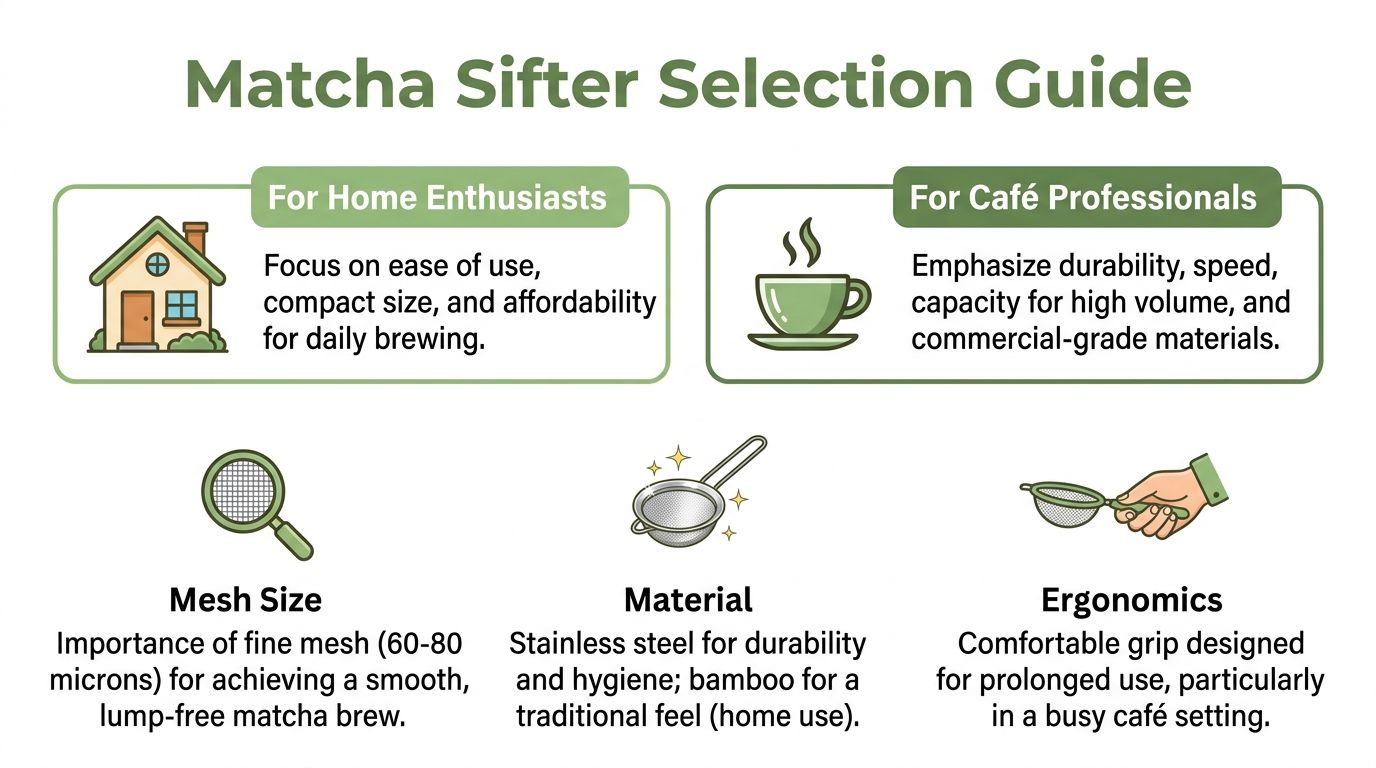
What to look for in the material and mesh
Food-grade stainless steel is usually the safest practical choice. It’s easy to clean, durable, and better suited to repeated use in a home kitchen or commercial setting.
A very fine mesh matters too. A generic kitchen sieve might work in a pinch, but it often isn’t designed for such fine powder. That’s why dedicated matcha tools feel easier and more predictable.
If you’re shopping as a beginner and want an all-in-one setup, the https://peptea.com.au/matcha-tea-set-australia/ page shows a full set format that includes the key preparation tools, including a sifter.
Matcha Sifter Comparison
| Sifter Type | Best For | Material | Pros | Cons |
|---|---|---|---|---|
| Handle-style strainer | Daily home use, single bowls, small latte prep | Usually stainless steel | Easy to store, simple to use, precise for one serve | Slower for batch work |
| Canister-style sifter | Café prep, repeated service, recipe batching | Usually stainless steel | Better for volume, tidier for larger prep | Takes more space, less nimble for one bowl |
| Bamboo-style traditional option | Home enthusiasts who value ritual and aesthetics | Bamboo or mixed materials | Traditional feel, visually appealing | Harder to sanitise well, less practical for commercial use |
| Generic kitchen sieve | Emergency substitute only | Varies | Easy to find | Mesh may be too coarse, less control, less tidy |
A simple buying checklist
- Choose stainless steel if you want durability and easier cleaning.
- Check the mesh and avoid anything that looks obviously coarse.
- Think about volume. One bowl at a time and café prep are different jobs.
- Consider ergonomics if you’ll use it repeatedly during service.
- Keep compliance in mind if you run a venue and need cleaner, more controlled tool choices.
One mention worth making here is practical rather than promotional. Pep Tea’s Japanese Matcha Set includes a sifter, which is useful for people who want the core tools together in one setup.
Your Step-by-Step Sifting Method
Sifting looks refined, but it’s very straightforward once you’ve done it once or twice. Many learn it in minutes.
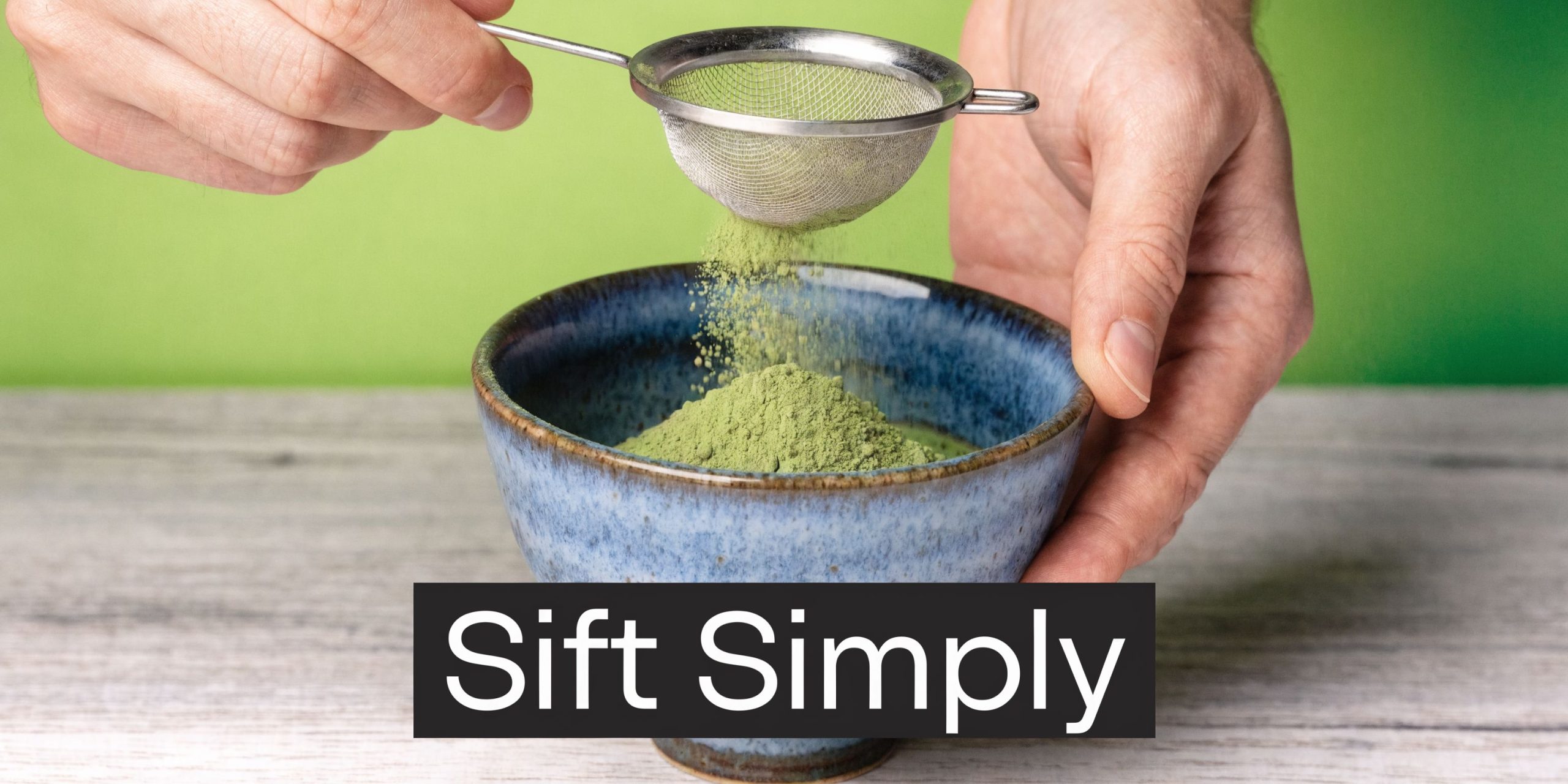
The easiest way to do it
Start with a completely dry bowl and a dry sifter. Moisture is the enemy at this stage, so even a few drops can make the powder catch.
Then follow this sequence:
Set the sifter over the bowl
Make sure it sits securely. You don’t want it wobbling while you work.Measure your matcha into the sifter
Use your bamboo scoop or measuring spoon and place the powder gently into the centre.Press lightly, don’t mash
Use the scoop, a small spoon, or a spatula to coax the powder through the mesh. Gentle circular movements work well.Tap only if needed
If a little powder clings to the mesh, a light tap can help. Don’t smack the sifter hard or you’ll create a puff of green dust.Whisk straight after sifting
Once the matcha is airy and loose in the bowl, add your water and whisk while it’s at its freshest.
Common beginner mistakes
A few tiny habits make the process much easier:
- Using a damp tool causes immediate sticking.
- Forcing the powder through too aggressively can compact it again.
- Sifting too far ahead can expose the powder to more air than necessary.
- Overfilling the sifter makes the process messier than it needs to be.
Keep the motion light. You’re fluffing the powder, not grinding it.
If seeing the movement helps, this short video shows the rhythm clearly:
How long should it take
Not long. Once your tools are within reach, sifting becomes one of the quickest parts of the ritual. It often saves time overall because whisking becomes easier and more predictable afterward.
For a café team, that’s good news. For a beginner, it’s even better. One small habit removes a lot of unnecessary frustration.
Troubleshooting and Advanced Tips for Cafés
Sometimes the problem isn’t your technique. It’s the room.
In parts of Australia, especially through humid periods in NSW and QLD, matcha can start clumping much faster than people expect. That’s why a method that worked perfectly on a cool dry day suddenly feels messy and stubborn in summer.
When humidity keeps ruining your prep
This Australian matcha reference notes that searches for matcha spike 42% in summer, and that matcha agglomeration can happen 3x faster in humidity above 70%. It also reports that home users can pre-chill sifters to -5°C for 10 minutes to cut clumping by 50%, while cafés handling larger amounts may use electric vibrating sieves for 100g batches: sifting matcha powder in humid conditions.
That’s useful because it gives us two practical paths. One for the home kitchen, and one for service.
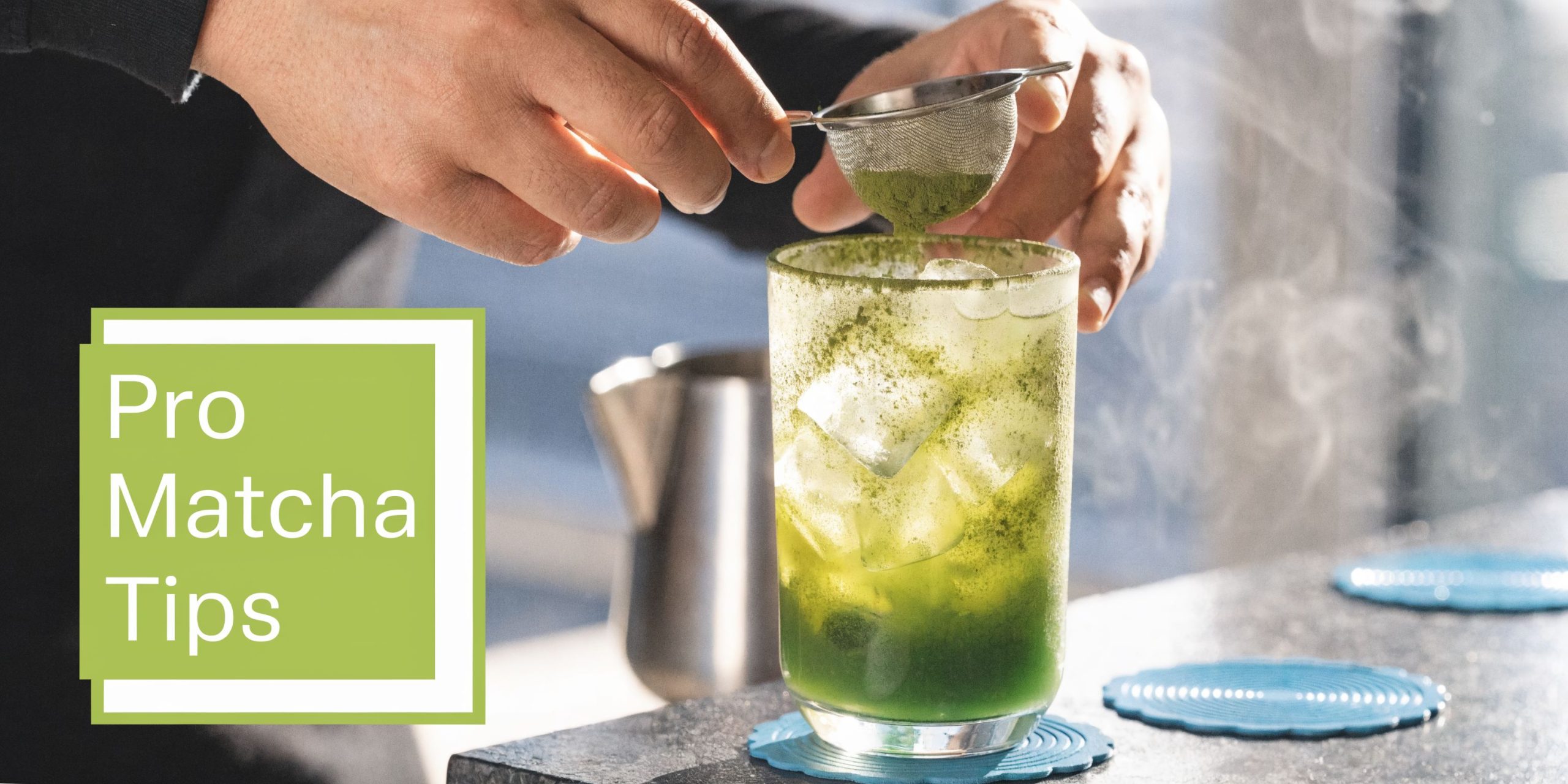
Quick fixes at home
If your matcha keeps clumping, try these:
- Sift just before use rather than preparing it well in advance.
- Keep tools dry and cool so moisture doesn’t catch on the mesh.
- Use a fine tea strainer temporarily if you don’t own a dedicated matcha tea sifter yet.
- Store your matcha tightly sealed and away from steam, sunlight, and heat.
A regular fine tea strainer can work as a stopgap, but it usually feels less tidy and less precise. It’s a practical substitute, not a long-term matcha ritual tool.
Workflow tips for cafés
For hospitality teams, speed matters, but consistency matters more. A rushed bowl with lumps isn’t saving time if the drink comes back or pours poorly into milk.
Try a workflow like this:
- Assign one dry prep zone for matcha only.
- Pre-portion small service amounts instead of exposing a larger container repeatedly.
- Use batch sifting tools only when turnover justifies it.
- Train every staff member the same way so texture stays consistent across shifts.
In a café, the best sifting method is the one staff will repeat accurately during a busy service.
That’s true whether you’re serving straight matcha, iced lattes, or using matcha as part of a non-alcoholic menu.
Caring for Your Tools and Your Tea
A good matcha tea sifter doesn’t need complicated care. It needs clean, gentle care.
Rinse metal sifters with warm water after use if powder has caught in the mesh, then dry them thoroughly before putting them away. Avoid leaving them damp in a drawer or on a crowded sink. If you can brush out dry powder first, that’s often even easier.
Soap can be useful for a deeper clean when needed, but residue is the thing to avoid. You don’t want cleaning smells lingering on a tool that sits close to a delicate tea.
Good habits that protect flavour
A few small habits make a real difference:
- Keep the sifter dry before the next use.
- Store matcha airtight so moisture and kitchen odours stay out.
- Avoid heat and light because they dull freshness.
- Clean promptly so powder doesn’t cake into the mesh.
The bigger point is simple. Sifting is an act of care. It respects the work that went into growing, grinding, packing, and preparing matcha.
If you’ve been skipping this step, don’t feel bad. Many do at first. Once you make it part of your routine, it quickly feels natural, and the bowl in front of you reflects that care straight away.
If you’d like to put this into practice, explore Pep Tea for organic matcha, tea education, and tools that support a smoother everyday ritual at home or in hospitality.