
Matcha Tea Accessories: Your Complete 2026 Guide

You buy a good tin of matcha, heat the water, stir it with a spoon, and somehow end up with green lumps floating in a drink that tastes sharper than it should. Many assume the problem is the powder.
Usually, it’s the setup.
Matcha behaves differently from leaf tea because you drink the whole powdered leaf. That means texture, water temperature, and tool choice all show up in the cup straight away. The right matcha tea accessories don’t just make things look traditional. They change how the powder dissolves, how the foam forms, and how balanced the final drink tastes.
That’s one reason these tools have become more common in Australian kitchens and cafés. Australia’s tea market, including matcha, grew at a 3.2% CAGR from 2018 to 2023 and reached $450 million in revenue, while premium segments such as matcha accessories contributed 15 to 20%. A 2024 Euromonitor International study also found that 68% of surveyed Melbourne and Sydney cafés added matcha to menus post-2020, which helped drive 25% annual growth in accessory imports according to the summary in this matcha accessories overview.
If you’ve been curious about whisks, bowls, sifters, or whether they’re worth buying at all, the short answer is yes. But each tool matters for a different reason. Once you know what each piece does, matcha feels much simpler.
Why Your Matcha is Lumpy and How to Fix It
Lumpy matcha usually comes from two things. The powder has compacted in storage, and the mixing method isn’t strong or fine enough to break those clumps apart.
A spoon pushes powder around. It doesn’t suspend it evenly. A fork does a bit better, but it still tends to leave tiny gritty pockets that settle to the bottom.
What’s going wrong
Matcha is extremely fine. The moment it meets moisture, little balls of powder can form. Once that happens, stirring often makes the outside wet while the centre stays dry.
That’s why a cup can look mixed but still taste rough.
Common signs you’re fighting the tools instead of the tea:
- Dry specks on the surface that never fully disappear
- A sandy finish at the bottom of the bowl or mug
- Bitterness that seems stronger than expected
- Flat foam or no foam at all
A smooth bowl of matcha starts before the water goes in.
The simplest fix
Use a sifter first, then whisk in a wide bowl.
A fine sifter breaks up compacted powder before it has a chance to clump. If you want a dedicated tool for that step, a matcha tea sifter makes the process much easier than pressing powder through a generic kitchen strainer.
Then whisk with short, brisk motions near the surface rather than stirring in circles. That movement disperses the powder and adds the light foam that softens matcha’s edge.
A better home routine
Try this order next time:
- Warm the bowl with a little hot water, then dry it.
- Sift the matcha directly into the bowl.
- Add a small splash of warm water first and make a loose paste.
- Add the remaining water and whisk briskly.
- Stop when the surface looks fine and even, not bubbly like dish foam.
If your matcha has been disappointing, don’t change everything at once. Start with the tool that prevents clumps. Many notice the difference immediately.
The Essential Trio for Authentic Matcha Preparation
Three tools do most of the heavy lifting in traditional preparation. The chasen, chashaku, and chawan aren’t decorative extras. They solve three separate problems. Mixing, measuring, and whisking space.
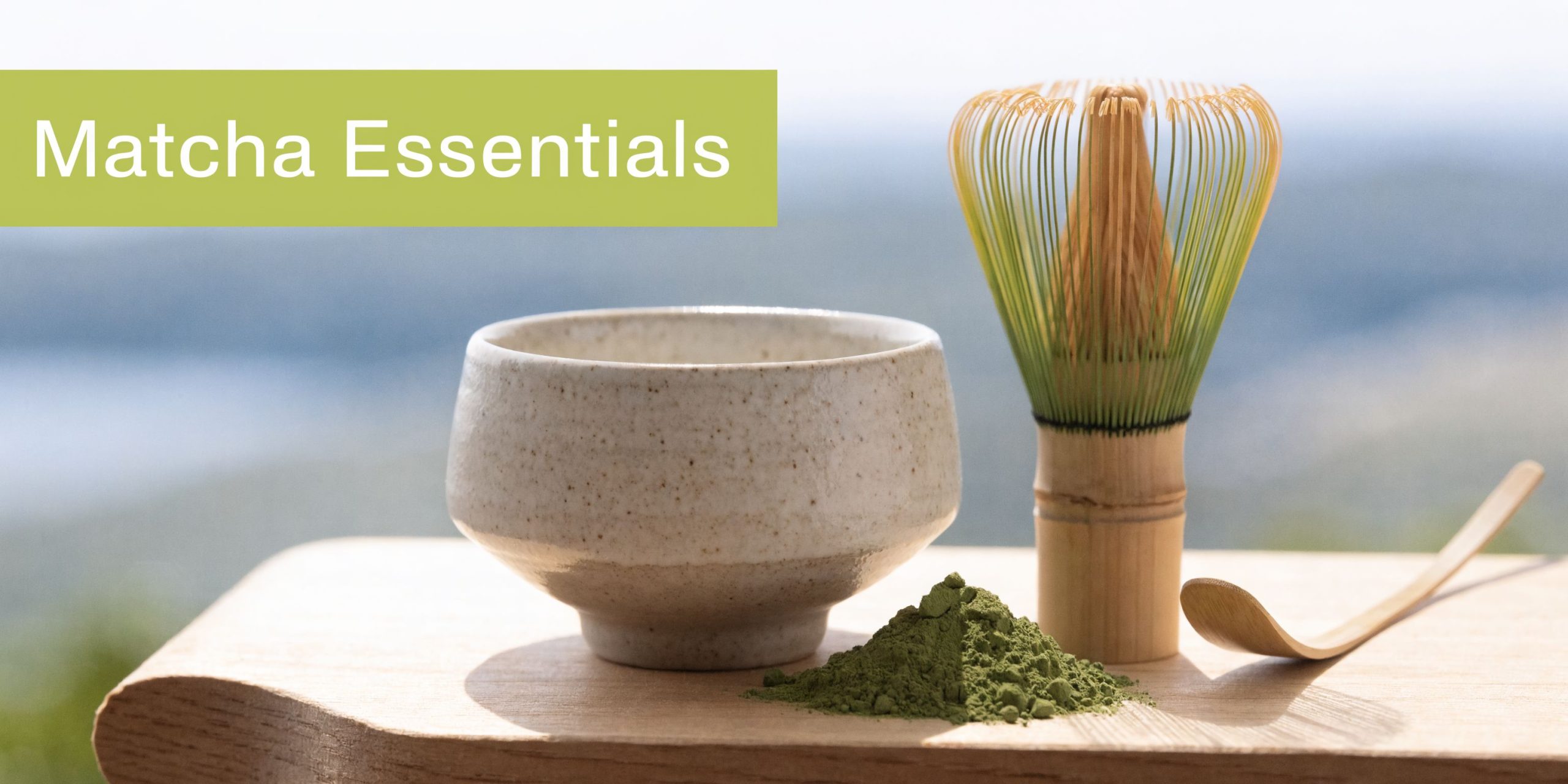
If you’re starting from scratch, a complete matcha tea set Australia option is a practical way to get the core pieces in one go.
The chasen and why it works
The chasen is the bamboo whisk. It’s the tool that changes the cup most.
In premium Australian matcha preparation, a bamboo chasen with 80 to 120 finely split tines is used to aerate 2g of matcha in 60 to 80ml of water at 75 to 80°C, creating a stable crema layer. That froth can enhance EGCg bioavailability by 15 to 20%, while unsifted, unwhisked brews can reduce antioxidant extraction by 30%, according to this detailed guide on matcha accessories and whisking technique. The same source notes that poor whisking leads to clumping and more bitterness from uneven heat exposure.
That sounds technical, but the practical meaning is simple. The whisk creates tiny, even bubbles and keeps the powder suspended. A spoon can’t do that. An electric frother creates a different kind of foam, which matters for mouthfeel.
The chashaku and why scooping matters
The chashaku is the curved bamboo scoop. It looks delicate, but it has a very practical job.
It lets you portion matcha without compacting it or introducing moisture from a metal spoon that’s been sitting near steam. It also makes your routine repeatable. If one day’s cup tastes balanced and the next feels harsh, inconsistent measuring is often part of the reason.
Consider salting food with your fingers versus using a measured spoon. Both can work. One is easier to repeat accurately.
The chawan gives your wrist room to work
The chawan, or matcha bowl, is wider than a mug for a reason.
Whisking in a narrow cup forces the whisk into the sides. Your motion gets smaller. The powder stays less evenly mixed. A wide bowl gives you enough surface area to whisk quickly without splashing.
The bowl also changes the drinking experience in a way people often underestimate:
- Better movement for the whisk
- More even mixing across the base
- A more stable grip while whisking
- A nicer aroma release than a tall glass or travel mug
Practical rule: If the whisk keeps tapping the sides, the bowl is too narrow for proper matcha.
Why this trio is enough for many
You don’t need a shelf full of specialised gear to make a good bowl.
For daily matcha, this trio does the important work:
| Tool | Main job | What improves in the cup |
|---|---|---|
| Chasen | Aerates and suspends the powder | Foam, texture, smoother flavour |
| Chashaku | Measures consistently | Balance, repeatability |
| Chawan | Creates whisking space | Even mixing, less mess |
If you only buy three matcha tea accessories, make them these. Everything else helps refine the process, but this is the working foundation.
Expanding Your Toolkit Beyond the Basics
Once your core setup is sorted, a few extra tools make matcha less fiddly and more consistent. These pieces don’t change the ritual for the sake of it. They remove the little annoyances that ruin an otherwise good cup.
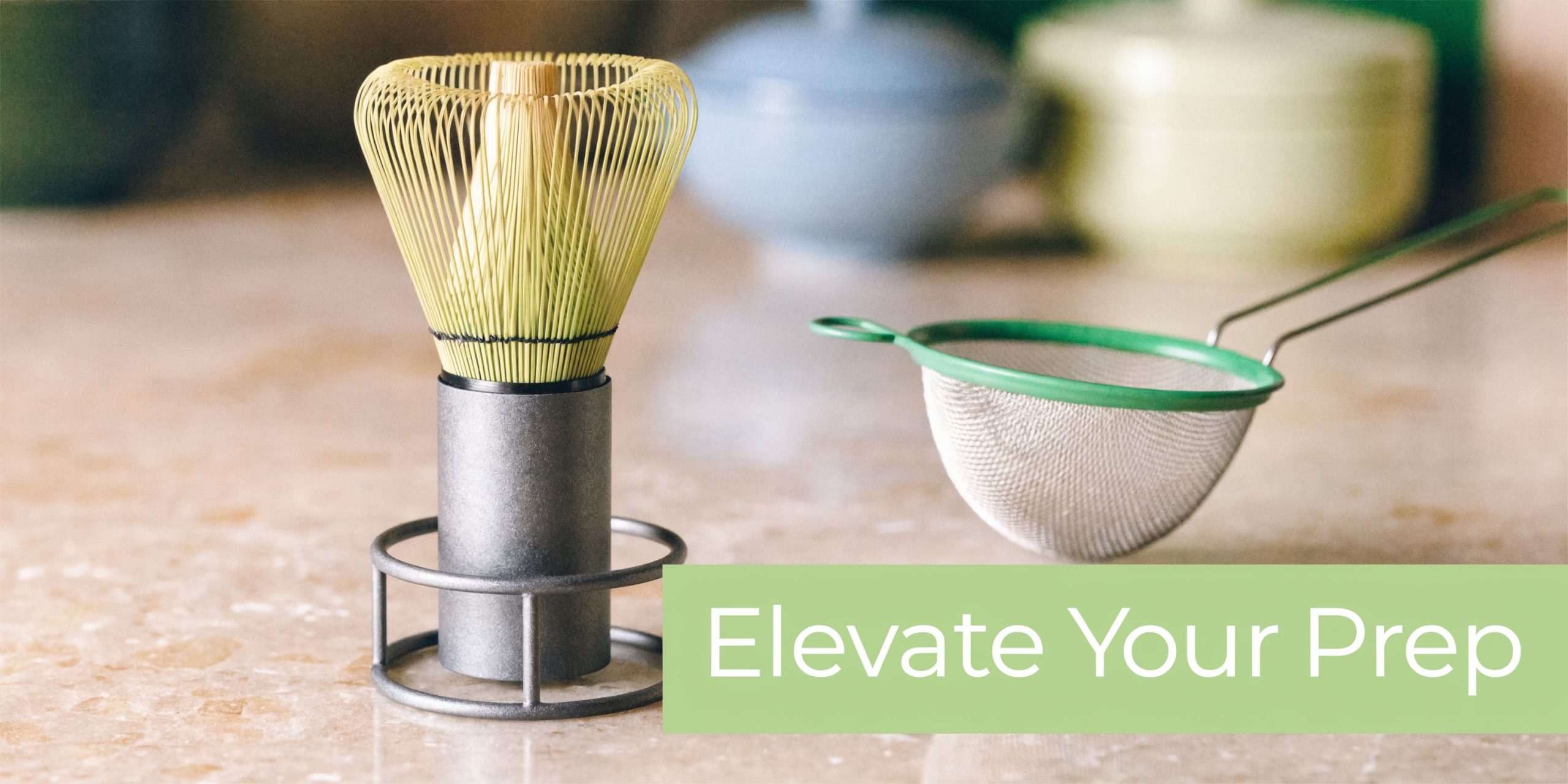
The sifter is the quiet problem-solver
If one extra accessory deserves a place in almost every kitchen, it’s the sifter.
Matcha powder naturally compacts. Even a fresh tin can contain small clumps from storage and humidity. Sifting fluffs the powder before water touches it, which means the whisk spends less effort breaking lumps and more effort creating smooth foam.
A small step, but it changes the result.
The whisk holder protects the whisk you already paid for
The whisk holder, often called a kusenaoshi, helps the bamboo whisk dry in its proper shape.
Without one, the tines can dry bent, flattened, or uneven. That makes whisking less effective and shortens the useful life of the tool. With a holder, airflow improves and the whisk keeps the open curve it needs.
This matters more than people expect because a whisk that looks only slightly misshapen often performs much worse.
A proper storage tin protects the powder itself
People often focus on the whisk and forget that matcha is sensitive to its environment. Air, light, and moisture all work against freshness.
A good storage tin helps preserve:
- Colour, so the powder stays vibrant rather than dull
- Aroma, which fades quickly when left exposed
- Flavour, especially the softer sweet and savoury notes
- Texture, because less humidity means fewer clumps
The accessories that earn their place
Not every extra belongs in every setup. These are the upgrades that usually make sense first:
- Fine sifter for anyone tired of lumps
- Whisk holder for anyone using bamboo regularly
- Airtight tin for anyone buying better-quality matcha
- Clean tea cloth for drying bowls and keeping the area tidy
A lot of matcha tea accessories are sold on appearance. These three are worth owning because they solve preparation problems.
Modern Alternatives Electric Frothers and Scales
Traditional tools aren’t the only option. Plenty of people make matcha with an electric frother, a shaker bottle, or a small blender. That doesn’t make the result wrong. It just changes the drink.
Electric frother versus bamboo whisk
An electric frother is fast. It’s handy when you’re making a quick latte before work or mixing matcha into milk.
A bamboo whisk is slower, but it creates a finer foam and a gentler texture. That matters most when you’re drinking matcha with water rather than masking it with milk and sweetener.
The main differences look like this:
| Tool | Strength | Trade-off |
|---|---|---|
| Electric frother | Speed and convenience | Larger bubbles, less refined texture |
| Bamboo chasen | Fine micro-foam and traditional mouthfeel | More hands-on, needs care |
If you mainly drink iced lattes, an electric frother can be perfectly reasonable. If you want to taste the detail in ceremonial-style matcha, the chasen is still the better tool.
Where a digital scale helps
A small digital scale is one of the most useful modern additions, especially if you like consistency.
The bamboo scoop gives you a traditional feel, but a scale helps when you want to repeat a recipe exactly. That’s useful at home, and even more useful in hospitality where one person’s “slightly heaped scoop” can become another person’s “too much powder”.
A scale is particularly handy for:
- Testing recipes for iced drinks or baking
- Comparing different matcha grades
- Training café staff to prepare drinks consistently
- Troubleshooting when a cup tastes too thin or too strong
For lattes, convenience can win. For straight matcha, texture usually decides.
A sensible middle ground
You don’t have to choose between old and new.
Many people settle into a hybrid routine. Traditional whisk, proper bowl, and a digital scale. Or ceremonial-style preparation on weekends, frother-made iced lattes on busy weekdays. The best setup is the one you’ll use often enough to enjoy good matcha regularly.
Choosing Your Accessories Home vs Café Use
The right setup at home isn’t always the right setup behind a busy bar. A home drinker usually wants ease, comfort, and a sense of ritual. A café needs consistency, speed, and tools that hold up under repeated use.
That’s where total cost of ownership becomes more useful than the sticker price.
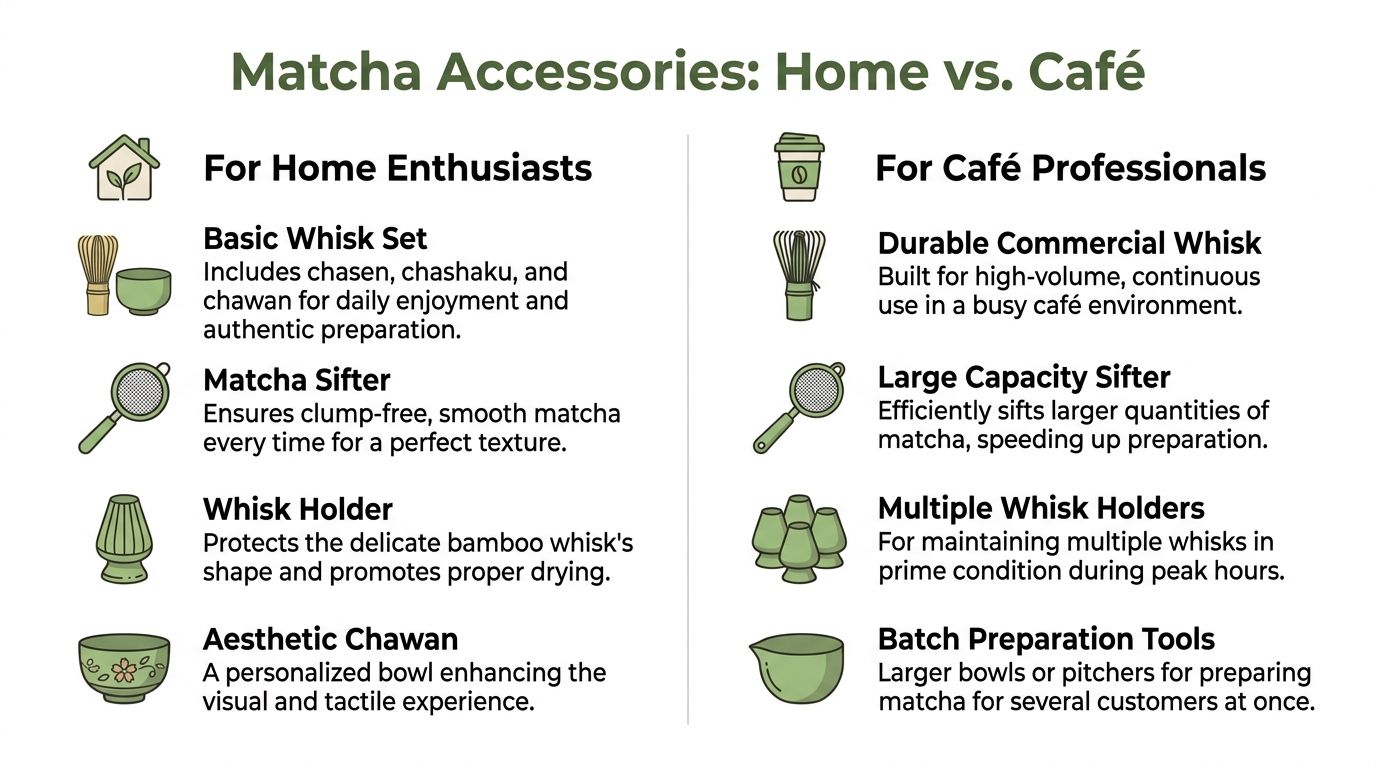
What matters most at home
For home use, it makes sense to keep the kit simple and enjoyable.
A good starter setup usually includes a whisk, bowl, scoop, and sifter. If you drink matcha several times a week, a whisk holder quickly becomes worthwhile too. You don’t need commercial-grade anything. You do need tools that feel pleasant to use and easy to clean.
Home buyers usually care about:
- A balanced starter set rather than individual specialty pieces
- A bowl shape they enjoy holding
- A whisk that feels flexible, not stiff
- Easy storage in a small kitchen
There’s also the visual side. If a bowl and whisk are attractive enough to leave on the bench, you’re more likely to use them.
What changes in a café
In a café, the questions shift.
The issue isn’t whether the whisk looks lovely on a shelf. It’s whether the setup supports fast prep, reliable results, and manageable replacement costs over time. The research around matcha tea accessories often skips these practical realities. This summary on traditional and non-traditional matcha tools notes that buyers need clearer guidance on durability, climate effects, maintenance, and long-term cost comparisons, especially in Australian conditions.
That’s the key buying question for hospitality. Not “What’s traditional?” but “What keeps service smooth without lowering quality?”
Thinking in total cost, not just upfront spend
A cheaper whisk can become expensive if it warps quickly, sheds tines, or gives inconsistent texture that leads staff to remake drinks. A better-made whisk may cost more initially but can be easier to maintain and more reliable in service.
For cafés, it helps to think in layers:
Preparation quality
Does the tool support a repeatable drink with the right texture?Durability in your environment
A coastal or humid venue may need stricter drying and storage habits for bamboo.Staff usability
If a tool is awkward, people won’t use it well during busy periods.Replacement rhythm
Tools that hold shape longer are easier to budget for.
Material choices and practical trade-offs
A café doesn’t have to be rigidly traditional to be thoughtful.
For example:
- Bamboo whisks offer the texture many customers expect in premium matcha
- Stainless steel sifters can make sense in higher-volume settings because they’re sturdy and easy to clean
- Larger bowls or pitchers may help when building a smooth matcha base before pouring into cups
- Multiple whisk holders make daily drying more organised
If you’re fitting out a broader beverage station, it can also help to look at well-designed general kitchen accessories for storage, prep flow, and cleaning tools around the matcha setup itself.
A useful rule of thumb
Home drinkers should buy for pleasure and consistency.
Cafés should buy for workflow, training, and maintenance discipline.
Those goals overlap, but they’re not identical. The most practical accessory setup is the one that fits how matcha is made in your space, not the one that looks most impressive in a product photo.
Care Maintenance and Sustainable Sourcing
Good matcha tools aren’t high-maintenance, but they do need the right kind of care. Bamboo especially rewards gentle habits.
Australia has also seen a long rise in demand for these tools. Matcha accessories entered Australia prominently in 2005 alongside the first certified organic matcha imports, and Australian Department of Agriculture trade data recorded matcha-related imports rising from 150 tonnes in 2010 to 1,200 tonnes by 2023, a 700% increase. Accessories such as chasen whisks and chawan bowls accounted for 22% of value, or AUD 4.2 million. In NSW, a 2024 Nielsen survey found 62% of wellness consumers prioritise accessories for authentic preparation, and whisk holders can extend chasen life by 6 to 12 months, reducing replacement rates by 40%, as summarised in this article on matcha accessory adoption in Australia.
How to clean each tool properly
The biggest mistake is over-cleaning. Matcha tools usually need less soap and less soaking than people think.
For the chasen
- Rinse with warm water only straight after use
- Don’t use detergent because bamboo can retain odour and residue
- Don’t leave it soaking in a bowl or sink
- Place it on a holder to dry in shape
If you need a proper drying stand, a matcha whisk stand is designed for that exact job.
For the chashaku
Wipe it clean and keep it dry. Avoid washing it like cutlery. Bamboo can swell or lose shape if it’s exposed to water too often.
For the chawan
Rinse it soon after drinking, wipe gently, and let it dry fully before putting it away. If matcha sits in the bowl too long, staining becomes more likely.
Bamboo lasts longer when it’s cleaned quickly, dried well, and left alone the rest of the time.
Storage matters more than people realise
Steam, humidity, and trapped moisture do a lot of quiet damage. A whisk left near the kettle, or stored before fully drying, won’t age well.
Helpful habits include:
- Keeping bamboo away from direct steam
- Letting every tool dry fully before storage
- Storing matcha separately from strong food odours
- Avoiding direct sunlight on bamboo and tea powder
Sustainable choices start with longer use
One of the most sustainable things you can do is keep a well-made tool in use for longer. That means buying thoughtfully and maintaining it properly, rather than cycling through cheap accessories.
If sustainability is already part of how you organise your kitchen, broader ideas around materials and lower-waste habits can be useful too. This guide to eco-friendly kitchen products is a handy reference point for that wider mindset.
What to look for when sourcing accessories
You don’t need a museum-grade set. You do want tools that feel intentional.
Look for:
- Responsibly sourced bamboo where possible
- Evenly cut whisk tines
- Bowls with a stable base and enough whisking room
- Craftsmanship that supports repeated use, not just gifting
That approach fits the spirit of matcha nicely. Better tools, fewer replacements, less waste, and a calmer daily routine.
Putting Your Tools to Work With Pep Tea Matcha
Once the tools make sense, the ritual gets much easier. You don’t need complicated recipes to feel the difference. A simple bowl of usucha and a clean iced latte are enough to show what good preparation does.
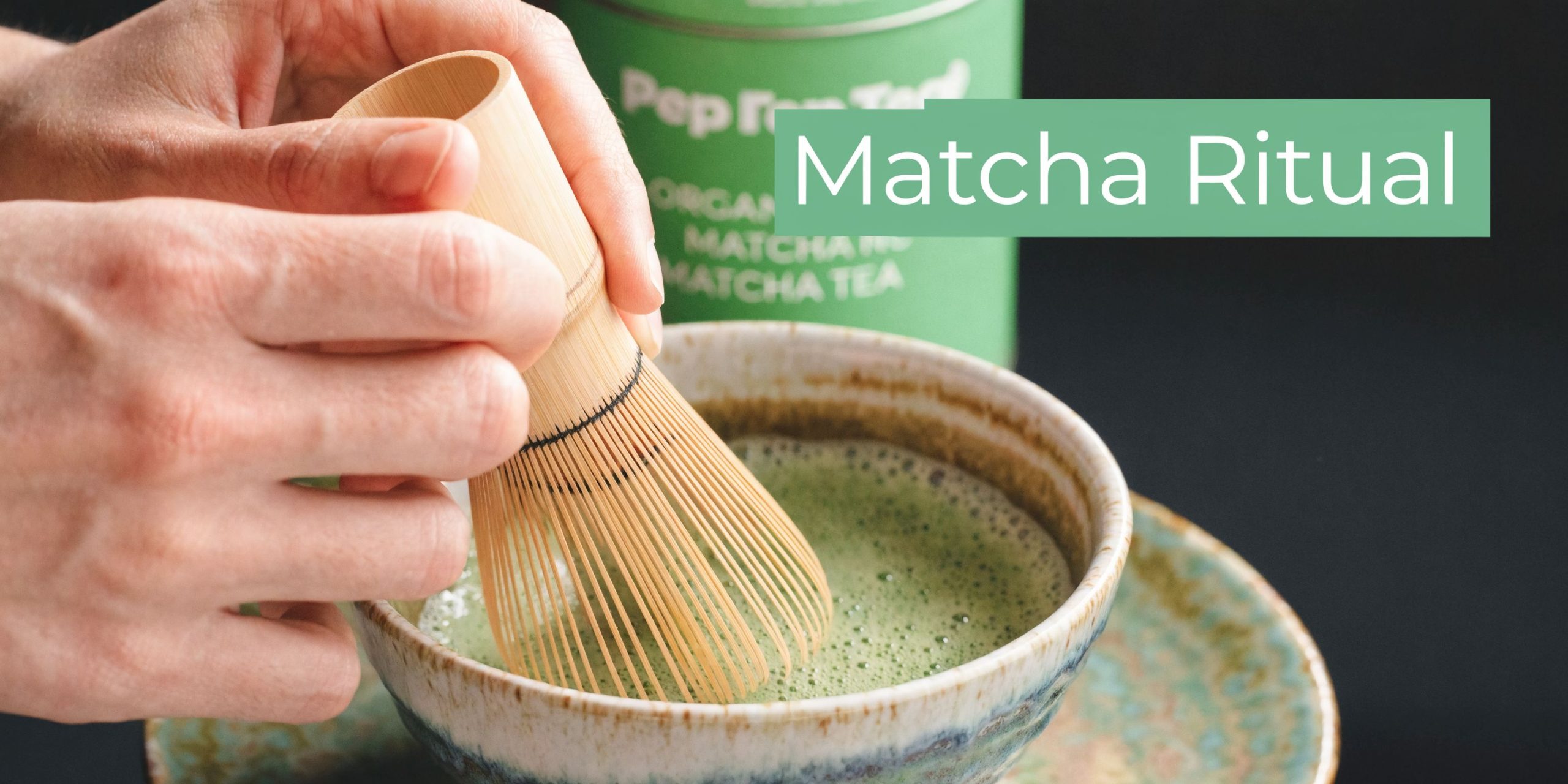
Pep Tea offers organic matcha in grades suited to different uses, including ceremonial-style preparation and lattes, so it’s a practical example of how the right tea and the right tools work together.
A simple usucha for quiet mornings
Use your ceremonial grade organic matcha when you want to drink it with water and appreciate the flavour on its own.
Try this method:
- Warm the chawan, then dry it.
- Sift matcha into the bowl.
- Add a little warm water and mix into a smooth paste.
- Add more water.
- Whisk briskly in a W motion until the surface looks smooth and lightly foamy.
The goal isn’t giant bubbles. It’s a fine, even top layer and a clean, rounded taste.
An iced matcha latte that stays smooth
For milk-based drinks, culinary grade organic matcha is usually the better fit because it stands up well in a latte.
A simple approach:
- Sift the matcha into the bowl
- Add a small amount of warm water
- Whisk until fully smooth
- Pour that concentrate over ice
- Top with your milk of choice
Starting with a smooth concentrate matters. If you add dry powder straight into cold milk, it’s much harder to dissolve properly.
Here’s a quick visual guide for whisking technique and setup:
Small adjustments that improve both drinks
These details make a noticeable difference:
- Sift first if your matcha has been sitting for a while
- Use warm, not boiling, water for the initial mix
- Whisk near the surface for better foam
- Rinse the whisk immediately after use so it stays in working shape
A good bowl of matcha feels light, smooth, and integrated. It shouldn’t taste like powder added to water at the last minute.
Once you’ve made a few bowls this way, the accessories stop feeling specialised. They just feel like the right tools for the drink.
From a Simple Drink to a Mindful Ritual
The nicest thing about matcha tea accessories is that they solve practical problems and slow you down in a good way at the same time.
A sifter gets rid of lumps. A chasen improves texture. A whisk holder helps your tools last. Those are useful, concrete benefits. But the experience goes further than utility. The act of warming the bowl, sifting the powder, and whisking until the surface turns glossy gives the drink a shape in the day. It asks for attention, but not much time.
That’s why these tools appeal to very different people. A home drinker may want a few quiet minutes before work. A café may want a more authentic matcha service and a better-looking cup. Both are using accessories to make the drink more intentional.
The good news is that you don’t need to become a purist. You just need to understand what each tool is for and choose the pieces that match the way you drink matcha. Start small if you like. A whisk, a bowl, a scoop, and a sifter are enough to transform the result.
Once the process becomes familiar, the ritual doesn’t feel complicated. It feels organised, calming, and repeatable. That’s part of matcha’s appeal. It brings together flavour, craft, and a little moment of focus in the middle of ordinary life.
If you’re ready to build a better matcha routine, explore Pep Tea for organic matcha, accessories, and practical guidance for home kitchens, cafés, and everyday wellness.