
Japanese Matcha Set: Your 2026 Buyer’s Guide
You’ve probably seen it happen. A beautiful bowl of vivid green matcha appears in your feed, sitting beside a bamboo whisk and a handmade bowl, and suddenly the whole ritual looks equal parts calming and confusing.
A japanese matcha set can seem like something meant for experts only. In reality, it’s a practical group of tools that helps you make smoother, better-tasting matcha with less fuss. Once you know what each piece does, the set stops feeling formal and starts feeling useful.
For many Australians, matcha now sits at the meeting point of wellness, café culture, and everyday routine. It can be your quiet morning drink, your afternoon reset, or a thoughtful addition to a non-alcoholic menu. The ritual matters, but it does not need to feel intimidating.
An Invitation to the Matcha Ritual
A lot of people begin in the same place. They buy a tin of matcha, stir it with a spoon, end up with lumps, then wonder whether the traditional tools are more about looks than function.
They are not just decorative. They help turn powdered tea into a drink that feels rounded, smooth, and intentional.
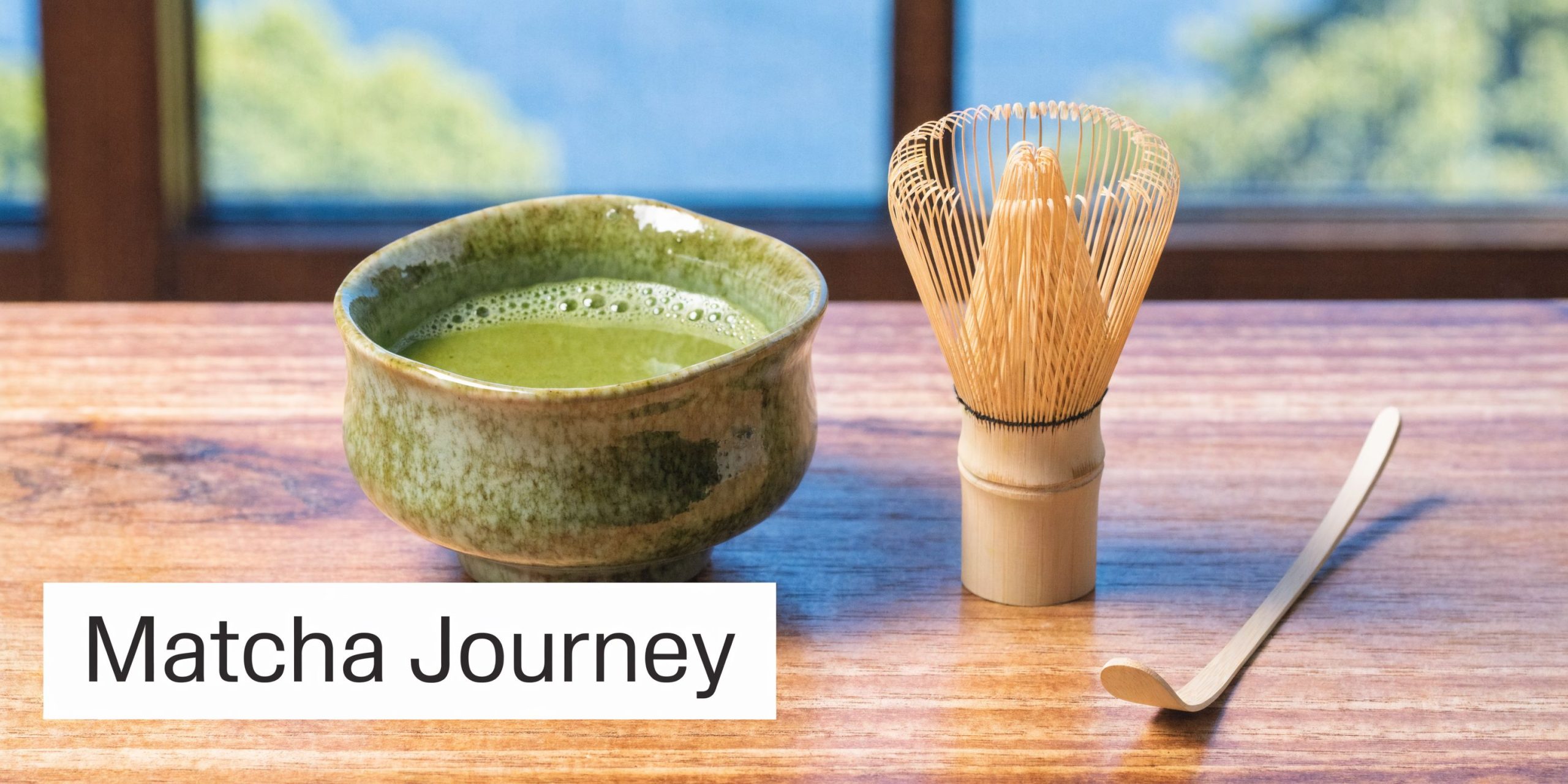
The appeal of matcha today goes far beyond trendiness. People want rituals that slow them down for a minute. They want drinks that feel clean, grounding, and a little bit special. A japanese matcha set fits that beautifully because it gives shape to the moment. Bowl, scoop, sift, whisk, sip.
That interest is part of a much bigger movement. In 2024, Japan’s tea exports reached a record ¥36.4 billion, up 24.7% from the previous year, with powdered teas such as matcha making up 58% of export volume, according to Nippon’s report on Japan’s tea export record. For Australian drinkers, that matters because it points to strong global demand and continuing access to authentic matcha and traditional tools.
Why the ritual feels so different
When you make matcha this way, you are not only preparing a drink. You are giving yourself a repeatable pause in the day.
That can look like:
- A quick morning reset before emails and school drop-off
- A café-quality afternoon cup without leaving home
- A hospitality moment that feels more thoughtful than another standard hot drink
A good ritual does not need to be complicated. It just needs a few reliable tools and a little attention.
Deconstructing Your Japanese Matcha Set
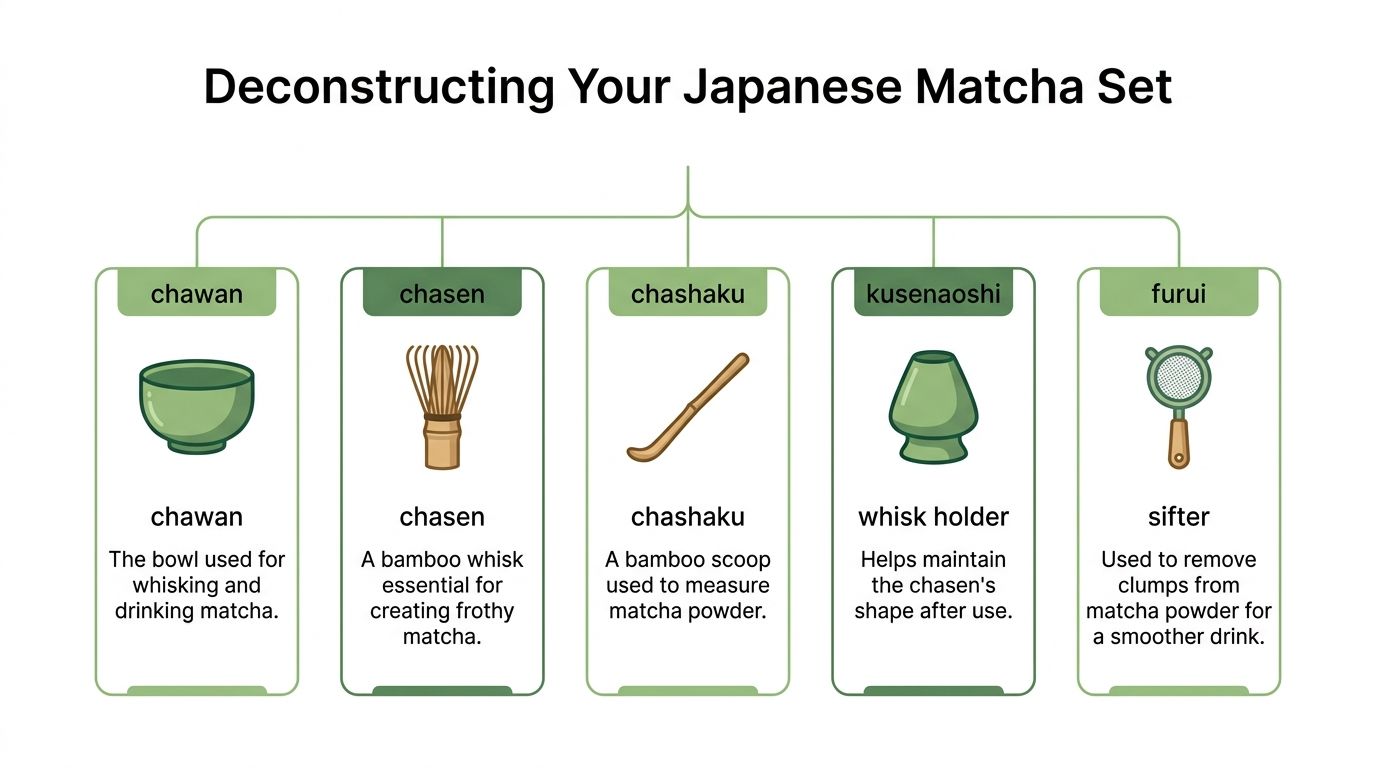
Open a japanese matcha set and you’ll usually find a small group of tools with very specific jobs. Each one solves a common matcha problem.
The core pieces
The chawan is the bowl. It is wide enough to whisk in comfortably and deep enough to keep the liquid from splashing everywhere. You drink from it too, which is part of the charm. It keeps the process simple.
The chasen is the bamboo whisk. This is the heart of the set. Its fine tines break up powder, lift air into the tea, and create the light froth people associate with properly prepared matcha.
The chashaku is the bamboo scoop. It helps you measure powder consistently without guessing. That matters more than many beginners realise. Too much matcha can taste heavy. Too little can taste thin.
The kuse naoshi, or whisk holder, helps the chasen keep its shape after use. Without it, the tines can dry unevenly and lose the form needed for good whisking.
Many sets also include a sifter. This step is easy to skip, but it makes a real difference because matcha powder naturally clumps.
Why each piece matters in practice
If you’ve ever stirred matcha in a mug and wondered why it felt gritty, the answer is usually a mix of clumps, uneven suspension, and the wrong vessel.
A proper set improves all three.
- The bowl gives you room to whisk quickly and evenly
- The whisk creates suspension so the tea feels smoother to drink
- The scoop improves consistency from one cup to the next
- The holder protects the whisk after you finish
- The sifter removes lumps before they become a texture problem
The set is traditional, but not precious
Some readers worry they need to follow a strict tea ceremony to “use it properly”. You don’t.
You can honour the tradition while still making matcha in a modern Australian kitchen before work. You can use a handmade bowl on a quiet Sunday, or prep several bowls in a café service window. The tools stay the same. The context changes.
If a tool helps you make better matcha more easily, it belongs in your routine.
How to Choose the Right Matcha Set
Not every japanese matcha set suits every drinker. A beginner at home needs something different from a café team serving matcha all day.
The best way to choose is to match the set to your actual habits, not your ideal self.
Start with the whisk, not the bowl
People often focus on the bowl because it is the most visible piece. The better starting point is the chasen.
A proper whisk with 80 to 96 prongs works especially well for ceremonial-style preparation. According to Japanese Taste’s product guide for an organic ceremonial set, using a proper chasen with sifted ceremonial-grade matcha can increase the bioavailability of EGCg antioxidants by up to 30% compared with stirring without a whisk. The reason is practical. Fine froth keeps the powdered leaf evenly suspended, so you drink the whole bowl more evenly.
That does not mean the bowl is unimportant. It means function should lead the decision.
Materials and fit matter
A good set should feel easy to use, clean, and store.
Look for:
- A bowl with enough width for whisking without knocking the sides
- A whisk with fine, even tines rather than thick, rough ones
- A scoop that feels balanced in the hand
- A whisk holder included if you want the set to last
If you enjoy traditional preparation, a ceramic bowl such as Mino-yaki can feel lovely in the hand. If you are buying for a café, durability and consistency matter more than visual romance alone.
Matcha Set Comparison Home Use vs. Café Use
| Feature | Ideal for Home Baristas | Essential for Cafés & Hospitality |
|---|---|---|
| Bowl | Comfortable to hold and wide enough for easy whisking | Durable, stackable, and consistent in shape |
| Whisk | Fine bamboo chasen for daily use | Multiple chasen on hand for service continuity |
| Scoop | Traditional chashaku for measured ritual | Consistent portioning method staff can repeat |
| Sifter | Helpful for smoother texture | Important for speed and consistency across orders |
| Holder | Strongly recommended | Necessary if you want to protect tool life |
| Matcha choice | Ceremonial grade for straight drinking | Ceremonial for premium service, culinary for recipes and lattes |
Buy for the way you drink
If you mostly drink straight matcha, choose a set that supports slower preparation. If you make lattes, smoothies, or recipe bases, you still benefit from proper tools, but you may not need the most delicate ceremonial setup.
If you’re still sorting out powder styles, Pep Tea’s guide to different grades of matcha is useful for deciding what belongs in the bowl and what belongs in recipes.
Your First Matcha A Simple Preparation Guide
The first bowl does not need to be perfect. It just needs to be pleasant enough that you want to make a second one.
A simple method that works
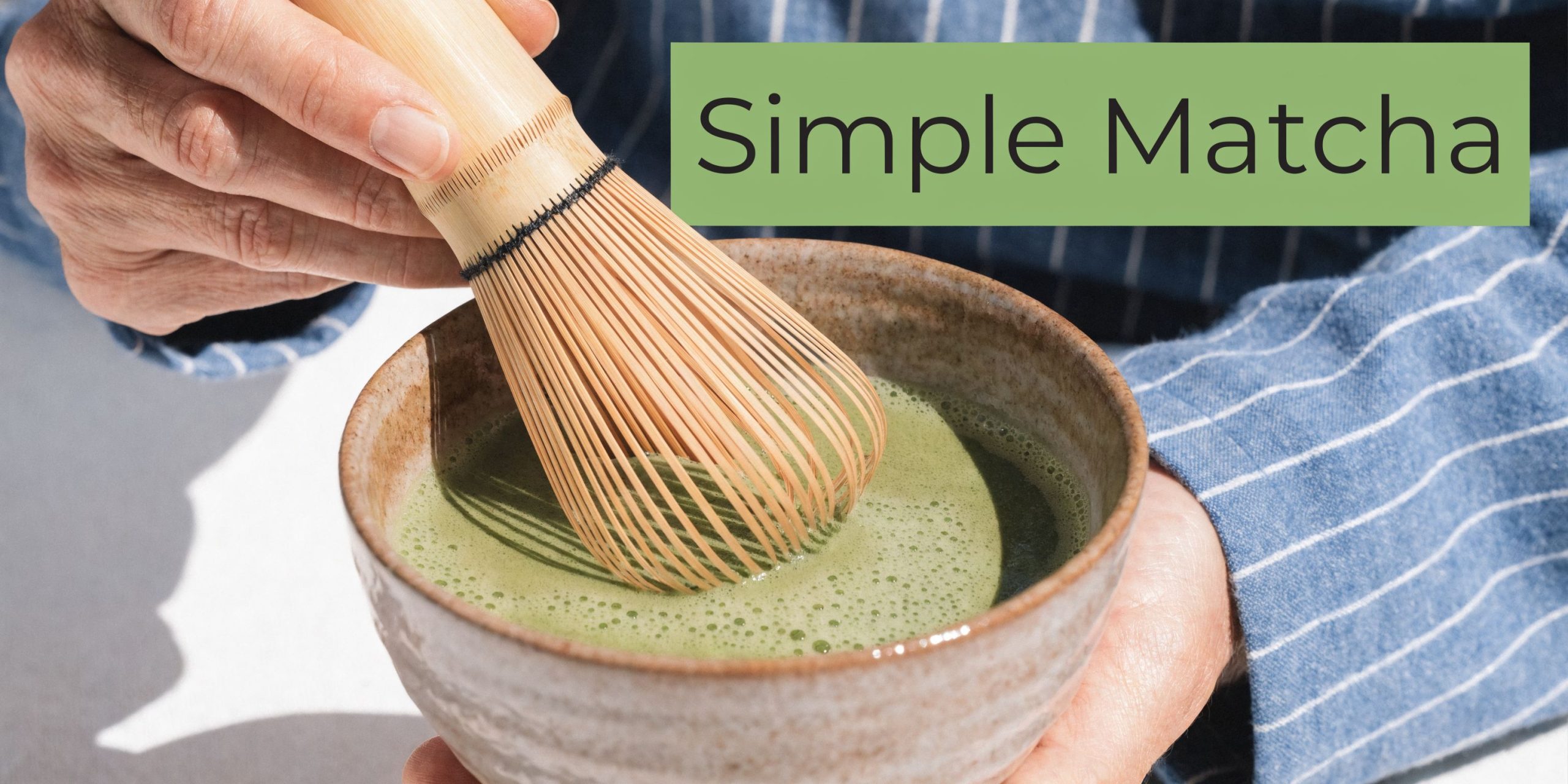
Use 2g of matcha, which is about 3 scoops with a chashaku, and 60ml of water at 70 to 80°C, based on the preparation details in the verified product data for ceremonial matcha sets. Start by sifting the powder into your bowl. This step removes lumps before you add water.
Add a small splash of warm water first and make a loose paste. Then pour in the rest.
Now whisk briskly using a quick W motion across the surface rather than stirring in circles. Aim for a fine froth on top.
What beginners usually get wrong
Boiling water is the most common mistake. It flattens the flavour and can make matcha taste harsher than it should.
The second mistake is pressing the whisk against the bottom of the bowl. The whisk should move lightly and quickly, almost skimming the tea.
- Too many clumps usually means the powder was not sifted
- Flat texture usually means the whisking motion was too slow
- Bitterness often points to water that was too hot
- Weak flavour usually means too much water for the amount of matcha
For a visual walkthrough, Pep Tea’s guide on how to whisk matcha can help if the hand motion feels awkward at first.
Watch the hand movement
A short demo often makes the process click faster than written instructions alone.
Stop whisking once the surface looks fine and lively. You are aiming for smoothness and lift, not a giant foam cap.
Cleaning and Caring for Your Matcha Tools
A japanese matcha set lasts longer when you treat it as kitchenware with a rhythm, not as something you toss in the sink and deal with later.
The most important tool to protect is the chasen. Bamboo is strong, but the fine tines are delicate.
The care habit that saves money
According to Matcha.com’s starter kit guide, high-quality bamboo whisks stored on a ceramic holder can withstand over 500 uses before significant deformation, reducing replacement costs by up to 60% compared with whisks left to dry on their side.
That is a practical reason to care for your whisk properly. Better shape means better froth. Better froth means better matcha.
Simple cleaning steps
Rinse the bowl with warm water soon after use. Matcha dries fast and can cling to ceramic if left sitting.
For the whisk, use warm water only. Swirl it gently in clean water to release any trapped matcha. Avoid soap, which can linger in bamboo and interfere with flavour.
Then place the whisk on a kuse naoshi so the tines dry evenly.
- Do rinse straight away after each use
- Do let tools air dry fully before storing them
- Do use the holder to help maintain whisk shape
- Don’t scrub the bamboo
- Don’t leave the whisk flat on the bench
- Don’t store damp tools in a closed drawer
The small ritual after the ritual
These few seconds of care are part of the experience. They also protect the investment you made when choosing a quality set.
A whisk that keeps its form performs better, looks better, and asks less of your wallet over time.
Beyond the Bowl Creative Matcha Recipes
Once you’re comfortable using your japanese matcha set, you can move beyond the traditional bowl without abandoning the tools that got you there.
The whisk, bowl, and sifter are just as helpful for modern drinks as they are for classic preparation.
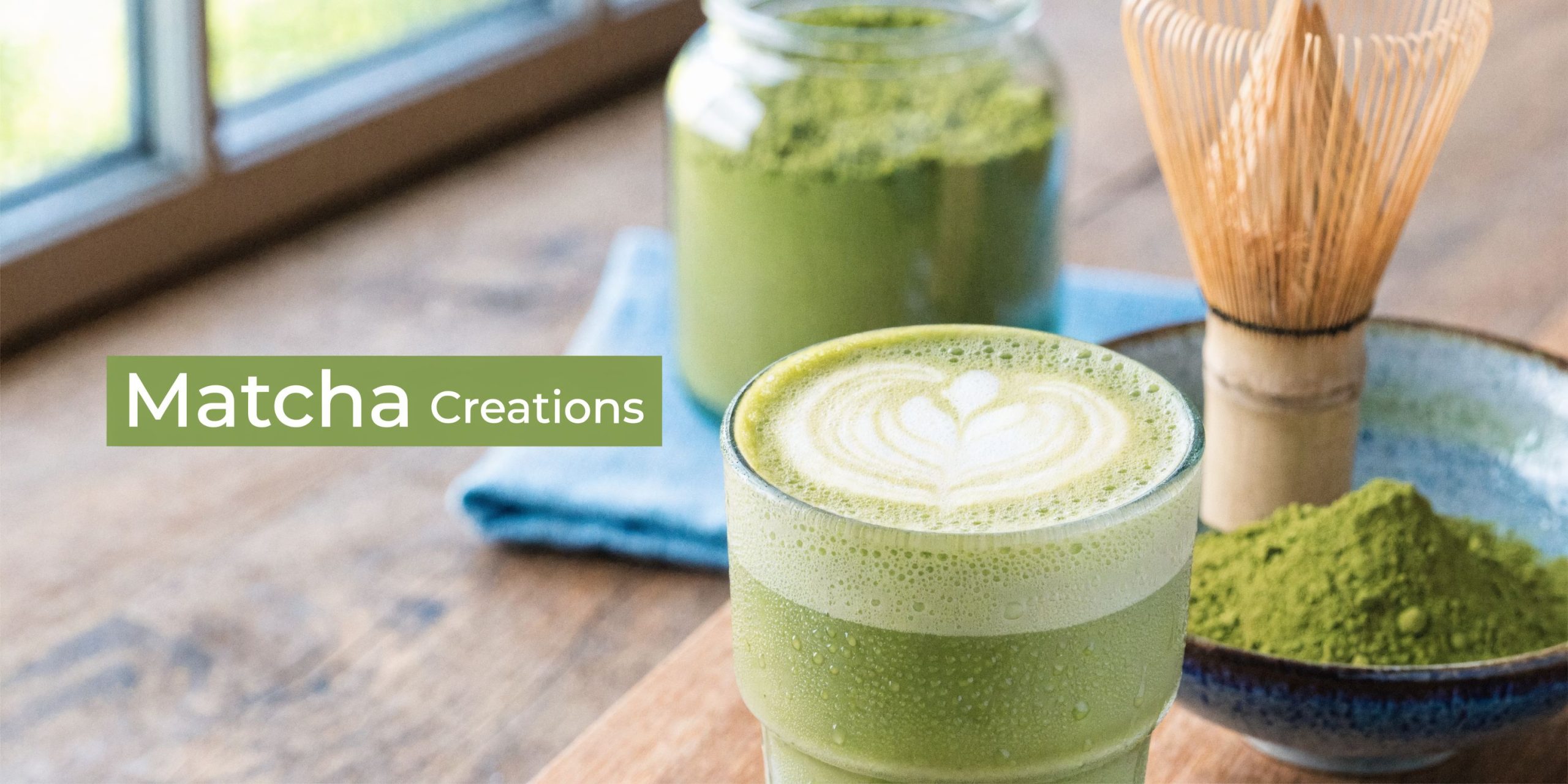
Everyday drinks you can make with the same set
A hot matcha latte starts with whisked matcha in the bowl. Once smooth, pour it over warmed milk or your preferred plant milk.
An iced matcha latte works best when the matcha is fully whisked first, then poured over ice and cold milk. This avoids dry specks floating on top.
A matcha smoothie is easy too. Whisk the matcha with a little water before blending it with banana, yoghurt, oats, or mango. Pre-whisking helps it distribute more evenly.
A Pep Tea inspired pairing
Matcha also plays well with modern non-alcoholic drinks. One of the most refreshing combinations is a simple Matcha Kombucha Fizz.
Try this at home:
- Whisk a small bowl of matcha until smooth.
- Let it cool slightly.
- Pour it over ice.
- Top with chilled kombucha.
- Add a slice of citrus if you like a brighter finish.
The result is layered and lively. You get the earthy depth of matcha with the sparkling lift of kombucha. For cafés, it’s a smart way to create a more interesting alcohol-free option using functional ingredients already familiar to wellness-minded customers.
Baking and kitchen use
You can also use the set for recipe prep. The bowl is handy for making a lump-free matcha paste before adding it to:
- Pancake batter
- Yoghurt bowls
- Chia pudding
- Icing or glaze
- Simple desserts
Ceremonial matcha suits straight drinking. Culinary matcha usually makes more sense in recipes where milk, fruit, or sweetness share the spotlight.
A Guide for Australian Cafés and Retailers
For hospitality businesses, a japanese matcha set is not only a retail item or a styling prop. It is part of service design.
If you plan to offer traditional matcha, premium lattes, or wellness-led specials, the tools and sourcing process need to support consistency.
What cafés should prioritise first
Start with repeatable preparation. Staff should know the portion, water temperature, sifting step, and whisking motion expected for every serve.
That matters whether you are preparing a straight bowl of matcha or building a latte base.
A practical setup often includes:
- Dedicated bowls and sifters for prep speed
- More than one whisk so service does not stop during cleaning or drying
- Clear staff training on texture and presentation
- The right powder for the menu item, whether ceremonial or culinary
For venues serving larger volumes or building recipe programs, Pep Tea offers bulk buy culinary grade organic matcha for recipe and café use.
The importing issue many guides skip
Australian businesses importing Japanese matcha tools need to think beyond aesthetics.
According to the verified compliance data tied to this retailer background page, the Biosecurity Act 2015 scrutinises untreated bamboo items such as whisks, and ceramics must meet FSANZ standards for lead and cadmium. The same verified data notes that 2025 DAFF data shows tea-related imports are frequently flagged, which can create costly delays for cafés that are not prepared.
That means a set can be beautiful and still be a poor buying decision if paperwork, treatment status, or food-safety documentation are unclear.
Questions worth asking suppliers
Before placing an order, ask:
- Are the bamboo tools treated and documented for Australian import requirements
- Do the ceramics have food-contact compliance information
- Is the matcha organic certified in a way that aligns with your purchasing needs
- Can the supplier support repeat orders, not just one-off sets
For retailers, this also shapes customer trust. Shoppers increasingly want authenticity, but they also want clarity. A thoughtful product page should explain what the tools are made from, how they are used, and what standards matter in Australia.
Embrace Your Daily Matcha Moment
A japanese matcha set is more than a bowl and whisk. It is a simple way to make your tea smoother, your routine calmer, and your daily drink a little more intentional.
You do not need to master a formal ceremony to enjoy it. You only need a few good tools, a little practice, and the willingness to slow down for a minute. That is where the pleasure begins, at home, in the café, or anywhere you want a steadier kind of energy.
If you’re ready to begin, explore Pep Tea for premium organic matcha and practical guidance on bringing matcha into everyday Australian life.