
Organic Matcha Green Tea Powder Australia: A Full Guide 2026
Certified organic matcha sold in Australia is generally imported from Japan rather than grown locally at commercial scale. Australia's certified organic agricultural land increased by 48.9% between 2021 and 2022, while the country has more than 53 million hectares of certified organic farmland, about 12.4% of its agricultural land. IndexBox's Australian matcha market overview provides the market context, but those figures describe organic agriculture overall, not domestic matcha production.
You may be standing at a café counter with a new matcha latte on the menu, or comparing tins online after deciding that your usual green tea doesn't deliver the colour or flavour you want. The search for organic matcha green tea powder Australia often creates one immediate confusion: Australian availability doesn't mean Australian origin. The tea may be imported, while the business selling, testing, distributing and educating customers operates locally.
That distinction matters because matcha is a whole-leaf powder. Unlike a brewed infusion, the leaf isn't removed after steeping. Organic certification can help verify how the tea was grown and handled, but it doesn't automatically tell you whether the powder is fresh, potent, well processed or suitable for your recipe. The useful question isn't only whether a tin says “organic”. It's whether the product has a traceable origin, credible certification, suitable grade and testing that matches the risks you need to manage.
Finding Quality Organic Matcha in Australia
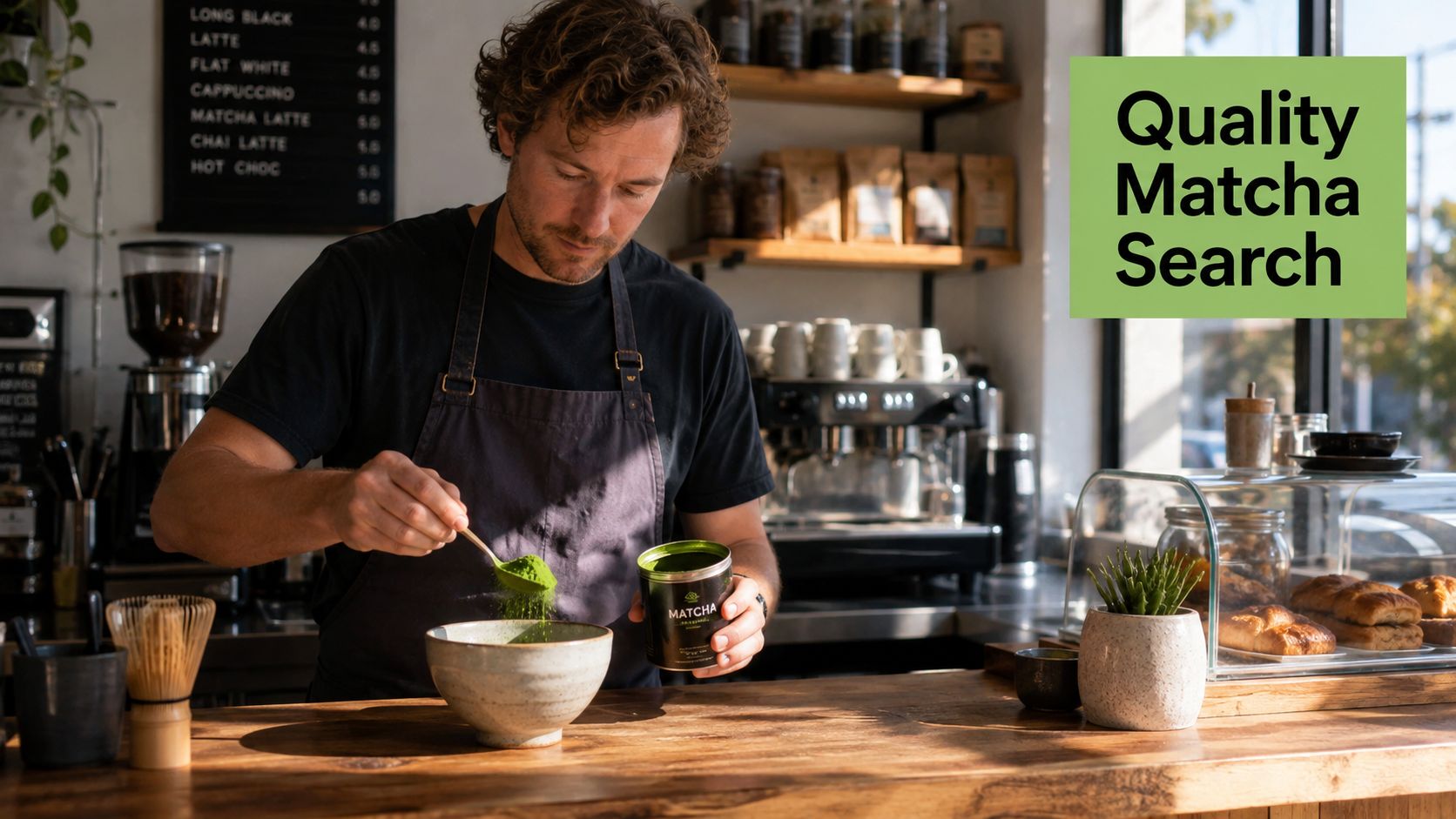
A café owner in Newcastle may need a vivid green latte that dissolves cleanly. A home baker in Melbourne may want a stronger powder that remains noticeable in oats, icing or banana bread. Searching for organic matcha green tea powder Australia brings up products with different origins, grades, certification records and handling practices.
For Australian buyers, the local part of the supply chain usually involves importing, distribution and hospitality, rather than cultivation. Matcha is generally imported from overseas tea-growing regions, particularly Japan, where shaded tea leaves are processed into tencha and stone-ground into powder. National organic farmland data can show that Australia has established certification systems and traceability practices, but it does not prove that a product is Australian-grown matcha. The Australian matcha market context helps clarify the difference between local availability and domestic production.
What Australian buyers should look for
A reliable product description gives you several points to check instead of relying on one premium-sounding claim.
- Country and region of origin: “Japan” identifies the country, while a named region gives more supply-chain detail.
- Certification identity: Check the certifier, certificate number and certification scope. Ask the importer for its ACO or JAS certificate number, then verify it through the certifier's public database before purchasing.
- Grade and intended use: Powder for whisking may not suit a café producing large volumes of lattes.
- Lot traceability: A lot number should connect the retail pack with supplier records and relevant testing.
- Storage information: Light, heat, air and moisture can affect matcha, so packaging and handling influence the final cup.
“Ceremonial grade” can indicate intended use, but it is not a universal government-controlled matcha grade. Assess colour, aroma, texture and flavour alongside the label. Fresh matcha should smell clean and vegetal, disperse finely and avoid a harsh, stale or dusty finish.
For an Australian supplier presenting its range and product details, compare the Pep Tea matcha tea powder collection with the documentation supplied by other sellers. The practical goal is a powder with an identifiable origin, verifiable certification, suitable handling information and a flavour profile you can explain to customers.
Ceremonial vs Culinary Matcha Grades Explained
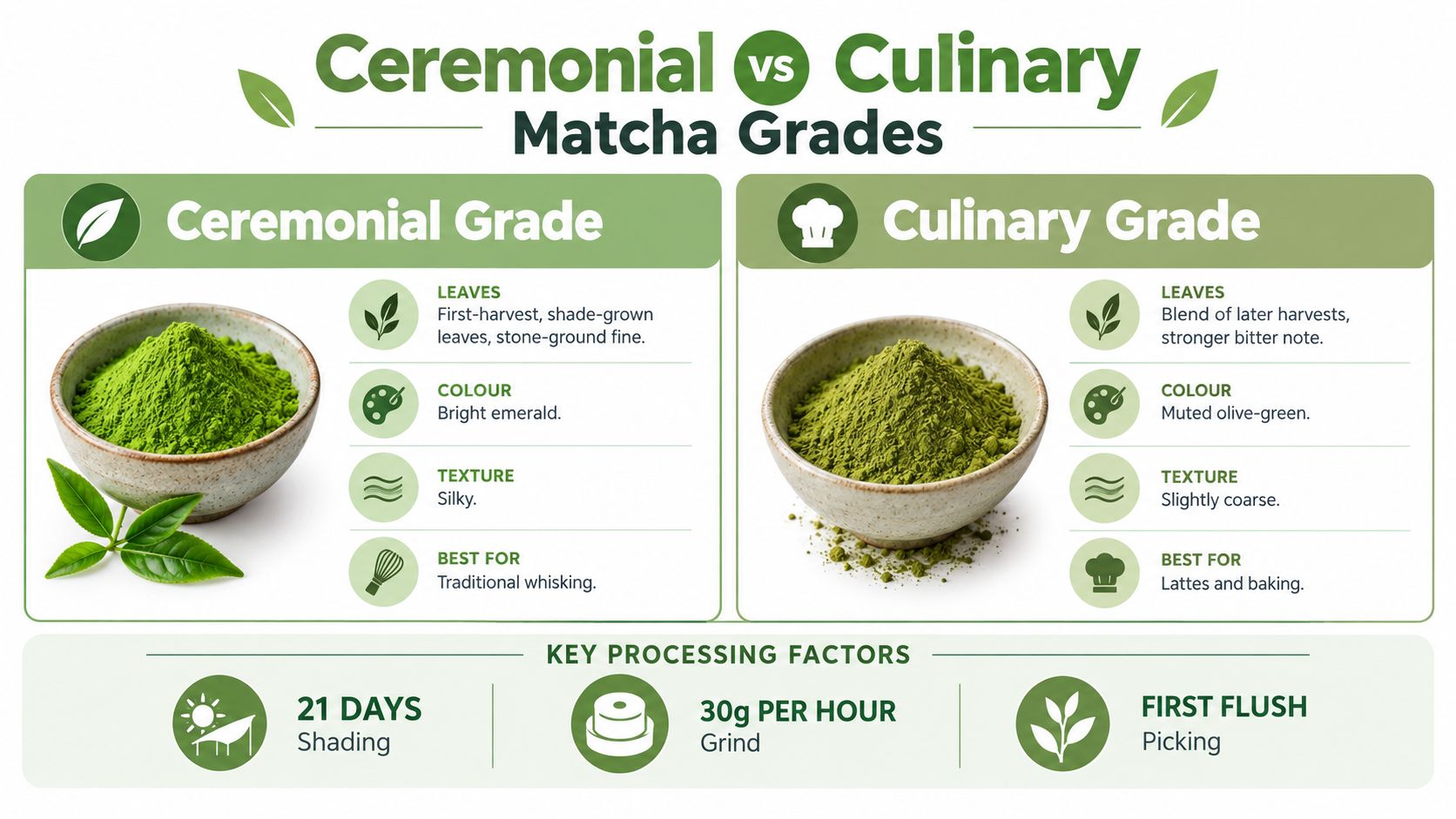
“Ceremonial” and “culinary” are practical buying terms, not a complete quality-control system. In Japan and internationally, “ceremonial grade” doesn't have one universal regulated definition, so a buyer should still examine origin, harvest information, processing, freshness and test documentation.
Ceremonial-style matcha is usually selected for drinking directly with water. It tends to be brighter in colour, finer in texture and more rounded in flavour, with an umami character that can stand on its own. Culinary matcha is usually chosen for recipes where the powder must remain noticeable beside milk, fruit, oats, flour or sweetener. It can have a more assertive bitterness and a less delicate finish, which may be an advantage rather than a defect.
How processing changes the cup
Tea plants used for matcha are shaded before harvest, then processed into tencha, with stems and veins removed before grinding. Shading can influence the leaf's colour and flavour, while cultivar, harvest timing and processing also affect the powder's chemical composition. The Western Sydney University review of matcha's bioactive compounds reports that matcha generally contains catechins, L-theanine and caffeine, but concentrations vary substantially between products.
Stone-grinding is associated with a fine powder and a smooth mouthfeel. However, the phrase “stone-ground” isn't enough to prove that a matcha will taste good. A powder may have been well processed and still be old, poorly stored or unsuitable for the drink you're making.
Try the following comparison:
| Matcha grade | Best for | Key characteristics |
|---|---|---|
| Ceremonial-style | Traditional whisking, thin tea and direct drinking | Brighter colour, fine texture, softer bitterness and a flavour designed to be enjoyed with water |
| Culinary-style | Lattes, smoothies, baking, desserts and sauces | More robust flavour, stronger bitterness and enough presence to work with other ingredients |
Choose by application, not status
A delicate ceremonial-style powder can taste excellent in a bowl but become wasteful in a strongly flavoured latte. Milk, ice and sweeteners can mute subtle notes, so a practical culinary powder may perform better while keeping the menu cost under control.
The reverse problem appears in direct drinking. A coarse or bitter culinary powder whisked with water can leave astringency on the tongue, especially if the water is too hot or the powder is poorly stored. That doesn't mean culinary matcha is inferior. It means the product has been selected for a different job.
Organic status addresses farming and handling standards, not whether a powder is ceremonial-style, culinary-style, mild, strong, fresh or compositionally consistent. For serious café purchasing, ask for the supplier's intended use, batch information and preparation recommendation. The Pep Tea guide to ceremonial and culinary matcha can sit alongside a sensory trial, where staff prepare both powders using the same recipe and taste them in the actual menu format.
One final caution concerns caffeine. Matcha is powdered tea, so the amount consumed depends on powder mass, cultivar, processing and preparation. A supplier shouldn't present a single caffeine number as universal for every tin or serve.
Understanding Organic Certification and Standards
A café can receive a bag labelled “organic” without knowing how that claim was verified. Organic claim and certified-organic status are different. Australian domestic organic sales do not always require mandatory certification, while a business using a certified-organic label must ensure the product meets the stated arrangement. The Australian Government describes AS 6000-2015, the Australian Standard for organic and biodynamic products, as covering production, processing, storage, transport, labelling and importation. The government's organic and biodynamic factsheet explains why checks need to extend through the supply chain, not stop at the farm.
Certification answers one set of questions
Certification verifies the production system, permitted inputs and relevant handling practices. It can support claims about how tea was grown, processed and represented, provided the finished imported product falls within the applicable certification arrangement. For an Australian buyer, the certifier, certificate holder, product scope and import documentation all matter.
See how certification is verified locally in the Pep Tea guide to organic certification in Australia.
Certified status does not establish that every powder has the same caffeine level, catechin profile, moisture content, colour or flavour. The Western Sydney University review found variable bioactive profiles in commercially marketed matcha from different countries. Organic certification is therefore a baseline for production claims, not a guarantee of potency or consistency.
For a café, use separate checks for separate decisions:
- Certification: Was the product produced and handled under the stated organic standard?
- Composition testing: What does this batch contain in terms of caffeine and selected compounds?
- Contaminant testing: Has this batch been assessed for hazards such as heavy metals, pesticides or microbes?
- Sensory evaluation: Does the powder meet the flavour, colour and texture required for the menu?
Certification verifies the production system; laboratory testing verifies what is in this specific lot. Sensory evaluation then shows whether the powder performs in the intended drink. A certificate cannot tell you whether a matcha is too bitter for a latte, while a taste test cannot establish organic status.
Read labels with appropriate caution
The word “natural” offers less verification than a named certification system. A credible pack should identify the product, importer or responsible business, origin and relevant certification information so those details can be checked against supplier records.
Matcha uses the whole leaf, so it is consumed as a powder rather than brewed and discarded. The Food Standards Australia New Zealand caffeine advice distinguishes naturally occurring caffeine in tea from concentrated caffeine products. Organic certification does not make matcha caffeine-free or establish a particular physiological effect.
Businesses should keep certification separate from health marketing. Matcha may contribute naturally occurring tea compounds to the diet, but claims about immunity, detoxification, metabolism or disease prevention require evidence and careful regulatory review. A clear description of origin, grade and preparation gives customers more useful information than benefits a supplier cannot substantiate.
How to Verify Quality and Sourcing
A responsible matcha purchase starts with paperwork, then moves to the powder itself. This approach works for a home buyer comparing tins and for a café owner assessing a wholesale supplier.
Ask for the documents that connect product to batch
Request the following information before committing to a large order:
- A current certificate of conformity. Check the certifier, certificate holder, product scope and validity.
- Country and region of origin. A named Japanese region is more informative than an unexplained “imported” claim.
- Lot number. Confirm that the lot on the pack matches the supplier's documentation.
- Testing date. Recent testing is more useful when it clearly identifies the tested lot.
- Laboratory scope. Find out whether the report covers heavy metals, pesticide residues, microbiological quality and other relevant parameters.
- Product specification. Ask for storage conditions, recommended serving mass, grade, packaging and expected shelf life.
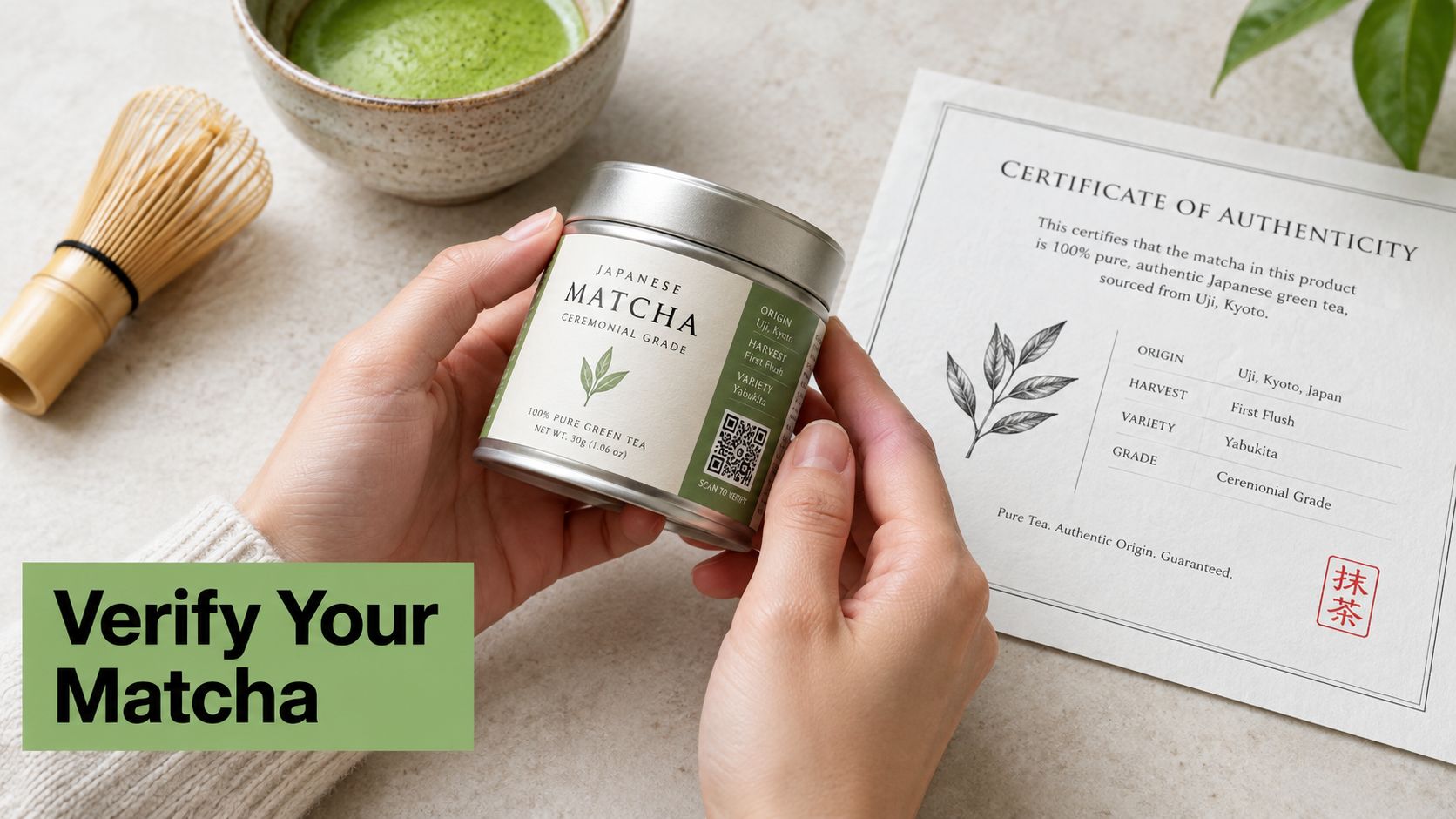
A certificate of conformity is valuable, but it shouldn't be treated as a complete safety report. Organic certification and laboratory testing answer different questions. The certification concerns the production system. Laboratory analysis tests selected hazards or compositional features in a particular sample.
Interpret testing without overclaiming
The available Australian regulatory material doesn't establish one simple matcha-specific consumer threshold for every concern a shopper may have, including lead, cadmium, pesticides and microbial hazards. That's why suppliers should be precise about what was tested, by which method, on what date and for which lot, rather than writing “fully tested” without detail.
For cafés and retailers, the Western Sydney University review recommends batch-level testing where possible, ideally using validated HPLC or UPLC methods for caffeine and major catechins such as EGCG, alongside checks for moisture, microbiological quality and heavy metals. The practical reason is straightforward: colour and sensory grade can't reliably predict functional composition.
Practical rule: Certification tells you how the product was produced. A laboratory report tells you what a particular test found. Keep both records.
Taste and storage remain part of verification
Open the pack and inspect the powder. A lively green colour, fresh aroma and fine texture are useful signs, while dull colour, stale odour, visible moisture or persistent clumping deserve questions. These observations don't replace laboratory testing, but they can reveal poor storage or age.
Keep the powder sealed, away from heat, light, air and moisture. A café should also record when a pack was opened and use a consistent recipe. If one barista uses a light spoonful and another uses a heavily packed scoop, customers won't receive a consistent drink, even if the underlying matcha is sound.
Australian Use Cases and Product Selection
Australian matcha works best when the grade matches the service format. A home user drinking a small bowl with water has different needs from a café building an iced latte, and a food manufacturer needs documentation that a casual buyer may never request.
Matcha preparation at home and in cafés
For direct drinking, sift the powder into a bowl, add warm water and whisk until the surface becomes lightly foamy. Water that's too hot can exaggerate bitterness, so use comfortably hot rather than boiling water. The right technique won't rescue stale matcha, but it can prevent avoidable clumping and harshness.
For a latte, dissolve the powder in a small amount of warm water first, then add milk or a plant-based alternative. Culinary-style matcha usually makes economic and sensory sense here because its stronger flavour can hold up against milk, ice and optional sweetener. Keep the drink unsweetened if the aim is to provide a low-sugar menu option, and let customers choose additions separately.
This video demonstrates a practical preparation approach for customers and café teams:
The same powder can be used in a smoothie with banana and oats, folded into yoghurt, blended into ice cream or added to baking. Heat and strong ingredients change the final flavour, so a powder that tastes slightly assertive on its own may be the better recipe ingredient.
| Matcha grade | Best for | Key characteristics |
|---|---|---|
| Ceremonial-style | Bowl preparation and simple iced matcha | Fine texture, vivid colour and a balanced flavour that remains exposed |
| Culinary-style | Café lattes, smoothies and baking | More pronounced tea flavour and better compatibility with milk or food |
Matcha alongside kombucha
Matcha and kombucha serve different roles. Matcha is a powdered tea ingredient that contributes tea flavour and naturally occurring caffeine. Kombucha is a fermented beverage requiring controlled acidity, clean equipment, reliable cultures and documented process monitoring.
FSANZ identifies kombucha as a beverage requiring careful control. The initial tea infusion is typically around pH 5, and it should be cooled from 60°C to 20°C within two hours. During fermentation, acidity should reduce the drink to pH 4.2 or below, while the finished beverage should generally remain at pH 2.5 or above and below 1% alcohol. These controls are set out in FSANZ's kombucha guidance.
That difference matters for cafés. A properly fermented sugar-free kombucha can provide an alcohol-free, low-sugar menu option, but “fermented” alone doesn't prove that the drink was made safely or contains no residual sugar. Read the nutrition information and ask how the producer manages acidity, alcohol and hygiene. Pep Tea offers organic Japanese matcha and Australian-brewed organic kombucha from the Hunter Valley, NSW, as separate beverage options rather than treating them as interchangeable products.
Australian beverage menus can also use matcha and kombucha in different dayparts. A matcha latte suits a morning or afternoon service, while chilled kombucha can work as a refreshing alternative to soft drinks or alcohol. For venues managing customer questions at scale, drink industry chatbot examples can help inspire ways to organise menu information, ingredient answers and service workflows without replacing staff knowledge.
Your Organic Matcha Shopping Checklist
Use this checklist before buying organic matcha green tea powder in Australia:
- Confirm the origin: Look for Japan and, where available, a named region.
- Verify the certification: Ask which certifier issued it and whether the finished imported powder is covered.
- Match grade to use: Choose ceremonial-style powder for direct whisking and culinary-style powder for lattes, smoothies and baking.
- Request batch details: Certificate, lot number, testing date and product specification should connect to the pack.
- Separate certification from testing: Organic status doesn't replace independent checks for heavy metals, pesticide residues or microbiological quality.
- Ask about caffeine: A serving's caffeine depends on powder mass, cultivar, processing and preparation. Healthdirect Australia's caffeine guidance gives healthy adults a general daily upper guideline of around 400 mg, but that isn't a target and doesn't suit every person.
- Inspect the powder: Fresh aroma, fine texture and lively colour support a better drinking experience.
- Check storage: Heat, light, air and moisture can reduce freshness after importation.
If you're presenting products online or building a café menu, strong photography should show the powder, colour, preparation and serving context accurately. A practical food product photography workflow from MerchLoom can help teams organise those visual assets without making unsupported claims about the product.
Pep Tea offers organic Japanese matcha in grades suited to direct drinking, café lattes and culinary use, alongside Australian-brewed organic kombucha from the Hunter Valley, NSW. Visit Pep Tea to compare the range, review product details and enquire about options for your home, café or wholesale menu.