
Your 2026 Guide to the Best Matcha Cake Brisbane
You're standing in a Brisbane café, staring at a green slice of cake and wondering if it's real matcha or just a pretty sponge with colouring. That hesitation makes sense. matcha cake Brisbane searches have surged because matcha is no longer a niche order, it's now part of the city's everyday café language, but the quality gap is still wide.
The tricky part is that a cake can look right and still miss the mark completely. It might taste flat, look unnaturally bright, or feel like the matcha was added for branding rather than flavour. For Brisbane diners, the key question isn't just where to buy it, it's how to tell when a cake is worth the price.
The Search for Brisbane's Perfect Matcha Cake
Brisbane's matcha scene has grown into something far more visible than a passing trend. That matters, because once an ingredient becomes mainstream, the market fills with both thoughtful, high-quality versions and quick opportunistic ones. A recent Australian consumer panel analysis found matcha was up 53% year-on-year nationally, with the ingredient sitting at 3.58% social share and still described as “emerging” (Tastewise).
That trend shows up in menus across the city too. Iced matcha lattes now appear at major chains including McDonald's, Krispy Kreme, Starbucks, Rashays, and Chatime, and Brisbane prices in that dataset ranged from $6.30 to $18.95 (Tastewise). When an ingredient moves from specialty cafés into chain menus, dessert makers usually follow, because customers start recognising the flavour and expecting it in more formats.
Practical rule: if a city already accepts matcha as a menu flavour, cakes and pastries usually follow the drink trend.
The problem is that popularity doesn't guarantee quality. Brisbane coverage has been rich on where to find matcha, but much thinner on whether the boom is still backed by good ingredients, especially in desserts (Torrens University). That gap is exactly where smart buyers get an advantage, because a great matcha cake should taste balanced, aromatic, and fresh, not just look green.
Not All Matcha Is Created Equal
A good matcha cake starts with the right grade of powder, a distinction that often confuses many buyers. Ceremonial grade is the high-end powder people usually drink on its own, while culinary grade is built for baking and mixing. The simplest way to think about it is like cooking wine versus a fine bottle you'd pour into a glass, one is made to shine in a dish, the other is made to be savoured directly.
The reason this distinction matters in cake is flavour structure. Baking dilutes and reshapes ingredients, so a matcha that's lovely in a bowl can disappear in batter, while a culinary grade designed for mixing can hold its own through flour, eggs, and butter. That's also why the best matcha cakes tend to show a natural green colour rather than a pale, dull, or artificially bright one.
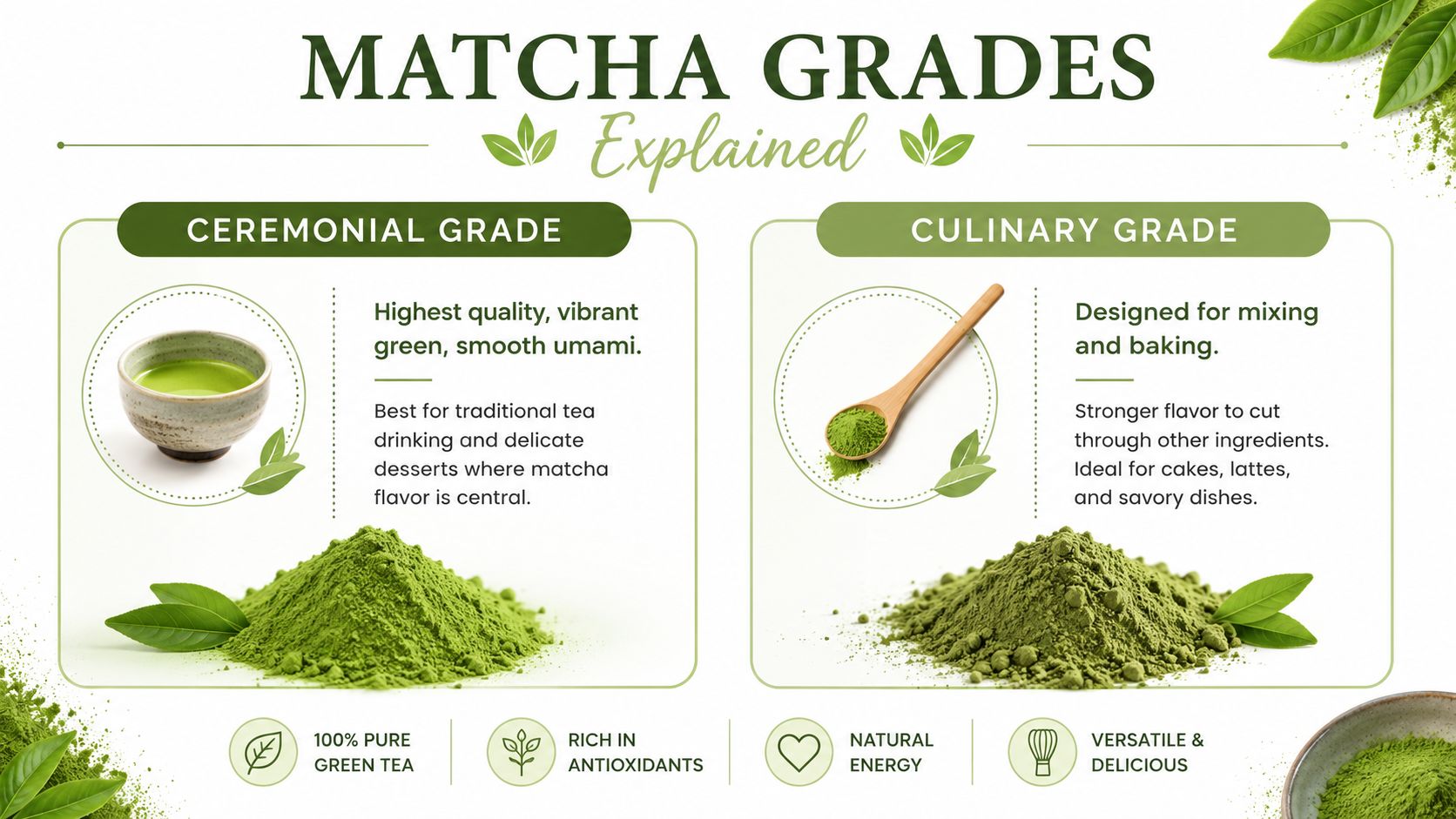
A good café menu usually gives clues if you know what to look for. A cake made with stronger culinary matcha often tastes more rounded and less sugary, while a weak one can taste mostly like vanilla sponge with a faint grassy note. When the powder is high quality, the colour is more even and the finish feels cleaner rather than bitter or dusty.
| Feature | Ceremonial Grade Matcha | Culinary Grade Matcha (High Quality) | Best For |
|---|---|---|---|
| Flavour | Smooth, delicate, umami-rich | Stronger, more robust | Drinking, delicate desserts |
| Colour | Vibrant natural green | Good green colour, slightly less delicate | Cakes, lattes, baked goods |
| Texture | Fine and refined | Designed to mix well | Whisking, batter, sauces |
| Best use case | Traditional tea preparation | Baking and recipes | Matcha cake, café drinks, desserts |
If you're shopping or ordering, ask one simple question, what grade of matcha is in the cake? If the answer is vague, that's usually a sign the product is built for appearance first.
Learn more about different grades of matcha
Where to Find Great Matcha Cake in Brisbane
Brisbane's matcha market is now broad enough that you can start your search in several parts of the city instead of chasing one hidden specialty spot. Dedicated outlets across Teneriffe, the CBD, and Sunnybank show how far the flavour has moved into the mainstream, while chain cafés have made matcha familiar to casual drinkers too (The Urban List). That broader awareness helps dessert menus, because customers already know what matcha should taste like.
The best way to judge a café is to look at how seriously it treats matcha across the menu. A venue that serves it as a throwaway novelty will usually lean on colour and sweetness. A place that treats it as a core flavour tends to show more restraint, with better balance, cleaner colour, and a more deliberate texture.
A useful buying cue: the strongest café cakes usually sit in places that already serve matcha regularly, not just once as a special.
Price can also reveal positioning. Brisbane sources note drinks ranging from $4.50 to $18.95, with dedicated tea houses like Sinmei Tea pricing cakes around A$6 to A$7 and specialty items such as a lava cake at A$20 (The Urban List; Sinmei Tea at Scrumptious Reads). Those numbers don't tell you quality by themselves, but they do show that Brisbane already accepts a premium tier for matcha products.
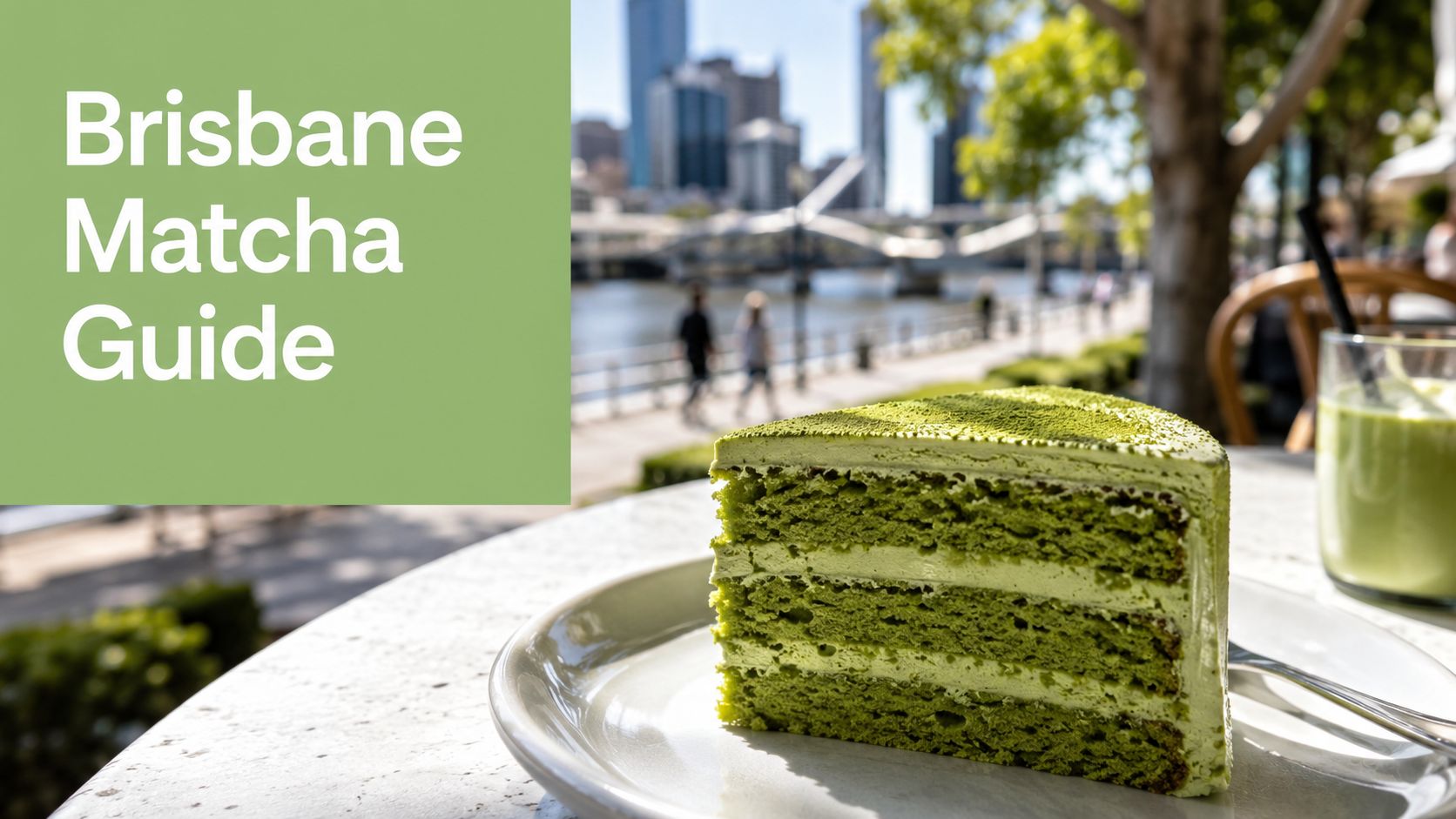
For Brisbane buyers, the smartest approach is to compare three things at once, flavour depth, colour consistency, and how the cake sits in the venue's broader dessert offer. If a café is already comfortable charging premium prices for matcha drinks, its cake is more likely to be made with intention. If you're after a starting point, look around the CBD for specialist tea houses, then check Brisbane suburbs with established dessert culture like Teneriffe and Sunnybank.
Bake Your Own with Our Pep Tea Matcha Recipe
Baking your own cake removes the guesswork. You choose the powder, control the colour, and decide whether the result tastes fresh or merely decorative. That's especially useful if you've been disappointed by cakes that look promising but collapse into sweetness once you take a bite.
The key technique comes before the oven
Matcha cake is sensitive to temperature and dispersion. One tested method bakes at 162°C and heats milk only to 82 to 85°C, which helps preserve colour, while another Australian recipe uses 180°C and stresses whipping eggs and sugar until the mixture triples in volume before folding in the dry ingredients (Texanerin; Zen Green Tea). The logic is simple, lower liquid temperature and solid aeration help reduce clumping, protect the green tone, and keep the crumb finer.
A practical home method looks like this:
- Sift the matcha first. This breaks up soft lumps before they meet liquid.
- Warm the milk carefully. Body-temperature milk can help matcha disperse more evenly, while some tested cakes heat milk to 82 to 85°C for colour control (Zen Green Tea; Texanerin).
- Pre-slurry the powder. Mix matcha with a little warm liquid before it goes into batter, because warm liquid improves solubilisation and helps prevent bitter specks (Zen Green Tea).
- Whisk for structure. If the method uses eggs and sugar, beat until the mixture is visibly lighter and expanded.
- Fold gently. Once the dry ingredients go in, keep mixing light so the batter stays airy.
If you want a beginner-friendly foundation for the sponge side of baking, the Just Cook It simple baking guide is a handy companion. It won't teach matcha nuance, but it does help with the basic rhythm of mixing, baking, and cooling.
Practical rule: if your batter contains visible green flecks, the matcha probably wasn't dispersed well enough before baking.
A simple matcha cake base
Use a light sponge or chiffon style, because those styles let matcha remain the star. Keep the sugar moderate, use a good culinary matcha, and don't overdo the add-ins. A thick frosting can drown the flavour before it reaches the palate.
For a recipe that keeps the ingredient quality front and centre, see our baking with matcha and beyond guide.
Once the cake is out of the oven, let it cool properly before slicing. Matcha colour looks strongest when the crumb is settled, not steaming hot, and the flavour usually tastes cleaner the next day.
Perfect Pairings and Smart Storage Tips
Matcha cake tastes best when the plate doesn't fight the flavour. Fresh berries, a light spoonful of cream, or a fine dusting of extra matcha all work because they add contrast without overwhelming the tea note. If the cake is already rich, keep the garnish simple and let the green tea character stay in charge.
A cold, crisp drink can make a slice feel lighter. That's one reason a sugar-free organic kombucha pairs so naturally with matcha cake, the brightness cuts through richness while keeping the overall experience clean and refreshing. If you're storing leftovers for later, keep the cake covered, refrigerate it if the filling is dairy-heavy, and bring it back to a cool room temperature before serving so the texture softens again.
For shelf-life questions, the most useful habit is to treat matcha cake like a fresh tea dessert rather than a long-life bakery item. The colour fades faster when it sits uncovered, and the crumb dries out quickly if air reaches it. This shelf-life guide is a practical reference if you want to keep the slice tasting close to day one.
A Note for Brisbane Cafés and Retailers
Brisbane diners have already accepted matcha as a premium café flavour, which means cafés and dessert bars have a clear opportunity to build trust with better ingredients. When customers can already buy matcha drinks across mainstream chains and specialist venues, a cake made with high-quality matcha becomes a visible quality signal, not just another dessert on the cabinet. That's especially important in a market where people are starting to ask whether the product is authentic or just aesthetic.
For café owners, the commercial case is straightforward. A well-made matcha cake can justify a premium price point because it gives customers a taste difference they can notice, cleaner bitterness, better colour, and a more layered finish. It also helps with repeat business, since people remember a dessert that tastes balanced rather than sugary and generic.

If you're planning a dessert offer for a café, market stall, or food truck, pairing a premium cake with a practical payment setup matters too. A resource like POS integration for food truck owners is useful when you're building a smoother service flow around specialty desserts and drinks.
The simplest strategy is also the strongest one, make the ingredient quality obvious. Use a matcha that delivers colour, aroma, and consistency, then serve the cake in a way that makes those qualities easy to notice. If Brisbane is already paying attention to matcha, the venues that respect the ingredient will stand out fastest.
If you're ready to bake, stock, or serve better matcha desserts in Brisbane, explore Pep Tea for premium organic matcha and sugar-free kombucha that fit café menus, wholesale kitchens, and home baking alike.